
Your kid just threw their controller because they lost in Fortnite. Again. Before you launch into the "it's just a game" speech, consider this: that meltdown might be the most honest emotional moment they've had all day, and what happens next could teach them more about handling frustration than any calm conversation ever could.
I used to be the dad standing in the doorway, arms crossed, ready with my "in my day" speech about how we handled losing at games. Then one night, I watched my son completely lose it after dying in Minecraft. Not just frustrated - genuinely devastated. His wolf had fallen into lava trying to protect him from zombies, and he was crying actual tears over pixels on a screen.
My first instinct was to minimize it. "It's just a game, buddy." But something stopped me. Maybe it was the raw emotion on his face, or maybe I finally remembered crying when I couldn't beat Mike Tyson in Punch-Out. Instead of dismissing it, I sat down and asked him to tell me about his wolf. For the next twenty minutes, he told me about their adventures, how he'd rescued the wolf as a puppy, how they'd explored ocean monuments together. By the time he finished, I understood. This wasn't about pixels. This was about loss, loyalty, and love.
That moment changed how I see gaming emotions. They're not something to manage or minimize - they're windows into what our kids actually care about. And if we're brave enough to look through those windows instead of trying to close them, we might just find the connection we've been searching for.
Why Kids Have Bigger Emotions in Games Than "Real Life"
Here's what took me way too long to figure out: gaming emotions ARE real emotions. When your kid melts down over losing their Fortnite victory royale, they're not being dramatic - they're being honest.
Think about it. In school, there are rules about emotional expression. Can't yell when you're frustrated with math. Can't celebrate too loudly when you ace a test. Can't cry when someone's mean at recess without becoming a target. But in games? All those emotions get to come out, amplified and unfiltered.
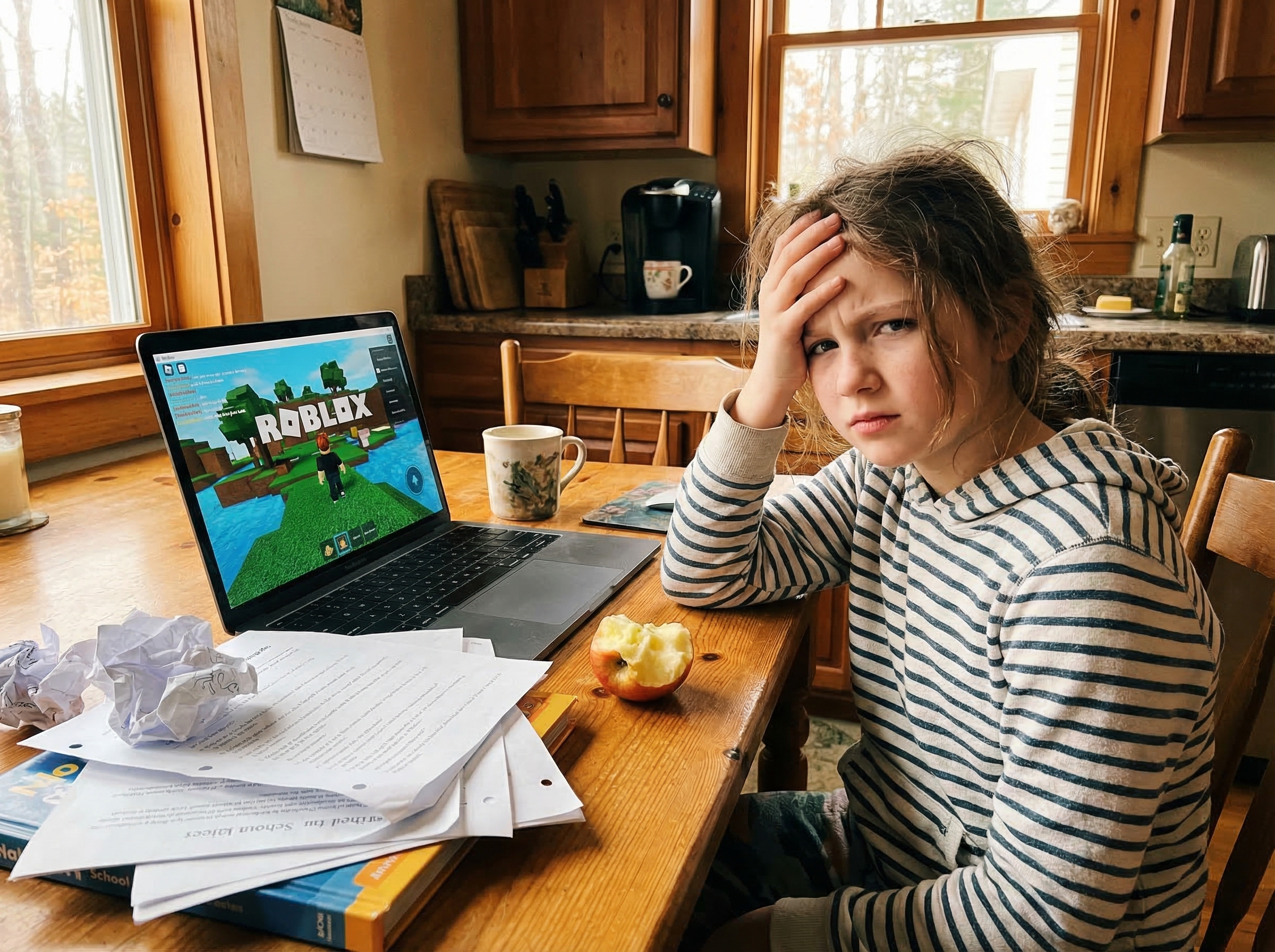
My daughter explained it perfectly one day after I asked why losing in Roblox upset her more than losing at soccer. "Dad, in soccer, everyone's watching. In Roblox, I can actually feel what I feel." That hit me like a ton of bricks. Our kids have learned to perform emotions in public and feel them in private - and gaming is often the most private public space they have.
Plus, kids invest differently in games than we realize. When my son spends six hours building a castle in Minecraft, that's his artwork, his creation, his expression of creativity. When a griefer blows it up with TNT, he's not upset about losing fake blocks - he's grieving actual creative work. It's like someone ripping up a drawing he spent all day on, except we dismiss it because it happened on a screen.
I learned this the hard way when my son's Roblox account got hacked. I initially treated it like a minor inconvenience. "We'll make a new account," I said, completely missing the point. He looked at me like I'd suggested replacing his dog. "Dad, I had limited edition items from two years ago. My friends list. My builds." It wasn't until I imagined losing my laptop with all my work that I got it. His digital space was just as real as my physical one.
 When the controller gets thrownPause, Play, Connect: Core Deck172 prompts that help you ask about the loss instead of lecturing about the meltdown.$49 CAD • 90 cards • 18 reviewsShop the deck
The Hidden Emotional Skills Your Kid Is Already Learning
The same kid who throws the controller is learning more about emotional regulation than we give them credit for. We just miss it because we're focused on the meltdown instead of the recovery.
Watch what happens after the controller hits the couch. Nine times out of ten, they pick it up and try again. That's resilience in action. No adult forcing them. No external motivation. Just pure, internal drive to overcome frustration. When else do our kids voluntarily subject themselves to repeated failure until they succeed? Once you start seeing the emotional work happening on the screen, it gets easier to turn screen time into connection time without making it a fight about putting the controller down.
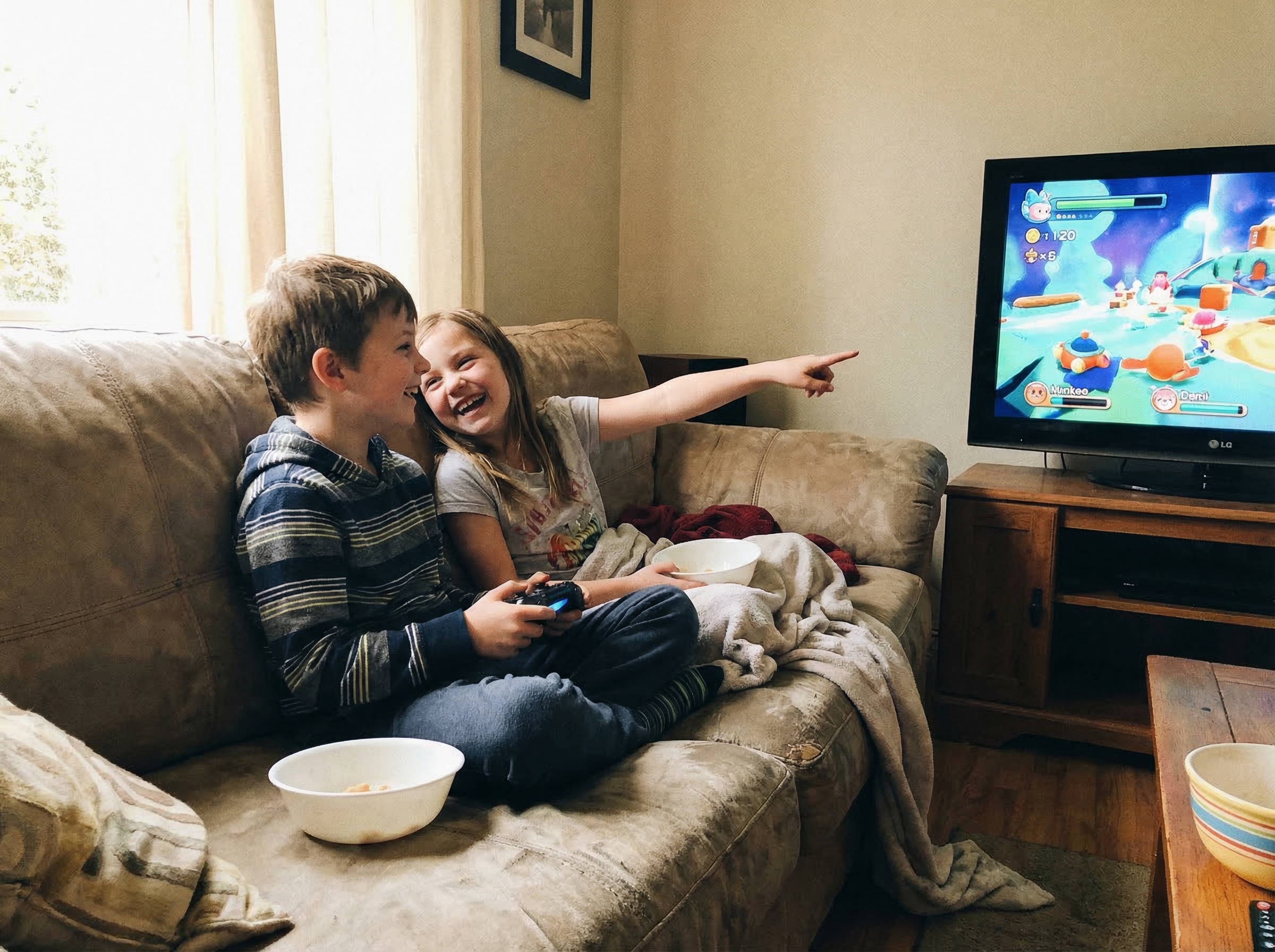
My daughter died at least 100 times trying to beat Sans in Undertale. Each death made her more determined. She analyzed patterns, adjusted strategies, took breaks when needed, and came back fresh. When she finally won, her victory dance could've powered the neighborhood. But here's what struck me: she immediately started coaching her friend through the same battle, with more patience than she'd ever shown her little brother with homework.
"You have to watch for the blue attacks," she explained calmly, even as her friend died for the twentieth time. "It's okay, everyone dies here a lot. The trick is noticing which attack comes next." This is the same kid who gets frustrated when her brother doesn't immediately understand her explanation of multiplication. The difference? In gaming, struggle is normalized. Expected. Part of the process.
They're also learning resource management in ways that would make a financial advisor proud. My son saves his V-bucks in Fortnite like he's Warren Buffett, analyzing which skins give him the most satisfaction for his investment. He's learned delayed gratification, cost-benefit analysis, and buyer's remorse - all from virtual currency.
The collaborative problem-solving amazes me most. I've listened to my kids coordinate complex strategies with friends, delegate tasks based on strengths, and debrief failures without blame. "Okay, next time you cover the left side while I build up," my son strategizes after a loss. When's the last time a group project at school taught those skills so naturally?
Decoding Different Types of Gaming Emotions (And What They Mean)
Not all gaming outbursts are created equal. Learning to read the different types changed how I respond to each one.
The Rage Quit comes in two flavors. There's the healthy version - recognizing you're too frustrated to continue and removing yourself from the situation. That's actually mature emotional regulation. Then there's the destructive version - throwing things, screaming at others, staying angry for hours. The key is duration and recovery. A quick storm that passes? Normal. A tornado that destroys everything in its path? That needs attention.
My son taught me to spot the difference. After one particularly dramatic exit from a game, he came back five minutes later. "I knew I was getting too mad," he said. "So I stopped before I said something mean to my friends." That's self-awareness most adults don't have.
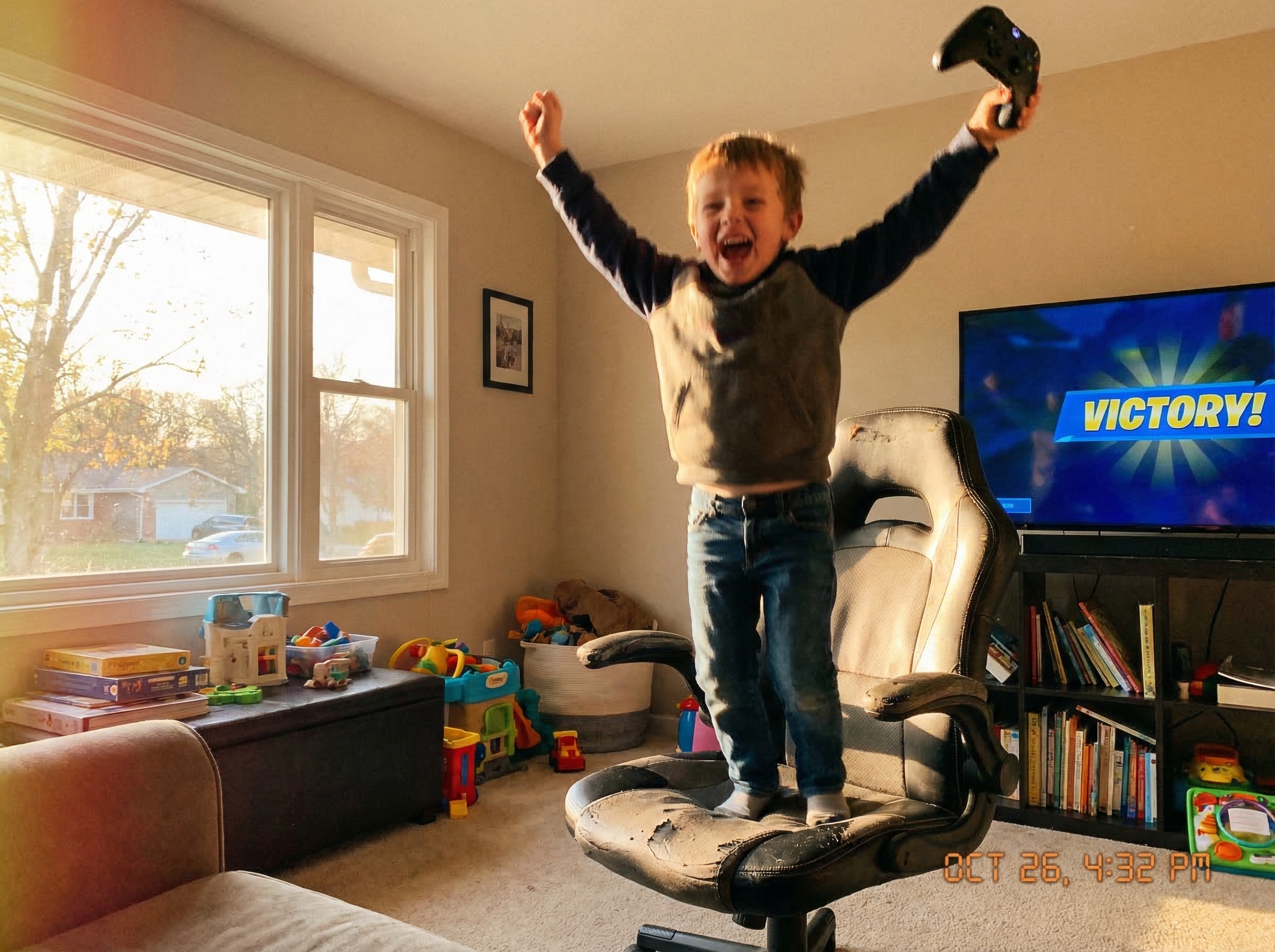
The Victory Dance matters more than we think. When your kid goes absolutely feral after finally beating a boss, they're practicing joy expression. In a world where we're constantly telling kids to calm down, quiet down, settle down, gaming gives them permission to GO ABSOLUTELY NUTS in celebration. My daughter's post-victory rituals involve a specific dance, a victory screech, and usually running to tell everyone in the house about her triumph. I used to shush her. Now I celebrate with her.
The Zoned-Out Trance worried me until I understood it. That glazed-over look while playing isn't always checking out - sometimes it's checking in. Deep focus. Flow state. Processing the day while their hands stay busy. My son explained it best: "Sometimes I'm not really playing Minecraft. I'm thinking while I mine." It's meditation with explosions.
The Social Drama hits different because online friendships are real friendships. When my daughter came crying because her Roblox friend said she couldn't play with their group anymore, my first instinct was to minimize it. "You don't even know them in real life." But I caught myself. These kids collaborate daily, share secrets, create together. That's real friendship, just digitally mediated.
The intensity of gaming emotions finally made sense when I realized games are one of the few places kids get to feel without performing. No one's grading their emotional response. No one's telling them how they should feel. They just get to feel it, fully and honestly.
How to Actually Help (Without Being the "It's Just a Game" Parent)
The phrase "it's just a game" should be banned from parenting vocabulary. A deck of conversation cards for families gives you ready-made prompts so you do not have to invent them on the fly during a meltdown. Here's what actually works:
Acknowledge without fixing: "That was so frustrating when you were about to win and lost connection. I'd be mad too." You don't have to solve it. Sometimes they just need to know their feelings make sense.
Get curious about specifics: Instead of "How was gaming?" try "What's the most annoying thing that happened in your game today?" Or "Did anything surprising happen in your world?" Specific questions get specific answers. Our guide on having real conversations with your kids walks through the question patterns that work at every age.
Learn their language: When my son says he got "third-partied," I know he means someone attacked while he was already fighting someone else. Understanding gaming terminology helps you understand their experiences. You don't need to be fluent, just conversational.
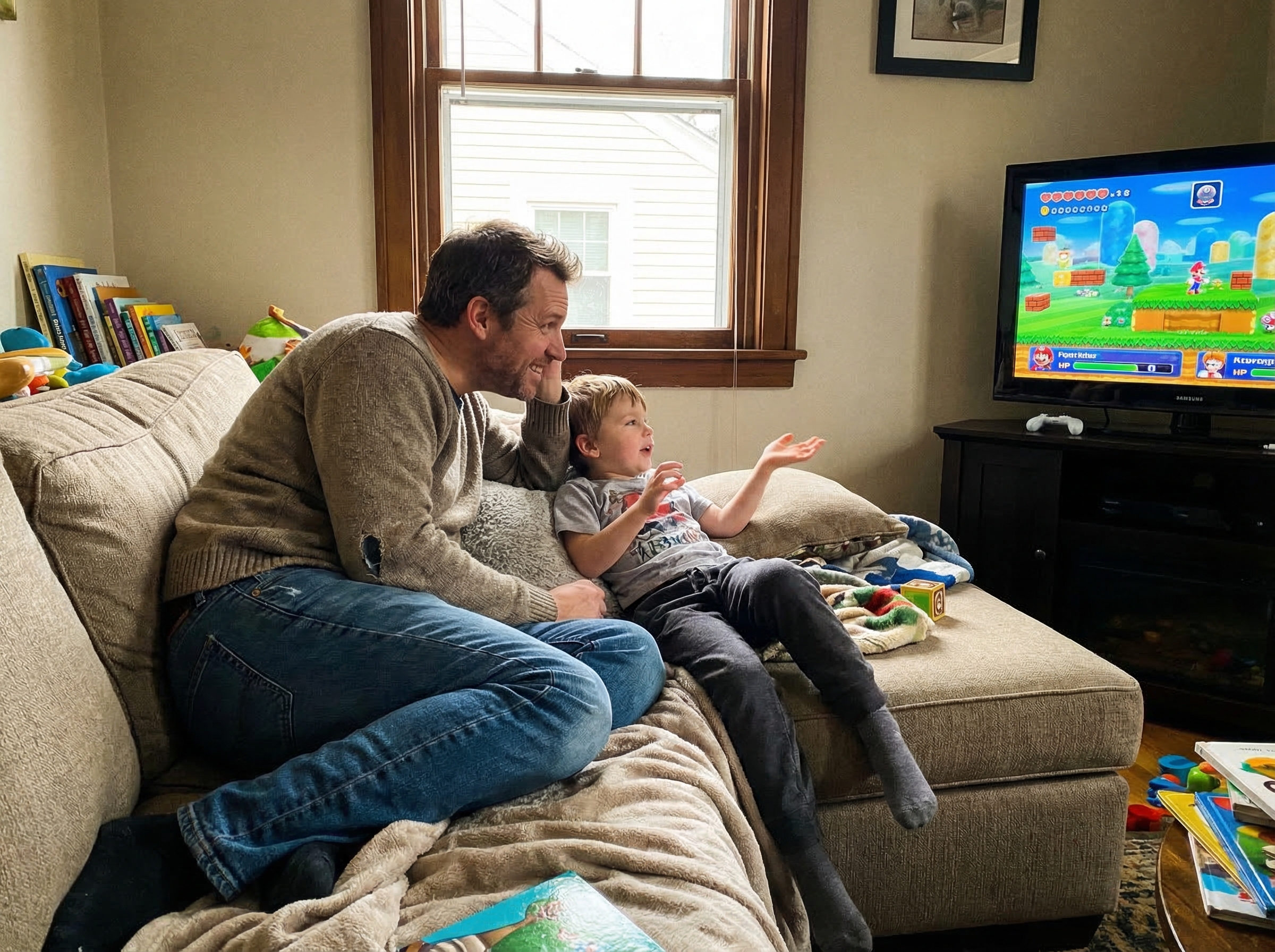
Share your own gaming frustrations: I tell my kids about rage-quitting Battletoads on Nintendo. About throwing my controller when I couldn't beat levels. It normalizes their experience and shows you get it.
Ask "What would you do differently next time?" instead of giving advice: This question changed everything in our house. It shifts from blame to strategy, from problem to solution. My kids started analyzing their gameplay objectively instead of just being mad about losing.
Recognize when they need space vs. support: Sometimes the best help is backing off. Other times they need you to sit there and commiserate. I've learned to ask: "Do you want to talk about it or do you need a few minutes?"
Validate the investment: "I know how hard you worked on that build" or "You've been practicing that combo for days" shows you see their effort, not just their emotion.
One night, my daughter was in tears because she lost all her diamonds in lava. Instead of my usual responses, I just said, "Tell me about those diamonds." She explained how she'd mined for hours, gone deeper than ever before, almost died to zombies twice. By the end, we were both laughing about the zombie chase scene. The diamonds were gone but the conversation was worth more.
 For the cool-down afterPause, Play, Connect: Core Deck$49 CAD • 172 promptsSee the deck
Using Gaming as Emotional Regulation Practice
Gaming isn't the enemy of emotional regulation - it's the practice field. We just need to be intentional about it.
Pre-game check-ins work wonders. "How do you want to handle it if things get frustrating today?" My kids started coming up with their own strategies. "I'll take three deep breaths before I respawn" or "If I die three times in a row, I'll switch games."
Mid-game coaching requires finesse. You can't hover, but strategic check-ins help. I'll pop in during a loading screen: "How's the frustration level?" They've learned to self-assess. "Like a 7 out of 10. I might need a break soon."
Post-game reflection turns experience into learning. "What went well today? What was hard?" These conversations happen naturally now. My son will come find me: "Dad, I stayed calm even when we lost three matches in a row. I'm getting better at not tilting."
Creating rules together beats imposing them. We have a family gaming agreement my kids helped write. They decided that throwing controllers means replacing them with allowance money. They chose to implement "tilt breaks" - stepping away when emotions run too high. When kids make the rules, they're more likely to follow them.
The Yakety Pack hack: We discovered that pulling a random conversation card after a tough gaming session completely shifts the energy. "If you could design the ultimate video game level, what would it include?" suddenly has them creating instead of stewing. Or "What's a time you helped someone in a game?" reminds them of their gaming victories beyond just winning.
My proudest moment came when I heard my son tell his friend, "Hold up, I need a frustration timeout." He paused the game, did some jumping jacks, came back calmer. No prompt from me. He'd internalized the tool and used it independently.
For the Post-Match Debrief: A deck of Yakety Pack conversation cards gives you a softer way to start the talk after a meltdown than asking "what happened" head-on.
When Gaming Emotions Become Concerning
Let's be real about when to worry. Because yes, sometimes gaming emotions cross into concerning territory.
Frequency matters more than intensity. A massive meltdown once a week? Probably normal. Moderate anger every single gaming session? That's a pattern worth examining.
Physical aggression is a line. Throwing a controller occasionally versus punching walls, breaking things intentionally, or hurting others. My rule: if it damages property or people, we need to address it differently.
Duration tells you everything. Mad for five minutes? Normal. Still furious two hours later? Problem. Can't let go of a loss from yesterday? Red flag.
Impact on relationships matters. When my son started being mean to his real-life friends about their gaming skills, we had to intervene. Competitiveness turned toxic is different from momentary frustration.
Physical symptoms need attention. Headaches from tension, not eating because they can't leave a game, disrupted sleep from gaming stress - these signal something deeper.
I've seen the difference between my two kids. My son gets mad, expresses it, moves on. My daughter used to stay stuck in the emotion, letting it ruin her whole day. We had to work with her differently, teaching her specific techniques for emotional release. Same game, same frustrations, completely different needs.
Building Your Gaming-Emotion Toolkit
Here's your practical starting point:
Pick one game they love and actually learn about it. Not play it necessarily, but understand it. Watch a YouTube video explaining the basics. Ask them to give you a tour. My gaming credibility skyrocketed when I could say, "Oh, you're fighting in Tilted Towers? That's always chaos."
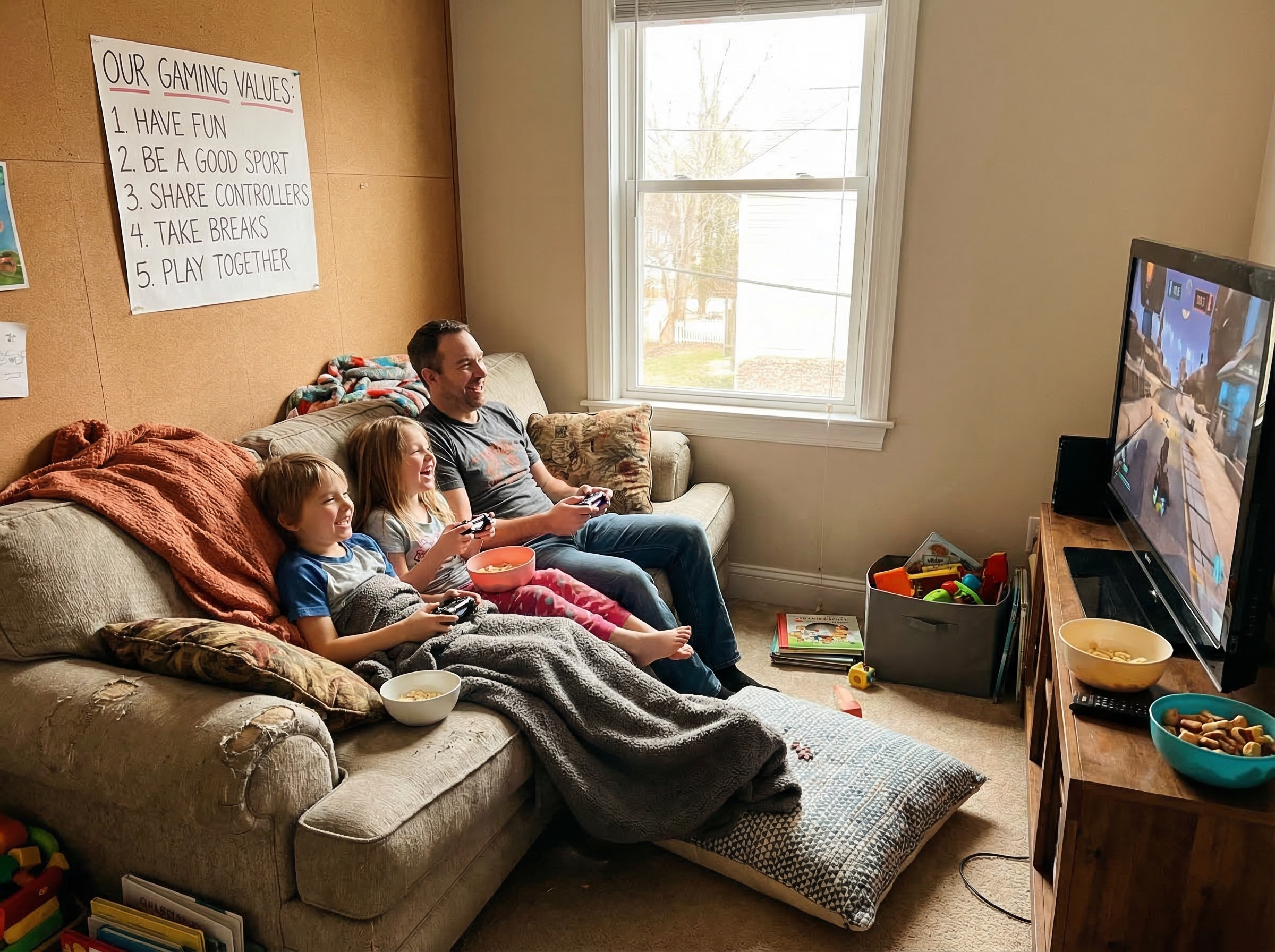
Join them for one session a week, even if you're terrible. Especially if you're terrible. Nothing bonds you faster than them teaching you something. Plus, they see you handle frustration in real-time. (Spoiler: I'm not always graceful about losing either.)
Create a family gaming values list. What matters to us when we game? Ours includes: "Losing with grace matters more than winning," "Friends over victories," and "Real-life responsibilities come first." Having these posted near our gaming area serves as a visual reminder.
Use gaming metaphors in real-life emotional moments. When my daughter was frustrated with piano practice, I reminded her how she approached beating Sans. "Remember, you died 100 times but kept trying new strategies." Suddenly piano practice became a boss battle, and her approach shifted.
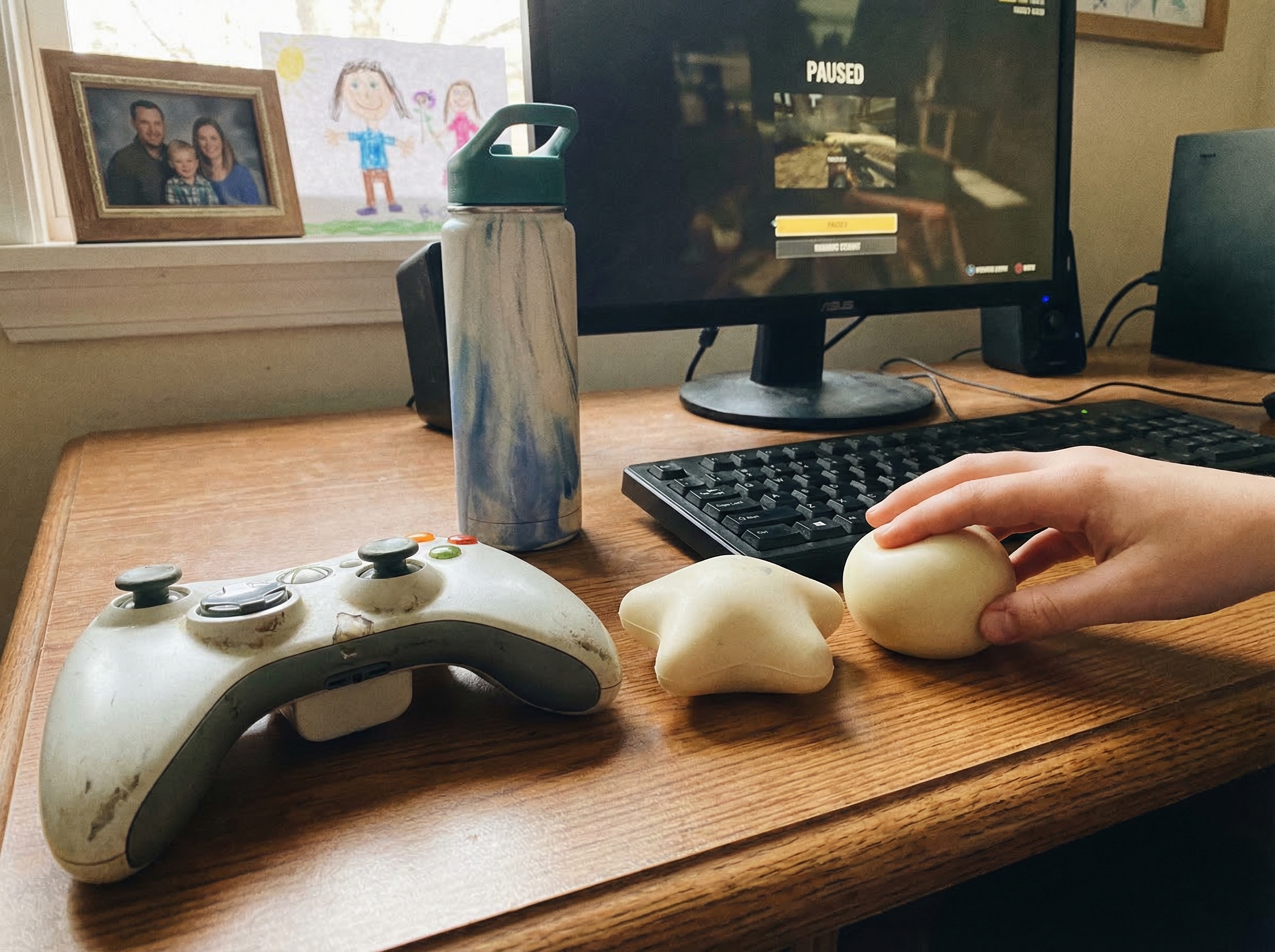
Keep emotion-processing tools nearby. We have stress balls by the gaming setup. A list of "break activities" (jumping jacks, getting water, petting the dog). And yes, Yakety Pack cards that turn post-game time into connection time.
Model emotional regulation yourself. I make sure my kids see me taking breaks when I'm frustrated with work. "I'm getting tilted with this spreadsheet. I need a five-minute break." Using their language for my emotions validates both.
The transformation in our house has been remarkable. Gaming went from a source of conflict to a place of connection. Not because we limited it or controlled it, but because we leaned into it. We started seeing gaming emotions as information rather than problems.
Last week, my son came to me after a particularly tough loss. "Dad, I handled that really well. I was super mad but I didn't yell at my teammates or quit. I just said 'good game' and found a different lobby." That's emotional regulation. That's maturity. That happened because of gaming, not in spite of it.
Your kid's gaming emotions aren't something to fix. They're something to understand, validate, and use as teaching moments. The next time you hear that controller hit the couch, resist the urge to lecture. Instead, get curious. Ask questions. Share your own struggles. You might just find that the thing you've been viewing as a problem is actually the solution you've been looking for.
After all, where else do our kids get to practice handling frustration, disappointment, and joy in a safe environment with immediate feedback? Where else do they voluntarily subject themselves to challenges that push their emotional limits? Where else are they this honest about what they're feeling?
Gaming isn't creating emotional dysregulation in our kids. It's revealing emotions that were already there, giving them a space to feel and express them fully. Our job isn't to shut that down - it's to help them process what comes up. And if we do it right, those gaming meltdowns become some of our most powerful parenting moments.
The controller will get thrown again. The tears will come. The victory screeches will rattle the windows. Good. That means they're feeling, learning, and growing. And if we're paying attention, we get to be part of that journey.
So the next time your kid has a gaming meltdown, take a breath. Remember that you're watching emotional honesty in action. And maybe, just maybe, ask them to teach you how to play. You might be surprised what you both learn in the process.
Tell me about those diamondsPause, Play, Connect: Core Deck172 prompts that get a kid talking about what the game meant, not just what went wrong.$49 CAD • 90 cards • 18 reviewsShop the deck
Related Articles
Looking for more? Check out these related articles:

