
When my 12-year-old son gamed for six hours straight the day his grandmother died, I finally understood something crucial: my child uses games to cope with stress, and sometimes that's exactly what he needs. Six. Hours. Straight. And you know what? I let him. Because sometimes, when the real world becomes too heavy, kids need a world where they're still in control.
I spent years fighting my kids' gaming habits. Setting timers. Making charts. Feeling that familiar parent guilt every time they reached for a controller after a rough day. Then Jake taught me something that changed everything: sometimes gaming isn't the problem. It's the solution they've found. And maybe, just maybe, our job isn't to take that solution away. It's to understand why it works.
Why Kids Turn to Games When Stressed (And Why Fighting It Makes Everything Worse)
Here's what took me way too long to figure out: when kids are stressed, they're not just looking for distraction. They're looking for control. In the real world, effort doesn't always equal progress. Study hard, still fail the test. Be nice to classmates, still get picked on. Try your best at tryouts, still get cut from the team.
But in games? Every action has a clear result. Every challenge has a solution. Kill the boss, level up. Gather resources, build something amazing. The world makes sense.
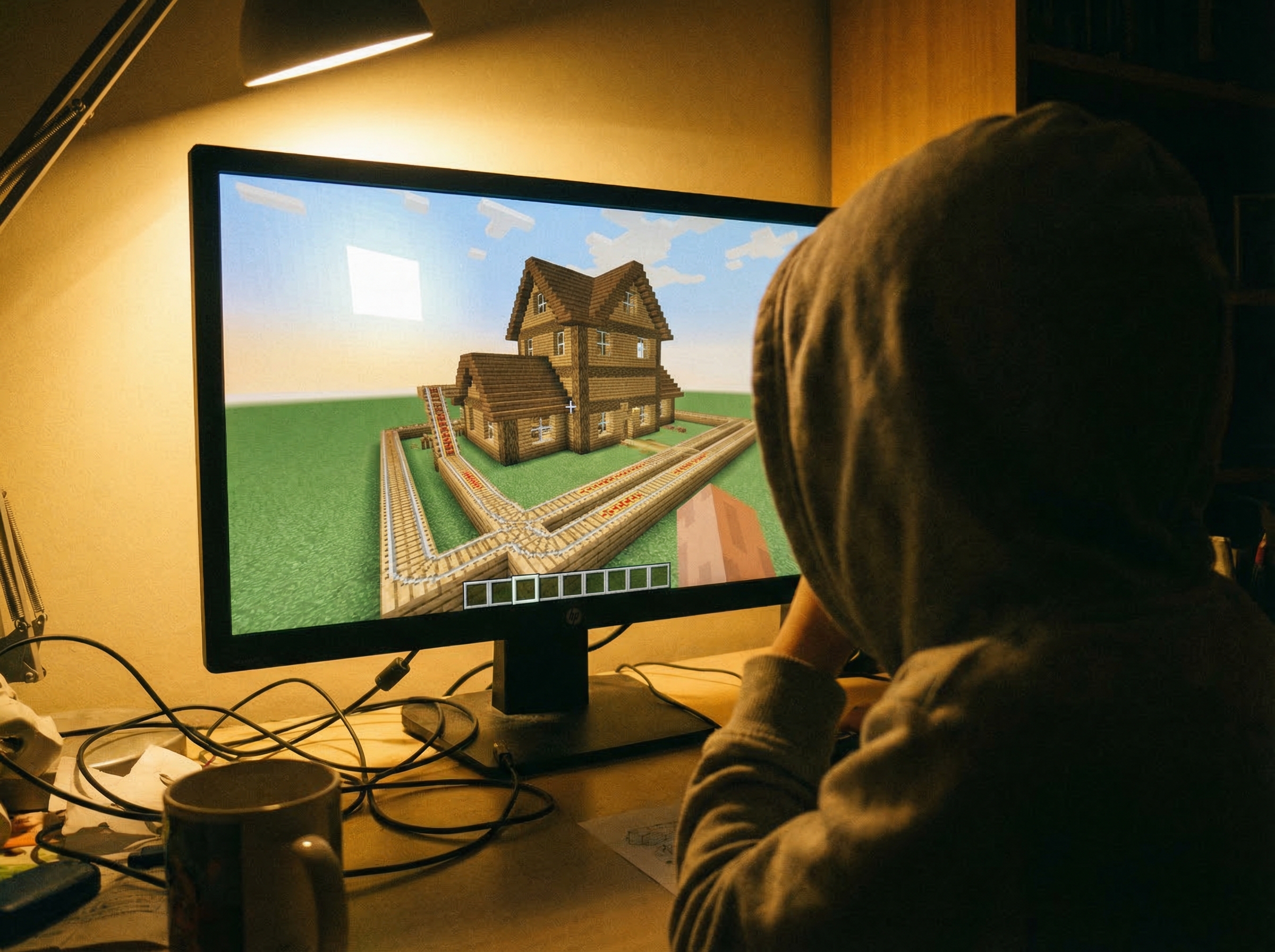
When Jake's best friend moved away last year, he basically lived in Minecraft for two weeks. My first instinct was to limit his screen time, push him toward "healthier" activities. You know, all the stuff the parenting blogs tell you to do. But then I actually sat down and watched what he was building.
He'd recreated his friend's house block by block. Built a railway between their homes. Created this whole world where distance didn't matter. He wasn't escaping his grief. He was processing it, one perfectly placed block at a time. When the game opens into something bigger, our guide on how to talk about big feelings covers what to do once the door is open.
That's when I realized fighting the gaming was like taking away his journal mid-sentence. No wonder he got defensive every time I mentioned time limits.
Reading the Intel: What Their Game Choice Tells You
Your kid's game choice is basically a mood ring you can actually decode. Once I started paying attention, it was like Jake was handing me a roadmap to his emotional state.
When he plays Minecraft or other building games, he needs control and creation. After chaotic days at school, he'd spend hours organizing chests, building elaborate sorting systems. The real world felt messy, so he created order where he could.
Competitive games like Fortnite usually mean he's processing anger or needs to prove himself. Bad grade? Time to rack up Victory Royales. Argument with a friend? Cue the aggressive gameplay.
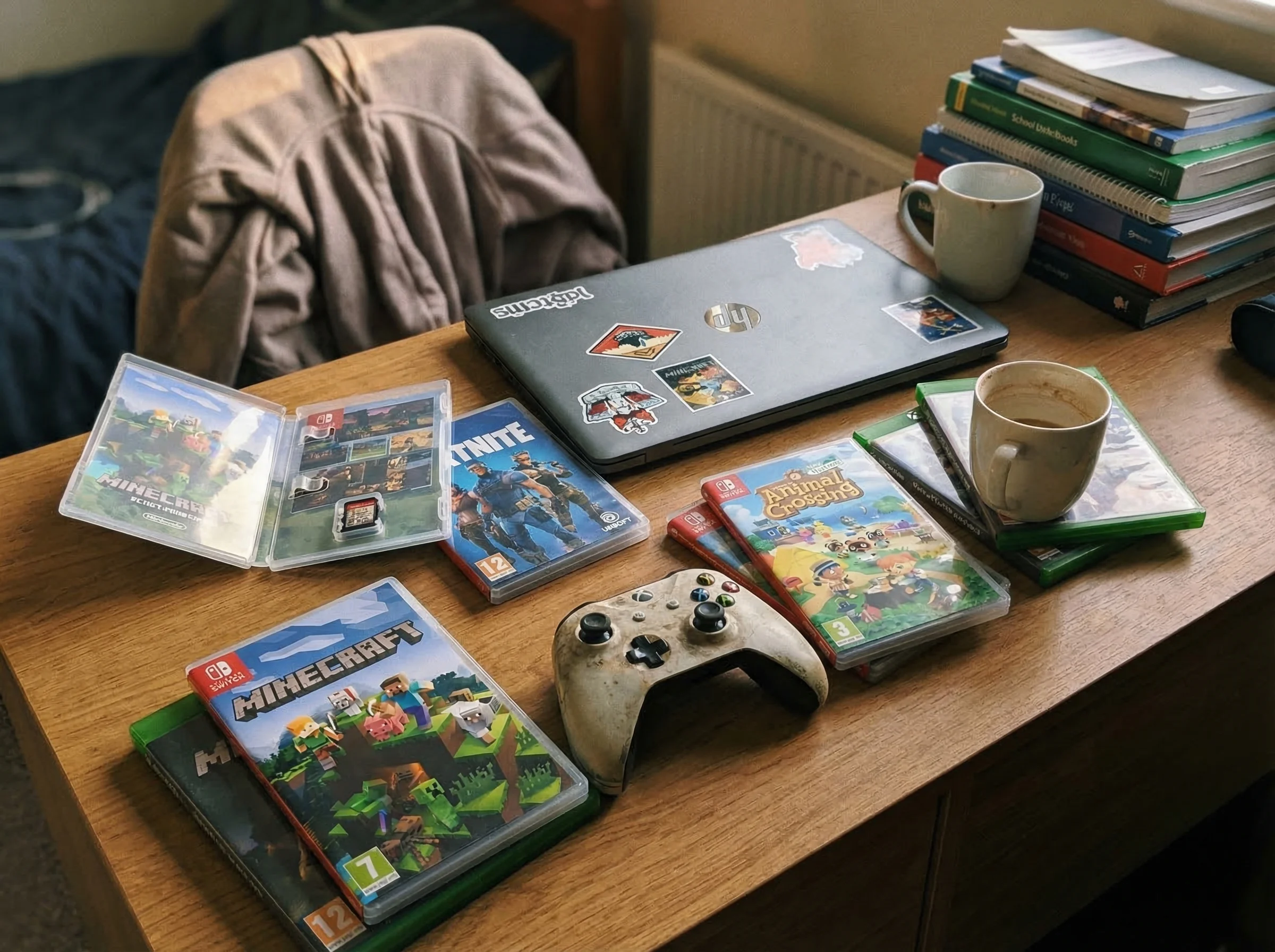
RPGs signal he's dealing with identity pressure. When Jake felt stuck being "the quiet kid" at school, he became a warrior saving villages in Skyrim. He got to try on different versions of himself without real-world consequences.
Cozy games like Animal Crossing or Stardew Valley? That's comfort-seeking. Predictable routines, gentle progress, no fail states. It's the gaming equivalent of mac and cheese after a hard day.
I watched Jake shift from Fortnite to Minecraft after getting cut from basketball tryouts. That told me more about his emotional state than any conversation we'd tried to have. He didn't need to prove himself anymore. He needed to build something that couldn't be taken away.
 A question about the worldPause, Play, Connect: Core Deck172 prompts that give you a question to ask about the game they are playing.$49 CAD • 90 cards • 18 reviewsShop the deck
The Difference Between Coping and Escaping (And Why It Matters Less Than You Think)
Every parenting article warns about kids "escaping" into games. But here's what they don't tell you: sometimes kids need to escape before they can cope. It's like taking a deep breath before diving underwater. The escape gives them space to process.
Healthy gaming stress relief looks like:
- They can still talk about what's bothering them (even if it's through game metaphors)
- Gaming helps them calm down, not amp up
- They eventually want to share their gaming experience with you
- Other life activities still happen, just maybe on a different timeline
When gaming becomes avoidance:
- Complete shutdown when real world is mentioned
- Increasing anger when gaming time ends
- Lying about gaming or sneaking screen time
- Physical needs ignored (not eating, not sleeping)
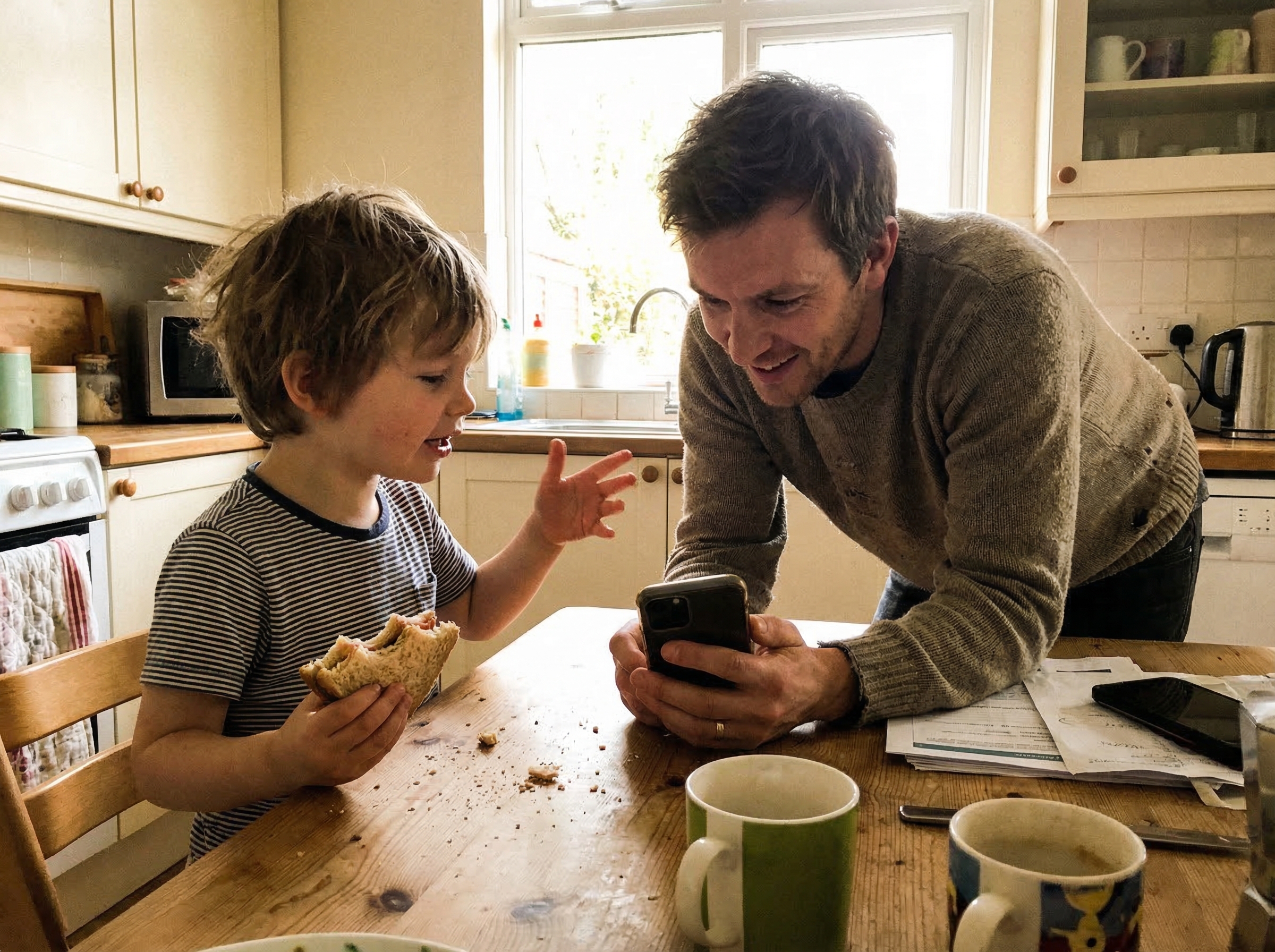
But here's the truth bomb: even avoidance can be a temporary coping mechanism. The day Jake spent six hours in Minecraft after his grandmother died? Pure avoidance. And also exactly what he needed that day. By hour four, he started talking about building a memorial garden for her in his world. By hour six, he was ready to help plan the real funeral.
Sometimes the escape is the processing. Once you see it that way, it gets easier to turn screen time into connection time instead of treating the game as the thing to fight.
How to Talk to Your Gaming Kid About Stress (Without Killing the Conversation)
Want to shut down a conversation with a stressed gaming kid? Ask "how was your day?" while they're mid-game. Want to actually connect? Try this instead.
"What's happening in your world today?" works way better than "how was school?" One question enters their space. The other tries to drag them out of it.
Use their language. "Sounds like you had a boss-level day" acknowledges their stress without minimizing their coping method. "That teacher sounds like a griefer" shows you understand their world.
The magic happens when you play alongside them. Not to monitor. Not to limit. Just to exist in their space. Jake told me more about his anxiety while teaching me to build in Minecraft than in all our "serious talks" combined.
Here's an actual conversation that happened while Jake was building:
Me: "That's a huge wall. What are you keeping out?" Jake: "Creepers." Me: "Just creepers?" Jake: "And kids from school." Me: "Ah. Real world creepers." Jake: "Yeah. They keep blowing up my stuff too."
Twenty minutes of building together revealed he was being bullied. Something I'd been trying to figure out for weeks through direct questions. The post-game wind-down is gold for this; we wrote a separate piece on why video games help my kid calm down that maps how to use that calmer window for the harder conversation.
Building Bridges: Using Gaming to Introduce Other Coping Tools
The secret isn't replacing gaming with "better" coping mechanisms. It's finding real-world versions of what they love about gaming. Yes And instead of No But.
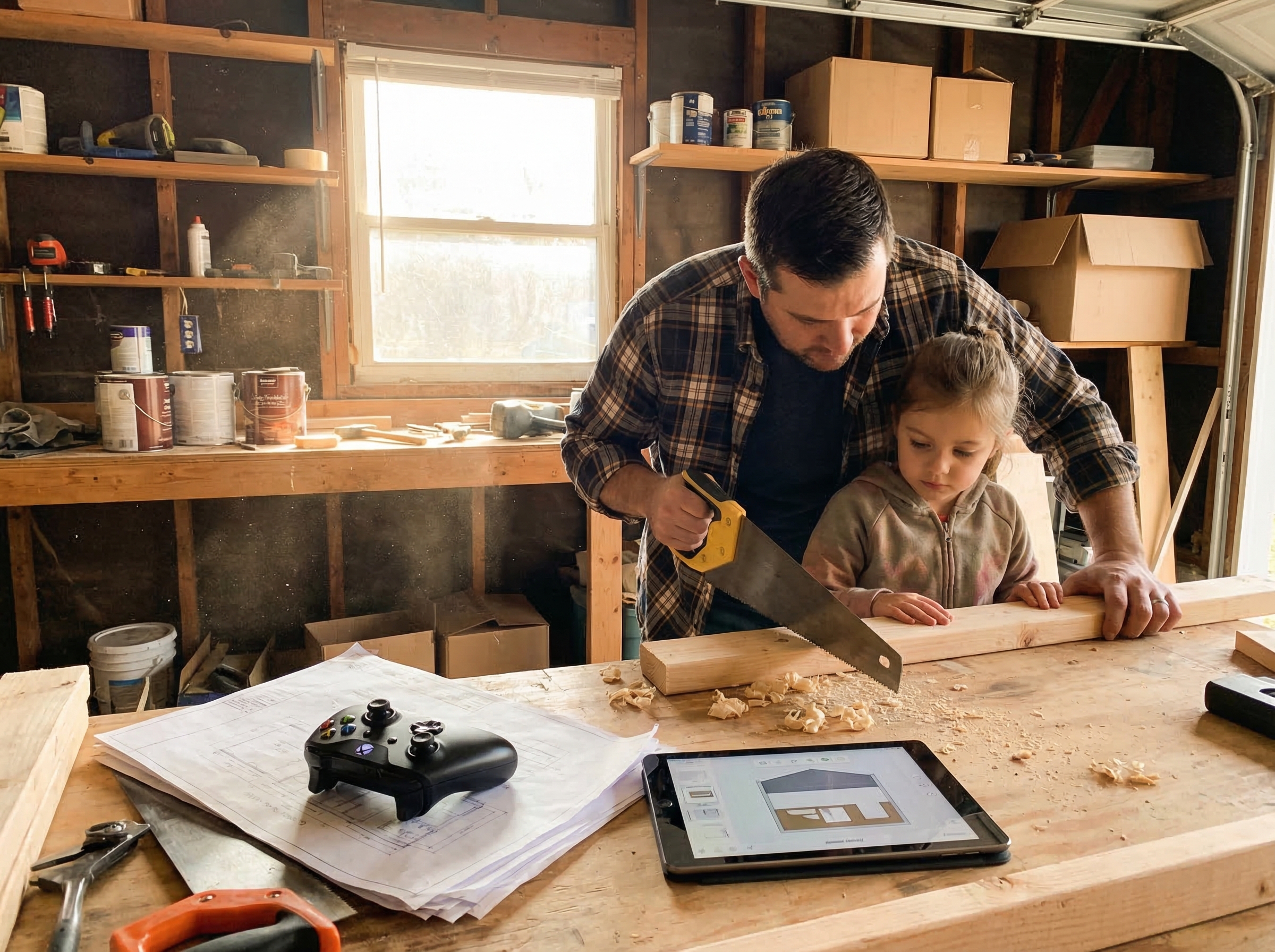
Jake loved the building and organizing in Minecraft. So we tried:
- Lego challenges (building with real blocks)
- Woodworking projects (creating with tools)
- Room reorganization (real-world base building)
The key? I didn't present these as replacements. I presented them as expansions. "Since you're so good at designing in Minecraft, want to help me plan the garden?" Not "instead of playing Minecraft, let's garden."
We started using Yakety Pack conversation cards during snack breaks between gaming sessions. Questions like "If you could design any world, what would it have?" led to conversations about what he wished was different in the real world. Gaming became the starting point, not the endpoint.
The bridge worked. Jake still games for stress relief, but now he also builds things in the garage when he needs to think. Same coping mechanism, additional outlets.
 Prompts you did not writePause, Play, Connect: Core Deck$49 CAD • 172 promptsSee the deck
When Gaming Stress Relief Is Actually Working (And How to Recognize It)
Here's what successful self-regulation through gaming actually looks like, because nobody talks about when it's working:
Jake now says things like "I need some Minecraft time to chill out." He recognizes his own need and communicates it. That's emotional intelligence, even if it involves a screen.
He naturally transitions out after achieving whatever emotional state he needed. Build the thing, feel better, ready to rejoin the world. No timer required.
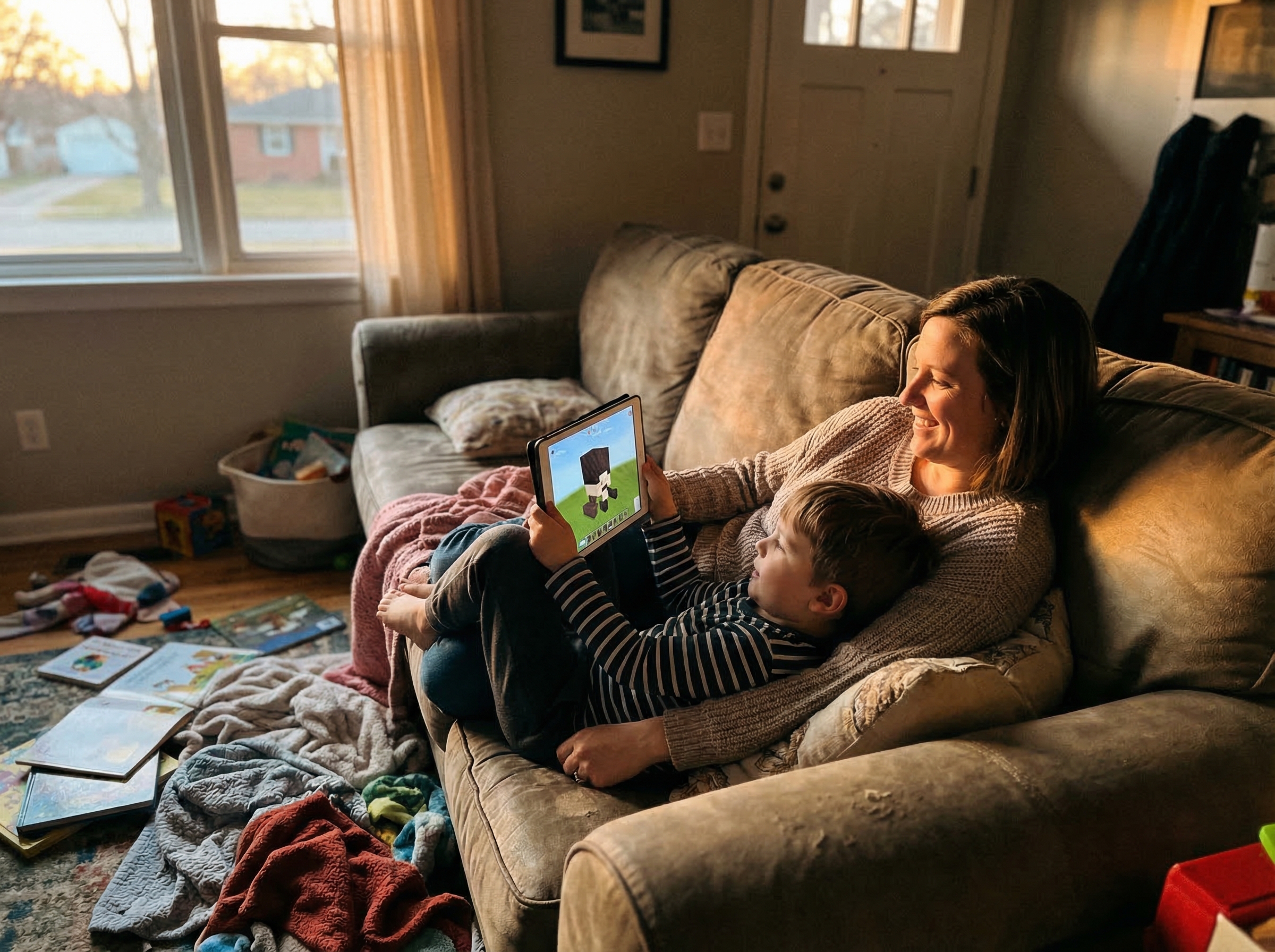
He can explain why different games help with different feelings. "Fortnite when I'm angry, Minecraft when I'm sad, Animal Crossing when everything's too much." That's sophisticated emotional processing.
The decompression window works. Thirty minutes of gaming after school prevents the three-hour escape sessions later. He's learned to dose his own medicine.
Most importantly, he wants to share his gaming with us. "Dad, come see what I built to remember Grandma." That's not escape. That's connection.
Setting Boundaries That Don't Break Trust
Boundaries still matter. But how you set them determines whether they bring you closer or push you apart.
Collaborative limits beat imposed rules every time. "What do you think is a fair amount of gaming time when you're stressed?" gets better results than "you get one hour, period."
Try feelings first, limits second. "I see Minecraft is really helping you today. How much time do you think you need to feel better?" acknowledges their coping while still establishing boundaries.
Create transition rituals instead of abrupt stops. We use Yakety Pack cards as a bridge between game world and dinner table. "Tell me your gaming story of the day" replaced "time to get off NOW." Same result, zero fights.
The biggest breakthrough came when I stopped seeing game time as something to manage and started seeing it as information. High gaming days mean high stress days. Instead of limiting the gaming, I started addressing the stress.
The Real Truth About Kids Who Game for Stress
Sometimes the best thing you can do for a stressed kid is hand them a controller and say "show me what you're building." The connection you create by entering their world matters more than any screen time guideline you're breaking.
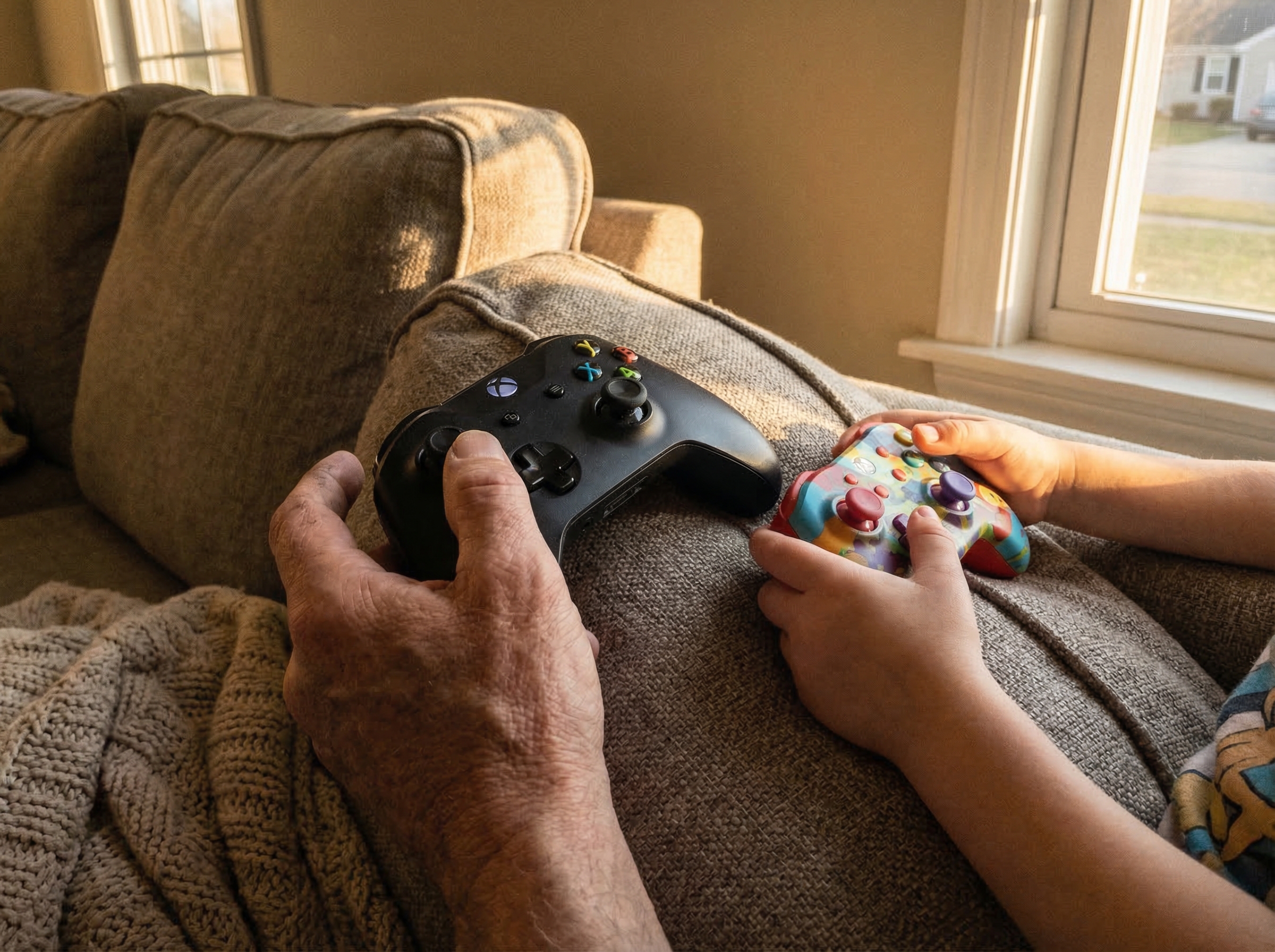
Your kid using games to cope with stress doesn't mean you're failing as a parent. It means they've found a tool that works for them. Your job isn't to take that tool away. It's to understand why it works and help them build a full toolkit.
Jake still games when he's stressed. But now he also builds, talks, and processes in multiple ways. Gaming opened the door to those conversations. It became the bridge, not the barrier.
So the next time your kid retreats into a game after a hard day, try asking "what are you working on in there?" instead of "haven't you played enough?" You might be surprised what they're actually building.
Besides, in a world that often feels out of control, is it really so bad that our kids have found a space where their efforts matter, their progress is clear, and they get to be the hero of their own story?
I don't think so. Not anymore.
Give the evening a topicPause, Play, Connect: Core Deck172 prompts about games and home life, so there is a question ready at dinner.$49 CAD • 90 cards • 18 reviewsShop the deck
Related Articles
Looking for more? Check out these related articles:

