
My son threw his "calming game" controller across the room. "This stupid fish won't stop swimming away!" he yelled about Animal Crossing, you know, that game that appears on every list of the best calming video games for kids. There I was, confused, because isn't this supposed to be the zen experience everyone promises for anxious kids?
I sat there thinking, "But... but... this is the calming game. The one with the peaceful music and the talking animals who never get mad at you."
That's when I learned something important: the best calming video games for kids aren't always the calmest games.
Why "Calming" Doesn't Mean What You Think
I used to be that dad who'd hand my anxious kid a meditation app disguised as a game. You know the ones - breathe with the jellyfish, follow the floating feather, tap the singing bowls. My son's review? "Dad, this is stupid." Not exactly the zen moment I was hoping for.
Here's what took me way too long to figure out: calming isn't about making your kid sit still and breathe deeply. It's about giving their brain the right job to do while their emotions sort themselves out.
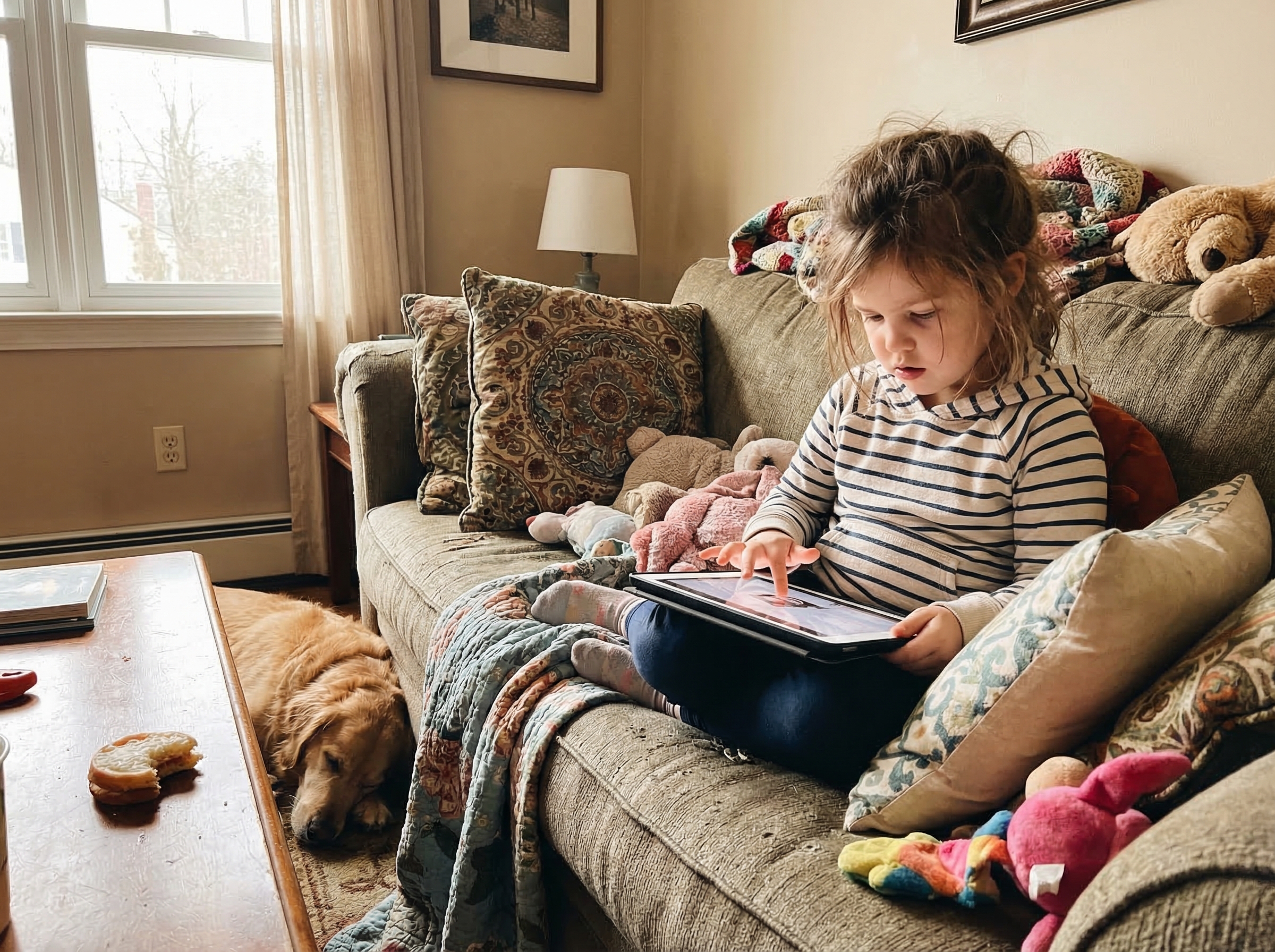
Last week, my daughter had a rough day at school. Some friend drama, failed math quiz, forgot her lunch. She came home wound tight as a spring. Know what helped? Building elaborate death traps in Minecraft creative mode while explaining every detail of her terrible day. "And THEN," she said, placing TNT blocks in a pattern, "Sarah told everyone I said something I didn't even say!" A deck of conversation cards for families gives you ready-made prompts when you want to keep that kind of opening from sliding back to silence.
By the time she'd constructed a working TNT cannon (aimed at a house labeled "MATH"), she was laughing about how ridiculous middle school is. The game gave her hands something to do while her brain processed the day. That's calming.
 While their hands are busyPause, Play, Connect: Core Deck172 prompts that turn a quiet building session into the story about the actual bad day.$49 CAD • 90 cards • 18 reviewsShop the deck
The Three Types of Calming Your Kid Actually Needs
After years of getting this wrong, I finally noticed a pattern. Kids don't all calm down the same way. Shocking, right? But once I saw it, I couldn't unsee it.
Organization Calming
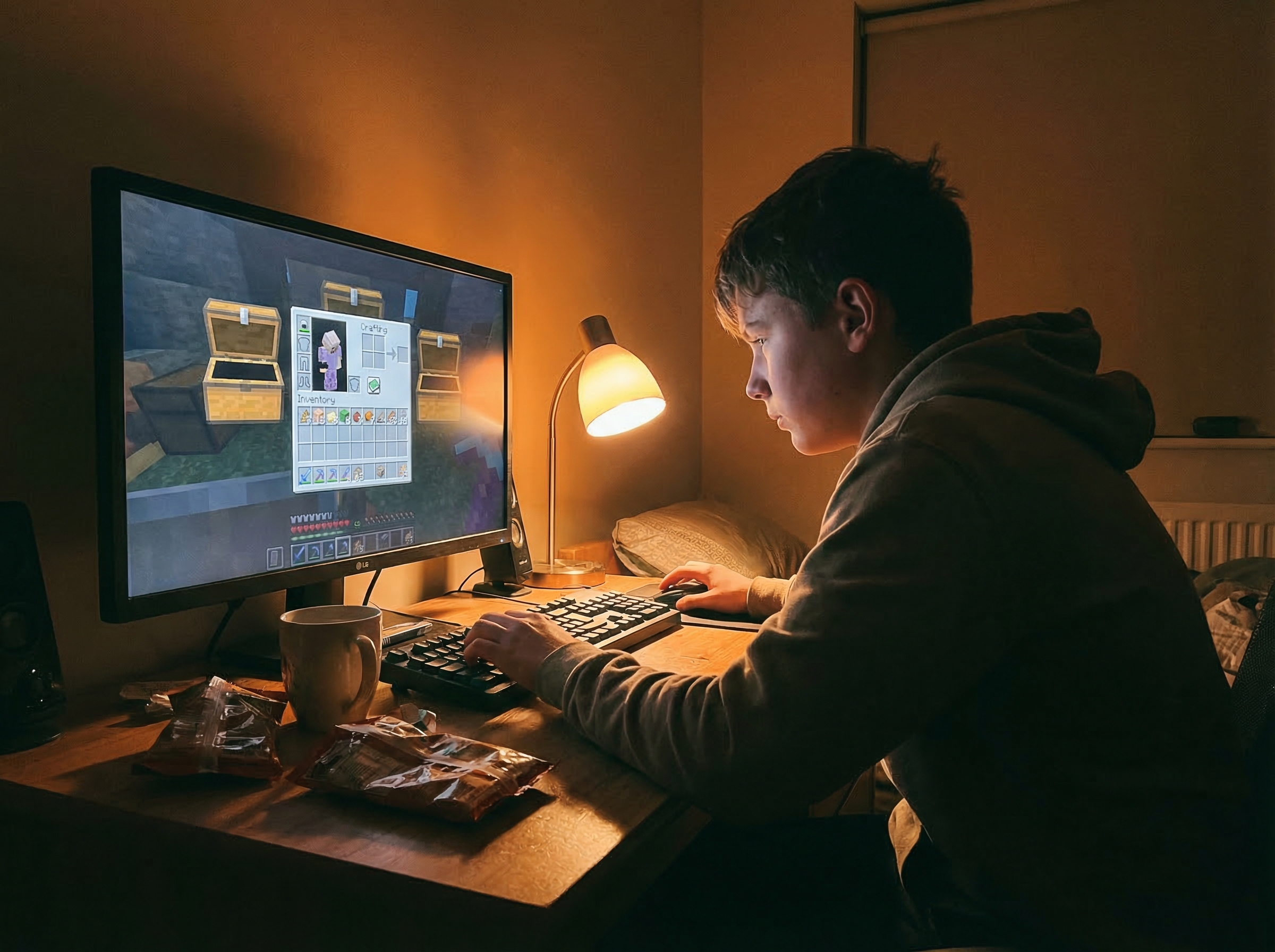
This is my oldest. When he's overwhelmed, he needs to sort, categorize, and control things. I discovered this by accident when I found him organizing his Terraria storage chests at 10 PM on a school night.
"Buddy, it's late," I said.
"I know. I just need to finish sorting my ores by tier."
He wasn't procrastinating. He was self-regulating. Now when I see him booting up Terraria after a hard day, I know he's not there to fight bosses. He's there to organize his virtual life when his real life feels chaotic.
Creative Calming
My middle kid needs to make things without consequences. No grades, no judgment, just creation. When she's stressed, she opens Townscaper and builds impossible cities floating in the ocean. Click, click, click. No way to fail. No wrong answers. Just colorful buildings appearing wherever she taps.
"Look," she'll say, showing me a gravity-defying tower. "This is how my brain feels today." And somehow, building that chaos outside her head helps organize it inside. Once you start seeing the emotional work happening on the screen, it gets easier to turn screen time into connection time instead of treating the game as the enemy.
Rhythm Calming
Then there's my youngest, who finds peace in repetition. Plant seed, water plant, harvest plant, repeat. He'll play Stardew Valley and literally just farm. No quests, no relationships with the villagers, just the rhythm of tending crops.
"Don't you want to explore the mines?" I asked once.
"Nope. Just farming today."
The repetitive actions give his nervous system something predictable to sync with. It's like a gaming version of knitting.
Games That Actually Work (And When to Use Them)
Here's where most articles mess up - they just list "calming games" like all kids are the same. Your organization kid won't find peace in a repetitive farming game. Your creative kid might get stressed by having to organize inventory. You need to match the game to what your kid's brain is asking for. Our roundup of best games to play with kids sorts options by age and skill level so you can match titles to the right kid without guessing.
For Organization Needs:
- Minecraft Creative Mode: Unlimited resources to sort and build systems
- Terraria: Deep inventory management with purpose
- A Little to the Left: Literally a game about organizing things (my son's current favorite)
- Unpacking: Unbox and arrange belongings in new spaces
For Creative Needs:
- Mario Maker 2: Build without limits, test whenever
- Townscaper: Can't fail, just click and build
- Dreams (for older kids): Create anything imaginable
- Alba: A Wildlife Adventure: Photography and helping animals
For Rhythm Needs:
- Stardew Valley: Farming, fishing, foraging rhythms
- Spiritfarer: Gentle routines of caring for spirit friends
- Garden Story: Tend your garden, help your neighbors, repeat
- TOEM: Peaceful photography with simple objectives
The age thing matters too. My 7-year-old finds Unpacking calming because it's simple - put things where they feel right. My 13-year-old needs the complexity of modded Minecraft to achieve the same effect. Don't assume easier means more calming.
The Setup Matters More Than the Game
This one hit me like a brick when I finally figured it out. We had our gaming setup in my son's bedroom - big TV, surround sound, gaming chair, the works. Guess what? Even "calming" games amped him up in that environment.
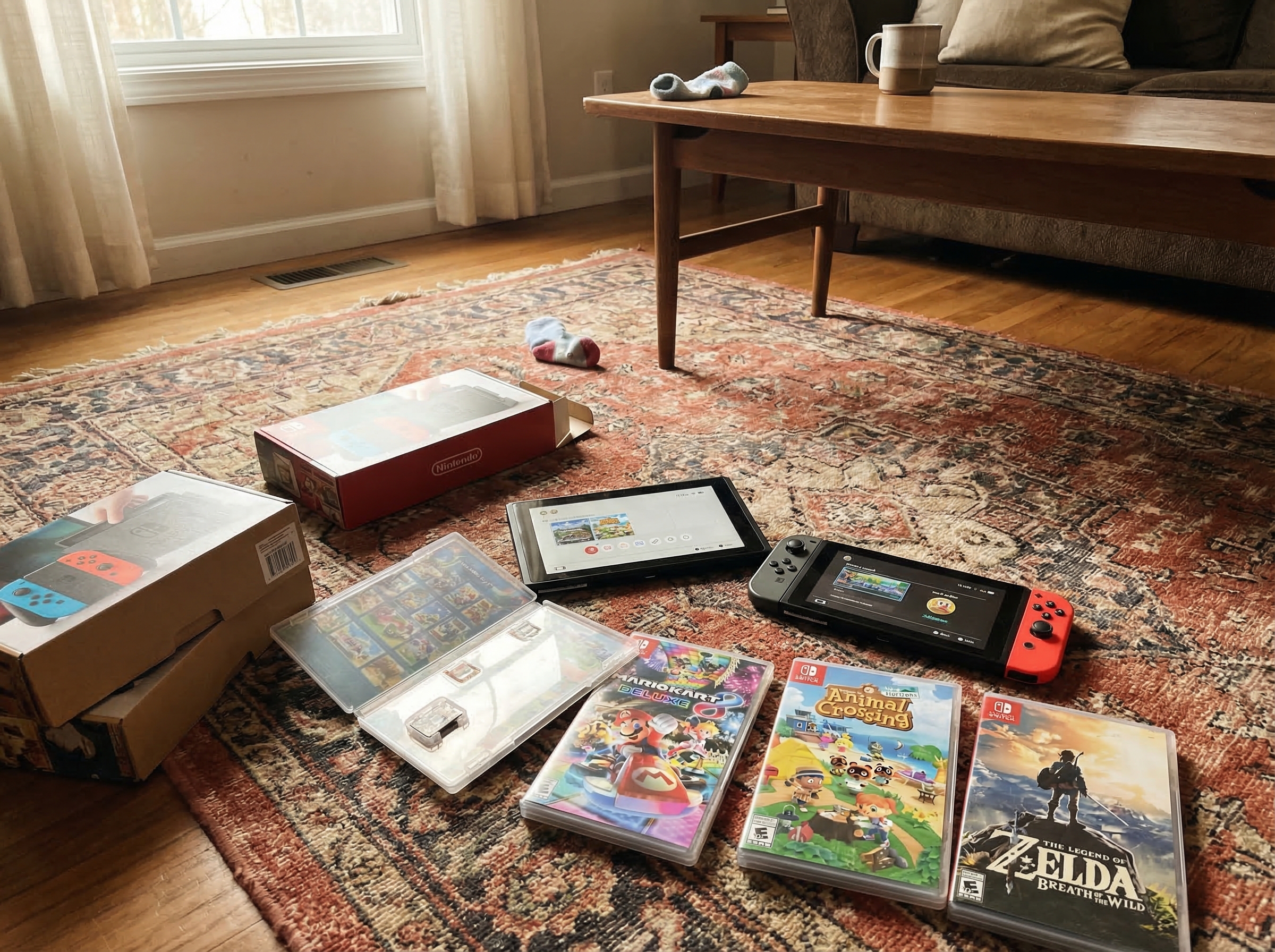
We moved his Switch to the living room couch. Same games, completely different result. Curled up under a blanket with the overhead lights dimmed, suddenly Spiritfarer actually felt calming instead of just... quiet.
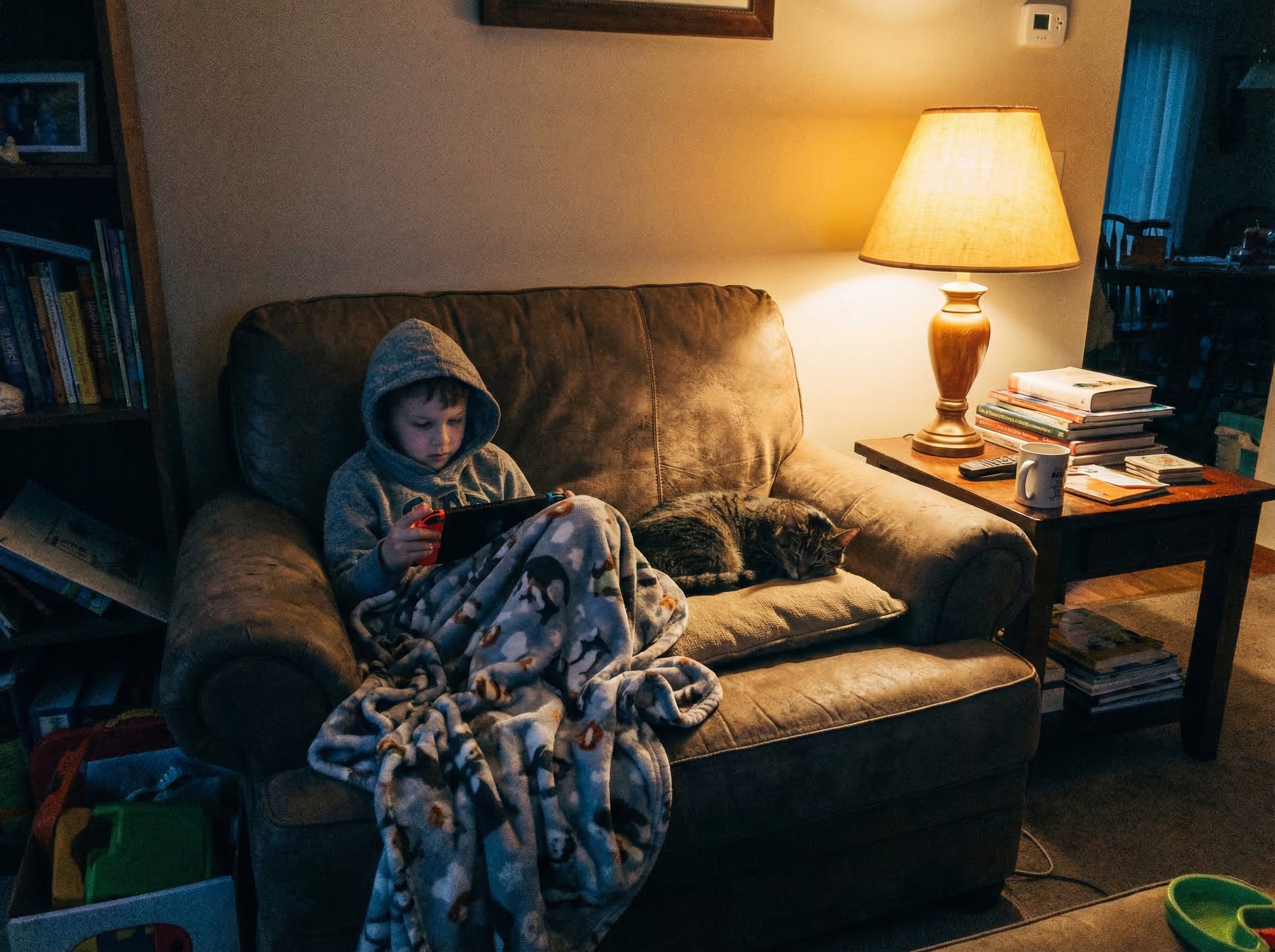
Some kids need headphones to block out the world. Others find headphones too isolating when they're anxious. Some need the big screen for that immersive escape. Others do better on a handheld they can hold close.
My daughter calms down best playing handheld mode in her hanging chair, legs tucked up, cat in her lap. My oldest needs headphones and his desktop setup where he can control everything. There's no universal "calming setup" - you have to watch YOUR kid.
 Watch what they reach forPause, Play, Connect: Core Deck$49 CAD • 172 promptsSee the deck
Red Flags: When "Calming" Isn't Calming
Here's the hard truth I had to face: sometimes gaming wasn't helping my kid calm down. It was helping him hide.
The warning signs I missed for too long:
- He could only communicate calmly WHILE playing
- Transition out of gaming always led to meltdowns
- He was playing the same section over and over, not progressing
- His mood was worse after gaming than before
- He couldn't tell me anything about what he did in the game
There's a difference between processing emotions and avoiding them. When my son was actually calming down through gaming, he could talk about his day while playing. He'd make connections between the game and real life. "This boss is like my math teacher," he'd say, and we'd laugh about it.
When he was hiding, gaming became a wall. No conversation, no connection, just escape. That's when I knew we needed a different approach.
Making It Stick: The Transition Game Plan
The hardest part isn't finding the right game - it's making the whole system work in real life. Here's what actually works in our house:
Introduce During Calm Times
Don't wait until your kid is melting down to suggest a new calming game. "Hey, want to check out this organizing game I found?" works way better on a lazy Sunday than in the middle of homework rage.
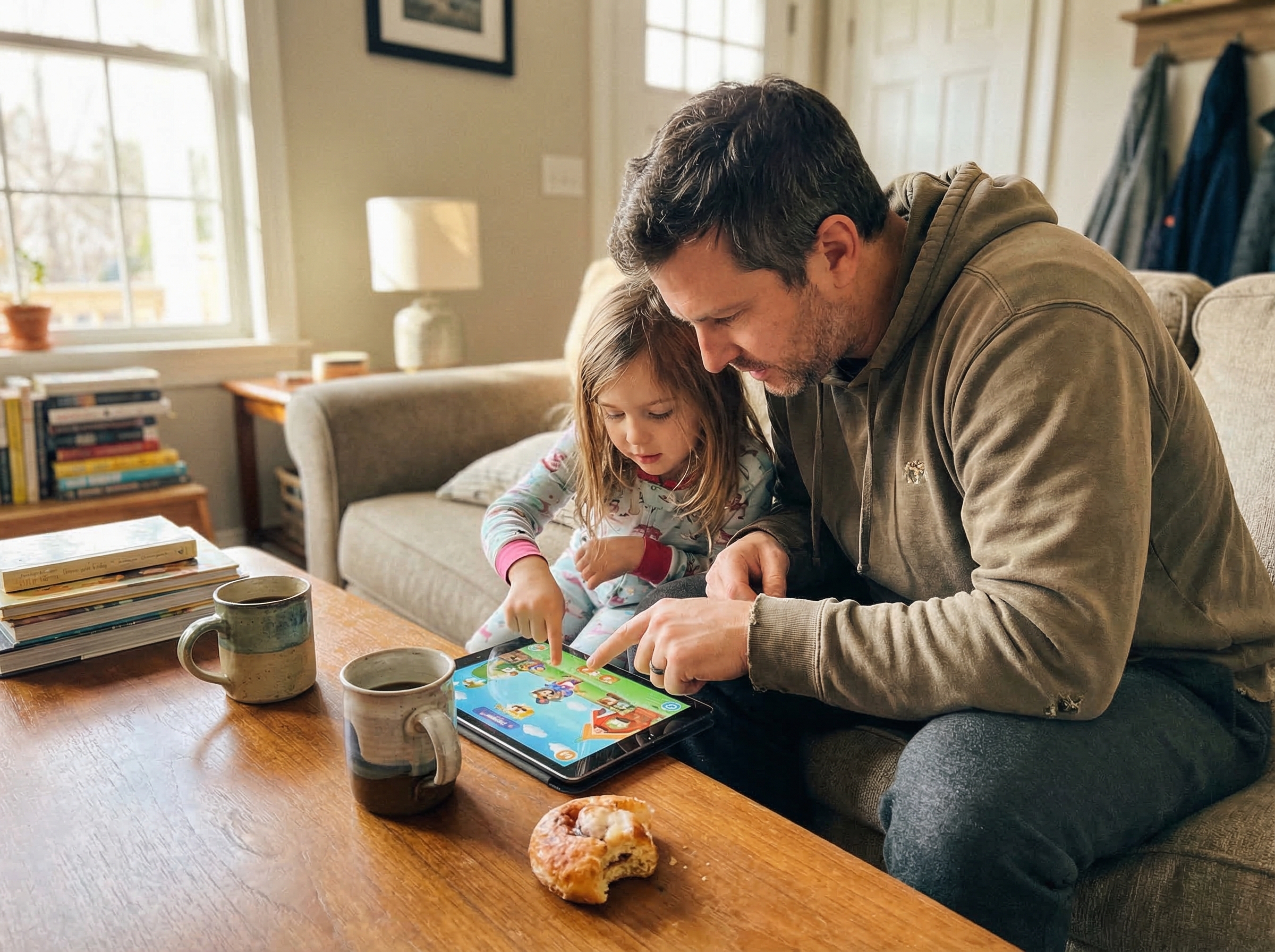
The Real 5-Minute Warning
"Five more minutes" used to trigger instant panic in our house. Now I say, "Find a good stopping point in the next five minutes." For Minecraft, that might mean finishing a wall. For Stardew, it's the end of the day. Natural endpoints feel less jarring.
Bridge to Real Life
This is where Yakety Pack saved us. Instead of "turn it off and do homework," I started asking questions about their game world that connected to real life. "What's the biggest challenge in your Minecraft world right now?" often led to "Actually, it's kind of like this thing at school..."
Those game conversations became our bridge. Suddenly, they weren't leaving their calm space - they were bringing me into it.
Your Kid Might Surprise You
My daughter insisted Rocket League helped her calm down. Rocket League! Cars playing soccer at 100mph! I was skeptical until I watched her in free play mode, just driving around, practicing aerial moves, no pressure, no score, no opponents.
"It's like doodling," she explained, "but with a car."
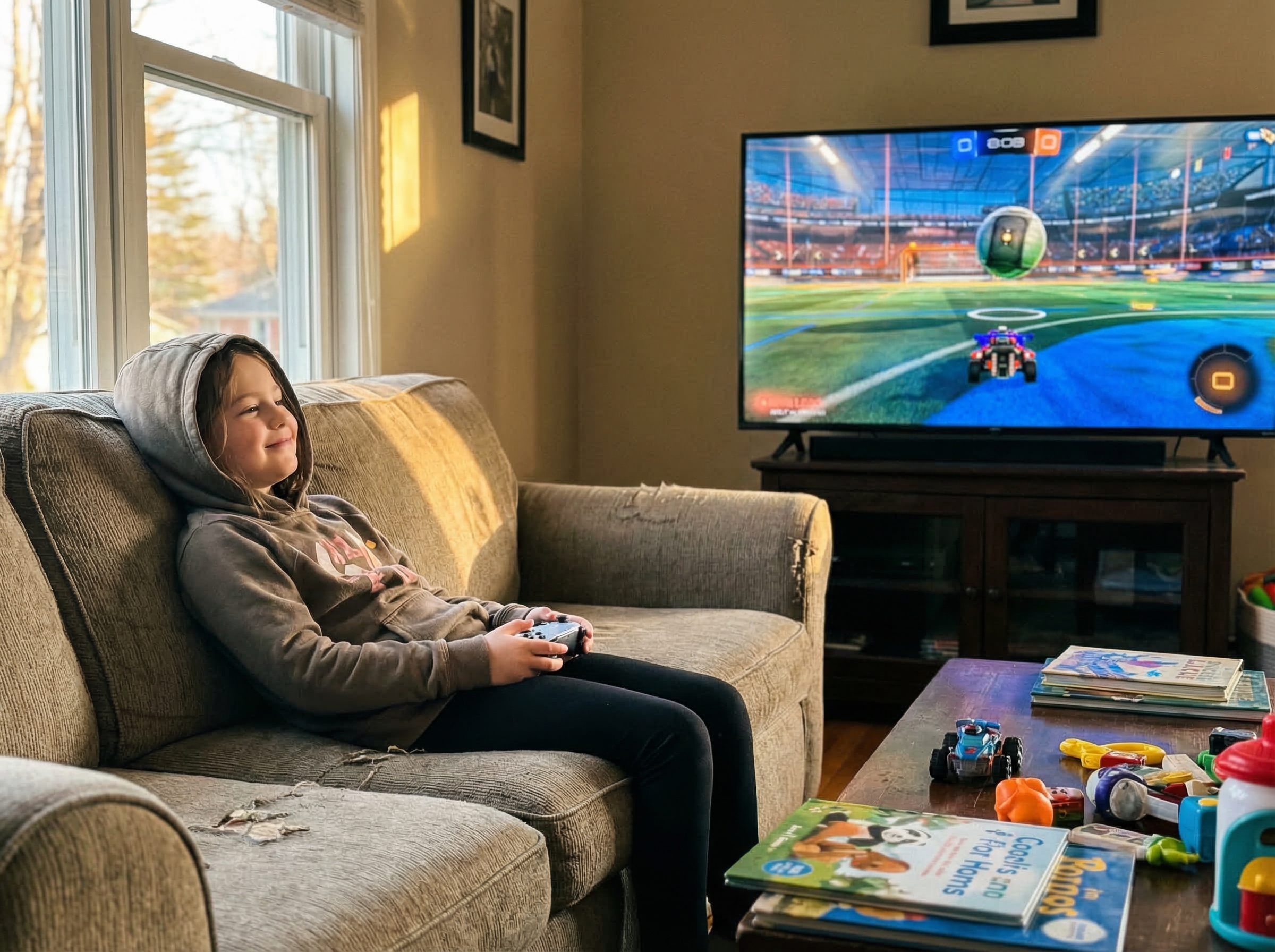
Some kids find calm in places we don't expect:
- Building elaborate Fortnite structures in creative mode
- Organizing Pokemon cards in the digital TCG
- Creating music in Fuser without any goals
- Practicing combos in Smash Bros training mode
The key is watching what they gravitate toward when stressed, not what we think should calm them down. Trust their instincts (with boundaries). They know their brains better than any article does.
When the shoulders dropPause, Play, Connect: Core Deck172 prompts that catch the ten minutes after a session, before everyone drifts to separate screens.$49 CAD • 90 cards • 18 reviewsShop the deck
Related Articles
Looking for more? Check out these related articles:
- gaming and emotional regulation for kids
- healthy gaming boundaries for emotional kids
- my child uses games to cope with stress
- minecraft helps my kid with emotions
- kid melts down when games end
FAQ
Q: How long should I let them play to calm down?
A: It varies, but I watch for the shift. Usually 20-30 minutes for younger kids, maybe 45 for teens. You'll see their shoulders drop, their breathing change. That's when to start the transition conversation.
Q: What if they only have violent games?
A: Look closer. My son uses Halo's Forge mode to build elaborate obstacle courses. No shooting, just creating. Most "violent" games have creative or practice modes that might surprise you.
Q: My kid says every game calms them down. How do I know what really works?
A: Watch their body, not their words. Clenched jaw while playing Animal Crossing? Not calming. Relaxed shoulders during Minecraft? That's your answer. Also check their mood 30 minutes after they stop.
Q: Should I play with them?
A: Depends on the kid and the day. Sometimes sitting nearby is enough. Sometimes they need space. Sometimes joining their world is exactly right. Ask them.
Q: What about mobile games?
A: Some kids do great with mobile games for quick calming. Monument Valley, Alto's Odyssey, and Threes are solid choices. Just watch for the ad-supported games that interrupt the flow.
Your Next Step Today
Tonight, instead of suggesting a game you think should calm your kid, ask them: "When you're stressed, what game makes your brain feel better?" Then watch them play it. Don't judge the choice. Just observe.
Notice their breathing. Their posture. Their willingness to chat. Are they processing or hiding? Are they organizing, creating, or finding rhythm?
Once you know what actually works for your kid, you can find more games that hit the same notes. Because the best calming video games for kids aren't the one with the most peaceful music or the slowest pace. It's the one that gives your kid's brain exactly what it needs in that moment.
And sometimes, that might be organizing virtual storage chests at 10 PM on a school night. Trust me on this one.
For the Wind-Down: A calming session is a great hour, the post-session ten minutes are even better. Keeping a deck of Yakety Pack conversation cards on the coffee table catches the energy before everyone drifts to their own screens.

