
For two years, my dinner table small talk with my son was a hostage negotiation. "How was school?" "Fine." "What'd you do in Fortnite?" "Stuff." I'd ask three questions, get six syllables back, and we'd both go back to chewing.
Then I tried something stupid. I bought a stack of conversation cards. The first one I pulled changed how we talk, and not for the reason you'd think.
It wasn't the question that did it. It was the card. That's the whole pitch for why conversation cards for families with gamer kids actually work, when the right ones are in your hand.
Why "How Was Your Day?" Stopped Working (And Why Cards Do)
Here's what I didn't understand for the longest time: when I asked my son a question out of nowhere, it felt like a job interview to him. Open-ended parental curiosity reads as interrogation to a 12-year-old, especially one whose brain is still half in a Fortnite match.
Cards change the dynamic. The question isn't coming from Dad-who-wants-something. It's coming from a piece of cardstock. The card is the one prying, I'm just reading it out loud. That small bit of distance gives kids permission to actually answer.
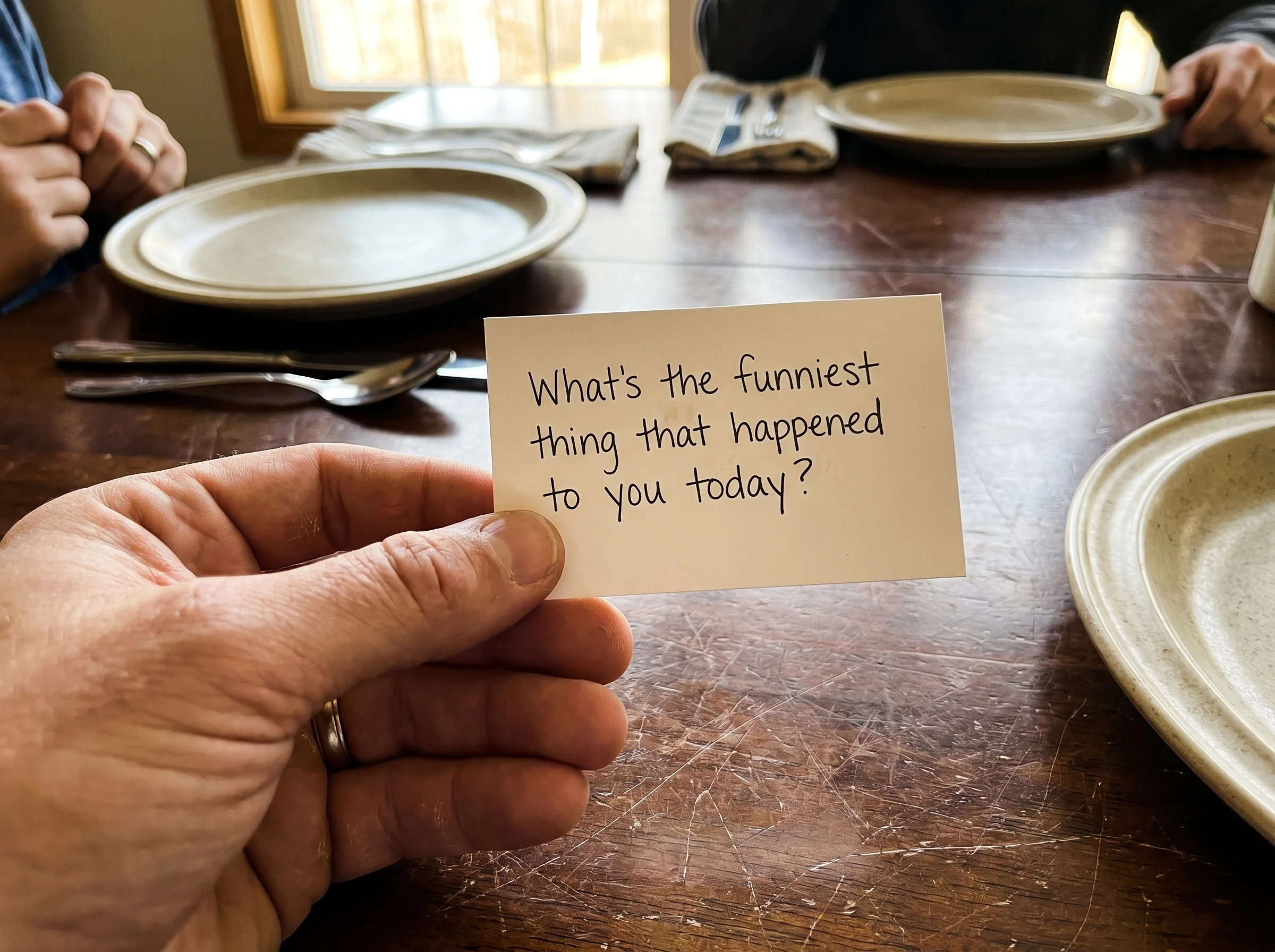
The first card I pulled with my son said something like, "What's the weirdest glitch you've ever seen in a game?" He started laughing before I finished reading it. Then he talked for twenty minutes. Twenty. Minutes. About a glitch where his character got stuck inside a wall and could see through the map. I understood maybe 40% of it. Didn't matter. He was talking.
That's the whole trick. The card depersonalizes the question, and the randomness gives kids cover to be honest. They're not performing for you. They're playing along with a game, and games are their native language. There's actually solid research on this idea of indirect communication with kids, and how play-based conversation lowers defensiveness in ways direct questioning can't.
 The card asks, not youPause, Play, Connect: Core Deck172 prompts that assume gaming is part of your kid's world, so the question actually lands.$49 CAD • 90 cards • 18 reviewsShop the deck
Generic Cards vs. Conversation Cards for Families with Gamer Kids
Most conversation cards on the market are written like it's 1994. "What's your dream vacation?" "If you could have any superpower, what would it be?" "What's your favorite family memory?"
These questions aren't bad. They just don't meet a gamer kid where they live. A kid who just spent three hours building a redstone contraption in Minecraft doesn't light up at "what's your favorite color?" You might as well ask him about his retirement plan.
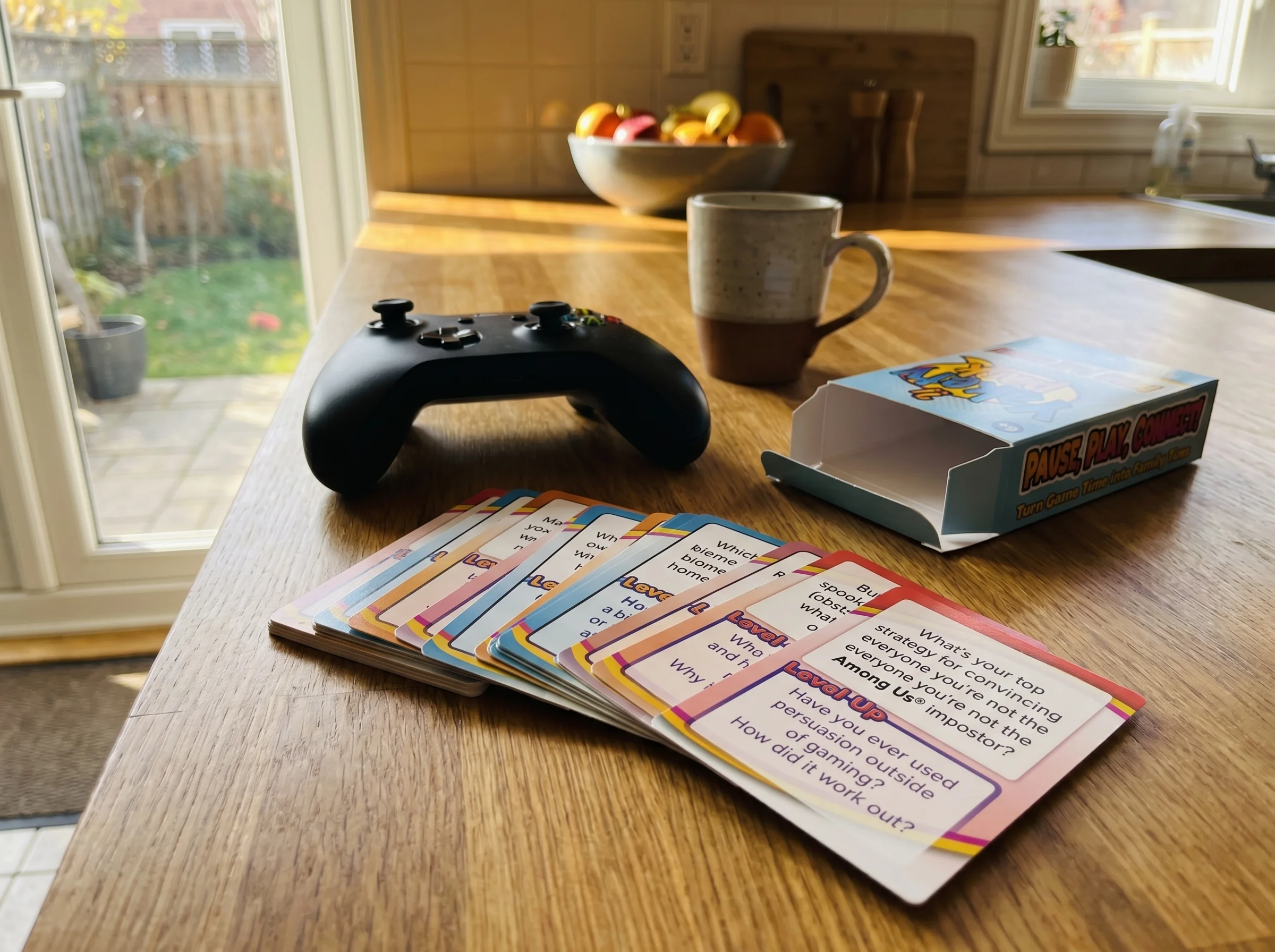
Gaming-aware questions sound different:
- "What game character would you trust with your life?"
- "If your favorite game added one new feature, what would break it?"
- "Who's the most annoying player you've been matched with?"
These hit because they assume gaming is part of the kid's actual world, not the elephant nobody mentions. The minute a question treats games as real (which to your kid, they are), the kid leans in.
This is why we built Yakety Pack. The conversation cards on the market were written like gaming didn't exist in most homes. Ours assume your kid lives partly in a digital world, and that's not a problem to solve. It's the doorway in.
How to Actually Pull Out the Cards Without It Feeling Forced
The fastest way to kill conversation cards is to announce them like a Family Activity™. If you slam them on the table and say "OKAY EVERYONE, WE'RE GOING TO CONNECT NOW," your teenager will leave the room and possibly the state.
What actually works:
Keep them somewhere visible but casual. Mine live in the middle console of the car and on the kitchen counter. They're just there, like salt.
Use the in-between moments. Car rides. The ten minutes before dinner's ready. The post-game wind-down when your kid just lost a Valorant match and isn't ready to do homework yet. These pockets are gold.
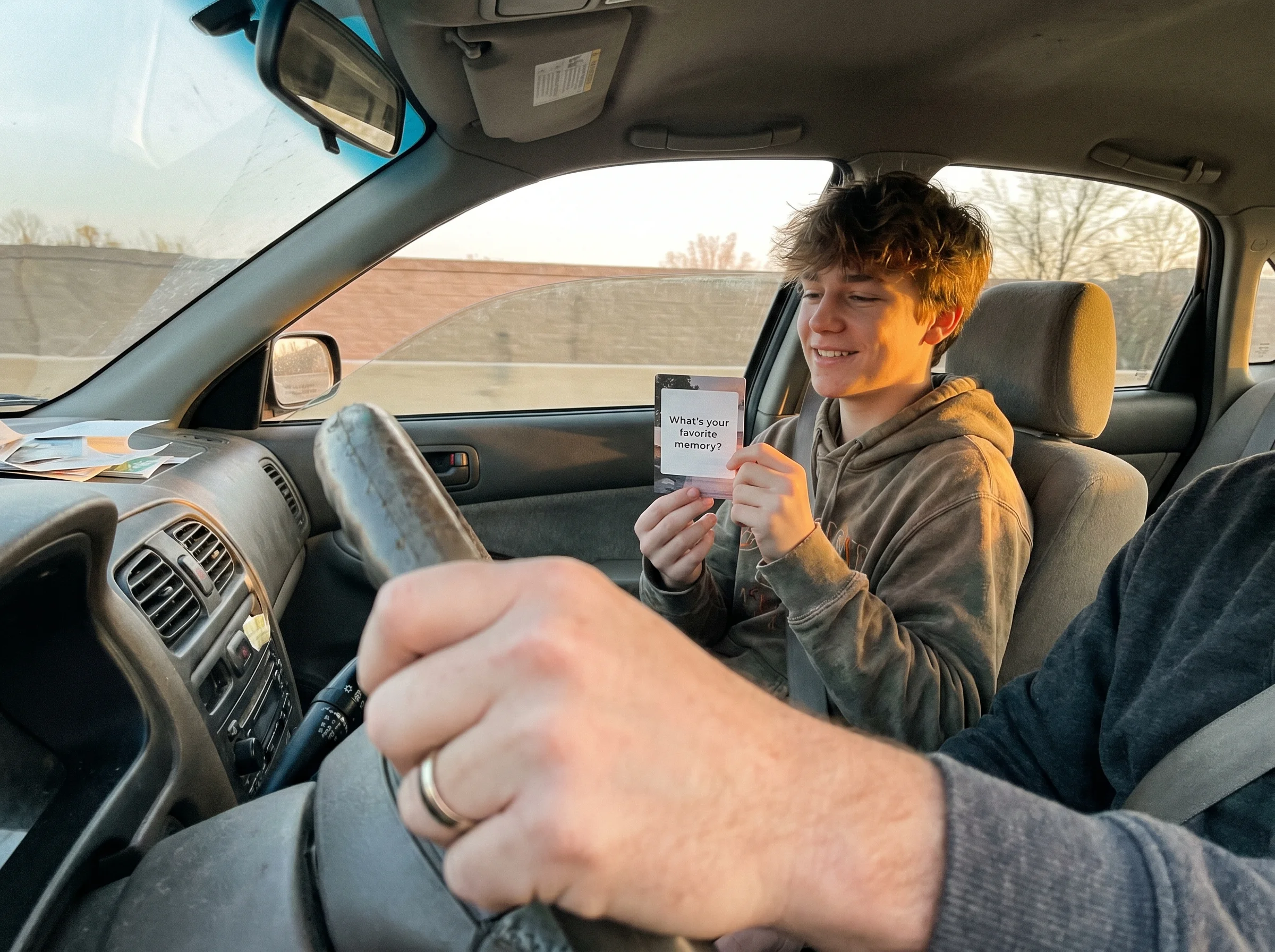
Let the kid pull the card. This is the move that flipped it for us. When I pull the card, it's Dad's agenda. When my daughter pulls the card, it's hers. She started calling it "the question deck" and now she'll grab it on her own. I have not asked her to do this once.
Don't force everyone to answer. If your teenager says "pass," let him pass. He's still listening. Trust me.
The 5 Questions That Always Get My Kids Talking
These aren't theoretical. These are the ones I keep pulling because they work in my actual house with my actual kids.
-
"What's the most ridiculous thing that happened in your game this week?" Specific beats general. "Ridiculous" gives them permission to tell a story instead of a summary.
-
"If you could add one feature to your favorite game, what would it be?" This one turns kids into designers. You get insight into what they value, what frustrates them, what they think is missing.
-
"Who's the most annoying player you've ever been matched with?" Kids love to complain. Let them. You'll learn more about online social dynamics in five minutes than you would in a year of reading parenting blogs.
-
"What game would you want to play with me?" This one is sneaky. The answer tells you exactly how to spend an hour with your kid. Listen carefully.
-
"What's something you've learned from gaming that surprised you?" This is the question that bypasses the "screens are bad" frame and lets them brag a little. My son's answer once was "patience." I almost dropped my fork. Turns out gaming actually builds a stack of cognitive and social skills parents rarely give it credit for.
 Ninety cards past these fivePause, Play, Connect: Core Deck$49 CAD • 172 promptsSee the deck
What to Do With the Answer (The Part Everyone Skips)
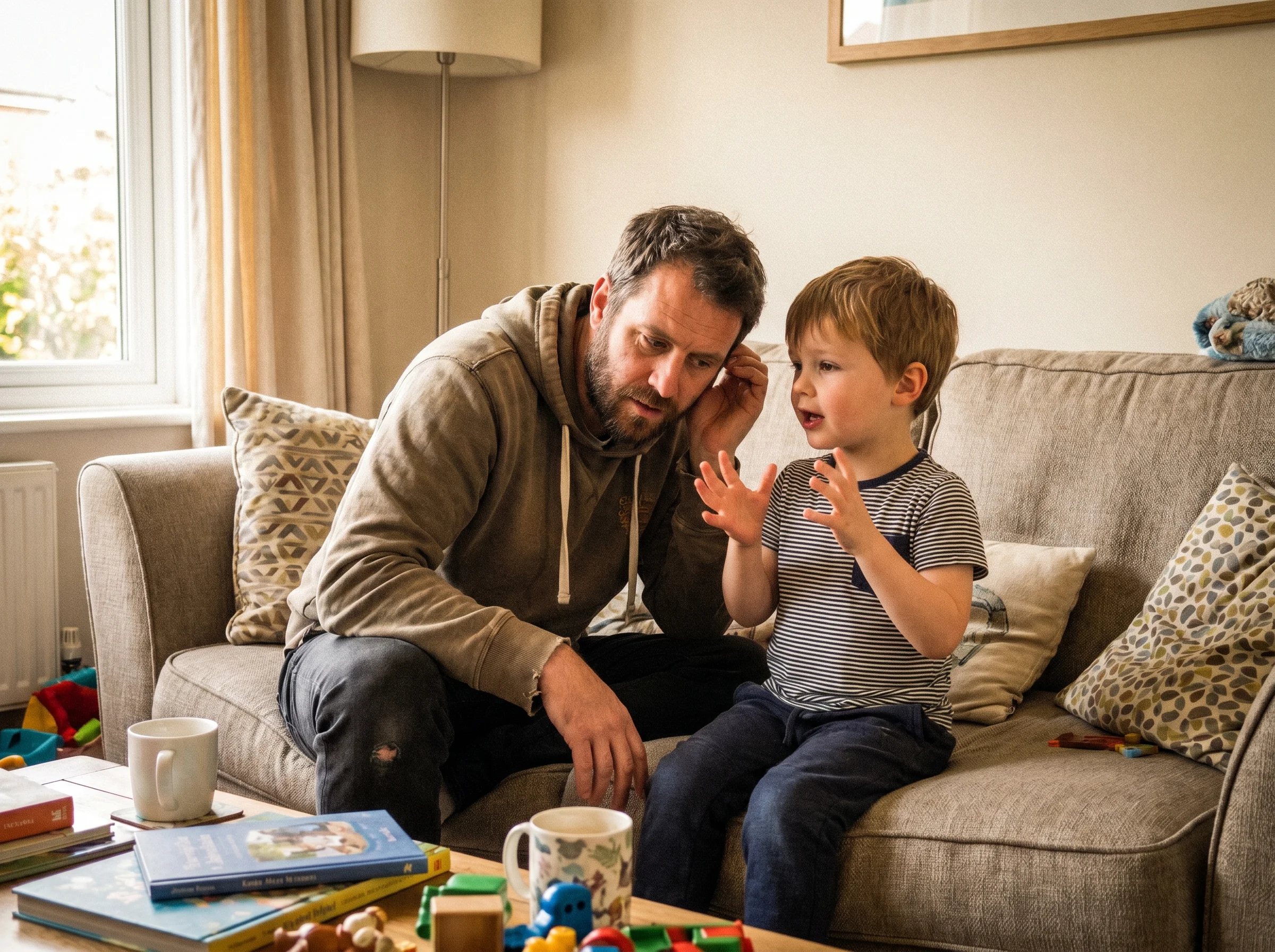
Here's where most parents fumble it. The kid gives you a real answer, and we pivot to a lesson. "Well, that's interesting, but did you finish your homework?" or "See, gaming CAN teach you things!" Both are conversation killers.
What works instead: be genuinely curious and a little dumb. Ask follow-up questions. "Wait, how does that even work?" "Show me what you mean." "What's a Creeper?"
That last one is real. Years ago I asked my son what a Creeper was, fully expecting a one-word answer. I got a 30-minute tutorial on every Minecraft mob, complete with him pulling up the game to show me. That became our thing. Now I can tell you the difference between a Creeper and an Enderman, and my son thinks I'm slightly less of a relic than I was.
Admitting you don't understand the game is a superpower. Kids love explaining. They almost never get to be the expert with an adult. Give them that, and you'll get more than you asked for.
Making It Work With Non-Gaming Siblings and Skeptical Spouses
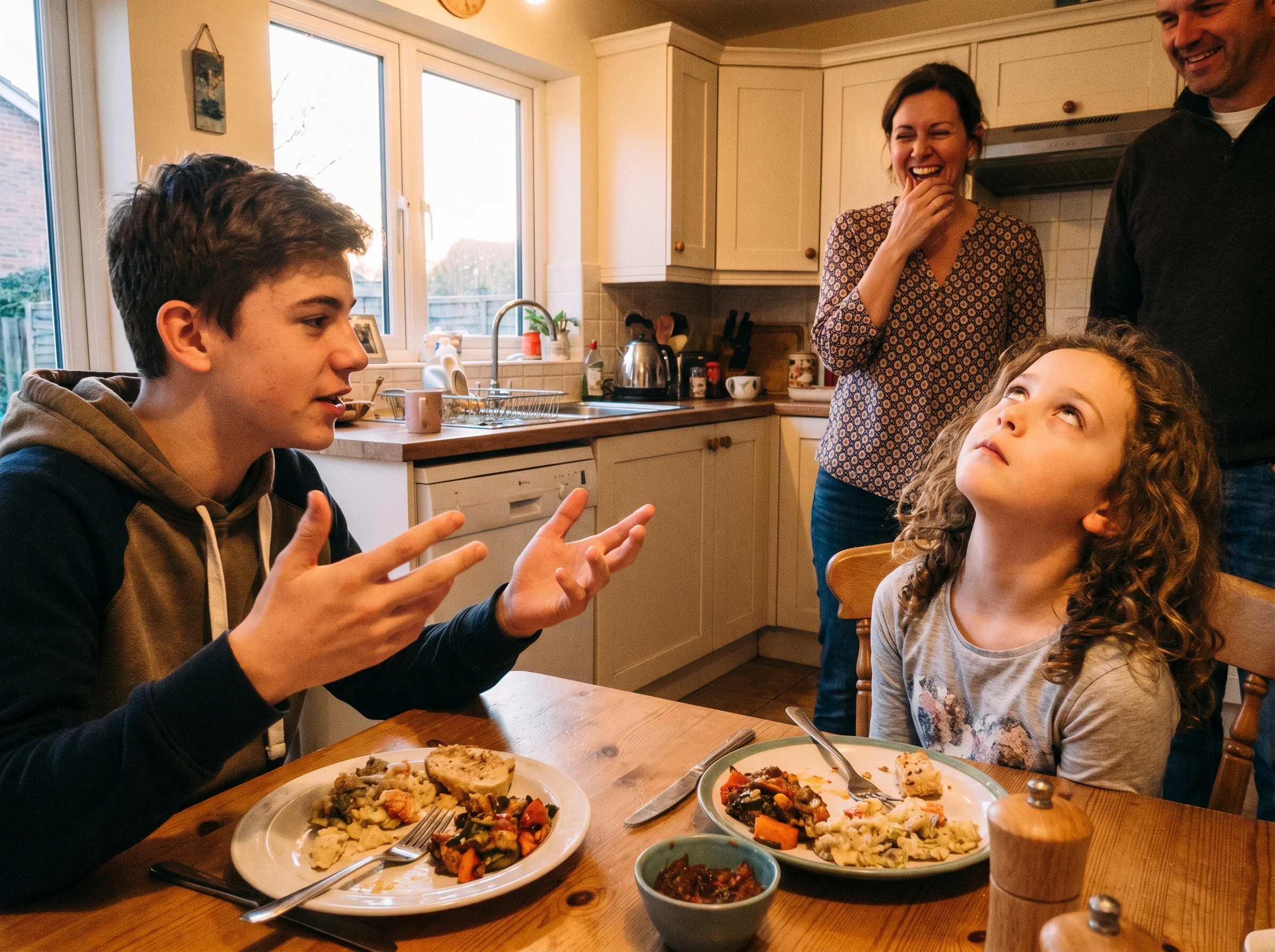
Real families are messy. You've got the gamer kid, the younger sibling who'd rather draw, and a spouse who's been suspicious of screens since the iPad came out. Cards have to work in that environment or they don't work at all.
Two things help:
Let the non-gamer be the commentator. My youngest doesn't really play, but she has STRONG opinions on her brother's answers. "That game sounds dumb." "Why would you trust HIM with your life?" She's basically the studio audience, and it makes the whole thing funnier.
Use cards that go both directions. Some of our best conversations have started with a card asking the parents about the games we played as kids. My wife, who spent years rolling her eyes at gaming, got pulled into a 45-minute conversation about which Mario character she'd want as a friend. (Toad, apparently. She had reasons.) After that, she stopped seeing gaming as the enemy. The cards did that. I didn't.
When Cards Aren't Enough
I need to be honest here. Cards open doors. They don't fix everything.
If your kid is gaming ten hours a day, isolated, and refusing to engage with anyone, no deck of cards is going to crack that open. That's a bigger conversation, possibly with a professional. The AAP's guidance on healthy media use is a decent starting point if you're worried things have tipped past normal. Don't expect cardstock to do the work of therapy.
Cards work best when used regularly but lightly. Twice a week, in passing, no pressure. They're a habit, not a Hail Mary. If you only break them out when things are tense, your kid will smell it and bail.
One Thing to Try This Week
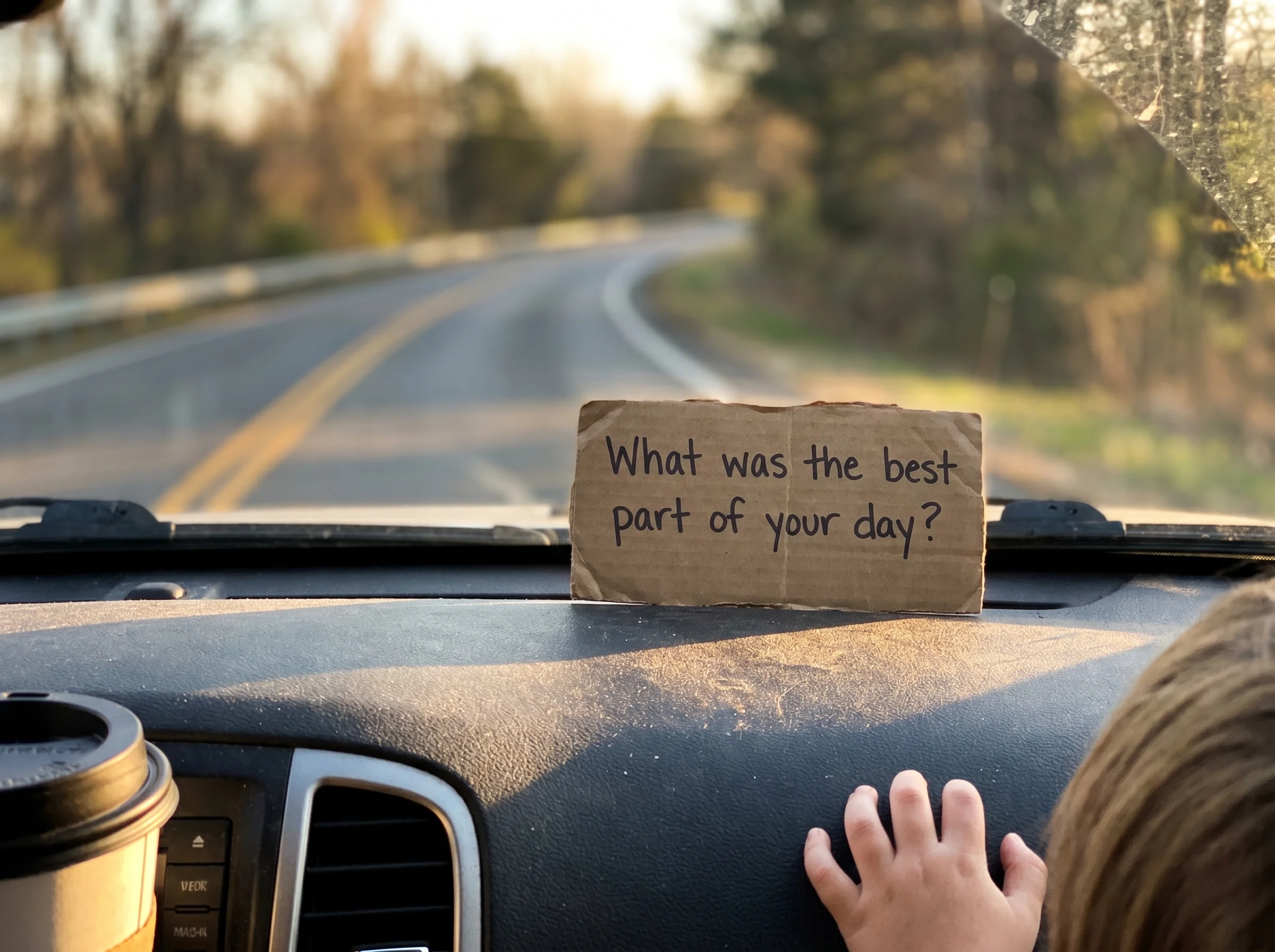
Pick one car ride. Bring three cards. Let your kid pull one. Read it. Shut up and listen.
That's it. Don't redirect, don't lecture, don't connect it back to anything. Just listen and ask one follow-up question.
One of our Yakety Pack cards asks, "What game would you want to play with me?" The first time my son answered that one honestly, I bought the game that weekend. We've played it together about thirty times since.
The cards didn't do that. The question did. The card just gave me permission to ask it.
Three cards for the carPause, Play, Connect: Core Deck172 prompts that your kid can pull from, so the question is theirs and not yours.$49 CAD • 90 cards • 18 reviewsShop the deck
Related Articles
Looking for more? Check out these related articles:
