
Look, I spent years thinking my kids were wasting their lives in Minecraft. Then one night I found my son crying at his computer. Not because we were making him stop playing, but because a creeper had blown up the memorial garden he'd built for our dog. That's when I realized Minecraft helps my kid with emotions in ways I never expected. He wasn't escaping FROM his feelings. He was building WITH them.
The Night Everything Changed About How I See Minecraft
For the bigger frame, see our pillar piece on turn screen time into connection time.
Three weeks after we lost our family dog, my son disappeared into Minecraft for hours every day. I did what most parents would do. I worried. I set timers. I tried redirecting him to "healthier" activities. Classic dad moves, right?
Then came the night I actually looked at his screen instead of just telling him to get off it. He'd built this incredible monument. Stone pathways, water features, flowers everywhere. In the center was a sign that said "Buddy's Place - No Monsters Allowed." He'd spent three weeks processing grief by placing blocks. And I'd spent three weeks trying to stop him.
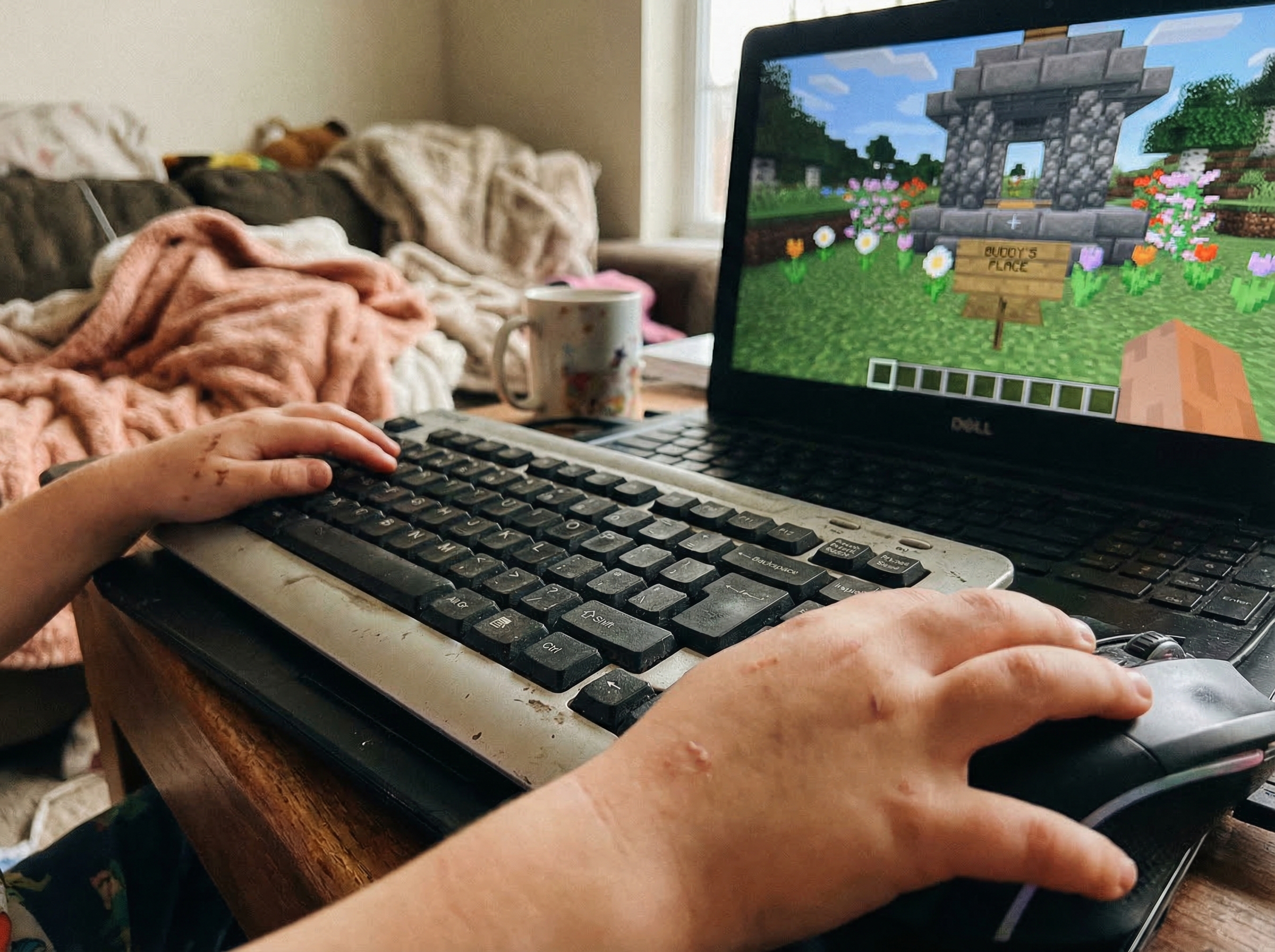
That memorial is still there. Sometimes I catch him visiting it, just standing there in his pixelated world. He'll add a flower or fix a fence. It's maintenance, sure. But it's also ongoing emotional work that I almost shut down because I couldn't see past the screen.
 When they show the buildPause, Play, Connect: Core Deck172 prompts that give you something to ask while your kid walks you through their world.$49 CAD • 90 cards • 18 reviewsShop the deck
Why Minecraft Works Different for Big Feelings
Here's what I've learned after actually paying attention to how my kids use this game. Minecraft gives them something we can't always provide in the real world: total control when everything else feels chaotic.
Bad day at school? They can build an impenetrable fortress. Anxious about tomorrow's test? Time to organize every chest in their storage room. Angry at their sibling? There's a whole lot of digital ground that needs aggressive digging.
My daughter builds houses. Not just any houses, though. She's got her "happy house" (lots of windows, yellow wool everywhere), her "calm house" (underground, water features, blue tones), and what she calls her "grumpy house" (obsidian walls, no windows, lava moat). When I finally understood this wasn't random building, our conversations changed completely.
"Which house are you working on today?" tells me more about her emotional state than "how are you feeling?" ever did.
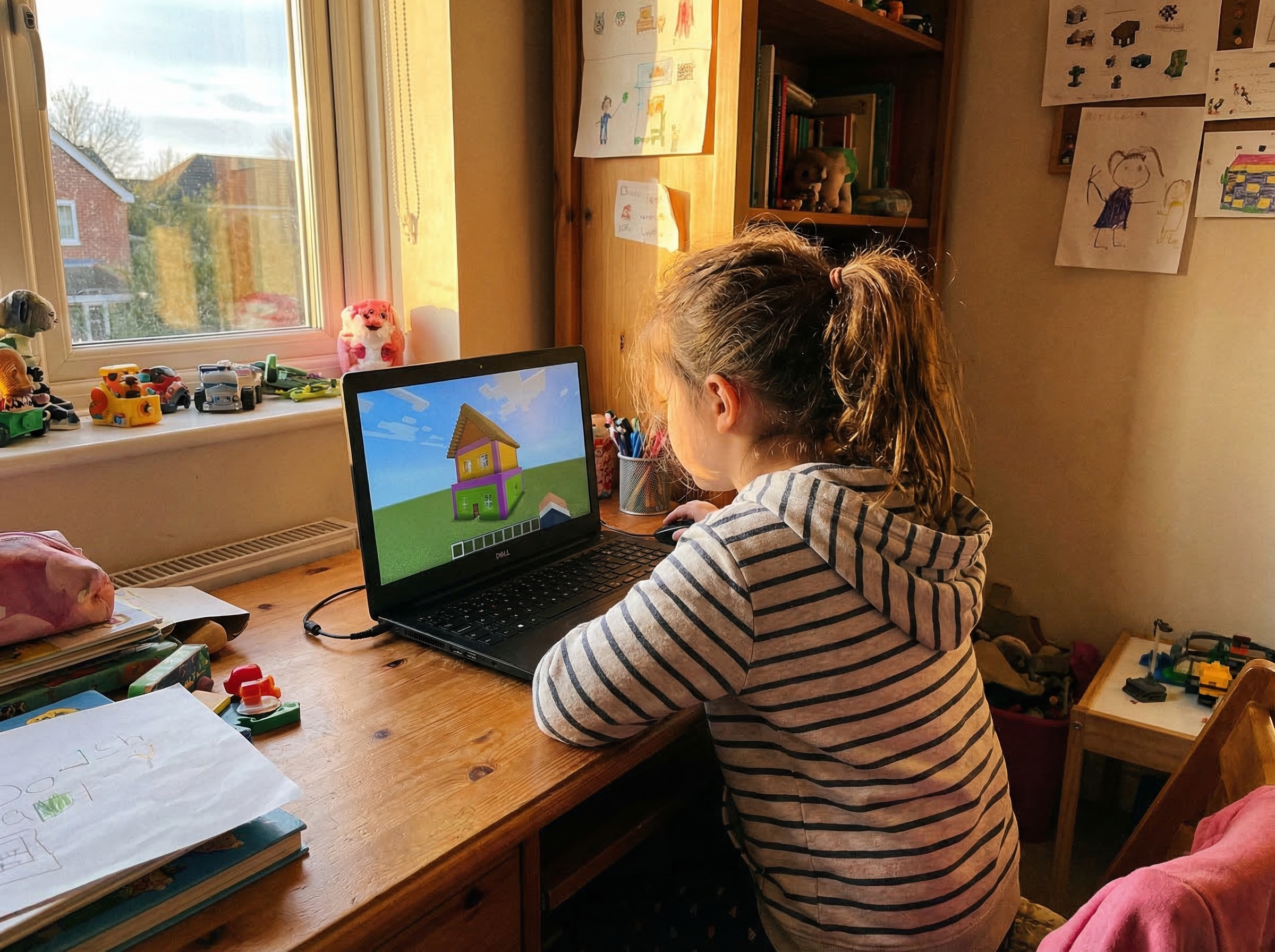
The game mechanics themselves teach emotional regulation. Lost all your diamonds in lava? Devastating. But you respawn. You go mine more. The world doesn't end. That's a life lesson disguised as a game mechanic, and kids internalize it through play, not lectures.
Learning to Speak Their Language
Once I started paying attention, I noticed my kids had different Minecraft tells. My son digs straight down when he's overwhelmed. Just punches through dirt and stone until he hits bedrock, then digs sideways for a while. My daughter? She builds elaborate organizing systems when she's anxious. Suddenly every item has a labeled chest, every animal gets named and penned.
These aren't just play patterns. They're coping mechanisms. And they're brilliant ones.
The kid who spends an hour organizing their inventory might be the same kid who can't organize their backpack. But in Minecraft, they're practicing the feeling of bringing order to chaos. They're experiencing what "everything in its place" feels like, building those neural pathways through play.
I used to see my son's endless mining as mindless repetition. Now I know it's meditation. The rhythmic breaking of blocks, the simple goal, the clear progress. It's basically what adults pay good money for with those meditation apps, except it comes with achievement notifications.
Questions That Actually Open Doors
Want to know the fastest way to shut down communication with a Minecraft kid? Ask "did you have fun playing your game?" You'll get a grunt. Maybe a "yeah." That's because you're asking the wrong question.
Here's what works in our house:
"Walk me through what you built today." This one's magic. Kids light up explaining their creations. And while they're talking about their automatic chicken farm, they'll drop in stuff like "I built it underground because I wanted somewhere really safe."
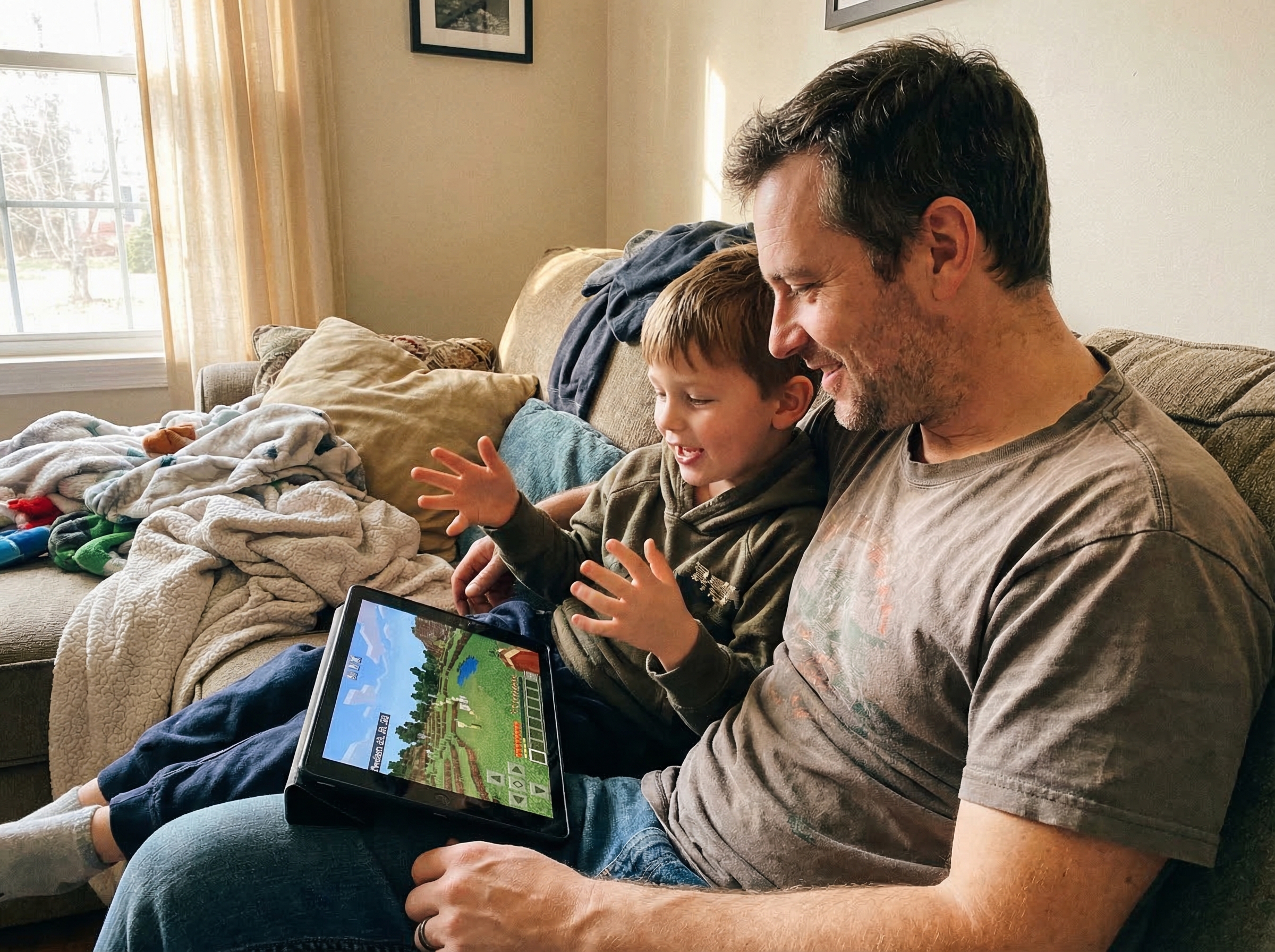
"What's the most satisfying thing you did in your world this week?" Sometimes it's "I finally found diamonds." But sometimes it's "I fixed all the stuff that got destroyed" or "I made a place where nothing bad can happen."
"If I visited your world, where would you take me first?" The answer tells you what they're proud of, what feels important to them right now.
"What are you avoiding in your world?" My kid once said "the desert. I built something there when I was sad and I don't want to see it right now." That opened up a conversation we never would have had otherwise.
These questions work because they respect the world your kid has built. You're not dismissing it as "just a game." You're acknowledging it as a real space where real emotional work happens.
 While the world loadsPause, Play, Connect: Core Deck$49 CAD • 172 promptsSee the deck
Different Modes for Different Moods
Took me forever to realize the different game modes aren't difficulty settings. They're emotional settings.
Creative mode is therapy mode. Unlimited resources, no threats, just pure expression. When my daughter switches to creative, I know she needs control. She needs to build without worrying about monsters or hunger or falling. It's her emotional safe space.
Survival mode is resilience training. Every creeper that blows up your house is a chance to rebuild better. Every death is a lesson in letting go and starting over. My son gravitates here when he's working through challenges. He's not avoiding hard things. He's practicing them in a world where failure costs nothing but pixels.
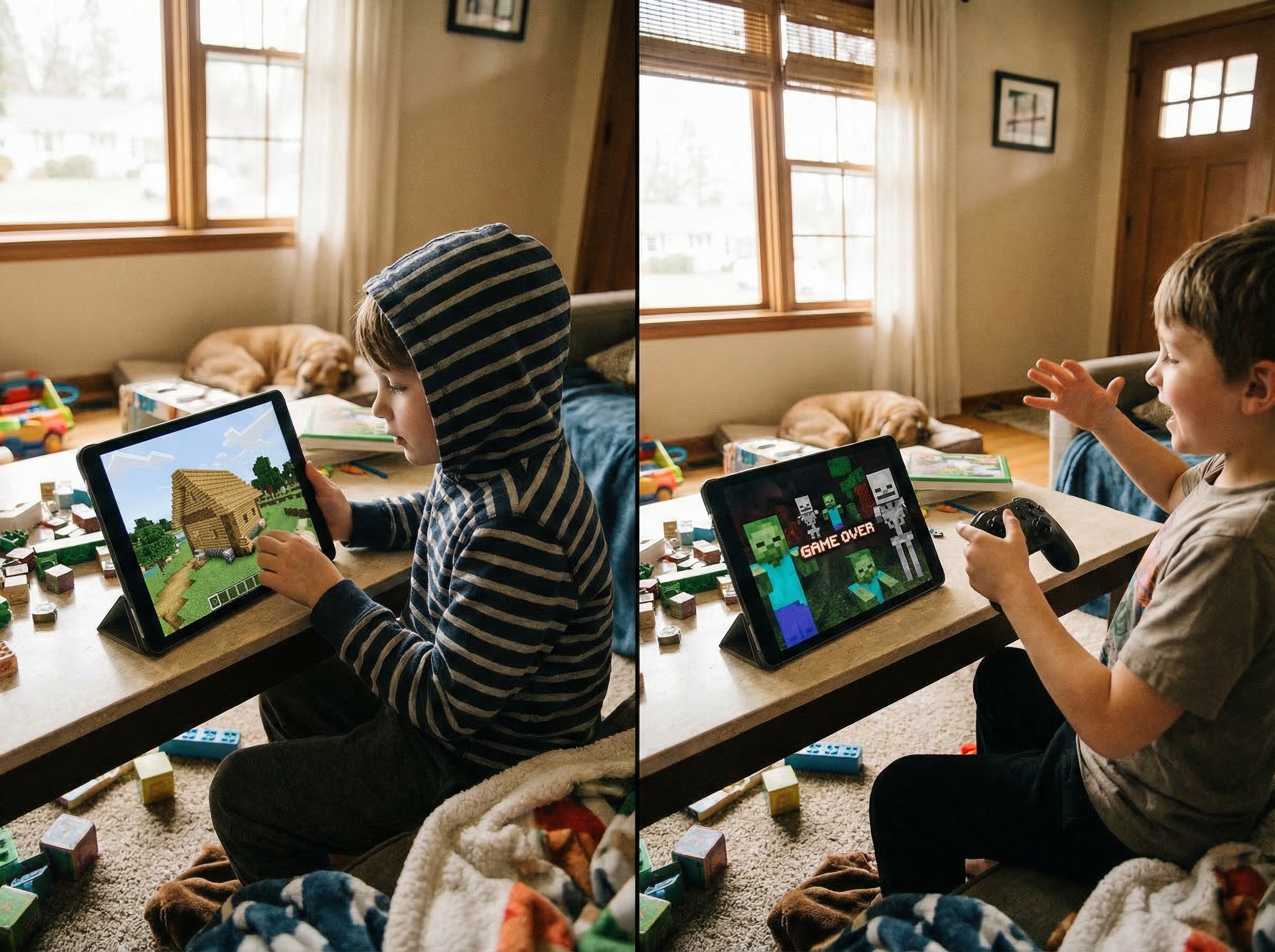
Peaceful mode is the middle ground. Keep your resources, lose the monsters. Sometimes kids need to feel productive without feeling threatened. After a particularly rough day at school, I watched my daughter switch to peaceful and just... breathe. She spent an hour farming. Just planting and harvesting, planting and harvesting. Repetitive? Sure. Therapeutic? Absolutely.
The key is not dictating which mode they "should" play. It's noticing which mode they choose and understanding what that tells you about their emotional needs right now.
For the Co-Play Window: A curiosity card lands during the in-between beats. Keep the Pause, Play, Connect deck by the screen so a prompt is within reach when you sit down together.
Joining Their World Without Invading It
For the Long Build: Connection grows from many small low-pressure conversations. A deck of conversation cards for families with gamer kids on the table makes those talks routine.
Here's where I screwed up early on. I tried to insert myself into their Minecraft worlds like some kind of digital dad supervisor. Turns out kids can smell parental agenda through a screen.
What works better? Being curious without being intrusive.
"Mind if I watch for a bit?" beats "Let me play with you." Sometimes they want company, not participation.
When they do invite you in, follow their lead. My daughter once gave me a tour of her world that turned into an hour-long explanation of her feelings. Each area had a purpose, a mood, a story. I just walked behind her avatar and listened.
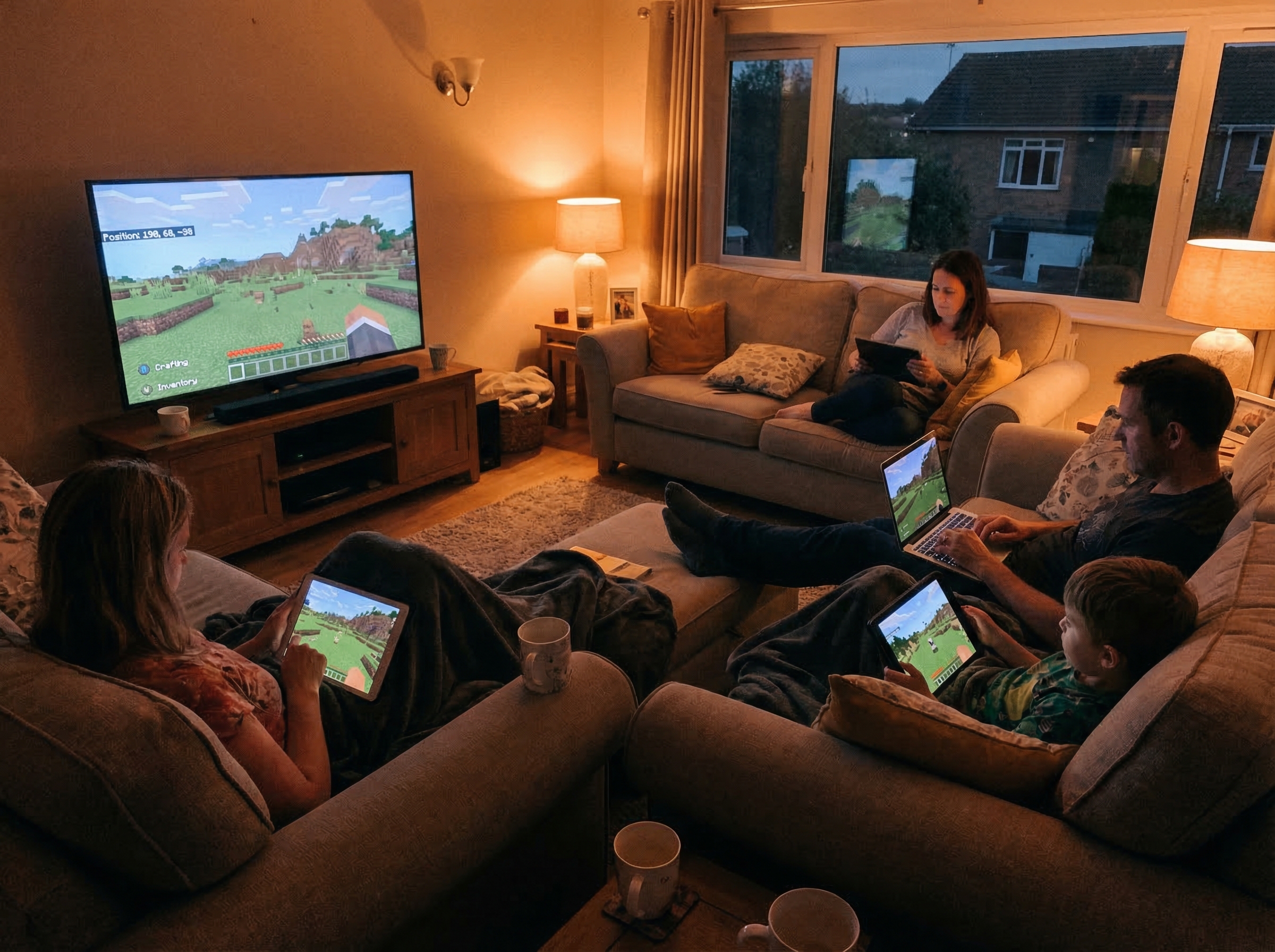
We started "Family Realm Fridays" where we all play in the same world. But here's the thing: we each do our own projects. My son might be mining, my daughter building, me probably dying repeatedly to zombies. We're together but not forced to interact. It mirrors how families actually work, sharing space while respecting individual needs.
Some nights we work on group projects. Building a family castle taught us more about compromise and communication than any family meeting ever did. You want to see your kids' leadership styles, conflict resolution skills, and emotional triggers? Build something together in Minecraft.
When Does Building Blocks Become Building Walls?
Parents always ask me, "But when is it too much?" Fair question. Here's what I watch for:
If Minecraft is their only emotional outlet, that's limited. If they can't talk about feelings without using Minecraft metaphors, that's concerning. If they panic at the thought of not playing, that's different from being disappointed.
But here's what I've learned: kids who use Minecraft for emotional regulation usually naturally expand their toolkit when they're ready. My son now journals sometimes, "like writing patch notes for my feelings," he says. Minecraft language, real-world application.
The problems come when we shame the digital coping and offer nothing in return. "Get off that game and deal with your feelings properly" assumes they're not already dealing with them. They are. They're just doing it in a language we don't speak fluently.
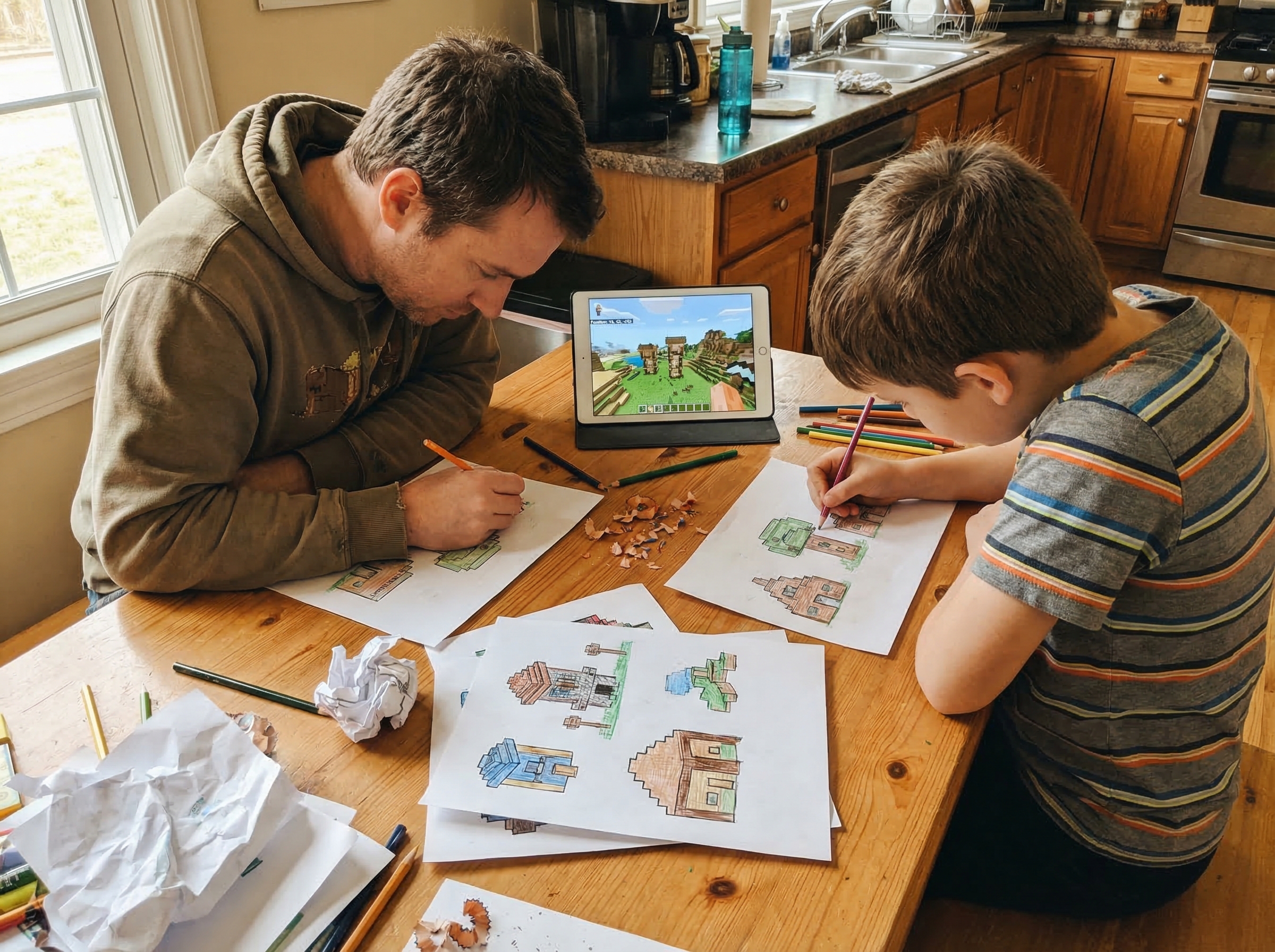
I started keeping a "Minecraft journal" with my kids. They draw their builds, I write what they tell me about them. It bridges their digital emotional work with physical reflection. Plus, looking back at old builds and remembering what they were working through helps them see their own growth.
From Virtual Blocks to Real World Skills
Six months after my son built that memorial for our dog, his grandmother passed away. I watched him struggle with the bigger, harder grief. Then he said something that stopped me cold: "It's like when you lose all your stuff in lava. It really hurts, but you know you can keep playing. You just have to start collecting new memories."
He was translating Minecraft resilience to real life. The game had given him a framework for understanding loss and recovery.
My daughter now talks about "griefing" when kids are mean at school. She understands the concept of people who just want to destroy what others build. But she also knows you can rebuild, you can protect your builds better, you can find servers (friend groups) where griefing isn't allowed.
These aren't just gaming terms to them. They're emotional concepts they understand deeply because they've lived them through play.
When my son gets frustrated with homework, he'll say "I need to switch to creative mode for a minute." He's learned that sometimes you need to remove obstacles to practice skills. So he'll do math problems without worrying about showing work, just to build confidence, then go back and add the "survival mode" requirements.
The Truth Parents Need to Hear
Your kid who seems obsessed with Minecraft might not be avoiding life. They might be practicing for it. They're building emotional skills with blocks before they need them for bigger things.
That world they're creating isn't an escape from reality. It's a laboratory for processing reality. Every build is a thought externalized. Every creation is a feeling given form. Every destruction and rebuild is resilience in practice.
Stop counting screen time and start recognizing therapy time. Stop seeing mindless play and start noticing mindful processing. Stop trying to get them off Minecraft and start learning to speak it.
The night I understood what my son's memorial meant, everything changed. Not because I suddenly loved video games, but because I finally saw what he was really doing in there. He wasn't hiding from grief. He was building something beautiful out of it, one block at a time.
Your kid is probably doing the same thing. You just need to learn to see it.
Your Next Move
Tonight, ask your kid to give you a tour of their Minecraft world. Don't judge, don't suggest, don't redirect. Just follow them around and listen. Ask what their favorite build is. Ask what was hardest to make. Ask if anything in their world reminds them of real life.
Then watch their face when they realize you're actually interested. That's when the real conversations begin. That's when you stop being the parent who doesn't "get" Minecraft and become the parent who gets them.
And if you're looking for more ways to connect with your gaming kid, that's actually why we created Yakety Pack. After years of dead-end "how was school" conversations, we designed questions that meet kids where they live - including in their game worlds. But honestly? Sometimes the best conversation starter is simply "show me what you built today."
Because our kids are already doing the work. We just need to learn to see it.
Later that same eveningPause, Play, Connect: Core Deck172 prompts that make it easy to keep asking about what they built and why.$49 CAD • 90 cards • 18 reviewsShop the deck
Related Articles
Looking for more? Check out these related articles:

