
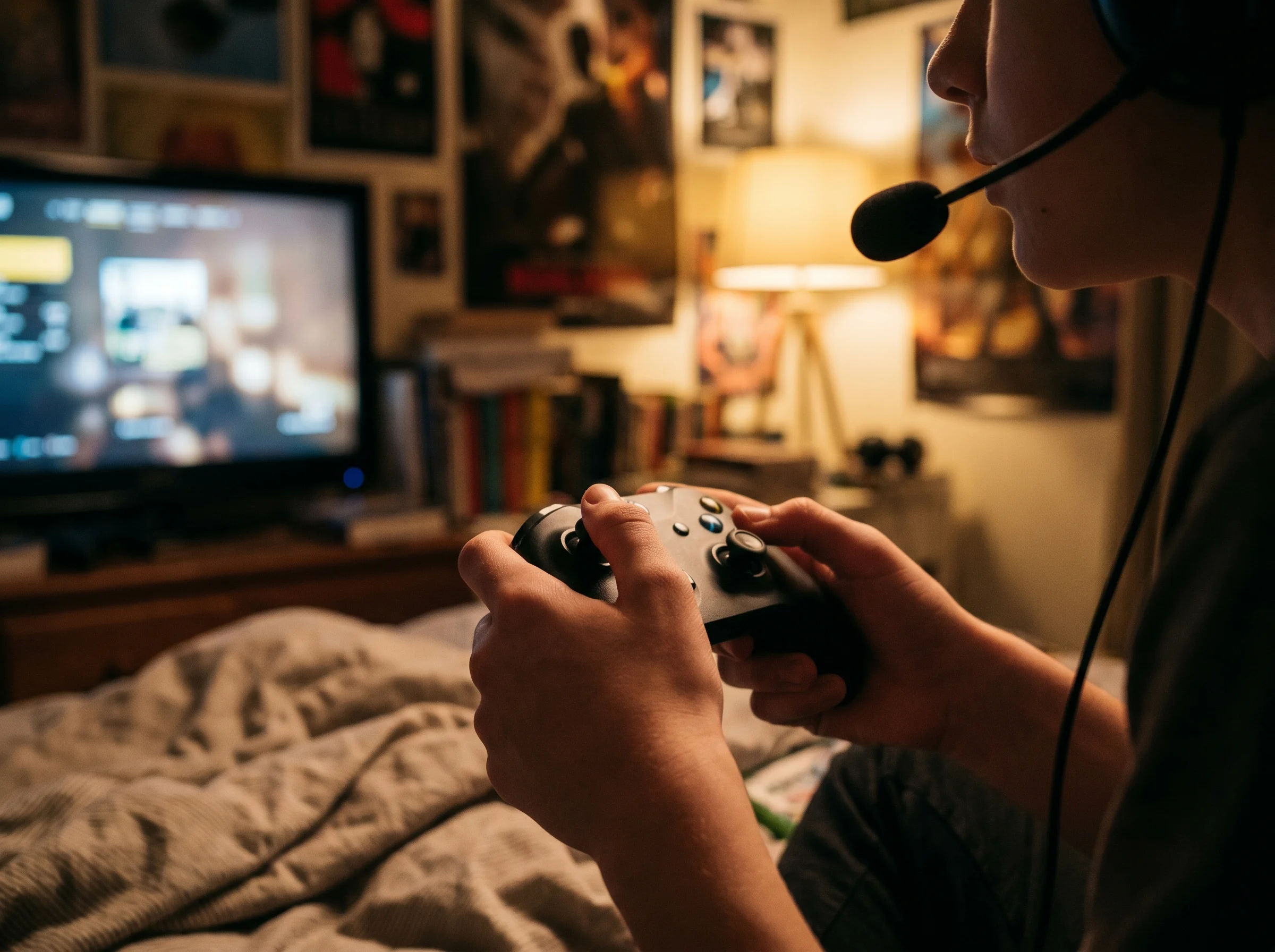
Last spring I walked past my son's room and heard him yell something into his headset that I'm not going to type out here. Let's just say if my mother had heard it, she'd have washed two mouths out: his and mine for raising him.
My first instinct was to kick the door open, yank the controller, and start a lecture I'd already half-written in my head on the walk over. I didn't. I kept walking, sat on the couch, and waited about an hour. What I did next changed every one of these conversations I've had since.
That's what this piece is about: how to talk to kids about inappropriate gaming language in a way they don't shut down on. Not how to punish bad language in games. How to actually talk about it in a way your kid doesn't slam the door on.
First, Figure Out What You Actually Heard
Here's the thing nobody tells you: not all "bad" gaming language is the same, and treating it like it is will blow up your credibility fast.
There are basically three buckets:
- Gamer venting. "This is trash." "GG EZ." "I'm cooked." This is the sports equivalent of yelling at the TV during a Bears game. It's aimed AT the game, not a person.
- Edgy slang. "Cringe," "mid," "ratio'd," "bro got bodied." Sounds harsh to us, sounds like Tuesday to them.
- Genuinely harmful stuff. Slurs, sexual language, "kys" (which means exactly what you're afraid it means). This is the bucket that matters.
If you can't tell which bucket you just heard, you're going to either overreact to nothing or underreact to something serious. I learned this the hard way when I marched into the living room because I heard my son say "this guy's getting cooked." I thought it was violent. It just means "getting beaten badly." He looked at me like I'd just asked him to explain TikTok. I lost six months of credibility in about ten seconds.
If you need help decoding what you're hearing, organizations like Common Sense Media keep solid, regularly updated guides on gaming slang and what's actually concerning vs. what just sounds bad.
The other question to ask yourself: was it aimed AT the game, or AT a person? Yelling "are you KIDDING me" at a missed shot is different from telling a teammate they're worthless. Same energy, different ethics.
Don't Lead With the Word. Lead With Curiosity.
Here's the move that changed everything for me: don't bring up the word first. Bring up the game.
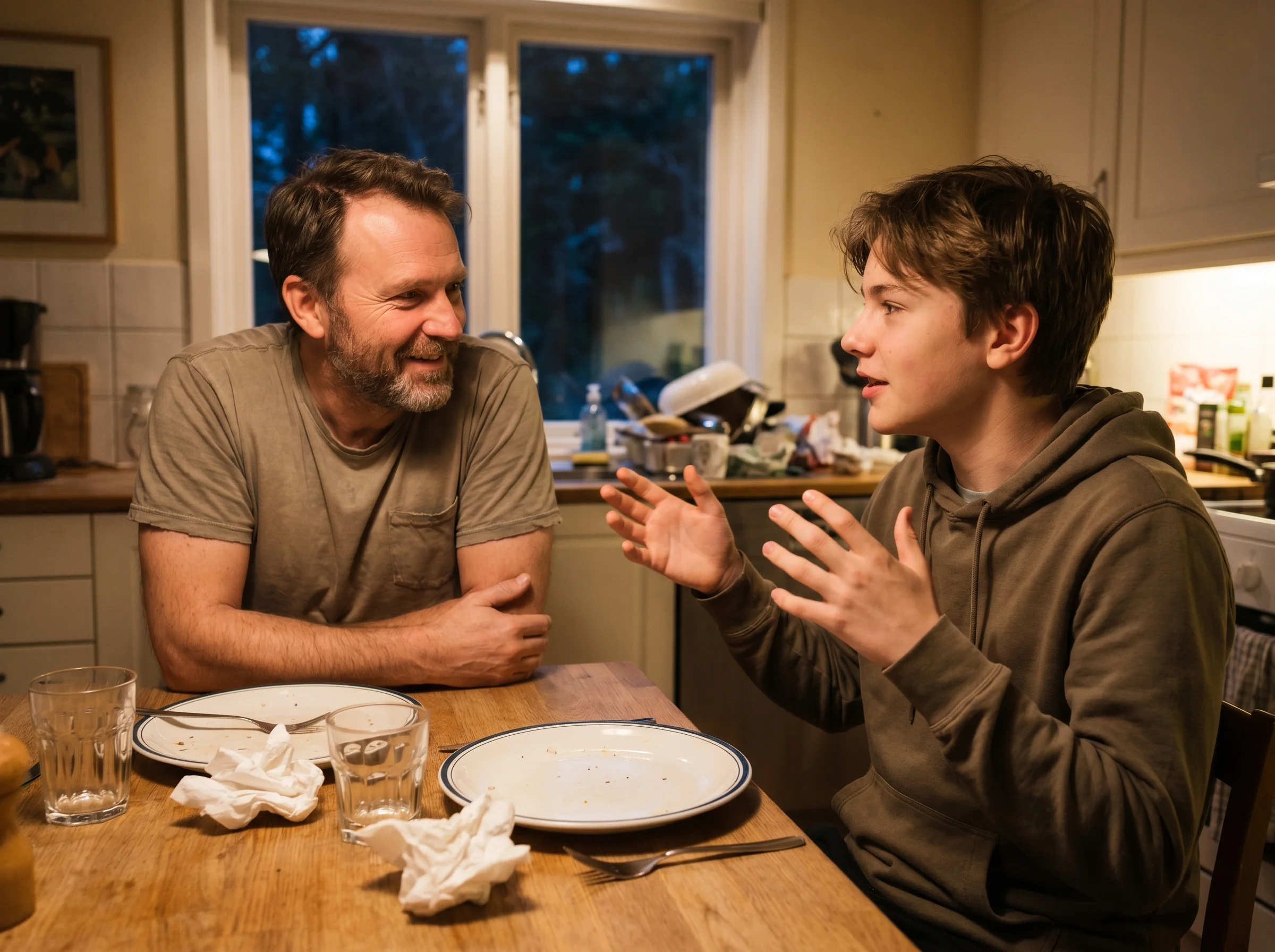
The hour I waited after the Discord incident? I used it to cool down. Then I sat down next to my son after dinner and said, "Hey, I walked by earlier and it sounded pretty heated. What's that scene like? Who were you playing with?"
I got a twenty-minute monologue. About a kid named Tyler who says wild stuff to get reactions. About how their squad has an unspoken rule that whoever dies first has to mute for a round. About how my son thought it was funny at first and then started feeling weird about it.
I didn't ask about the word. I asked about the world. And because I asked like I was curious, not like I was catching him, he brought me INTO the world instead of locking the door.
Compare that to the script most articles give you: "Sweetheart, I noticed you used a hurtful word today. How do you think that made the other player feel?" Real kids hear that and physically retract into their hoodies. You've already lost.
The questions that actually work sound more like:
- "Who's the loudest person in your lobby usually?"
- "What's the weirdest thing someone said in your match today?"
- "Is there a kid in your group everyone kind of tolerates?"
- "Were you tilted? What happened?"
These are side doors. Walk through enough side doors and the front door opens on its own.
 More questions like thesePause, Play, Connect: Core Deck172 prompts that get a kid talking about their lobby, their squad, and their week.$49 CAD • 90 cards • 18 reviewsShop the deck
The "But Everyone Says It" Defense
When you finally do circle back to the word, you're going to get a version of: "But everyone says it. The streamers say it. My friends say it. It's not a big deal."
Here's my hot take: don't argue with that. Because it's true.
If you tell a 12-year-old that "nobody actually says that," you've just confirmed you don't know what you're talking about. Game over. Instead, validate the premise and redirect:
"Yeah, I know people say it. I get that. The question isn't whether other people say it. The question is whether WE say it, and what it means when you do."
Then talk about audience. There's lobby language, and there's family language, and there's school language, and there's grandma language. Kids already code-switch constantly. They're not going to talk to their teacher the way they talk to their squad. We're not asking them to never hear a word. We're asking them to be intentional about which words they choose, when, and around who.
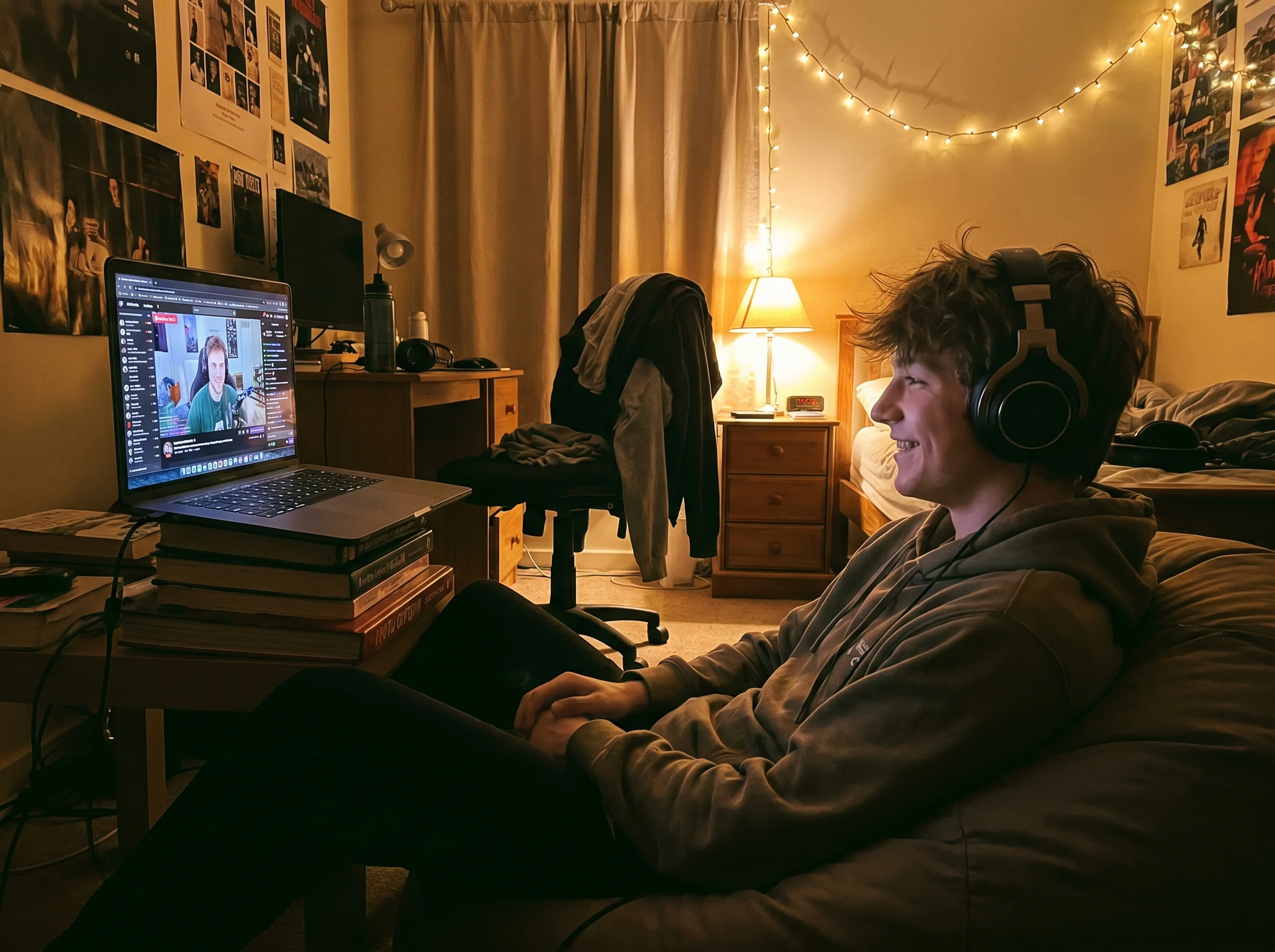
The streamer conversation is a great example. There's a creator my son loves who curses like it's punctuation. I didn't ban him. I asked my son why he liked watching him. The answer ("he's actually funny and he doesn't pretend to be perfect") told me more about my kid than a month of lectures would have.
When the Bad Language Is Coming AT Your Kid
This is the part almost nobody talks about, and it's actually more common than your kid being the one slinging insults. Research from the Anti-Defamation League's annual survey on online harassment in games consistently shows the majority of young gamers experience harassment in voice or text chat. Most of them never tell a parent.
About a year ago, my son got called something genuinely nasty in a Rocket League lobby. Racial. Vicious. He didn't tell me for two weeks. When I finally found out, I asked him why he sat on it.
"Because I thought you'd take the game away."
Read that again. He absorbed something ugly, alone, for two weeks, because the cost of telling me was higher than the cost of carrying it.
That broke me a little. And it taught me the single most important rule of this whole topic: your reaction to their first story determines whether they tell you the second one.
If your kid tells you someone said something awful to them in a game and your first move is to threaten the console, you've just taught them to handle it alone next time. Instead:
- Ask what happened, who was there, what they said back (or didn't)
- Tell them you're glad they told you
- Walk them through the mute, block, and report tools on whatever platform they're on. Xbox, PlayStation, Discord, and Roblox all have them, and they all work better than parents think. The Family Online Safety Institute has a solid parent-friendly breakdown of these tools by platform.
- Ask if they want you to sit with them for a few matches
That last one matters. Sometimes they say no. Sometimes they say yes. Either way, you offered.

Age-by-Age, Because the Same Talk Doesn't Work for All of Them
The lecture you'd give a 7-year-old will get you eye-rolled into orbit by a 13-year-old. Adjust accordingly.
Ages 6 to 9: Keep it simple. "We don't use words we don't understand." If they parrot something, ask "do you know what that means?" without any heat. Usually they don't. Tell them. Watch their face. Most kids self-correct just from knowing.
Ages 10 to 12: This is the imitation age. They're testing identities. Talk about context and audience. "Who's that word for? Where does it land? Who could get hurt by it?" Treat them like they can handle nuance, because they can.
Ages 13 and up: Treat them like the social navigators they actually are. Talk about reputation, identity, what kind of person they want to be in a lobby. They've already figured out that words have weight. They want to be talked WITH, not AT.
 When nothing has happenedPause, Play, Connect: Core Deck$49 CAD • 172 promptsSee the deck
When to Step In, When to Step Back
A friend of mine banned Fortnite for a month after his son said something he shouldn't have. You know what happened? His son just played at a friend's house for four weeks. Nothing changed about the language. Everything changed about the trust.
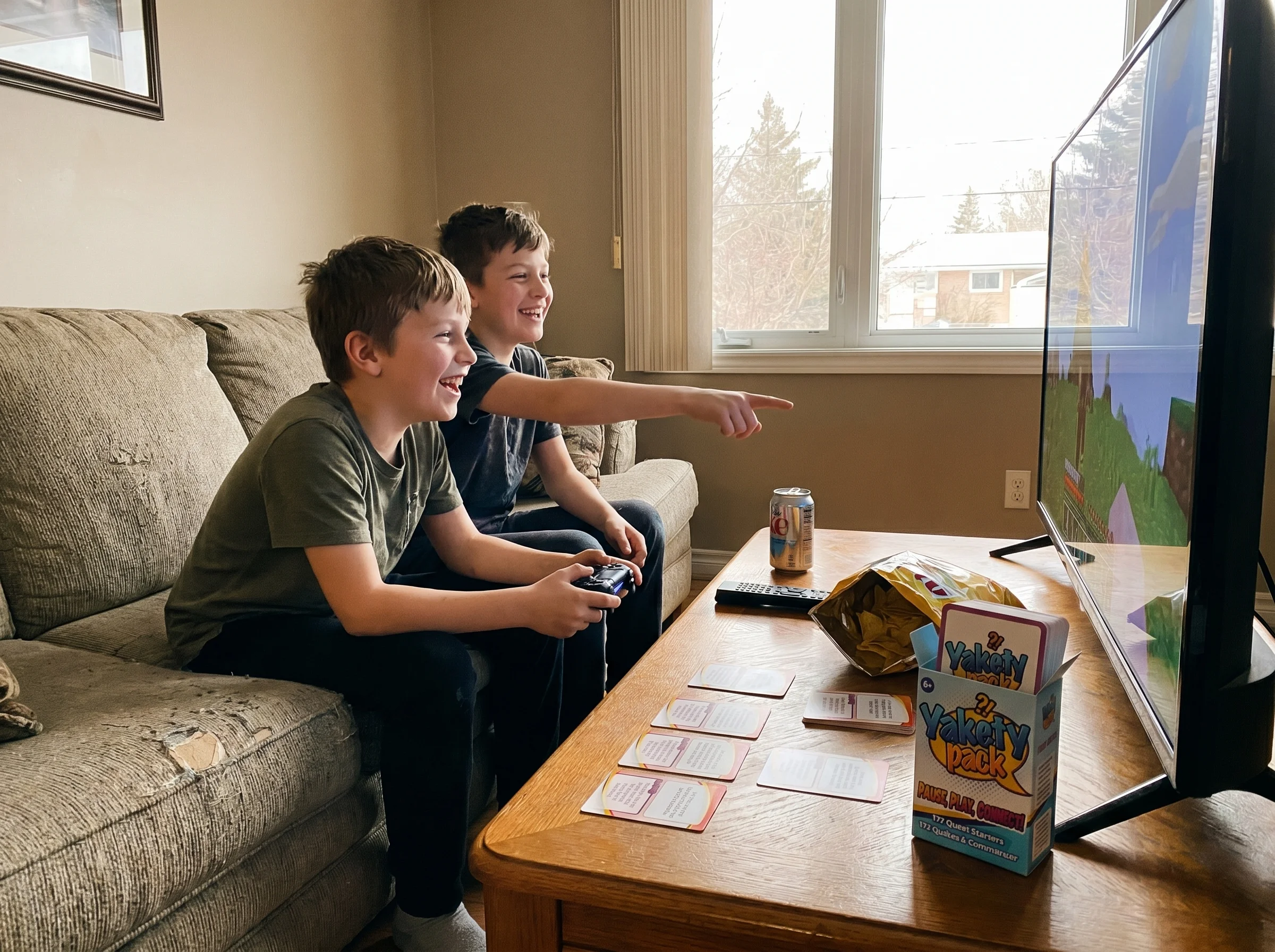
Here's my rule of thumb. If it's experimentation, talk. If it's a pattern, intervene. If the gaming environment itself is the problem (a specific group, a specific game, a specific server), help your kid see that and let THEM be part of the solution. "What if we found a better squad?" lands way better than "you're banned."
Pulling the console is the nuclear option. Once you use it, you've spent your biggest card and you haven't actually taught anything. Save it for real stuff.
Keep the Door Open for Next Time
Your goal in any one of these conversations isn't to win it. It's to get invited to the next one.
End every talk with some version of: "Thanks for telling me. I know that wasn't easy. You can always tell me this stuff."
And then, this is the part most parents skip, prove it by not blowing up the next time something comes up. They're testing you. Every single time.
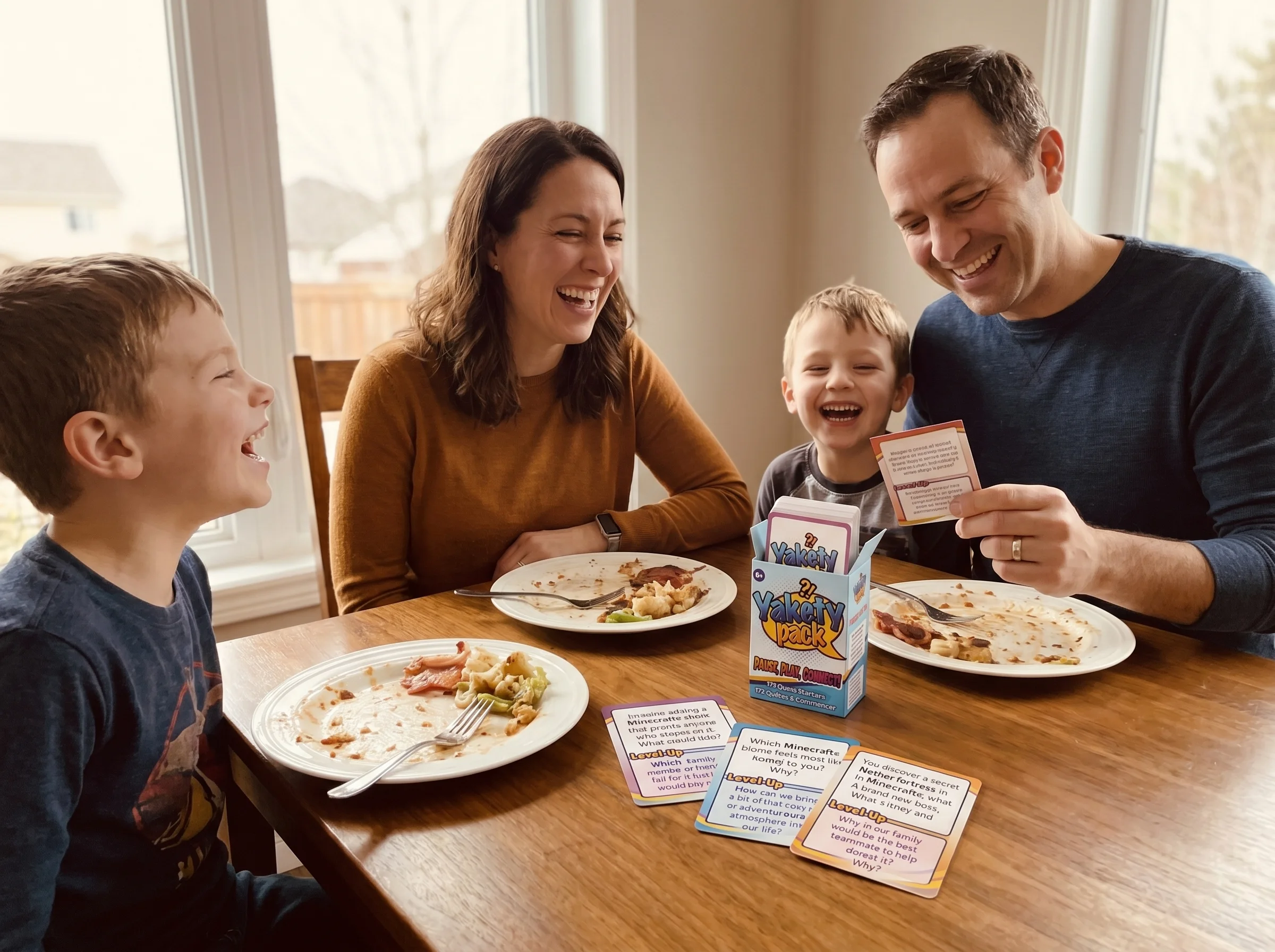
This is honestly why we built Yakety Pack. I kept noticing that the conversations that actually opened my kids up weren't the ones aimed at a problem. They were the sideways ones. One of our cards just asks, "What's the funniest thing someone said in your game this week?" That single question has surfaced more real information about my son's online life than any direct interrogation I ever tried. Including stuff I needed to know.
One Thing to Do Tonight
Don't bring up the word. Don't bring up the rule. Just ask one question over dinner: "Who's the funniest person in your lobby right now? What do they say?"
Then listen. Don't react. Don't correct. Just listen.
That's the whole thing. The conversations about inappropriate gaming language don't start with the language. They start with you proving you actually care about the world the language lives in.
Walk through the side door. The front door opens on its own.

From this article
Pause, Play, Connect: Core Deck
Side doors, ready-made: That dinner question about the funniest kid in the lobby works because you had it ready. The Pause, Play, Connect Core Deck keeps fifty more side doors in the kitchen drawer.
If you want more backup, the bundle adds the Parent Power-Up deck and two digital parent guides; the full bundle is $146 of family fun for $59.

