
My son once told me that turning off his game when he was upset felt like someone ripping away his security blanket during a thunderstorm. That's when I realized I'd been doing boundaries all wrong for emotional kids - treating gaming like the problem instead of understanding it was his solution.
For months, I was that dad. Timer set for 30 minutes. Charts on the wall. Consequences clearly outlined. And every single gaming session ended with my son in tears, me frustrated, and our relationship getting worse. I was so focused on limiting his gaming that I missed what it was actually doing for him.
The breakthrough came on a particularly rough Tuesday. He'd bombed a test, had a conflict with a friend, and came home looking like he might explode. Instead of enforcing our usual "homework first" rule, I watched him boot up Minecraft. For the next hour, he built an elaborate underground bunker, complete with multiple escape routes and hidden rooms.
When he finally looked up, calm for the first time all day, he said, "I needed to build something nobody could wreck."
That's when it clicked. He wasn't gaming to avoid his problems. He was gaming to regulate his nervous system enough to face them.
Why Emotional Kids Game Differently
Here's what took me way too long to understand: emotional kids don't game like other kids. They're not just having fun or killing time. They're self-medicating with predictability and control.
Think about it. When you're an emotional kid, the real world is constantly overwhelming. Social situations are minefields. School feels like a place where you're always one mistake away from disaster. Your own feelings ambush you without warning.
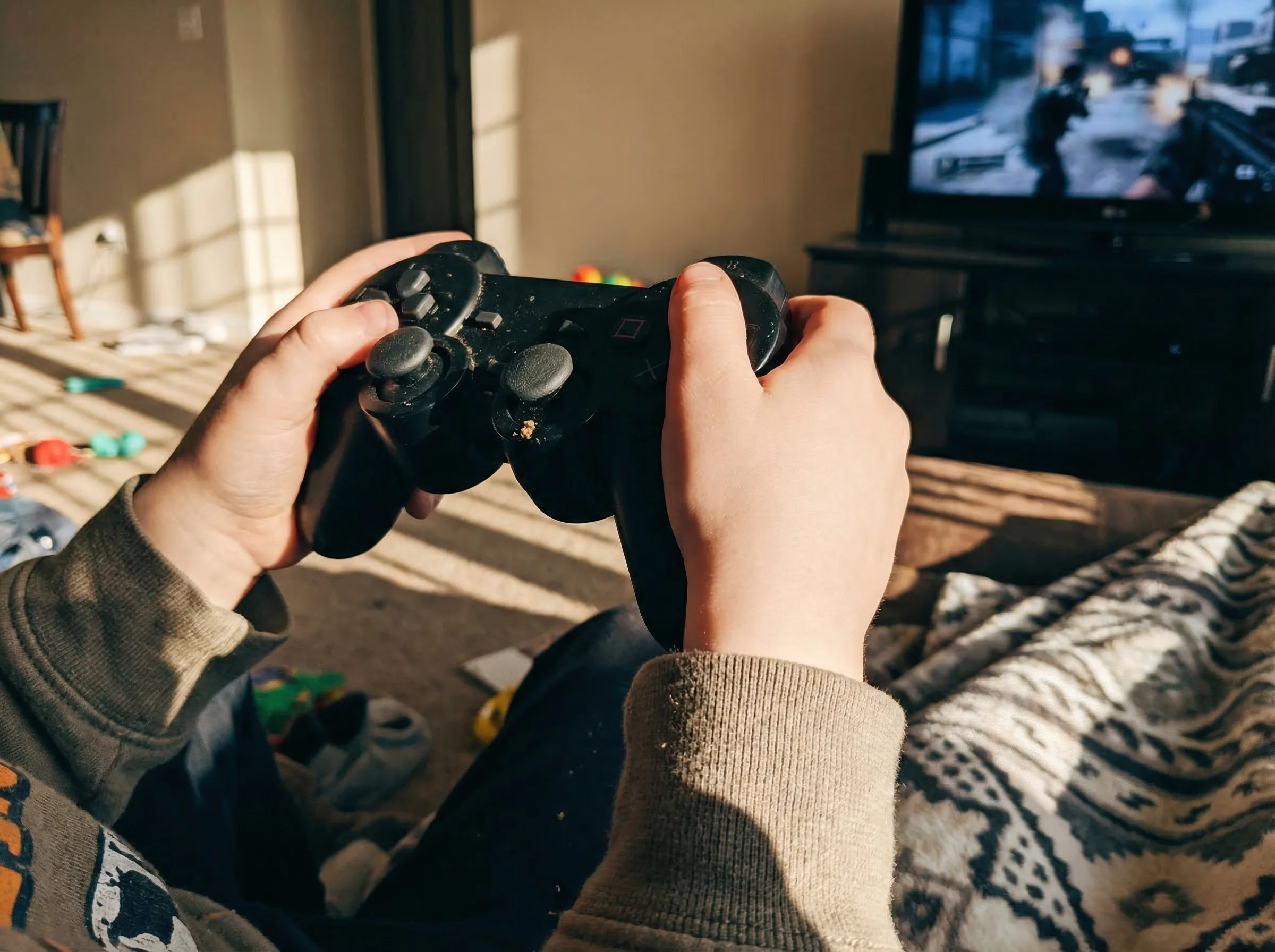
Then you log into a game world where:
- Rules are consistent and predictable
- Effort leads to clear results
- You can restart when things go wrong
- Nobody judges your emotional reactions
- You control the pace and intensity
My son gravitates to different games based on what he's feeling, and once I started paying attention, it was like learning a new language. Minecraft means he needs control. Rocket League means he has energy or anger to burn. When he loads up Stardew Valley or Animal Crossing, I know anxiety is high.
The other day I found him playing this random fishing game I'd never seen before. Instead of asking how long he'd been playing (my old default), I asked, "Why this game today?" A deck of conversation cards for families gives you that same shape of specific, structured question without having to invent one mid-session.
"It's just... calm," he said. "Nothing attacks you. You can't lose. The music is quiet."
That told me more about his emotional state than any check-in conversation would have.
 Something concrete to askPause, Play, Connect: Core Deck172 prompts that give you a specific question to ask about the game on screen.$49 CAD • 90 cards • 18 reviewsShop the deck
Reading the Gaming Language
Once you start looking at game choices as emotional communication, everything changes. Here's what I've learned to watch for:
Sandbox/Creative Games (Minecraft, Terraria, Roblox Studio): Need for control and creation. Often chosen after days where they felt powerless or when things were destroyed (failed test, broken friendship, lost opportunity).
Competitive Games (Fortnite, Rocket League, Overwatch): Energy that needs discharge. Sometimes anger, sometimes just physical restlessness that can't be addressed directly. The competition gives their fight-or-flight response something to do.
Cozy/Farming Games (Animal Crossing, Stardew Valley): Anxiety soother. The repetitive tasks, gentle progression, and impossible-to-fail mechanics regulate anxiety better than most breathing exercises.
Story RPGs (Pokemon, Zelda): Need for escape into heroic narrative. Often chosen when real life feels particularly unheroic or when they need to feel capable.
Understanding this language means you can work with their gaming instead of against it. When my son loads up competitive games after school, I know he needs physical activity afterward. When it's Minecraft, I know to give him space to create before asking about his day.
Boundaries That Bend Without Breaking
Here's the thing about healthy gaming boundaries for emotional kids: rigid rules often create more dysregulation than they prevent. We needed boundaries that could flex based on emotional needs while still providing structure. The harder edge case is when gaming becomes an emotional escape problem, which is where flexible boundaries quietly start breaking down.
Make It a Routine: A deck of Yakety Pack conversation cards on the dinner table gives you a low-pressure way to check in on regulation patterns without making it feel like an inspection.
What we landed on:
- State-based instead of time-based limits: "Play until you feel calm" or "Game until your shoulders aren't tight anymore"
- Different protocols for different days: Therapy Tuesdays get extended gaming. Good days have regular limits.
- Weekly patterns, not daily battles: We look at gaming over a week, not each day. Some days need more, others naturally need less.
- Purpose-driven sessions: "What are you hoping gaming will help with today?" helps them think about why they're playing.
Our "Terrible Tuesday" agreement is a perfect example. Tuesdays include therapy, his hardest classes, and PE (which he hates). Instead of fighting about gaming every Tuesday, we agreed: Tuesdays get an extra hour, no questions asked. He knows it's there if he needs it. Funny thing? Some Tuesdays he doesn't even use it. The safety net matters more than the actual time. For the broader rule design, our piece on screen time rules that work covers what to keep and what to drop.
We also created "emergency gaming" protocols. Just like some kids need sensory breaks or quiet corners, my son sometimes needs emergency gaming sessions. The rule is simple: he has to name what he's feeling first. "I need emergency Minecraft because my brain feels like it's full of bees." Cool. Go build until the bees quiet down.
 About the game, nothing elsePause, Play, Connect: Core Deck$49 CAD • 172 promptsSee the deck
The Transition Toolkit
The "5-minute warning" is garbage advice for emotional kids. Mine would spend those 5 minutes spiraling into anxiety about stopping, making the transition worse. We needed better bridges between gaming and the real world.
What actually works:
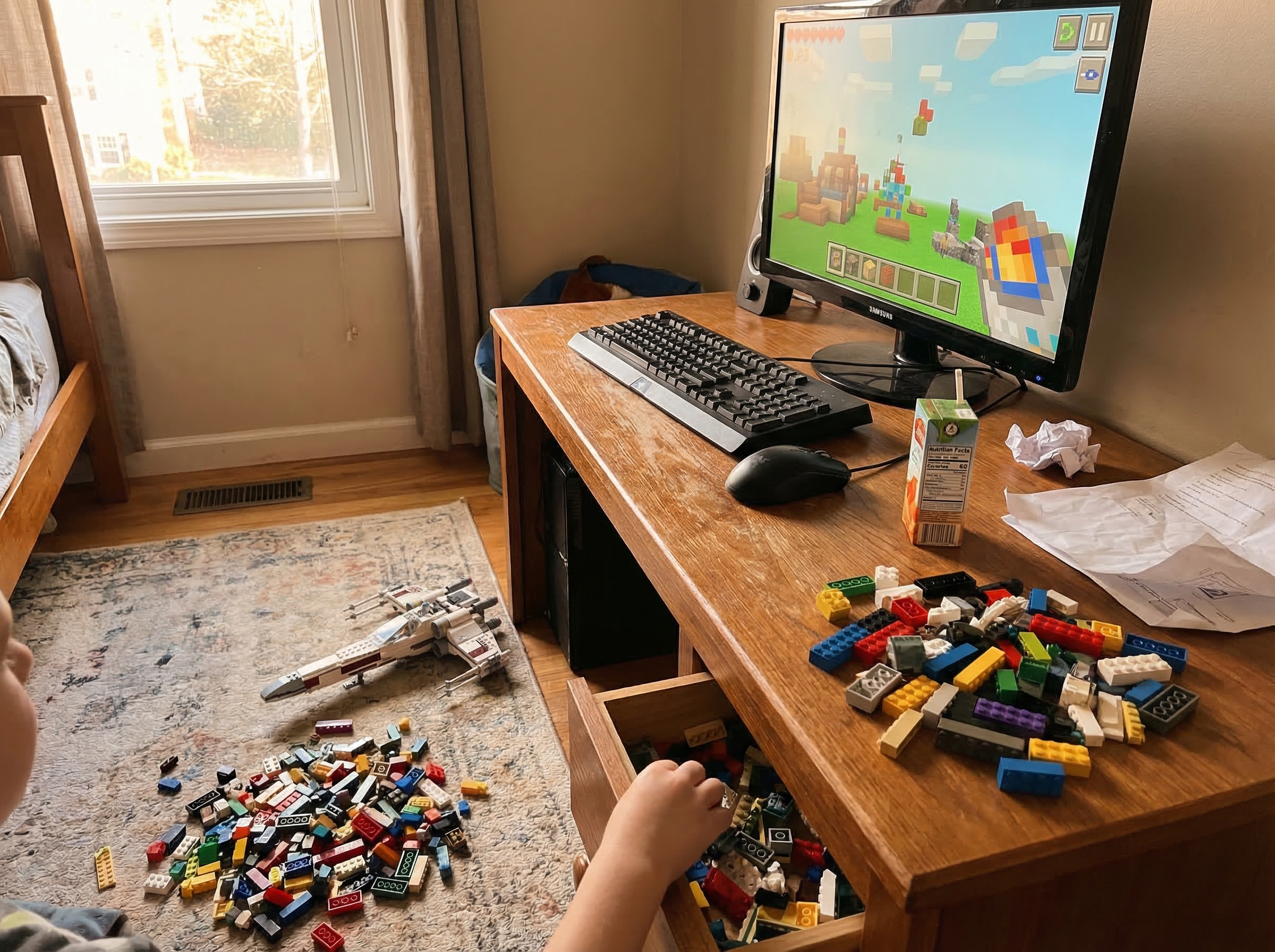
Bridge activities: We keep LEGOs near his gaming setup. Building something physical from his digital world helps his nervous system transition. Sometimes he builds what he created in Minecraft. Sometimes just fidgeting with blocks while talking about his game helps.
The "one more thing" compromise: Instead of time warnings, we do activity warnings. "After this match" or "Once you finish this build" or "When you reach the next save point." It respects the game's natural stopping points.
Game talk during transitions: I learned to keep him talking about the game even after it's off. "Show me what you built" or "Explain that strategy to me" keeps his mind engaged with what he loves while his body transitions to the next activity. This is the cleanest way to turn screen time into connection time without making it a fight about the controller.
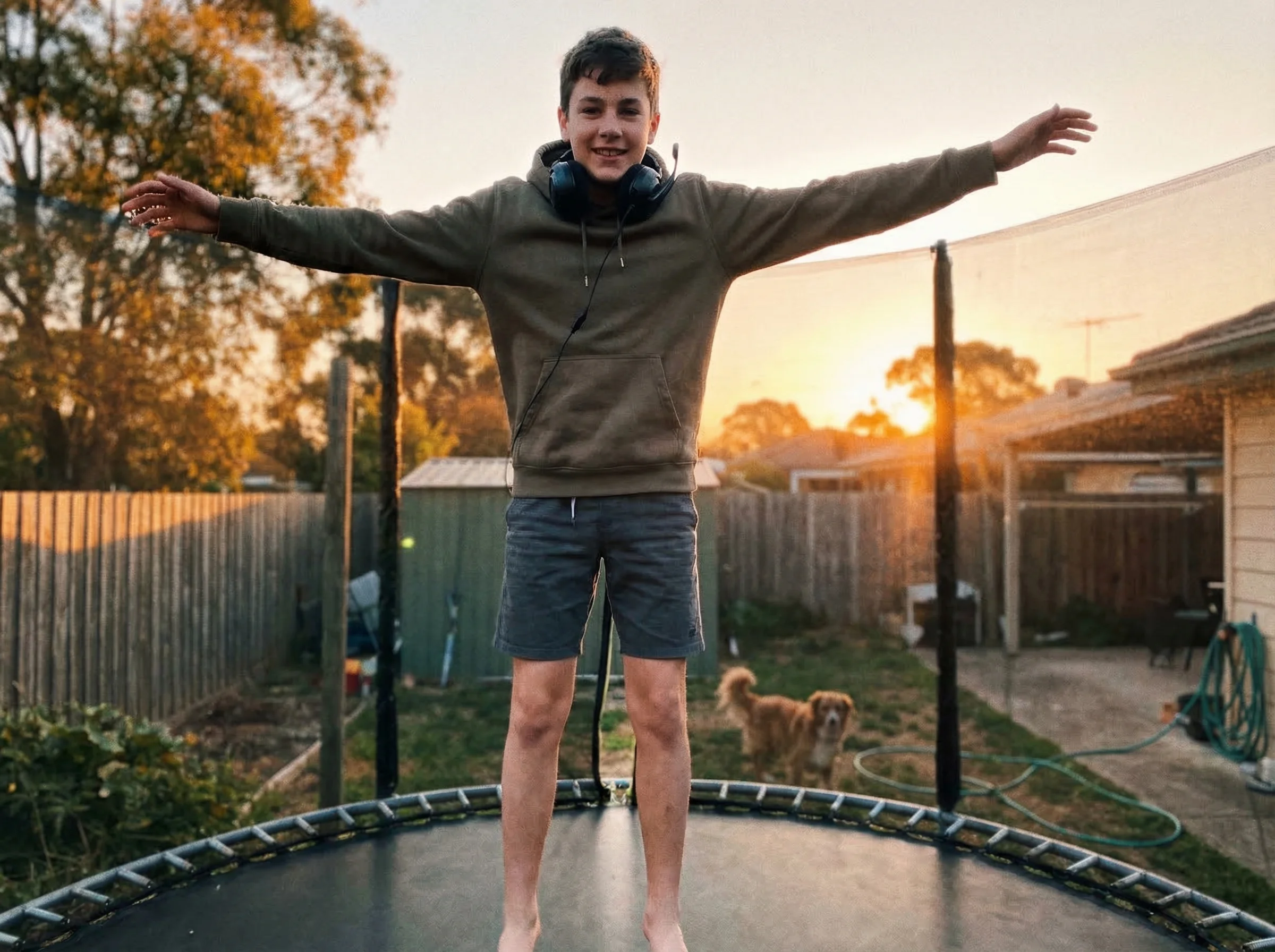
Physical regulation after gaming: Not as punishment, but as nervous system support. Trampoline time, walk around the block, or even just some stretches. We frame it as "helping your body catch up with your brain."
The key is making transitions collaborative, not combative. We're solving the same problem together - how to help his nervous system shift gears.
When Gaming Becomes Concerning
Let's be real about this. Sometimes gaming does become problematic, even for emotional kids who genuinely need it. The difference between healthy coping and unhealthy escape is usually pretty clear once you know what to look for.
Healthy gaming as emotional regulation:
- Kid can talk about why they're gaming
- They naturally take breaks
- Gaming helps them face problems afterward
- Mood improves during and after gaming
- They maintain other interests and relationships
Concerning patterns:
- Can't articulate why they're gaming beyond "I don't know"
- Panic at any mention of stopping
- Problems pile up while gaming continues
- Mood worsens with more gaming
- Dropping everything else for games
We hit a rough patch last spring where gaming shifted from coping to avoidance. He was gaming to avoid a bullying situation at school, and the more he gamed, the worse he felt. The games weren't helping him process or regulate anymore - they were helping him pretend the problem didn't exist.
That's when we had to adjust. Not remove gaming, but add other supports. Therapy. School intervention. And different types of games - we temporarily removed online multiplayer (where he was encountering more bullying) and focused on single-player experiences that actually helped him regulate.
Co-Regulation Through Gaming
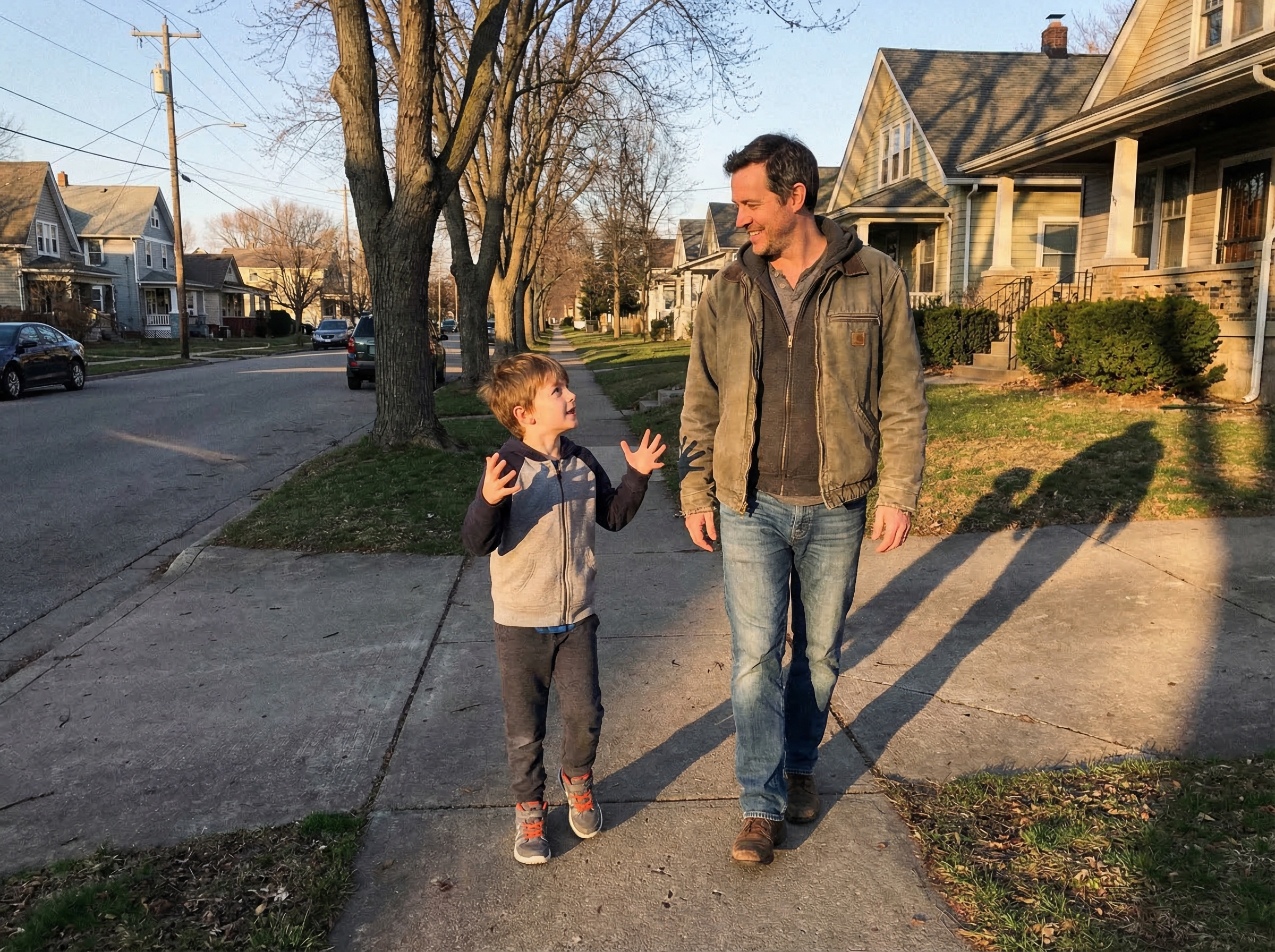
Here's what changed everything for us: I stopped monitoring his gaming from the kitchen and started engaging with it. Not playing necessarily (though sometimes I do), but being curious about his digital world.
Questions that actually work:
- "What's the coolest thing you discovered today?"
- "If you could change one thing about this game, what would it be?"
- "Show me your favorite part"
- "Teach me the strategy you're using"
When you're genuinely interested in their gaming world, boundaries become collaborative. You're not the enemy trying to take away their coping mechanism. You're the ally helping them use it effectively.
Last week, we played Minecraft together. Not because I love Minecraft (I don't), but because when we're in his world together, he talks. About school, friendships, worries - all while mining blocks. The game becomes the safe container for difficult conversations.
Making Peace with Gaming as Coping
Here's what I wish someone had told me three years ago: It's okay if gaming is your emotional kid's primary coping mechanism. It's not a failure. It's not something to fix. It's something to work with.
My son might always turn to games when life gets hard. That's not so different from adults who run, do yoga, or scroll social media to decompress. The goal isn't to eliminate gaming as coping - it's to ensure it's one tool among many.
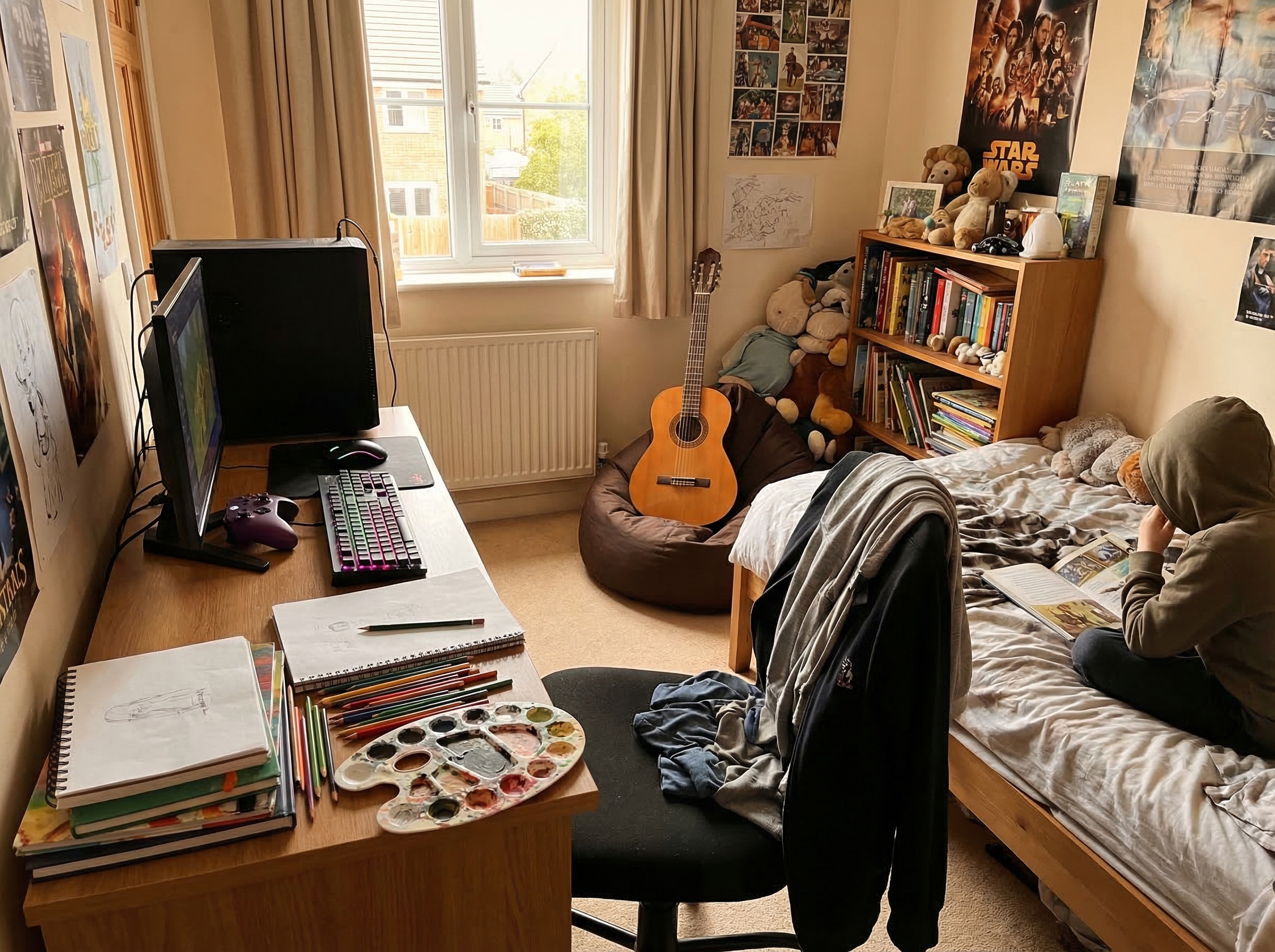
We're building other coping strategies alongside gaming:
- Art (often drawing game characters)
- Music (usually video game soundtracks)
- Movement (inspired by game achievements)
- Storytelling (creating backstories for game characters)
But when he's really dysregulated? When the world has been too much? He needs his games. And I've learned that's perfectly okay.
Some days, the healthiest boundary is no boundary at all. Last month, after a particularly brutal day involving a panic attack at school, I found him deep in a Zelda game. Instead of checking the time, I brought him a sandwich and asked if he needed anything. He gamed for four hours straight. By bedtime, he was regulated enough to talk about what happened. The gaming didn't solve his problem, but it gave him the neurological space to face it.
The Real Secret
Want to know the real secret to healthy gaming boundaries for emotional kids? Sometimes the boundary needs to be on your own anxiety about their gaming, not on their game time. When I stopped panicking about screen time and started seeing gaming as legitimate emotional regulation, everything got easier.
We still have boundaries. We still have screen-free time. We still encourage other activities. But we do it all with the understanding that for my emotional kid, gaming isn't the enemy. It's often the solution.
Tomorrow, when he comes home carrying the weight of whatever middle school threw at him, he'll probably disappear into a game world for a while. And I'll let him. Because I know that in that pixelated universe, he's finding the regulation he needs to face the real one.
The boundaries that actually work aren't about limiting access to his coping mechanism. They're about helping him use it wisely, understanding why he needs it, and being his partner in finding balance. Even if that balance includes more gaming than the parenting blogs say is "healthy."
Because you know what's actually healthy? A kid who knows how to regulate their emotions, even if they need a controller in their hands to do it.
Ordinary questions, ordinary nightPause, Play, Connect: Core Deck172 prompts about games and everyday life, for the nights when nothing comes to mind.$49 CAD • 90 cards • 18 reviewsShop the deck
Related Articles
Looking for more? Check out these related articles:
- gaming and emotional regulation for kids
- my child uses games to cope with stress
- best calming video games for kids
- minecraft helps my kid with emotions
- kid melts down when games end
FAQ
Q: How much gaming is too much for emotional kids? A: It's less about hours and more about impact. If gaming helps them regulate and face problems afterward, the time matters less than the outcome. Watch for whether it's helping or hindering their ability to handle life.
Q: What if my kid only wants to game and nothing else? A: Start by understanding what gaming provides that nothing else does. Often, once kids feel their gaming is respected rather than threatened, they're more open to other activities.
Q: Should I learn to play their games? A: You don't have to become a gamer, but showing genuine interest in their gaming world opens doors to connection. Even watching and asking questions can bridge the gap.

