My son said "that's mid" about my cooking last Tuesday and I just stood there holding a spatula, completely lost.
It wasn't the word itself. It was the realization that my kid had an entire vocabulary I didn't speak. He'd toss out phrases like "he's so goated" or "I just clutched that" and I'd nod along, pretending I understood. I was faking fluency in my own house.
If you've ever overheard your kid gaming and felt like they were speaking a different language, you're not wrong. They literally are. Gaming slang is its own dialect, and knowing even a handful of these terms can change the way your kid sees you. Not because you'll suddenly be cool. But because you cared enough to learn.
This is the gaming slang parents should know, with the context you actually need to use it right.
Why Gaming Slang Matters More Than You Think
For the bigger map of how to read your kid's gaming world, see our parent guide to gaming culture.
Here's the thing most parents miss: gaming slang isn't random nonsense. It's culture. These words carry meaning, status, and social signals. When your kid says someone is "cracked," they're expressing genuine admiration. When they call something "mid," it's a specific type of dismissal that means more than just "bad."
Learning this language isn't about becoming a fellow gamer. It's about showing your kid that their world matters to you. That you're willing to meet them where they are, even if it feels awkward.
I write about this a lot in our Understanding Gaming Culture guide, but the short version is: language is the doorway. You don't need to master the game. You need to understand the conversation.
 For the words you missedPause, Play, Connect: Core Deck172 prompts that turn a word you just picked up into an actual conversation with your kid.$49 CAD • 90 cards • 18 reviewsShop the deck
The Essential Gaming Slang Dictionary
Let's break these down by category so they actually stick. I'm not just giving you definitions. I'm giving you the context your kid assumes you already have.
Performance and Skill Terms
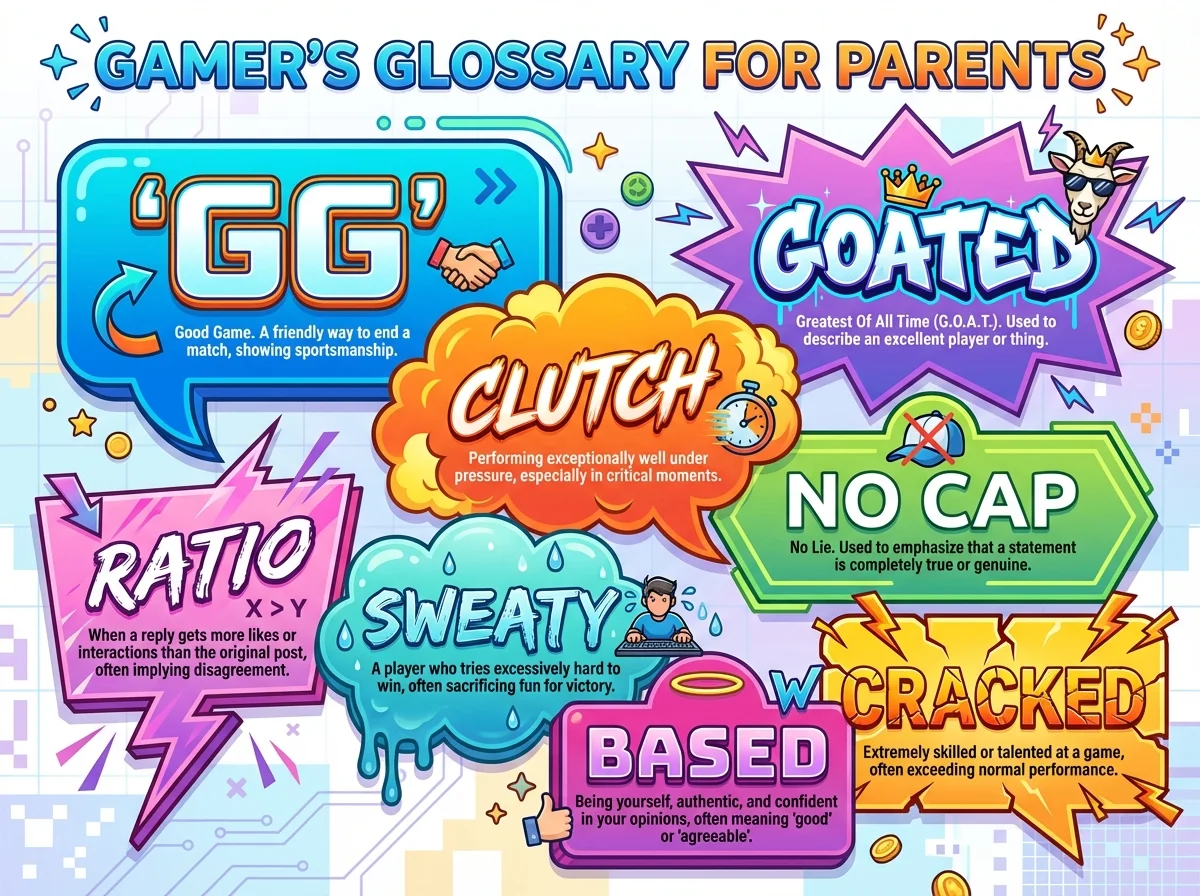
GG - "Good game." This is the handshake of gaming. Said after a match ends, win or lose. Using it correctly is basic gaming etiquette. If your kid wins something in real life, saying "GG" will get a smile.
Goated - The best. The greatest of all time (GOAT, but turned into an adjective). "She's goated at math" means she's incredible at it. Your kid uses this outside of gaming constantly.
Cracked - Extremely skilled. Someone who's cracked plays at an insane level. "That guy is cracked" means they're almost impossibly good. Similar to goated but with more emphasis on raw skill.
Clutch - Winning or succeeding under extreme pressure. If your kid pulls off a last-second save on a school project, that's a clutch. This one crosses into real life all the time.
Sweaty / Tryhard - Someone playing way too competitively for the situation. This can be a compliment or an insult depending on context. In a casual game, being sweaty is annoying. In a ranked match, it's expected.
Noob - A new or unskilled player. Sometimes affectionate ("I was such a noob when I started"), sometimes cutting ("stop being a noob"). Tone matters.
Bot - Someone playing so badly they look like a computer-controlled character. Worse than noob. "He's literally a bot" means they have no idea what they're doing.
One-shot - An enemy with almost no health left. When your kid yells "he's one-shot!" they're telling teammates to finish the job. It's a callout, not a description of a weapon.
Social and Reaction Terms
Mid - Average. Mediocre. Unremarkable. This is the ultimate Gen Z dismissal. "The movie was mid" means it wasn't terrible, just not worth talking about. Possibly the most useful word on this list for understanding your kid's opinions.
Salty - Upset about losing or about something unfair. "He's so salty right now" means someone is visibly frustrated. Your kid definitely uses this about siblings.
Sus - Suspicious. Originally from Among Us (a game about finding the imposter), now used everywhere. "That's sus" means something seems off or untrustworthy.
Based - Confidently holding an opinion regardless of what others think. It's a compliment. "That take is so based" means someone said something bold and true.
Ratio - When a reply gets more likes than the original post. In gaming chat, saying "ratio" is basically saying "nobody agrees with you." It's a social power move.
Touch grass - Go outside. Get some perspective. Used when someone is taking something (usually a game) way too seriously. Ironically, gamers say this to each other constantly.
L / W - Loss or Win. "That's an L" means that's a failure. "W dad" means you did something your kid respects. If your kid calls you a W, take the compliment.
Game-Specific Terms Worth Knowing
Meta - The most effective strategy currently available. "What's the meta?" means "what works best right now?" The meta changes when games update, which is why your kid might suddenly hate a weapon they loved last week.
Nerf / Buff - When game developers make something weaker (nerf) or stronger (buff). Kids use these in real life too. "They nerfed the homework" means it got easier.
AFK - "Away from keyboard." Temporarily gone. If your kid says "I went AFK," they stepped away from the game. Useful when you need to call them for dinner, by the way. "Tell them you're going AFK."
Rotate - Move to a different position or area. A tactical callout in battle royale games. When your kid screams "rotate!" they're coordinating with teammates in real time.
Grief / Griefing - Intentionally ruining someone else's experience. Destroying someone's Minecraft build for fun is griefing. It's the gaming equivalent of knocking over someone's sandcastle.
Skin - A cosmetic outfit or appearance change for a character. Skins don't affect gameplay, but they carry massive social currency. Your kid wanting a specific skin is like wanting the right shoes at school. It's about identity.
NPC - Non-player character (a character controlled by the game, not a real person). Calling someone an NPC means they're boring, predictable, or going through life on autopilot. It's not kind, but it's everywhere.
For the Co-Play Window: Slang lands best when a question backs it up. Keep a Pause, Play, Connect deck by the console so a card is within reach when you sit down with the controller.
How to Actually Use Gaming Slang (Without Being Cringe)
The full prompt set is in our conversation cards for families with gamer kids.
Here's where most parent guides stop. They give you the dictionary and wish you luck. But knowing what "clutch" means and knowing when to say it are completely different skills.
The Golden Rule: Less Is More
The fastest way to make your kid cringe is to use every new word you learned in one sentence. "That was a clutch GG, you're so goated and not mid at all!" will make them regret teaching you anything.
Pick one or two terms. Use them sparingly. Use them correctly. Your kid will notice, and they'll respect it way more than a vocabulary dump.
 Let them teach you somethingPause, Play, Connect: Core Deck$49 CAD • 172 promptsSee the deck
Let Them Teach You
The best conversations I've had with my kids started with "wait, what does that mean?" Not in a judgmental way. In a genuinely curious way. Kids love explaining things they know more about than you do. It flips the typical parent-child dynamic, and that shift creates connection.
When we built Yakety Pack, one of the things we learned is that kids open up when questions feel like real curiosity, not surveillance. Asking "what does goated mean?" is curiosity. Asking "why do you talk like that?" is judgment. Same topic, completely different energy.
The Dos and Don'ts
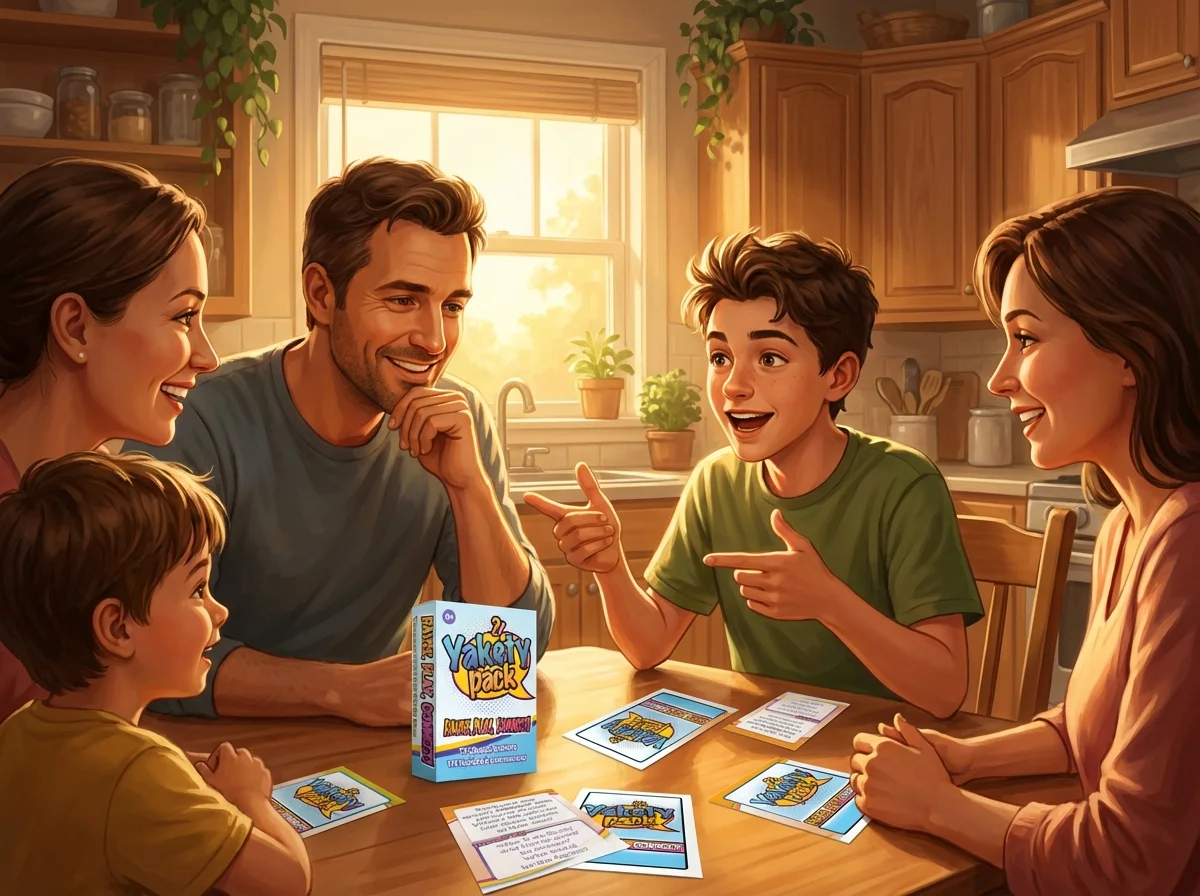
Do: Use a term naturally when it fits. If your kid aces a test, "that's a W" lands perfectly.
Don't: Announce that you learned new slang. Nothing kills it faster than "I looked up what mid means!"
Do: Get it wrong sometimes. Your kid correcting you is actually a bonding moment. They get to be the expert.
Don't: Use slang to mock them or their friends. These words are part of their identity. Treat them with the same respect you'd want for your own vocabulary.
Do: Accept that some terms will change by next month. Gaming slang evolves constantly. That's part of the fun.
Don't: Use outdated slang thinking it's still current. "Pwned" and "l33t" are from our era. Using them now is like your parents saying "groovy."
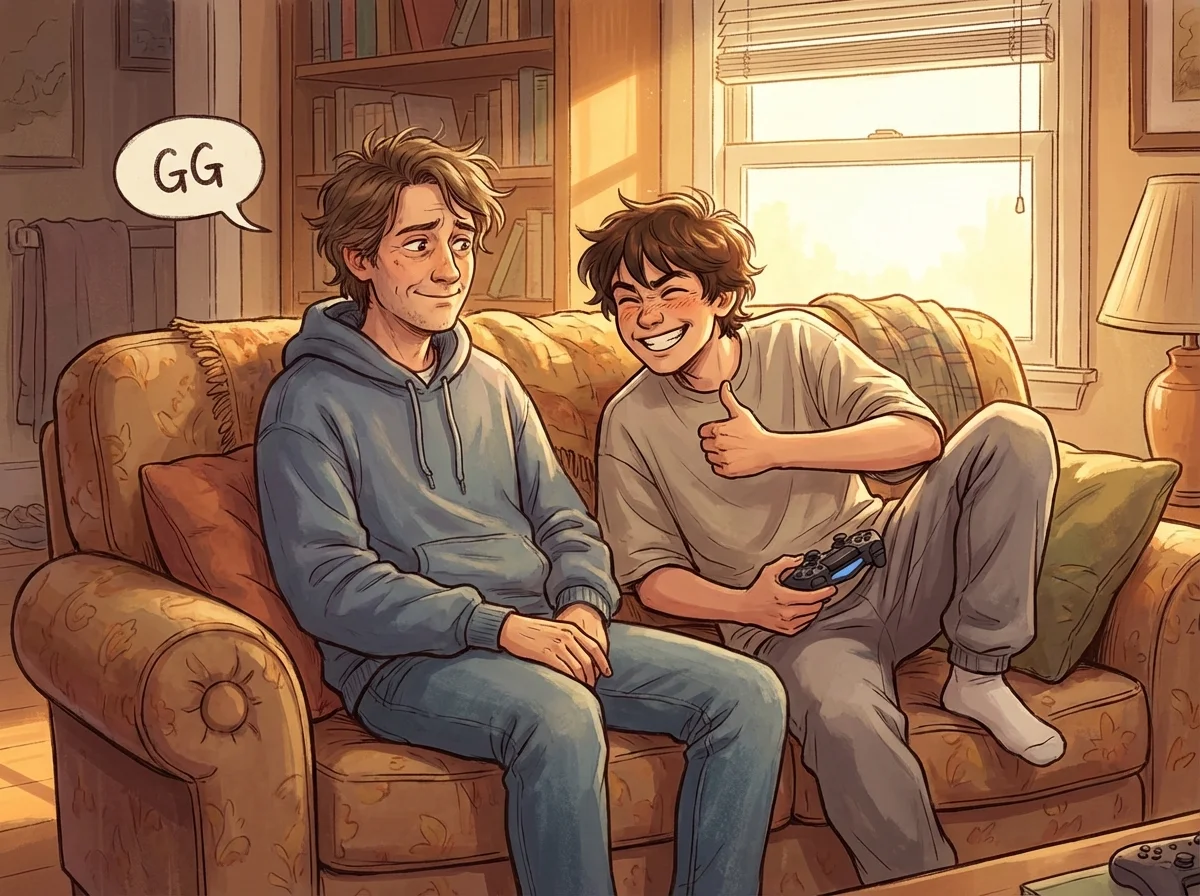
For the Long Build: Fluency in your kid's language grows from many small low-pressure chats. A deck of Yakety Pack conversation cards on the dinner table is the easiest one to keep.
What Your Kid's Slang Tells You About Them
Pay attention to which words your kid gravitates toward. It tells you something real about their gaming life.
A kid who talks about clutching and rotating is probably playing competitive team games, communicating under pressure, and developing real-time strategy skills. Those are leadership moments happening in a headset.
A kid who talks about griefing and toxicity might be dealing with difficult social situations online. That's worth a conversation, not about banning games, but about how to handle toxic behavior and process negative experiences.
A kid obsessed with skins and the meta is tuned into social dynamics and trend awareness. That's the same instinct that drives fashion, sports stats, or knowing what's happening in their friend group. It's social intelligence.
The language is a window. Use it.
The Slang That Changes (And Why That's OK)
Six months from now, half the terms on this list might be replaced by new ones. That's normal. Gaming culture moves fast, and the language moves with it.
Don't try to keep a running dictionary in your head. Instead, build the habit of asking. "I keep hearing you say [word]. What does that mean?" works every single time. It's not about memorizing a list. It's about staying curious.
My kids have taught me more slang than any article could. And every time they explain something to me, they talk a little longer, share a little more, and let me a little further into their world.
That's the real translation guide. Not the words themselves. The willingness to learn them.
Quick Reference Cheat Sheet
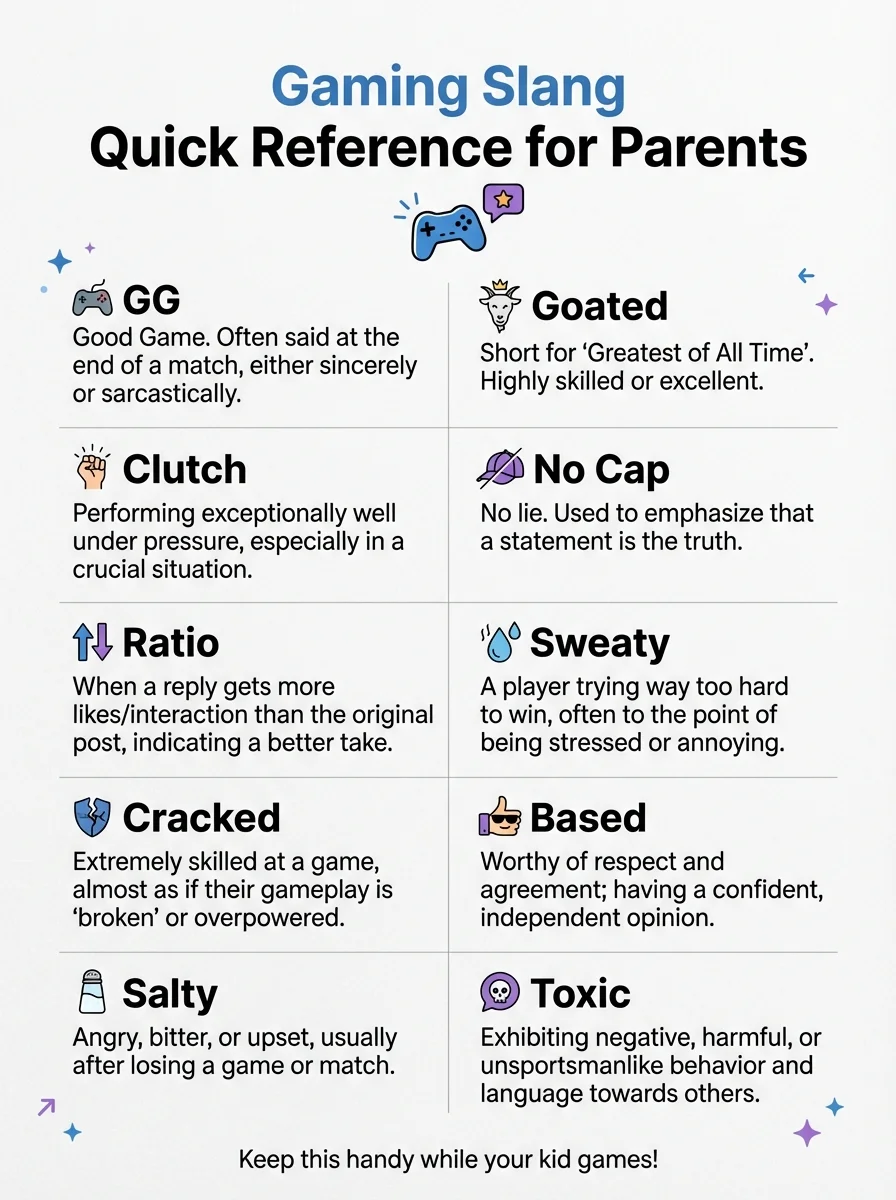
For the fridge, your phone notes, or wherever you need a fast lookup:
| Term | Meaning | Example |
|---|---|---|
| GG | Good game | "GG, that was close" |
| Goated | The best | "She's goated at this" |
| Cracked | Insanely skilled | "That player is cracked" |
| Clutch | Win under pressure | "He clutched the round" |
| Mid | Average, mediocre | "That show is mid" |
| Salty | Upset about losing | "Don't be salty" |
| Sweaty | Overly competitive | "Stop being so sweaty" |
| Noob | New/unskilled player | "I'm such a noob" |
| Bot | Terrible player | "Playing like a bot" |
| Sus | Suspicious | "That's kinda sus" |
| Based | Bold and authentic | "Based opinion" |
| Meta | Best current strategy | "What's the meta?" |
| Nerf/Buff | Made weaker/stronger | "They nerfed my main" |
| AFK | Away from keyboard | "Going AFK real quick" |
| NPC | Boring/predictable person | "Acting like an NPC" |
| W/L | Win/Loss | "W dad" or "That's an L" |
| Skin | Character costume | "I need that skin" |
| Touch grass | Go outside | "You need to touch grass" |
| Grief | Ruin someone's fun | "Stop griefing me" |
| One-shot | Almost dead enemy | "He's one-shot!" |
Ask what goated meansPause, Play, Connect: Core Deck172 prompts that give you the next question, once your kid has finished explaining the word.$49 CAD • 90 cards • 18 reviewsShop the deck
Related Articles
Want to go deeper into your kid's gaming world? These guides pick up where this one leaves off:
- Understanding Gaming Culture: A Parent's Complete Guide - The big picture of why gaming matters to your kid
- How to Talk to Kids About Fortnite (Without Getting One-Word Answers) - Fortnite-specific slang and conversation starters
- Playing Video Games With Your Kids: A Parent's Real Guide - Put the language into action by actually playing together
- What Is Minecraft Teaching Your Kids? 7 Real Skills Explained - Minecraft-specific terms and the skills behind them
Frequently Asked Questions
Is gaming slang just for kids?
Not even close. Gaming slang has gone completely mainstream. Terms like "salty," "sus," and "mid" show up in workplaces, on social media, and in everyday conversation. Understanding it isn't just about connecting with your kid. It's about understanding modern culture.
My kid gets annoyed when I use gaming slang. What am I doing wrong?
Probably using too much, too fast. The key is subtlety. Drop one term naturally in conversation and see how they react. If they smile or correct you gently, you're on the right track. If they groan, dial it back. The goal isn't to speak their language fluently. It's to show you're listening.
How do I keep up with slang that changes so fast?
You don't need to keep up with all of it. Focus on understanding the terms your kid actually uses. Ask them to explain new ones when you hear them. The conversation that comes from asking is more valuable than knowing every term.
Is any gaming slang actually inappropriate?
Some terms can be used in toxic ways, like any language. "Bot" and "NPC" can be genuinely hurtful when directed at real people. If you hear your kid using slang to put others down consistently, that's worth a conversation about how words affect people, online and off.
Should I correct my kid's grammar when they use gaming slang?
No. Gaming slang is a dialect, not bad grammar. Your kid likely knows the difference between talking to friends in a game and writing a school paper. Correcting their slang is like correcting someone's accent. It creates distance instead of connection.