
Last week, my daughter burst into tears because someone filled her carefully designed Minecraft house with TNT and blew it up "for the lolz." If you're wondering what does griefing mean in gaming, this is it: gaming's version of the playground bully, except this time, you can't see it coming and there's no teacher to tell.
Here's what threw me: she'd spent three weeks building that house. Three weeks of placing blocks, choosing colors, decorating rooms. To her, it wasn't "just pixels." It was her creation. And someone destroyed it purely because they could.
That's when I realized I needed to actually understand what griefing meant - not just the dictionary definition, but what it means to kids, why it happens, and most importantly, how to use these moments to teach real empathy in digital spaces.
 When the build gets wreckedPause, Play, Connect: Core Deck172 prompts that give a kid a way into talking about a wrecked build.$49 CAD • 90 cards • 18 reviewsShop the deck
The Real Definition (Not the Wikipedia One)
Griefing is intentionally ruining another player's experience for your own entertainment. But that clinical definition misses what it actually looks like in your kid's games.
In Minecraft, it's destroying someone's builds, killing their pets, or stealing from chests on servers where that's not allowed. In Fortnite, it's boxing in your own teammates so they can't play. In Roblox, it might be blocking doorways in Adopt Me or spamming chat until no one can communicate.
The key word? Intentionally. Last month, my son accidentally led a creeper to his friend's base in Minecraft. The base exploded. He felt terrible. But that wasn't griefing - that was just Minecraft being Minecraft.
Real griefing has intent. It's when someone thinks "this will ruin their fun" and does it anyway. Sometimes specifically BECAUSE it will ruin their fun.
Griefing vs. Just Playing the Game
This is where parents get confused, and honestly, where I got confused too. My son came home from school one day upset because his friend called him a griefer for destroying his base in Minecraft. Plot twist: they were playing on a PvP (player versus player) server where destroying bases is literally the point.
Here's how to tell the difference:
It's probably NOT griefing if:
- Everyone agreed to competitive rules
- The game mode encourages it (battle royale games, PvP servers)
- It's part of normal gameplay (taking loot in survival games)
- Both players are having fun with the chaos
It IS griefing if:
- Someone's breaking server rules to mess with others
- They're targeting the same player repeatedly
- They're destroying things in creative or peaceful modes
- The victim clearly isn't having fun and asks them to stop
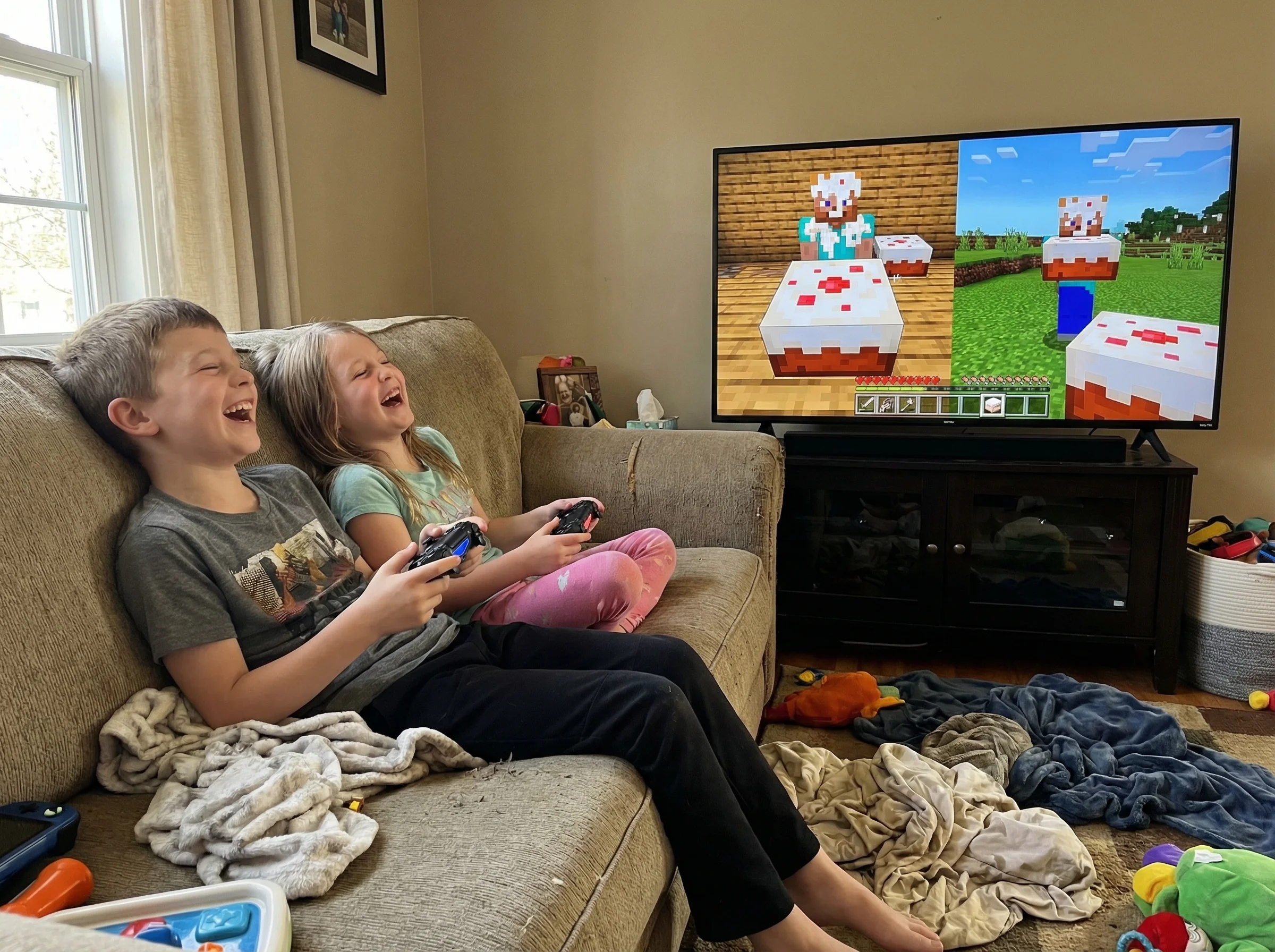
The summer of 2022, my kids started what they called "The Great Prank War" in their shared Minecraft world. They'd sneak into each other's bases and leave harmless pranks - chickens everywhere, houses filled with cake, that sort of thing. Both kids were laughing. Both were plotting revenge. Not griefing.
Then my son's friend joined and burned down my daughter's barn with all her animals inside. She hadn't agreed to him being part of their prank war. She definitely didn't find it funny. That? That was griefing.
Why Kids Grief (It's Not Always What You Think)
When I first caught my son griefing - yes, my own kid - my knee-jerk reaction was to ban Minecraft entirely. Then I actually asked him why he did it. His answer stopped me cold: "They never let me join their server, so I showed them I could get in anyway."
Kids grief for lots of reasons:
- Boredom: They've run out of things to do in the game
- Attention: Negative attention feels better than being ignored
- Peer pressure: Their friends are doing it, so they join in
- Frustration: They can't beat someone fairly, so they cheat
- They genuinely don't get it: They think it's funny and don't realize the impact
That last one hits different. Some kids, especially younger ones, literally don't understand that digital creations matter to people. They see it as "just a game" because no one's explained otherwise.
Signs Your Kid Is Being Griefed
Your kid probably won't march up and announce "Mother, I'm being griefed in Minecraft." But there are signs:
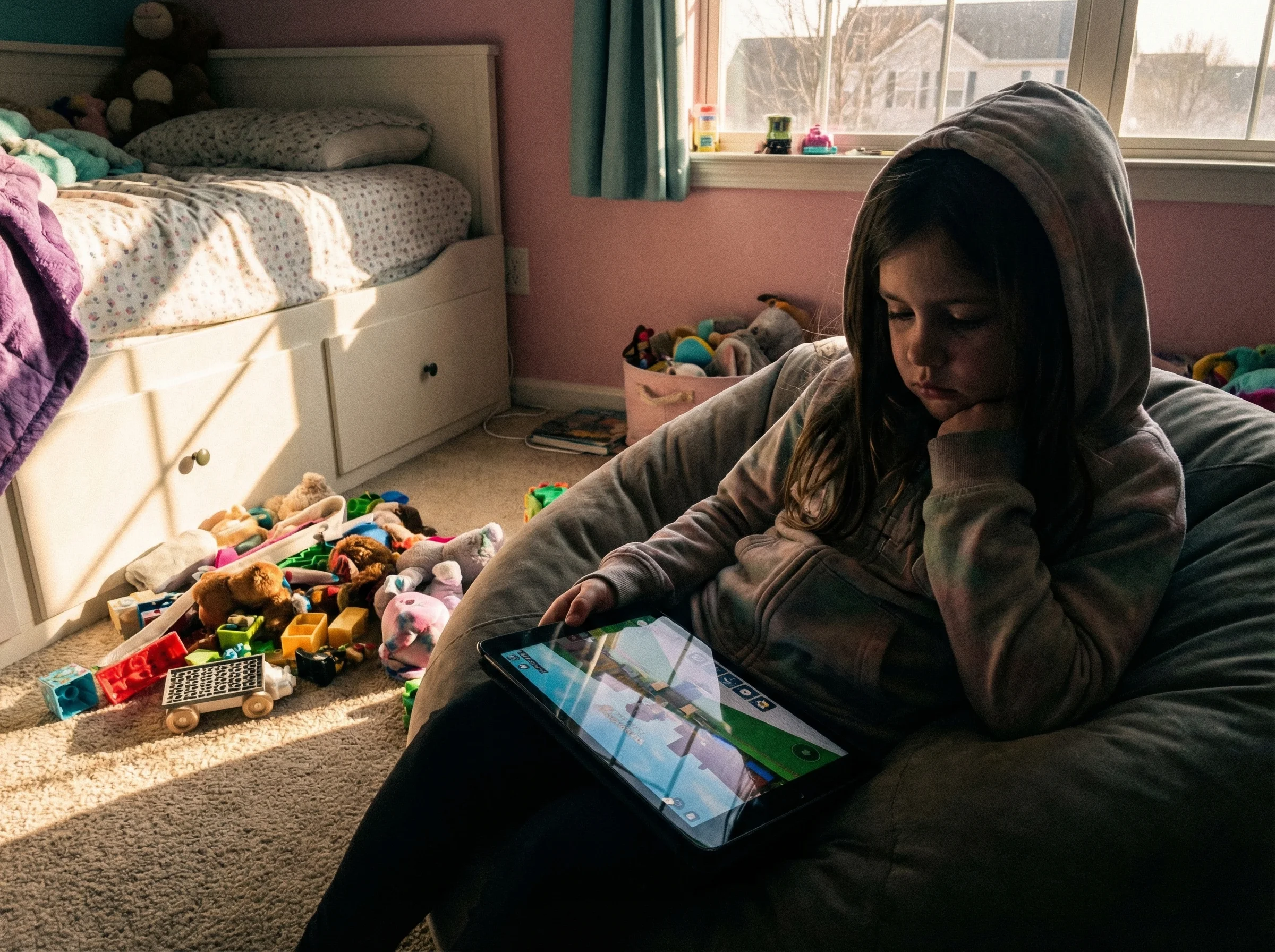
Behavioral red flags:
- They're suddenly reluctant to play their favorite game
- Mood crashes after gaming sessions
- They keep switching servers or creating new worlds
- Making excuses to avoid playing with certain friends
- Asking to play only offline modes
In-game signs:
- Their stuff keeps getting destroyed "mysteriously"
- They're constantly rebuilding the same things
- Other players seem to target them specifically
- They mention someone following them between servers
My daughter went through a phase where she'd only play Minecraft in creative mode with cheats on. Turns out, she was giving herself bedrock to build with so griefers couldn't destroy her buildings. Smart kid, but it broke my heart that she had to strategize around bullies. Quieter kids will not tell you a session went sideways, they will just disappear into their room; our piece on helping an introverted gamer connect covers the patterns to watch for and the openings that work without forcing it.
For the Drive Home: If your kid comes off a session looking off, the conversation works better in the car than at the kitchen counter. Bring a Pause, Play, Connect card along for the ride so you have a soft opener without making it a scheduled talk.
The Conversation Script (What to Actually Say)
Alright, here's where the rubber meets the road. What do you actually SAY when dealing with griefing?
If your kid's been griefed: "I can see you're really upset about what happened to your [building/character/world]. You worked hard on that, didn't you? Tell me more about what you'd built."
Let them talk. Let them be mad. Then:
"That person was wrong to destroy something you created. Just like it would be wrong to knock down a LEGO tower you built. Your digital creations matter too."
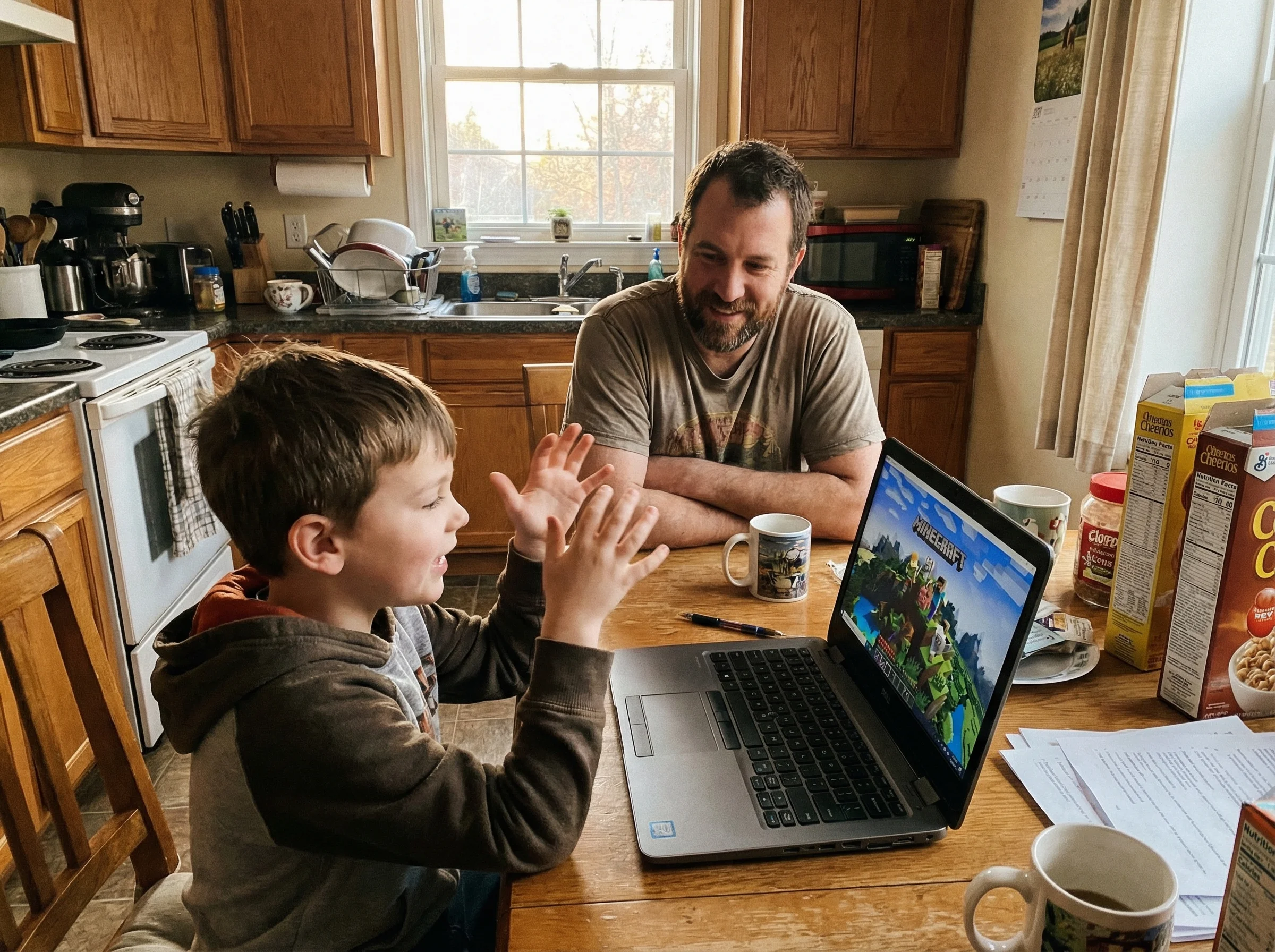
If your kid IS the griefer: Don't start with "How would you feel if..." They'll tune out. Instead, try:
"I saw what happened in [game name]. Walk me through what you were thinking when you did that."
Listen first. Then make it concrete:
"Remember when you spent all weekend building that LEGO city and your cousin knocked it down? Remember how that felt? That's how [player name] feels right now about their [creation]."
For different ages:
- 7-10 years: Use physical comparisons constantly. LEGO sets, drawings, sandcastles.
- 11-13 years: Focus on golden rule stuff. "If you wouldn't want it done to you..."
- 14+: Talk about digital citizenship and online reputation. This stuff follows you.
 Finding the words that landPause, Play, Connect: Core Deck$49 CAD • 172 promptsSee the deck
Turning Griefing Into Teaching Moments
Here's my controversial take: griefing incidents are actually gifts. Seriously. They're perfect for teaching empathy, boundaries, and respect in low-stakes environments.
When my son griefed that kid's base, we didn't just punish and move on. We:
- Had him help rebuild what he destroyed
- Talked about asking before pranking
- Set up "house rules" for our server
- Made him apology gifts in-game (he made a pixel art sorry sign)
The kid whose base he griefed? They're gaming buddies now. The apology process actually brought them closer. Timing matters more than what you actually ask; our walkthrough on how to use Yakety Pack in real life covers the specific windows where a debrief lands instead of bouncing off, like the car ride home or the cooldown before bed.
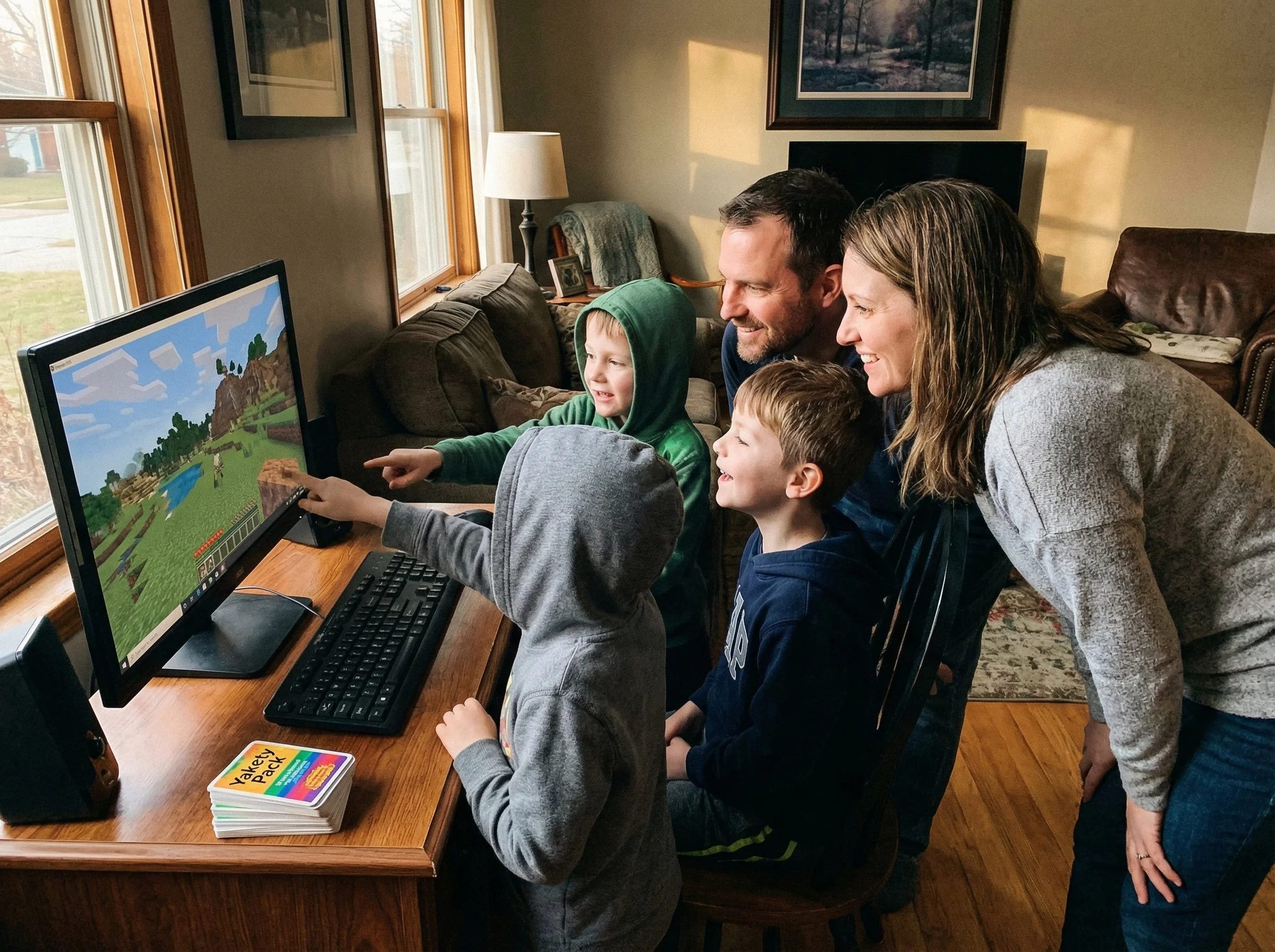
We use our Yakety Pack conversation cards for these conversations now. There's one that asks "What's the most frustrating thing that happened in a game this week?" You'd be amazed what comes out. Last week my daughter finally told us about ongoing griefing she'd hidden for a month because she didn't want us to take away Roblox.
Digital empathy is real empathy. When kids learn to respect others' digital space and creations, they're learning to respect people, period. A bad session is a reset opportunity, not a tactical loss; it is one of the cleanest moments to step back and turn screen time into connection time without sounding like you are taking the game away as punishment.
The Recovery Plan
So griefing happened. Now what?
For the griefed:
- Validate their feelings first. Their digital loss is real loss.
- Help them rebuild if they want - make it a bonding activity
- Teach them reporting tools in their games
- Consider a server break - not a game ban, just new spaces
- Celebrate their next creation extra hard
For the griefer:
- Natural consequences - they fix what they broke
- Temporary loss of multiplayer privileges (not full game ban)
- Written or verbal apology to the victim
- Create something positive for the community
- Check in weekly about online interactions
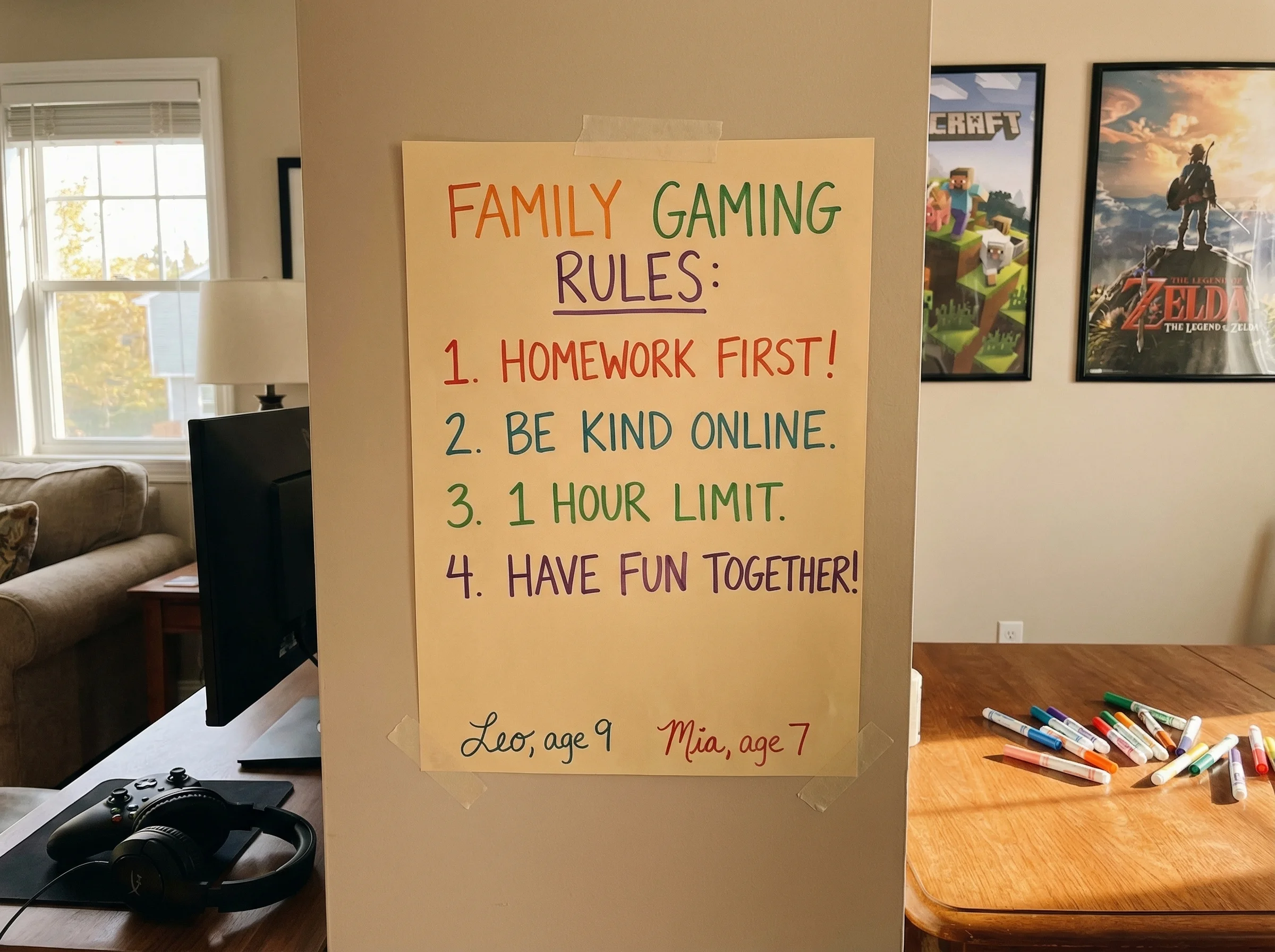
Family gaming agreements that actually work:
- No destroying others' creations without permission
- Ask before "pranking" every single time
- If someone says stop, you stop immediately
- Report griefers, don't grief back
- Griefing equals loss of multiplayer for a week
Sometimes the best response is letting kids handle minor griefing themselves with your coaching. Not every TNT incident needs parent intervention. Working through gaming disputes with guidance builds better digital citizens than parent-imposed bans.
Moving Forward
Griefing sucks. There's no way around it. But it's also an incredible opportunity to teach kids about respect, consent, and empathy in digital spaces. The same kid who learns not to destroy someone's Minecraft house learns not to cyberbully. The same kid who stands up to griefers learns to stand up to real-world bullies.
Next time your kid comes to you with a griefing situation - whether they're the victim or the perpetrator - remember it's not about the pixels. It's about the person behind the screen and the lessons we teach about how we treat each other, everywhere.
Start tonight. Ask your kid: "Has anyone ever destroyed something you made in a game? How did that feel?"
You might be surprised what stories come pouring out. And that conversation? That's where real understanding begins.
After a rough session onlinePause, Play, Connect: Core Deck172 prompts that keep the talk going after a session ends badly.$49 CAD • 90 cards • 18 reviewsShop the deck
Related Articles
Looking for more? Check out these related articles:

