
Last Tuesday my son threw a controller across the couch after losing a Fortnite match. Not a tantrum exactly, more like a frustrated fling. For about a year, I would have told you with full confidence that Fortnite was the problem. The aggression, the attitude, the snapping at his sister, all of it. The game made him like this.
Then I started paying actual attention to what was happening, and I had to admit something uncomfortable: the game wasn't changing my kid. It was just turning the volume up on stuff that was already there.
If you've ever Googled "does Fortnite affect kids' behavior" at 9pm on a Tuesday after a rough night, this one's for you.
The Behavior You're Seeing Is Real. The Cause Probably Isn't What You Think.
Yes, Fortnite affects behavior. So does soccer practice, a hard day at school, a bad grade, a fight with a friend, and skipping lunch. The question isn't whether the game has an effect. The question is whether the game is the cause, or whether it's just the thing happening when the cause finally boils over.
Here's what I did. After about the fifth blowup in a month, I started writing down every time my son lost it after a Fortnite session. Just a note in my phone. Time of day, what he ate last, how he slept the night before, what happened at school.
Two weeks in, I had nine incidents logged. Eight of them happened between 4:30 and 6pm. He hadn't eaten since lunch at 11:30. On five of those eight, he'd slept less than nine hours the night before.
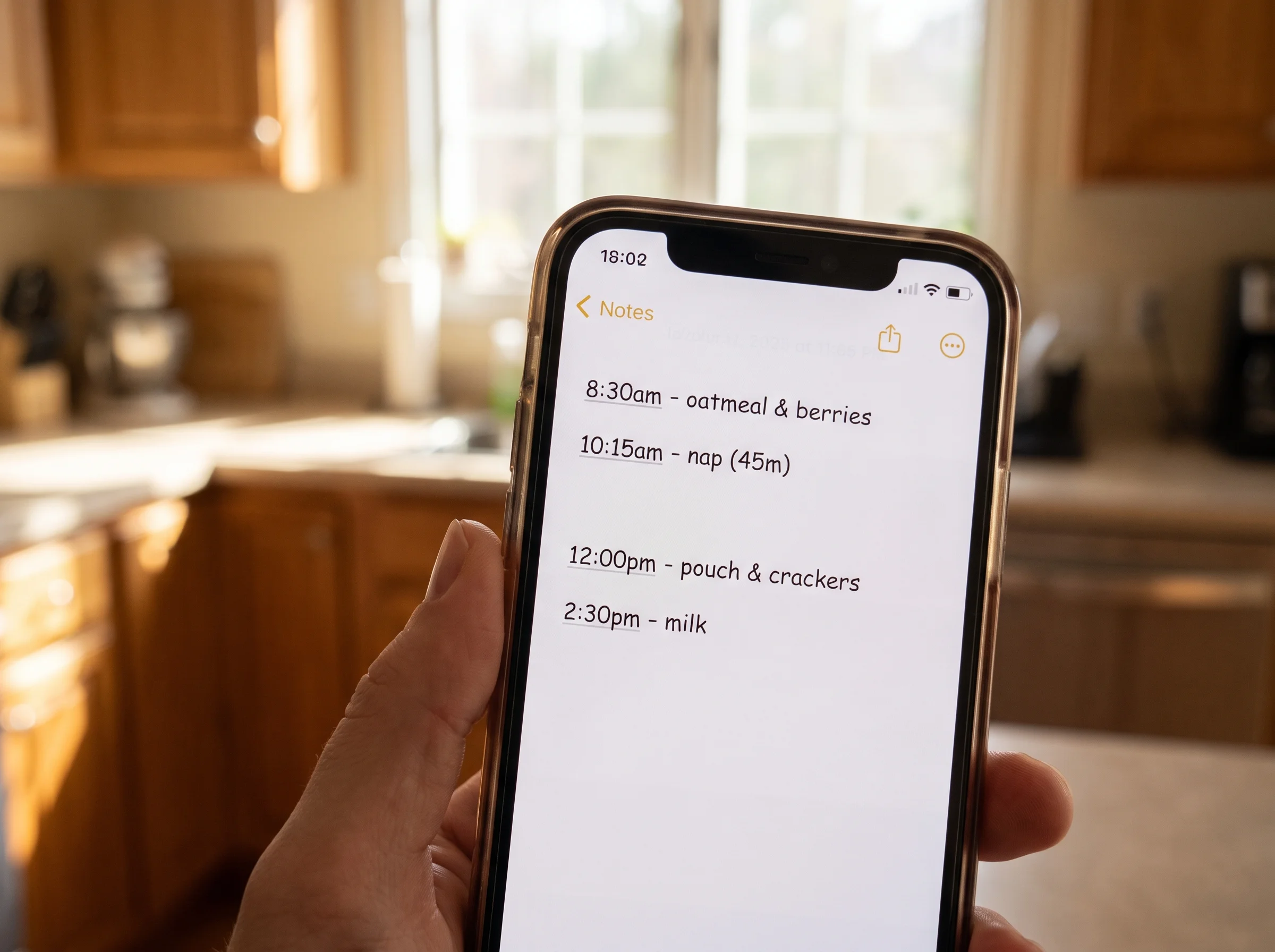
The game wasn't the variable. He was a hungry, tired ten-year-old who happened to be playing Fortnite when his fuse hit zero. If he'd been doing math homework at 5:15 on an empty stomach, I'd have gotten the same kid. I just wouldn't have had something to blame.
This is the part nobody tells you. The game amplifies. It doesn't create. Research from the Oxford Internet Institute backs this up too: the way a kid plays and the surrounding circumstances matter way more than the game itself.
 Not the game, the dayPause, Play, Connect: Core Deck172 prompts that give you something to ask about the day, not just the match.$49 CAD • 90 cards • 18 reviewsShop the deck
The Real Problem Isn't the Game. It's the Transition Off It.
Most "Fortnite makes my kid crazy" stories aren't actually about Fortnite. They're about the moment you tell your kid to stop playing Fortnite.
Here's the thing parents who don't play the game miss: Fortnite matches don't end on a timer. You can't pause a match. If your kid is in the final ten of a Battle Royale and you yell "dinner, NOW," you're not asking him to put down a toy. You're asking him to throw away 15 minutes of focused effort and let his squadmates down at the exact moment things matter most.
I learned this the hard way. One night I yanked the controller mid-match because he didn't come down after I called three times. World War III. Slammed door, tears, the works.
A week later, same scenario, I walked in and said, "Finish this match, then we eat." He came down five minutes later. Same kid. Totally different human.
The rule in our house now: ten minutes warning, and he gets to finish his current match. That's it. The meltdowns dropped by something like 80% overnight.
If your kid is fine until you tell him to turn it off, the game isn't the problem. The transition is.
The Post-Game Decompression Window
Here's something I've never seen another parent talk about, and it changed everything for me.
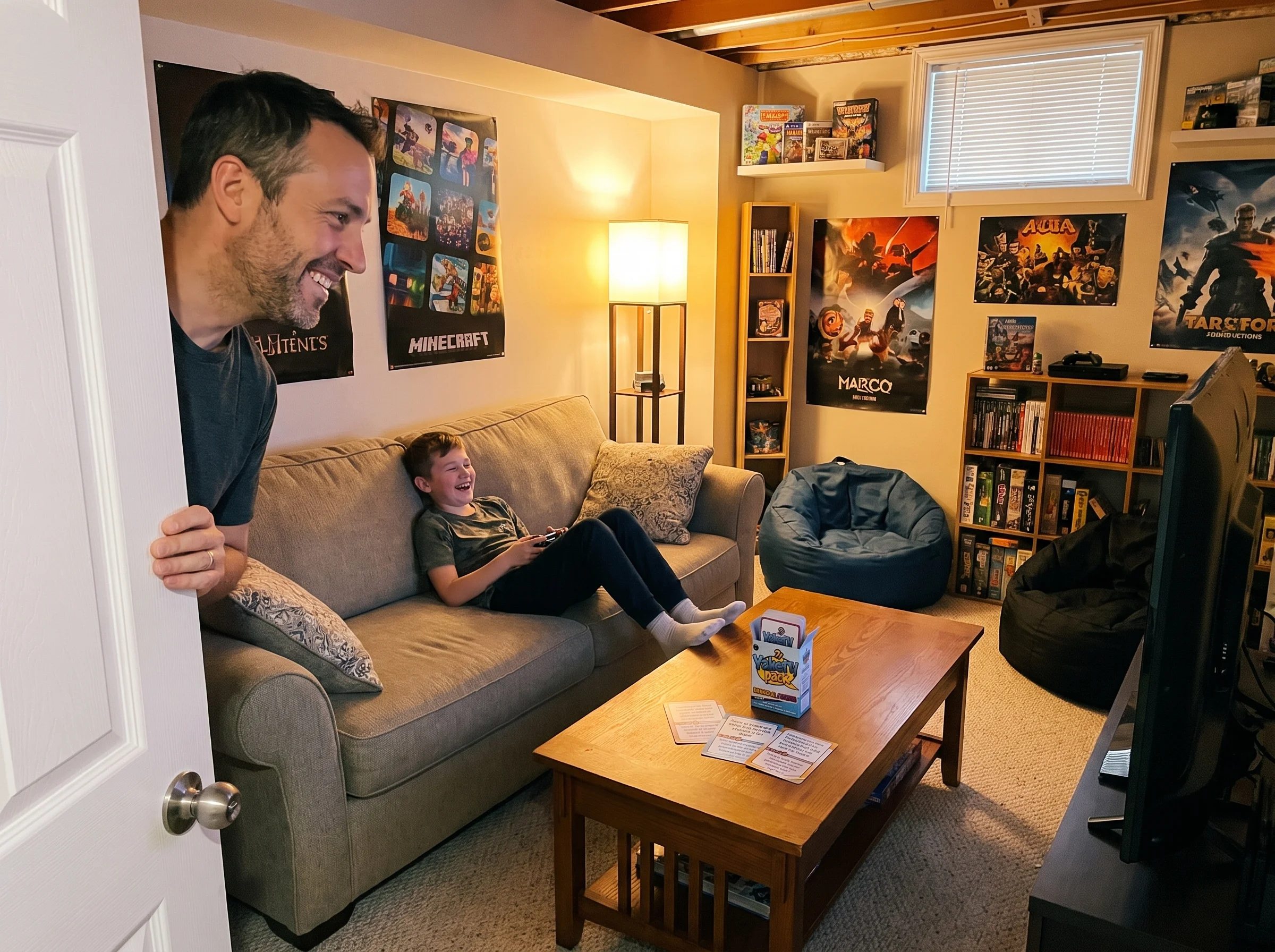
After a Fortnite session, especially a competitive one, your kid is still cranked up for 10 to 20 minutes. Adrenaline is working through their system. Dopamine is dropping. Their heart rate is still elevated. They look fine on the outside, but neurologically they're coming down from something intense.
This is the worst possible window to:
- Ask "how was your day?"
- Assign chores
- Bring up the math test
- Have a conversation about screen time
- Ask why their room is a mess
What works instead: a glass of water, a snack, and low-stakes presence. Sit on the couch. Don't ask questions. Let them tell you about the match if they want. Don't make them.
About 15 minutes later, you've got your kid back. Try the conversation then.
 Fifteen minutes later, not nowPause, Play, Connect: Core Deck$49 CAD • 172 promptsSee the deck
The Behaviors That Are Actually Worth Worrying About
Not all behavior changes are red flags. Some are just kids being kids who happen to love a thing.
Normal: rage after a tough loss. Intense focus during a session. Wanting to play more. Talking about the game constantly. Getting hyped before a play session with friends. Strong opinions about loadouts and strategy.
Worth paying attention to: lying about whether he played. Lashing out at family when he isn't playing. Withdrawing from things he used to love (the basketball hoop is dusty, the books are untouched, the friends he used to ride bikes with are forgotten). Sleep disruption. Secrecy about who he's playing with online.
That last one is the big one. The American Academy of Pediatrics has good guidance on what warning signs actually look like versus what's just normal kid intensity.
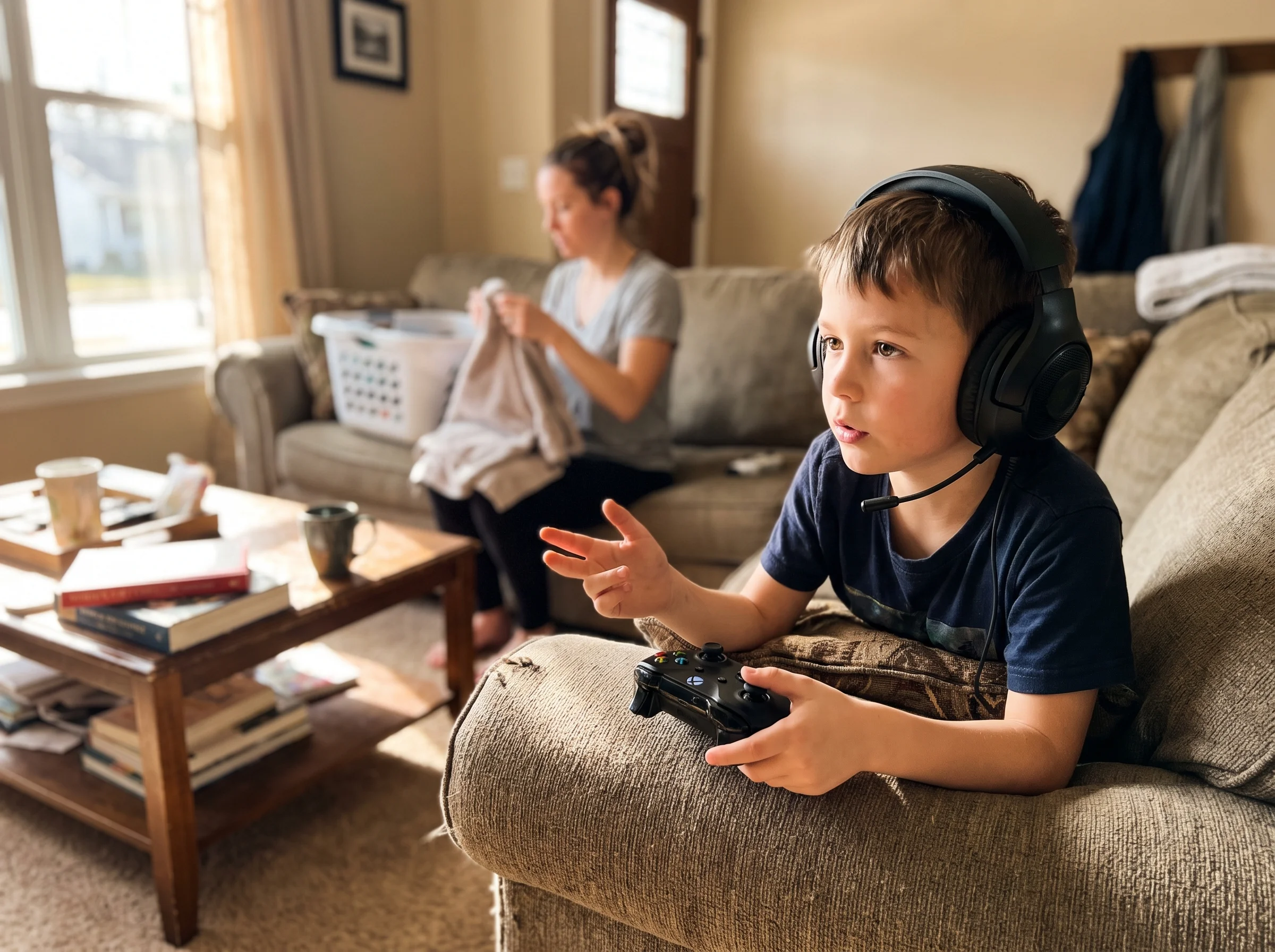
There's a moment I won't forget. My son started playing way more than usual, and I was about to drop the hammer. Then his teacher emailed about him being quiet at lunch. Turned out he was getting frozen out by his usual group at school. He wasn't retreating into Fortnite because Fortnite was the problem. He was retreating into Fortnite because Fortnite was the one place where he had a squad that wanted him.
The game wasn't the problem. It was the symptom. If I'd taken it away, I'd have taken away the one good thing he had that week.
The Positive Behavior Changes Nobody Mentions
Watch your kid play with his friends for an hour and you'll learn more about who he's becoming than you will in a month of dinner conversations.
How does he talk to his squad when someone messes up? Does he blame, or does he reset? When he loses a match he should have won, does he own it or does he point fingers? When his teammate gets eliminated, does he go for the revive or does he run? When he wins, is he gracious or insufferable?
That's character data. Real, observable, in-the-wild character data. Most parents are so busy worrying about whether the game is harming their kid that they miss the fact that the game is showing them exactly who their kid is, in real time, under pressure.
My son has gotten genuinely better at losing. Not because we sat down and had a chat about sportsmanship. Because he loses sometimes in Fortnite and his friends are watching, and he's figured out that being a sore loser costs him squadmates.
I couldn't have taught him that. The game did.
What to Actually Say After a Bad Session
Skip "you shouldn't get so upset over a game." It doesn't work, and you know it doesn't work, because it never works on you when someone says it to you either.
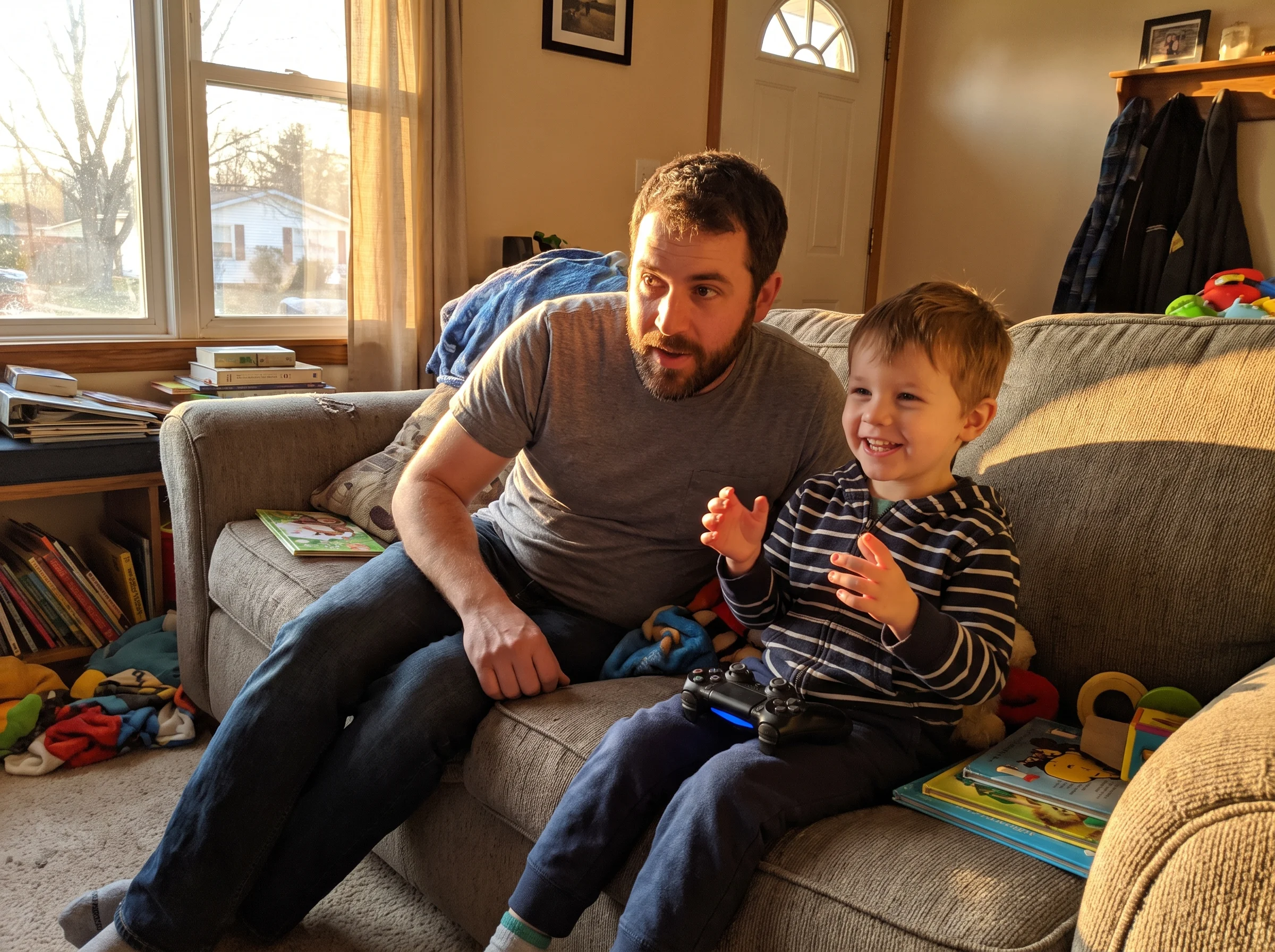
Wait for the decompression window to pass. Hand him a snack. Then, when he's regulated, try this:
"What happened in that last match?"
Not "why did you lose your mind." Not "we need to talk about your behavior." Just curiosity about the match itself.
And then the question that changed everything in our house:
"What would you do differently next round?"
That question does three things at once. It treats him like someone capable of self-reflection. It moves him from blame to strategy. And it tells him you actually care about the thing he cares about.
This is honestly the seed of why we built Yakety Pack in the first place. I spent months asking "how was Fortnite?" and getting grunts. The day I asked "what's the wildest thing that happened in your match today?" I got ten minutes of stories about a guy who built a sky base and somebody else who got knocked into the storm at one HP. The question matters more than the timing, more than the setting, more than anything.
The One Thing That Will Affect Your Kid's Behavior More Than the Game
Whether you engage with what they love, or dismiss it.
Kids whose parents ask real questions about the game behave differently than kids whose parents just complain about screen time. I've watched it in my own house and I've watched it in friends' houses. The difference is night and day.
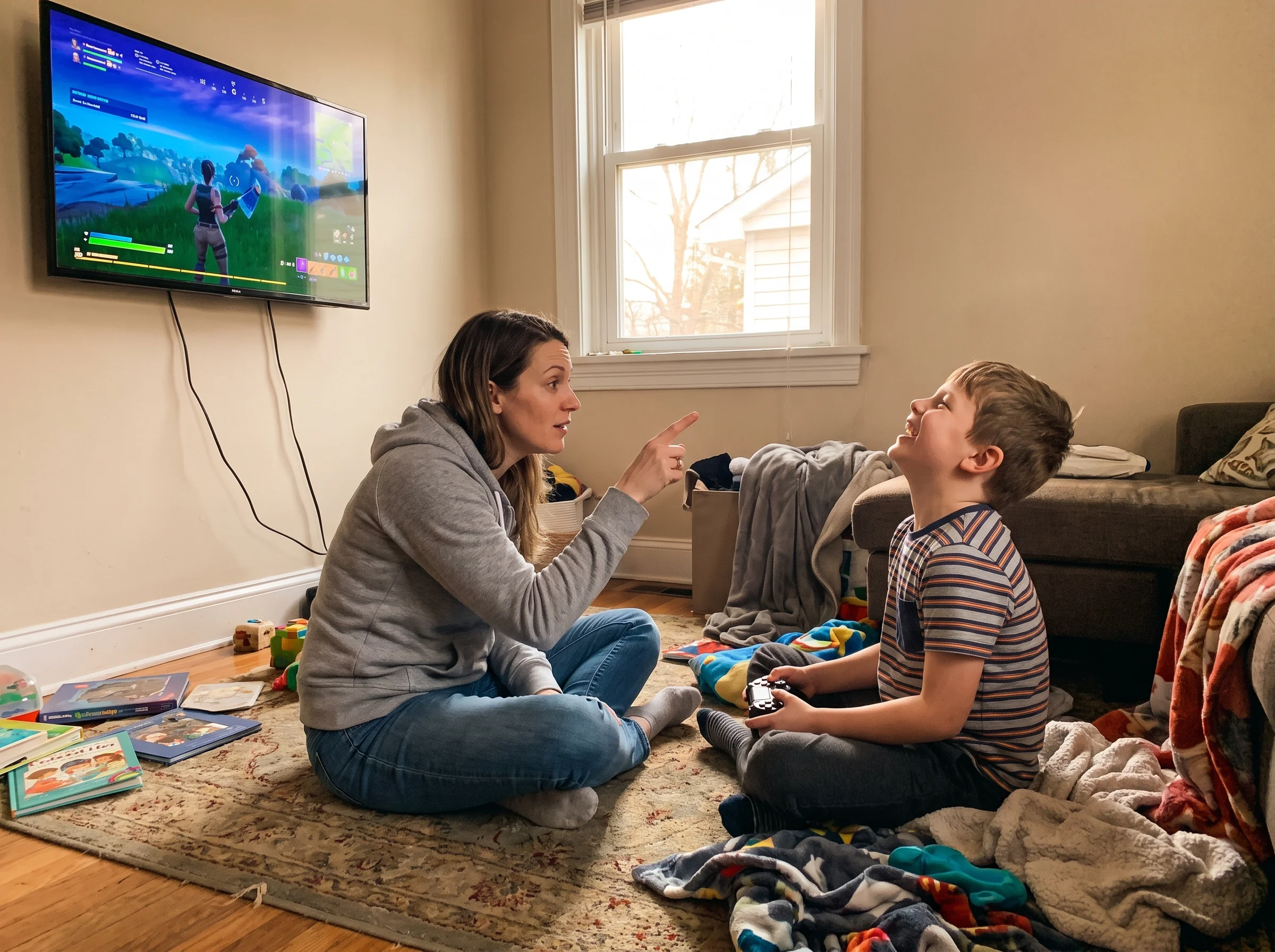
You don't have to love Fortnite. You don't have to play it. You have to be curious about it. Because if you make it clear that the thing your kid loves is stupid to you, you've just taught him that you're not a safe person to bring problems to. And then when the game does cause a real problem, a toxic squadmate, a creepy DM, a spending temptation, he's not coming to you. He's figuring it out alone.
That's the behavior change that will actually cost you. Not the rage after a loss. The silence that comes later.
So yes, Fortnite affects your kid's behavior. But the bigger question is whether you're paying attention to what it's showing you. The game is a window into who your kid is becoming. Pull up a chair next to the couch tonight. Don't say anything. Just watch a match.
You'll learn more than you think.

From this article
Pause, Play, Connect: Core Deck
Snack first, then this: Once the decompression window passes, what you say next decides whether you get stories or a shrug. The Pause, Play, Connect Core Deck hands you match-first questions for that calm moment, so it becomes a conversation instead of a behavior review.

