
Last Tuesday, my kid melted down when his game ended after I said time was up. He threw his controller and screamed "You don't understand!" He was right. I didn't understand that I'd just asked him to abandon his friends mid-battle, lose 30 minutes of progress, and get labeled a "rage quitter" by his team.
That moment changed how I handle gaming endings forever. Because here's what I realized: we don't ask adults to abandon their activities mid-task. Imagine someone telling you to stop cooking dinner with food on the stove, or to hang up during an important call because "time's up." You'd melt down too.
Yet that's exactly what we do to our kids every single day.
Why Gaming Endings Hit Different
Games aren't like TV. You can't just hit pause and walk away. When I finally sat down and played Fortnite with my son, I got schooled in more ways than one. Twenty minutes into a match, my wife called us for dinner. "Just pause it," she said.
My son and I looked at each other. You can't pause an online battle with 99 other real people. If we left, we'd lose everything we'd worked for. Our teammates would be down two players. We'd get marked as quitters.
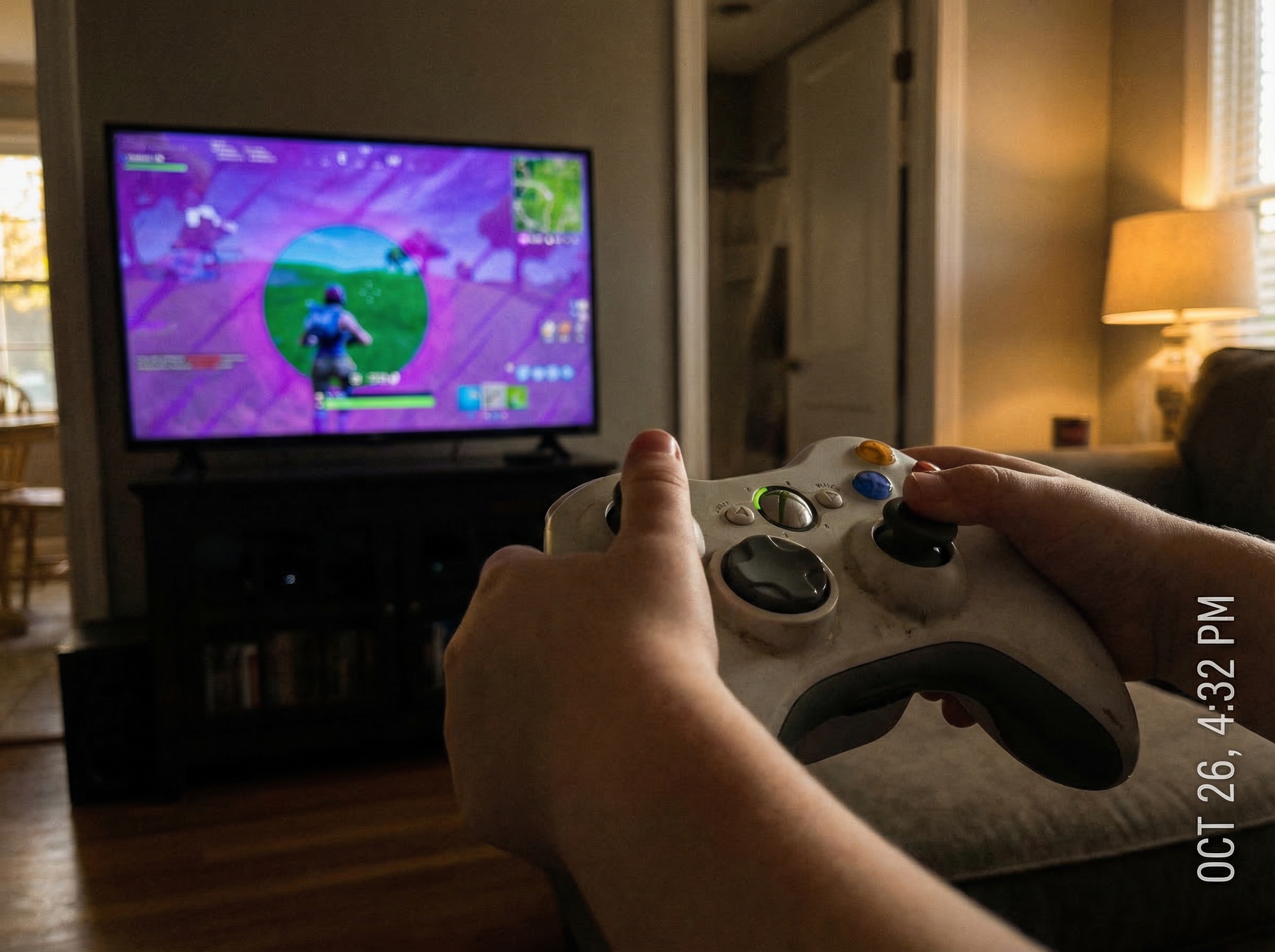
That's when it clicked. Every time I'd yanked him away from a game, he wasn't just losing screen time. He was losing:
- Real progress (items, points, achievements he'd worked for)
- Social standing (letting down real friends who were counting on him)
- The satisfaction of completion (imagine reading a book and someone ripping out the last chapter)
- His sense of control in that world
The worst part? Games are literally designed to never have a "good" stopping point. There's always one more level, one more match, one more thing to build. Game designers call this "engagement mechanics." I call it "why my kid cries when I say dinner's ready."
 When the match cannot pausePause, Play, Connect: Core Deck172 prompts that turn the end of a session into something worth talking about.$49 CAD • 90 cards • 18 reviewsShop the deck
Reading Your Child's Game (Not Just the Clock)
After the Fortnite revelation, I did something radical. I learned about the games my kids play. Not to monitor them, but to understand their world. Turns out, different games need completely different ending strategies.
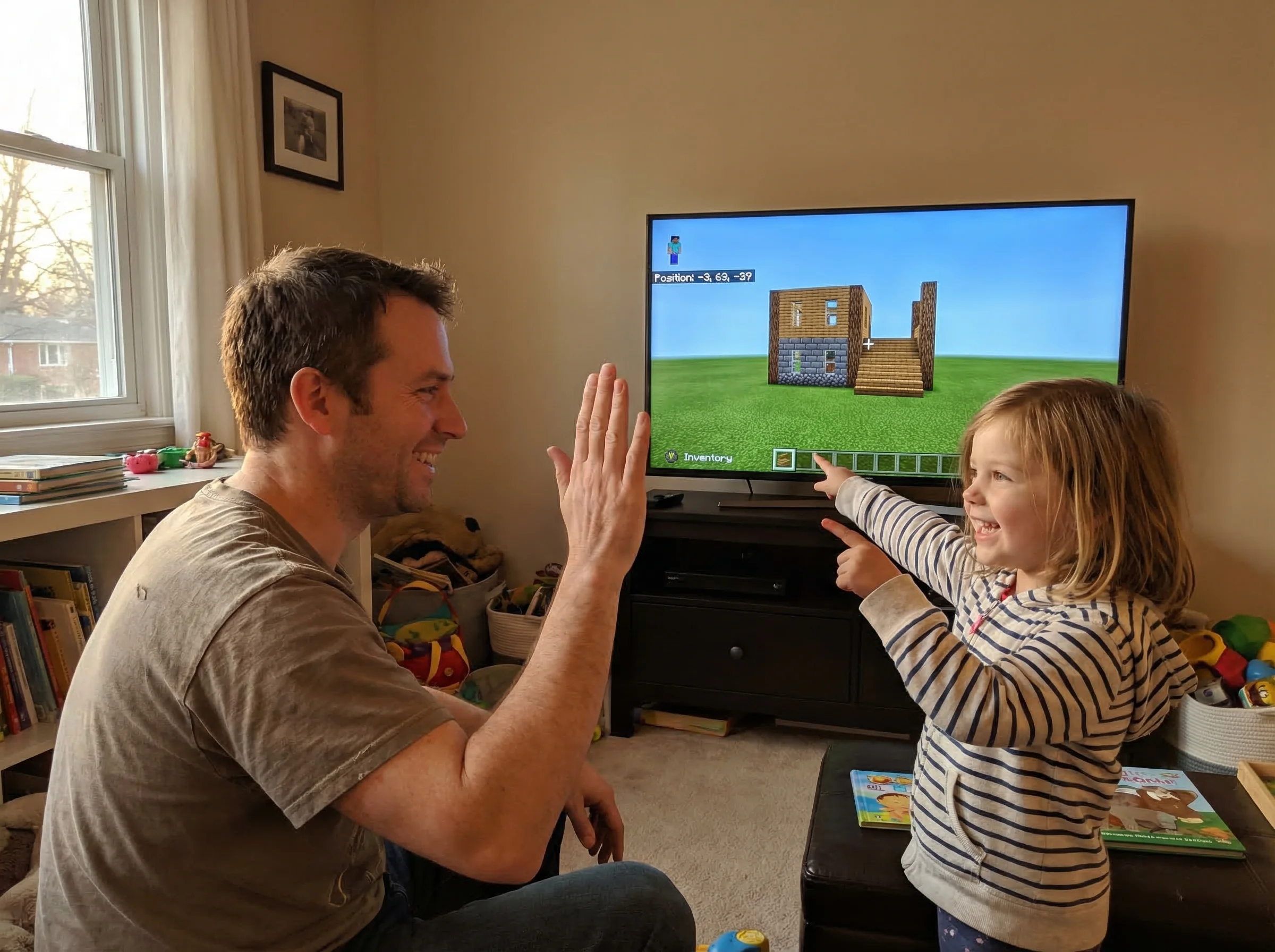
Minecraft: My daughter can save anytime, but she needs warning to finish what she's building. Asking "What are you working on?" gets me answers like "I'm putting the roof on my house" - now I know she needs 10 minutes, not 5.
Fortnite/Battle Royale Games: Matches last 20-25 minutes. You can't save. You can't pause. You can't leave without consequences. I learned to ask "How long if you play one more match?" and actually respect the answer.
Roblox: This one's tricky because it's not one game - it's thousands. Some you can leave anytime. Others are like mini-Fortnites. The question "What game are you in?" became essential. A deck of conversation cards for families gives you that same shape of specific, structured question, ready for the windows when you do not have the bandwidth to invent one.
Sports Games (FIFA, NBA 2K): Games have quarters or halves. "Can you finish this quarter and then save?" works way better than arbitrary time limits.
The magic question became: "What's happening in your game right now?" My kids went from grunting at me to explaining their digital situation. And once I understood, we could problem-solve together.
The Transition Strategy That Actually Works
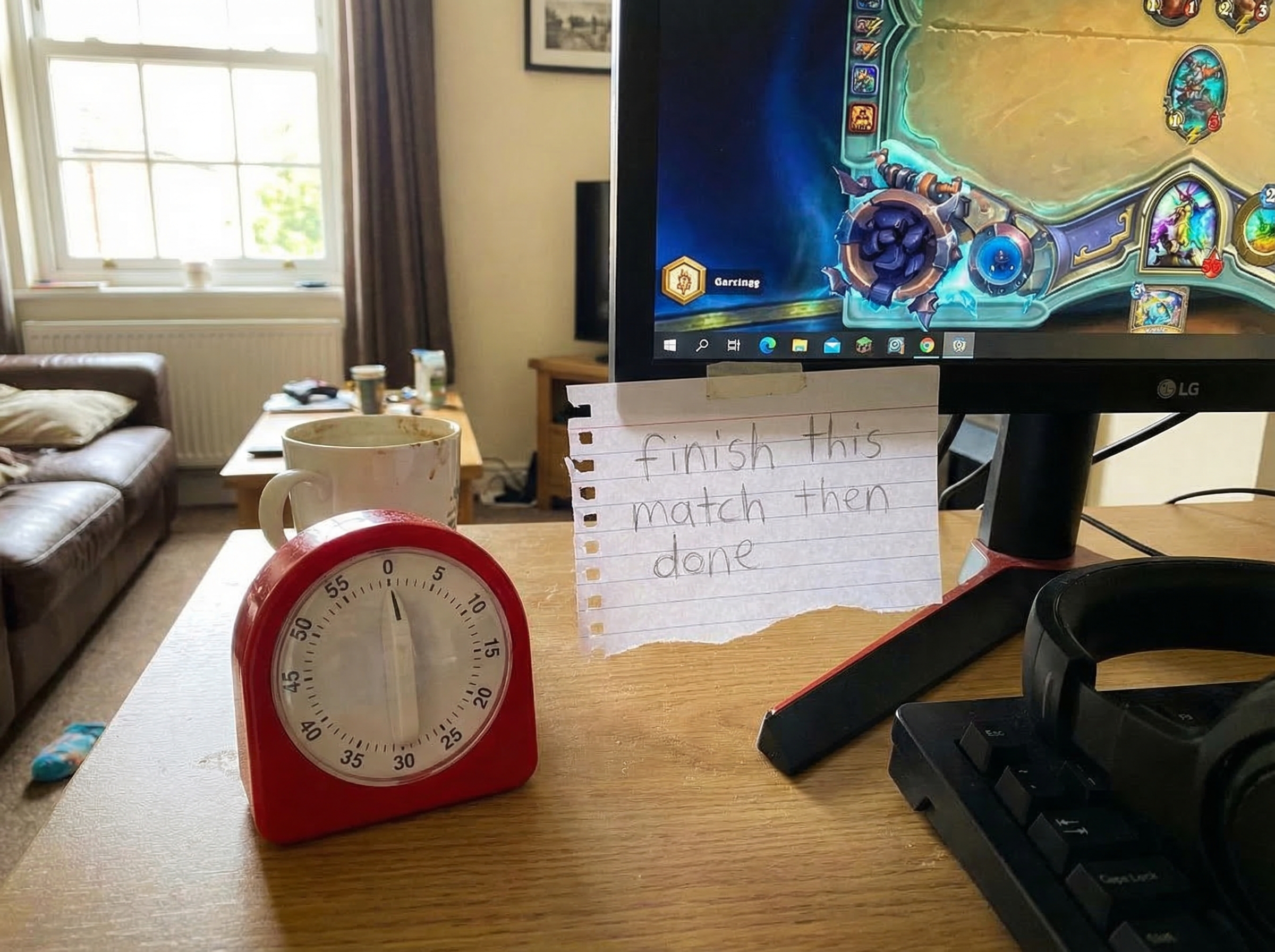
"Five minutes!" used to be my go-to warning. It never worked. Know why? Five minutes in parent-time means "wrap everything up." Five minutes in game-time means "oh crap, I can't do anything meaningful in five minutes so why bother trying."
Here's what actually works in my house:
The "Next Good Stopping Point" Conversation Instead of: "You have 10 minutes left" Try: "What's your next good stopping point?"
My 11-year-old might say "After this match" (20 minutes) or "Let me get to a save point" (5 minutes). By letting them identify the endpoint, they own it. They're way less likely to negotiate when the time comes.
Building Transition Rituals We created something called "victory lap" - before logging off, each kid shares one cool thing that happened in their game. My youngest told me about taming her first wolf in Minecraft. My oldest explained a clutch play that saved his team.
This does two things: it honors what they accomplished (so leaving doesn't feel like abandonment), and it creates a bridge between their gaming world and our family world. Some of our best conversations now start with "Tell me about that thing you built." When the post-game wind-down opens into something bigger, our guide on how to talk about big feelings covers what to do when the conversation goes deeper than the game.
The "What Comes Next" Strategy I used to pull them from games to... nothing. "Screen time's over" meant "go find something to do." No wonder they melted down. Now I make sure there's something worth transitioning TO. "When you hit your stopping point, we're making cookies" works better than "time's up, go play outside." This is the cleanest way to turn screen time into connection time without making it a fight about putting the controller down.
For the Drive Home: If your kid comes off a session looking off, the conversation works better in the car than at the kitchen counter. Keep a few Pause, Play, Connect cards in the glovebox so you can pull a soft opener without making it a scheduled talk.
When Meltdowns Are About More Than Games
Here's a hard truth I had to face: sometimes the game wasn't the problem. It was the solution.
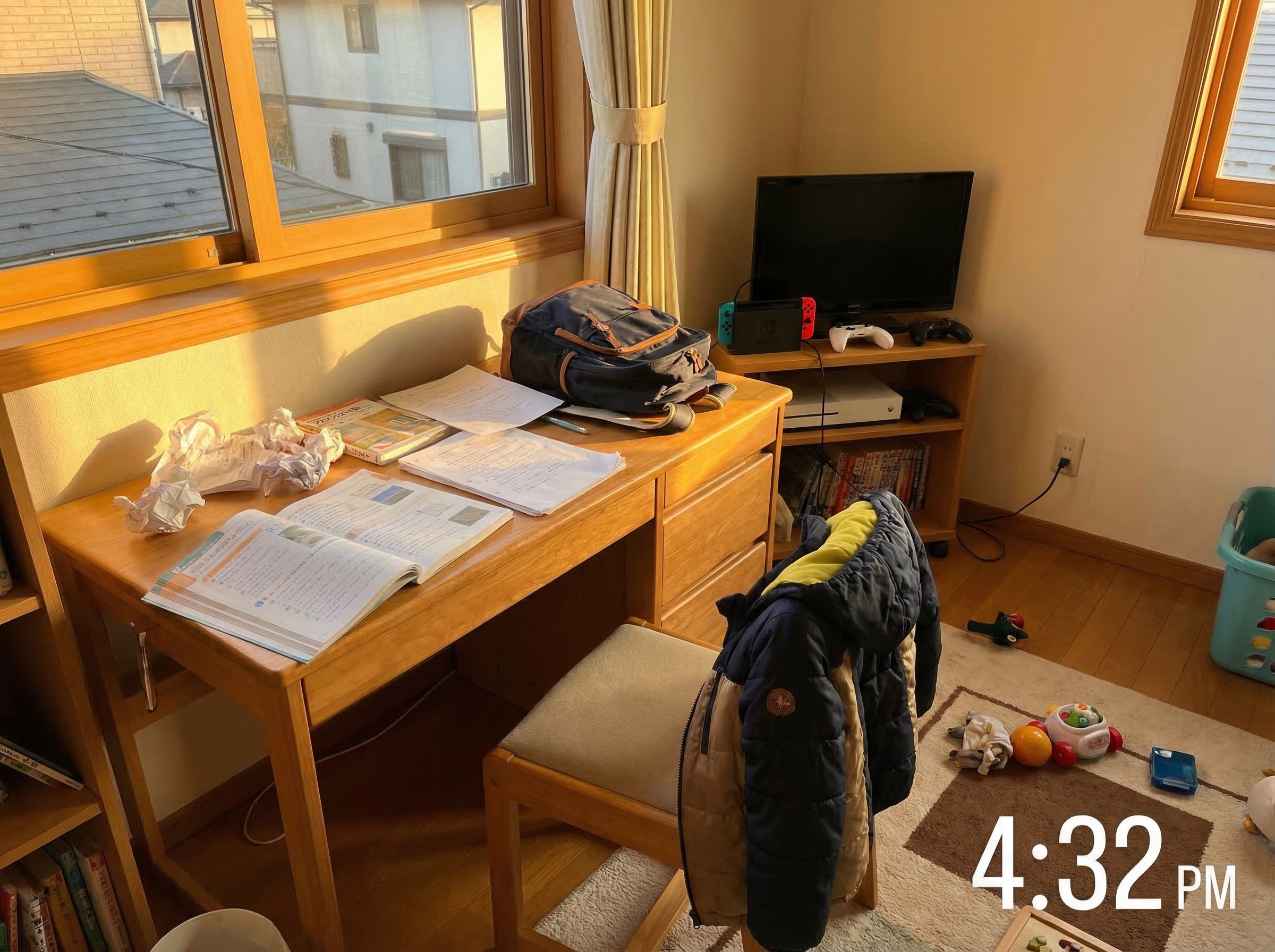
My son's gaming meltdowns peaked during test weeks at school. The pattern was so obvious once I looked for it. His game was where he felt competent when school made him feel stupid. It was where he had control when everything else felt chaotic. Taking it away without understanding this was like ripping away his emotional support blanket.
Games can be emotional regulation. That's not automatically bad. My daughter builds elaborate Minecraft worlds when she's processing big feelings. My son plays NBA 2K to decompress after social stress. The game itself isn't unhealthy - it's how they cope.
The question isn't "How do I stop the meltdowns?" It's "What are the meltdowns telling me?"
When your kid absolutely loses it over ending a game, ask yourself:
- What's going on in their life right now?
- Is gaming their main source of success/control/social connection?
- Am I providing other outlets for these needs?
Sometimes the answer isn't less gaming. It's more of everything else.
 Once the screen goes darkPause, Play, Connect: Core Deck$49 CAD • 172 promptsSee the deck
Natural Consequences vs. Power Struggles
I used to be the "rules are rules" dad. Time's up meant time's up, meltdown or not. Then I tried an experiment that changed everything.
For one week, I let natural gaming consequences teach the lessons. When my son insisted on "one more match" before hockey practice, I said okay. He missed warm-ups, got benched for the first period, and learned that game time has real-world impacts. Way more effective than me being the bad guy.
When my daughter stayed up late building in Minecraft after I'd warned her about stopping, I let her. The next day she was exhausted, cranky, and couldn't focus on her art class (which she loves). "Mom, I think I stayed up too late gaming" hit different coming from her than from me.
But here's the key: I had to fight every urge to say "I told you so." Instead, I asked "What do you want to do differently tonight?" She set her own earlier endpoint. No meltdown. No power struggle.
Sometimes holding the line matters. If we have dinner reservations or family coming over, game time ends when it ends. But I learned to pick my battles. Is this the hill to die on, or can natural consequences do the teaching for me?
Building Better Gaming Endings Together
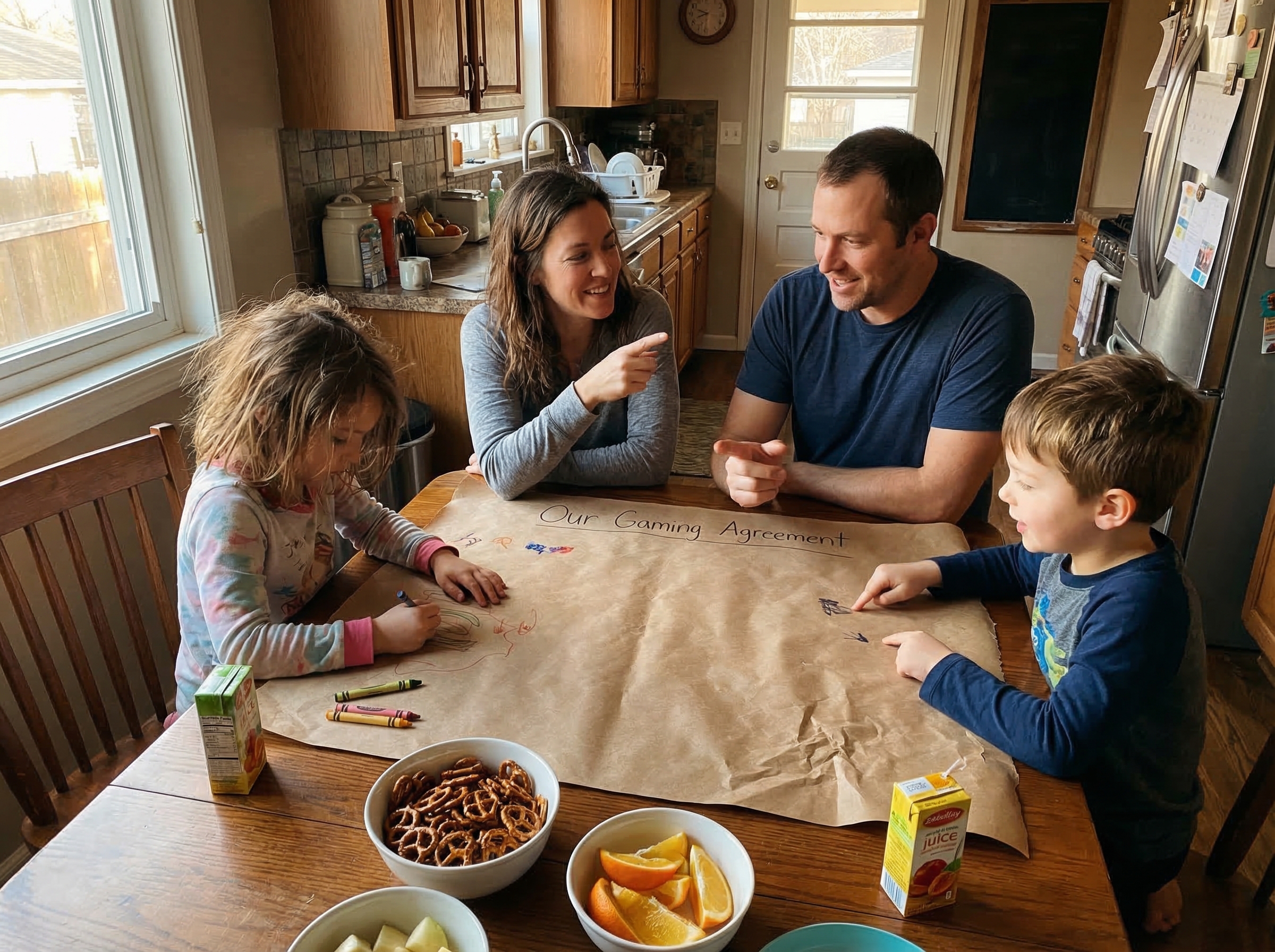
The breakthrough came when I stopped making rules FOR my kids and started making agreements WITH them. We had a family meeting (with snacks, because bribes work) and created our "Gaming Agreement."
My kids helped write it. They decided:
- How much warning they needed for different games
- What counted as "good stopping points"
- Consequences for not honoring agreements (they chose losing the next day's game time)
- Exceptions for special events or new game releases
Because they helped create it, they follow it. Mostly. We're not perfect, but meltdowns went from daily to maybe weekly. And when they happen, I can point to the agreement THEY wrote.
The unexpected bonus? My oldest now announces "Hey Dad, I'm gonna finish this match then I'm done." Without prompting. Because he helped design the system, he owns it.
This is where tools matter too. We use Yakety Pack cards after gaming sessions sometimes - not as a requirement, but as an option. "Want to do some card questions about your game?" often gets a yes, especially when they're still excited about something that happened. It became part of our cool-down routine, this bridge between their gaming world and our family conversation.
The Long Game: From Meltdowns to Maturity
Progress doesn't look like no more tears. Progress looks like:
- "Dad, can I have 15 more minutes to finish this?" instead of lying about where they are in the game
- Tears that last 2 minutes instead of 20
- "I'm mad but I know I agreed to stop now"
- Setting their own timers (my 13-year-old does this now)
- "Actually, this is a good stopping point" when you haven't said anything yet
My oldest is 13 now. Last week, he was deep in a ranked match when I reminded him about youth group. "Ugh, okay. Give me literally two minutes to forfeit properly so I don't screw my teammates." Two years ago, this would've been a screaming match. Now it's communication.
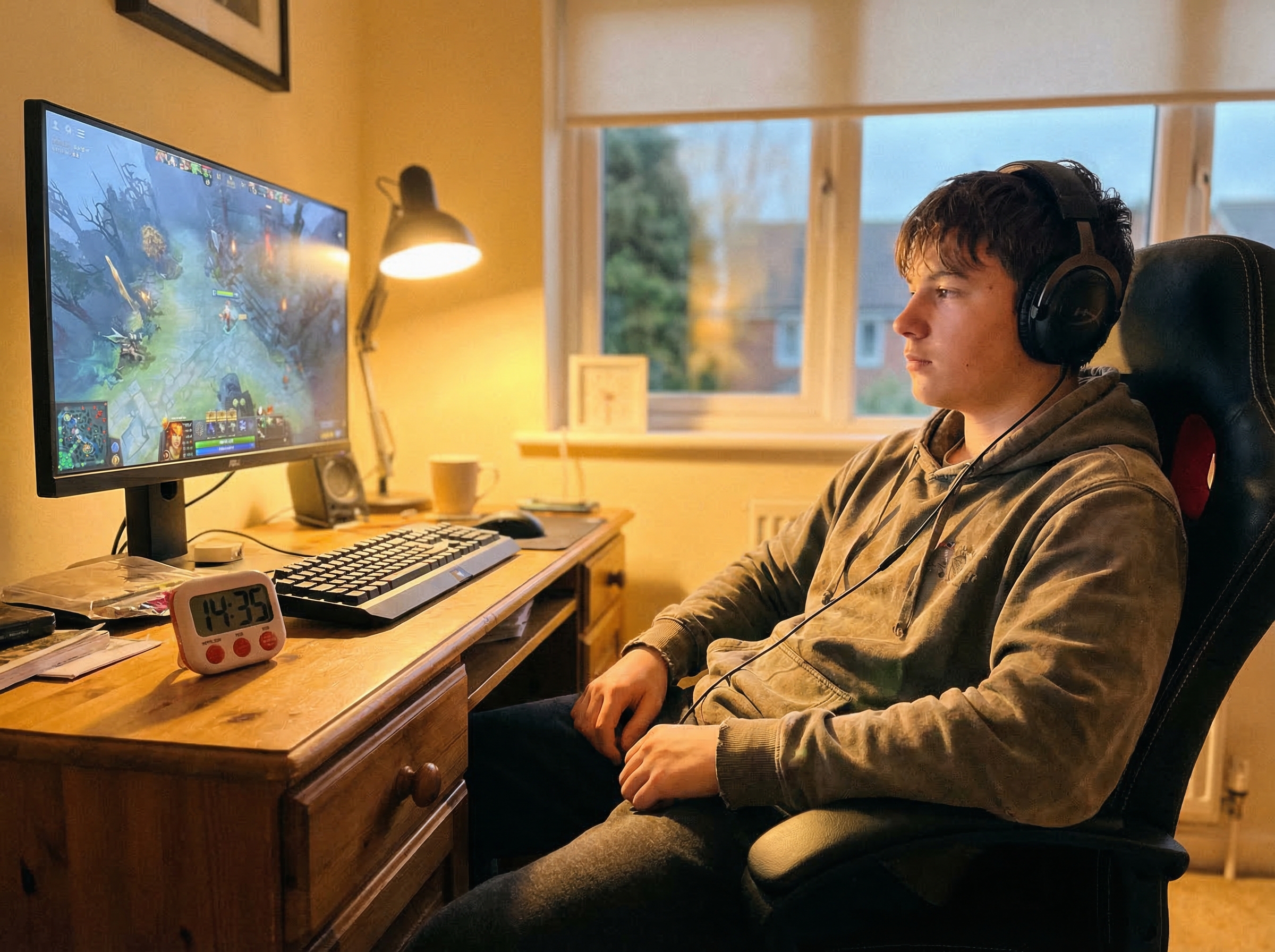
The goal isn't compliance. It's teaching them to manage their own gaming relationships. Because here's the truth: games aren't going away. They need these skills for life, not just for childhood.
Your Next Move
Tonight, when your kid is gaming, try this: Instead of announcing "time's up in 10 minutes," sit down next to them and ask, "What's happening in your game right now?" Listen to the answer. Really listen. Ask when a good stopping point would be.
You might still get pushback. You might still get tears. But you'll also get something else: understanding. And that's where every solution starts.
The meltdowns won't stop overnight. But they'll transform from volcanic eruptions into manageable disappointments. And sometimes? Your kid might even volunteer when a good stopping point is coming up.
That's not just ending screen time without tears. That's building trust, understanding, and communication skills that last way beyond game time.
For the victory lapPause, Play, Connect: Core Deck172 prompts that give the cool-down after a session an easy place to start.$49 CAD • 90 cards • 18 reviewsShop the deck
Related Articles
Looking for more? Check out these related articles:
- gaming and emotional regulation for kids
- healthy gaming boundaries for emotional kids
- my child uses games to cope with stress
- best calming video games for kids
- minecraft helps my kid with emotions
FAQ
Q: What if my kid always says "just five more minutes" and it's never actually five minutes?
A: Been there. Here's what works: make them be specific. "Five more minutes to do what exactly?" If they say "finish this build" or "complete this match," hold them to that specific thing, not the time. "OK, when that match ends, you're done" is way more enforceable than watching the clock.
Q: Is it normal for my 8-year-old to cry actual tears when game time ends?
A: Totally normal. They're not being manipulative - they're experiencing real loss. Think about how you'd feel if someone made you leave a movie theater 20 minutes before the ending. The tears usually decrease as they learn to anticipate and manage transitions better. Common Sense Media has great resources on understanding emotional responses to screen time limits.
Q: How do I handle it when they say all their friends are still playing?
A: This one's tough because it's often true. I validate the feeling: "That does stink that they get to keep playing." Then I redirect: "What should we do that your gaming friends CAN'T do right now?" Exclusive time with you suddenly sounds better than what they're missing.
Q: Should I learn to play their games to understand better?
A: You don't have to become a gamer, but understanding basics helps immensely. Watch them play for 10 minutes. Ask questions. Let them teach you. My daughter explaining Minecraft made her feel like the expert (she is) and helped me understand why "just pause it" doesn't work.
Q: What's the difference between normal meltdowns and signs of gaming addiction?
A: Normal meltdowns happen at transition times but kids recover and engage with other activities. Warning signs include: lying about game time, complete inability to enjoy anything else, declining grades/hygiene/sleep consistently, and aggressive behavior that escalates over time. If you're concerned, trust your gut and seek help. The American Academy of Pediatrics offers evidence-based guidance on healthy gaming habits.

