
When my older son hit sixth grade, I had a spreadsheet. An actual color-coded spreadsheet, ranking every gaming app he wanted to play by safety score, age rating, recommended time limits, and "parental control compatibility." I'd spent a Saturday building it. I was proud of it. I showed it to him at the kitchen table like it was a peace treaty.
He looked at it for about four seconds and said, "Dad, you don't get it."
He was right. I was managing his gaming like a compliance officer when what he actually needed was a teammate. The next two years were me slowly, painfully figuring out that almost everything I'd read online about gaming apps and technology for middle schoolers was written for the parent I was trying not to become: scared, suspicious, and completely outside the world my kid was living in.
This is the article I wish I'd had instead. Not a ranked list of "safest apps." Not a threat assessment. A cultural translation guide for parents who want to actually understand what their middle schooler is doing on that screen, why they care so much, and how to use it to get closer to them instead of farther.
First, Let's Talk About What Gaming Actually IS for Your Kid
Here's the single biggest mistake I made early on, and I see other parents making it constantly: I treated gaming like an activity. Like it was the modern equivalent of watching TV. Something my son was doing instead of socializing.
It's not. For most middle schoolers, gaming IS socializing.
When my son fires up Fortnite after school, he's not "playing a video game." He's hanging out with three specific friends, in a specific Discord call, doing what kids my age did at the mall or on bikes or on the phone for four hours after school. The game is the location. The friends are the point.
Once that clicked for me, "go play outside instead" stopped feeling like helpful parenting and started feeling like what it actually is: telling my kid to ditch his friends. No wonder it never worked. Research from the American Psychological Association backs this up: most adolescent gaming is fundamentally social, not solitary.
The status economy is real
The other thing nobody told me: middle school gaming has a status layer that's every bit as cutthroat as the social hierarchy I remember from 1992.
When my son begged me for a specific Fortnite skin, I told him no, because it was twenty bucks for "pixels." He got upset and went to his room. I felt good. Boundaries, right?
Then about a week later it hit me. In seventh grade, I begged my mom for a specific pair of Air Jordans. They cost a fortune. They didn't make me run faster. They were also, definitely, just leather and rubber. But if you didn't have them, you knew. And everyone else knew too.
The skin was the shoes. The Robux were the shoes. The Discord server name was the shoes. I wasn't wrong to say no to the twenty bucks. I was wrong to be dismissive about why he wanted them. There's a difference between "no" and "your whole world is stupid."
 Take their world seriouslyPause, Play, Connect: Core Deck172 prompts that treat your middle schooler's world as worth asking about.$49 CAD • 90 cards • 18 reviewsShop the deck
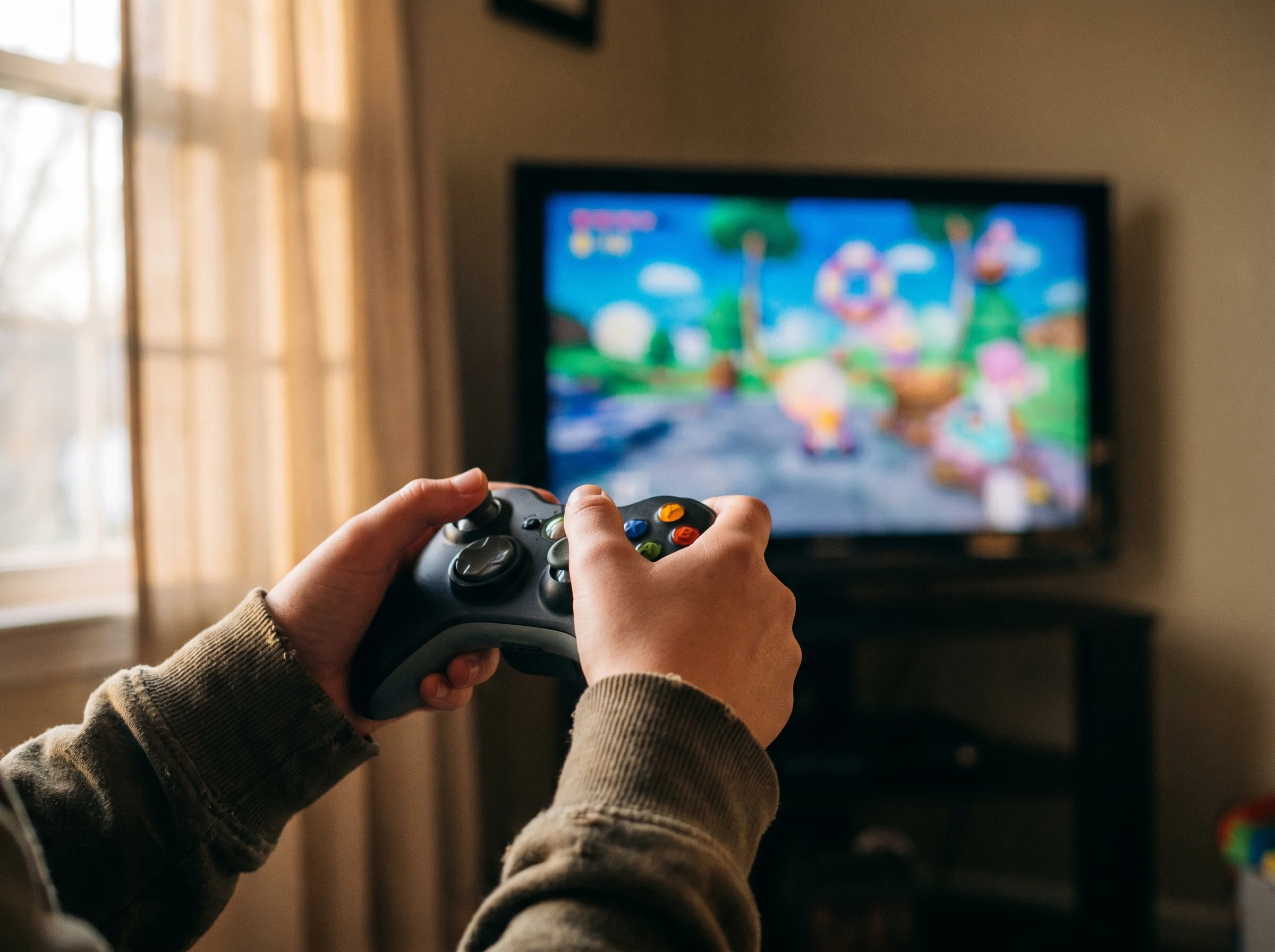
The Actual Gaming Landscape for Middle Schoolers Right Now
Okay, here's the lay of the land. I'm going to skip the fear-based reviews and tell you what each thing actually is, why kids love it, and what's worth paying attention to.
Roblox
Roblox isn't a game. This is the first thing parents need to know. It's a platform that hosts millions of games made by other users, most of them other kids. Your kid isn't playing "Roblox" any more than you're "watching YouTube." They're playing specific experiences inside it, things like Adopt Me, Blox Fruits, Murder Mystery 2, or whatever is hot this month.
Why kids love it: it's where their friends are, and the variety is endless.
What to actually watch for: it's not the games. It's the chat. Roblox has a public chat system and the user-generated nature means quality control is uneven. The real risk is social, not visual.
Minecraft
Still huge. Still mostly great. If your kid is into Minecraft, count your blessings, because it's the closest thing to digital LEGO that exists. Creative, collaborative, low-toxicity.
The thing to know: Realms and private servers. Your kid will eventually want to play with friends on a shared world. That's almost always fine. Public servers are a different conversation and worth asking about specifically.
Fortnite
The skin economy game. Yes, there's shooting. No, it's not realistic violence. The bigger thing happening in Fortnite isn't the gameplay, it's the social meta: who's in your squad, what skin you're wearing, what emote you have, what your stats look like.
V-Bucks are the in-game currency. They cost real money. Your kid will ask for them. This is a great conversation to have about money, not just gaming. I let my son earn V-Bucks for specific things. It changed the dynamic completely.
Valorant, League of Legends, Overwatch, Apex
This is the "real games" tier. Usually 7th grade and up, sometimes earlier if older siblings are involved. These are competitive, ranked, team-based, and have a steeper toxicity curve than Fortnite. Voice chat matters more here because coordination matters more.
When your kid graduates from Minecraft and Fortnite to one of these, pay attention. Not because the games are dangerous, but because the social stakes get higher. Rank means something. Losing hurts more. The lobbies can be brutal.
Discord
Not a game. The most misunderstood app in the entire gaming world from a parent perspective.
Discord is where gaming socializing lives. It's group chat plus voice channels plus servers (think clubhouses) organized around games, communities, or just groups of friends. Your kid's school friend group probably has a private Discord. That's mostly fine and actually pretty great, the digital equivalent of the basement everyone hung out in.
Public Discord servers organized around games or streamers are a different animal. That's where the strangers live. We'll come back to this.
Mobile stuff
Clash Royale, Brawl Stars, Geometry Dash, Subway Surfers, Stumble Guys. These are the snack food of middle school gaming. Usually not a big deal, sometimes monetized aggressively. The main thing to watch is the in-app purchase pressure.
The Hardware Question for Middle School Gaming (Console vs. PC vs. Phone)
Here's something every article ignores: hardware is identity for middle schoolers.
"Console kids" and "PC kids" are different tribes now. Not in a hostile way, mostly. But ask any middle schooler and they can tell you exactly which of their friends play on PS5, which are on Xbox, which are on Switch, and which have a "real" gaming PC. The hardware signals where you fit socially and what games you can even play with your friends.
This is why when your kid asks for a gaming PC, it's not really about frame rates. It's about which game they want to play (some games are PC-mostly), which friends they want to play with, and what identity they're trying to step into.
That doesn't mean you have to buy one. It does mean understanding what they're actually asking for.
Quick honest take on spending:
- A Switch or PS5 covers most middle school gaming needs.
- A gaming PC is a real investment ($800 minimum for anything decent, easily $1500+). Worth it if your kid is genuinely into PC-specific games and you want it to last through high school.
- A gaming chair is mostly a vibe. My son tried to negotiate me into a $400 gaming chair when he was 12. We ended up at a $90 office chair from Costco. He survived.
The money pit warning: peripherals. Mice, keyboards, headsets, monitors, RGB lights. There's always one more thing. Set a budget, hold the line, let them save up for upgrades.
Voice Chat, Discord, and the Stranger Question
This is the single biggest source of parent anxiety I hear about, so let me be direct about how I think about it.
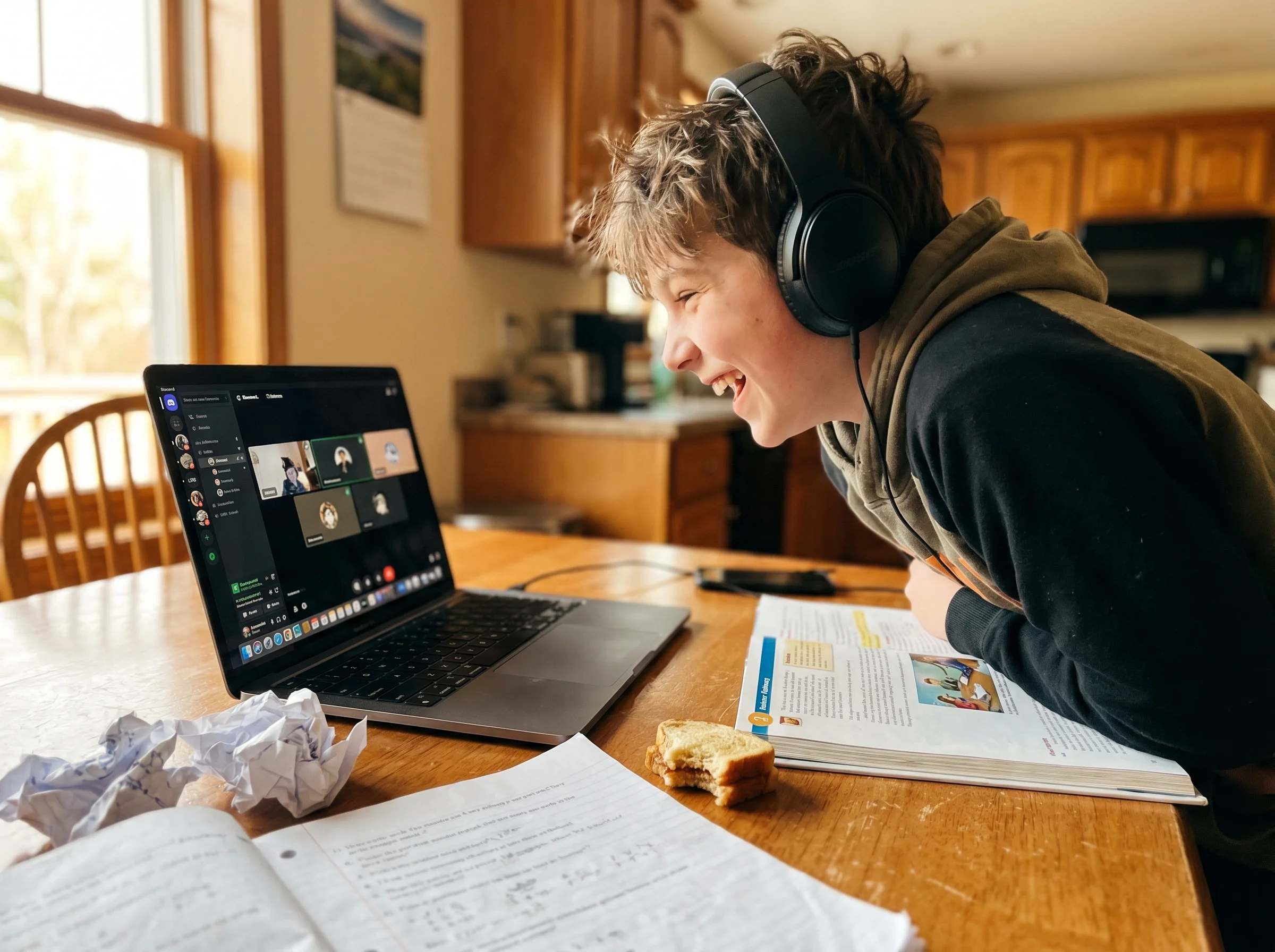
Voice chat with friends your kid knows in real life: almost always fine, and honestly great. They're just hanging out. It sounds chaotic because middle school boys are chaotic. They're not in danger, they're just loud.
Voice chat in public lobbies with strangers: your call, but I lean toward "off" for younger middle schoolers and "supervised" for older ones. Random lobby chat in competitive games is where the toxicity lives. Slurs, harassment, weird adults occasionally. Not always, but enough that it's worth being deliberate.
Public Discord servers with strangers: this is where I'd pay the most attention. A 13-year-old in a public Discord server with 5,000 strangers organized around a streamer is a different situation than a private server with five school friends. The first one is essentially social media. The second is a group text. Organizations like Common Sense Media have solid breakdowns of how Discord works if you want a deeper dive.
How I handle it at my house: I know which Discord servers my kid is on. I don't read his messages. I know the names of the servers and roughly who's in them. He knows I might ask. He knows if I ever found out he was on a public server I didn't know about, the rule changes. It's a trust system. It works because we actually talk about it.
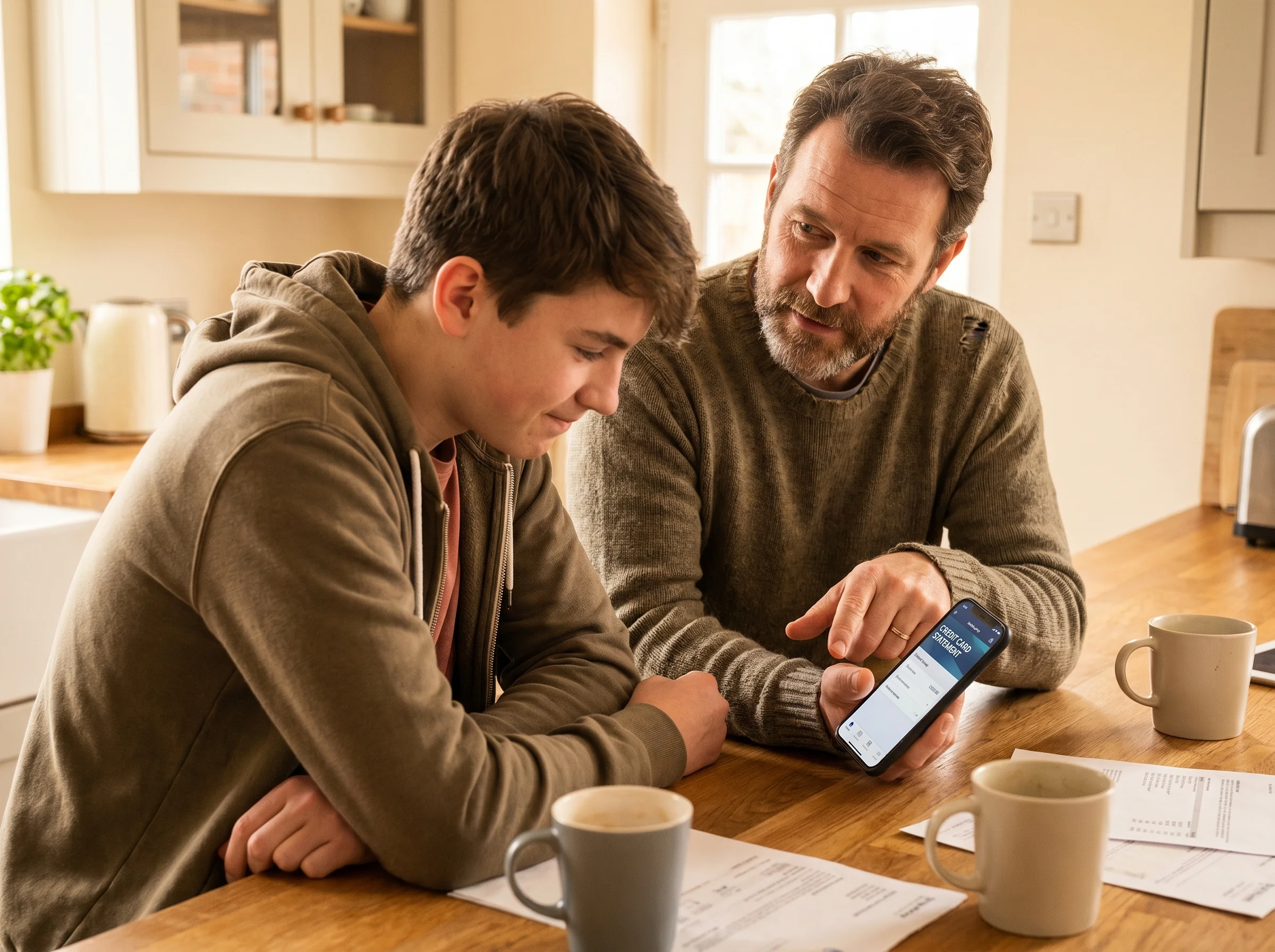
How to Actually Play WITH Your Kid (And Why You Should Be Bad At It)
The single best parenting move I've ever made was asking my son to teach me Rocket League.
Rocket League is soccer with cars. It sounds simple. It is not. The first time I played, I scored on my own goal within about 90 seconds. My son laughed so hard he actually cried. Then, while we were sitting there in the post-match screen, he started telling me about a kid in his class who'd gotten suspended that week. He'd never mentioned it at dinner. He'd never mentioned it in the car. He told me because we were playing a game together and he was relaxed and the conversation just spilled out.
That's the magic. Side-by-side conversation, not face-to-face conversation. Middle schoolers will tell you things while doing an activity that they will never tell you while being interrogated about their day.
Games that are great for parent-kid co-play, in my actual experience:
- Rocket League: easy to start, hard to master, hilarious when you're bad.
- Minecraft: just build stuff together. Ask them to give you a tour of their world.
- Mario Kart: the great equalizer. Blue shells don't care how old you are.
- It Takes Two: literally designed for two-player co-op. Incredible.
- Stardew Valley: chill, no pressure, lots of time to talk while you farm.
- Overcooked: you will yell at each other. You will also laugh.
The point isn't to be good. The point is to be IN it with them. To get the reference when they mention a tilted lobby. To know what a "main" is (the character or playstyle they specialize in). To have any idea who their favorite streamer is.
Being bad at the game is actually a feature. When you suck and your kid is good, you've handed them the teacher role. Middle schoolers almost never get to be the expert with their parents. Let them. It's good for both of you.
 Thirty minutes, one questionPause, Play, Connect: Core Deck$49 CAD • 172 promptsSee the deck
When Gaming Becomes a Problem (And When It Just Looks Like One)
I'm going to be straight with you because I think most articles get this wrong: most middle school gaming that looks like a problem isn't a problem. It's just enthusiasm that you don't share.
Not warning signs:
- Talking about games a lot. (You also talked a lot about whatever you loved at 12.)
- Wanting to play with friends after school. (That's just socializing.)
- Getting bummed when they have to stop. (You'd be bummed if someone shut off your podcast mid-episode too.)
- Spending money they earned on cosmetics. (Annoying, not concerning.)
Actual warning signs:
- Dropping friends, both online and off.
- Sleep getting wrecked. Sneaking devices at night.
- Rage that lingers after the game ends. Not "frustrated for ten minutes," but bad moods that bleed into the next day.
- Grades sliding noticeably.
- Lying about whether they've played or for how long.
- Avoiding the family entirely, not just sometimes.
If you see those things, the answer is rarely "confiscate everything." That usually backfires hard. The answer is a real conversation, often with a real professional, about what's underneath the gaming. Because gaming is usually a symptom, not the disease. Anxiety, social struggle, depression, ADHD, those things drive compulsive gaming, not the other way around. The World Health Organization's framing of gaming disorder is helpful here: it's about pattern and impairment, not just hours played.
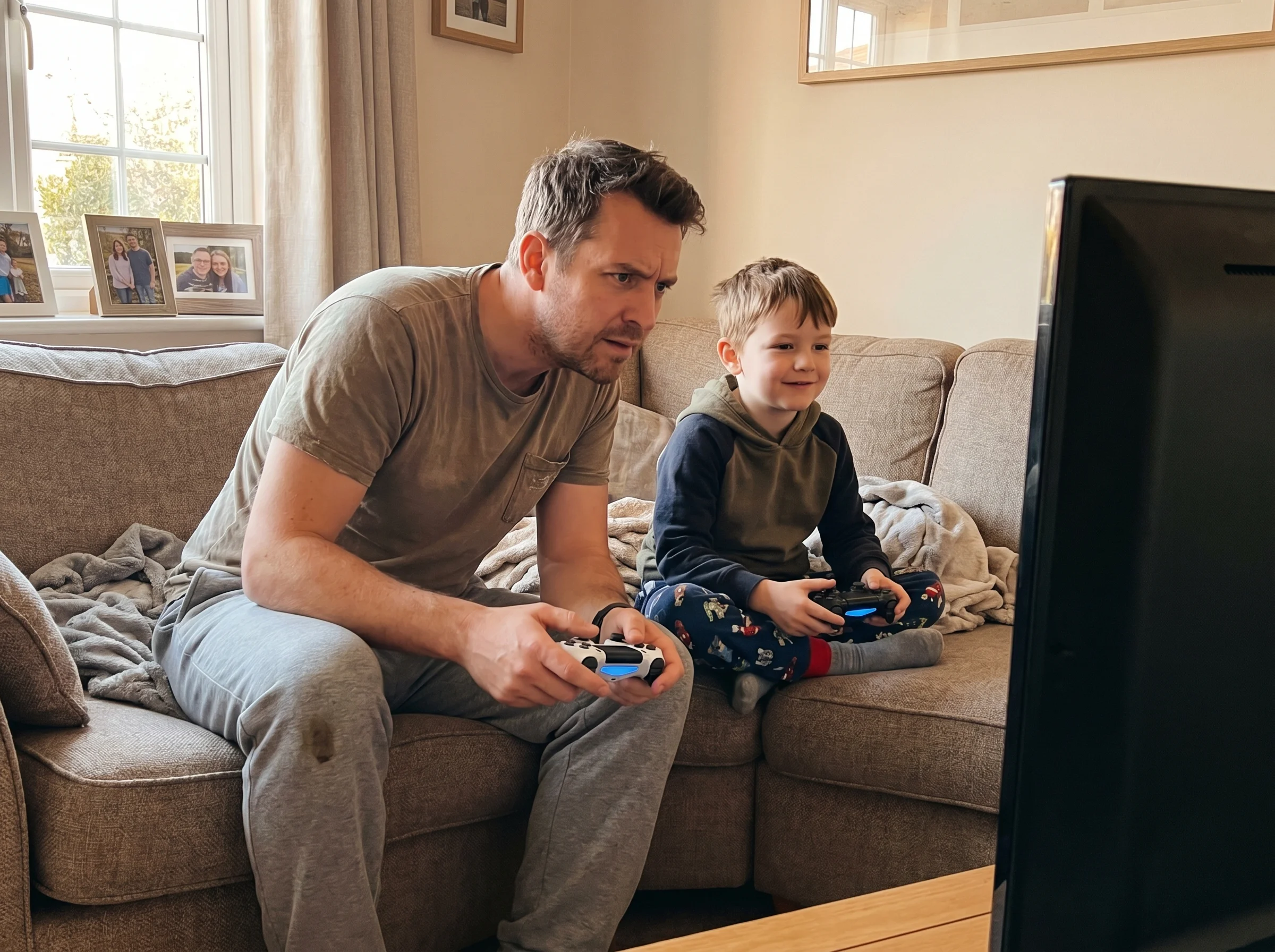
The conversation nobody else is having: what if your kid is the toxic one?
Every article I've ever read assumes your kid is the victim of toxic gaming culture. Sometimes they're the source.
I caught my son being a complete jerk to a younger kid on Roblox once. Bossy, mean, mocking. I heard it through the wall and walked in. I didn't yell. I just said, "Hey. Would you say that to him at school?" He went quiet. We talked about it for a while. He apologized to the kid in chat.
That was one of the most important parenting moments I've had, and it never would have happened if I wasn't in earshot of his game. Be in earshot sometimes. Not to spy. Just to be present.
The Conversation Starters That Actually Work
"How was your game?" gets you nothing. I know because I tried it for weeks. I got grunts.
Specifics work. Always. Try these:
- "Who's the best on your team right now?"
- "What's the most broken thing in that game right now?" (Kids love complaining about game balance.)
- "Who's the most annoying kid in your lobby this week?"
- "What's your main? Why?"
- "If you could change one thing about the game, what would it be?"
- "What's the dumbest way you've died this week?"
Every one of those will get you a real answer. Most of them will lead to a story. Some of them will get you twenty minutes of unprompted talking about friends, school, and the social dynamics of seventh grade.
This is actually a big part of why I started Yakety Pack with my co-founder in the first place. I was so tired of dinner table conversations dying after "how was school?" One of the cards in our deck just asks, "If you could be any video game character for a day, who would you pick and why?" I expected a one-word answer. My son talked for fifteen minutes, not just about the character, but about why, and what he'd do with the powers, and which of his friends would pick which character. The question mattered more than the answer.
That's the whole game with middle schoolers. Better questions, not more rules.
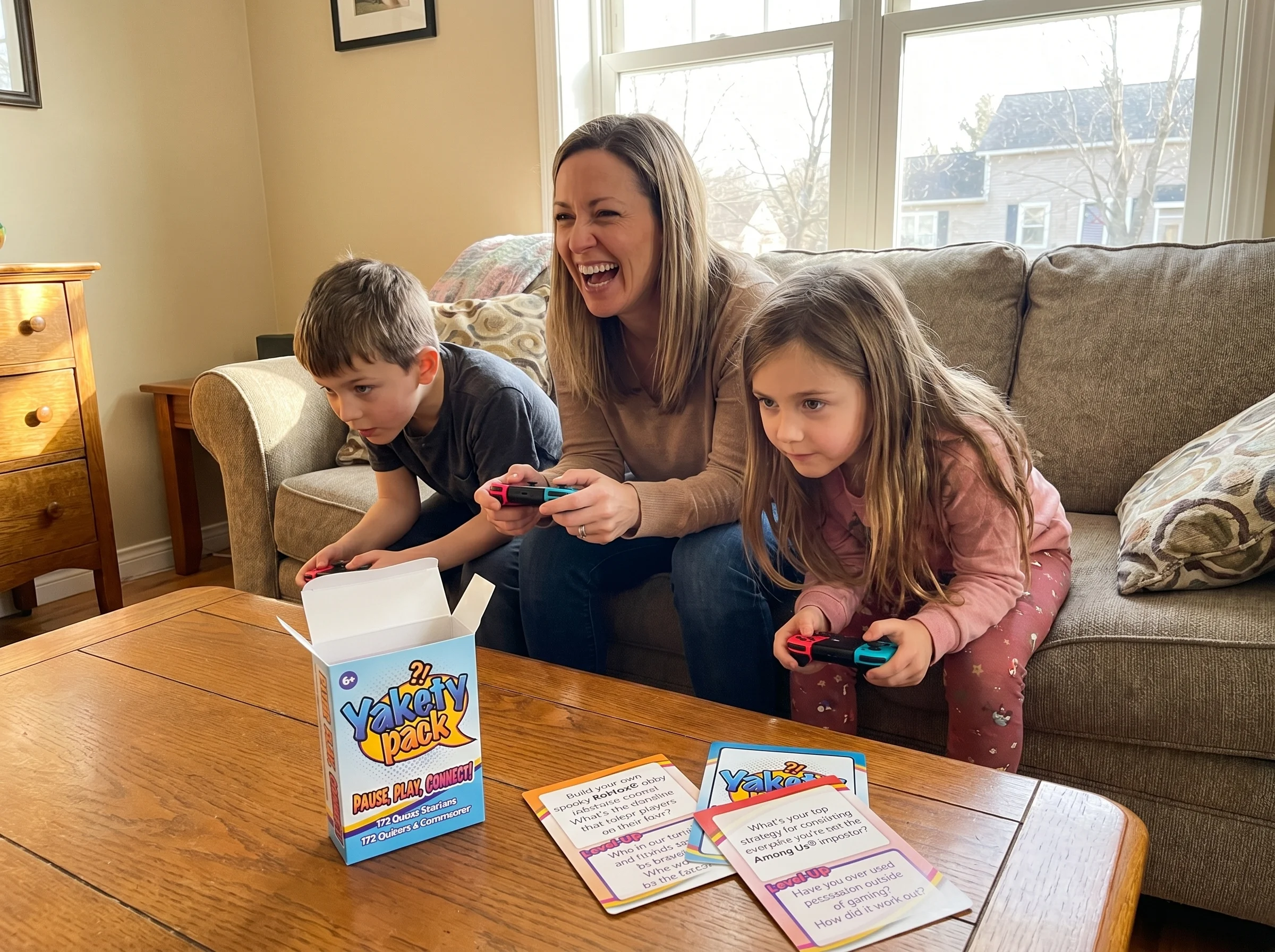
What I Wish I'd Known At the Start
If I could go back and hand my spreadsheet-building self one piece of advice, it would be this: stop trying to reduce your kid's gaming time. Start trying to participate in it.
The parents I know with the best middle school relationships aren't the ones with the strictest screen rules. They're the ones who know the name of their kid's Discord server. They know what V-Bucks are. They've embarrassed themselves at Rocket League. They've asked who the most annoying kid in their kid's lobby is and laughed at the answer.
Gaming isn't a substance to manage. It's a culture, a language, and a social network rolled into one. If you don't engage with it at all, you've effectively told your kid you're not interested in a huge chunk of their daily life. They notice. They remember.
You don't have to love gaming. You don't have to become a gamer. You just have to be curious about your kid's world, the same way your parents (hopefully) tried to be curious about whatever weird obsession you had at twelve.
One Thing To Try This Week
Pick one game your kid plays. Ask them to teach you. Set aside thirty minutes. Be honestly, terribly bad at it. Let them laugh at you. Ask them one specific question about the game while you're playing.
That's it. That's the whole move.
And if you want a little help with the questions, whether it's a card from our deck at Yakety Pack or just something you make up at dinner, the goal is the same: show them you're interested in their world, not just worried about it.
The window's open. You just have to look through it.

From this article
Pause, Play, Connect: Core Deck
One more tool for the toolbox: Knowing the apps is half the job; the other half is having something to say when the headset comes off. The Pause, Play, Connect Core Deck puts a stack of those better questions on the table so you do not have to invent them mid-dinner.
Keep reading
- Best Educational Gaming Apps for Middle Schoolers
- What Apps Should I Let My 12 Year Old Have?
- What Apps Are Middle Schoolers Using?
- What Is the World's #1 Learning App?
- Is GTA 6 OK for a 12 Year Old?
- What Is the Most Useful App for 13 Year Olds?
- What Are the Best Study Apps for Middle School Students?

