
Last spring, my son had four of his friends over after a tournament. They were sprawled across the kitchen demolishing what had to be three bags of Goldfish, and I did something I don't normally do. I asked them, straight up, what apps middle schoolers are actually using every day.
Not in a parent-trying-to-be-cool way. More like a "I keep reading articles that contradict each other and you guys are right here" way. They were generous about it. Probably because their mouths were full.
The list they gave me looked nothing like the parenting articles I'd been reading. So I started taking notes. Here's what I learned, and what I wish I'd known before half the conversations I've had with my kid about his phone.
The Big Six (What's Actually on Their Phones)
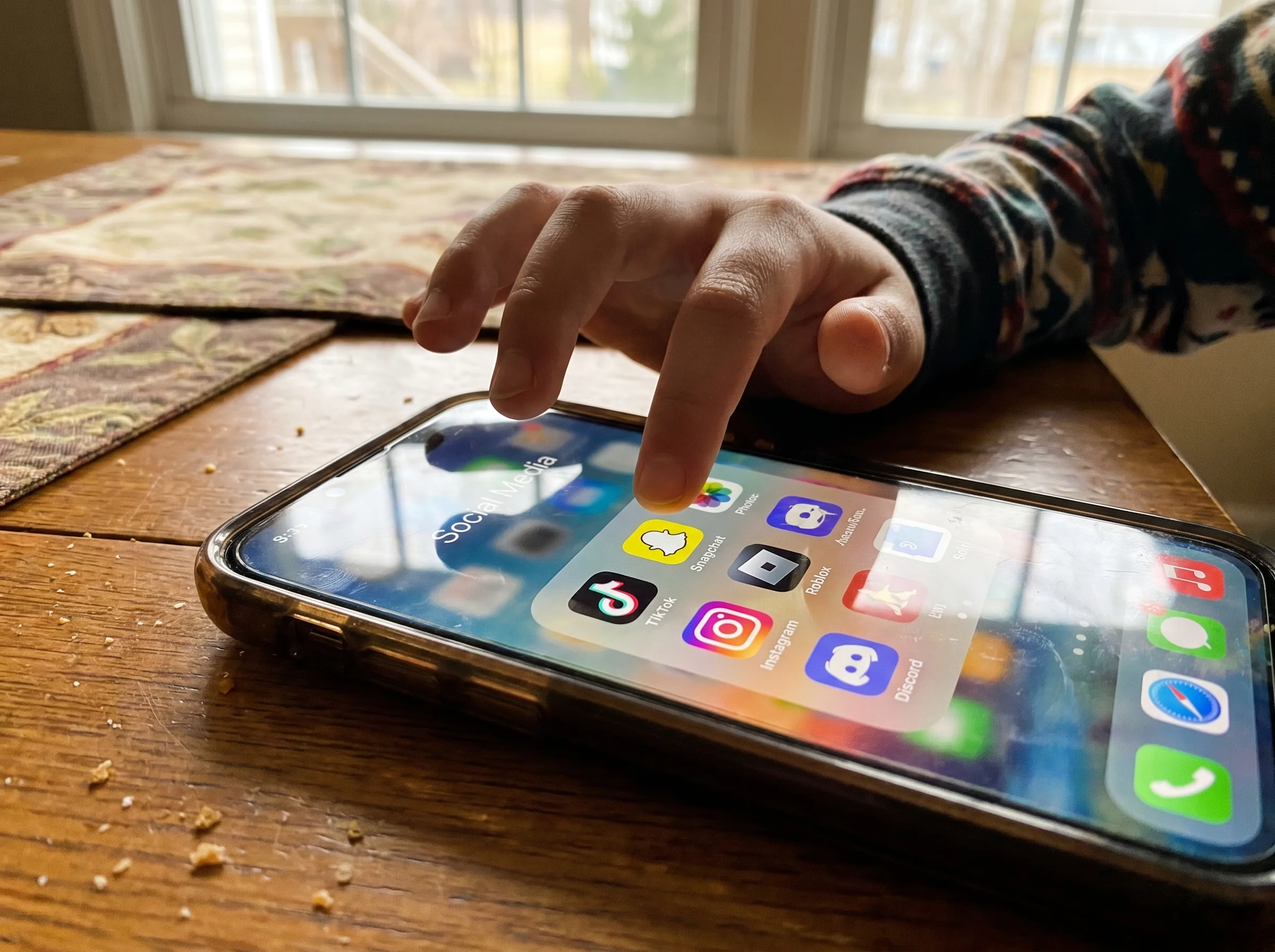
If you want the honest, current list of what middle schoolers are using in 2025, it's these six:
- Snapchat
- Discord
- TikTok
- Roblox
- YouTube
That's it. That's the lunch table.
What's notably missing? Facebook, obviously. But here's the one that surprised me: regular texting. iMessage is for parents and grandparents. Their friends are on Snap. If you've ever wondered why your kid never seems to reply to your texts but answers Snaps instantly, that's why.
Three honorable mentions worth knowing:
- BeReal is mostly dying. It had its moment in 2023. The notifications stressed kids out and the novelty wore off.
- Pinterest is quietly huge with middle school girls right now, especially for outfit inspo and fan edits.
- Reddit is sneaking up with boys, mostly for niche gaming subreddits.
If an article you're reading still leads with Musical.ly or Houseparty, close the tab. App culture for this age shifts every six months. (For broader context on usage trends, the Pew Research Center's teen and tech reports are some of the few sources actually worth reading.)
 Past the app listPause, Play, Connect: Core Deck172 prompts that move the talk from which apps they use to what happens inside them.$49 CAD • 90 cards • 18 reviewsShop the deck
The Gaming Apps That Are Actually Social Apps
Here's the biggest blind spot in almost every "apps middle schoolers use" article: they ignore games. Or they put them in a separate category, like games and apps are two different things.
To your kid, they're not.
Roblox, Fortnite, and Minecraft are hangout spots first and games second. When my son says he's "playing Minecraft with Jaylen and Theo for a couple hours," he means he's on a voice call with them inside Discord, and they happen to be running around a Minecraft world while they talk. Sometimes they barely play the game. They just hang out in it.
I learned this the slow way. For weeks I'd ask "how was Minecraft today?" and get a grunt. Then one night I asked "what's the craziest thing that happened in your world this week?" and he talked for twenty minutes about accidentally flooding his entire village trying to build an aquarium. He laughed about it. I laughed about it. The question mattered.
Games are conversation. Not consumption.
Snapchat, Streaks, and the Social Currency Layer
Snapchat is the number one messaging app for middle schoolers. Full stop. Not Instagram DMs, not iMessage. Snap.
The thing parents misunderstand most is streaks. A streak is what happens when you and a friend send each other a snap every day. The number goes up. If you miss a day, it resets to zero.
Sounds dumb. I thought it was dumb. Then my son almost cried when he was at sleepaway camp with no phone and lost a 400-day streak with his best friend.

Here's the reframe: streaks are friendship maintenance. They're the digital version of "we still cool?" between two kids who can't drive to each other's houses. The number isn't the point. The daily check-in is.
The part of Snapchat I'd actually pay attention to? Snap Maps. It shows your kid's exact location to whoever they've added. Sit down together and turn on Ghost Mode. Don't ban the app. Just fix that one setting. (Common Sense Media has a solid breakdown of Snap Map settings if you want a walkthrough.)
The one question to ask: "Who do you have streaks with right now?" You'll learn who their actual close friends are in about ninety seconds.
 Ask about the streaksPause, Play, Connect: Core Deck$49 CAD • 172 promptsSee the deck
Discord, the App Parents Misunderstand Most
I'm going to say something that contradicts most parenting articles you'll read: Discord is one of the better apps your middle schooler can be on, not one of the worst.
Discord is essentially a group chat platform with voice rooms. That's it. Every gaming friend group has a server. My son's server has maybe eight kids in it, all from his school, and they use it to coordinate when they're going to play, share memes, and talk while they game.
Compare that to the algorithm-driven, stranger-filled scroll of TikTok DMs and Discord starts looking like a community center.
That said, there are real risks. Not imaginary ones. The actual things to watch:
- Random server invites from strangers. Talk about not joining servers from people they don't know in real life.
- DMs from people outside their server. This is the main attack surface. Lock it down.
- Privacy settings. Sit with your kid and go through them together. The three to check: Direct Messages, Friend Requests, and Server Privacy.

Now, my hard-earned lesson. A couple years back I watched a Today Show segment about Discord and panicked. I deleted it off my kid's phone that night. What I didn't know was that his entire friend group from his old school, the one he'd left a year earlier, hung out there. That was his only line to them. We had a rough month over that one. He felt cut off. I felt like an idiot once I figured out why.
Rules without understanding usually backfire. I've made that mistake more than once.
TikTok and Instagram, the Algorithm Problem
Yes, middle schoolers are still on TikTok. Heavily. It hasn't moved on.
But here's the nuance that matters: TikTok is for content, Instagram is for friends. They scroll TikTok for hours but they don't really talk to anyone there. Instagram is where they DM, share Reels back and forth, and stalk each other's stories.
The conversation parents should be having isn't "are you on TikTok." It's "what's on your For You Page." Because the algorithm is the actual product. Two kids on TikTok can have wildly different experiences depending on what the algorithm has decided they're into.
Sit next to them sometime and ask them to scroll. Don't grab the phone. Just watch. You'll learn more in five minutes than you would from a dozen articles.
The Instagram DM problem is real, by the way. The feed is mostly fine. The DMs, especially from strangers and group chats with kids they barely know, that's where the messy stuff happens.

The Apps Parents Don't Know to Look For
Here's the shadow layer nobody covers.
- The Notes app. Kids type long messages in Notes, screenshot them, and send the screenshots. Why? Because screenshots can't be unsent and they show up better in feeds. The Notes app is also where they vent privately.
- Google Docs. Yes, really. Kids use shared Docs as chat rooms during school because teachers don't flag them. The chat is in the comments or just typed back and forth on the page.
- In-game chat. Roblox DMs, Fortnite party chat, Among Us text. These don't show up in any screen time report and they're where a lot of conversation actually happens.
- Vault apps disguised as calculators. They look like a calculator on the home screen. You type in a code and it opens a hidden photo gallery. If you see a second calculator app, that's worth a conversation.
I'm not telling you this to make you paranoid. I'm telling you because the App Store rankings don't show you the actual landscape of what apps middle schoolers are using.
What to Actually Do With This Information
If I could redo my approach from three years ago, here's what I'd do differently.
Ask before banning. Every time. Even if the answer doesn't change your decision, you'll understand what you're taking away.
Three questions to ask about any app:
- Who do you talk to on it?
- What do you like about it?
- What's the worst thing that's happened on it?
That third one is the gold mine. Kids will tell you things if you ask matter-of-factly instead of with panic in your voice.

Set rules together, not over them. "Phones charge in the kitchen at 9" is a rule. "I deleted your app because I saw something on the news" is a punishment. The first one holds. The second one builds resentment.
We built Yakety Pack because once I started asking my son about his games and his friends and what was happening in his worlds, instead of about his screen time, the dinner conversations completely changed. The cards are basically the questions I wish I'd had years earlier, back when I was still trying to figure out what to ask.
One of the prompts in the deck asks what game character you'd want as a real-life friend. Sounds small. But that question pulled a half-hour conversation out of my son about a Roblox game I'd never heard of, the friends he plays it with, and why one character "would probably be annoying in real life but fun at a sleepover." I learned more about his social world from that one card than from a month of asking about his day.
That's the whole point. Curiosity beats surveillance every time.
If you want the next step on this, the pillar piece on gaming apps and technology for middle schoolers goes deeper on the landscape. And if you're trying to figure out what to actually allow on your kid's phone, the spoke on what apps to let your 12-year-old have is the permission-setting follow-up.
The apps on your kid's phone aren't the enemy. They're a window. Look through it.

From this article
Pause, Play, Connect: Core Deck
When the list changes again: This lineup will be outdated by next spring, but the habit of asking what happens inside those apps never expires. The Pause, Play, Connect Core Deck keeps those questions in rotation at our table.

