
For two years, I downloaded every "educational" app a parenting blog told me to. DragonBox. Prodigy. Some thing with a cartoon owl that wanted my son to count gold coins. He rolled his eyes at all of them.
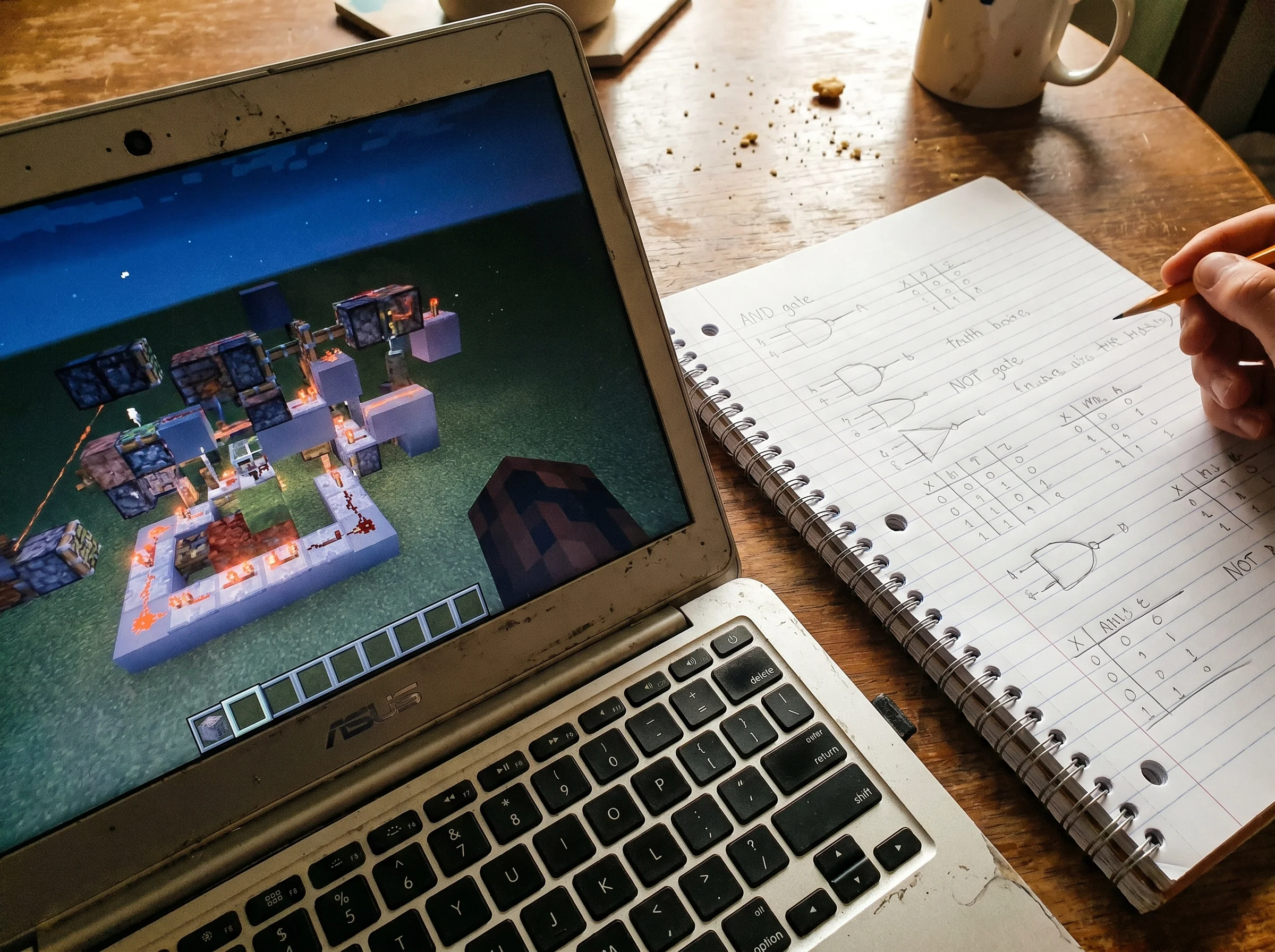
Then one Saturday, he spent four hours building a working calculator in Minecraft using redstone. A working calculator. With binary logic he'd figured out from YouTube tutorials and trial and error. I'd been hunting for learning in the wrong corner of the App Store the entire time.
If you're looking for the best educational gaming apps for middle schoolers, I want to save you the two years I wasted. The category, as marketed, is mostly broken. The good news: the games your kid is probably already begging to play might be teaching them more than anything labeled "educational."
What "Educational" Actually Means for a 12-Year-Old
Here's the dirty secret of the App Store's Education category: most of it is built for 7-year-olds with a thin layer of "for older kids" paint. Middle schoolers can smell that from across the room. A 12-year-old who plays Fortnite is not going to engage with a smiling cartoon fox that wants to teach fractions. They'd rather do the actual homework.
The skills that matter at this age aren't memorizing multiplication tables. They're systems thinking, problem-solving, creativity, collaboration, and the slow-burn ability to stick with something hard. Research from the American Psychological Association on video games and learning backs this up: complex games build cognitive skills that worksheets can't touch. When I started asking "would my kid play this if I didn't make them?" the whole list of recommendations changed.
That redstone calculator was the moment it clicked for me. My son had taught himself binary logic. Not because anyone made him. Because he wanted to automate a door.
 Not another appPause, Play, Connect: Core Deck172 prompts that make room for the four-hour build story you would otherwise never hear.$49 CAD • 90 cards • 18 reviewsShop the deck
The Sneaky-Good "Real Games" That Teach the Most
These are the games missing from 90% of "educational app" lists because they're not marketed to parents. They should be at the top.
Minecraft (Java or Bedrock)
The greatest sandbox learning tool ever built, full stop. Engineering, geometry, project planning, resource management, creativity, collaboration. If your kid goes deep on redstone, they're learning logic gates and circuits. If they build big projects, they're learning to plan. If they play on a server with friends, they're negotiating and leading.
Minecraft Education Edition
Honest take: if your kid's school uses it, great. Otherwise, regular Minecraft is usually better. Education Edition has chemistry kits and coding lessons baked in, which is cool, but most kids learn just as much from regular Minecraft because they actually want to play it.
Kerbal Space Program
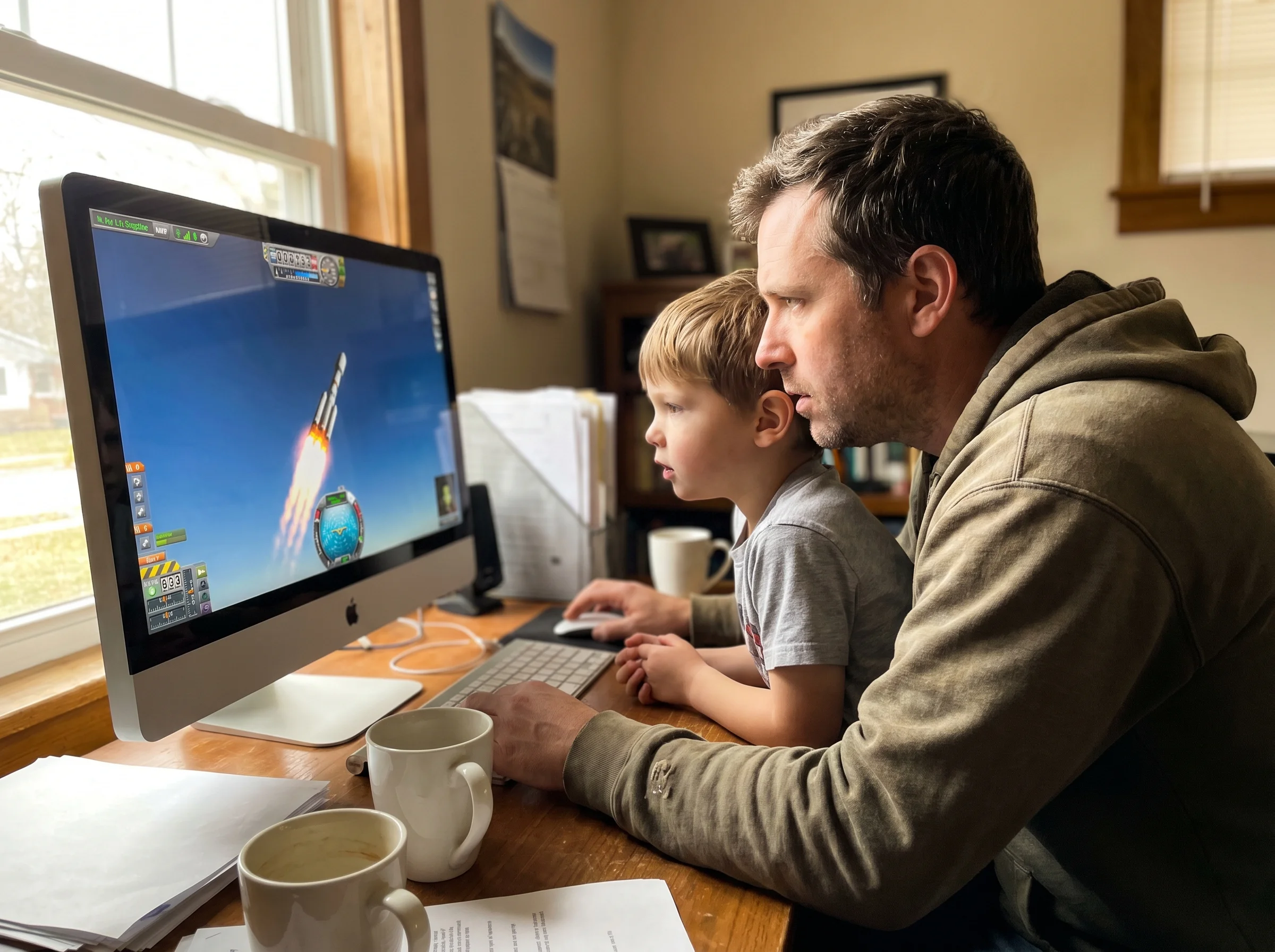
Physics, orbital mechanics, engineering. It is brutal. Your kid's rockets will explode. Repeatedly. That's the magic. Failure is the curriculum. By the time they put something into orbit, they've internalized concepts most college freshmen are still struggling with.
Civilization VI
History, geography, economics, long-form strategy. My friend's 8th grader started reading Wikipedia articles about Gilgamesh because of this game. Unprompted.
Roblox (with real caveats)
Yes, Roblox has issues. Yes, you need to set up parental controls and talk about safety. But Roblox Studio is a genuine gateway to coding (Lua), and the platform itself teaches social negotiation and entrepreneurship.
My son made $40 selling a Roblox game pass. He had to think about pricing, customer feedback, and what people actually wanted. He learned more about business in that one weekend than I did in my first year of college.
Apps Actually Designed to Teach (That Don't Suck)
A few "real" educational apps survive the middle school sniff test. If you're hunting for the best educational gaming apps for middle schoolers in the traditional sense, start here.
- Duolingo. The streak mechanic is genuinely manipulative and genuinely works. My daughter chose it over YouTube one night. It took three years to get there, but it happened.
- Tynker and Scratch. Real coding, gamified well. Scratch is free and made by MIT. Start there.
- Brilliant. For the kid who likes puzzles and is too old for cartoon apps. Math, science, logic, presented like a really good escape room.
- Khan Academy (not Khan Academy Kids). For the kid who wants to get ahead or fill in gaps. Best used voluntarily, never as punishment.
- Prodigy Math. I'll be honest: most kids see through this by 7th grade. The "battle" mechanic feels childish. Works for some 6th graders. Skip for older.
The Console and Switch Games Worth Counting
Not every kid lives on a phone. Some of the best teaching games ever made live on Switch, PlayStation, and PC.
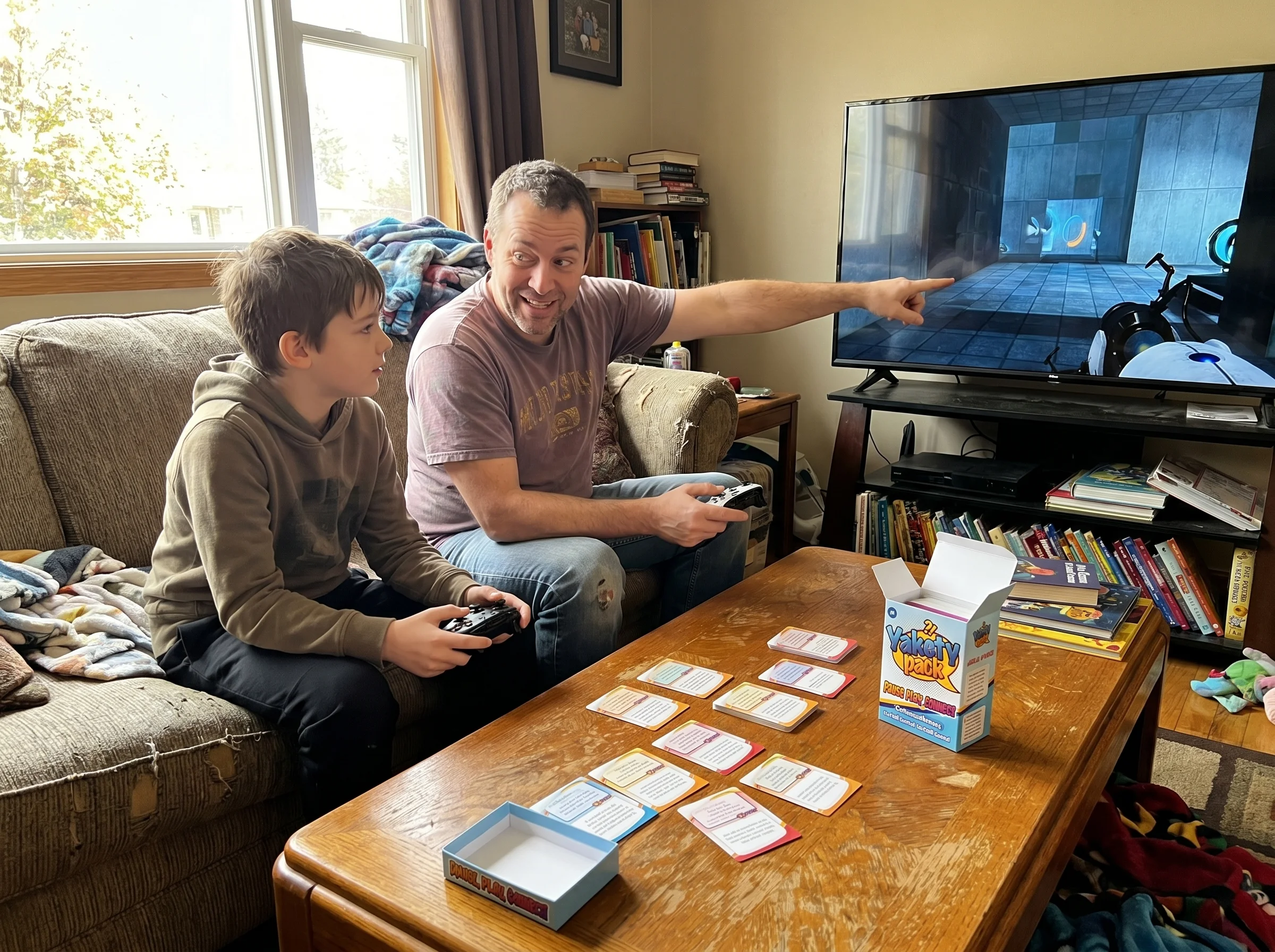
- Portal 2. Maybe the single greatest puzzle game for teaching physics intuition and logical thinking. Co-op mode is incredible.
- Stardew Valley. Economics, planning, patience, time management. Weirdly meditative.
- Scribblenauts. Vocabulary and creative problem-solving. Type any noun, it appears.
- Human Resource Machine and 7 Billion Humans. Actual programming concepts disguised as a game. Loops, variables, conditional logic. Brilliant.
 Have them teach you somethingPause, Play, Connect: Core Deck$49 CAD • 172 promptsSee the deck
How to Tell If a Game Is Actually Teaching Your Kid Something
You don't need a report card. You need a few honest filters.
- Can they describe what they did, in detail, after playing?
- Are they problem-solving or just pattern-matching?
- Do they talk about it outside the game?
- Are they reading, writing, or calculating without being told to?
- Do they get frustrated and come back, or quit and forget it?
One night my son asked me what compound interest was. Not because of school. Because of a game mechanic. That's the test passing. Common Sense Media's research on game-based learning has a lot more on what to look for if you want to dig deeper.
How to Get Your Kid to Try Something New (Without a Fight)
Some hard-won rules:
- Never pitch it as educational. The word is poison. The second you say it, you've lost.
- Play it yourself first. Twenty minutes. You'll know if it's any good and you'll have something to talk about.
- Connect it to something they already love. "You liked building stuff in Minecraft? This game is like that but with rockets."
- Fail in front of them. This one works embarrassingly well.
I got my son into Kerbal by sitting down and building the worst rocket in the history of the program. It cartwheeled into the ocean. I tried again. Exploded on the launchpad. He started laughing, then started giving me advice, then took the controls. He's been playing for six months.
Ask Better Questions About the Games They Already Love
This is the part nobody talks about. The single biggest unlock isn't finding a new app. It's getting curious about the games already on your kid's screen.
"How was Minecraft today?" gets you a grunt. Try:
- "What's the most useful thing you've ever built in a game?"
- "If you could redesign one rule in Roblox, what would it be?"
- "What's the worst decision you've made in a game and what did you learn?"
- "Have you ever taught someone else how to do something in a game?"
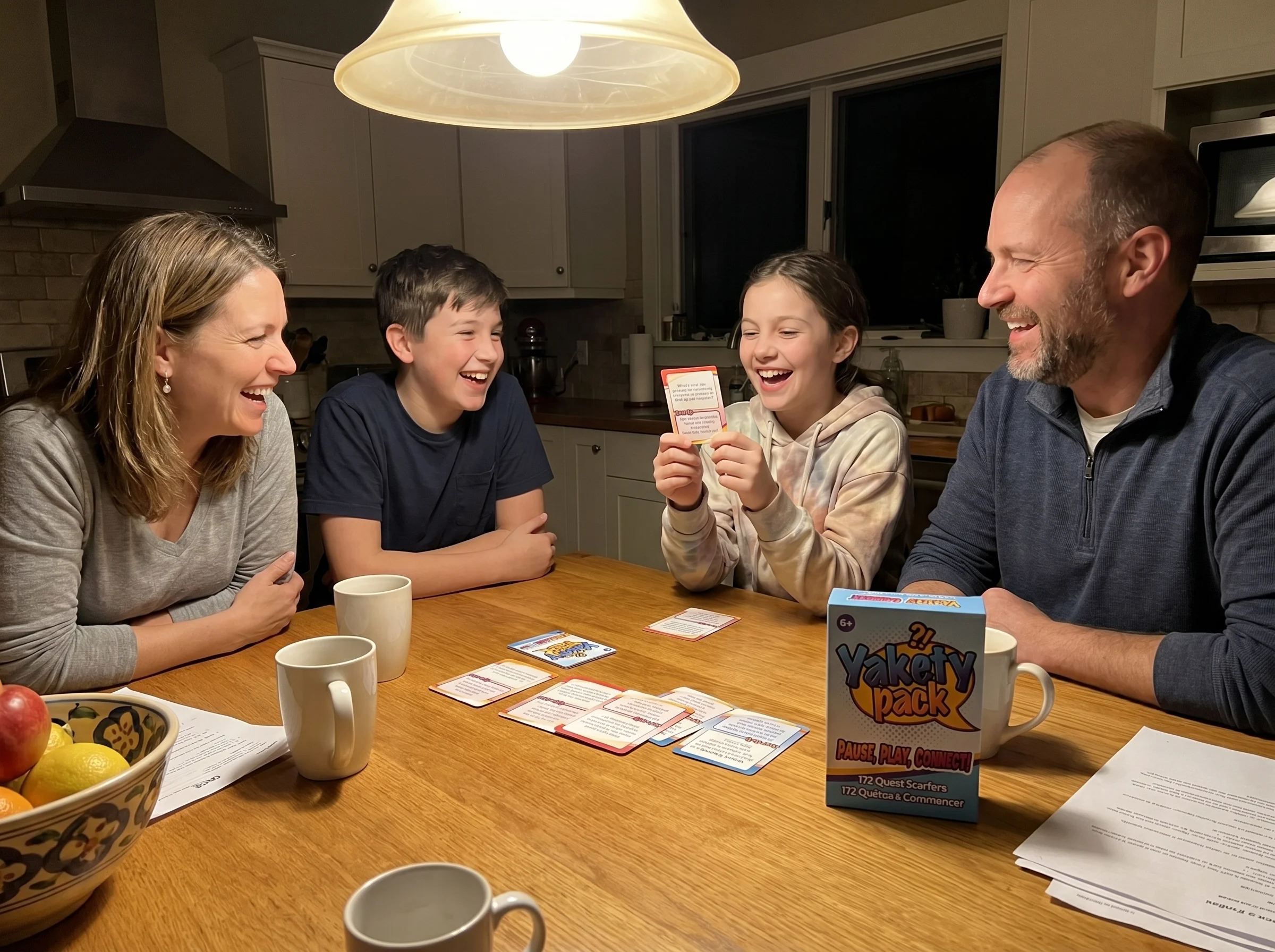
Different question, different conversation. We built Yakety Pack because I was tired of getting one-word answers about a part of my son's life that clearly meant a lot to him. The cards ask the kinds of questions that actually get gamers talking. One card about the dumbest in-game purchase he ever made turned into a 30-minute conversation about regret, pricing, and why he stopped trusting one of his friends. Worth more than any "educational app" I ever downloaded.
One Thing to Do This Week
Pick one game your kid already plays. Sit next to them for 20 minutes, no phone in your hand, and ask them to teach you something about it. Don't quiz them. Don't suggest they "use this for homework." Just be curious.
You'll find more learning happening than you thought. And you'll find your kid more willing to show you their world than you expected.
That's the whole thing, honestly. The best educational gaming apps for middle schoolers aren't a list you download. They're a lens you put on. Once you see what's already there, the conversations get easier and the screen stops feeling like a wall between you.

From this article
Pause, Play, Connect: Core Deck
No download required: The richest learning moment in our house wasn't an app, it was my kid explaining his redstone build while I actually listened. The Pause, Play, Connect Core Deck gives you prompts like that for nights when you don't know what to ask.

