
For two years, I asked my son "how was Minecraft today?" and got one-word answers. Grunts. Shrugs. The occasional "fine" if I was lucky. I'd stand in his doorway holding a plate of apple slices like some kind of hostage negotiator, and he'd barely look up.
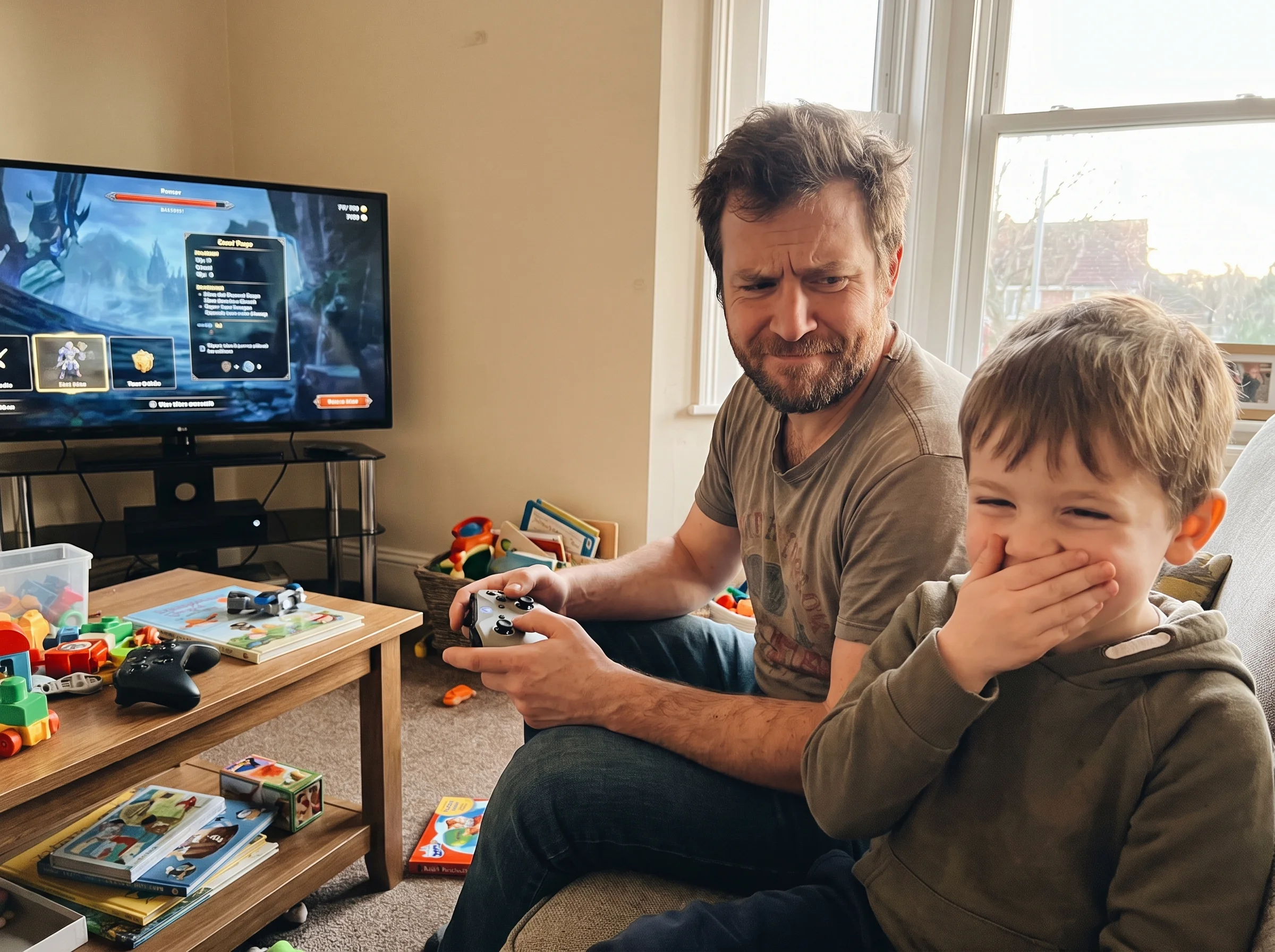
Then one night, out of pure desperation, I sat down next to him and asked if he'd teach me how to play. Not to check in. Not to bond. To actually learn. He handed me a controller, gave me a two-minute tutorial that assumed way too much, and watched me build a house that looked like a cardboard box a raccoon had dragged through a puddle. He laughed for what felt like a week. Called it the "shoebox."
That was the night my kid started talking to me again.
I'm writing this because I spent way too long treating gaming like a problem to manage instead of a door to walk through. If you're a parent looking for parent child gaming activities that actually work, not the sanitized "try Scrabble Junior on the iPad" version, this is the article I wish someone had handed me three years ago.
 Standing in the doorway againPause, Play, Connect: Core Deck172 prompts that ask about the story, the squad and the weird thing that happened.$49 CAD • 90 cards • 18 reviewsShop the deck
Stop Trying to Turn Gaming Into a Lesson
Here's the first thing I got wrong: I kept trying to redirect my son's gaming toward something "better." I'd send him articles about educational Minecraft mods. I'd suggest coding games. I once bought him a math-based puzzle game for his birthday, which he opened, said "cool," and never touched again.
Kids can smell an agenda from three rooms away. The second you frame gaming as "okay if it teaches you something," you've already lost them. You're not a co-conspirator. You're a chaperone.
The goal isn't screen time control. It's not about squeezing educational value out of every session. The goal is connection, and connection requires you to actually be interested in the thing your kid loves, without needing it to justify itself.
I know that's uncomfortable if you didn't grow up gaming. I didn't either. I grew up thinking video games were what you did when you'd finished everything else, which is basically the opposite of how kids see them now. For a lot of kids, gaming isn't a break from their real life. It IS a big part of their real life. Their friends are there. Their creativity is there. Their status, sometimes, is there.
Drop the agenda. Just show up.
Become the Beginner (Yes, Really)
The single best move I ever made as a parent was letting my kid teach me something and being visibly bad at it.
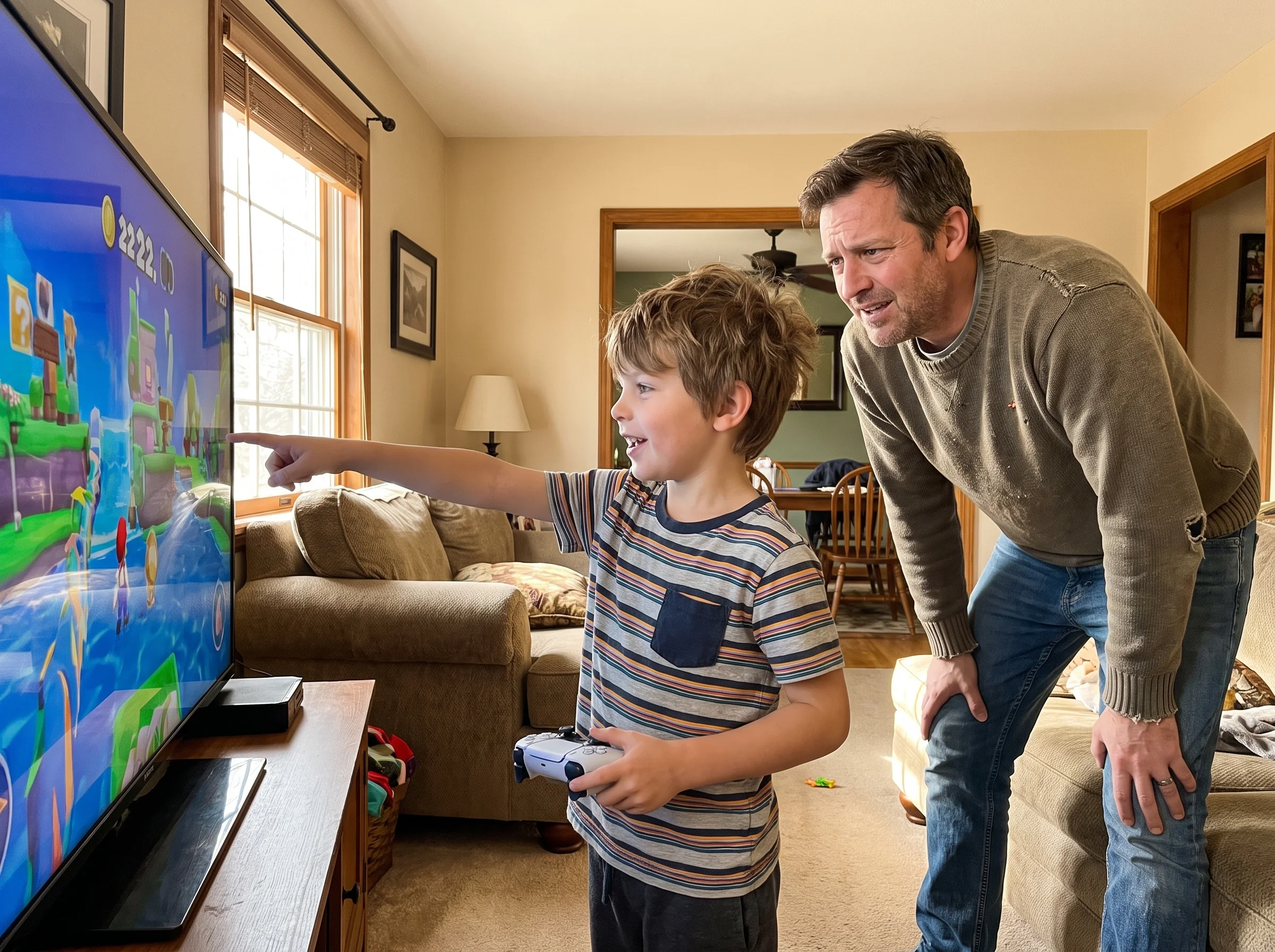
Think about your kid's day. How much of it is spent being told what to do by adults who know more? School, sports, home. They're constantly the student. Gaming is often the one place where they're the expert, and when you walk into that space asking them to teach you, on their terms, in their world, you're doing something almost no adult in their life does: you're handing them the wheel.
Most parenting advice tells you to be competent, prepared, and in charge. Gaming is the opposite. You want to be genuinely, hilariously bad. Not fake bad. Not "let daddy lose so you feel good" bad. Actually terrible.
Here's why it works. If you fake losing, kids know. They ALWAYS know. And it feels condescending, because it is. But if you're honestly trying and honestly getting your butt kicked at Rocket League by an 8-year-old, that's real. And they get to laugh at you, correct you, coach you. They get to be the one who knows.
This lines up with what child development researchers at the American Academy of Pediatrics have been saying for a while: co-viewing and co-playing with your kids matters way more than just monitoring their screen time from a distance.
My shoebox Minecraft house wasn't a strategy. I really was that bad. But that awful little house did more for my relationship with my son than any "quality time" activity we'd tried in the previous two years.
Games That Actually Work, By Age
Age brackets like "6 to 12" are useless. A first grader and a sixth grader have almost nothing in common gaming-wise. Here's a more honest breakdown.
Ages 5 to 8
At this age, the game itself matters less than the shared experience. Wins:
- Minecraft (Creative Mode). Skip Survival at first. Creative mode is basically LEGO with infinite pieces. Build something together. Let them boss you around.
- Mario Kart. The great equalizer. The blue shell exists to humble the person in first place, which is almost never you.
- LEGO games (LEGO Star Wars, LEGO Marvel, etc.). Two-player couch co-op, forgiving mechanics, silly humor. Perfect entry point.
- Animal Crossing. Slow, gentle, weirdly meditative. Good for kids who don't love pressure.
First move: sit on the couch, ask them to pick the game, ask them to explain what you're supposed to do.
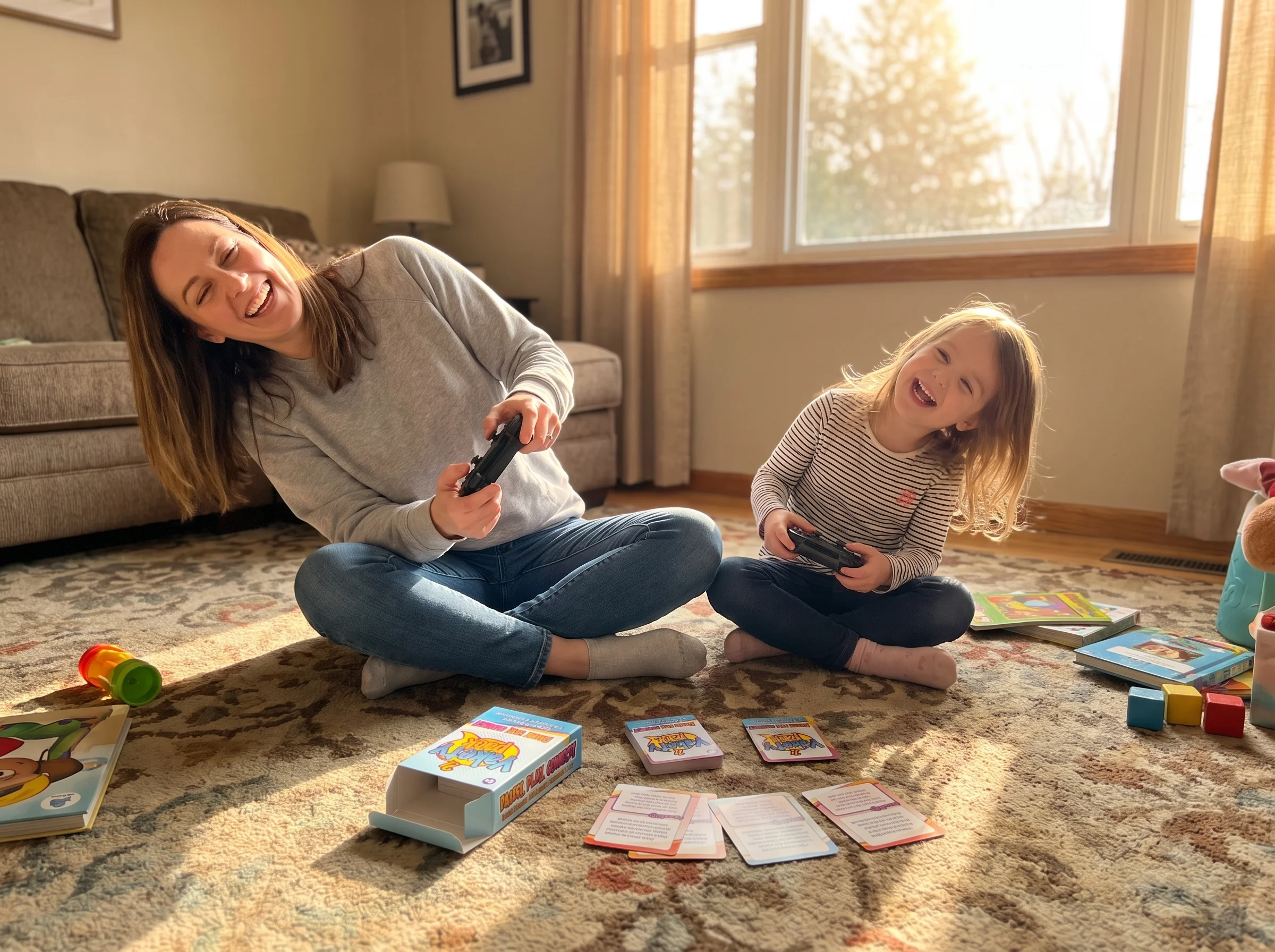
Ages 9 to 12
This is the sweet spot and also where most parents give up because the games get more complex and social.
- Roblox. Not one game, it's a platform with thousands. Ask your kid to pick their favorite Roblox game and show you. Do not, I repeat, do not try to pick one for them.
- Rocket League. Cars playing soccer. Easy to understand, impossible to master. You will be bad. It's fine.
- Stardew Valley (co-op). Farming, fishing, small-town life. Great for longer sessions where you can just chat while you play.
- Fortnite (with reasonable settings). I know, I know. But if your kid is asking to play Fortnite with you, that is a gift. Take it. Turn off voice chat with strangers, play squads together, get eliminated in the first two minutes, laugh about it.
First move: "Show me the game you're best at right now."
Ages 13 and up
Here's where a lot of parents lose the thread. Teenagers usually don't want to play with you the same way an 8-year-old does. That's normal. Adjust.
- Be the audience. Sit down while they play and just watch. Ask questions during the boring parts. Don't narrate. Don't strategize. Just be there.
- Among Us, Fall Guys, party games. If they have a friend group that plays these, ask if you can jump in sometime. Sometimes the answer is no. That's okay.
- Ask about their squad. Who are they playing with? What's the group like? Who's the funny one? Who rage-quits?
- Learn the meta. If they play Valorant or League or whatever, learn just enough vocabulary that you can ask real questions. Not to fake being a gamer. To signal you're actually paying attention.
First move: "Can I sit and watch you play for a bit? I won't talk."
 Being the audience tonightPause, Play, Connect: Core Deck$49 CAD • 172 promptsSee the deck
What to Do When Your Kid Doesn't Want You Playing
About half the parents I've talked to about this get rejected on the first invite. That's normal. Don't take it personally, and definitely don't guilt-trip. That's a fast way to make gaming a battlefield instead of a bridge.
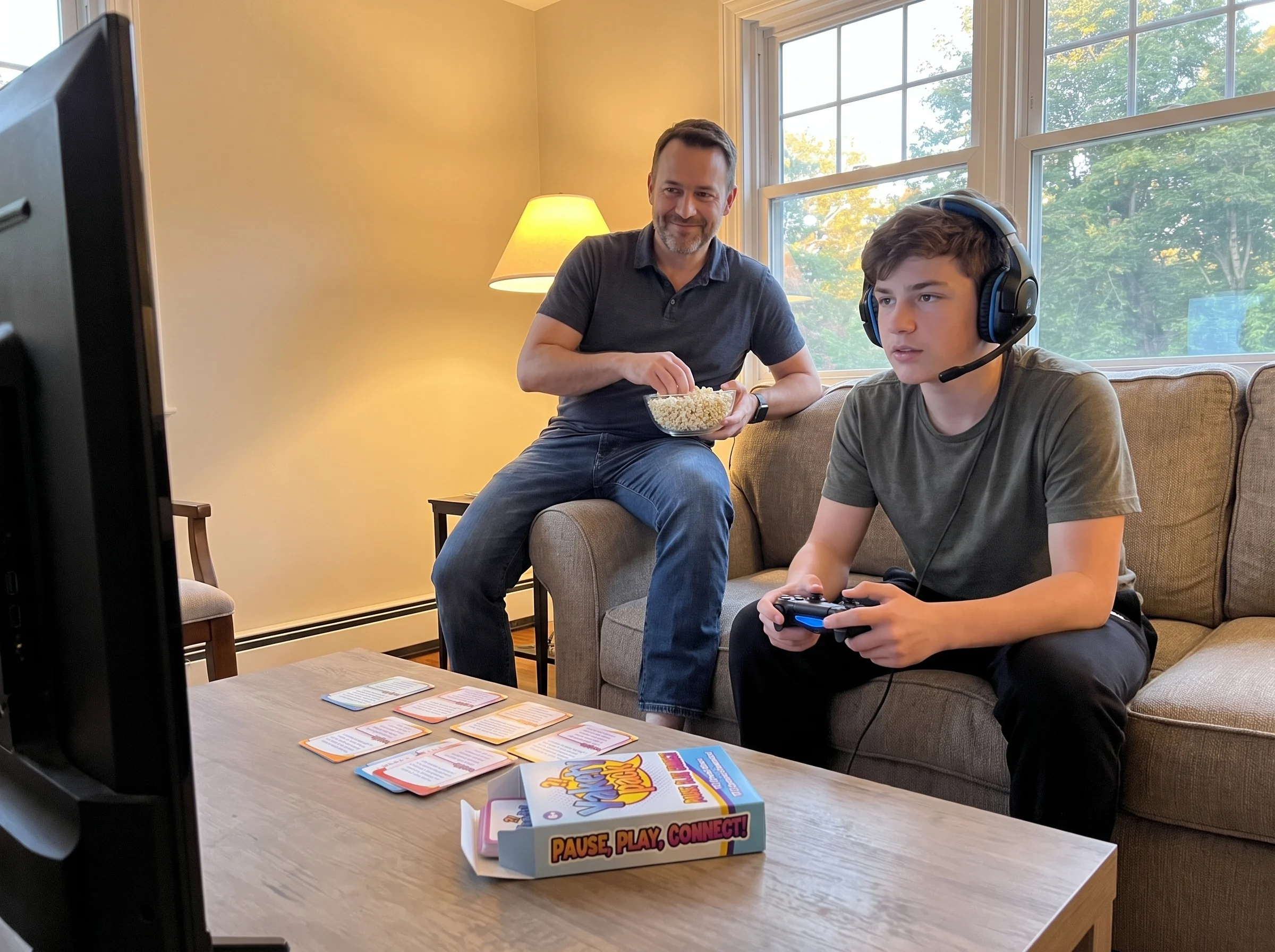
There was a stretch of about six months where my son straight up did not want me in his Fortnite matches. His friends were online, they had their thing going, and I was, honestly, dragging the squad down. He finally told me, kind of embarrassed, "Dad, my friends said you're kind of throwing." (Throwing means playing badly enough that you're costing everyone the game. I looked it up.)
That stung for about ten minutes. Then I realized: I wasn't actually being kicked out of his life. I was being kicked out of a specific competitive match with his friends where I was, factually, a liability.
So I became an audience. I'd bring a snack, sit on the arm of the couch, and just watch. Sometimes I'd ask a question during a lull. "Who's that guy on your team?" "What's that gun called?" "Why'd he do that?" I stopped trying to be a teammate and started being a fan.
Fans are welcome almost everywhere. Teammates need to earn their spot.
The Questions That Actually Open Kids Up
This might be the most important section in this whole article, so pay attention.
"How was gaming?" gets you nothing. Neither does "did you have fun?" or "who'd you play with?" These are the gaming equivalent of "how was school?" and they generate the exact same one-word garbage.
Better questions are specific, story-based, and open-ended:
- "What's the craziest thing that happened in your world this week?"
- "Who's the best player in your squad, and what makes them good?"
- "What would you build if you had unlimited resources?"
- "What's the funniest way you've died recently?"
- "If you could add one thing to this game, what would it be?"
- "Who's the most annoying player you've been matched with lately?"
Notice what these have in common. They ask about STORY, not activity. They invite an opinion or a memory. They can't be answered with "fine."
The night my son actually started talking to me was the night I asked "what's the craziest thing that happened in your world this week?" He talked for twenty minutes about accidentally flooding his village with a lava-and-water experiment gone wrong. Twenty minutes. From a kid who'd been giving me one-word answers for two years.
The question mattered. It always matters.
This is actually why we built Yakety Pack in the first place. My wife and I kept realizing that kids want to open up, they really do, they just need someone to ask them something that isn't lame. So we made a deck of conversation cards designed to sound like something an actual kid would want to answer, not a therapist's intake form. A lot of the questions came directly from what worked with my own kids around gaming and other stuff they cared about.
You don't need our cards to do this. You just need to stop asking "how was your day" and start asking about the story.
Off-Screen Activities That Extend the Bond
Some of the best parent child gaming activities don't involve a screen at all. They spin OUT of the game and into the rest of your life together.
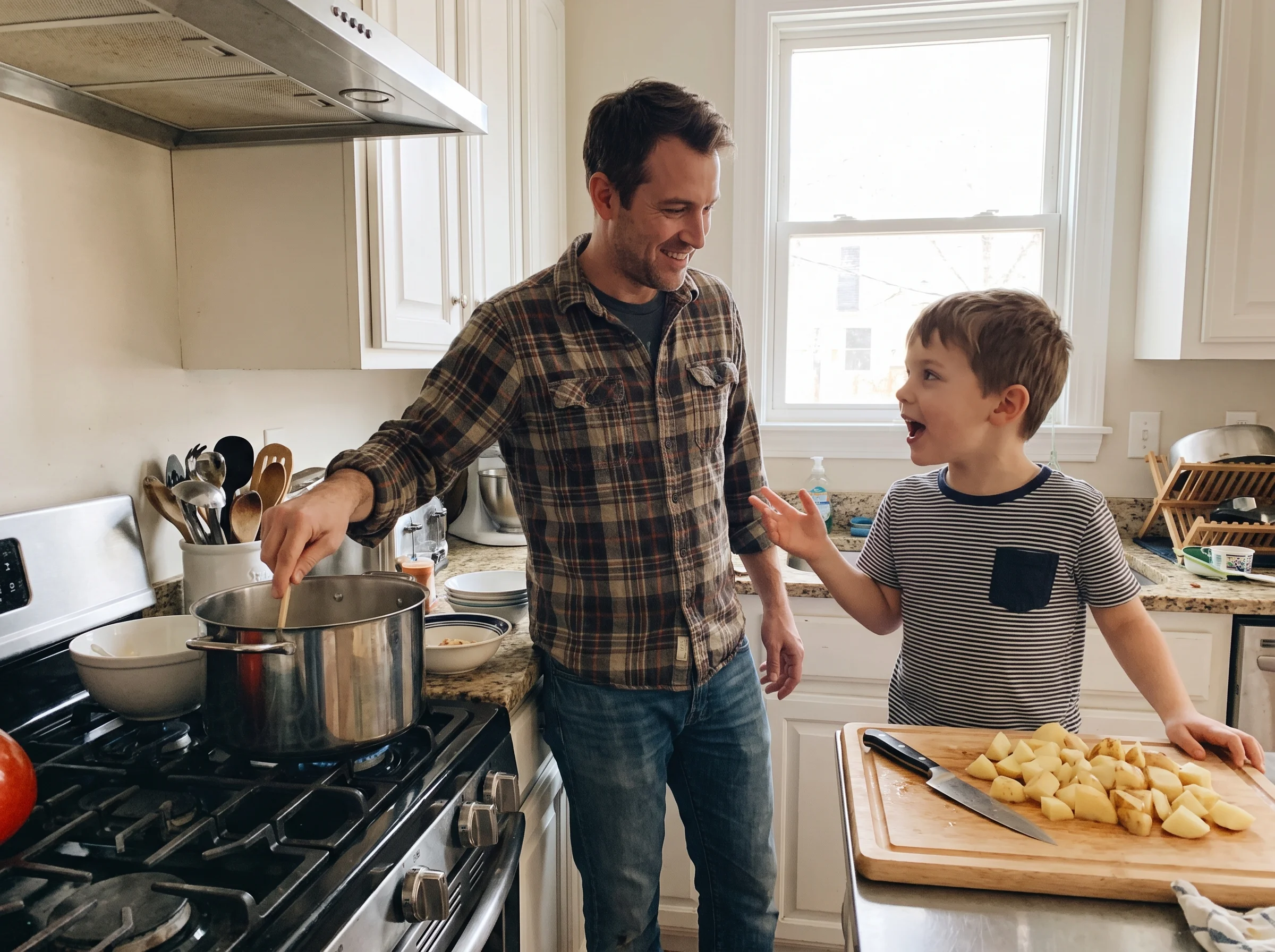
- Draw their Minecraft build. Get some paper, ask them to describe their latest creation, and try to sketch it while they narrate. You will get it wrong. They will correct you constantly. This is the point.
- Build a LEGO version of their favorite character. Doesn't have to be accurate. Has to be a joint project.
- Cook a meal their game character would eat. Sounds ridiculous. Try it once. My son and I made "Steve's Minecraft dinner" one night which somehow ended up being grilled pork chops and roasted potatoes. He talked about the game the entire time.
- Trivia night about their game. Let them quiz you. You will lose 50 to 3. They will be delighted.
- Watch a YouTuber they like, together. If your kid watches Dream, or Preston, or whoever, sit down and watch an episode with them. Ask why they like this creator. You'll learn a lot.
The point isn't that these activities are "better" than gaming. The point is that they extend the world of the game into shared physical space, which reinforces that you actually care about what they care about. Researchers at Common Sense Media have found similar patterns: kids whose parents engage with their media life feel more understood, period.
When Gaming Stops Being the Bridge
Here's something nobody tells you. Gaming might work as your connection tool for a year, or five years, and then stop. Kids grow. Tastes shift. Your 10-year-old who wanted you to play Roblox every night becomes a 14-year-old who mostly wants to be left alone with their group chat.
That's not a failure. That's growth. And the skills you built during the gaming years, asking better questions, being a curious learner, showing up without an agenda, those don't expire. They transfer.
When my older son started drifting away from gaming with me, I noticed he'd started really getting into music production. Making beats on his laptop. Same energy, different medium. So I did what I did with Minecraft. I asked him to show me. I was terrible. He laughed. He explained things I didn't understand. And we were back.
The gaming was never really about the gaming. It was about learning how to be a beginner in your kid's world. Once you've done that once, you can do it again with whatever comes next.
Common Mistakes I Made (So You Don't Have To)
- Suggesting "better" games. Nothing kills a bonding moment faster than "have you tried this one instead?"
- Talking about screen time DURING the game. Save that conversation for a completely different time. Never mix it with playing together.
- Trying to win. If you're a competitive person like me, this one's hard. Fight the urge.
- Narrating your kid's gameplay. They don't need commentary. They need presence.
- Making it a Big Deal. "Family gaming night" with capital letters and a schedule is way less powerful than just sitting down casually on a Tuesday.
- Giving up after one bad session. Sometimes the first try is awkward. Try again next week.
FAQ
What if I've genuinely never gamed before in my life? Perfect. You're the ideal candidate for the "become the beginner" move. Ask your kid to teach you. Be honest that you don't know what any of the buttons do. They will love this.
What if I genuinely don't like the game they love? You don't have to become a fan of the game. You have to become a fan of your kid's relationship with the game. Ask questions. Watch them play. You're not there for the game, you're there for them.
How long should we play together? Whatever feels natural. 20 minutes of focused, present time beats two hours of you checking your phone. Quality over quantity, always.
My kid only plays with online friends. Can I still be part of it? Yes, but adjust your role. You're probably not going to join the squad. You can be the audience, the snack-bringer, and the person who asks great questions during the breaks.
Is it okay to play Fortnite/Roblox/Minecraft with young kids? Depends on the kid and your settings. Turn off open voice chat with strangers. Play with real-life friends and family only. Watch a few sessions before deciding. Most of the fear around these games is about the social side, not the gameplay, and that's something you can actually control. Guides from Internet Matters walk through the specific settings for each platform if you want a starting point.
Your Next Step
Here's what to do tonight, or this weekend. Sit down next to your kid while they're playing. Don't ask if you can play. Don't offer suggestions. Just sit. Wait for a natural pause, then ask one of the questions from the list above. My favorite starter is still "what's the craziest thing that happened in your world this week?"
Then shut up and listen.
That's it. That's the whole move. Everything else in this article builds on that one skill.
One of the cards in our Yakety Pack deck asks "what game character would you want as a real friend?" It's a small question, but it opens up a big one underneath: who does your kid actually admire, and why? That's the real work of parenting a gamer kid, or any kid, really. Finding the small questions that unlock the big ones.
You don't need to be good at their game. You don't need to love it. You just need to be genuinely curious about the person playing it.
That's the whole thing. That's what I wish somebody had told me three years ago, back when I was standing in a doorway holding apple slices and getting grunts.
Go build a shoebox house. See what happens.

From this article
Pause, Play, Connect: Core Deck
Show up without an agenda: sitting next to them is the move, and the question you ask in the lull decides the next twenty minutes. The Core Deck keeps a boxful of story-first questions ready for exactly that couch-arm moment.
If game time is becoming your connection time, the full bundle adds the Parent Power-Up deck and two digital parent guides, $146 of family fun for $59.

