
I used to be that dad who said "one more level and you're done." Then I asked my son to teach me his favorite game. Three hours later, I understood more about my kid from watching him build a Minecraft fortress than from six months of "how was school?" conversations.
Here's the thing nobody tells you about family gaming: you're probably doing it wrong. I was. For years, I dragged my kids toward "appropriate" games while they rolled their eyes and counted the minutes until they could get back to whatever I'd banned that week. Sound familiar?
The breakthrough came when I stopped trying to control their gaming and started trying to understand it. Turns out, the path to connecting with your kids doesn't go around their favorite games - it goes straight through them.
Why Most Family Gaming Advice Is Written by People Who Don't Actually Game with Kids
Let me guess what you've read before: "Try these wholesome, educational games the whole family will love!" Lists full of games where you count apples, learn geography, or help cartoon animals share their feelings.
My daughter's exact words when I suggested we play Animal Crossing together: "Dad, I'm not five."
She was eight.
The problem with most family gaming advice? It's written by people who think kids are delicate flowers who need protection from anything remotely challenging or competitive. Meanwhile, your 10-year-old is building complex redstone computers in Minecraft and explaining game mechanics you can't even pronounce.
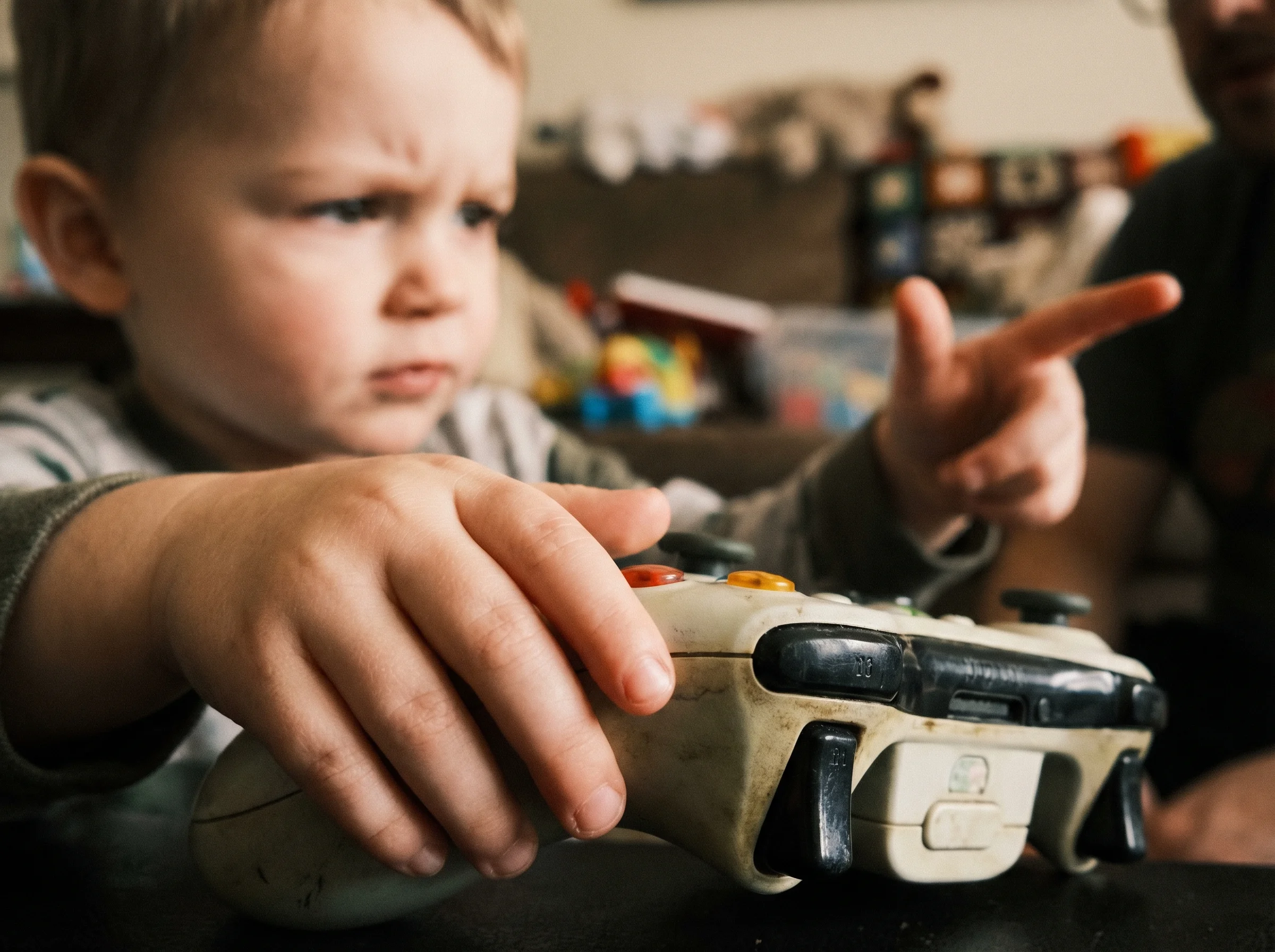
Here's what "E for Everyone" actually means: the game won't have swearing or blood. That's it. Doesn't mean your 6-year-old and 14-year-old will both enjoy it. Doesn't mean it's actually fun. Definitely doesn't mean it'll bring your family together.
I learned this the hard way when I brought home Math Blaster. "It's gaming AND educational!" I announced, like I'd invented sliced bread. My kids looked at me like I'd suggested we spend Saturday cleaning gutters for fun. That was the day I lost all gaming credibility in my house.
The worst part? While I was pushing "appropriate" games, I was missing what my kids actually loved about gaming. The problem-solving. The creativity. The genuine accomplishment of beating something difficult. You know, the exact same things I value in my own hobbies.
 Meet them where they arePause, Play, Connect: Core Deck172 prompts that start from the games your kid already loves, not the ones you picked for them.$49 CAD • 90 cards • 18 reviewsShop the deck
Start Where They Are, Not Where You Want Them
Want to know the sentence that changed everything for me? "Dad, want me to show you how to play Fortnite?"
My first instinct: "That violent game where kids shoot each other? No thanks."
What I actually said (after taking a breath): "Sure, but you'll have to teach me everything."
Best parenting decision I've made in years.
See, I'd been trying to drag my kids into my world. Board games. "Classic" video games from my childhood. Anything but the games they actually played with their friends. No wonder they weren't interested in gaming with dad.
The magic happened when I became the student. My 13-year-old explained building mechanics with more patience than I've ever seen him show his little sister. He taught me about storm circles, shield potions, and why you always need materials. When I died (approximately every 30 seconds), he didn't mock me. He explained what I could try differently.
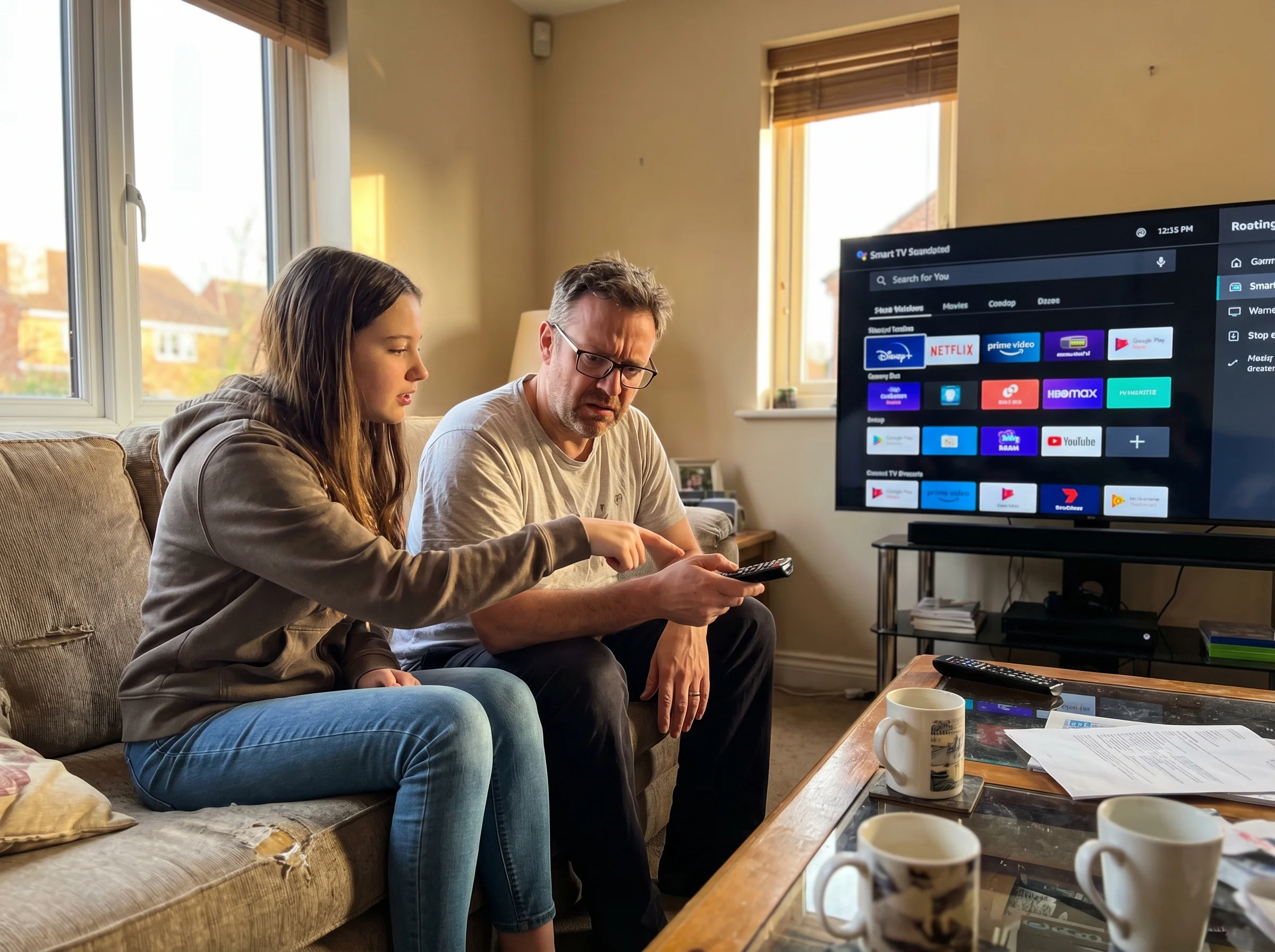
"Dad, you can't just run across open fields," he said, trying not to laugh as I got sniped for the twentieth time. "You need to build cover as you move."
That's when it hit me: he wasn't just teaching me Fortnite. He was teaching me how he thinks, how he solves problems, how he handles pressure. All because I asked him to show me his game instead of demanding he play mine.
Here's what actually works:
Instead of "Let's play something together," try "Show me what you built this week."
Instead of "We should do family game night," try "Teach me that game you're always talking about."
Instead of "One more game then you're done," try "Can I watch your next match?"
That last one? Game-changer. Sometimes watching is better than playing, especially when you're garbage at the game (and you will be). You get to see them in their element. You get to ask questions. You get to understand why they love it without slowing them down.
The Best Co-op Games Nobody Tells You About (Sorted by Real Situations)
Alright, let's get practical. You want to game with your kids, but you need games that actually work for your situation. Not some fantasy where everyone has unlimited time and identical skill levels.
For the 30-minute window after dinner:
Overcooked is chaos incarnate, and that's exactly why it works. You're trying to cook meals together in increasingly ridiculous kitchens. Kitchens on fire. Kitchens on moving trucks. Kitchens split by rivers. My kids learned more about communication from this game than from any team sport. Fair warning: someone will yell "WHERE'S THE TOMATO?" at least once per session.
Moving Out is basically Overcooked but with furniture. You're removal specialists trying to throw couches out windows and "carefully" transport fragile items. The physics are intentionally wonky, which means when dad launches the refrigerator into the pool, it's hilarious instead of frustrating.
Lovers in a Dangerous Spacetime looks cute but gets intense fast. You're all running around inside a spaceship, manning different stations to fight off enemies. The genius part? Nobody can do everything. Dad might be terrible at shooting, but he can steer. Your youngest can't navigate, but they're a shield master.
When skills don't match (aka reality):
It Takes Two should be required playing for every family. Only two players, but others can watch and strategize. The brilliant part? Each player has different abilities that are equally important. When your 8-year-old has the power you need to progress, suddenly the skill gap doesn't matter.
Any Kirby game lets better players literally carry others through levels. Not metaphorically - Kirby can swallow teammates and carry them past hard parts. My youngest loved "riding in Kirby's belly" while her brother handled the tricky platforming.
For different ages in the same family:
Minecraft on creative mode is the ultimate equalizer. Your 6-year-old can build a house of solid gold while your teenager constructs a working computer. Everyone's happy, nobody's competing, and you might actually relax.
LEGO games are genius because players can drop in and out instantly. Bathroom break? No problem. Little sister rage quit? The game adjusts. Plus, death means you just pop back as LEGO pieces. Low stakes, high fun.
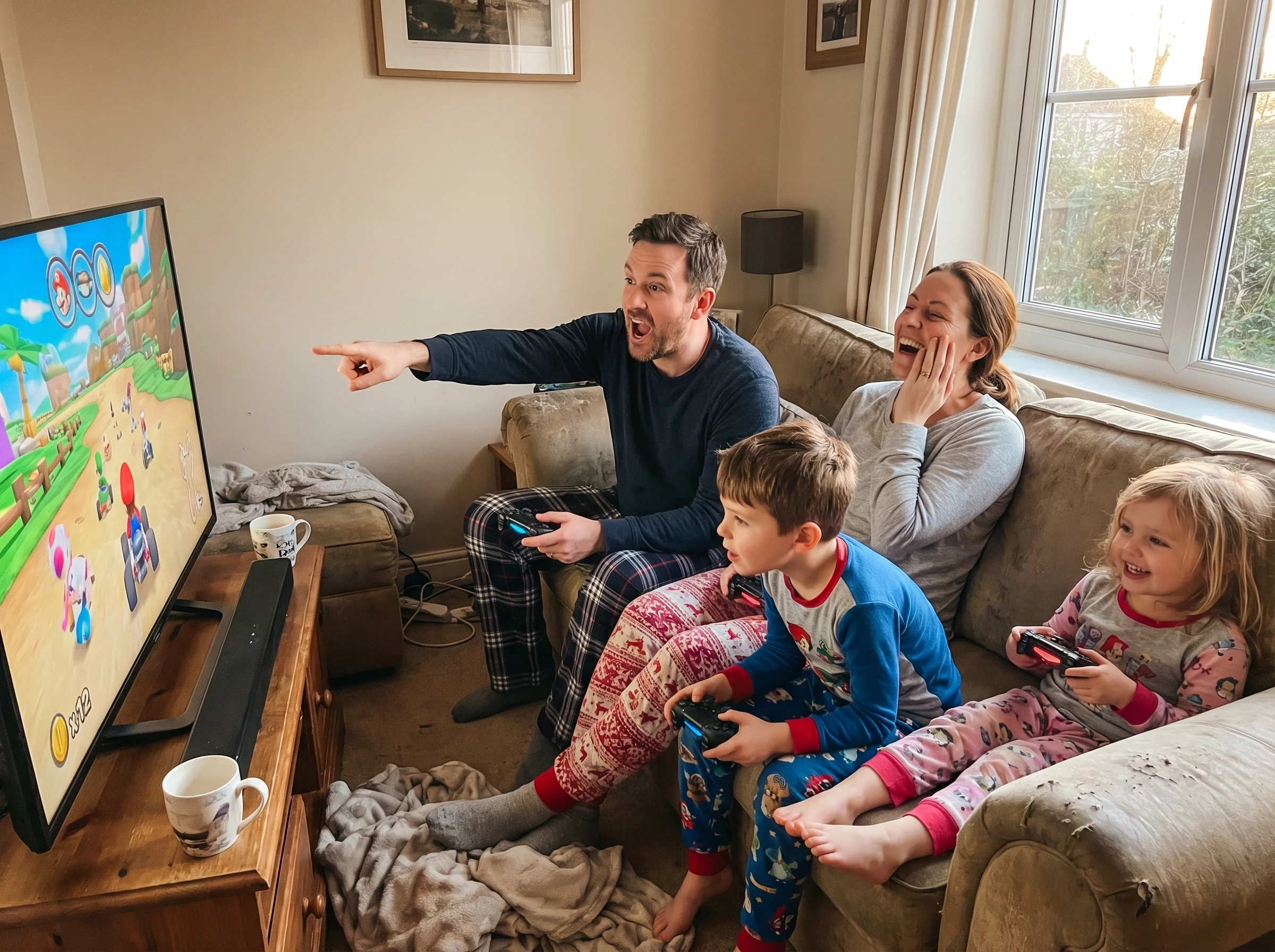
Mario Kart with auto-accelerate and smart steering means your 5-year-old can play with your 15-year-old. They won't win, but they'll finish the race, and that's what matters.
Gateway games for non-gamers (that's you):
Stardew Valley is farming without the back pain. Work together to build a farm, explore mines, and ignore the fact that you're all hopelessly addicted. The day my wife said "just one more day" at midnight, I knew we'd found our game.
Spiritfarer made my tough 14-year-old son cry. You're ferrying spirits to the afterlife, but it's beautiful and meaningful, not depressing. We had actual conversations about loss and memory because of this game.
A Way Out is designed for two players who might not game much. It's a prison break story where you literally can't progress without working together. My brother and I played this in one sitting and talked more than we had in years.
When they want "real" games (and you should let them):
Portal 2's co-op mode is brain-bending puzzle perfection. You need two players thinking differently to solve each room. When my daughter figured out a solution I'd been stuck on for ten minutes, the pride on her face was worth every frustrated attempt.
Yes, Cuphead is brutally difficult. That's why it works. When you finally beat that boss you've died to 47 times (I counted), the celebration is real. My kids and I still talk about beating King Dice like we climbed Everest.
Halo's split-screen campaign is why my generation fell in love with gaming. Playing through the story together, on the same couch, creates memories that online gaming can't touch. My teenager was shocked that games used to just... let you play together without internet.
When Co-op Goes Wrong (And It Will)
Let me paint you a picture: family game night, everyone's excited, we boot up Mario Party. Two hours later, my kids aren't speaking to each other, someone definitely threw a controller (might have been me), and the phrase "I'm never playing with you again" has been uttered at least three times.
This is normal.
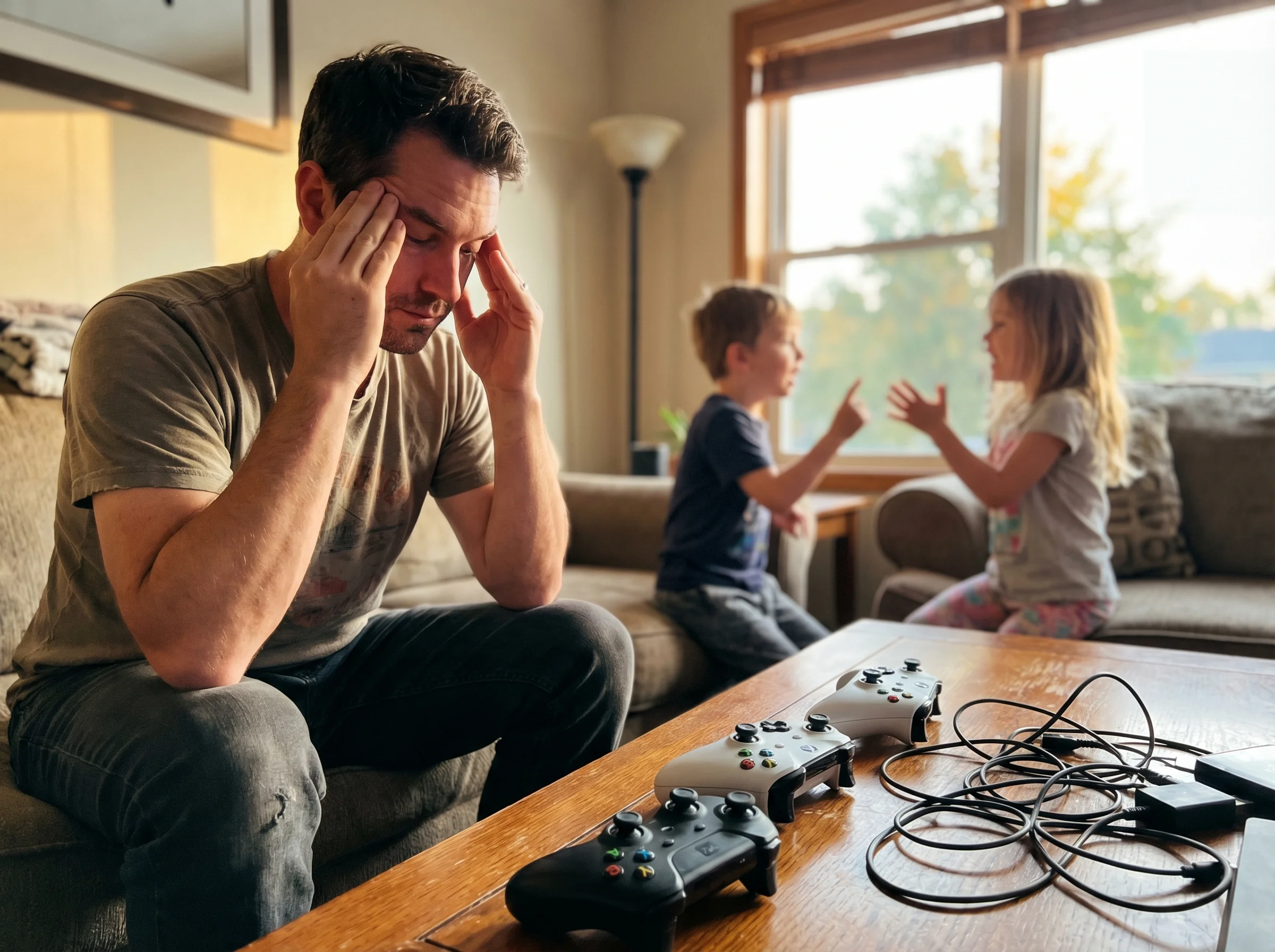
Here's what nobody admits: family gaming can go spectacularly wrong. Controllers will be thrown. Tears will happen. Someone will definitely accuse someone else of cheating. The question isn't how to avoid this - it's how to handle it when it happens.
The skill gap is usually where things explode. Your 12-year-old is carrying the team while your 8-year-old keeps falling off the same cliff. The older kid gets frustrated. The younger one feels useless. Everyone's miserable.
What works: Let them fail. Seriously. When my youngest couldn't make a jump in a platformer, my instinct was to take the controller and do it for her. Instead, I sat next to her and said, "You'll get it. What do you think you need to do differently?" Took her fifteen tries, but when she made it? Pure joy. Her brother actually cheered.
Sometimes quitting is the answer. We have a family rule: if two people aren't having fun anymore, we switch games. No judgment, no "just one more try," no guilt. This saved us from so many meltdowns.
But sometimes pushing through matters. When we were stuck on a Cuphead boss, I could see my kids wanted to quit. "Five more attempts," I said. "Then we're done." We beat it on attempt four. They learned persistence. I learned when to push.
The reality? Competition brings out the worst in people, and your kids are people. They're going to get mad when they lose. They're going to gloat when they win. Use it. "Hey, remember when you got that lucky shot? How do you think your sister feels right now?" Real-time empathy lessons.
 For the respawn walkPause, Play, Connect: Core Deck$49 CAD • 172 promptsSee the deck
Turn Gaming Into Conversation
The best conversations with my kids don't happen during scheduled "talk time." They happen in the loading screens, during the walk back from a respawn, in the "what should we do next?" moments of Minecraft.
"Tell me about that character" works infinitely better than "how was your day?" My son spent twenty minutes explaining the backstory of his favorite Apex Legends character. Hidden in that explanation: his thoughts on loyalty, sacrifice, and what makes someone a hero. Try getting that from "what did you learn in school?"
Here's what I actually ask during games:
"What's the hardest part about this level?" "If you could change one thing about this game, what would it be?" "Why do you think the developers made it work that way?" "What would you do if you were that character?"
That last one opened up a conversation about moral choices when my daughter was playing a story game. The character had to choose between saving a friend or completing the mission. Her choice and reasoning taught me more about her values than any lecture I could give.
Post-game matters too. We have a tradition: whoever played gets to share their "play of the game" at dinner. Doesn't matter if it was a victory or a spectacular failure. My kids practice storytelling, sequencing events, and recognizing their own achievements.

Sometimes the game provides the perfect metaphor. A Minecraft creeper blew up my son's house he'd worked on for hours. He was devastated. "You know what's cool?" I said. "You can rebuild it better now. You learned what doesn't work." Two weeks later, when his school project fell apart, he said, "It's like when the creeper blew up my house. I'll rebuild it better."
Gaming gave us a shared language for handling disappointment.
The Budget-Conscious Family's Gaming Setup
Let's talk money, because "just buy four controllers and every new game" isn't realistic advice for most families.
Here's how we built our gaming setup for less than the cost of one new console:
Xbox Game Pass is the netflix of gaming, and it's a game-changer for families. One subscription, hundreds of games, including most of the family co-op games I've mentioned. New stuff added constantly. When a game causes fights? Delete it and try something else. No $60 guilt.
Used games from GameStop, Facebook Marketplace, or local game stores. That $60 new release? It's $20 six months later. My kids don't care if we're playing the latest games - they care that we're playing together.
One console can work for multiple kids if you're smart about it. We use one Xbox with multiple profiles. Cloud saves mean they can pick up their solo games whenever. For actual co-op, one console is all you need anyway.
Free co-op games that don't suck: Fortnite (despite my initial resistance), Rocket League, Among Us when everyone's together. Minecraft costs money once but provides literally endless gameplay. Best dollar-per-hour entertainment you'll find.
Share with other families. We have a game swap with three other families. Everyone buys different games, everyone shares. My kids get to try 4x the games for the same budget. Plus, built-in playdates when they want to show off their progress.
Controllers are the real expense. Good news: you don't need four elite controllers. We have two good Xbox controllers and two decent third-party ones for when cousins visit. Works fine. Check Facebook Marketplace - people sell controllers when they upgrade consoles.
Budget reality: Start with what you have. Got a tablet? There are great co-op mobile games. Old laptop? Steam has thousands of cheap co-op games that'll run on a potato. Don't let perfect be the enemy of good enough.
Making Your Own Rules
Screen time limits are the "eat your vegetables" of parenting advice. Necessary? Maybe. But they miss the point entirely when it comes to family gaming.
Here's our approach: Gaming together doesn't count against screen time. Solo gaming does. This incentivizes what we actually want - connection, not just compliance. My kids will literally ask to play with me to earn more gaming time. I've weaponized their love of screens for good.
Sunday morning Minecraft is sacred in our house. No plans, no rush, no "we should be doing something productive." Just coffee for me, cereal for them, and whatever world we're building together. My wife sleeps in. Everyone wins.
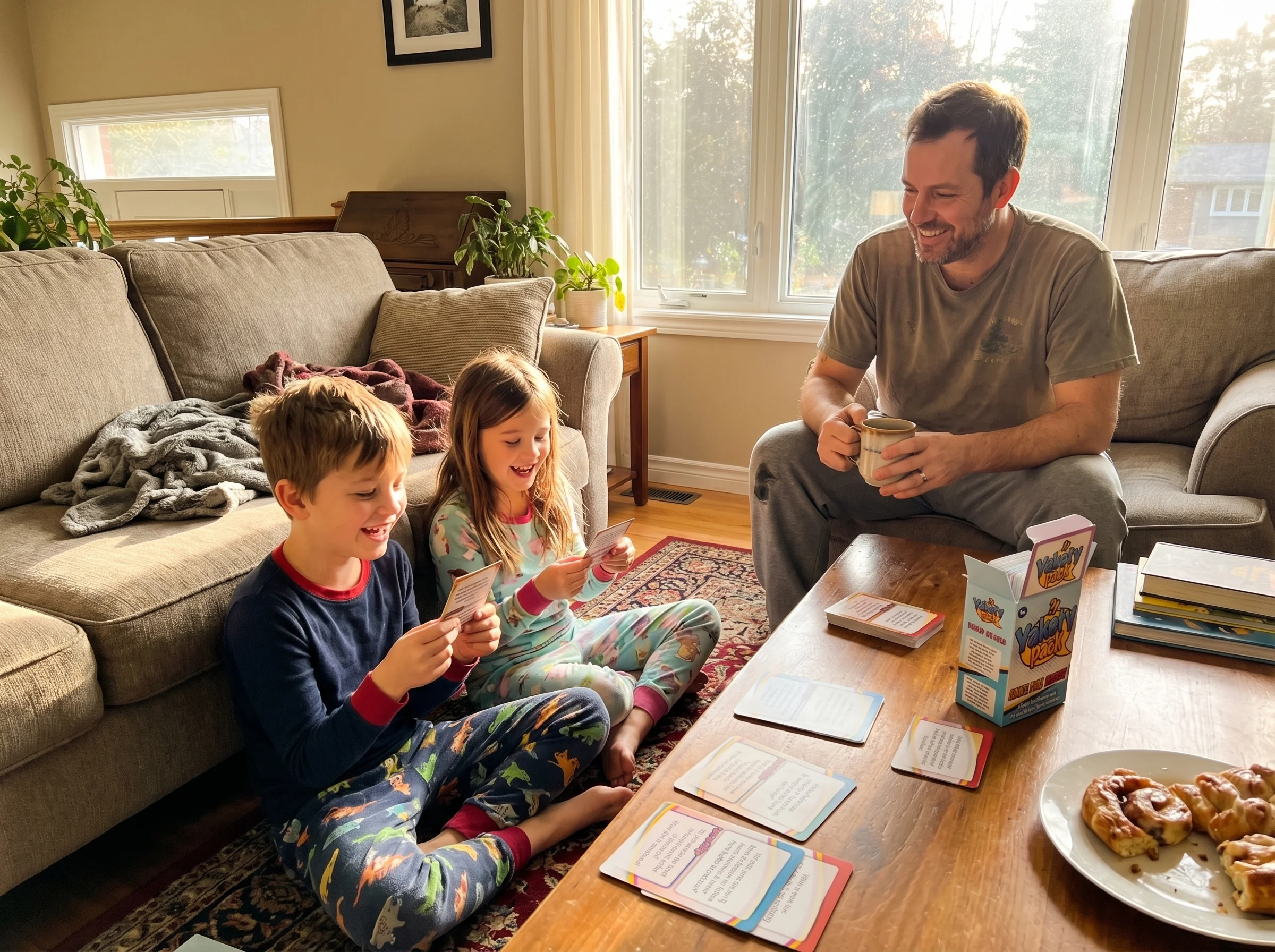
We have "game nights" and "gaming nights" - different things entirely. Game night might be board games, card games, whatever. Gaming night is video games, no judgment, no educational value required. Having both means nobody feels like their preferences are ignored.
The non-gaming parent problem is real. My wife doesn't game. Tried to force it, made everyone miserable. Now she has "gaming night off" - her time to do whatever she wants while the kids and I game. Sometimes she watches and comments. Sometimes she reads in the same room. Sometimes she goes out with friends. No guilt either way.
Tournament seasons work great for competitive kids. We'll do a month-long Mario Kart tournament with a bracket on the fridge. Low stakes (winner picks next month's game), high engagement. Spreads the competition out so nobody gets too heated in one session.
The "pause for people" rule: Real life always beats game life. Someone needs to talk? Pause. Dog needs out? Pause. Sister's crying? Pause. This teaches priorities without making gaming the enemy.
Here's the controversial one: I let my kids play "inappropriate" games with me. My 14-year-old and I play horror games together. Is it scary? Yes. Is he technically too young? According to the rating, yes. But sitting next to dad while playing changes everything. We talk about fear, problem-solving under pressure, supporting each other through tough moments. The game becomes a tool for connection, not consumption.
The Truth About Family Gaming
If you've made it this far, you're probably serious about connecting with your kids through gaming. So let me be real with you: it's not always magical. Sometimes it's frustrating. Sometimes your kids would rather play with friends. Sometimes you'll wonder why you're spending your precious free time dying repeatedly in a game you don't even like.
But then something clicks. Your daughter teaches you a trick that saves your life in-game. Your son opens up about school drama while fishing in Stardew Valley. You all scream when you finally beat that impossible boss. These moments make every failed attempt worth it.
The games aren't the point. They never were. The games are just the excuse to sit next to each other, to work toward something together, to have a reason to high-five your teenager who usually won't let you within three feet of them in public.
I started this journey thinking I needed to limit my kids' gaming. I ended it realizing I needed to join them. The connection I was looking for wasn't on the other side of the screen - it was right there in the games they already loved.
Your kids are already experts at something. They're already passionate about something. It might be Fortnite, Roblox, or some game you've never heard of. You can fight it, limit it, and stay on the outside. Or you can grab a controller, prepare to be terrible, and let them show you their world.
Trust me. The view from inside is worth every respawn.
Your Next Move
Tonight, ask your kid to show you their favorite game. Not play with you - just show you. Watch them light up as they explain something they're great at. Ask questions. Be genuinely curious. Don't judge the game, don't mention screen time, don't suggest an alternative.
Just be present in their world for once.
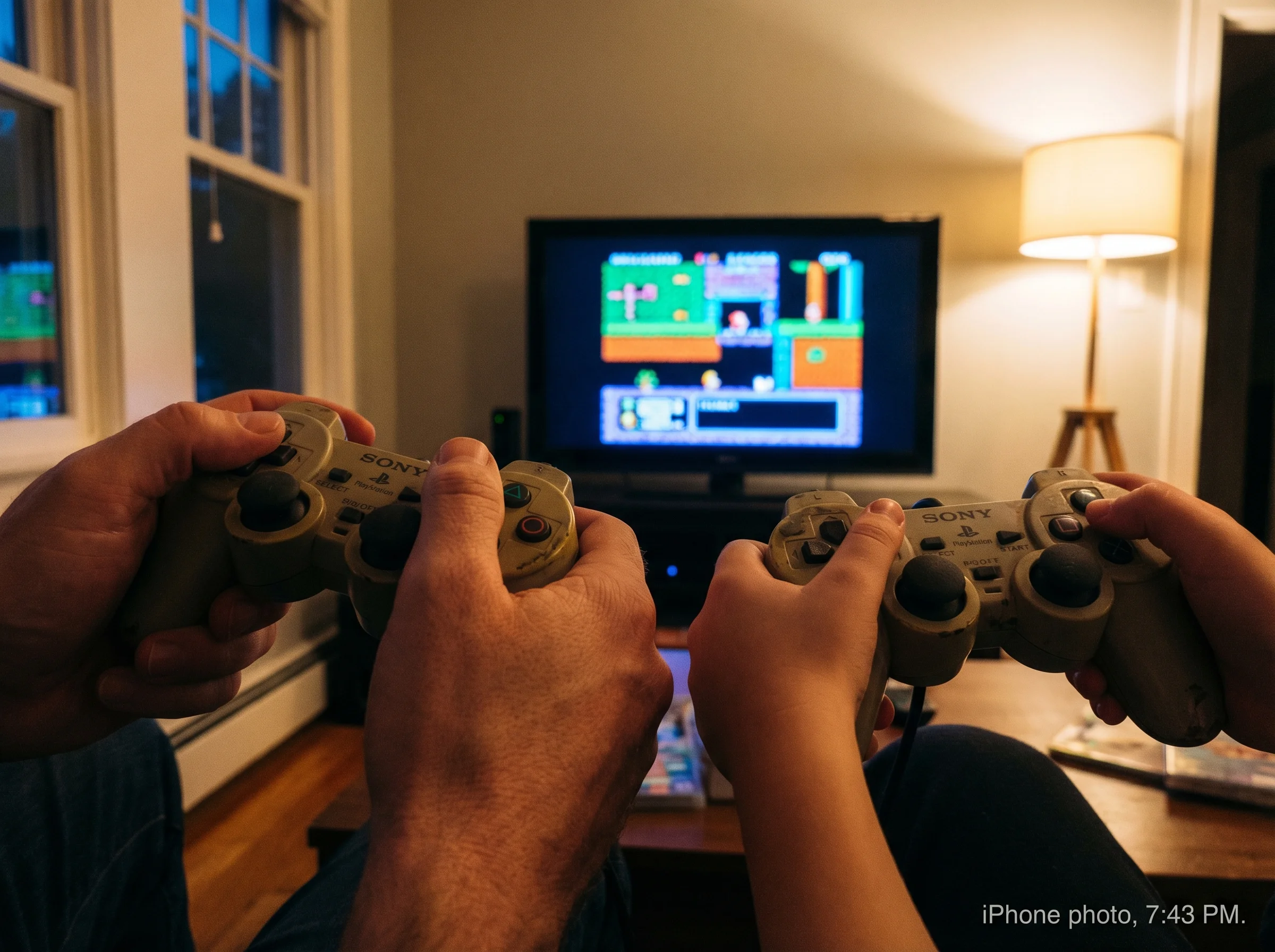
That's where family gaming really starts. Not with the perfect co-op game or the ideal setup. It starts with "show me what you love about this."
Everything else? That comes later. But this - this is where connection begins.
Quick note: If you're looking for ways to keep conversations going during and after gaming, we created Yakety Pack specifically for families like ours. Sometimes after an intense gaming session, the kids are all talked out about the game itself. That's when we pull out conversation cards designed for kids who'd rather discuss epic battles than emotions. Questions like "If you could live in any game world for a day, which would it be?" get them talking about their dreams and fears in ways direct questions never could. But honestly? Start with just being present. The rest will follow.
Once the game talk endsPause, Play, Connect: Core Deck172 prompts that pick up where the play by play stops, without turning it into a talk.$49 CAD • 90 cards • 18 reviewsShop the deck
Related Articles
Looking for more? Check out these related articles:
- family friendly co-op games under 30 minutes
- What are some good casual multiplayer games?
- What are some good two player co-op games?
- What are some fun free co-op games?
- What games can two people play offline?
- What are some good co-op campaign games?
- What is 2 player local co-op?
- What couch co-op games are good for parties?
- What 2-player games are good for couples?
