
Last week my daughter asked if we could play "that card game where we actually talk." She meant Crazy Eights, but what she really meant was she had something on her mind. Turns out, the best two-player offline games aren't about the games at all, they're about what happens between the turns.
I learned this the hard way. For years, I thought getting my kids to play offline games meant prying them away from screens. Wrong approach. Dead wrong. The real magic of offline gaming isn't the absence of screens, it's the presence of something else entirely.
Why Offline Hits Different (And Why That Matters)
Here's what nobody tells you about playing games face-to-face: your brain literally works differently. When you can see someone's thinking face, when you catch that little smirk before they make their move, when you both reach for the same card and laugh, something shifts. Scientists call it mirror neurons. I call it actually seeing your kid.
My son and I used to play Minecraft together online, sitting in the same room on different devices. One night our internet went down. I pulled out an old deck of cards. We played Uno for two hours. Not because Uno is some magical game, but because something changed. Without the screen between us, we started talking differently.
Between turns, while shuffling, during that pause when someone's thinking, that's when he mentioned this kid at school who kept "accidentally" bumping into him. That's when I told him about getting shoved into lockers in fifth grade. The game became background music to our conversation.
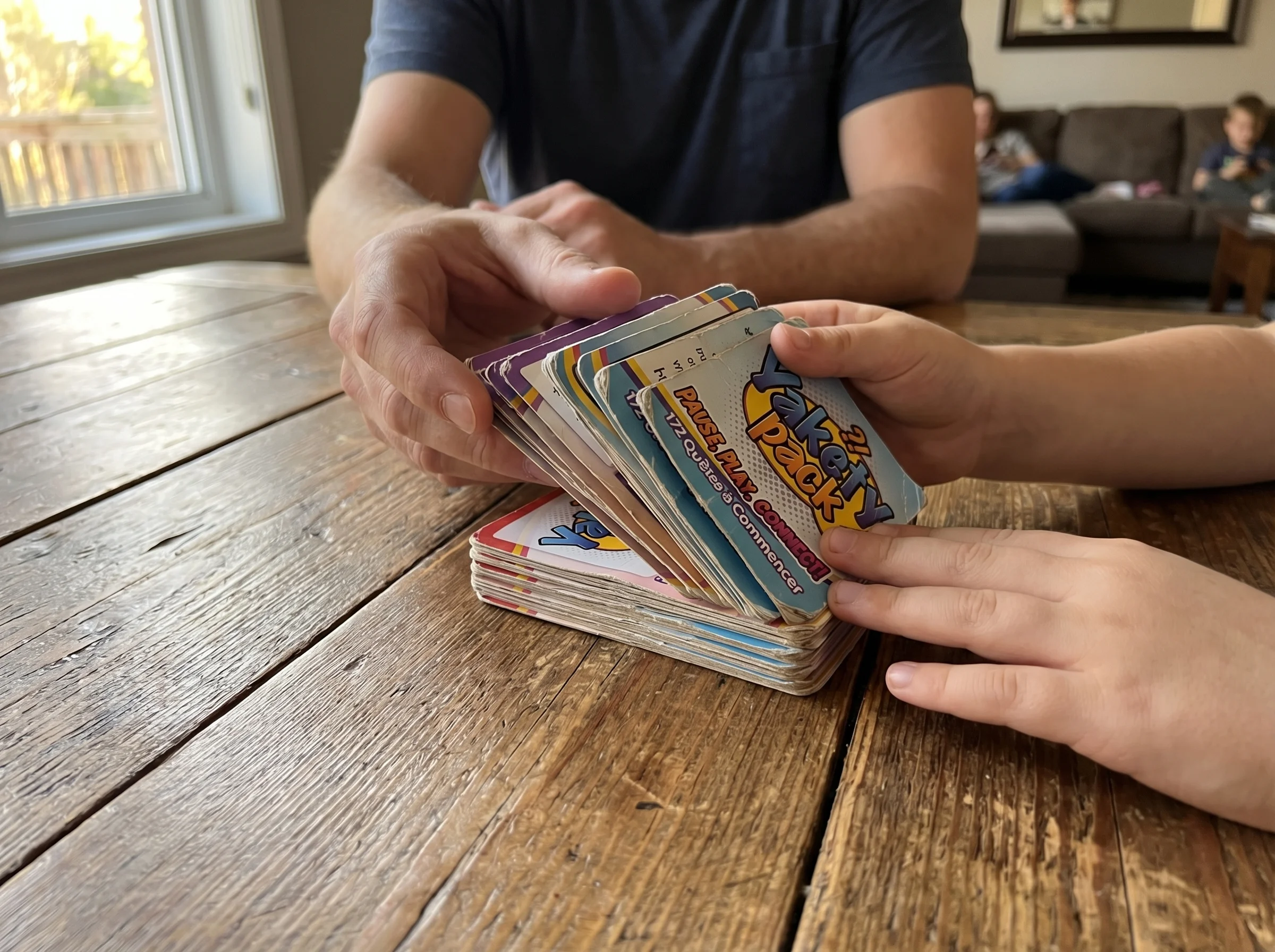
Online games demand constant attention. Offline games have built-in breathing room. Those pauses? That's where kids feel safe enough to bring up the stuff that matters.
 In the shuffle between turnsPause, Play, Connect: Core Deck172 prompts to have on hand for the quiet stretch while somebody deals.$49 CAD • 90 cards • 18 reviewsShop the deck
The Quick Connects (Under 10 Minutes)
You don't need two hours and a complex board game. Some of the best connections happen over simple card games while dinner's cooking.
Skip-Bo is my secret weapon. Simple enough that you can play while actually talking, engaging enough that it doesn't feel forced. My daughter and I play while her mac and cheese bubbles. That's where I learned about her best friend moving away.
Uno works because everyone already knows it. No teaching required. Just deal and play. Pro tip: House rules make it yours. We play where Draw 2s stack. My son invented the "mercy rule" where if someone has more than 10 cards, they can trade hands with anyone. Chaos? Yes. Connection? Absolutely.
Dice games hit different. Farkle takes five minutes to teach and creates natural story moments. "Remember when Dad rolled six ones?" becomes family lore. Plus, the clicking of dice is weirdly soothing. Like a meditation bell that occasionally makes you yell.
Simple rules matter more than you think. The game should facilitate connection, not dominate it. If you're spending more time explaining rules than playing, you've picked the wrong game.
The Conversation Starters (15-30 Minutes)
Some games are designed to get people talking. Others accidentally become confession booths.
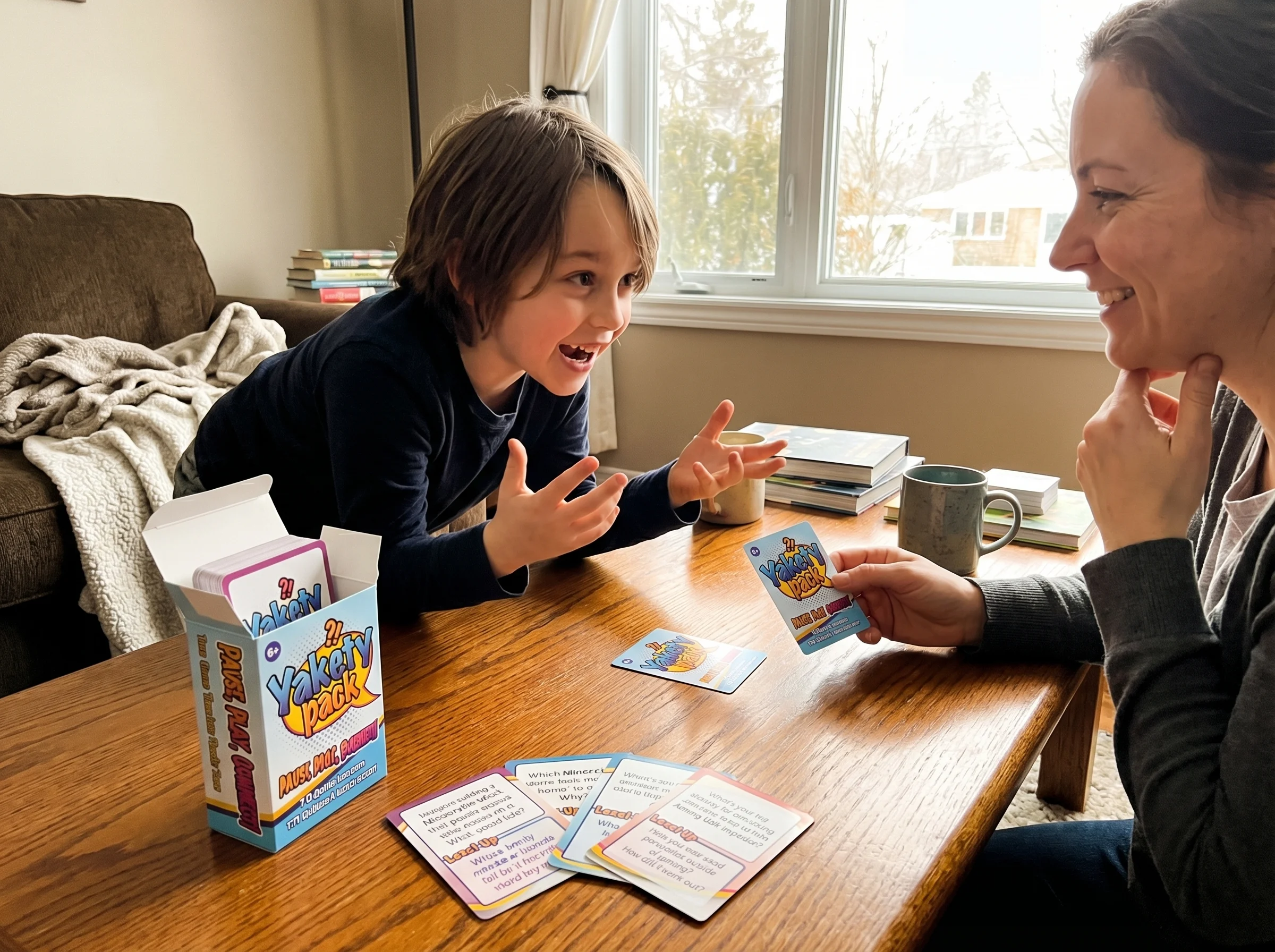
20 Questions sounds basic until you realize it's actually "let me show you how my brain works." When my daughter asks "Is it something that makes you happy?" instead of "Is it bigger than a breadbox?" I learn something. When she guesses "Dad's coffee mug" for something that's important to our family, I melt a little.
Boggle saved my marriage. I'm not kidding. My wife and I are both competitive, but differently. Strategy games made us fight. Boggle lets us be competitive individually while sitting together. We compare words after. She finds words I miss. I find ones she skips. We're different but equal. That matters.
Drawing games work even if you can't draw. Especially if you can't draw. Telestrations with just two people becomes "can you guess my terrible sketch?" My son draws what he thinks a "responsible adult" looks like. It's me holding a coffee cup and a bill. We laugh until we cry.
The Yakety Pack conversation cards grew from this exact realization. Sometimes the best games are just excuses to ask questions you wouldn't normally ask. "What's your superpower?" beats "How was school?" every time.
Bridging the Skill Gap (When One Person Always Wins)
Nothing kills game night faster than one person dominating every time. Trust me, I learned this teaching my daughter chess.
Start smaller than you think. With chess, we began with just pawns. Eight pawns each, first to get one across wins. She could handle that. We added pieces slowly. Now she beats me legitimately. Starting simple saved our relationship.
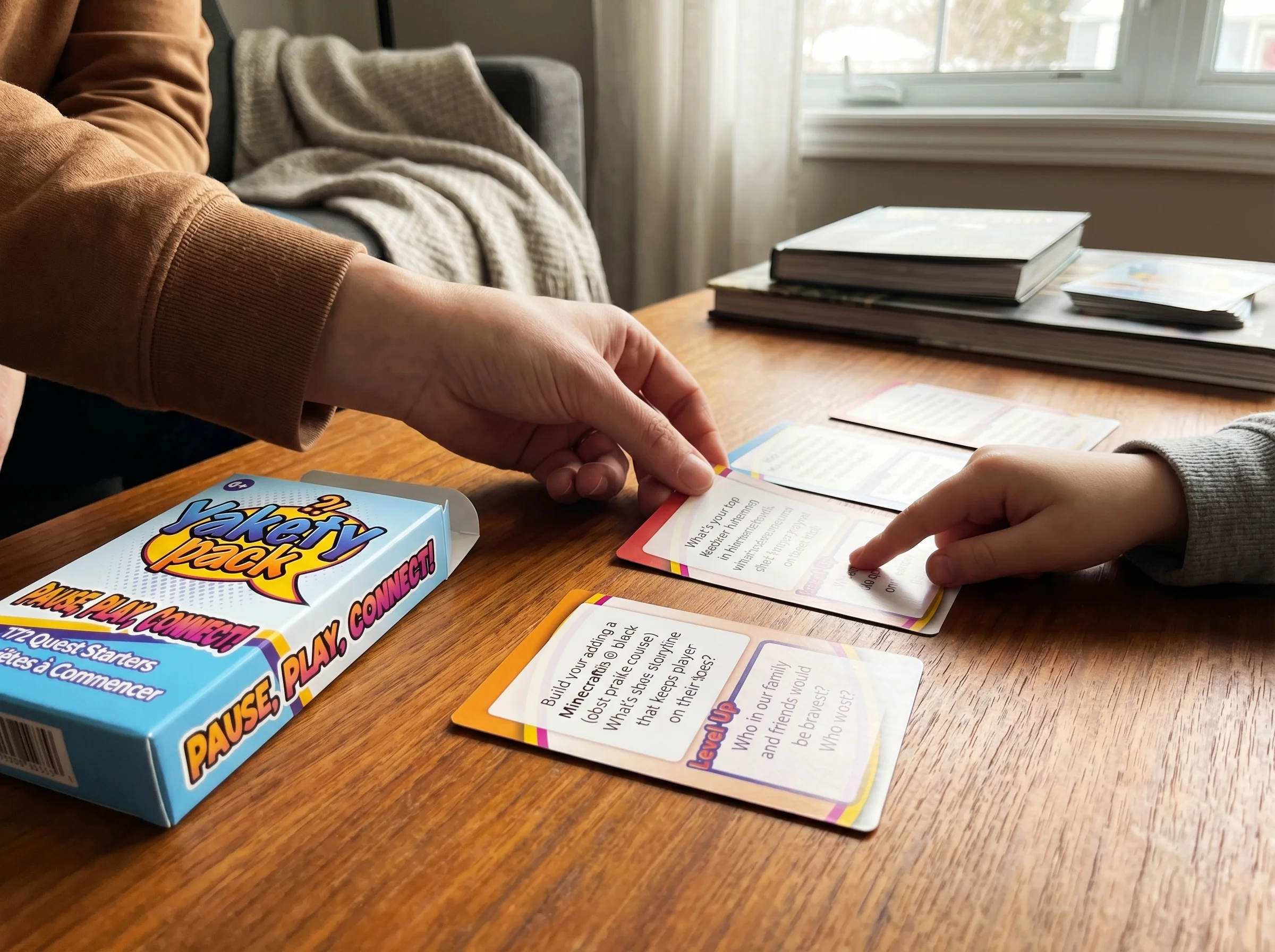
Cooperative games change everything. The Mind is just numbered cards you play in order without talking. Sounds dumb. It's not. You're trying to read each other, feel the rhythm together. When you nail it, you feel like psychics. When you fail, you laugh and try again.
Add randomness to level the field. Zombie Dice is pure luck with just enough decision-making. My ultra-competitive brother can't optimize his way to victory. We're equals. That matters more than the game.
Know how to lose without being obvious. Miss opportunities occasionally. Celebrate their good moves more than your own. But don't throw games. Kids know. They always know.
 Neither of you can losePause, Play, Connect: Core Deck$49 CAD • 172 promptsSee the deck
The Long Games (When You Have Time to Invest)
Sometimes you want to build something together over time. Carcassonne works because you're creating a map together. Each game tells a story. "Remember when we built that massive castle?" becomes shared history.
Story Cubes aren't really a game, they're an excuse to make stuff up together. Roll dice with pictures, tell a story using the images. My son's stories always involve explosions. My daughter's always have plot twists. I learn how they see the world.
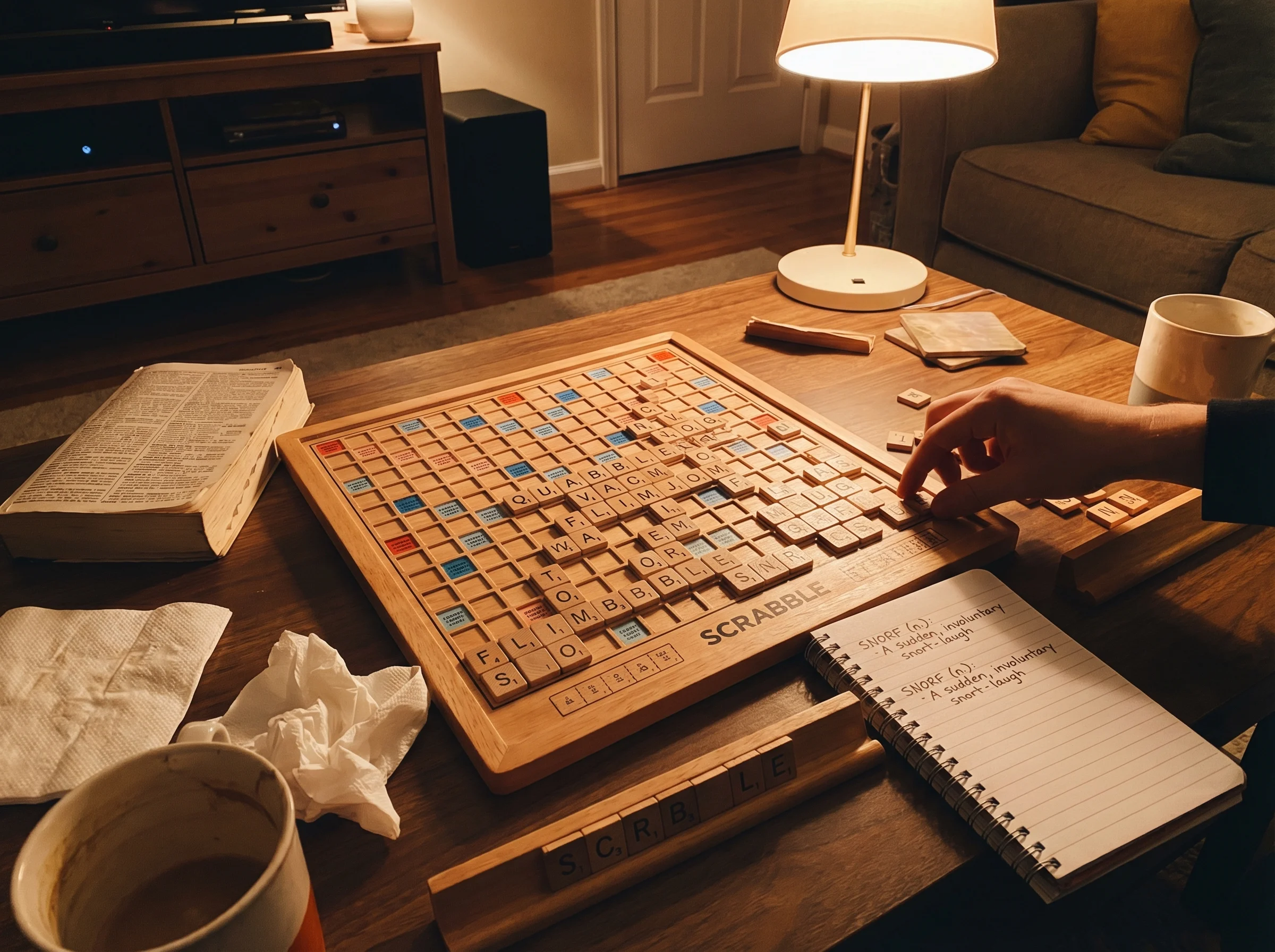
Traditional games with house rules become yours. We play Scrabble where you can make up words if you can define them convincingly. "Fooditude" is now officially "the attitude you have about trying new foods" in our house dictionary.
Making the Shift (From Screens to Table)
The hardest part isn't finding games. It's making the transition feel natural instead of forced.
Don't announce "It's family game time!" like you're declaring war on fun. Instead, start playing solitaire at the kitchen table. Be visible. Be enjoying yourself. They'll get curious. "What's that?" beats "Put your phone down" every time.
Create rituals that stick. Tuesday is "internet's down game night" at our house. Started as a joke when our WiFi actually died. Now it's sacred. Pizza and cards. Nothing fancy. Just consistent.
The "special deck" trick works magic. Buy a nice deck of cards, maybe wooden dice, something that feels different. Keep them somewhere specific. Make the physical objects special and the time becomes special too.
When Games Fail (And How to Recover)
Sometimes games bomb. The energy's wrong. Someone's grumpy. The game's too complex. Whatever. Know when to fold.
Read the room before you deal. If your teenager slams their door, maybe skip the invitation to play cribbage. If your partner's scrolling aggressively, Scrabble won't fix it.
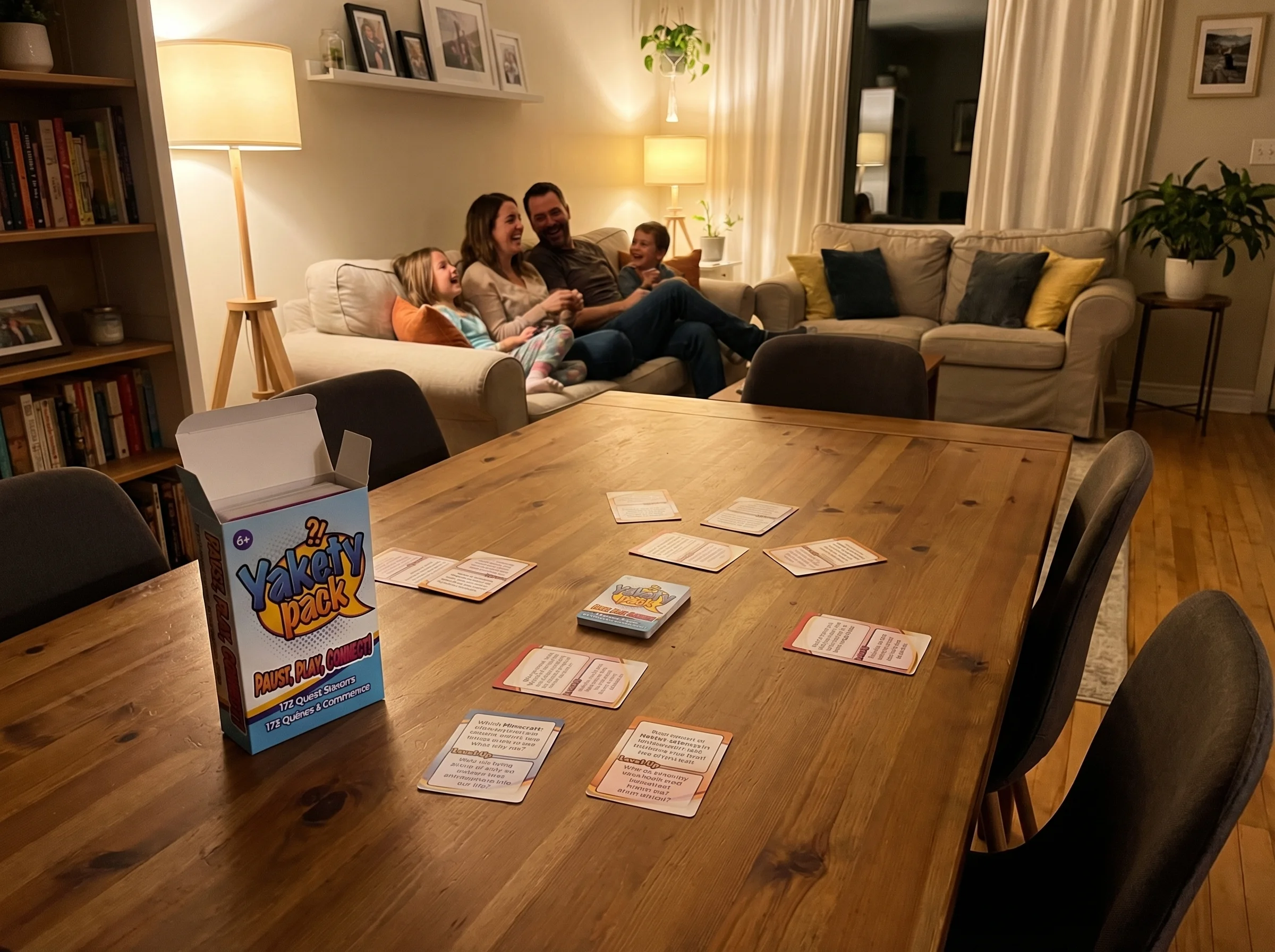
Quit while you're ahead. If everyone's laughing and connecting, don't push for "just one more round." End on the high note. Leave them wanting more.
Have pivot strategies. Game gets too competitive? Switch to cooperative. Too complex? Simplify on the fly. Too quiet? Add music. Too serious? Make up ridiculous new rules. The game serves you, not the other way around.
The Real Point
Here's what I wish someone had told me years ago: The best two-player games are often the ones you don't finish. If you're deep in conversation and abandon the game halfway through, you've won. The game's job was to start something, not be completed.
My kids don't remember who won Uno that night we talked about bullying. They remember feeling heard. My wife doesn't track our Boggle scores. She remembers laughing at my inability to see the word "cat" directly in front of me.
Two-player offline games create space for connection that our always-on world doesn't naturally provide. They're not about getting away from screens. They're about getting closer to each other.
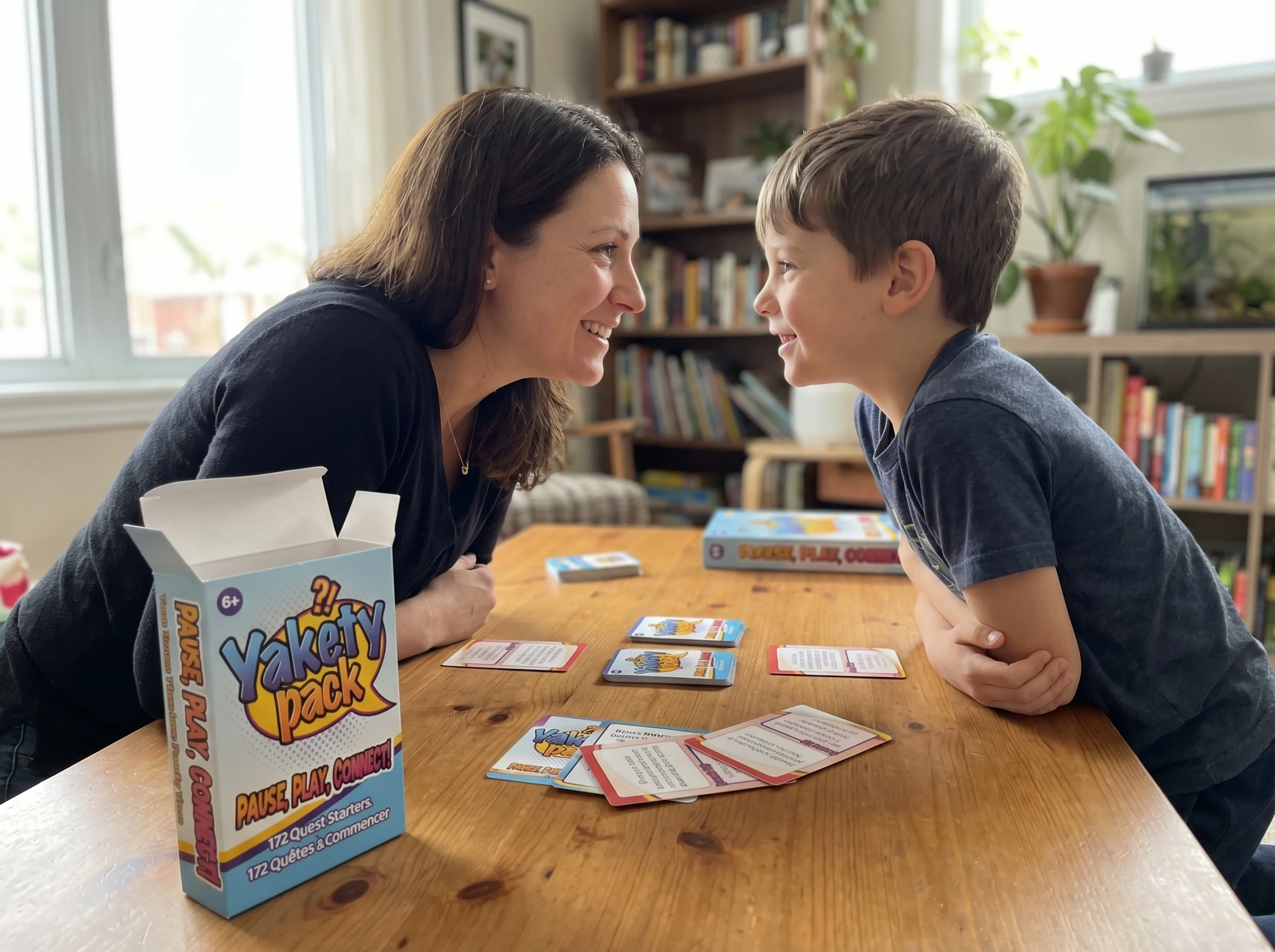
Start tonight. Grab a deck of cards. Sit at the table. Deal. See what happens in the pauses. That's where the magic lives, in the shuffle between turns, in the thinking faces, in the moment right before someone says, "Actually, can I tell you something?"
That's what games can two people play offline. The ones that make room for what really matters.
Can I tell you somethingPause, Play, Connect: Core Deck172 prompts that sit on the table and wait for the moment your kid opens up.$49 CAD • 90 cards • 18 reviewsShop the deck
Related Articles
Looking for more? Check out these related articles:
