
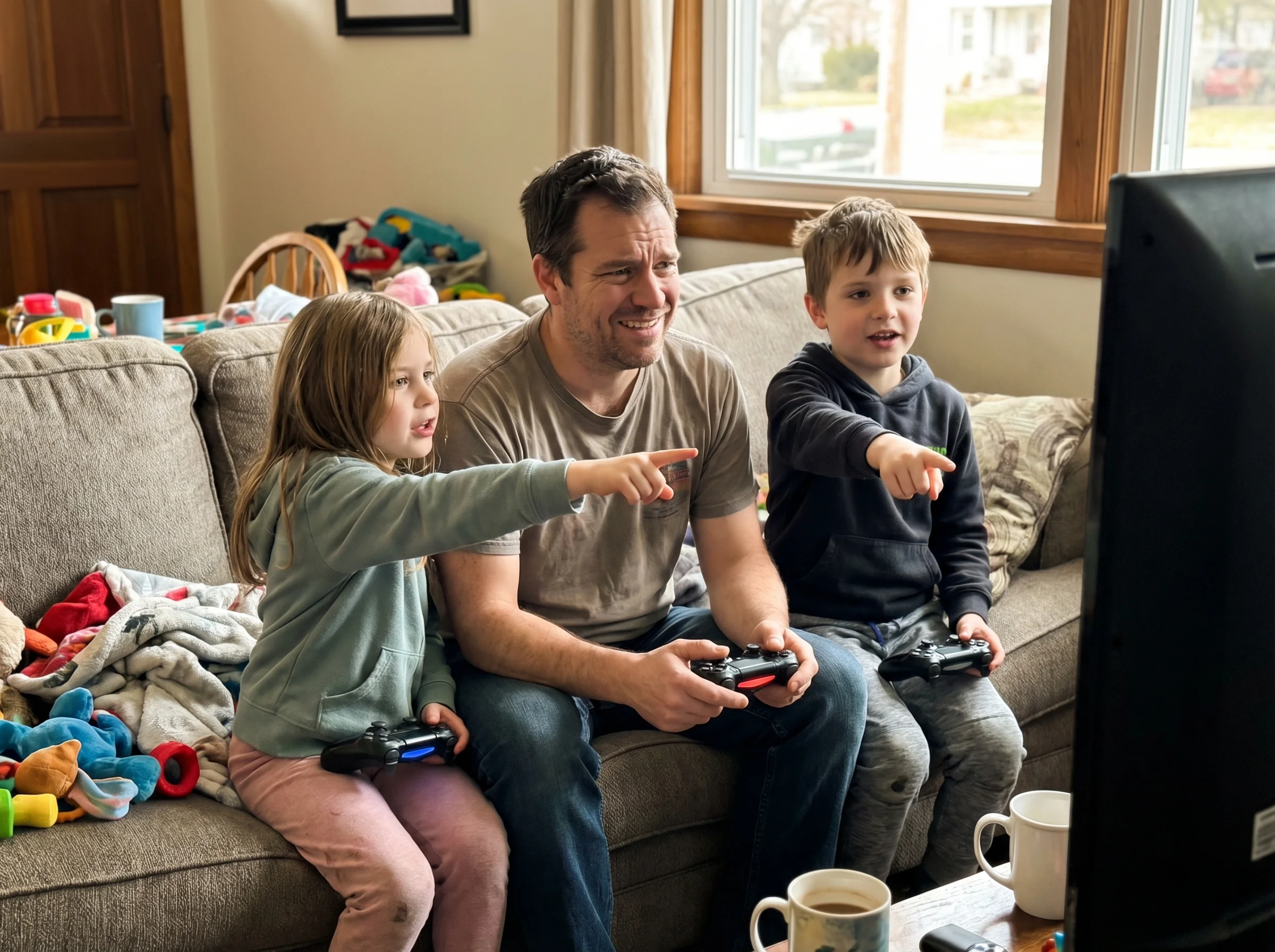
Last week, my 73-year-old mother beat my teenager at a video game. Not because she suddenly became a gaming wizard, but because we finally found casual multiplayer games that don't punish you for holding the controller upside down. Here's what two years of terrible gaming (and eventual success) taught me about finding games that actually work for the whole family.
I used to be that dad. The one who'd walk past my kids playing games and mutter something about "screen time" before suggesting they go outside. Then COVID hit, and "go play with your friends" wasn't an option anymore. My daughter asked if I wanted to play Fall Guys with her. I figured I'd humor her for ten minutes.
Three hours later, I was still getting knocked off platforms by giant fruit, and we were both crying from laughter. That's when it clicked: I'd been looking at gaming all wrong. The best casual multiplayer games aren't about winning. They're about creating moments where everyone can participate, fail spectacularly, and still want to play again.
What Makes a Game Actually "Casual"? (Hint: It's Not What You Think)
Here's what nobody tells you about casual games: "easy to learn" doesn't mean "easy to win." And that's exactly the point.
A truly casual game needs four things:
- You can quit anytime without ruining everyone's experience
- Controls simple enough that you're not staring at the controller
- Failure that makes you laugh, not throw things
- Fun whether you play for 5 minutes or 50
My wife discovered this during our first Mario Kart session. She came in dead last every single race. But she was grinning the whole time because she kept getting power-ups that let her mess with everyone else. "I may suck at driving," she said, launching a blue shell at our son in first place, "but I'm excellent at revenge."
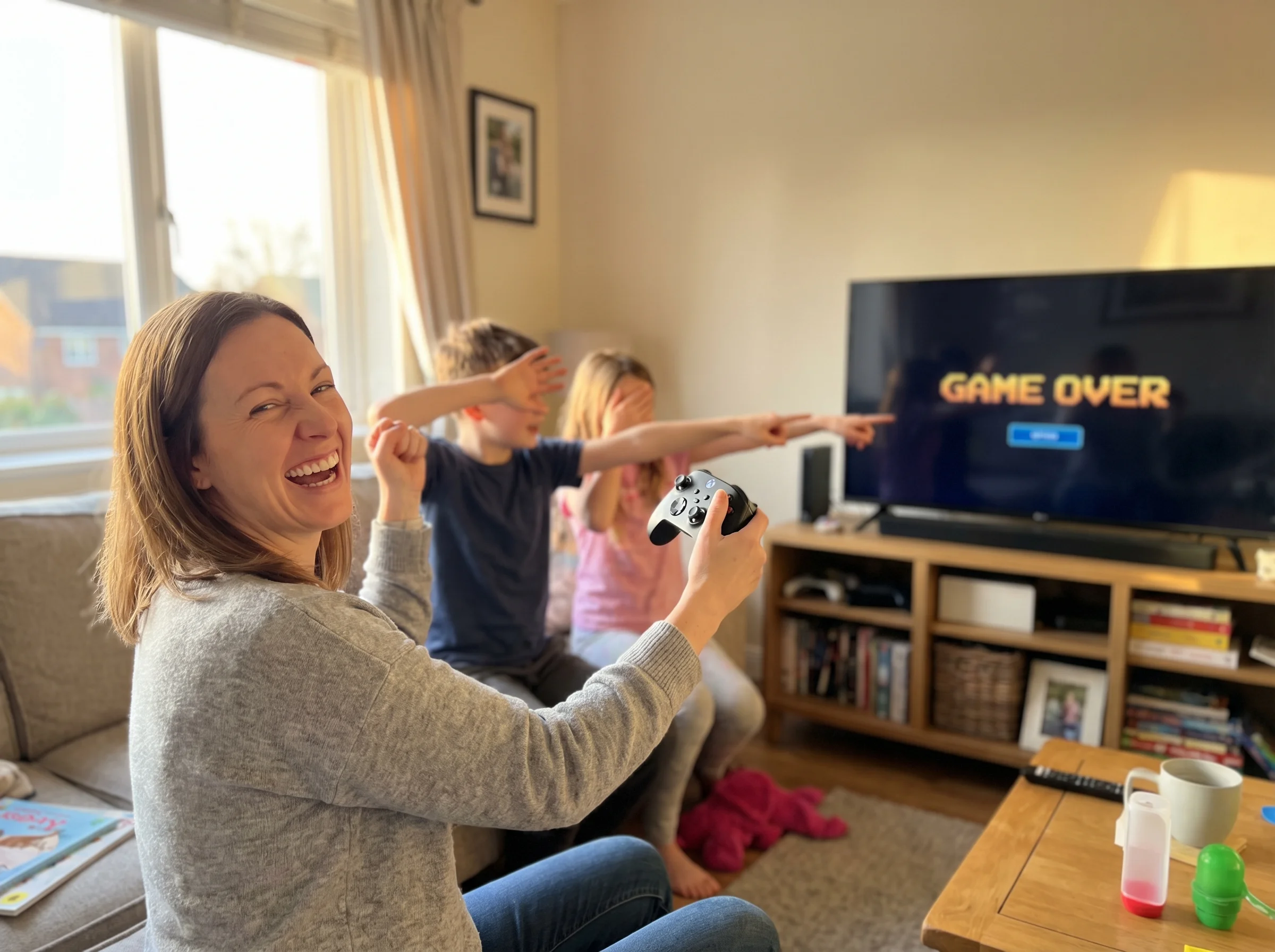
That's when I realized casual games aren't dumbed-down versions of "real" games. They're designed differently. They assume some players will be terrible and build fun around that assumption. The best ones make being bad at the game part of the entertainment.
 Grandma is winning againPause, Play, Connect: Core Deck172 prompts for the talking part of game night, not another game to learn.$49 CAD • 90 cards • 18 reviewsShop the deck
The "Couch Co-op" Games That Saved Family Game Night
Remember board game nights? Where someone would flip the table after losing Monopoly? Yeah, we found better options.
Overcooked became our Friday night tradition. You work together running a kitchen, and it's designed to fall apart. The first time we played, my kids spent five minutes arguing about who should chop onions while our kitchen caught fire. By week three, they were calling out orders like a real restaurant crew. No coach or team-building exercise taught them communication like trying to serve digital soup together.
Moving Out lets you be furniture movers who don't care about property damage. My usually rule-following son discovered he could throw a couch through a window instead of using the door. His face lit up like Christmas morning. Sometimes kids need sanctioned destruction.
Untitled Goose Game added co-op mode, and now two players can be horrible geese together. We spent an entire evening trying to trap a farmer in his own shed, strategizing like we were planning a heist. My daughter still randomly honks at me months later.
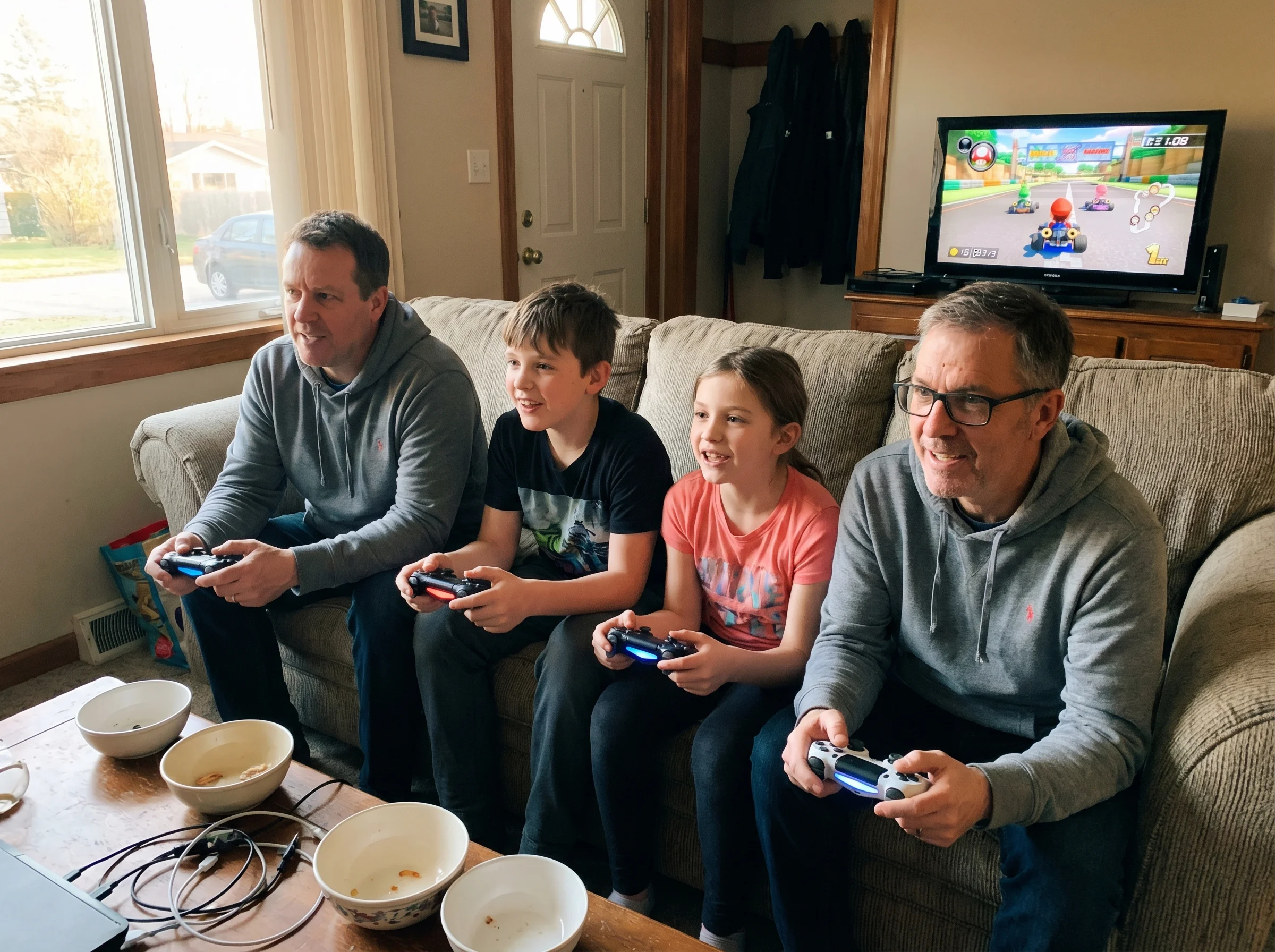
Fall Guys remains our champion of "failing upward." It's like a game show where 60 jellybean people race through obstacle courses. You'll get eliminated. A lot. But watching your jellybean get yeeted into space by a spinning hammer never gets old. My kids cheer louder for my one qualification than their ten wins.
Mobile Games That Don't Feel Like Mobile Games
I know what you're thinking. "Mobile games are just candy-matching time wasters." Some are. But your phone can host legitimate family experiences too.
Among Us lets you lie to your children with their full approval. It's a mystery game where someone's secretly the impostor. My son figured out I touch my nose when I'm lying. Now he watches for it during regular conversations too. I've created a monster, but an observant one.
We played this at a restaurant when our food took forever. Instead of four cranky people staring at separate screens, we had one shared experience. The table next to us asked what we were laughing about. Try explaining that your ten-year-old just successfully framed you for space murder.
Heads Up! bridges physical and digital. One person holds the phone to their forehead showing a word others help them guess. It gets everyone moving and shouting. Fair warning: your kids will give terrible clues on purpose. "It's that thing... that does the thing... with the stuff."
Spaceteam is pure chaos. Each player's screen shows different spaceship controls with nonsense names. You have to yell instructions at each other to survive. "Set the Eigenflange to 5!" "Activate the Spoinkifier!" It's ridiculous and perfect for breaking the ice with new gaming parents.
Minecraft (creative mode only for casual play) works because there's no wrong way to play. Build together, explore together, or just dig a really big hole together. My daughter gives me tours of her worlds like she's a real estate agent. "And this is where I keep my 47 dogs."
 The soup you burned togetherPause, Play, Connect: Core Deck$49 CAD • 172 promptsSee the deck
The "Grandparent Test" - Games for All Ages
The ultimate casual game test: can three generations play together without anyone feeling left out?
Wii Sports/Switch Sports remains undefeated for accessible fun. Motion controls mean grandma doesn't need to memorize buttons. She just bowls like she's actually bowling. My mom hadn't touched a video game since Pac-Man. Now she trash talks during tennis.
Jackbox Party Packs turn phones into controllers. Everyone already knows how to use their phone. Games range from drawing badly to writing jokes. Our family's terrible artwork becomes inside jokes that last months. "Remember when Grandpa drew a horse that looked like a melted candle?"
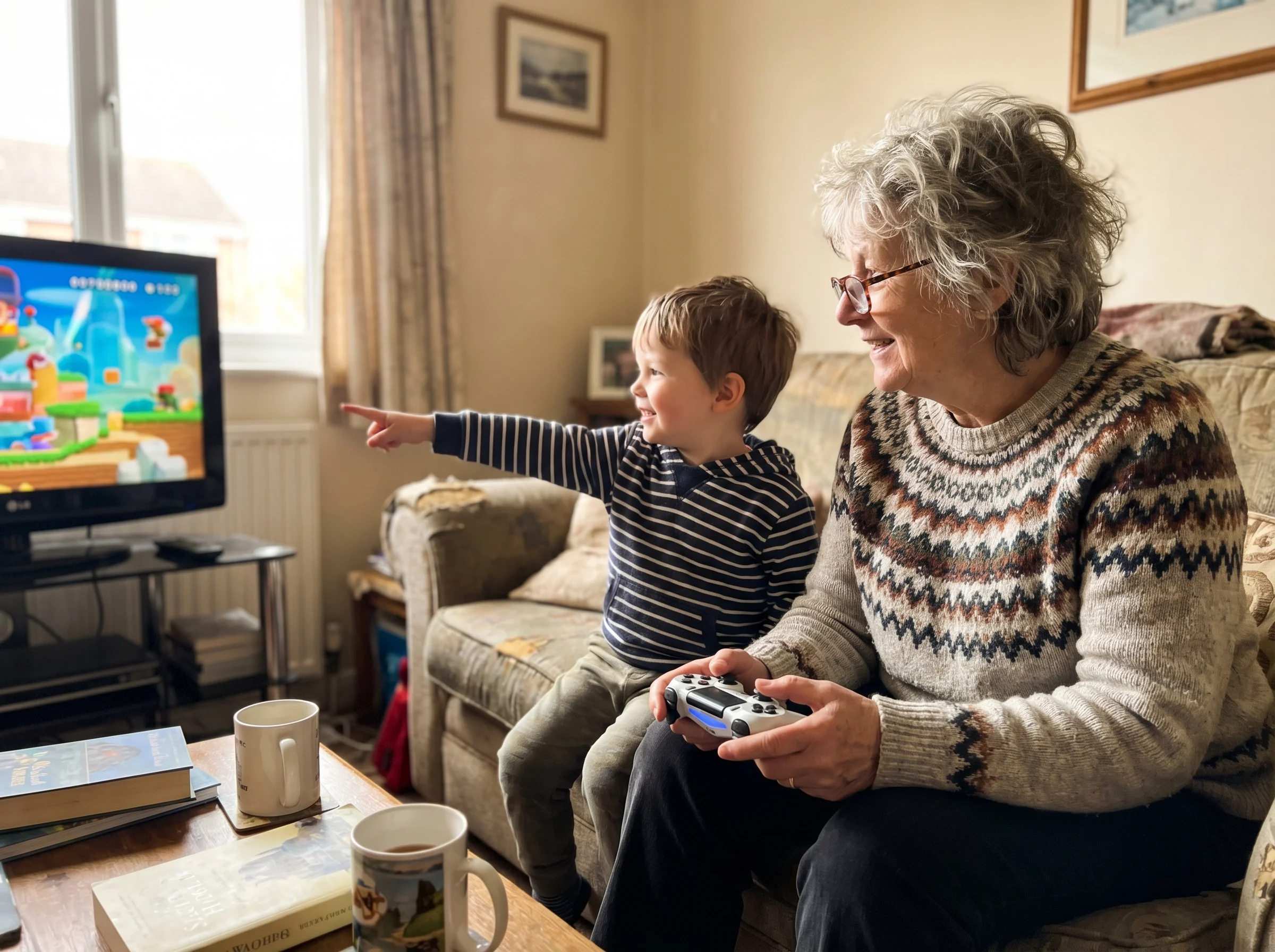
Animal Crossing works differently. It's not competitive multiplayer, it's visiting each other's islands. My mom learned to play during lockdown to "visit" her grandkids. Now she sends them virtual fruit and leaves cute messages on their bulletin boards. It counts as multiplayer when you're sharing experiences, even asynchronously.
Stardew Valley offers the most peaceful co-op experience possible. Farm together, mine together, fish together. No pressure, no rush. My father-in-law, who thinks video games rot brains, spent four hours helping my son organize virtual crops. "It's like gardening without the back pain."
Free Games Worth Your Time (And Ones That Aren't)
Free games get complicated fast. Some are genuinely free. Others are free like a timeshare presentation is free.
Fortnite Creative Mode (not the shooty part) lets kids build and play in custom worlds. It's like Minecraft with better graphics. Yes, there's still Fortnite stigma, but creative mode is basically a different game. My kids build elaborate obstacle courses for each other. No shooting required.
Roblox requires heavy supervision but offers thousands of mini-games. Some are great, some are garbage, most want your money. Play together so you can guide them away from the sketchy stuff. Think of it like YouTube - good content exists, but you can't let them browse alone.
Here's when paying makes sense: when "free" costs you peace of mind. I fought against buying Minecraft for months. "There are free alternatives!" I insisted. Those free alternatives came with ads, in-app purchase harassment, and quality that made everyone frustrated. That $30 purchase bought hundreds of hours of family fun and zero nagware. Sometimes cheap isn't worth it.

Red flags in free games: energy systems that limit playtime unless you pay, aggressive "special deal" pop-ups, social features you can't turn off, and anything that makes your kid ask for your credit card every session.
Making Games a Conversation Starter, Not Ender
The best part of gaming together isn't the gaming. It's what happens during and after.
Games create shared stories. "Remember when..." becomes the start of family legends. Our Overcooked disasters turned into problem-solving discussions. "How could we have saved that kitchen?" led to talks about communication and planning.
Skip asking "How was your game?" That gets you nowhere. Try these instead:
- "What's the coolest thing you built/did/discovered today?"
- "If you could change one thing about that game, what would it be?"
- "Which character/world would you want to live in?"
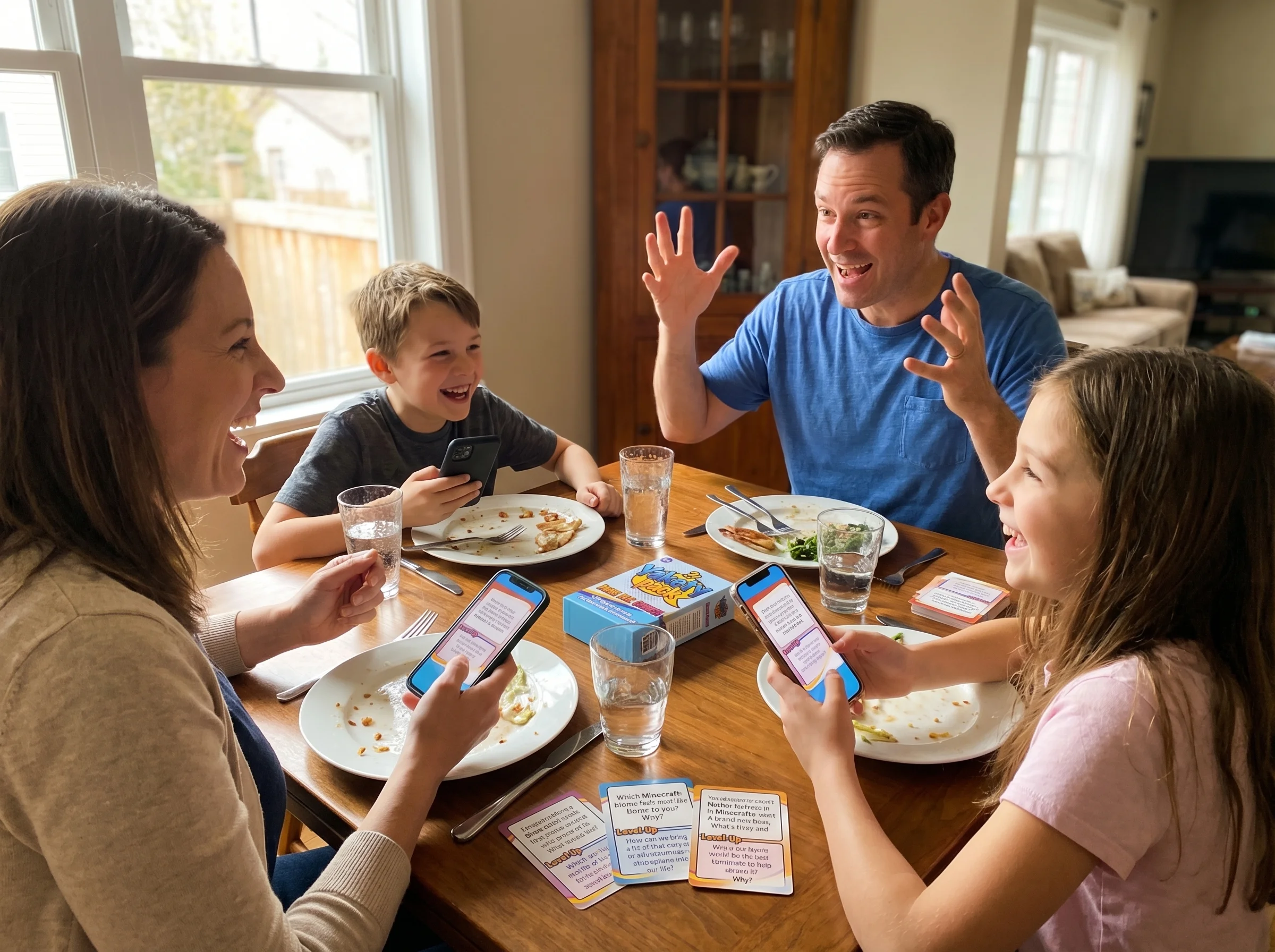
One question from our Yakety Pack cards - "If you could live in any game world for a day, which would it be?" - led to a 30-minute discussion about what makes a world feel safe versus exciting. My son picked Pokemon because "everything's an adventure but nobody really gets hurt." Deep thoughts from a nine-year-old.
Sometimes watching beats playing. When my kids play single-player games, I'll sit nearby and ask questions. "Why'd you choose that path?" "What's your strategy here?" They become the expert teaching me. The pride on their faces when explaining game mechanics beats any report card.
Your First Week: A Realistic Game Plan
Don't download fifteen games tonight. Start small or you'll quit before you begin.
Day 1-2: Pick ONE game from this list. I recommend Fall Guys for pure fun or Overcooked for teamwork. Play for 15 minutes. You'll be terrible. That's the point.
Day 3-4: Let your kids teach you. Bite your tongue when they explain things wrong. Say "show me" a lot. They'll love being the expert.
Day 5-6: Increase to 30 minutes. Notice what makes everyone laugh. Lean into those moments.
Day 7: Try a different game or stick with what's working. No pressure to become a "gaming family." You're just a family that sometimes games together.
Match your first game to your family:
- Competitive family? Try Overcooked
- Silly family? Go with Fall Guys
- Creative family? Minecraft creative mode
- Chatty family? Among Us
- Multi-generational? Wii Sports
I went from banning games during dinner to hosting Friday game nights. Not because I suddenly loved gaming, but because I loved what gaming together created: inside jokes, shared challenges, and kids who actually wanted to hang out with their parents.
Stop Fighting the Controller and Start Connecting
Here's my controversial take: Stop trying to get your kids OFF games. Start getting IN them instead. The conversations you'll have inside a Minecraft world beat any forced dinner table chat. Gaming together isn't giving up - it's showing up where your kids already are.
You don't need to become a gamer. You just need to be willing to be bad at something in front of your kids. They'll respect you more for trying than for lecturing about screen time from the sidelines.
Tonight, ask your kid to show you their favorite game. Not to monitor or judge - just to share something they love. When they light up because you're interested? That's your win. The high score doesn't matter.
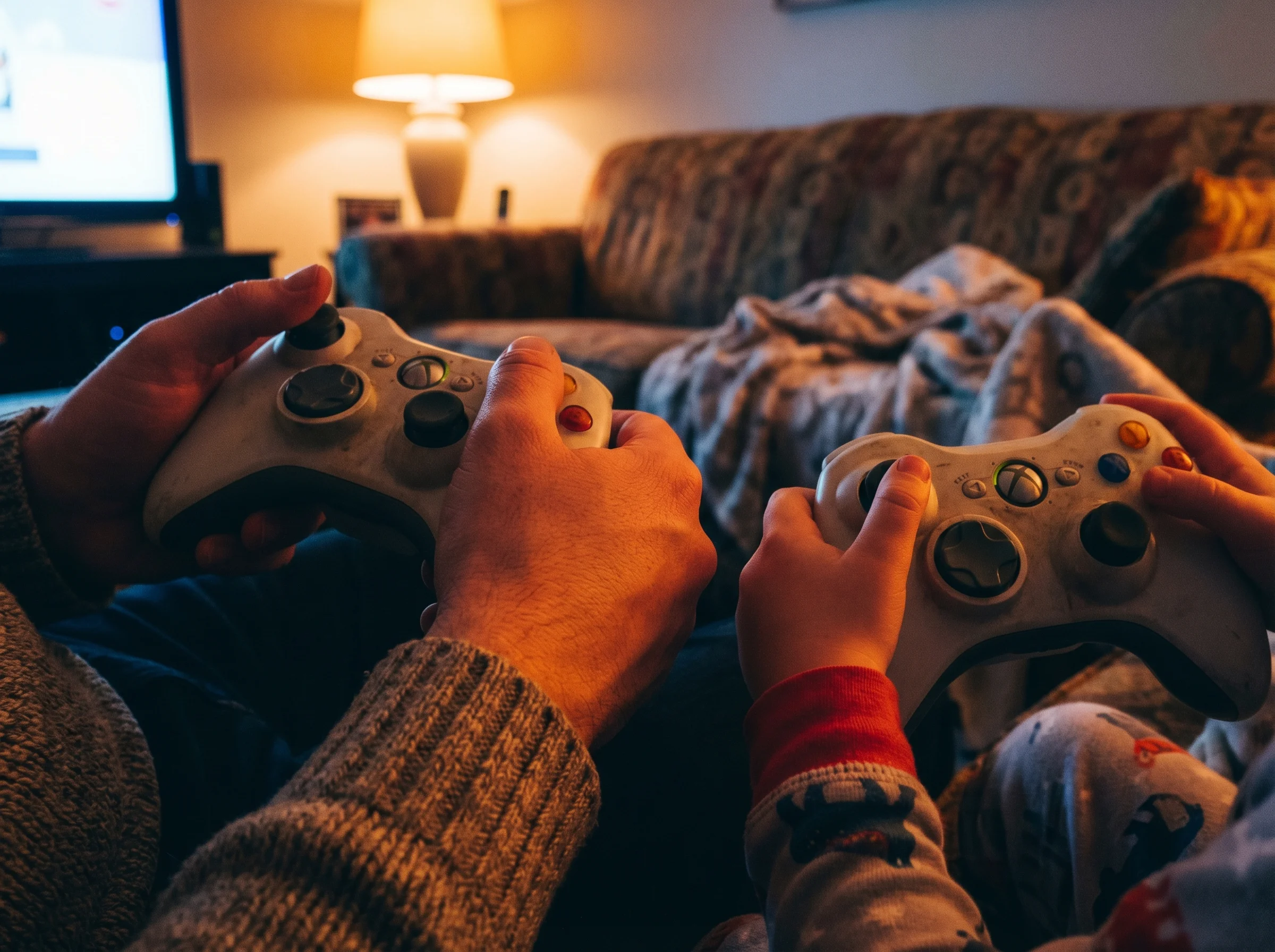
And hey, when you inevitably lose at whatever game you try first? Just remember: somewhere, my 73-year-old mother is probably beating another teenager at video games. If she can do it, so can you.
Just maybe hold the controller right-side up.
Talk that outlasts the gamePause, Play, Connect: Core Deck172 prompts that keep the table talking after the last round is over.$49 CAD • 90 cards • 18 reviewsShop the deck
Related Articles
Looking for more? Check out these related articles:
