
For two years, I thought I was teaching my kids teamwork by playing Forbidden Island. We had the box. We had the rules memorized. We had a whole little ritual around it. And the whole time, I was running those games like a project manager running a sprint review. "Okay, you move there. Use your card now. No, save that one. Trust me."
My kids weren't learning teamwork. They were learning to tolerate Dad's instructions until snack time.
The game that actually changed things was a chaotic video game about cooking burgers, where my 9-year-old started bossing me around mid-level. And he was right. The kitchen was on fire, the orders were stacking up, and he could read the chaos faster than I could. I shut up and followed his lead. That was the first time we actually played as a team.
This is the article I wish someone had handed me five years ago. Because cooperative games that build teamwork for families don't do it automatically. They build teamwork only if the adult at the table can stop running the show.
 Once the box is closedPause, Play, Connect: Core Deck172 prompts that hand you the question when the game ends and everyone scatters.$49 CAD • 90 cards • 18 reviewsShop the deck
The Real Reason Most Co-op Games Fail: The Alpha Gamer Problem
There's a thing in board game circles called the "alpha gamer." It's the person who, in a cooperative game, basically plays everyone's turn for them. They mean well. They want the team to win. They've got the strategy figured out, and they're just trying to help.
In families, the alpha gamer is almost always a parent. Sometimes it's the oldest kid. It's almost never the youngest.
Here's how you know you're doing it:
- "Here's what we should do."
- "No, save that card for later."
- "Trust me on this one."
- "Let me see your hand for a second."
I said all of these. Constantly. And what my kids were learning wasn't collaboration. It was compliance. There's a massive difference.
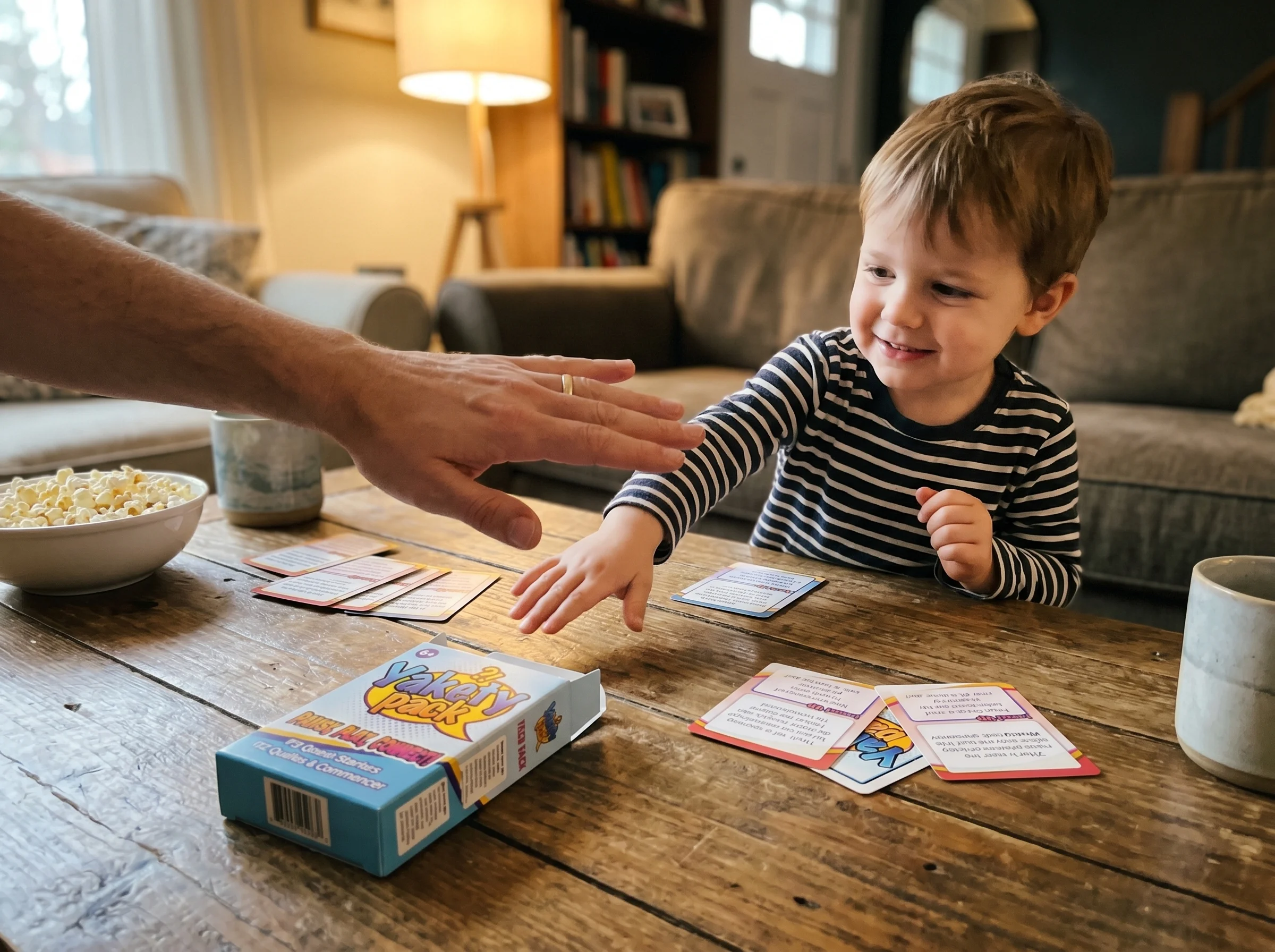
The breaking point came when my daughter, who was 8 at the time, looked at me halfway through a game and said, "You just want us to do what you want." She wasn't even mad. She was just stating a fact. I closed the box and sat with that for about a week.
If you take nothing else from this article, take this: in a cooperative game, the most helpful thing a parent can usually do is talk less.
Board Games Worth Buying (And How To Actually Play Them)
There are plenty of great co-op board games out there. The trick isn't picking the right one. It's how you play it.
Outfoxed! (ages 5+) is the gateway. It's a deduction game where you're trying to catch a fox before it escapes. Simple enough for kindergartners, quick enough that nobody melts down. If your family has never played a co-op game, start here.
Forbidden Island and Forbidden Desert (ages 8+) are great, but only with one rule: no advice on someone else's turn unless they ask. This single rule fixes 80% of the alpha gamer problem. (For more on games like this, check out our piece on strategy games that teach critical thinking.)
Magic Maze (ages 8+) is genius because you literally aren't allowed to talk during most of the game. You have to coordinate silently. It forces real teamwork because nobody can direct traffic.
Mysterium (ages 10+) flips the power dynamic. The kid giving clues has all the control, and the adults have to figure out what they mean. My kids love being the "ghost." I love not being in charge.
Horrified (ages 10+) uses classic monsters (Dracula, the Wolf Man, etc.) and kids actually care about the theme, which matters more than people admit.
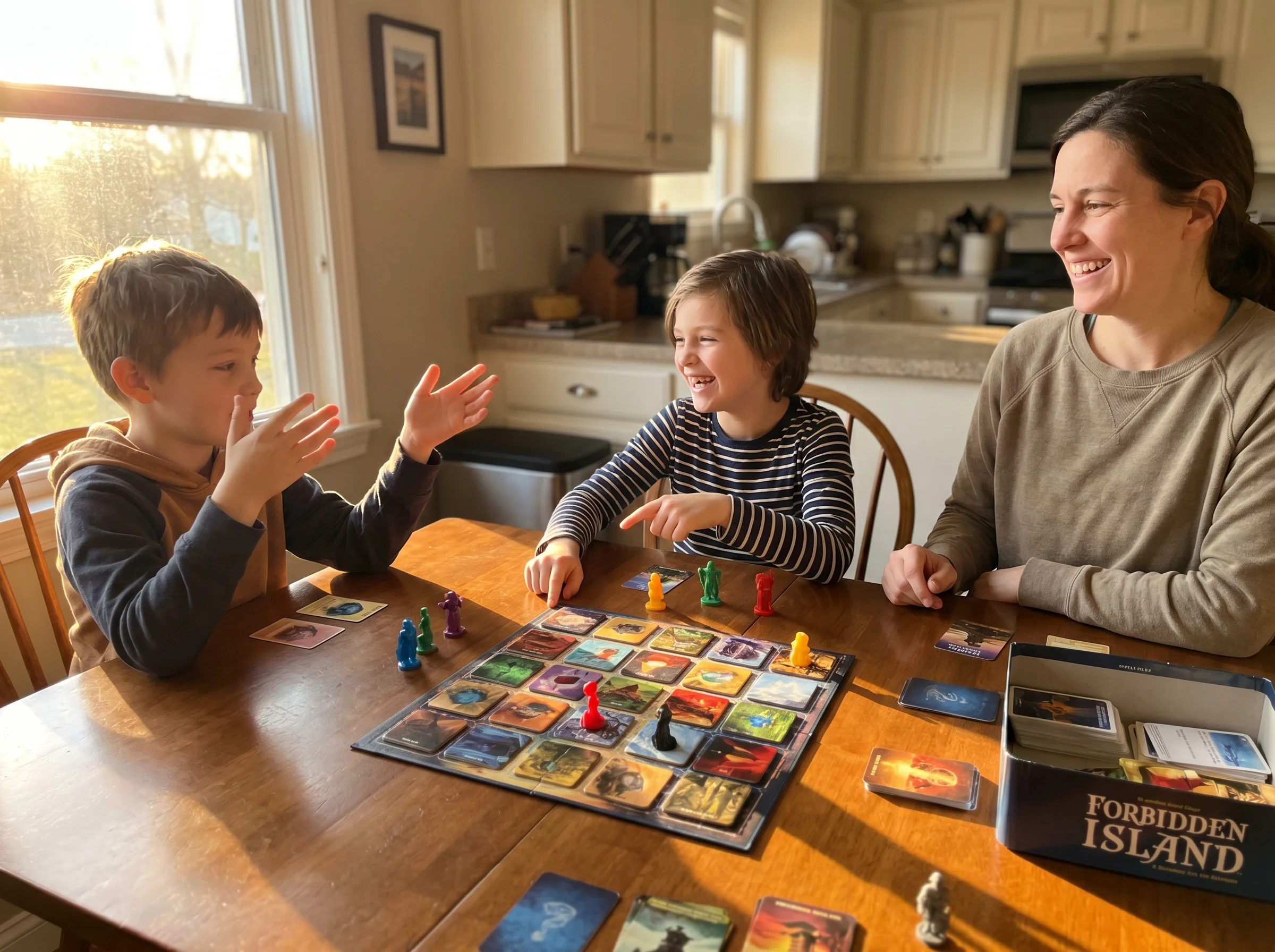
The house rule we play by now: parents get one suggestion per turn, then we zip it.
The Co-op Video Games Nobody's Telling You About
Most family blogs treat "cooperative games" like it means board games only. This is bananas. The best teamwork training in our house has happened in front of a TV.
Overcooked 1 & 2 is the one. You're running a chaotic kitchen, you've got 90 seconds, you can't possibly micromanage because the broccoli's burning. You have to call out what you're doing, trust your teammate, and adapt fast. This is where my son started directing me, and I learned to follow.
It Takes Two is incredible for one parent and one older kid. It's a full story-driven adventure that literally cannot be played solo. Every puzzle requires both players doing different things at the same time. Plan for 10-15 hours total.
Snipperclips works for non-readers, which is rare and valuable. You're two little paper shapes that have to cut each other into the right configurations to solve puzzles. Adorable and genuinely cooperative.
Minecraft (survival mode, shared world) is the long game. You're building, exploring, defending, gathering. Roles emerge naturally. My kids became "the builder" and "the explorer" without anyone assigning it.
Lovers in a Dangerous Spacetime has you running around a spaceship together, manning different stations. 2-4 players. Forgiving enough for younger kids, deep enough that older ones stay engaged.
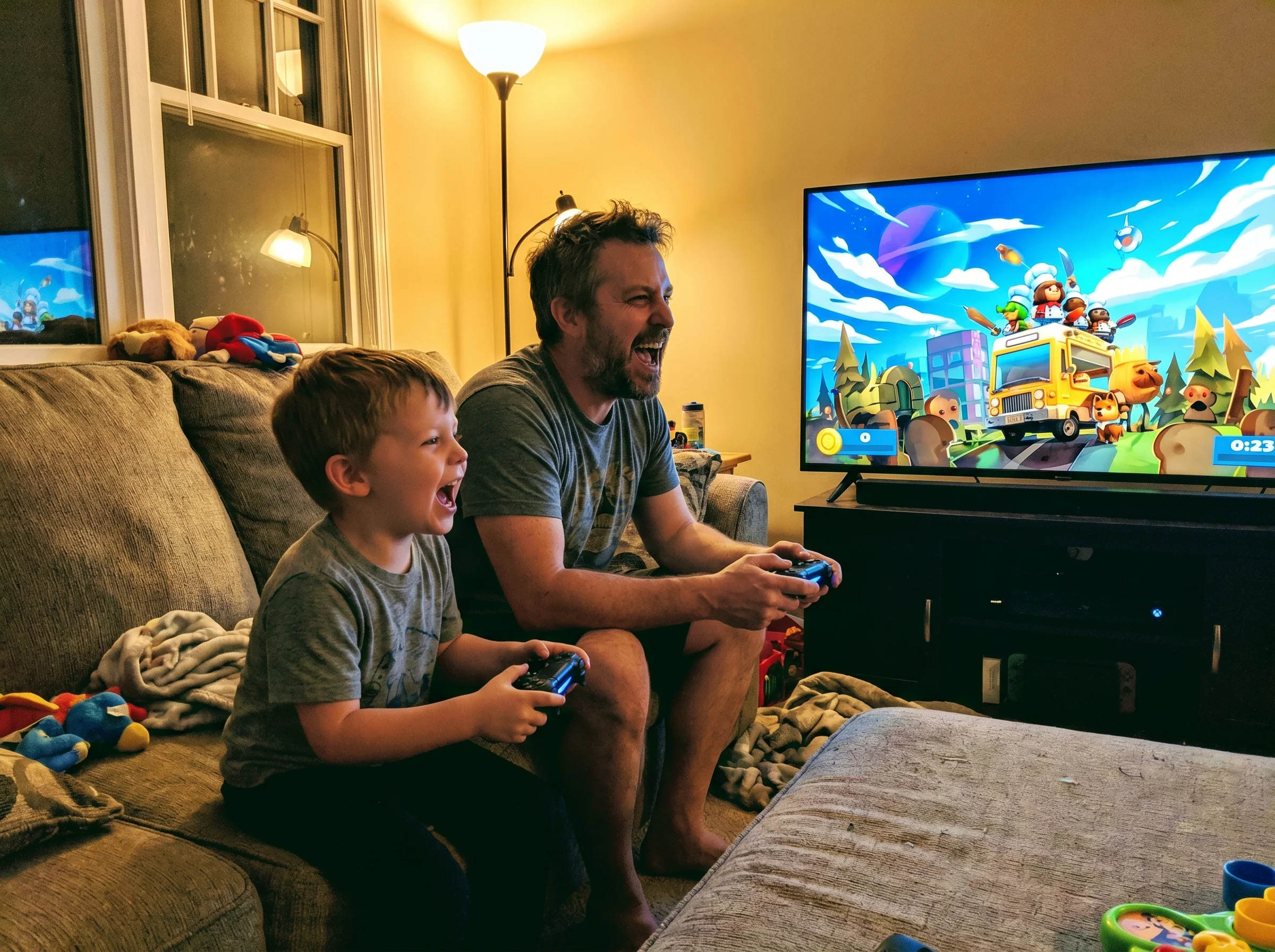
The reason video games often build teamwork harder than board games: failure is immediate and loud. The kitchen burns down. The ship explodes. There's no time for an adult to over-plan. You either coordinate or you lose, fast.
 Somewhere in the cleanupPause, Play, Connect: Core Deck$49 CAD • 172 promptsSee the deck
Playing Across Big Age Gaps
If you've got a 5-year-old and an 11-year-old, "play together" isn't a strategy. You need a structure.
What's worked for us:
Team within a team. Pair the youngest with the oldest. Give them shared decisions. The older kid becomes a mini-coach, which is way better than letting Dad coach everyone.
Give the youngest a real job. Rolling dice doesn't count. In Outfoxed, the youngest can be in charge of moving the fox token. In Minecraft, they can be the "lookout" or the "farmer." It has to actually matter.
Let the oldest be the rule-keeper. They love this. It also forces them to actually read the rulebook, which builds responsibility and gets them out of bossing everyone around.
One night, my younger son was lookout while we were mining in Minecraft. He spotted a creeper before my older one did and yelled the warning in time. He talked about it for a week. That moment wouldn't have happened if I'd been managing the whole expedition.
The Conversation Before And After Matters More Than The Game
Here's the part nobody writes about. The actual teamwork-building doesn't happen during the game. It happens in the two minutes before, and the ten minutes after.
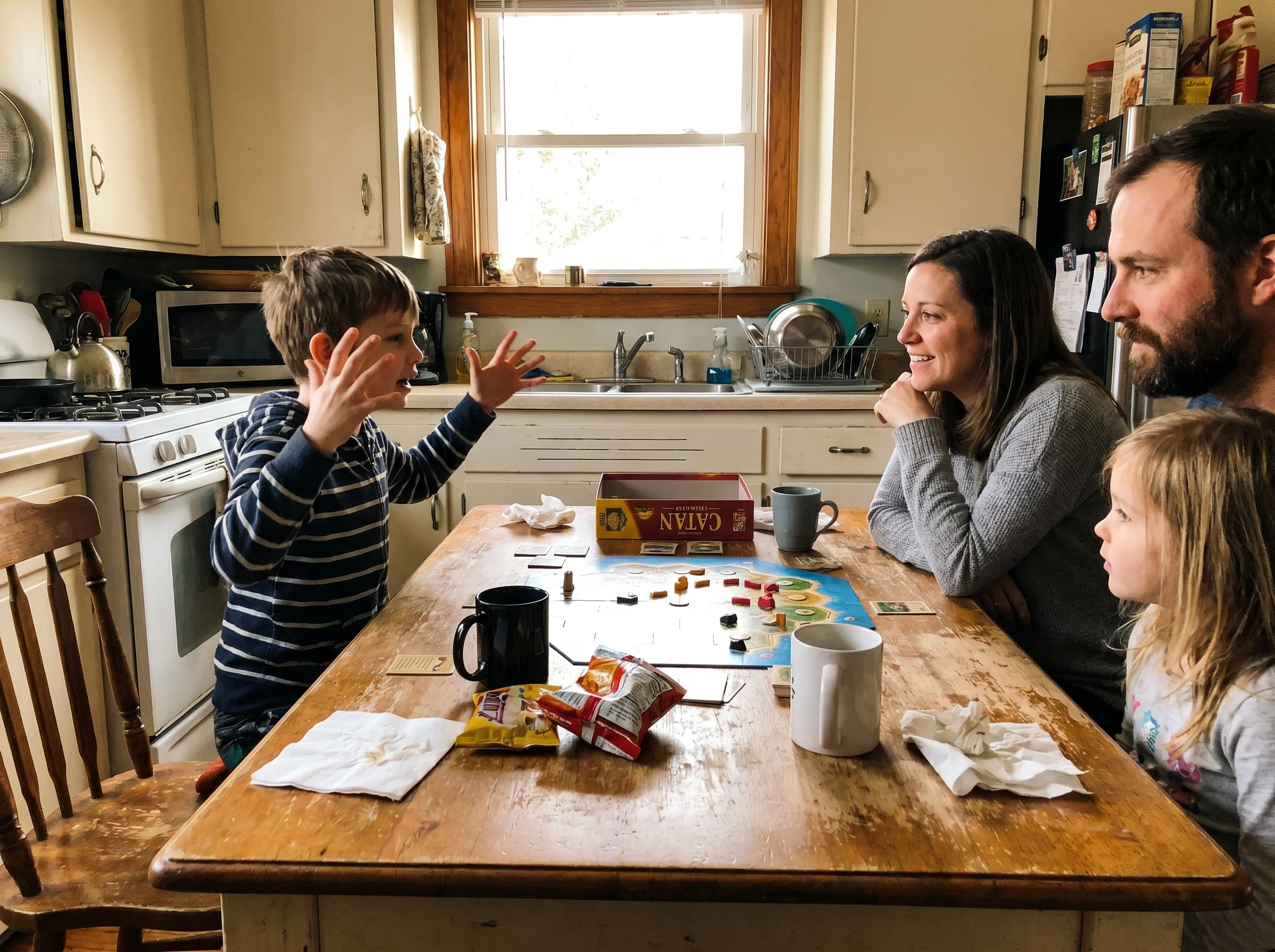
Before: "What's our plan if we get stuck?" That's it. One question. Get them thinking about it before the chaos starts.
After: "What did we do well? What almost broke us?" Don't lecture. Just ask. Listen to what they say.
Avoid the lecture trap. The second this turns into "see, what we learned today is..." you've lost them. Research from the American Academy of Pediatrics on family media use backs this up: the conversation around the play matters as much as the play itself.
This is actually why we built Yakety Pack. After enough lost board games and Overcooked disasters, I realized the conversation we had while cleaning up was better than the game itself. But I kept fumbling the questions, defaulting to "what'd you think?" and getting shrugs. We wanted prompts that fit those moments without turning them into a lesson. The questions matter more than the game does.
When You Lose Together
Co-op losses can feel worse than competitive losses. In a competitive game, you lose to someone. In a co-op game, you and your team failed together, and kids often feel like they were the one who blew it.
Don't say "it's just a game." I know you want to. Don't.
Try one of these instead:
- "We got further than last time."
- "What was the one thing that got us?"
- "What would we do differently?"
And model losing well yourself. If you sigh, throw your hands up, or say "well, that was rough," your kids learn that losing is a thing to be upset about.
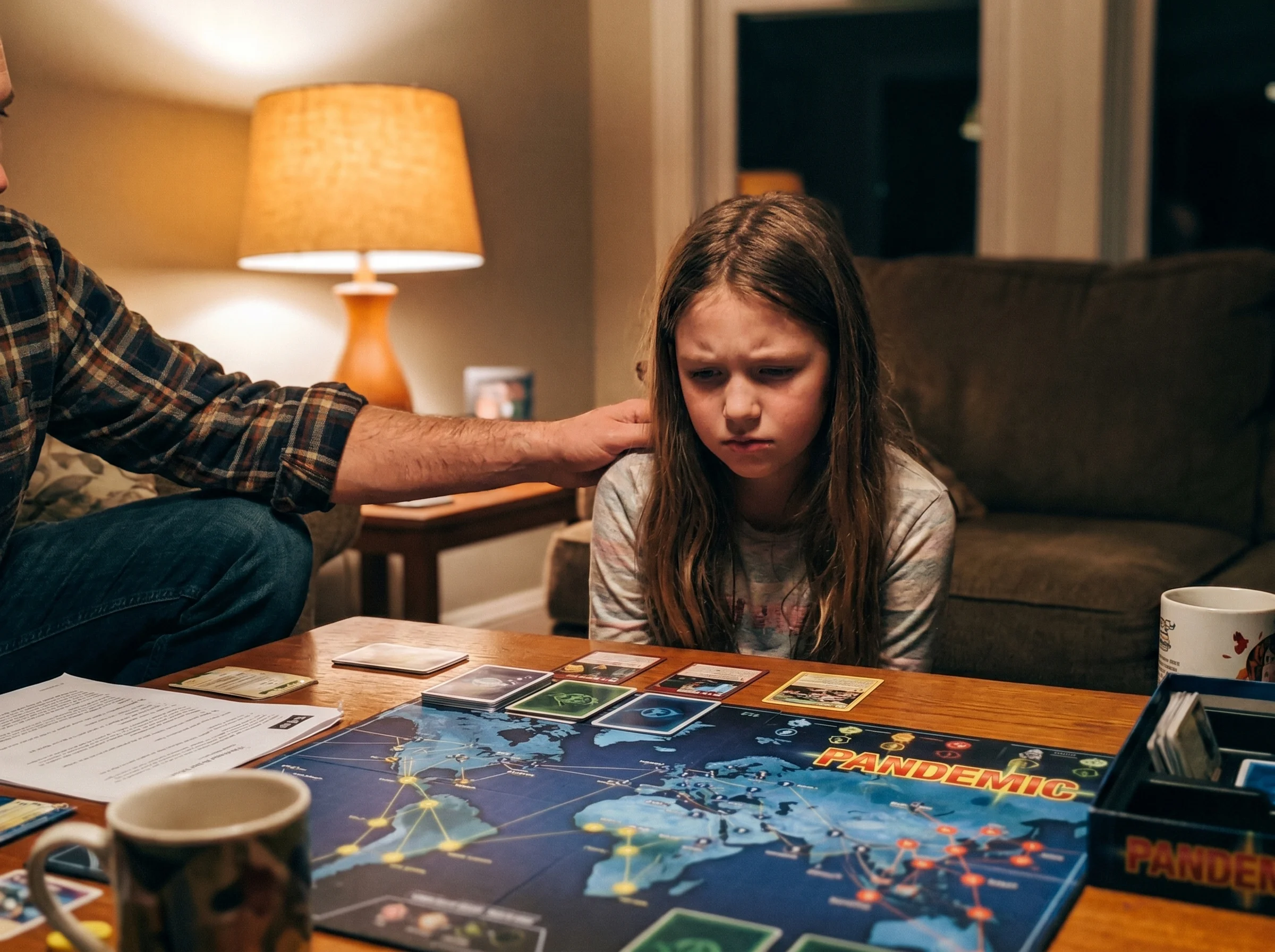
My daughter sobbed after losing Pandemic one night. Sobbed. I almost brushed it off, and instead I asked her what felt worst. She said, "I picked the wrong card." We talked for half an hour about what makes a decision wrong versus unlucky. That conversation never would have happened in a winning game.
A Starter Plan If You're New To Co-op Games That Build Teamwork
Don't go buy six games. Build the habit first.
- Week 1: Pick your medium. Try Outfoxed (board) or Overcooked (video). Just play.
- Week 2: Same game. Switch roles. Let the kids run more of it.
- Week 3: Add the "no advice on someone else's turn unless they ask" rule. This will be hard for you. Do it anyway.
- Week 4: Try a new game with everything you've learned.
The goal isn't a shelf full of co-op games. It's a family that knows how to play together. If you want a broader map of what works at what age, our pillar guide on the best games to play with your kids by age and skill level covers a lot more ground.
The One Thing To Try Today
Pick one game your family already owns. Sit down to play it tonight. And before you start, tell your kids out loud: "I'm going to try not to tell anyone what to do this game. If I do, call me out."
They will love calling you out. And somewhere in the middle of the game, when you're biting your tongue and watching your kid make a "wrong" move that turns out fine, you'll feel the thing shift.
That's the moment teamwork actually starts. Not when you teach it. When you get out of the way.

From this article
Pause, Play, Connect: Core Deck
For the cleanup window: The ten minutes after the kitchen burns down is where the teamwork sticks, if you can beat "what'd you think?" The Pause, Play, Connect Core Deck gives you debrief questions built for exactly that moment.
The full bundle adds the Parent Power-Up deck and two digital parent guides, $146 of family fun for $59.

