
Look, I used to dread the question "Dad, want to play something together?"
Not because I didn't want to spend time with my kids. But because I knew what would happen next: I'd fumble with the controller while my son watched his old man die repeatedly in whatever game he loved that week. He'd try not to show his frustration. I'd try not to show my embarrassment. We'd both pretend we were having fun for about 20 minutes before finding excuses to stop.
Then I learned something that changed everything: picking the right two-player co-op game isn't about finding the "best" games. It's about finding games that match your actual relationship. And once I figured that out? Gaming became our favorite way to connect.
Why Most Co-op Recommendations Fail Real Families
Here's what nobody tells you about those "Best Co-op Games" lists online. They assume everyone starts with the same gaming skills. They assume your 12-year-old wants to slow down for dad. They assume you have three hours to dedicate to a gaming session.
They're wrong on all counts.
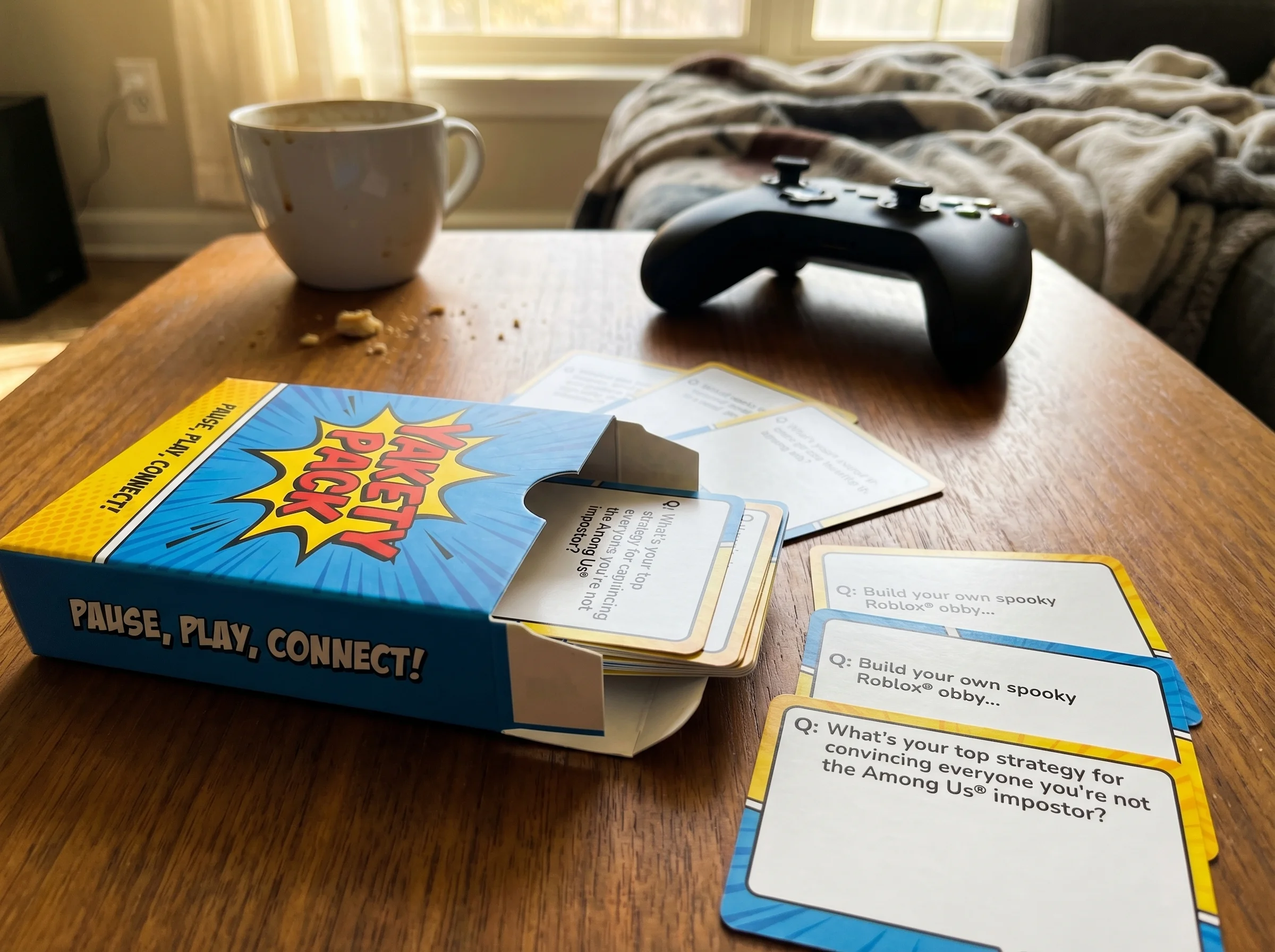
I learned this the hard way with Cuphead. Every list raved about it. "Perfect couch co-op!" they said. "Challenging but fair!" they promised.
My daughter quit crying after our third attempt at the first level. I quit pretending it was fun after the fifth. That gorgeous, hand-drawn nightmare sat unopened for months, a $30 reminder that "critically acclaimed" doesn't mean "right for us."
The real difference between "co-op" and "actually fun together"? One considers who's holding the controllers. The best two-player game for me and my teenage son won't work for me and my 8-year-old daughter. And the stuff that works for family game night would bore my wife to tears on date night.
 While they pick the gamePause, Play, Connect: Core Deck172 prompts for the stretch where you are both still scrolling and nobody has pressed start.$49 CAD • 90 cards • 18 reviewsShop the deck
The Three Types of Two-Player Co-op (And Which One You Need)
After years of trial and error (emphasis on error), I've figured out there are really only three types of two-player co-op games. Once you know which type matches your gaming duo, everything gets easier.
Teaching Co-op
One person leads, one follows. Perfect when there's a big skill gap.
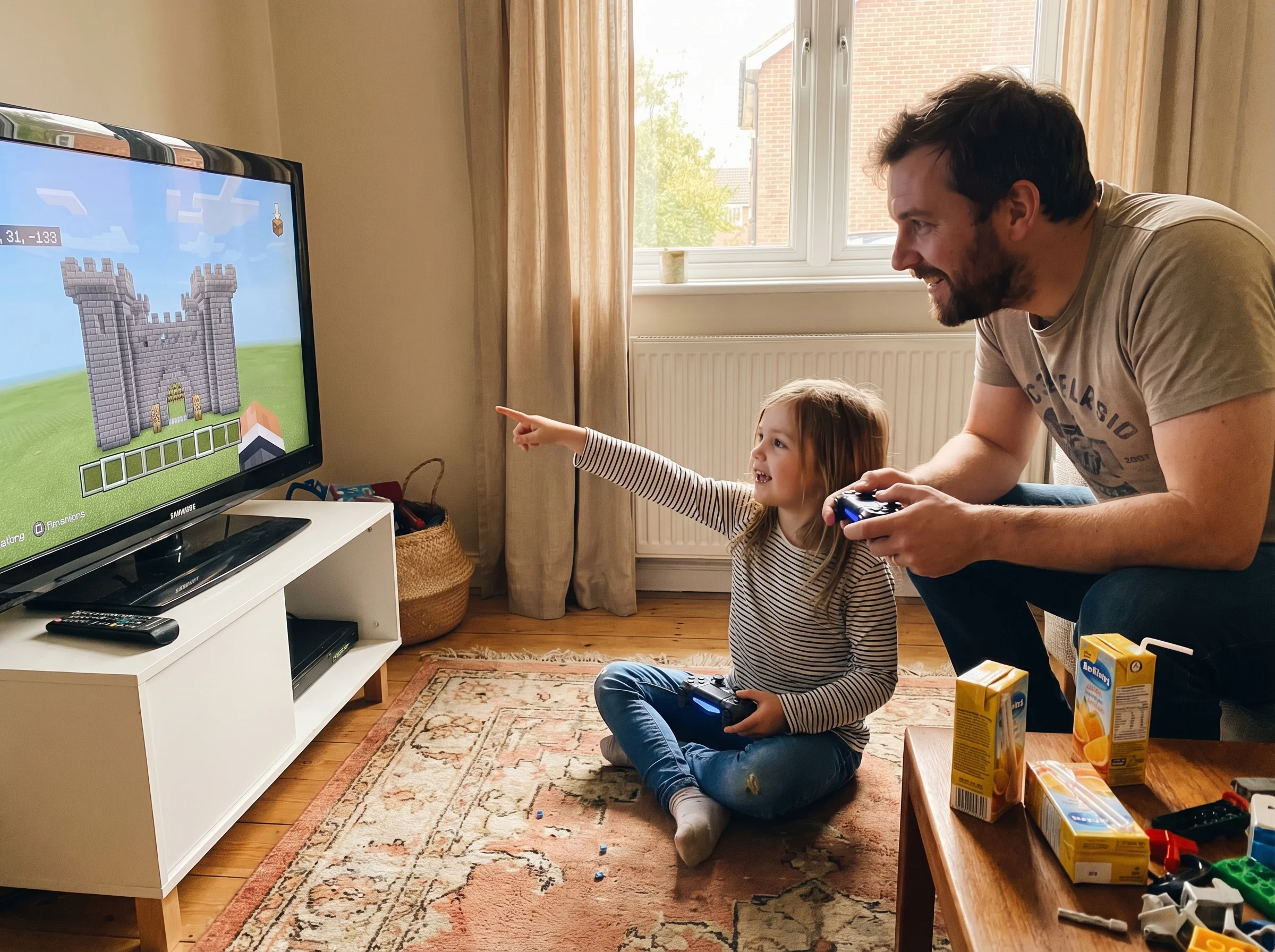
Minecraft in Creative mode saved gaming with my daughter. She could build elaborate castles while I figured out which button makes me jump. She felt like the expert (because she was). I felt included without slowing her down.
Other games that nail this: Kirby Star Allies lets the experienced player literally carry the newcomer. Lego games laugh off failure. It Takes Two has entire sections designed for teaching.
True Co-op
Both players need to contribute equally. Great when skills match.
My son and I finally conquered Portal 2's co-op mode last summer. But only after he'd played enough other games with me that my "gaming fingers" could keep up. True co-op demands coordination. If one person can't hold their own, nobody has fun.
Games like A Way Out, Overcooked, and Cuphead fit here. Approach with caution if you're still figuring out which trigger shoots.
Assisted Co-op
Built-in help for skill gaps. The sweet spot for most families.
Luigi's Mansion 3 might be the perfect example. Player two controls Gooigi, who can't really die. New Super Mario Bros. U has characters like Nabbit who can't take damage. The skilled player gets their challenge. The newer player gets to contribute without pressure.
This is where the magic happens for mismatched skills. My 6-year-old nephew felt like a superhero playing Nabbit while I handled the tricky jumps as Mario.
Starting Points for Different Gaming Duos
After hundreds of hours holding a second controller, here's what actually works:
Parent + Young Kid (5-8)
Start with Moving Out. Yes, it's about furniture moving. Sounds boring? My daughter and I spent an entire Saturday laughing at our couch stuck in doorways. No violence, no timers (you can turn them off), just silly physics and teamwork.
Minecraft remains undefeated for creative kids. Set it to Peaceful mode, give them Creative, and watch them teach you about architecture you didn't know they understood.
Any Mario game with assist characters. Let them be Nabbit or Toadette. They'll feel powerful while you handle the precise platforming.
Parent + Tween/Teen
Rocket League taught me more about my son than years of "how was school?" The game is simple: car soccer. But listening to him explain rotation strategy, boost management, and why I shouldn't chase the ball? That's when I realized he understood teamwork better than most adults.
It Takes Two if they're patient enough to teach you. The game literally requires communication. You can't progress without talking through puzzles together.
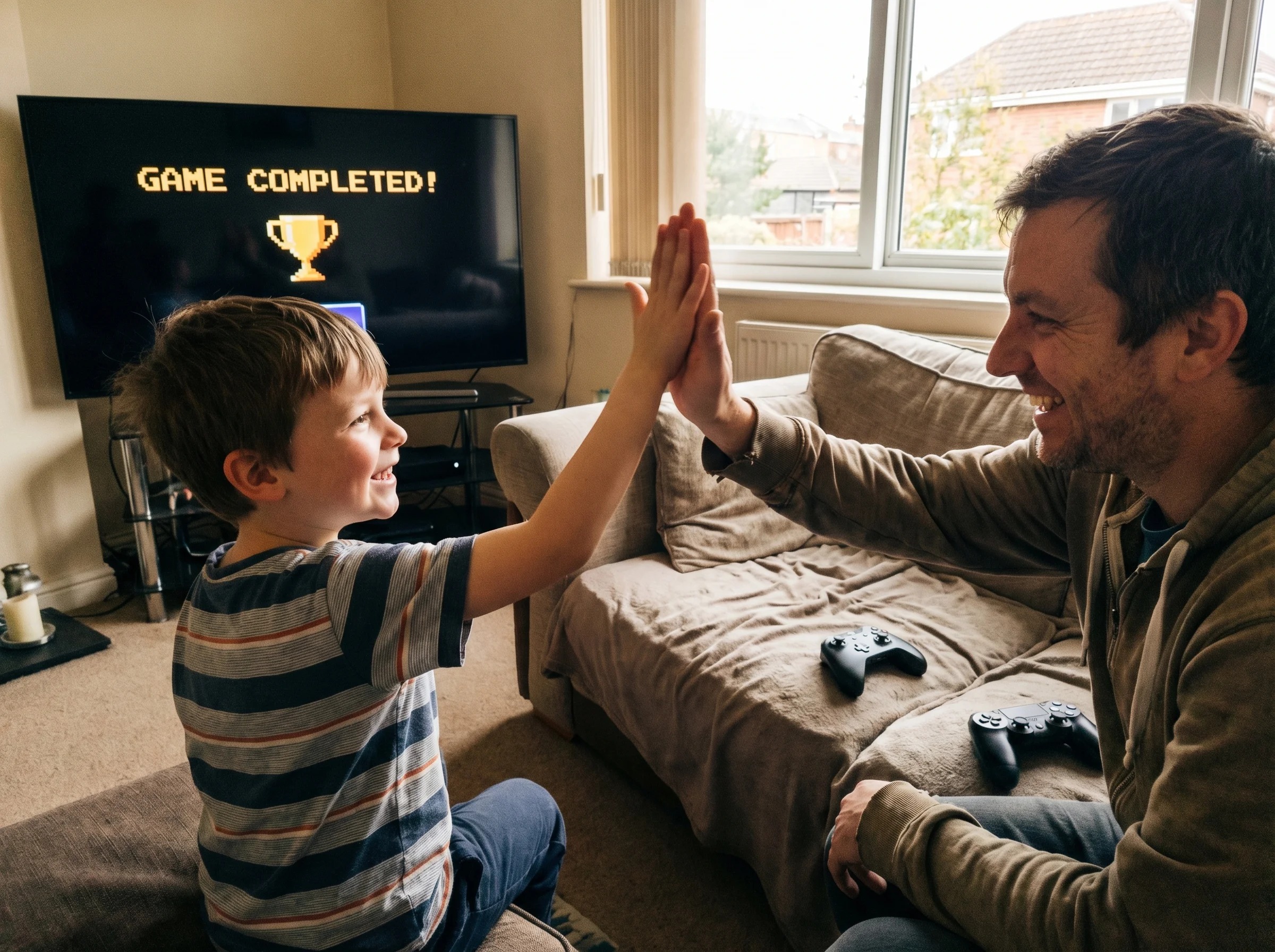
Overcooked but only if you can laugh at failure. This game will test your relationship. You'll burn virtual burgers. You'll drop dishes. You'll blame each other for the onions. Then you'll high-five when you finally serve that perfect order.
Couples and Adult Friends
Stardew Valley for the "one more day" addiction. My wife and I lost entire weekends to our virtual farm. It's relaxing until you realize you forgot to water the cauliflower and now your spouse is disappointed in your virtual farming skills.
Divinity: Original Sin 2 if you want your date nights to last 100 hours. Deep story, tactical combat, and endless debates about dialogue choices.
Unravel Two for something lighter. Beautiful, emotional, and you literally can't progress without working together. The yarn mechanics create natural problem-solving conversations.
The Conversation Games (Where Magic Happens)
Here's what I wish someone had told me earlier: the best two-player games create talking points beyond "press X to jump."
Building games generate natural planning conversations. My daughter explaining her Minecraft mansion blueprints taught me how her mind organizes information. She thinks in layers, builds foundations before decorating. I never knew that about her.
Puzzle games demand actual communication. Playing Boxboy + Boxgirl, we discovered she sees solutions I miss completely. She thinks in shapes. I think in sequences. Together, we solved puzzles neither could handle alone.
Even competitive co-op creates connection. Teaming up in Rocket League against online opponents? That's us versus the world. Every goal celebrated. Every loss analyzed together. "We'll get them next time, dad." Music to my ears.
 Beyond press X to jumpPause, Play, Connect: Core Deck$49 CAD • 172 promptsSee the deck
Avoiding the Co-op Traps
Let me save you some frustration. These games look like co-op but aren't:
Most Mario Party modes are competitive, not cooperative. Found that out during a "friendly" family game night that ended with accusations of star theft.
Some "co-op" games require two copies of the game. Diablo 3 on Switch? True couch co-op. Diablo 3 on PC? Hope you bought it twice.
Split-screen games need bigger TVs than you think. Trying to play split-screen Borderlands on a 32-inch TV is basically choosing to be legally blind.
Games that punish skill differences will ruin your night. Dark Souls might have co-op, but unless both players live for punishment, someone's throwing a controller.
Quick-Session vs. Campaign Co-op
Got 20 minutes before bedtime? You need different games than lazy Sunday gaming.
Quick hits: Overcooked levels take 4-5 minutes. Rocket League matches are 5 minutes flat. Moving Out lets you retry single levels. Death Squared puzzles work in bite sizes.
Weekend projects: It Takes Two demands 12-15 hours to finish. Portal 2's co-op campaign needs dedicated sessions. A Way Out tells its story over 6-8 hours.
The trick with campaign games? Set expectations. My son and I treat our Minecraft world like a long-term project. Two years running, we add something every time we play together. It's our digital treehouse.
Making Any Game Better: Connection Tricks
The game matters less than how you play it. Questions that work every time:
"What's your strategy here?" opens up their thinking process. "How did you figure that out?" celebrates their gaming growth. "What should we try next?" makes it collaborative. "Remember when we couldn't beat this part?" celebrates shared progress.
The "teach me" approach flips everything. Instead of me struggling to keep up, I asked my kids to teach me their favorite games. Suddenly they're patient, encouraging, excited to share. They became the experts. I became the student who actually wanted to learn.
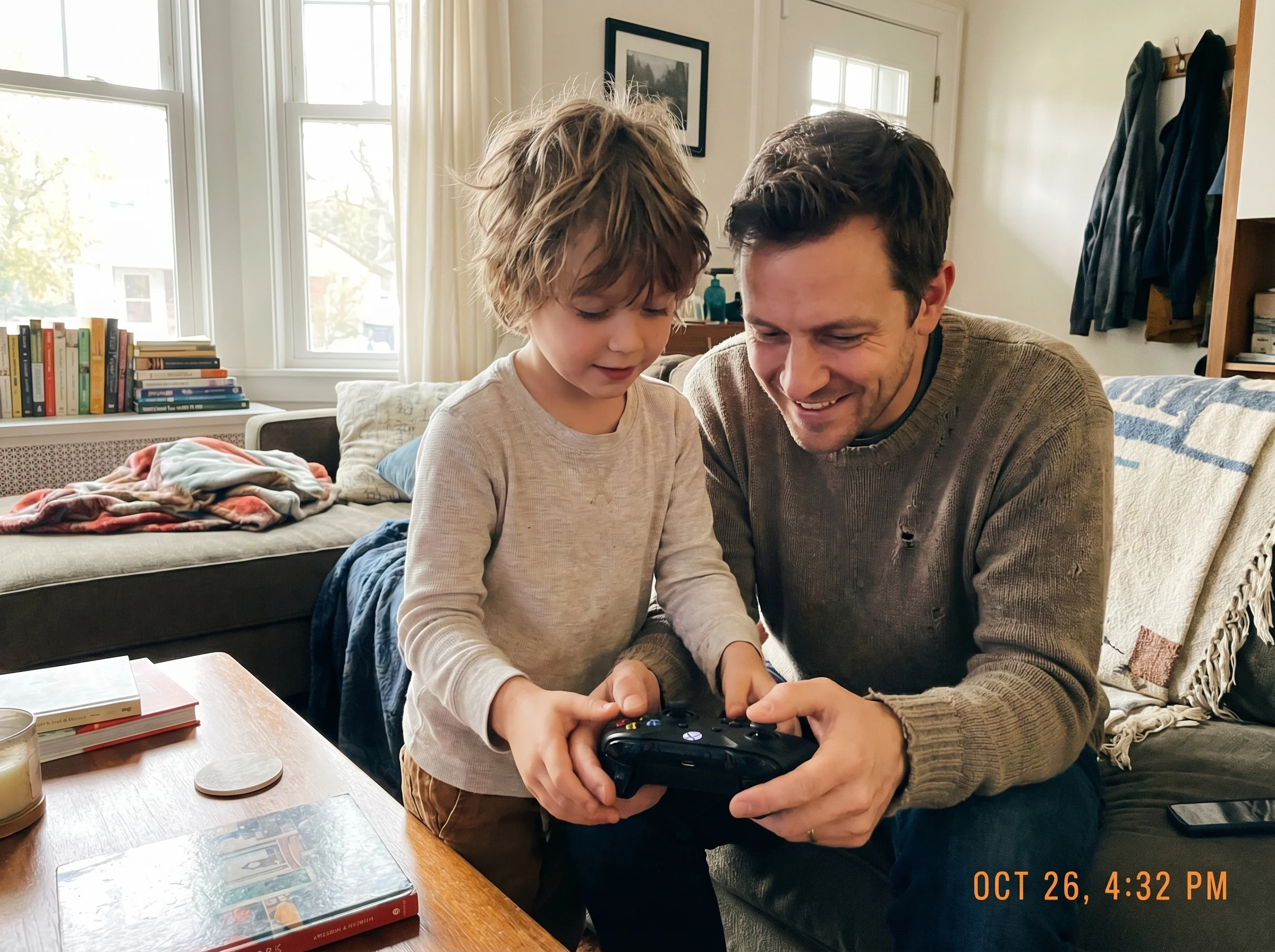
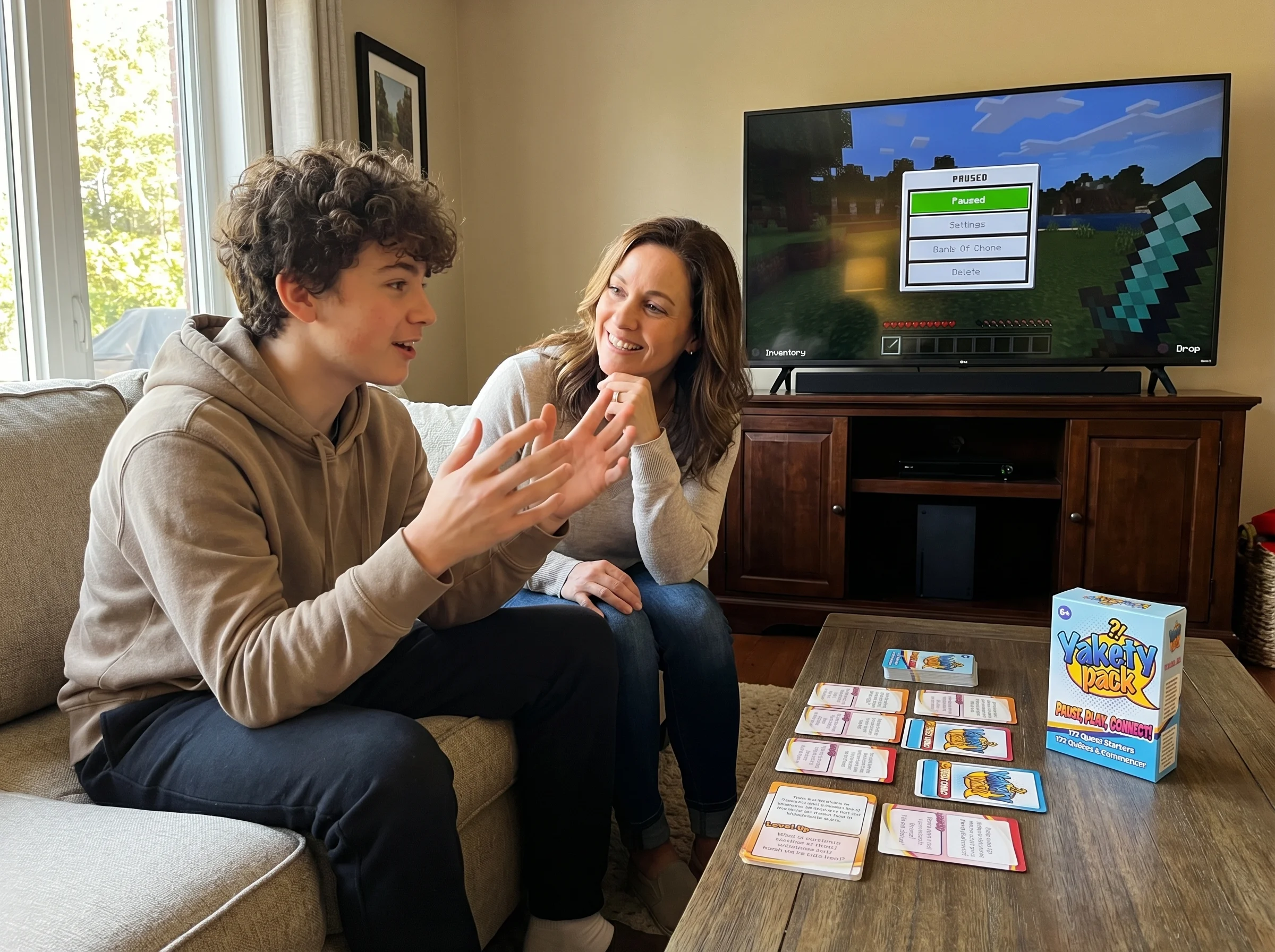
When we created Yakety Pack, we included gaming questions because these conversations don't always happen with controllers in hand. "If you could design a game level, what would be in it?" works at dinner just as well as during loading screens.
The Truth Nobody Mentions
Sometimes the best two-player game is a single-player game with passed controllers. My son and I played through entire Zelda games this way. He handles combat. I solve puzzles. We discuss every decision.
Co-op doesn't mean simultaneous play. It means playing together, whatever that looks like for you.
Your Next Gaming Session
Here's what to do today: Ask your kid (or partner, or parent) what game they'd want to teach you. Not play with you. Teach you.
Pick something they love that you've never touched. Set the difficulty low. Give them 30 minutes to make you slightly less terrible at their favorite game.
Then pay attention. Not to the game, but to how they teach. How they encourage. How they problem-solve. How they share something they love.
That's when two-player gaming becomes more than entertainment. That's when it becomes connection.
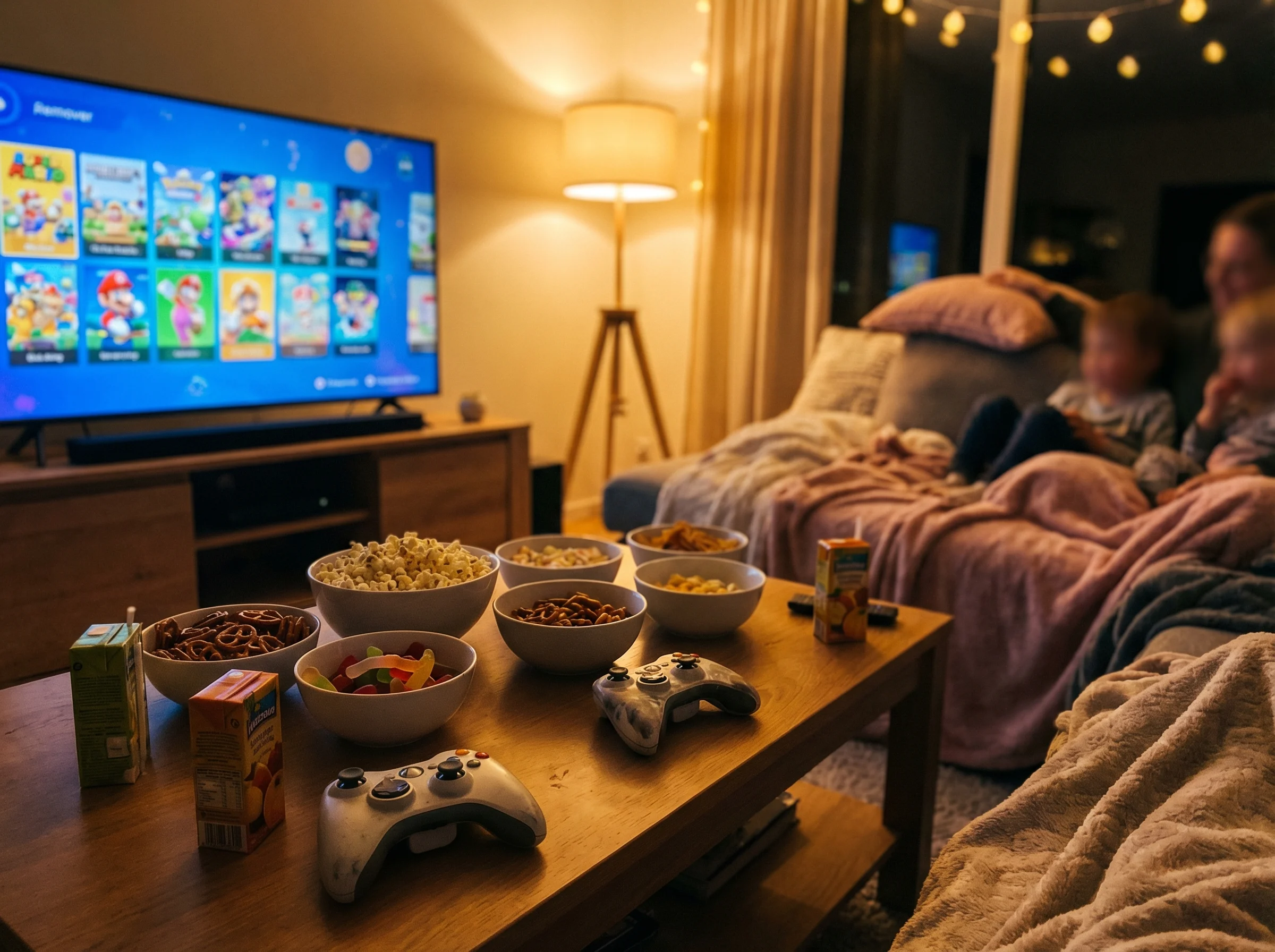
And if you need help keeping those gaming conversations going when the console's off? That's exactly why we built conversation starters into Yakety Pack. Because the best part of gaming together isn't always the game itself. It's everything you discover about each other along the way.
Four questions is not manyPause, Play, Connect: Core Deck172 prompts for the nights when your usual four have already been asked and answered.$49 CAD • 90 cards • 18 reviewsShop the deck
Related Articles
Looking for more? Check out these related articles:
- family co-op games
- family friendly co-op games under 30 minutes
- What are some good casual multiplayer games?
- What are some fun free co-op games?
- What games can two people play offline?
FAQ
What if my kid only wants to play Fortnite/competitive games?
Ask if you can play creative mode together first. Or find co-op modes in their competitive games. Rocket League has casual modes. Even Fortnite has team options. Meet them where they are, then expand from there.
Do we need two controllers for couch co-op?
For true couch co-op, yes. But plenty of games work with controller passing. Some phone/tablet games let one person use touch while the other uses a controller. Get creative with what you have.
What about motion sickness from split-screen?
Look for games with vertical split instead of horizontal (easier on the brain). Or find co-op games that share one screen. Overcooked, Moving Out, and most Nintendo games keep everyone on the same view.
My kid gets frustrated when I'm slow. Help?
Try assisted co-op games where your mistakes don't hurt their progress. Or flip it: play games where they help you through your campaign. Let them be the hero helping dad.
Are there good two-player co-op games that pause properly?
Most couch co-op games pause fine. It's online co-op that gets tricky. Stick to local multiplayer when you need pause-ability for real life interruptions.
