
Your kid just asked if you can play a game together, but they used words like "local co-op" and "couch co-op" and you're standing there pretending to understand while secretly googling on your phone. I've been there. Here's what they're actually asking for - and why saying yes might be the best parenting move you make this week.
I spent years trying to limit my kids' gaming time, convinced that every minute with a controller was a minute lost to "real" connection. Then one afternoon, my son asked if we could play Minecraft together. Not just him playing while I watched. Together. Same screen, same world, same adventure.
That's when I learned what 2 player local co-op actually means. And more importantly, what it means to kids.
The Simple Definition (That Actually Makes Sense)
Local co-op is just playing video games together in the same room, on the same screen. That's it. No complicated networking, no random strangers yelling through headsets, no kids disappearing into their rooms for hours. It's you and your kid (or kids) sitting on the same couch, holding controllers, working together or competing against each other while sharing the same physical space.
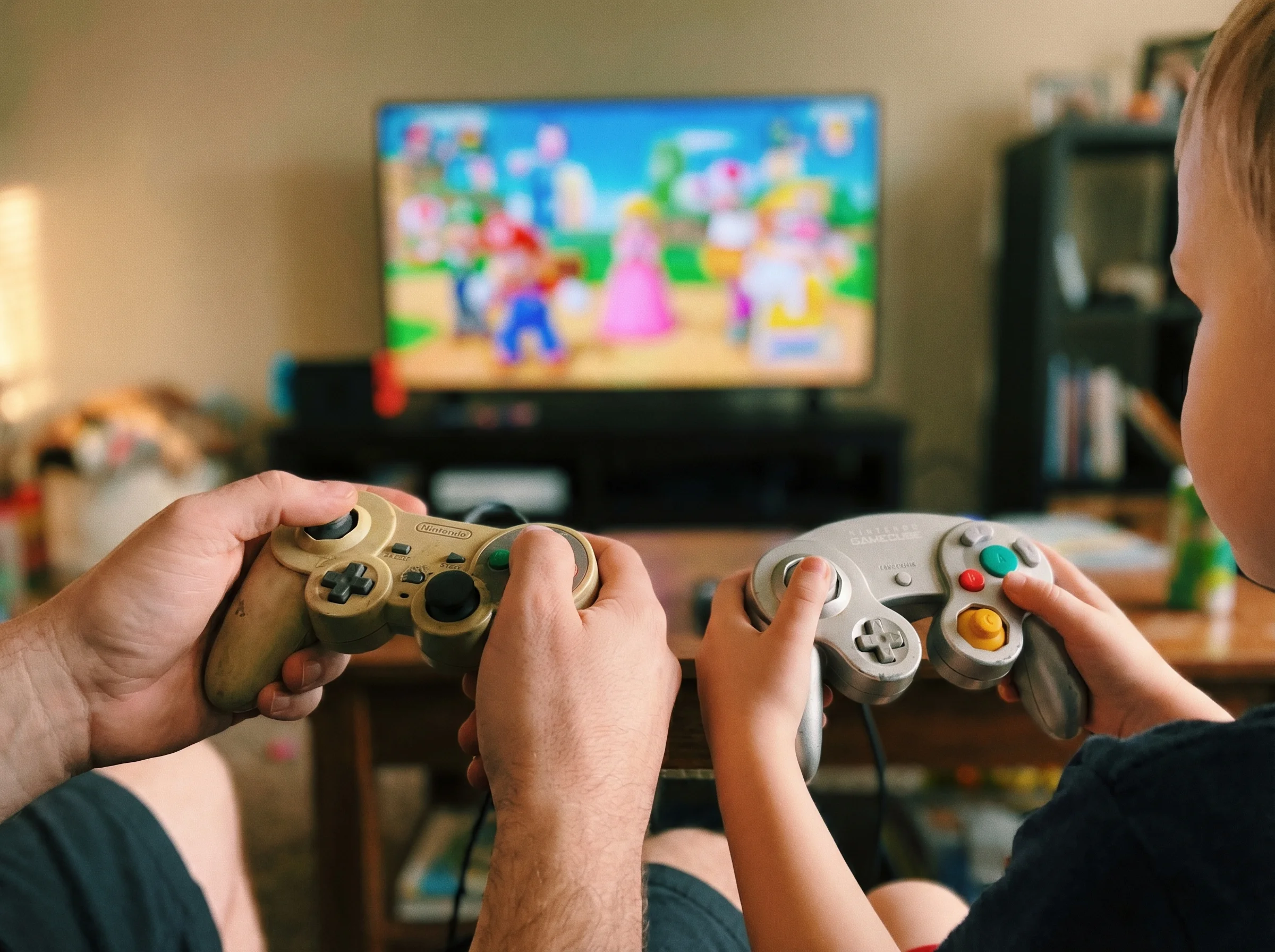
Think of it like digital board games where everyone can see the board at once. Remember playing Mario Kart at your friend's house in the '90s? That was local co-op. The "local" part just means you're physically together, not connected through the internet. The "co-op" part means cooperative - you're working together, not just taking turns.
When my son asked to play Minecraft together that day, he wasn't asking to zone out on another screen. He was asking to share his world with me. Literally. He wanted to show me the castle he'd built, introduce me to his villagers, teach me how to survive the night. He was inviting me into something he loved, and I almost missed it because I was too busy being the "screen time police."
 Nothing to google firstPause, Play, Connect: Core Deck172 prompts that need no controller skill, no setup, and nothing you have to look up.$49 CAD • 90 cards • 18 reviewsShop the deck
Why Kids Love Local Co-Op (It's Not What You Think)
Here's what surprised me: kids don't love local co-op because it's gaming. They love it because it's social gaming without any of the scary parts of playing online. No toxic strangers, no inappropriate chat, no worry about who they're really talking to. Just the fun of playing together with someone they trust.
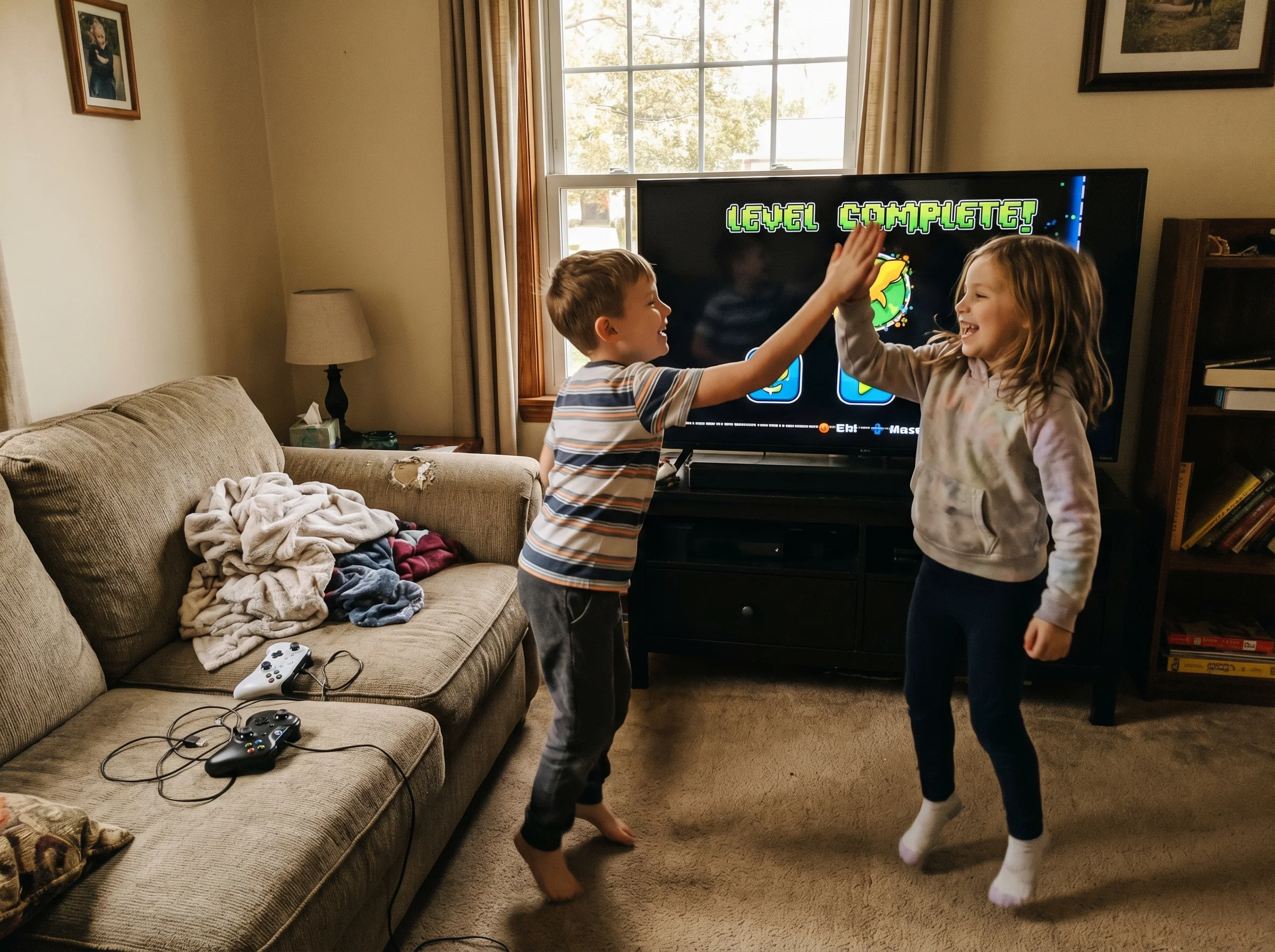
Watch kids playing local co-op sometime. Really watch them. They high-five after beating a tough level. They lean into each other during tense moments. They share snacks between rounds. They strategize out loud. They laugh at each other's mistakes without the meanness that creeps into online play.
Last week, I watched my kids plan their Minecraft castle together, arguing about door placement like tiny architects. "No, we need the door HERE so the zombies can't get in!" "But then we can't see the sunset from the living room!" Twenty minutes of negotiation over virtual door placement. It was basically a master class in compromise, and they had no idea they were learning anything.
What Is 2 Player Local Co-Op vs. Everything Else
Parents get confused because "multiplayer" can mean so many different things now. Let me break it down:
Local co-op vs. online multiplayer: Local co-op is family and friends in your living room. Online multiplayer is playing with strangers over the internet. The difference? Everything. One builds family connections. The other... well, have you heard the language in those online lobbies?
Local co-op vs. taking turns: Remember "it's my turn!" fights? Local co-op eliminates that. Everyone plays at once. No more timer negotiations, no more tears when someone's turn ends mid-level. Just continuous play where everyone's involved.
Local co-op vs. solo gaming: This is the big one. Solo gaming is your kid in their own world. Local co-op brings you into that world with them. The difference in our house was night and day. Fortnite online? Stressed, isolated kids yelling at screens. Overcooked together? Laughing, shouting directions, working as a team to not burn the virtual restaurant down.
Local co-op vs. you just watching: I used to sit next to my son while he played, asking questions, trying to engage. It was like being a spectator at a sport I didn't understand. Playing together changed everything. Now we're both IN the game, experiencing it together.
What You Actually Need (Spoiler: Not Much)
This is where parents usually panic. "Do I need to buy two gaming systems? Multiple TVs? A degree in computer science?" Nope. Here's the reality:
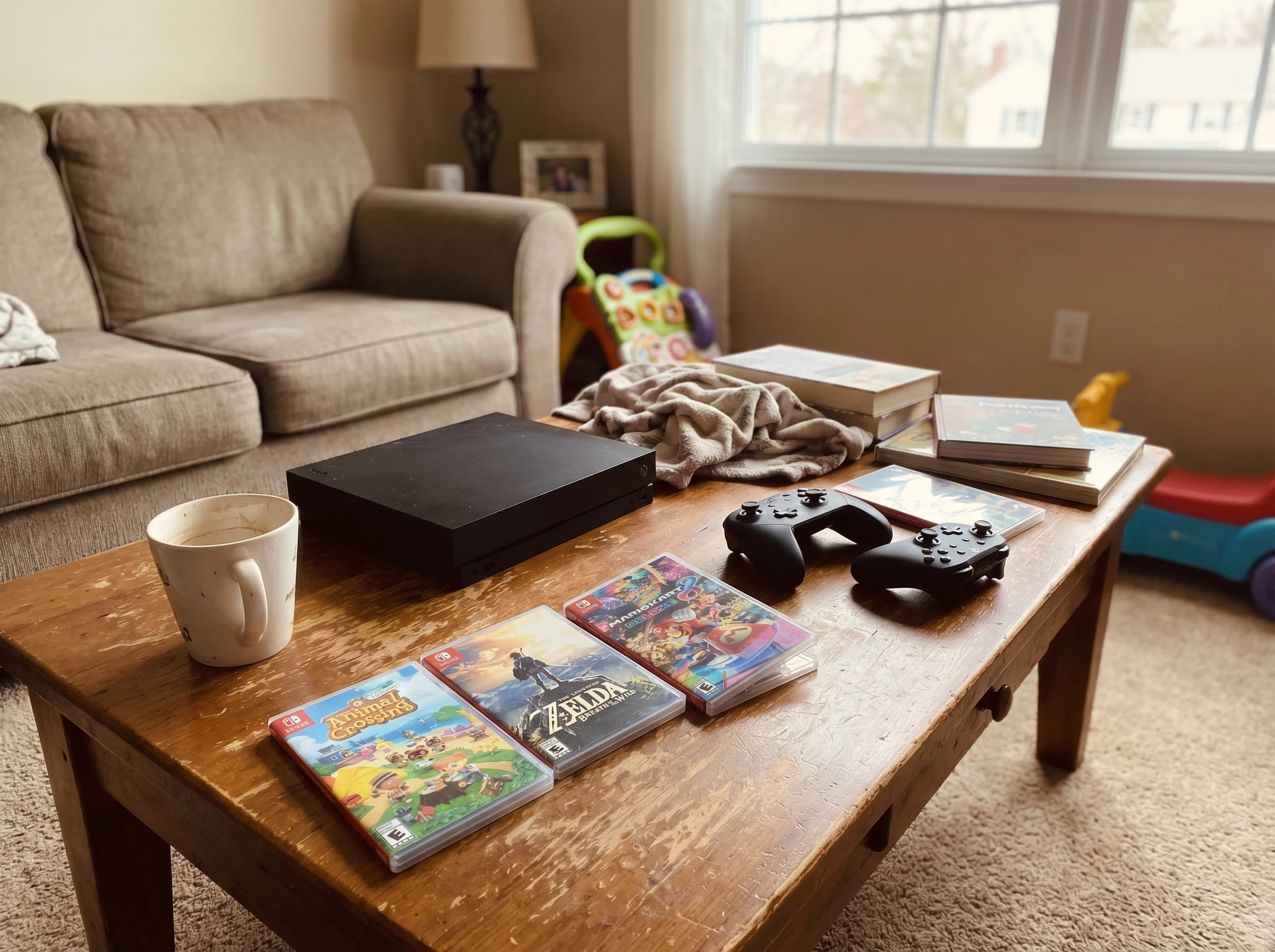
- One console (Xbox, PlayStation, Switch, whatever you already have)
- Two controllers (most consoles come with one, you just need a second)
- A local co-op game
- That's literally it
Most modern games adjust difficulty automatically. When my daughter and I play, the game knows she's been playing for years and I still sometimes walk into walls. It adapts. She gets harder enemies, I get extra help. We're both challenged at our own levels.
You don't need to be good at games. Actually, being bad at them might be better. My daughter loves teaching me the controls, patiently explaining what each button does while barely containing her eye rolls. It's one of the few areas where she gets to be the expert, and watching her confidence soar while she teaches me? Worth every virtual death.
Quick tip: Before buying any game, check the back of the box or the online store description. Look for "local co-op," "local multiplayer," or "couch co-op." They all mean the same thing - you can play together in the same room.
Why 2 Player Local Co-Op Games Are Getting Harder to Find
Here's something that frustrates both parents and kids: there are fewer local co-op games now than when we were young. Why? Money, mostly. Game companies make more profit from online games where every player needs their own copy. Local co-op means one purchase for the whole family.
Plus, modern games are more graphically intensive. Splitting the screen to show two players at once is technically challenging when games are pushing consoles to their limits. It's easier for developers to just skip local co-op entirely.
But here's the good news: indie game developers are bringing it back. Smaller studios remember what it was like to game with friends on the couch, and they're making games specifically for that experience. Some of our favorite family games came from studios I'd never heard of before. They're not trying to impress with graphics - they're trying to create fun.
 One room, two peoplePause, Play, Connect: Core Deck$49 CAD • 172 promptsSee the deck
The Unexpected Benefits I Discovered
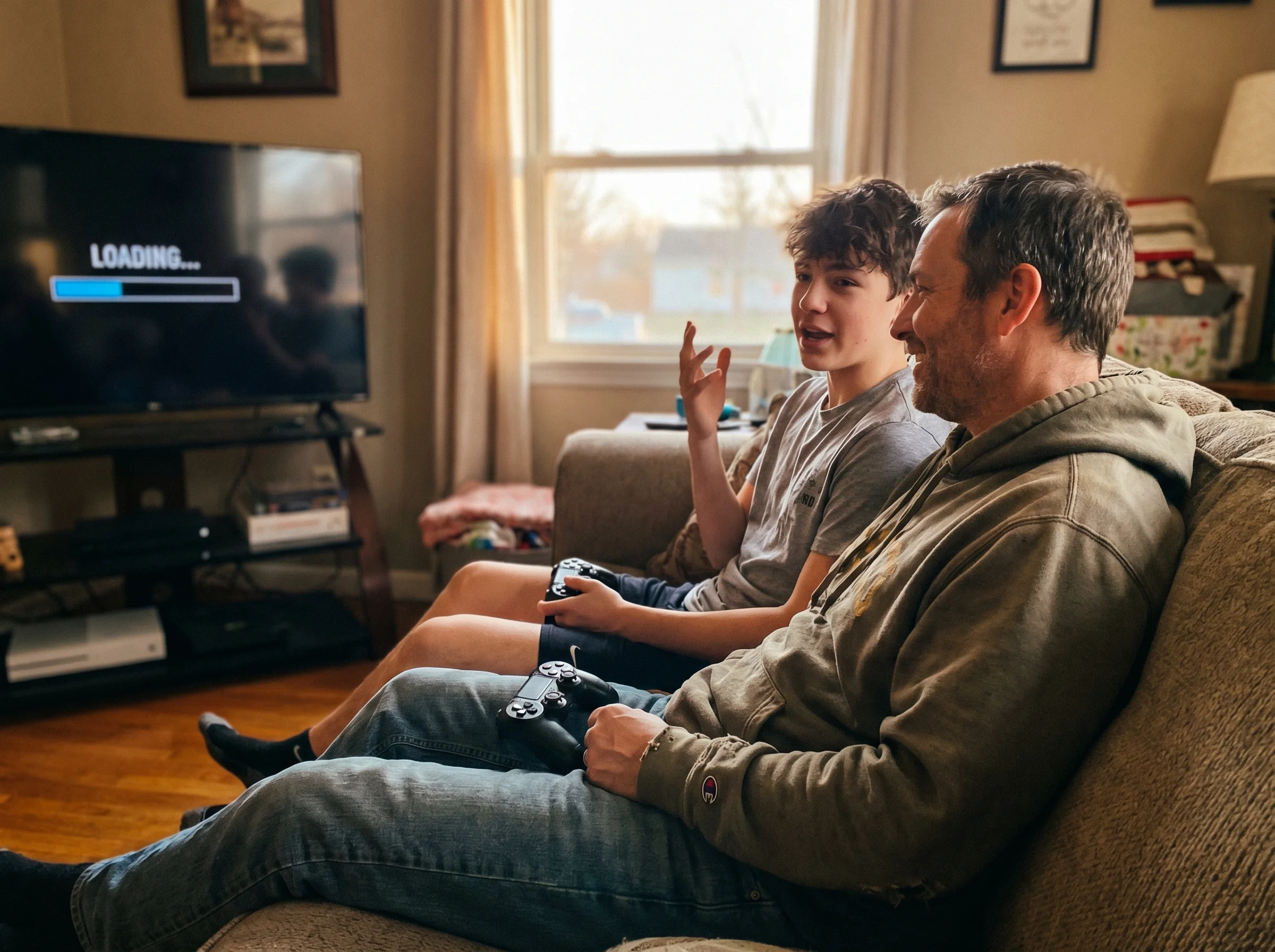
Six months into our local co-op experiment, I noticed something. My kids were talking to me more. Not just about games - about everything. Those natural breaks between levels became conversation starters. "Dad, while this is loading, can I tell you about what happened at lunch today?"
The shared vocabulary changed our family dynamic. "Remember when we accidentally blew up our own base?" became our shorthand for laughing at mistakes instead of getting frustrated. Gaming references started popping up in regular conversation, inside jokes that made my kids' eyes light up because I "got it."
Problem-solving together in games translated to problem-solving in real life. The teamwork skills, the communication patterns, the way we learned to divide tasks based on strengths - it all carried over. My son started approaching homework problems the same way he approached game puzzles: "Okay, what do we know? What are we trying to do? What haven't we tried yet?"
The physical proximity mattered too. Teenagers aren't always eager to cuddle up with parents, but sitting shoulder-to-shoulder for gaming? Totally acceptable. Those little moments of contact - the celebratory fist bumps, the playful shoulder shoves after mistakes - they add up.
Getting Started With 2 Player Local Co-Op (Even If You're Controller-Challenged)
Ready to try but worried you'll embarrass yourself? Here's how to start:
Pick the right game. For gaming newbies, I recommend starting with:
- Overcooked (chaotic cooking fun)
- Moving Out (ridiculous moving company simulator)
- Minecraft (on peaceful mode to start)
- Any LEGO game (impossible to take seriously)
Set yourself up for success. Play for 30-45 minutes at first. Take snack breaks. Let your kid be the expert. Ask questions. Celebrate small victories ridiculously. Make dying in the game funny, not frustrating.
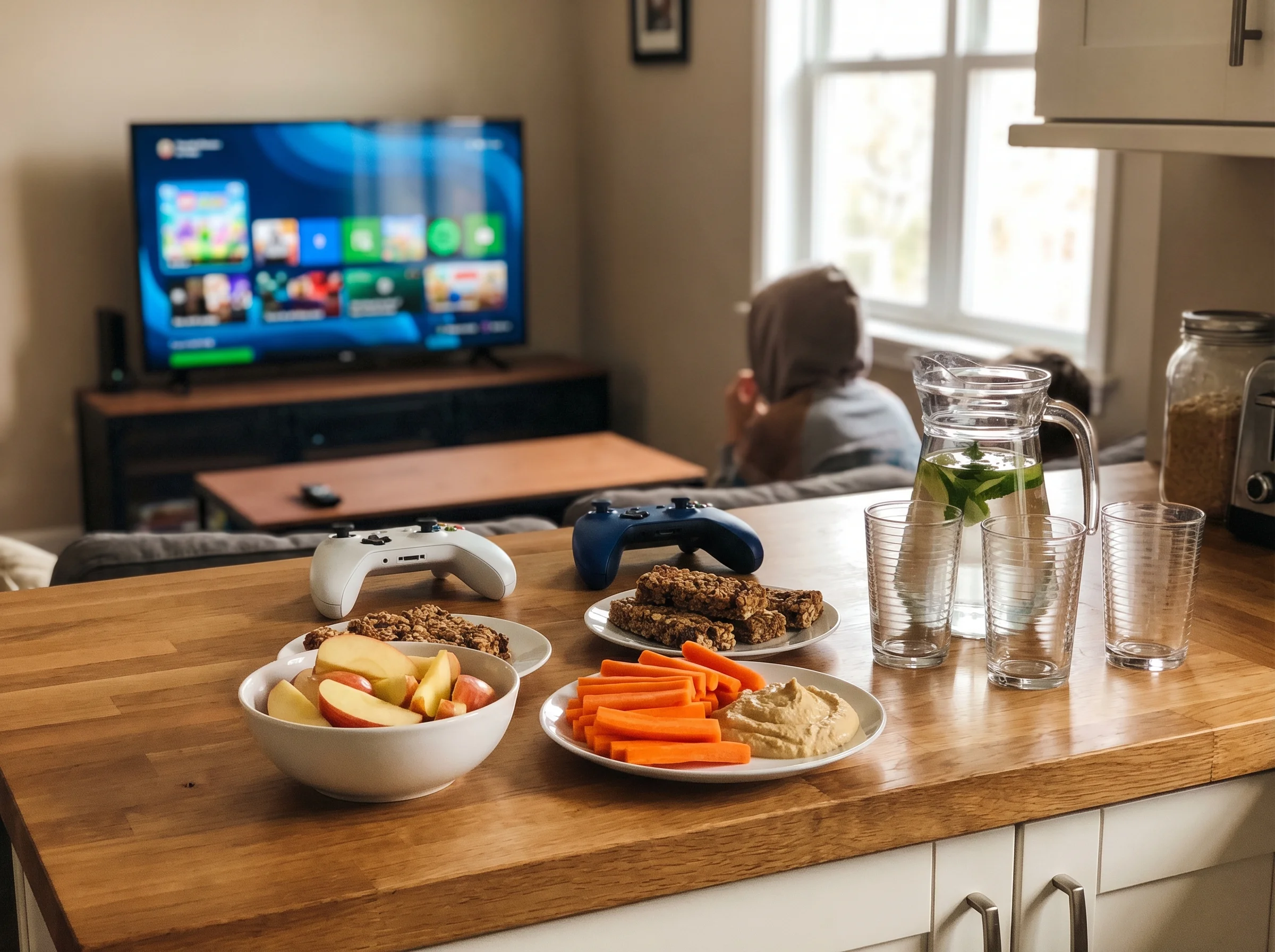
Make it routine but not rigid. We do Sunday morning gaming now - "Rayman Sundays" became as important as Sunday dinner. But if someone's not feeling it, we skip it. The point is connection, not obligation.
Most importantly: prepare to be terrible. You will walk off cliffs. You will press the wrong buttons. You will cause your team to lose. Your kids will love you anyway. Actually, they might love you more for it.
The Bottom Line
What is 2 player local co-op? It's really just playing video games together in the same room. But it's also so much more than that. It's meeting your kids where they are, in a world they love, speaking a language they're fluent in. It's shared experiences and inside jokes and problem-solving together. It's finding out that the thing you were trying to limit might actually be the thing that brings you closer.
Sometimes the best conversations happen between respawns. When your kid is relaxed, focused on the game but comfortable with you there, that's when the real stuff comes out. "Dad, there's this kid at school..." or "I'm worried about my math test" or just "Thanks for playing with me."
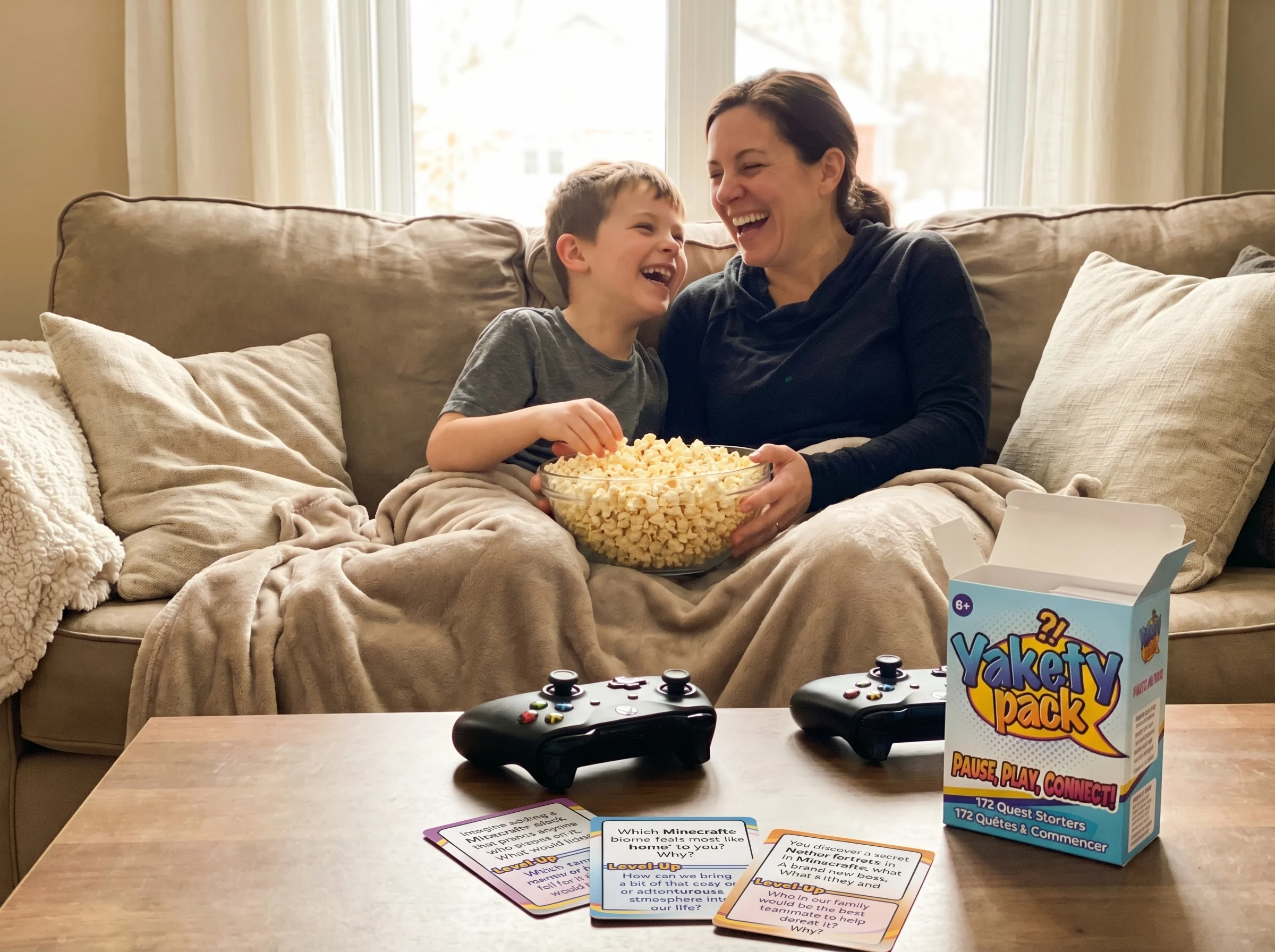
And if you want to keep those conversations going after the console is off, that's exactly what we designed Yakety Pack for - meeting kids in their world, not pulling them out of it. Because once you start speaking their language, whether it's asking about their favorite game character or their biggest gaming fail, they realize you're actually interested in what they love. That changes everything.
So next time your kid asks if you want to play local co-op? Say yes. Grab a controller. Prepare to be terrible. And get ready to connect with your kid in ways you didn't expect. Trust me - I learned this the hard way, and it turned out to be one of the best parenting pivots I ever made.
Your turn to bring somethingPause, Play, Connect: Core Deck172 prompts to bring to the couch, the same way your kid brings the game.$49 CAD • 90 cards • 18 reviewsShop the deck
Related Articles
Looking for more? Check out these related articles:
- family co-op games
- family friendly co-op games under 30 minutes
- What are some good casual multiplayer games?
- What are some good two player co-op games?
- What are some fun free co-op games?
FAQ
Is local co-op the same as couch co-op?
Yep, exact same thing. "Couch co-op" is just the casual way of saying it. Both mean playing together in the same room.
Can three or four players do local co-op?
Many games support up to four players locally. You'll need extra controllers, but the whole family can play. Check the game description - it'll say "2-4 players local co-op" if it supports more than two.
Do all games have local co-op?
Nope, and sadly it's becoming less common. Always check before buying. The game description will specifically mention "local co-op" or "split-screen" if it has it.
What if my kids are different ages?
Look for games with adjustable difficulty or asymmetric gameplay (where players have different roles). Many games let you adjust difficulty per player, so your 6-year-old and 12-year-old can both have fun.
Is local co-op better than online gaming for kids?
For family bonding and safe gaming? Absolutely. You're right there with them, no strangers involved, natural breaks for conversation. It's gaming at its most social and supervised. Online has its place for older kids, but local co-op is perfect for family gaming time.
