
My wife and I were those couples who tried "game night" with Monopoly exactly twice before someone flipped the board. Then we discovered we could run a virtual restaurant together instead, and everything changed. Turns out, the best couple games aren't about winning - they're about finding new ways to be a team.
I spent years trying to get Sarah to enjoy "my" games. I'd hand her a controller for Call of Duty, watch her die repeatedly, then wonder why she'd rather scroll her phone. Classic rookie mistake. Gaming together isn't about converting your partner into loving what you love. It's about discovering something new that belongs to both of you.
Why Most Couple Gaming Advice Misses the Point
Here's what nobody tells you: the reason "gaming ruins relationships" is because people pick the wrong games. Seriously. Playing Mario Kart with your significant other is like going to couples therapy with boxing gloves on. Sure, some couples thrive on competition. Most just end up not talking during dinner.
The real magic happens with co-op games. Not because they're "nicer" or "easier," but because they flip the whole dynamic. Instead of trying to destroy each other, you're both yelling at the same burning kitchen, the same impossible puzzle, the same ridiculous boss. You're not opponents. You're partners in chaos.
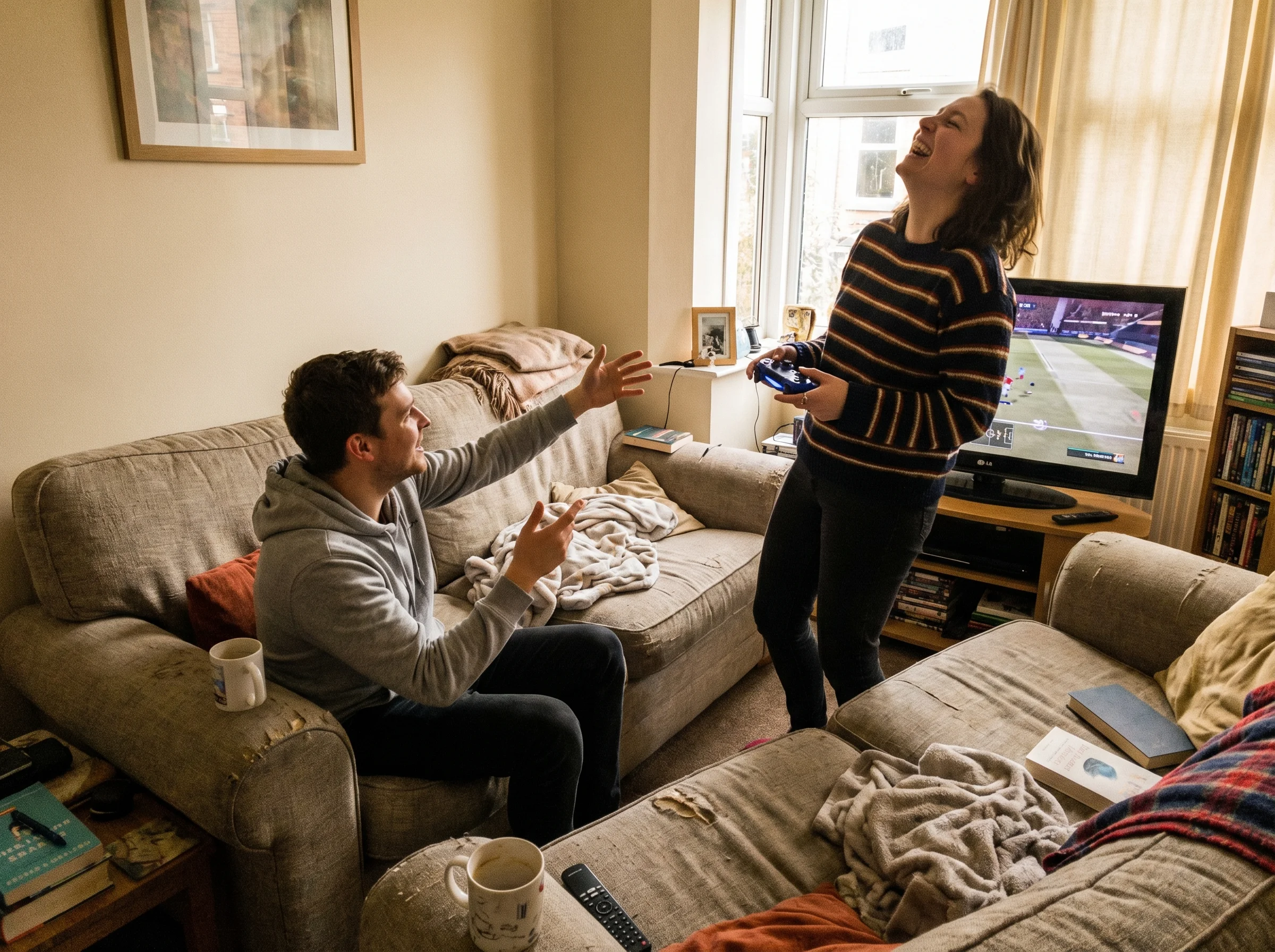
I discovered this by accident with Overcooked. Sarah agreed to try "just one cooking game" mostly to shut me up about gaming. Twenty minutes later, we're both screaming about lettuce, she's literally standing on the couch shouting directions, and I'm having more fun gaming than I'd had in years. We failed that level six times. We high-fived after every failure. That's when I knew we'd found something.
 When the controllers go downPause, Play, Connect: Core Deck172 prompts that bring the same after-the-game conversation to the family dinner table.$49 CAD • 90 cards • 18 reviewsShop the deck
The Three Types of Couple Games That Actually Work
After years of trial and error (emphasis on error), I've found couple games fall into three categories that actually matter:
Story Builders
These games give you something to talk about for days. Stardew Valley became our obsession for months. We'd plan our virtual farm over actual dinner. "Should we invest in chickens or save for the greenhouse?" became genuine dinner conversation. It Takes Two literally forces you to work together through relationship metaphors - heavy-handed? Sure. Effective? Absolutely.
A Way Out had us planning a prison break on date night. Not exactly traditional romance, but when you're both invested in whether Vincent or Leo makes it out alive, you're creating shared stories. That's what matters.
Chaos Coordinators
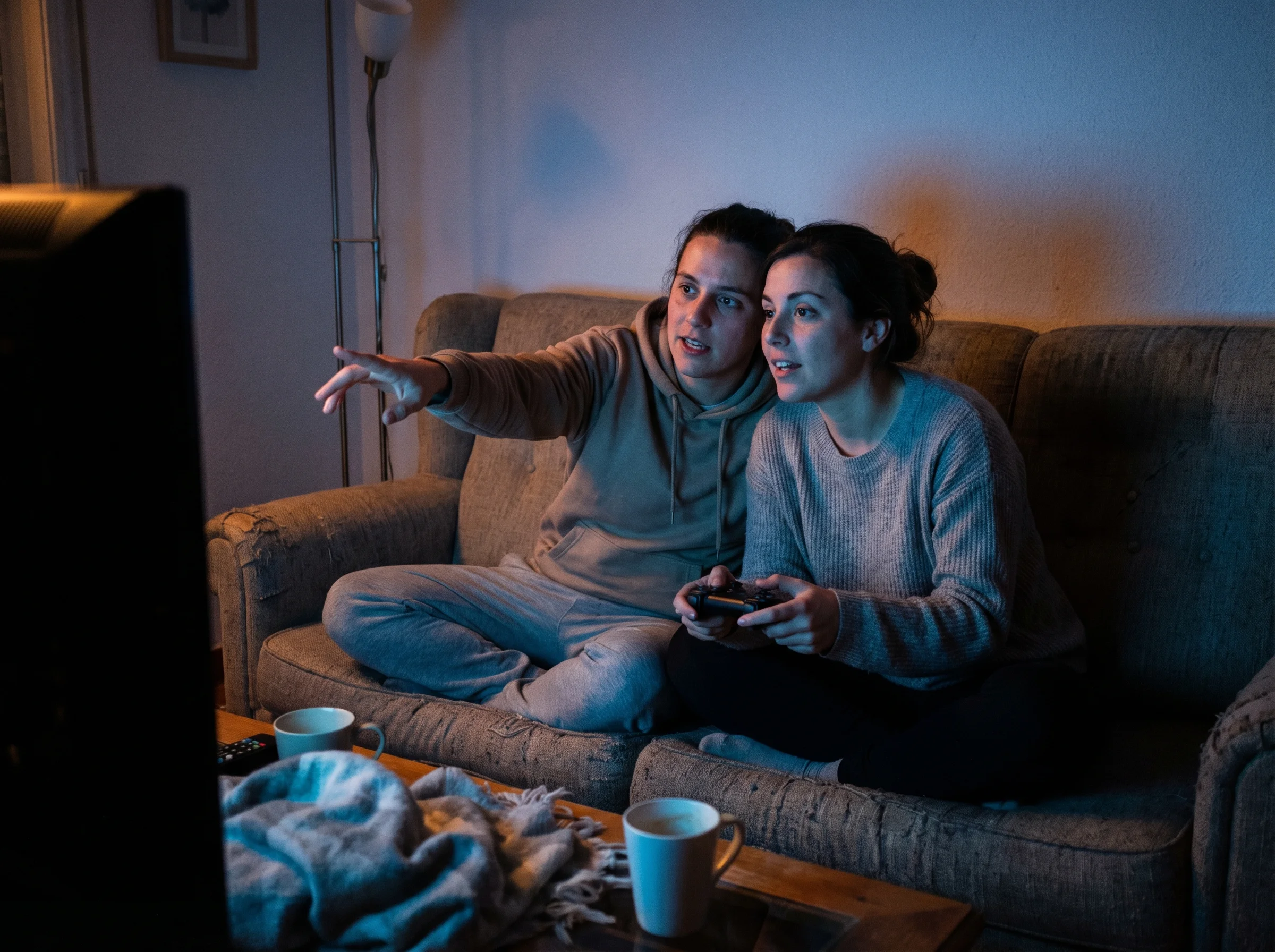
Sometimes you need energy. You need to laugh until your sides hurt. You need to fail spectacularly and not care. That's where games like Overcooked shine. Moving Out takes the same formula - you're trying to move furniture, everything's on fire, why is there a ghost? - and makes failure hilarious.
Unravel Two looks calm with its cute yarn characters. Don't be fooled. You'll be tangled up, falling off cliffs, and somehow laughing harder than you have all week. These games are therapy disguised as chaos.
Gentle Explorers
Not every night calls for screaming about virtual onions. Sometimes you want to explore a beautiful world together at your own pace. Journey doesn't even let you talk to each other - you communicate through musical chimes. Sounds weird? It's weirdly perfect for when words feel like too much work.
Spiritfarer had Sarah crying actual tears as we helped spirits pass on. Animal Crossing lets you build a whole world together without any pressure. These games work when you're exhausted but still want to share something.
The "One Controller" Solution
"But Kevin, my partner has never touched a controller!" I hear this constantly. Here's the thing - skill gaps kill gaming sessions faster than anything else. But there are brilliant workarounds.
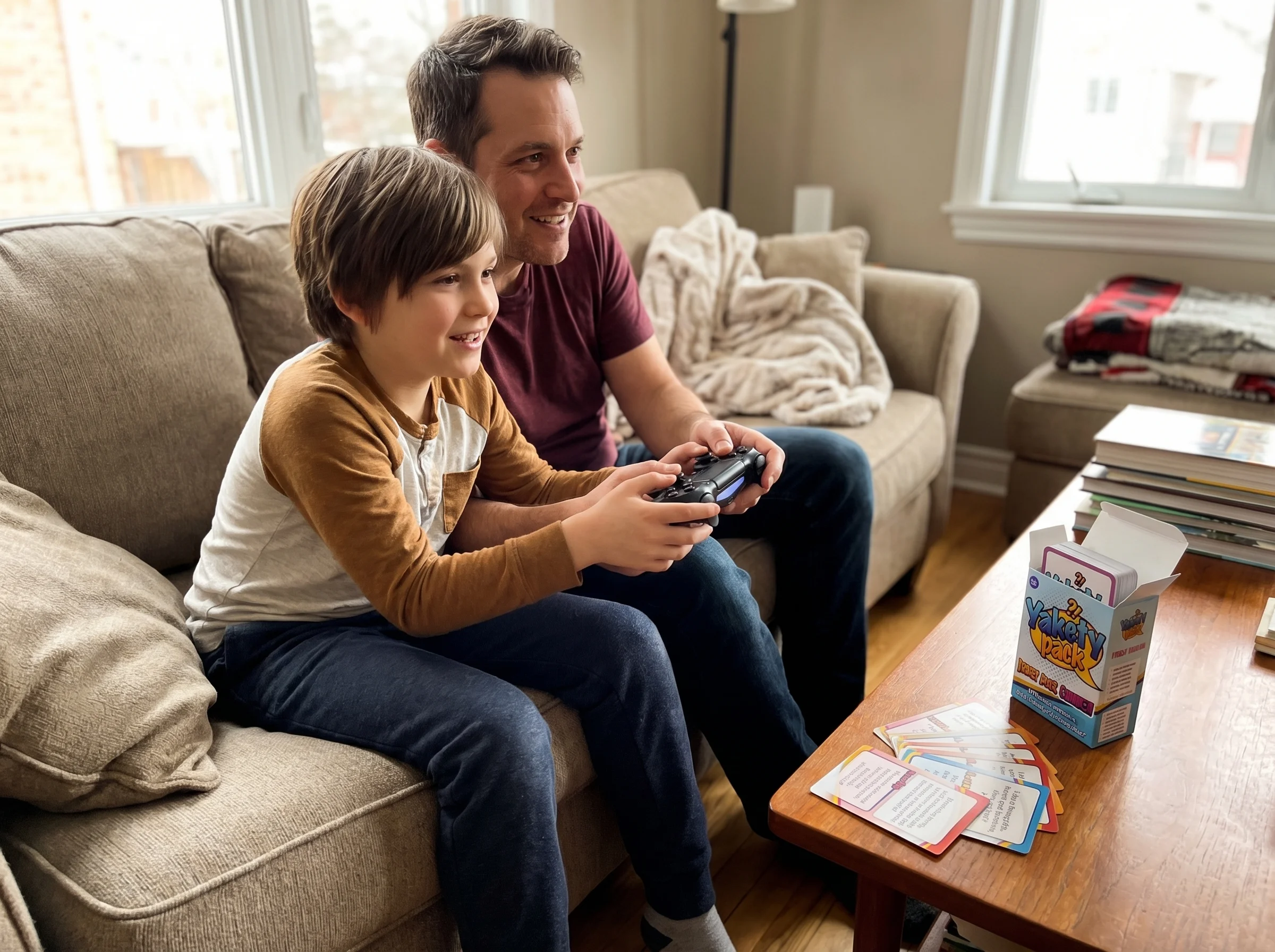
Portal 2's co-op mode taught me everything about teaching a non-gamer. Sarah had never played a first-person game. Within an hour, she was solving puzzles I couldn't figure out. Why? Because Portal 2 doesn't care if you can aim perfectly or time jumps. It cares if you can think and communicate. We'd switch who was "leading" each puzzle. I'd handle the technical stuff, she'd spot solutions I missed.
Some games build in asymmetric gameplay on purpose. In It Takes Two, players have completely different abilities. One person might be controlling time while the other has clone powers. Different skills, equal importance. Genius design for couples with different gaming backgrounds.
Taking turns works too, but pick your games carefully. Life is Strange lets you make story choices together. "Should we save Chloe or the town?" becomes a genuine discussion. You're not passing a controller - you're co-directing a movie.
Beyond the Screen: Making Games Matter
Here's what transformed gaming from "that thing we do sometimes" to part of our relationship DNA: the debrief. Sounds formal? It's not. It's continuing the conversation after the console's off.
"Remember when we accidentally burned down that entire kitchen?" becomes an inside joke. "We need more plates!" is now our code for "I'm overwhelmed and need help." That came from a particularly chaotic Overcooked session where we kept washing dishes instead of serving food. Now it's shorthand in our real kitchen when dinner prep gets crazy.
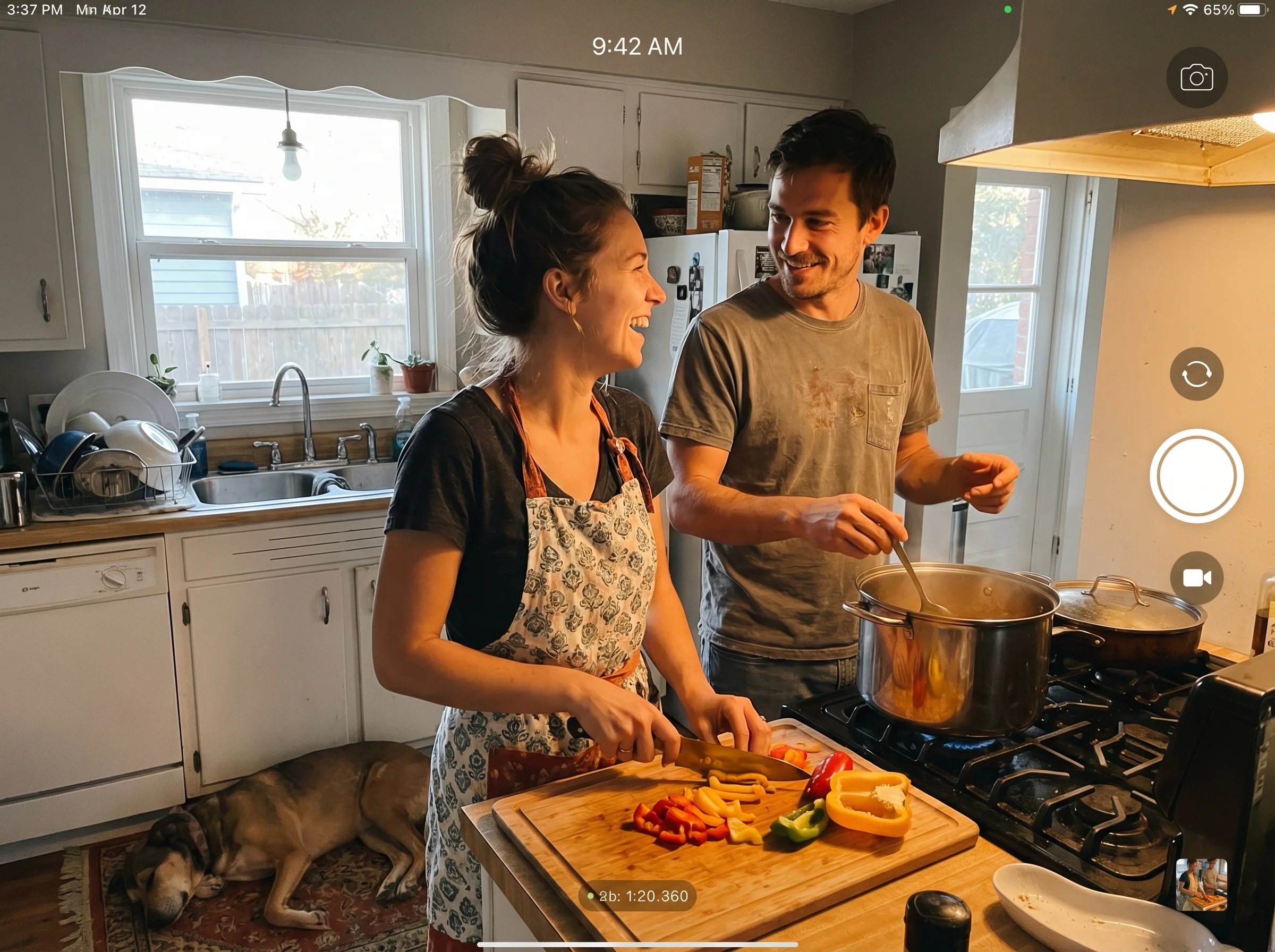
Games give you a whole vocabulary for connection that has nothing to do with "we need to talk." They create shared metaphors for real life. When Sarah says "this is like that impossible Portal room," I know exactly what kind of problem-solving mode she's in. When I say "Stardew Valley day," she knows I need something calm and predictable.
The conversation after matters as much as the gaming itself. "What was your favorite part?" beats staring at your phones in silence. Some of our best talks have started with "I can't believe you threw me in the river" and ended somewhere completely different.
 For the family tablePause, Play, Connect: Core Deck$49 CAD • 172 promptsSee the deck
The Exhausted Parent's Gaming Guide
Let's get real. Most couple gaming happens after 9 PM when you're running on fumes and tomorrow's coming too fast. You don't have energy for complex stories or precision timing. You need games that work with your life, not against it.
Twenty-minute sessions are your friend. Overcooked levels take 3-4 minutes each. Perfect for "let's just do a few rounds." Moving Out missions are similarly bite-sized. You can make progress without committing your whole evening.
Free games that don't suck? They exist. Rocket League is free and hilarious when you're both terrible at it. Fall Guys turns failure into entertainment. Among Us works great as a two-person detective game if you play with strangers online.
Skip anything that requires two full setups. You're tired, not trying to rewire your living room. Couch co-op or taking turns on one screen keeps it simple. Save the complicated stuff for when you have actual energy.
Your Couple Gaming Roadmap
Starting fresh? Here's your progression path that actually works:
Month 1: Start with Overcooked or Moving Out. High energy, impossible to take seriously, lots of laughing. If these stress you out instead of making you laugh, try Unravel Two for something gentler.
Month 2: Add a story element. Life is Strange for taking turns, A Way Out for true co-op. You're learning to make decisions together, not just react to chaos.
Month 3: Try something longer-form. Stardew Valley or Spiritfarer let you build something together over time. You're creating a shared project, not just sharing an activity.
Month 4: Now you know what works. Hate planning? Skip the farm games. Love stories? Dive into longer narratives. Thrive on chaos? There's a whole world of couch co-op waiting.
The monthly "new game" experiment keeps things fresh. First Friday of every month, we try something completely different. Most are forgotten by Saturday. Some become obsessions. That's how we discovered Untitled Goose Game - being horrible geese together is weirdly romantic.
The Secret: It's Not About the Games
Here's what took me way too long to figure out: some couples bond over beating each other at Street Fighter. Others need to build a farm together in peace. Neither is wrong. The game that works for your friends might destroy your Thursday night.
Sarah and I discovered we're "builders and explorers." Competition makes us snippy. Collaboration makes us closer. Your pattern might be completely different. Maybe you need the adrenaline of racing games. Maybe puzzle games make you think together in ways nothing else does.
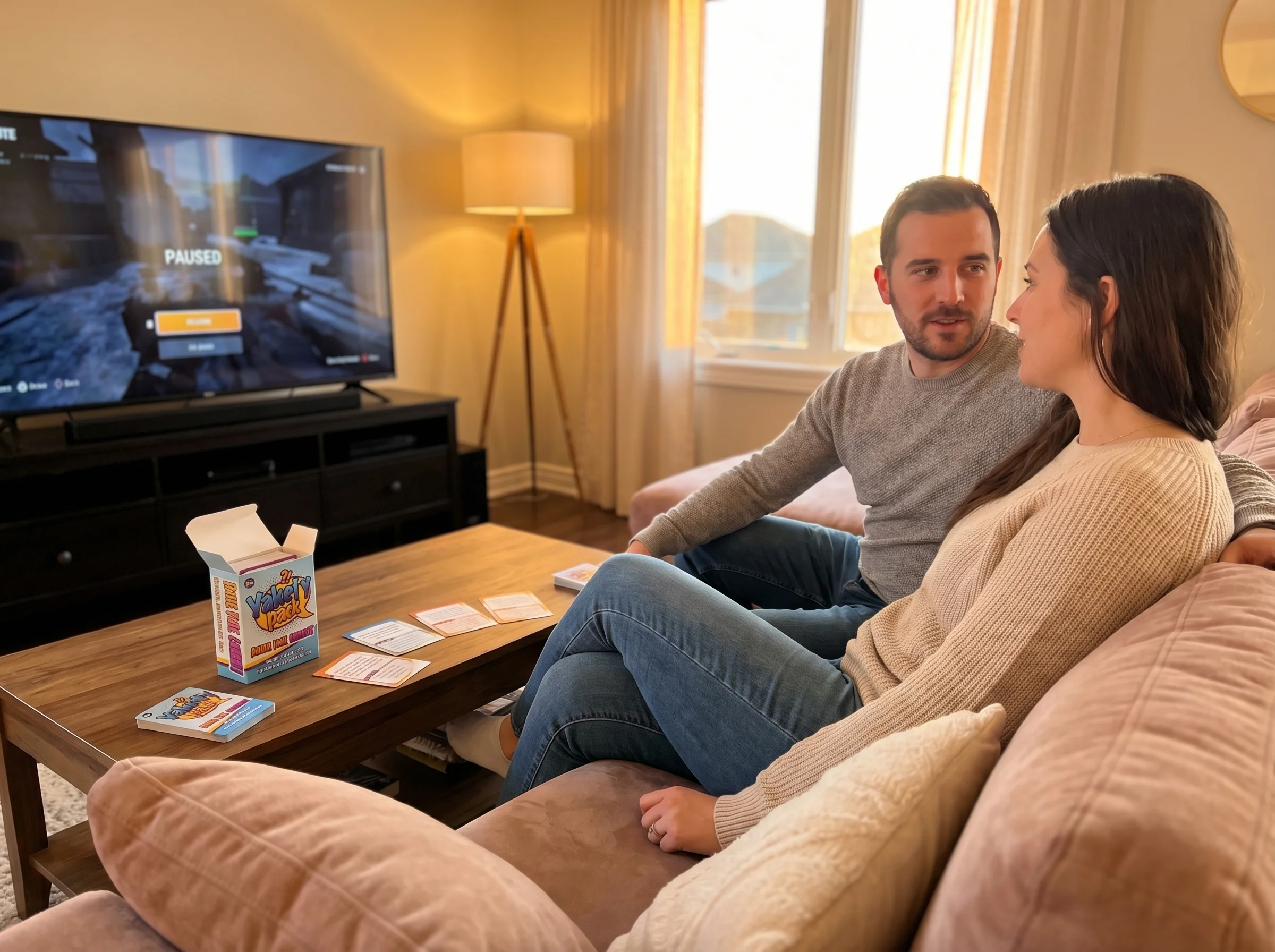
Gaming together is like finding your shared language. Sometimes those conversations happen through Yakety Pack questions at dinner. Sometimes they happen through deciding which turnips to plant. The medium matters less than the connection.
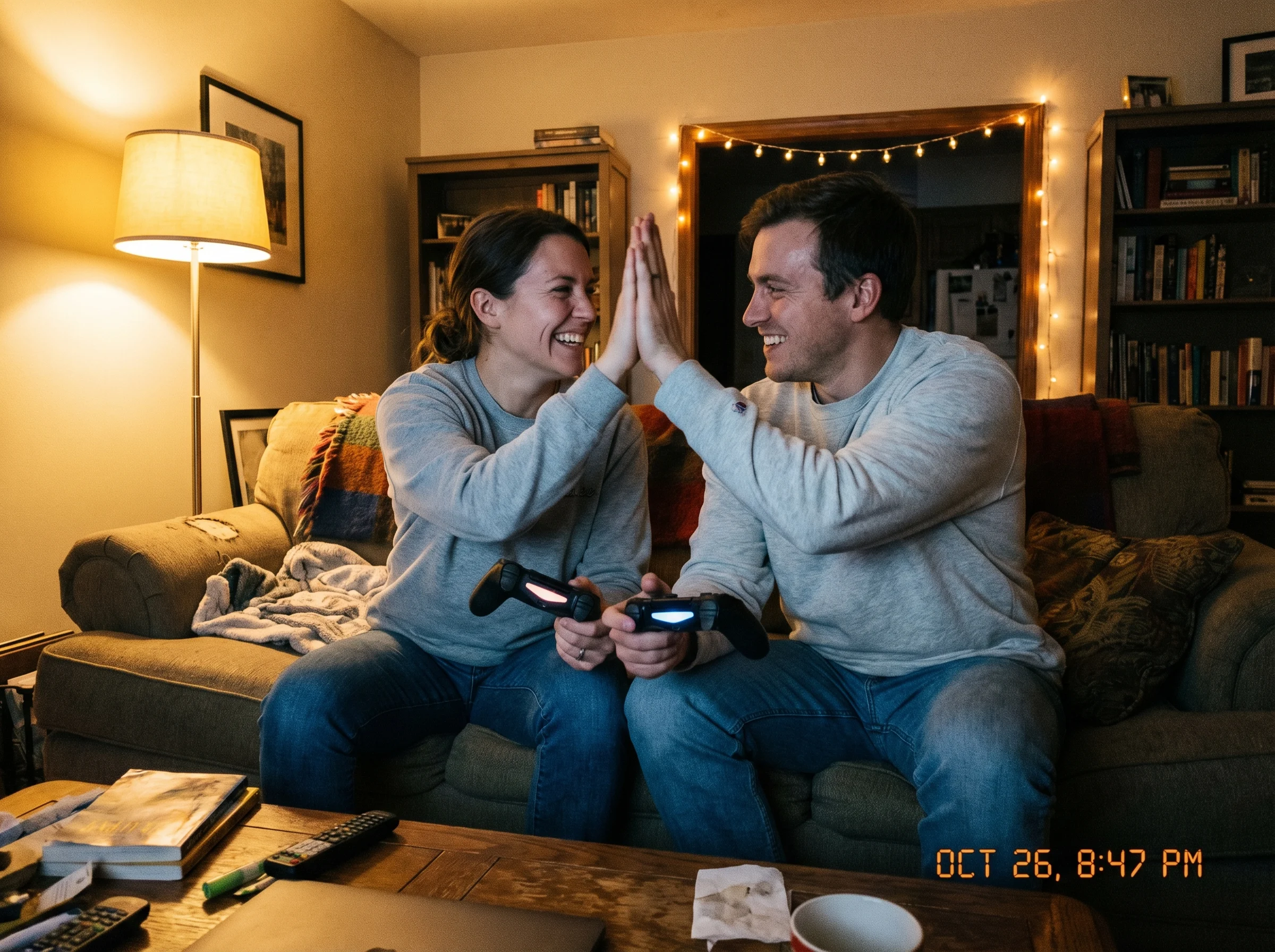
Create your own traditions. We play Stardew Valley every fall when the real leaves change. We replay Portal 2 whenever we need to remember we make a good team. We fire up Overcooked when life feels too serious. These aren't just games anymore - they're part of our story.
Pick one game from this list. Tonight. Don't overthink it. If you hate it, you've wasted twenty minutes and gained a funny story. If you love it, you've found a new way to connect. That's a gamble worth taking every time.
The controller's less important than who you're sharing it with. Trust me - I learned that the hard way, one burnt virtual onion at a time.
Bring the debrief to dinnerPause, Play, Connect: Core Deck172 prompts that turn "what was your favorite part" into a conversation the whole family joins in on.$49 CAD • 90 cards • 18 reviewsShop the deck
Related Articles
Looking for more? Check out these related articles:
