
My son asked if we could play "that game where we work together" again last week. Not Fortnite. Not Minecraft. He wanted to replay It Takes Two, our Tuesday night tradition for the past month. That's when I knew co-op campaigns weren't just games, they were our new way of hanging out.
But let me back up. Six months ago, I bought Cuphead thinking "cute cartoon game, perfect for family time." Twenty minutes later, my son was in tears, I was sweating bullets, and my wife was asking why we voluntarily chose stress as entertainment. That spectacular failure taught me everything about what actually makes a good co-op campaign game.
Here's what I learned: finding the right co-op campaign isn't about GameSpot reviews or Reddit recommendations. It's about matching the game to YOUR specific team. And nobody's writing that guide.
Why Co-op Campaigns Hit Different Than Regular Multiplayer
When my kids play Fortnite, they're in their own worlds. Headsets on, talking to friends, occasionally yelling about someone camping in a bush. When we play co-op campaigns? We're literally on the same couch, solving the same puzzles, celebrating the same victories.
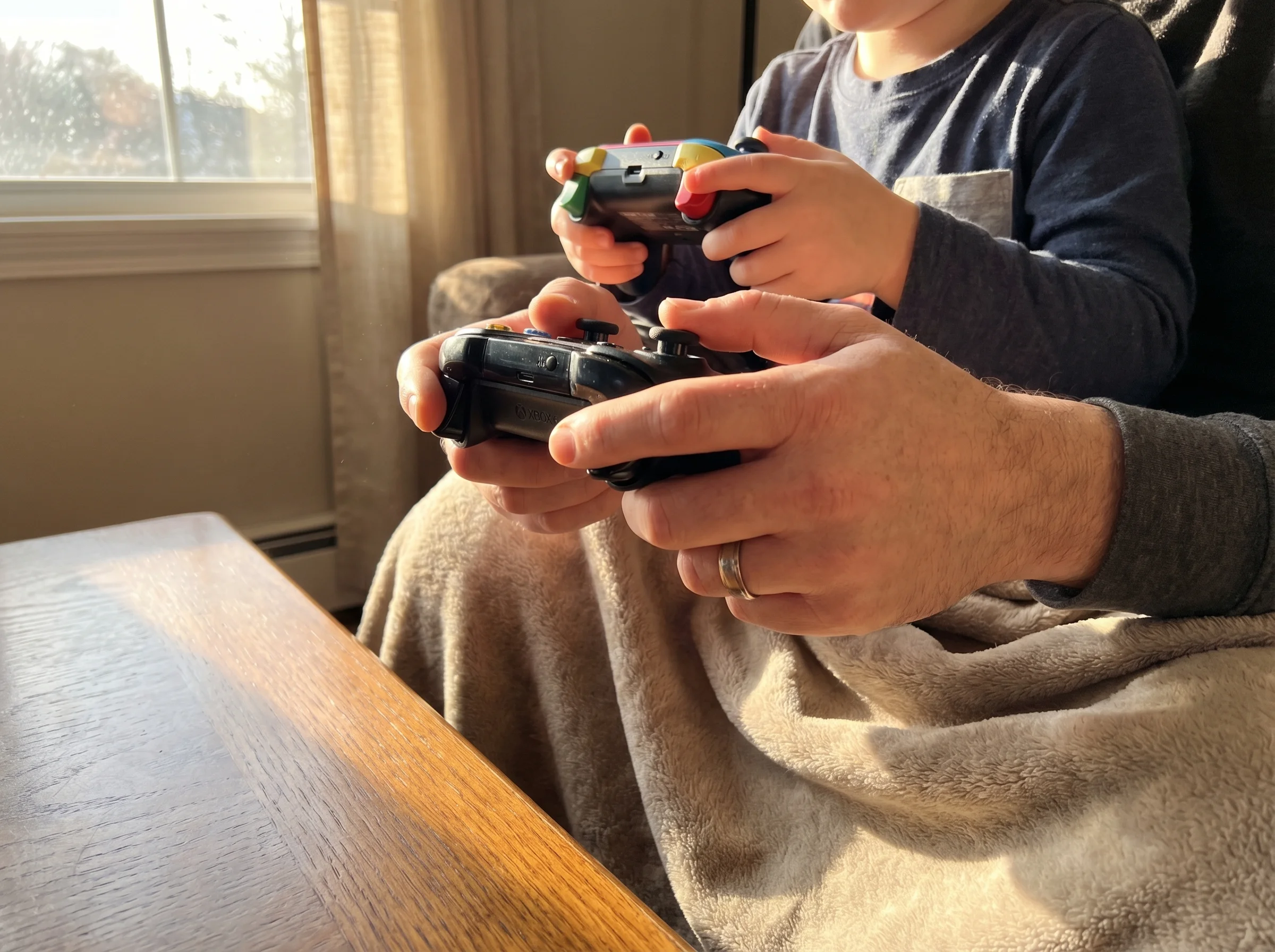
The difference is the journey. A campaign has an ending. You're working toward something together over weeks or months. Every boss beaten becomes family lore. "Remember when we accidentally threw each other off the cliff in A Way Out?" gets brought up at dinner months later.
My daughter calls it "appointment gaming," which sounds way cooler than "scheduled family time." Every Tuesday, she knows we're continuing our It Takes Two adventure. No negotiating screen time. No "just one more match." We have a shared goal and a story to finish.
The best part? Natural conversation happens between levels. During a loading screen in Sackboy, my daughter asked "What superpower would you want?" That question led to a twenty-minute discussion about invisibility versus flying. The game became the backdrop for actual connection.
 When nothing comes up naturallyPause, Play, Connect: Core Deck172 prompts for the sessions where the game is good and the talking never starts.$49 CAD • 90 cards • 18 reviewsShop the deck
The Setup Stuff Nobody Explains
Here's where most families quit before they start. The technical confusion is real, and nobody wants to admit they don't understand the difference between "local co-op" and "online co-op."
Local co-op means you're both on the same console, usually looking at the same TV. Some games split the screen (like It Takes Two), others share one view (like Overcooked). You need two controllers, one console. That's it.
Online co-op means two different consoles connecting through the internet. Even if you're in the same house, you need two copies of the game, two systems, two TVs. Way more expensive and complicated.
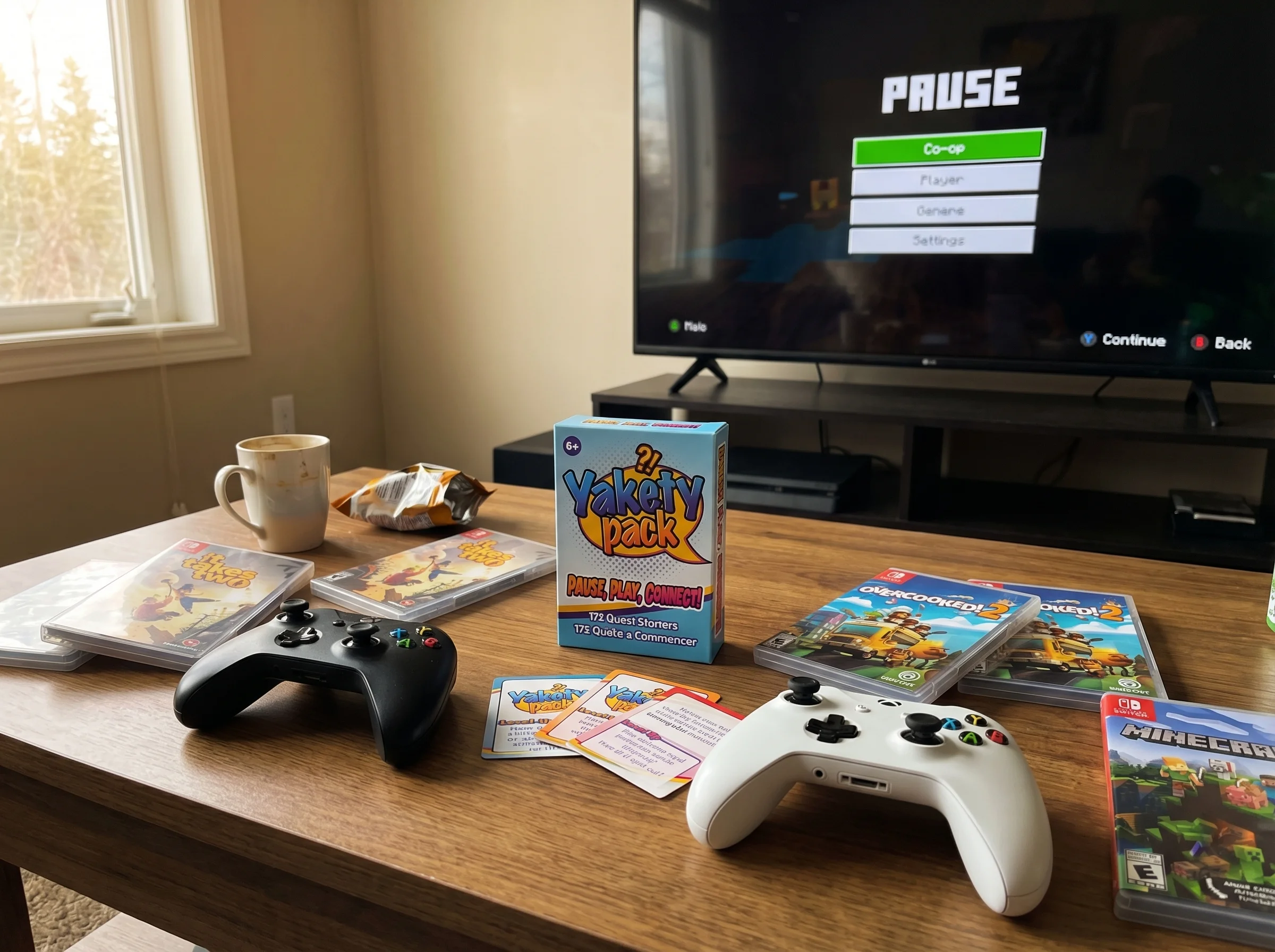
"Couch co-op" is just another term for local co-op. Marketing people thought it sounded friendlier. They were right.
Save systems matter more than you think. We tried playing Divinity Original Sin 2, which people swear is amazing for co-op. Know what's not amazing? Losing 45 minutes of progress because someone had homework and the game only saves at specific points. Now I always check if a game has "save anywhere" before buying.
The controller situation trips up gaming-rusty parents too. If you haven't touched a controller since Nintendo 64, modern controllers feel like piloting a spaceship. Start with games that use fewer buttons. Work your way up. There's no shame in checking the controls menu every session.
Skill Gap Champions: Games That Help Everyone Shine
This is where most co-op attempts die. Dad can barely move the camera. Daughter's doing speedrun tricks she learned on YouTube. Someone gets frustrated. Game night ends early.
The solution? Games with asymmetric gameplay. In It Takes Two, players have different abilities that complement each other. My son handles the precision platforming while I solve the puzzles. We both contribute something essential.
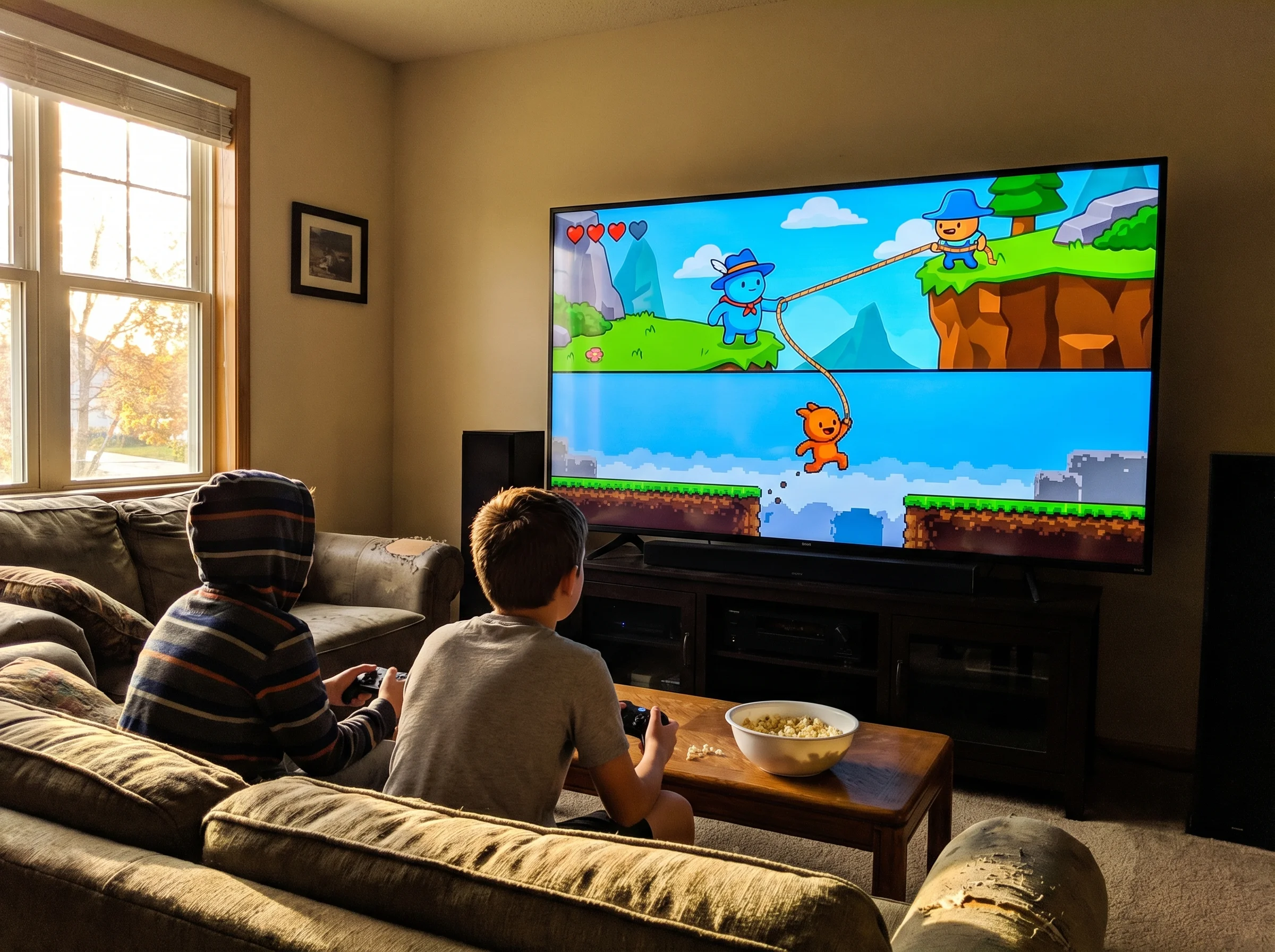
Unravel Two nailed this concept. One player can literally carry the other through tough sections by turning into a ball of yarn. My daughter carried me through platforming nightmares while I handled the physics puzzles. Nobody felt useless.
Some games include legitimate assist modes. Kirby Star Allies saved game night with my 6-year-old. He could float indefinitely, making platforming approachable. He felt like he was really playing, not just being dragged along.
The key is finding games where dying doesn't derail everything. In Cat Quest 2, if one player dies, they respawn in a few seconds. No restarting levels. No losing progress. Just a quick "my bad" and you're back to adventuring.
The Time-Respect Test: What Are Some Good Co-op Campaign Games for Real Schedules
Every article recommends 40-hour epic campaigns. Cool. When exactly am I supposed to finish those between homework, soccer practice, and bedtime?
We started Baldur's Gate 3 because the internet wouldn't shut up about it. Three weeks later, we'd played twice and forgotten the entire plot. Meanwhile, we finished Cat Quest 2 in ten sessions over two weeks and loved every minute.
The sweet spot for family co-op campaigns? 10-15 hours total. Long enough to feel substantial, short enough to actually finish. Games with clear chapter breaks work best. Finish a chapter, go to bed. Easy stopping points prevent the "just five more minutes" negotiations.
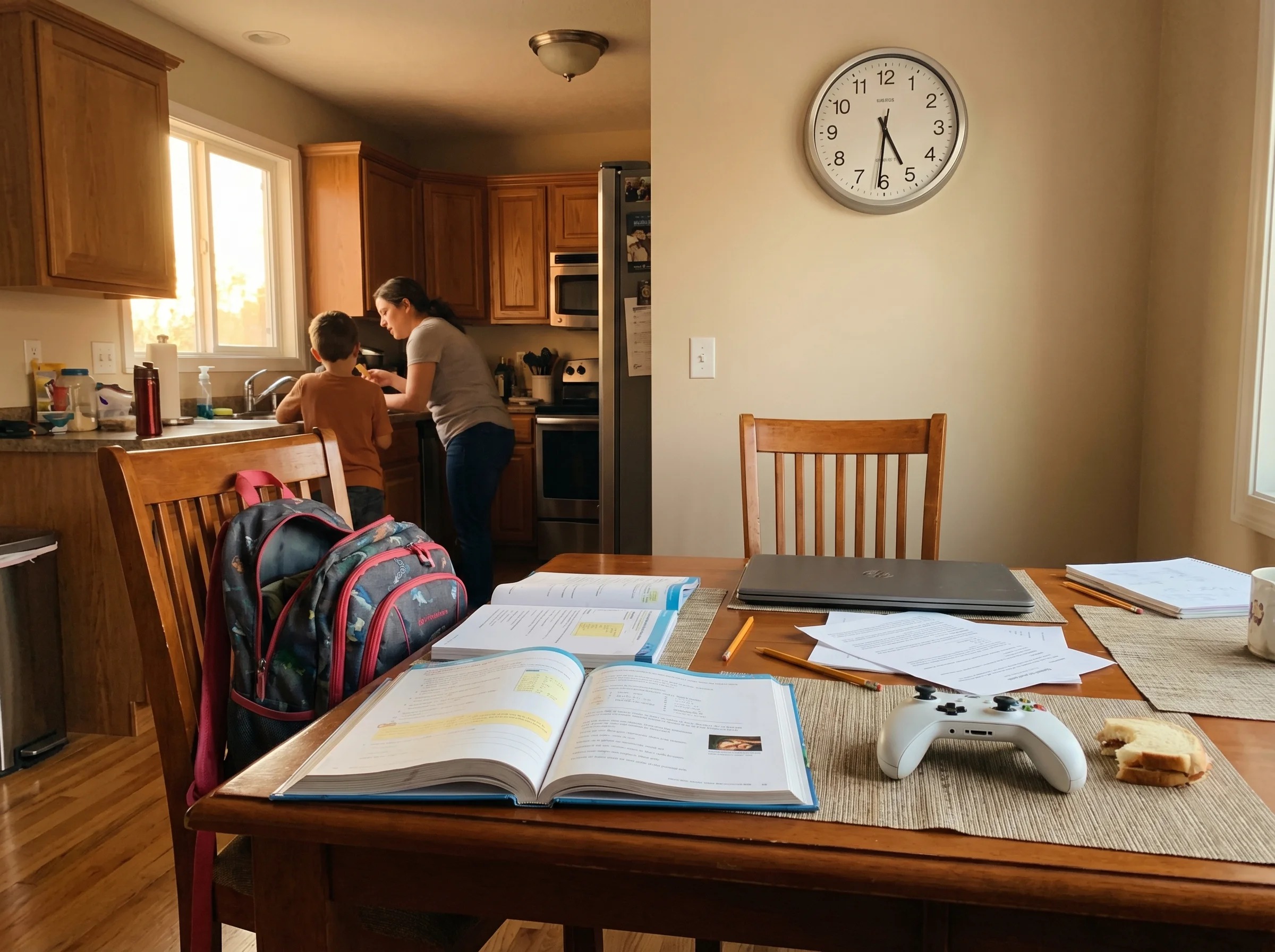
Watch out for misleading time estimates. "2 hours to complete" assumes skilled adult players rushing through. With kids? Triple it. Add time for bathroom breaks, snack runs, and explaining what just happened in the cutscene.
Games that save anywhere, anytime are gold. Teenage Mutant Ninja Turtles: Shredder's Revenge saves after every level. Takes 30 seconds. No searching for save points. No losing progress. More games need this.
 Between chapters, before bedPause, Play, Connect: Core Deck$49 CAD • 172 promptsSee the deck
Budget Building: Growing Your Co-op Library Smart
Here's the part nobody talks about: building a co-op library without going broke. Gaming sites assume you'll drop $60 per game. In reality? I've built a 20-game co-op collection for less than the cost of two new releases.
Game Pass is the cheat code for co-op families. For $15/month, you get access to dozens of co-op campaigns. It Takes Two, Teenage Mutant Ninja Turtles, Minecraft Dungeons, A Way Out, they're all there. Try before you buy.
Platform sales follow predictable patterns. Steam Summer Sale. PlayStation Days of Play. Xbox Ultimate Game Sale. Mark your calendar. Co-op games regularly hit 50-75% off during these events.
Here's my controversial take: five okay co-op games beat one perfect game. Variety prevents burnout. When Overcooked gets too stressful, switch to Stardew Valley. When Stardew feels too slow, boot up Moving Out. Options keep game night fresh.
Free co-op campaigns exist and some are genuinely good. It Takes Two has a Friend's Pass feature, only one person needs to own it. Destiny 2's campaigns are free-to-play. Portal 2 goes on sale for $2 regularly and includes a full co-op campaign.
Age-Based Reality Check: What Are Some Good Co-op Campaign Games by Age
What works for a 6-year-old frustrates a 12-year-old. What engages a teenager bores younger kids. Here's what actually works by age group.
Ages 5-8 need simple controls and forgiving gameplay. Kirby Star Allies, Yoshi's Crafted World, and LEGO games rule this space. Death means nothing. Progress is constant. Controllers use maybe four buttons max.
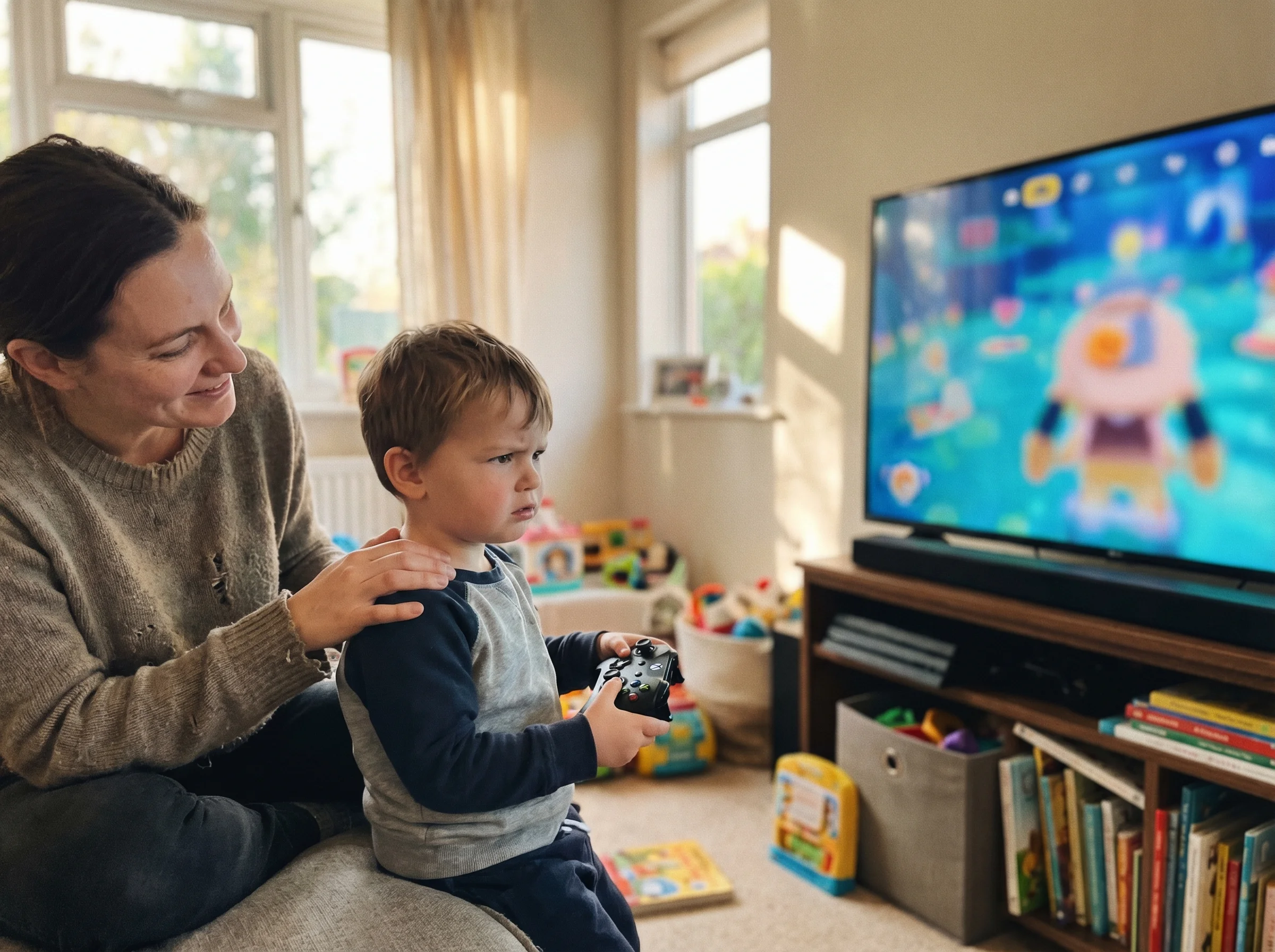
Ages 9-12 want story but can't handle Dark Souls difficulty. Minecraft Dungeons hits the sweet spot. Simple combat, light story, endless loot. Portal 2's co-op mode works if they're patient with puzzles. Sackboy: A Big Adventure offers platforming without punishment.
Teenagers need respect for their skills while you find your role. A Way Out works because choices matter more than reflexes. Diablo III lets them carry you through combat while you manage inventory. It Takes Two provides enough challenge without being impossible.
Mixed age siblings? Minecraft Dungeons adapts to different skill levels on the same team. Overcooked lets older kids handle complex orders while younger ones wash dishes. LEGO games let skilled players do the fighting while others collect studs.
When Things Go Wrong: The Quitting Question
Nobody talks about this, but every family hits the wall. The game gets too hard. Someone starts crying. Controllers get thrown. Game night becomes argument night.
First rule: recognize frustration before meltdown. Heavy sighing, repeated deaths, and "this is stupid" comments are warning signs. Take a break BEFORE someone loses it. "Let's grab snacks and try again in ten minutes" works better than pushing through.
Some games are built for rage-quitting. After our Cuphead disaster, we discovered Overcooked. Yes, it's chaotic. Yes, we fail constantly. But failing is hilarious, not heartbreaking. The kitchen catches fire, we laugh, we try again. Choose games where failure is fun.
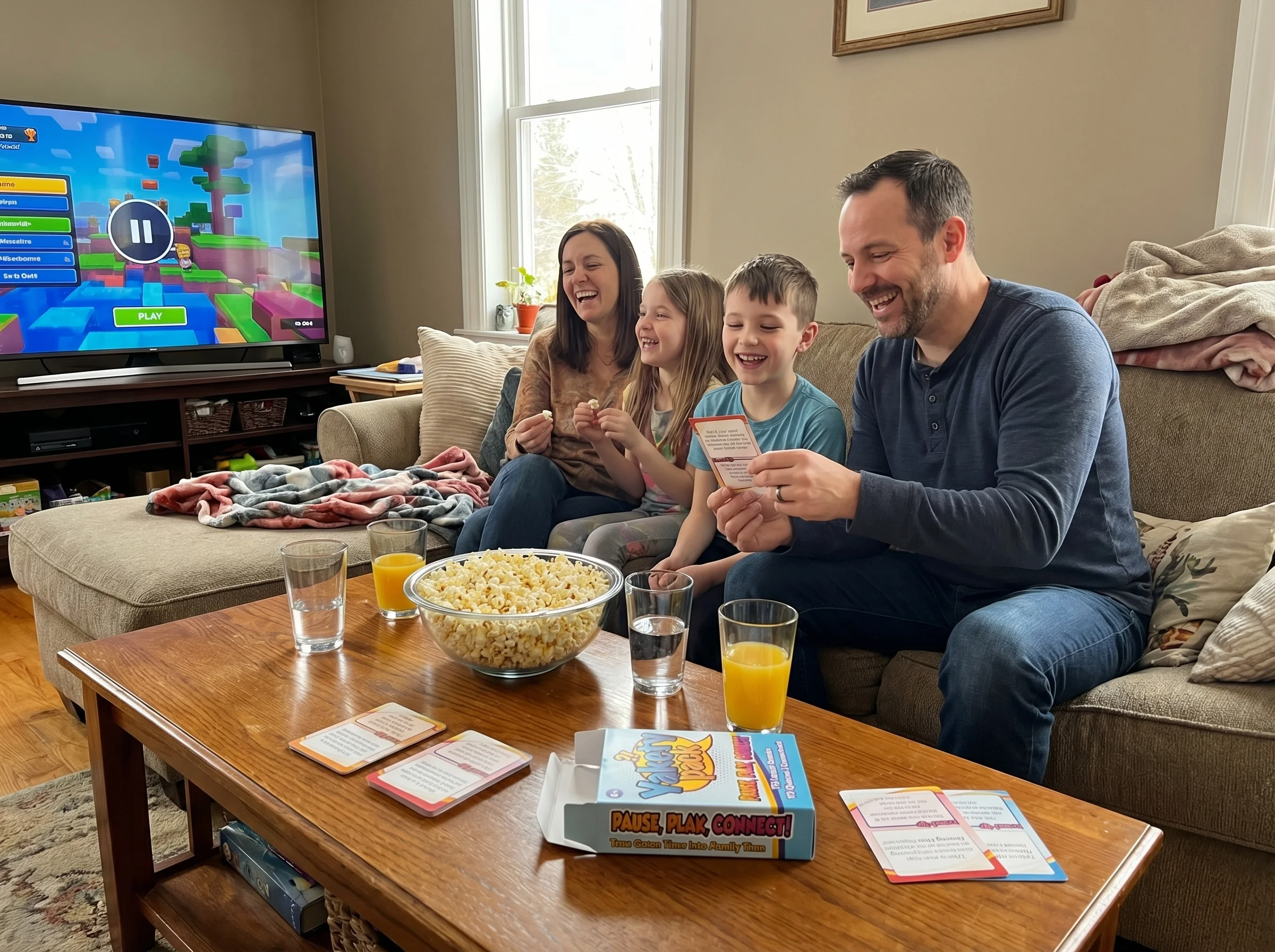
Know when to lower difficulty versus when to push through. If you're stuck on the same boss for three sessions, drop the difficulty. No shame. The goal is finishing together, not impressing strangers online. But if you're close to breakthrough? Sometimes struggling together and finally winning creates the best memories.
The "let's try something else" conversation doesn't mean failure. We've shelved multiple games that weren't working. Divinity Original Sin 2 sits unfinished. Cuphead collects digital dust. That's fine. Not every game fits every family.
The Bottom Line on Co-op Campaign Games
Here's what three years of co-op gaming taught me: the "best" game is the one that gets your family playing together consistently. Cat Quest 2 won't win awards, but it got us through pandemic lockdowns with our sanity intact. Overcooked 2 caused more arguments than any game should, but also more laughter.
Stop chasing perfect games. Chase perfect moments. The inside jokes from failed attempts. The victory dances after beating tough bosses. The conversations between levels.
Start tonight. Pick one game from Game Pass or grab Portal 2 on sale. Set a regular time, maybe just once a week. Don't overthink it. The first session might be rough while everyone learns controls. That's normal. By session three, you'll have your rhythm.
My kids don't remember every match of Fortnite they've played. But they remember staying up late to finish A Way Out. They remember the cat puns from Cat Quest. They remember working together.
That's what good co-op campaign games give you. Not just entertainment. Actual memories. And maybe, if you're lucky, a new tradition where your teenager asks to play "that game where we work together" again.
Your Tuesday, without the consolePause, Play, Connect: Core Deck172 prompts for the weeks when nobody has time to boot up the campaign.$49 CAD • 90 cards • 18 reviewsShop the deck
Related Articles
Looking for more? Check out these related articles:
- family co-op games
- family friendly co-op games under 30 minutes
- What are some good casual multiplayer games?
- What are some good two player co-op games?
- What are some fun free co-op games?
FAQ
What's the easiest co-op campaign to start with?
Minecraft Dungeons or any LEGO game. Simple controls, impossible to lose permanently, and fun whether you're 6 or 60. Both regularly go on sale for under $10.
Do we need two controllers for local co-op?
Yes, always. Each player needs their own controller. The good news? You don't need two expensive elite controllers. Basic controllers work fine for most co-op games.
What if my kid wants to play the campaign without me?
Some games handle this well (separate save files), others don't. It Takes Two requires both players, so they can't progress alone. Minecraft Dungeons lets them play solo on a different character. Ask before buying if solo progress matters to you.
Which games work if we only have 30 minutes?
Overcooked 2, Moving Out, and Teenage Mutant Ninja Turtles all have short levels perfect for quick sessions. Avoid RPGs or story-heavy games if time is tight.
How do I know if a game's too violent?
Check Common Sense Media before buying. They break down violence, language, and other content concerns by age. YouTube gameplay videos help too, watch the first 20 minutes to gauge appropriateness.
