
Look, I'll be honest. I used to be that dad who'd walk past my son's room, hear the Discord chatter and controller clicks, and think "there goes another afternoon down the drain." I'd drop comments like "you know that's not a real skill, right?" whenever he talked about ranking up in Valorant.
Then came the day he taught his 8-year-old sister multiplication. Through Minecraft. Not some educational version, just regular Minecraft. She needed 64 blocks to finish her castle wall and only had stacks of 16. Watching her work out that she needed 4 stacks, seeing that lightbulb moment... that's when I realized I'd been looking at this whole gaming thing backwards.
The problem wasn't that my kids were gaming. The problem was that I had no idea what they were actually doing in there. Once I started paying attention, really paying attention, I discovered my kids were developing skills I'd been trying to teach them through chores and homework. They just couldn't see the connection. And neither could I.
 What the grind felt likePause, Play, Connect: Core Deck172 prompts that give you something to ask a kid who just spent an hour chasing something.$49 CAD • 90 cards • 18 reviewsShop the deck
The Skills Hidden in Plain Sight
For the bigger frame, see our pillar piece on turn screen time into connection time.
Here's what blew my mind: every single game my kids play is teaching them something. Not in some abstract "hand-eye coordination" way that articles love to mention. I'm talking real, specific skills they use every day.
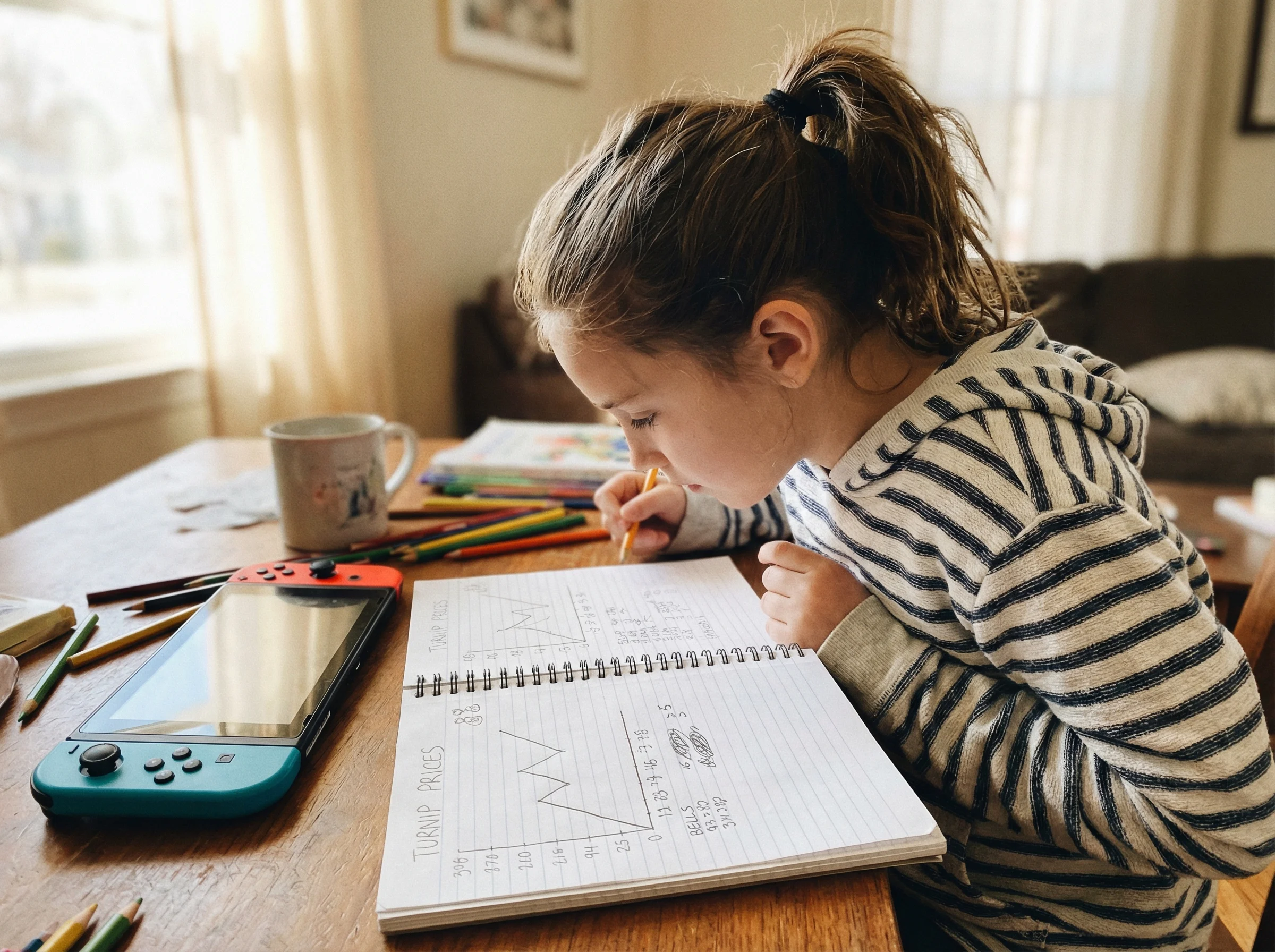
Take resource management. My daughter plays Animal Crossing like she's running a Fortune 500 company. She's got spreadsheets (actual spreadsheets!) tracking turnip prices, calculating profit margins, planning seasonal inventory. Last month she explained supply and demand to me using fish prices. She's 11.
Or strategic planning. You think it's just running around shooting things? Watch a kid plan a Fortnite match. They're analyzing the bus route, predicting player movements, calculating risk versus reward for every landing spot. My son can tell you exactly why landing at Tilted Towers on a Tuesday is different from a Saturday. That's market analysis.
But here's the one that really got me: social negotiation. My kids aren't just playing games. They're managing complex social dynamics that would make a CEO sweat.
Last year, my son organized a 20-person Minecraft server. Sounds simple, right? Wrong. Within a week, they had drama. Someone stole diamonds, another player built too close to someone's base, arguments about who got to build in the "good" biomes. Total chaos.
So what'd my 14-year-old do? He created a constitution. I'm not kidding. A full document with rules, zones, trading regulations, and a dispute resolution process. He appointed moderators for different time zones, set up a currency system, and implemented a three-strike policy for rule breakers.
When I asked him about it, he shrugged and said, "It's like when you complain about your homeowner's association, but for Minecraft."
The kid who "forgets" to take out the trash was successfully managing 20 teenagers from three different countries. Make that make sense.
Age Matters: What Kids Learn When
Not all gaming teaches the same skills at every age. I learned this the hard way when I tried to get my 7-year-old interested in the same strategy games her older brother loved. Disaster.
Here's what I've noticed actually happens at different ages:
Ages 6-9: The Foundation Years
At this age, it's all about basic connections. Cause and effect. Push button A, character jumps. Collect 10 coins, get an extra life. Sounds simple? Watch a 6-year-old learn that they need to save power-ups for the boss fight. That's delayed gratification in action.
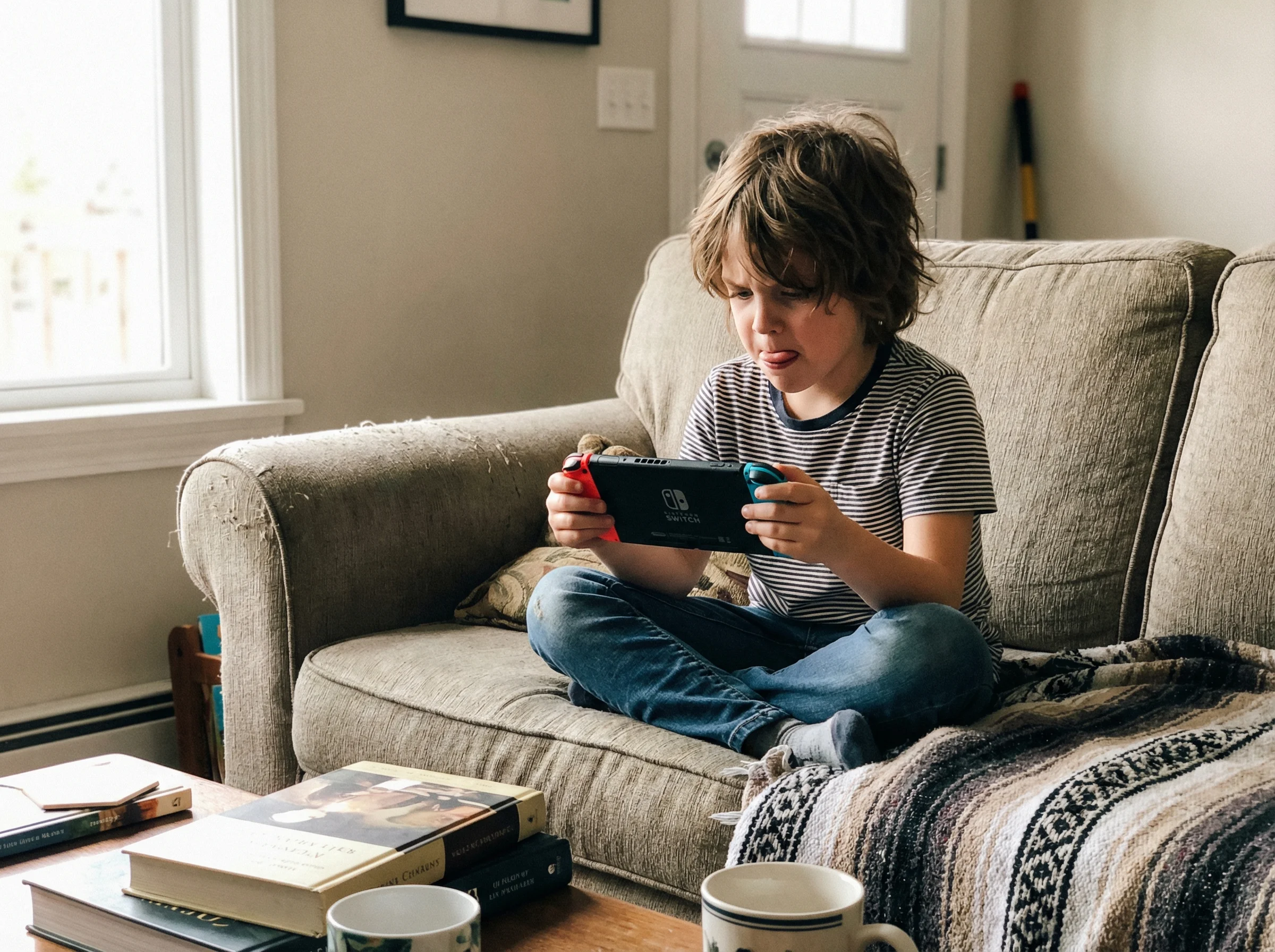
My youngest started with Mario Kart at 6. Couldn't stay on the track. By 7, she was taking shortcuts I didn't know existed. By 8, she was explaining to me why you should let someone pass you right before getting a power-up box. Strategy, patience, and planning, all from a "simple" racing game.
Ages 10-13: The Complex Thinking Explosion
This is where it gets interesting. Kids this age start seeing systems, not just individual challenges. They're not just playing games, they're breaking them down, finding exploits, optimizing strategies.
My son at 10 would just build random stuff in Minecraft. By 12, same game, completely different approach. He was calculating exact materials needed, planning multi-stage builds, creating redstone contraptions that honestly hurt my brain to understand. The game didn't change. His brain did.
This is also where social dynamics get complex. They're forming guilds, managing team dynamics, dealing with different play styles and personalities. The drama in a 12-year-old's Roblox group makes office politics look simple.
Ages 14-17: Leadership and Life Skills
Teenage gamers aren't just players anymore. They're leaders, content creators, community managers. They're dealing with real stakes, real pressure, real people.
My 16-year-old nephew runs a Discord server with 500 members. He schedules events across time zones, moderates discussions, handles conflicts between members, and creates content calendars. His mom thinks he's "just gaming," but I've seen startups with worse project management.
The skills get serious here. Time management becomes crucial when you're balancing school, gaming, and maybe streaming. They're learning personal branding, communication skills, how to deal with criticism (and toxic players). These aren't game skills anymore. These are life skills.
The Questions That Actually Work
For years, I asked my kids the wrong questions. "What are you playing?" got me one-word answers. "How long have you been on?" started arguments. "Did you win?" told me nothing useful.
Then I learned to ask better questions. Questions that actually start conversations instead of ending them.
Instead of "What are you playing?" try "What's the hardest part of that game right now?"
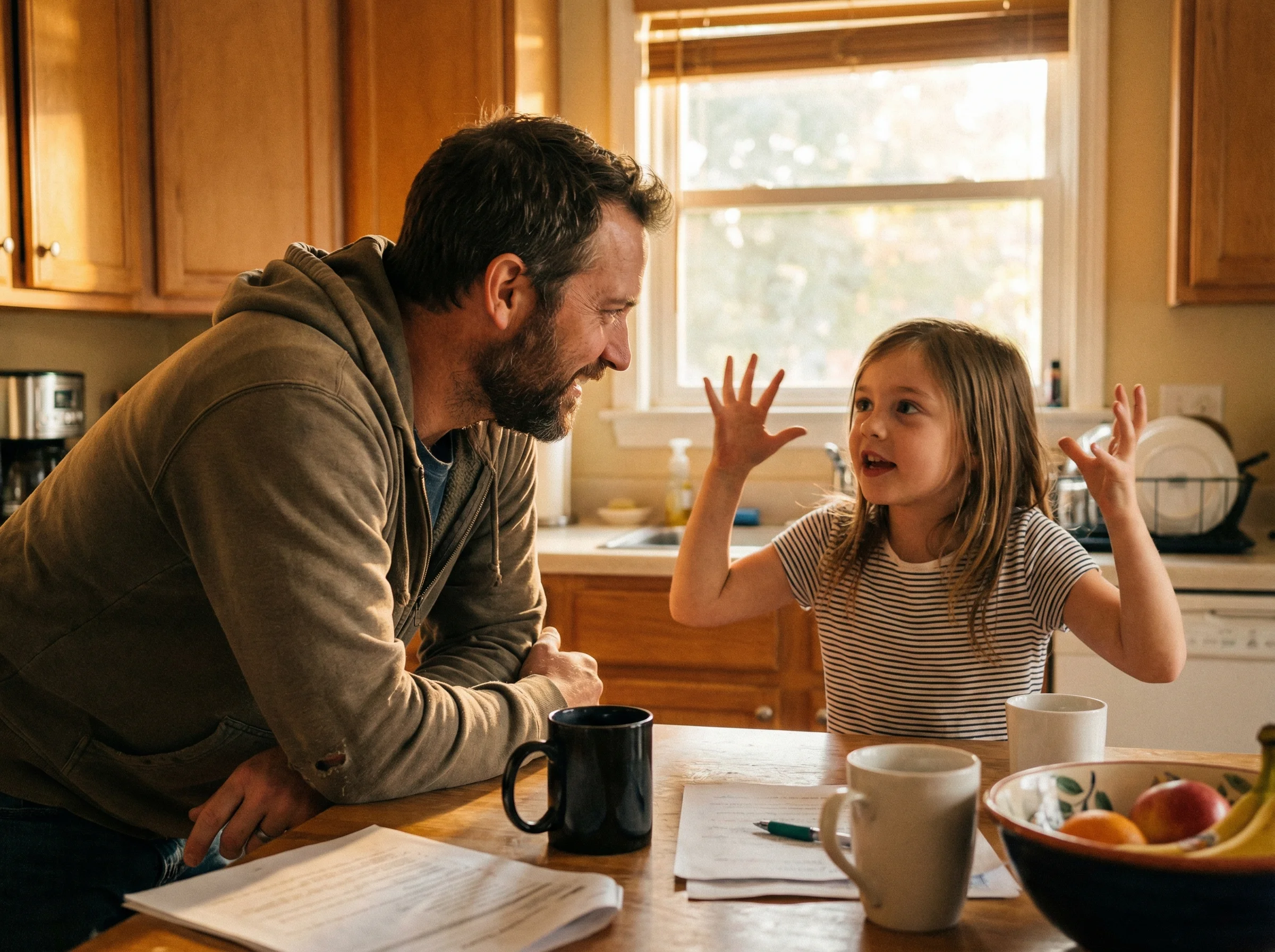
Suddenly you're not the enemy checking up on them. You're someone interested in their challenges. My daughter once spent 20 minutes explaining why a specific Zelda puzzle was "literally impossible" until she figured out she'd been thinking about it backwards.
Instead of "Did you win?" try "What did you try differently this time?"
This one's gold. Win or lose doesn't matter. What matters is iteration, learning, adapting. My son now volunteers information about his matches: "I tried rushing mid instead of playing defensive. Didn't work but I learned their sniper positions."
Here are more questions that actually get responses:
- "What's something in your game that would surprise me?"
- "If I played your game, what would be the first thing I'd mess up?"
- "What's the most unfair thing in that game?"
- "Who's the best player you know and what makes them good?"
- "What would you change about that game if you could?"
- "What's something you had to figure out on your own?"
- "Who do you like playing with most and why?"
- "What's the dumbest thing you've seen someone do in that game?"
- "What made you rage quit last time?"
- "What's your biggest comeback story?"
That last one led to my favorite gaming conversation ever. My son described a Rocket League match where his team was down 4-0 with two minutes left. His random teammates wanted to forfeit. He convinced them to keep playing, they adjusted their strategy, and won 5-4 in overtime.
The pride in his voice when he said "I never gave up, Dad" - that's when I realized these weren't just games. These were his challenges, his victories, his lessons.
 Hear it in their wordsPause, Play, Connect: Core Deck$49 CAD • 172 promptsSee the deck
When Gaming Goes Wrong (And Why That's Okay)
Let's talk about the elephant in the room: sometimes gaming goes badly. Really badly. Kids rage quit, throw controllers, scream at screens. They get scammed, trolled, destroyed by better players. They lose tournaments they practiced months for.
Good. Let them.
I know that sounds crazy, but hear me out. My son's worst gaming moments taught him more than his best ones.
Remember that Rocket League story? Well, there's another one. Regional tournament, his team had practiced for two months. They were favored to win their bracket. First round, they got destroyed. Not just beaten. Humiliated. 7-0 in a game that usually ends 3-2.
He didn't talk for hours. Wouldn't eat dinner. I found him later rewatching the match footage, taking notes. "We got cocky," he finally said. "We stopped communicating because we thought we were better."
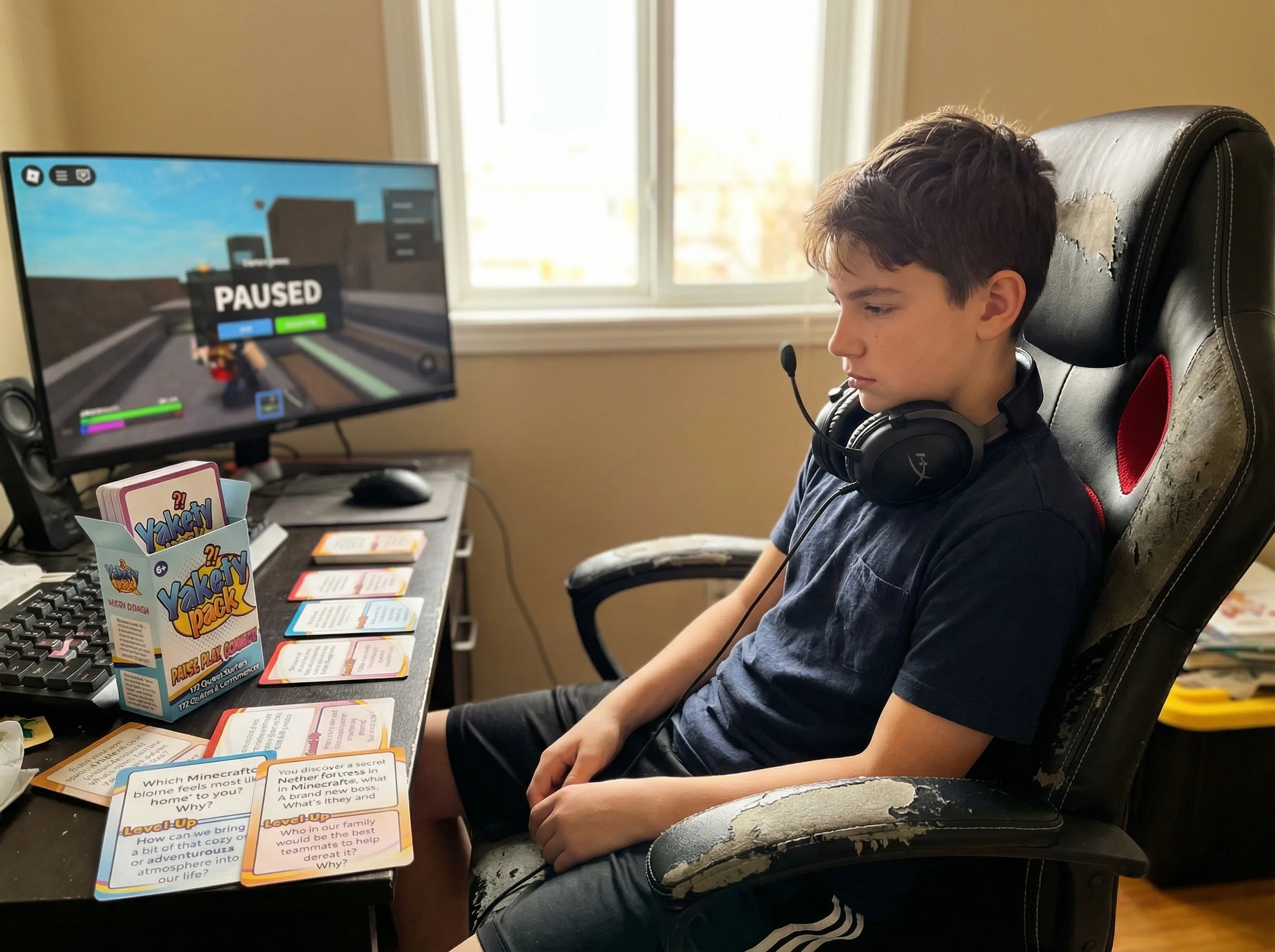
That loss did more for his humility and preparation than any lecture I could've given. Now he watches game film like he's prepping for the NFL. He learned that talent without preparation equals failure. At 15. Through a video game.
Getting scammed taught digital literacy better than any internet safety course. My daughter learned about "too good to be true" when someone offered her rare Animal Crossing items for free, then stole from her island. Expensive lesson? Sure. But she now questions every online interaction, checks sources, verifies trades. She's 11 and more digitally savvy than most adults.
Rage quitting? That's emotional regulation in training. First time my son rage quit, he broke a controller. Had to buy a new one with his own money. Now when I see him getting frustrated, he takes breaks, does breathing exercises, comes back calmer. He learned that from gaming, not from me.
The key is treating these failures as learning opportunities, not reasons to ban gaming. When your kid gets scammed, don't say "this is why gaming is dangerous." Ask "what warning signs will you look for next time?" When they rage quit, wait for them to calm down, then ask "what could you have done differently when you started getting frustrated?"
For the Co-Play Window: A curiosity card lands during the in-between beats. Have a Pause, Play, Connect deck within arm's reach so a prompt is waiting when you sit down together.
Making the Connection: Gaming Goals and Real Life Skills Development
For the Long Build: Connection grows from many small low-pressure conversations. A deck of conversation cards for families with gamer kids on the table makes those talks routine.
Here's where most parents get stuck. Okay, your kid is great at Fortnite. So what? How does that help with math homework or college applications?
The trick isn't making gaming skills sound academic. It's helping kids see that they already have the skills. They just need to recognize them in different contexts.
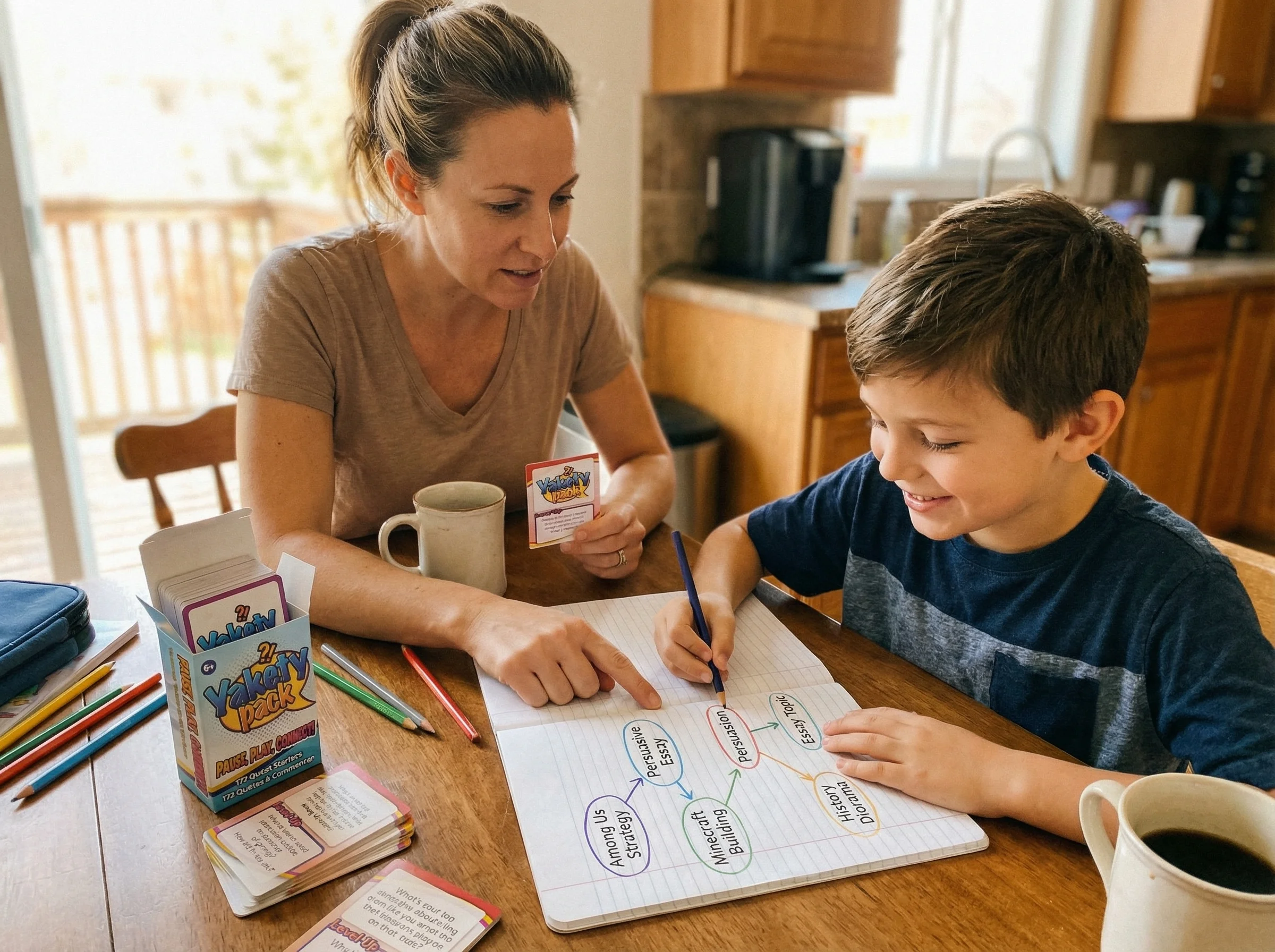
Take my daughter's Minecraft planning. She designs elaborate builds, calculates materials, manages time to complete projects. But when faced with a science fair project, she claimed she "didn't know how to plan things."
So we sat down with graph paper and planned her science fair project like a Minecraft build. What materials do you need? (Like counting blocks.) What's your build order? (Like knowing you need the foundation before the walls.) How long will each phase take? (Like calculating mining time.)
Suddenly she got it. "Oh, this is just like planning my underwater city!" Now she plans every school project like a Minecraft build. Teachers think she's super organized. She knows she's just using her gaming brain.
Or my son's competitive gaming. He analyzes opponent patterns, adapts strategies mid-game, studies replays to improve. When he struggled with debate class, I pointed out it's the same skill set. Research your opponent's arguments (like studying playstyles), adapt your strategy based on their approach (like switching tactics mid-game), review what worked and what didn't (like watching replays).
His debate teacher asked what changed. He said, "I started treating it like ranked matches."
Real examples of kids using gaming skills:
- A kid who speedruns Mario got into video editing because he wanted to share his runs. Now makes money editing YouTube videos at 16
- A Roblox developer learned coding to make better games. Got a programming internship before graduating high school
- A competitive Smash player became student council president using the same leadership skills from organizing tournaments
- A Minecraft architect is studying actual architecture, portfolio full of game builds that got her into design school
The key is helping them make these connections. When they say "I'm good at games," help them get specific. Good at what? Strategy? Communication? Quick decision making? Pattern recognition? Those aren't gaming skills. Those are skills, period.
What If They Want to Go Pro?
This is the conversation every gaming parent dreads. "Dad, I want to be a professional gamer."
My gut reaction was to shut it down. The odds are astronomical. It's not a "real" career. What about college?
Then I remembered I wanted to be a professional baseball player at 15. My parents didn't crush that dream. They just made sure I had backup plans.
Here's the reality: becoming a pro gamer is like becoming a professional athlete. Incredibly difficult, requires insane dedication, and most won't make it. But that doesn't mean you should kill the dream.
What you should do is treat it like any other professional aspiration. You want to be pro? Let's see the work ethic.
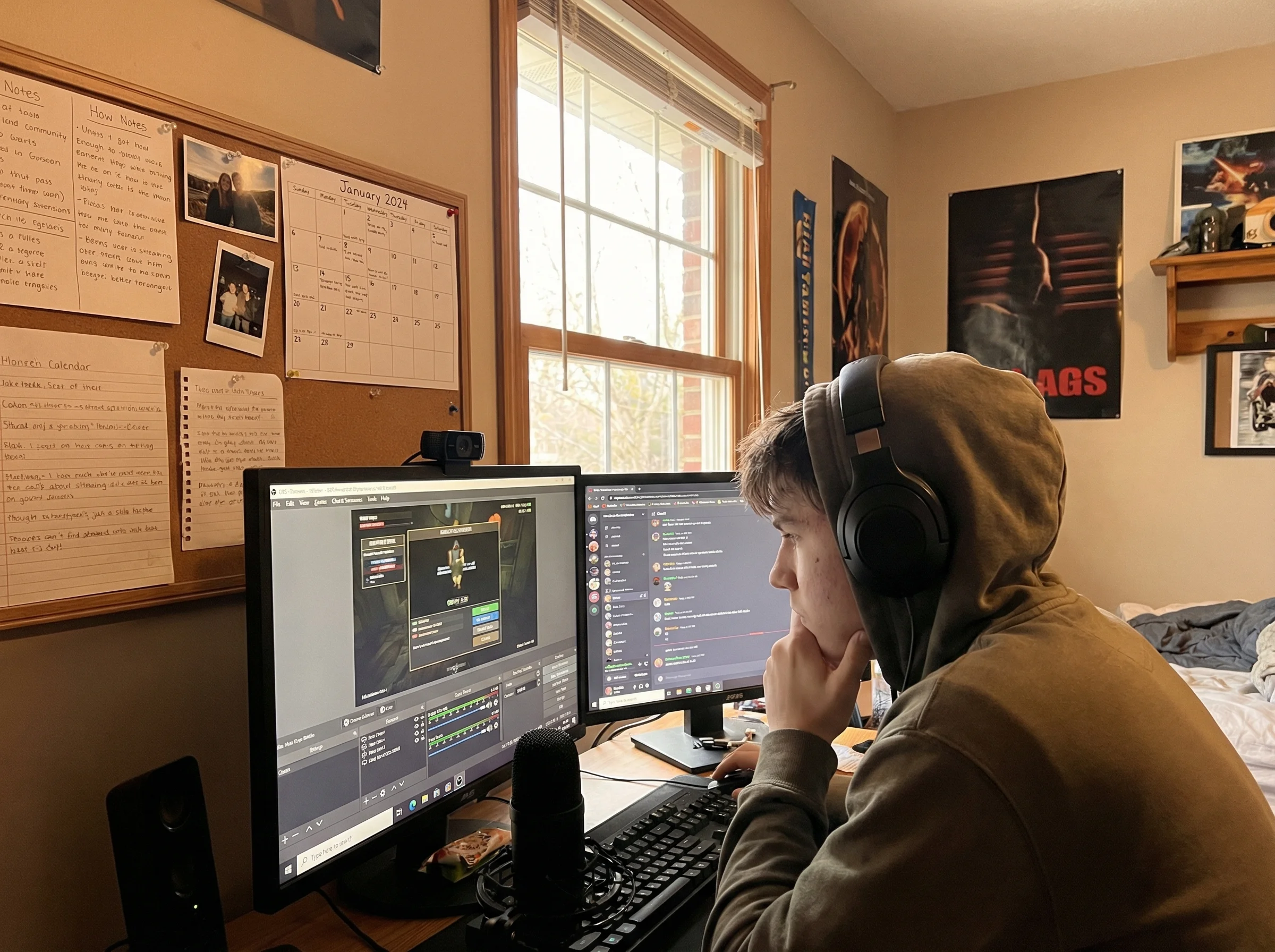
My son wants to stream. So we talked requirements:
- Consistent schedule (like any job)
- Content planning (like any creative career)
- Community management (like any business)
- Financial planning (like any entrepreneur)
- Skill development (like any profession)
He streams three times a week now. Gets maybe 20 viewers. Will he be the next Ninja? Probably not. But he's learning video editing, community building, public speaking, time management, and personal branding. If streaming doesn't work out, he's got a skill set that translates to dozens of careers.
More importantly, he's learning what "going pro" actually means. It's not just playing games all day. It's treating gaming like a business. Most kids realize pretty quickly whether they want to put in that work.
Support the dream while building the foundation. If they're serious about going pro:
- Set performance benchmarks (rank requirements, tournament placements)
- Create a timeline with checkpoints
- Require skill diversification (streaming, content creation, coaching)
- Maintain academic baselines
- Track actual progress, not just hours played
The kids who make it in esports aren't just good at games. They're disciplined, strategic, professional. Whether they go pro or not, developing those traits is worth supporting.
Your Action Plan
Enough theory. Here's what you actually do:
This Week: Ask One New Question
Pick one question from the list above. Just one. Ask it casually, when they're not actively playing. Maybe during dinner or in the car. Don't make it an interview. Make it a conversation.
If they give a short answer, follow up with "Really? How does that work?" or "That's interesting, tell me more." The goal isn't information. It's connection.
This Month: Learn One Thing About Their Favorite Game
You don't need to play it (though that helps). But learn something specific. Watch a YouTube video about it. Ask them to explain the basic goal. Learn three character names. Something.
When my daughter mentioned a specific Pokémon, and I knew it was a water type, her face lit up. "Dad! You know about Vaporeon?" That tiny bit of knowledge opened doors.
This Quarter: Help Them Identify One Real-World Application
Don't force it. Wait for a natural opportunity. When they're planning something, struggling with a project, or talking about their future, help them see how their gaming skills apply.
"You know how you organize your inventory in Minecraft? This is basically the same thing." "Remember when you had to coordinate your team for that raid? This group project needs the same skills." "You're really good at analyzing why you lost matches. What if you applied that to your math tests?"
The connection has to click for them. You're just pointing out what's already there.
Bonus: Start a Gaming Journal
This sounds cheesy, but it works. Encourage them to write down one thing they learned or accomplished each gaming session. Not "played for 2 hours." More like:
- "Figured out the puzzle in Level 4 by trying backwards"
- "Helped a new player learn the basics"
- "Lost 5 matches but improved my building speed"
My son resisted at first. Now he's got notebooks full of gaming insights that read like leadership manuals.
The Truth Nobody Tells You
Here's what I wish someone had told me years ago: Your kids are going to game. Fighting it is like fighting the tide. They'll do it at friends' houses, on their phones, anywhere they can. You can spend your energy trying to stop it, or you can spend that same energy making it meaningful.
The problem was never the gaming. It was the silence around it. A kid playing games for 4 hours who then talks about it for 20 minutes learns more than a kid who games for 2 hours and never discusses it. The gaming isn't the issue. The missing conversation is.
My biggest parenting regret? All those years I treated gaming like the enemy instead of the opportunity it was. All those chances to connect that I turned into conflicts about screen time.
Don't make my mistake. Your kids are already developing incredible skills through gaming. They're solving complex problems, building communities, learning resilience, developing strategies. They just don't have the vocabulary to explain it, and we don't have the framework to see it.
Start with one question. Learn one thing. Make one connection. The games aren't going anywhere, but your opportunity to be part of this world with them won't last forever.
Trust me on this one. The dad who thought gaming was wasting his kids' potential? Turns out it was building it. I just had to learn how to see it.
And if you're looking for more ways to start these conversations, to bridge that gap between their gaming world and your parenting world, well... we actually turned this into something. Yakety Pack started because parents kept asking for more conversation starters that actually worked. Sometimes you need a little help getting past "how was your day?"
But start with the basics. Ask better questions. Show real interest. Make the connections.
Your kids are already learning. It's time we started paying attention.
For the Repeat Sessions: A deck of Yakety Pack conversation cards near the gaming setup keeps the post-game ritual going.
The part you missedPause, Play, Connect: Core Deck172 prompts that turn what your kid is playing into something you actually talk about.$49 CAD • 90 cards • 18 reviewsShop the deck
Related Articles
Looking for more? Check out these related articles:

