
My friend texted me at midnight, crying. Her autistic son had been gaming for six hours straight, and when she tried to get him to bed, he had the worst meltdown she'd seen in months. "I don't know if Minecraft is helping him or destroying him," she wrote.
I told her I'd been there. Actually, no - I'd been somewhere worse. I'd been the guy who thought limiting screen time would magically fix everything. Spoiler: it didn't. What actually helped was realizing the real problem wasn't the game at all.
Last week, that same kid taught me how to build an automated wheat farm in Minecraft while explaining, unprompted, why his teacher's new seating chart made him feel "like a creeper about to explode." First real conversation about school we'd had all year.
Why Your Autistic Child's Gaming Looks Different (And Why That Matters)
Here's what took me forever to understand: when autistic kids game, they're not just playing. They're translating an overwhelming world into something that finally makes sense.
My neighbor's autistic daughter plays Animal Crossing for three hours every day. Same routine: water flowers, talk to villagers, organize her house. Her mom used to panic about the repetition. Then her daughter explained it perfectly: "In Animal Crossing, Tom Nook always says the same things. At school, Mrs. Johnson says different things even when she's teaching the same math."
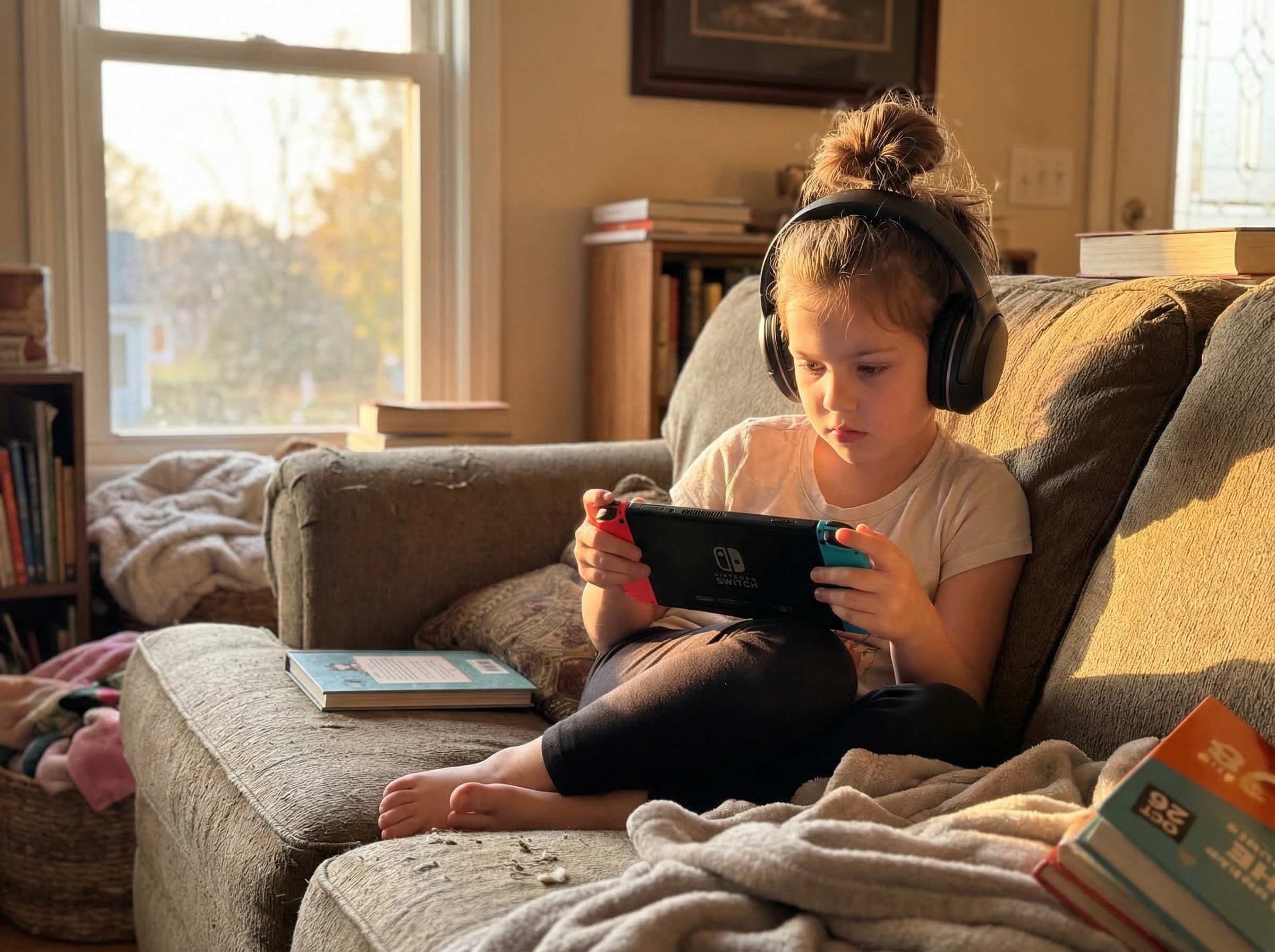
The control paradox is real. In the real world, social rules change without warning. Someone's mad but won't say why. The cafeteria menu switches unexpectedly. But in games? Water the plants, they grow. Every single time. Once you see why the predictability matters, it gets easier to turn screen time into connection time instead of fighting the controller.
My friend's son put it best while showing me his Stardew Valley farm: "Real plants die when I'm confused about watering. Game plants grow when you water them, always. Nine days for cauliflower. Always nine days."
That's not obsession. That's finding solid ground in quicksand.
 Small talk about big worldsPause, Play, Connect: Core Deck172 prompts that give you a question about the game instead of a question about school.$49 CAD • 90 cards • 18 reviewsShop the deck
Reading Emotions Through the Screen: What Their Gaming Tells You
Want to know what's really going on with your kid? Stop asking about their day. Start watching what they build.
I learned this when Jackson (my friend's son) went through what his mom called his "TNT phase" in Minecraft. For two weeks, all he did was blow things up. She was ready to delete the game. I convinced her to let me play with him first.
Turns out, Jackson wasn't randomly destroying. He was specifically blowing up schools, libraries, and cafeterias he'd built. When I asked why his character liked explosions, he said, "Because Dylan exploded my Lego tower at indoor recess and everyone laughed."
The bullying had been going on for weeks. The TNT wasn't the problem - it was the solution his brain found to process what he couldn't say out loud.
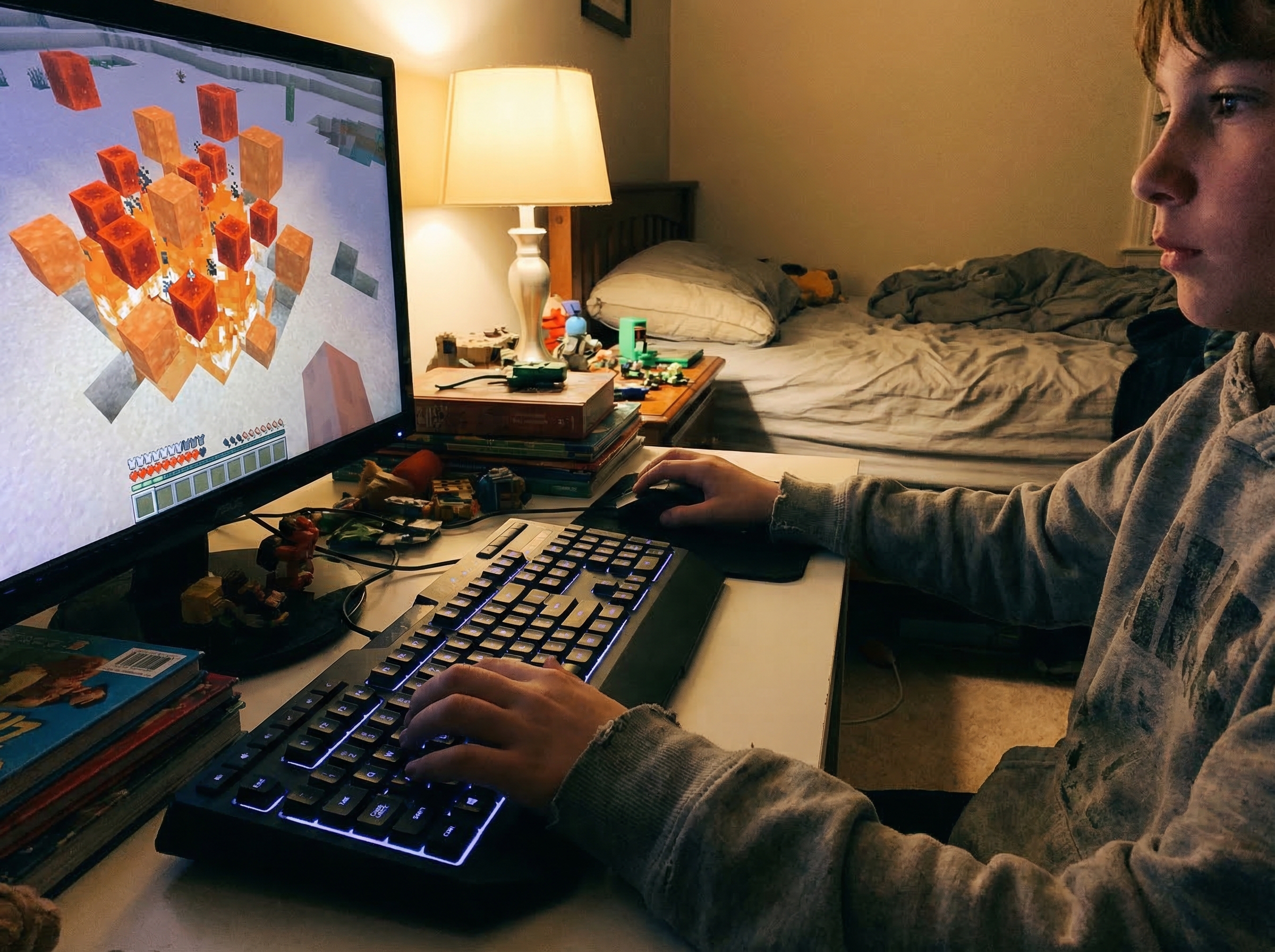
Here's what I've learned to watch for:
- Building walls everywhere? They're feeling invaded or overwhelmed
- Hoarding items obsessively? Anxiety about not having enough (of anything - time, control, safety)
- Creating elaborate sorting systems? Desperately trying to organize a chaotic experience
- Playing only in creative/peaceful mode? They need a break from challenges
- Replaying the same section endlessly? Processing something difficult through repetition
One mom noticed her son started building underground bunkers exclusively after starting middle school. The bunkers had multiple exits, hidden doors, and stockpiled food. When she asked what his Minecraft character was preparing for, he said, "Loud surprises." Turned out the school fire drills were triggering panic attacks nobody knew about.
The Conversations That Actually Work
"How was school?" gets you nothing. "What would your Minecraft character think about school?" gets you everything.
I stumbled on this accidentally. Was trying to connect with a kid who literally only spoke about Pokemon. After weeks of dead-end conversations, I asked, "If your teacher was a Pokemon trainer, what type would she specialize in?"
Twenty-minute analysis. Included why she'd definitely use Poison types ("because her words sting"), why she'd never beat the Elite Four ("she gives up when Jimmy acts out"), and how her Alakazam would probably have anxiety ("it knows too much but can't explain it right").
More real information about his classroom experience than his parents had gotten all semester.
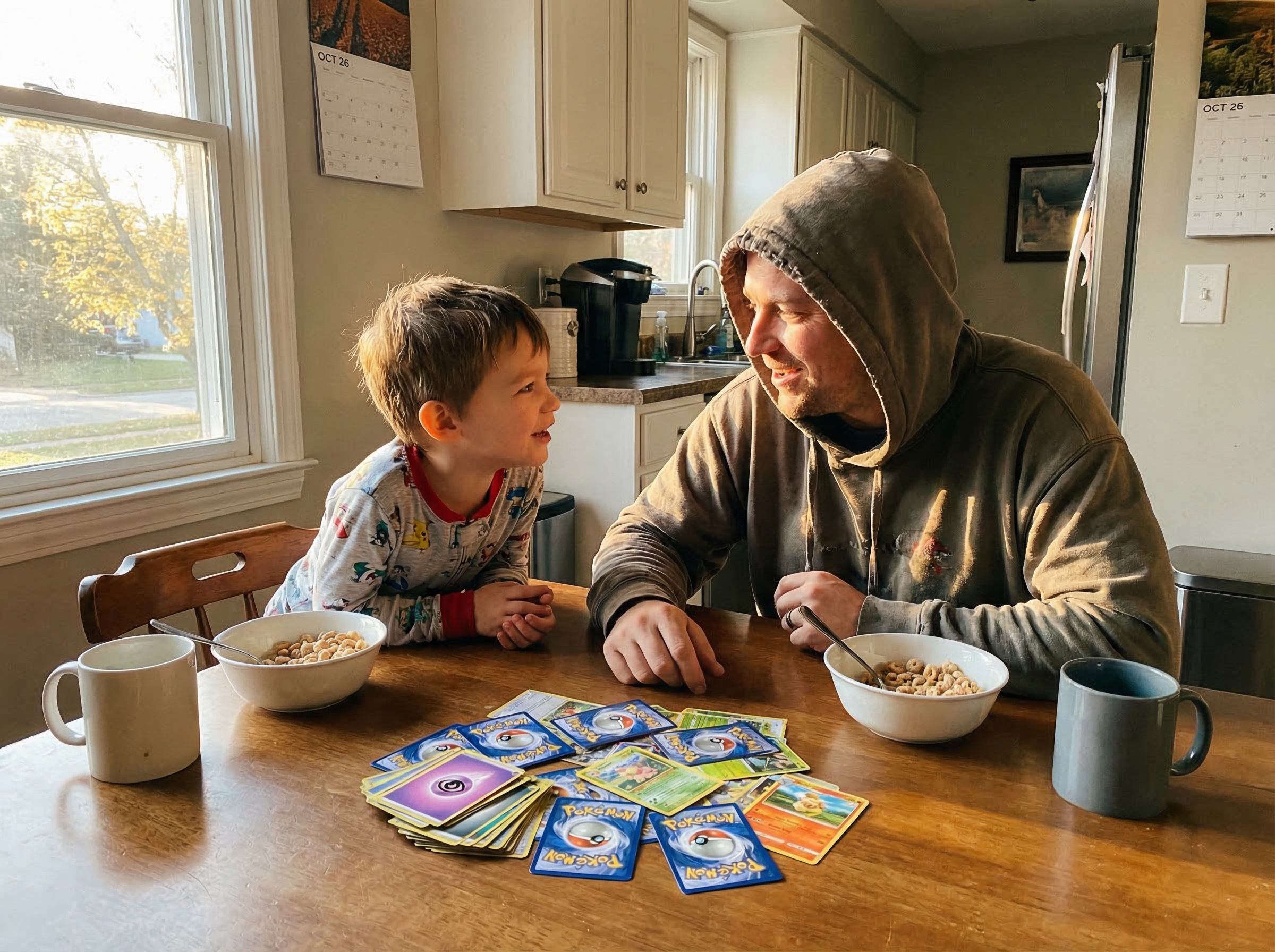
Here are questions that actually work:
Instead of "How do you feel?" try:
- "What emotion would your game character have right now?"
- "If your day was a video game level, what kind would it be?"
- "What quest did you complete in real life today?"
Instead of "What happened at school?" try:
- "If school was a game, what achievements did you unlock?"
- "What NPCs (non-player characters) did you interact with today?"
- "Did any real-life situations feel like boss battles?"
Instead of "Are you okay?" try:
- "Does your character need to rest at a save point?"
- "What resources is your character low on?"
- "Is this a side quest or main story stress?"
My favorite breakthrough came from asking, "What game mechanic do you wish worked in real life?"
Answer: "Dialogue options that show what people will think before you say something."
Suddenly understood why lunch conversations were so stressful for him.
 Plain questions about their gamePause, Play, Connect: Core Deck$49 CAD • 172 promptsSee the deck
When Gaming Helps Regulate (Even If It Doesn't Look Like It)
Your kid's been gaming for two hours straight. They're rocking back and forth, maybe flapping one hand, completely absorbed. Your instinct says intervene. Here's why you might be wrong.
I watched Jackson game during a particularly bad anxiety day. His mom kept trying to "snap him out of it." Get him outside, do something physical, anything but more screen time. Every intervention made things worse.
Finally, I convinced her to just... watch. Really watch.
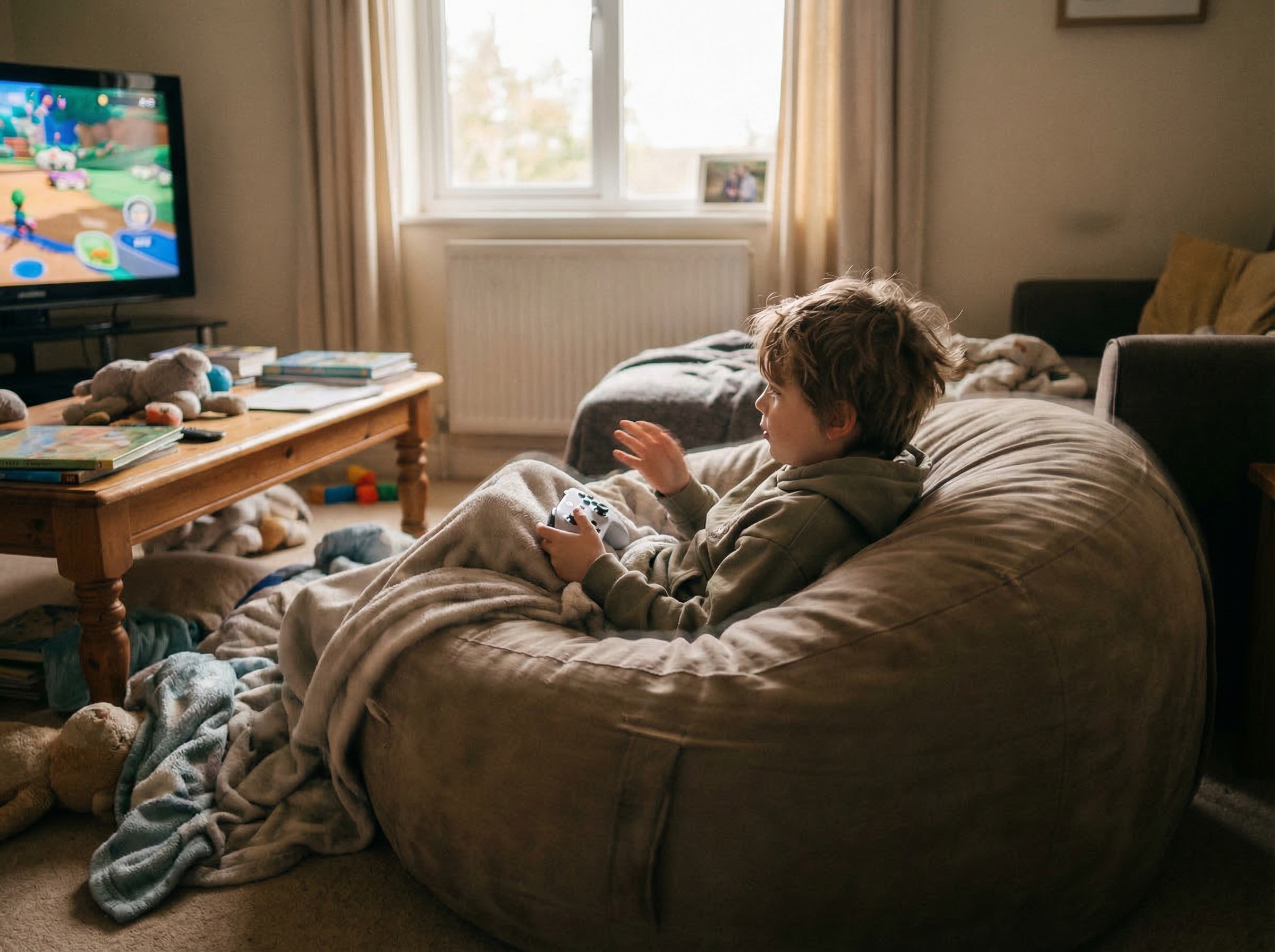
His breathing synced with his character's movements. The hand flapping happened during loading screens - he was literally shaking out excess energy between challenges. The rocking intensified during boss fights and calmed during exploration. His body was regulating itself through the game's rhythm.
What looks like "zoning out" might actually be:
- Processing a difficult experience through familiar patterns
- Using predictable game responses to calm an overloaded nervous system
- Practicing emotional reactions in a safe space
- Building up tolerance for frustration in controlled doses
Here's the kicker: after three hours of Pokémon, Jackson voluntarily told his mom about a kid who'd been mean at lunch. The gaming hadn't been escape - it had been preparation for a hard conversation.
That's why transition warnings work better than hard time limits. "Ten more minutes then dinner" creates panic. "After you finish that quest, let's eat" respects their process. The difference seems small. The result is huge.
Handling the Hard Parts Without Destroying the Good
Gaming meltdowns are real. Last month, Jackson's Minecraft world corrupted. Six months of builds, gone. The meltdown was spectacular. His mom's first instinct was to ban the game - "if it causes this much pain, it's not healthy."
Instead, we used it as practice.
First, we acknowledged the loss was real. Those builds represented hundreds of hours of work, creativity, and comfort. Telling him "it's just a game" would be like someone deleting your family photos and saying "they're just pictures."
Then we problem-solved together. Could we rebuild? What if we backed up more often? Was there a way to make this hurt less next time? He decided to build a memorial to his lost world in a new one. Grief processed, lesson learned, no game ban needed.
When meltdowns happen:
- Validate first: "You lost something important to you"
- Investigate the trigger: Was it loss? Unfairness? Surprise change?
- Connect to real world: "This feeling is like when..."
- Plan together: "How can we protect against this feeling next time?"
The corrupted save file became our reference point. Months later, when his friend moved away: "This is like when my Minecraft world disappeared, but with Jordan." He already had practice with the feeling. The game had prepared him for real loss.
Building Bridges Between Worlds
Here's what nobody tells you: gaming interests can unlock everything else.
Sarah, an autistic 10-year-old, would only engage with Pokemon. Her parents worried constantly. No interest in reading, math was a battle, science bored her. But Pokemon? She knew every stat, every evolution, every type matchup.
So her dad got creative. Math became damage calculations. Reading was Pokemon manga. Science turned into discussions about Pokemon habitats and adaptation. Geography? Mapping the Pokemon regions to real-world locations.
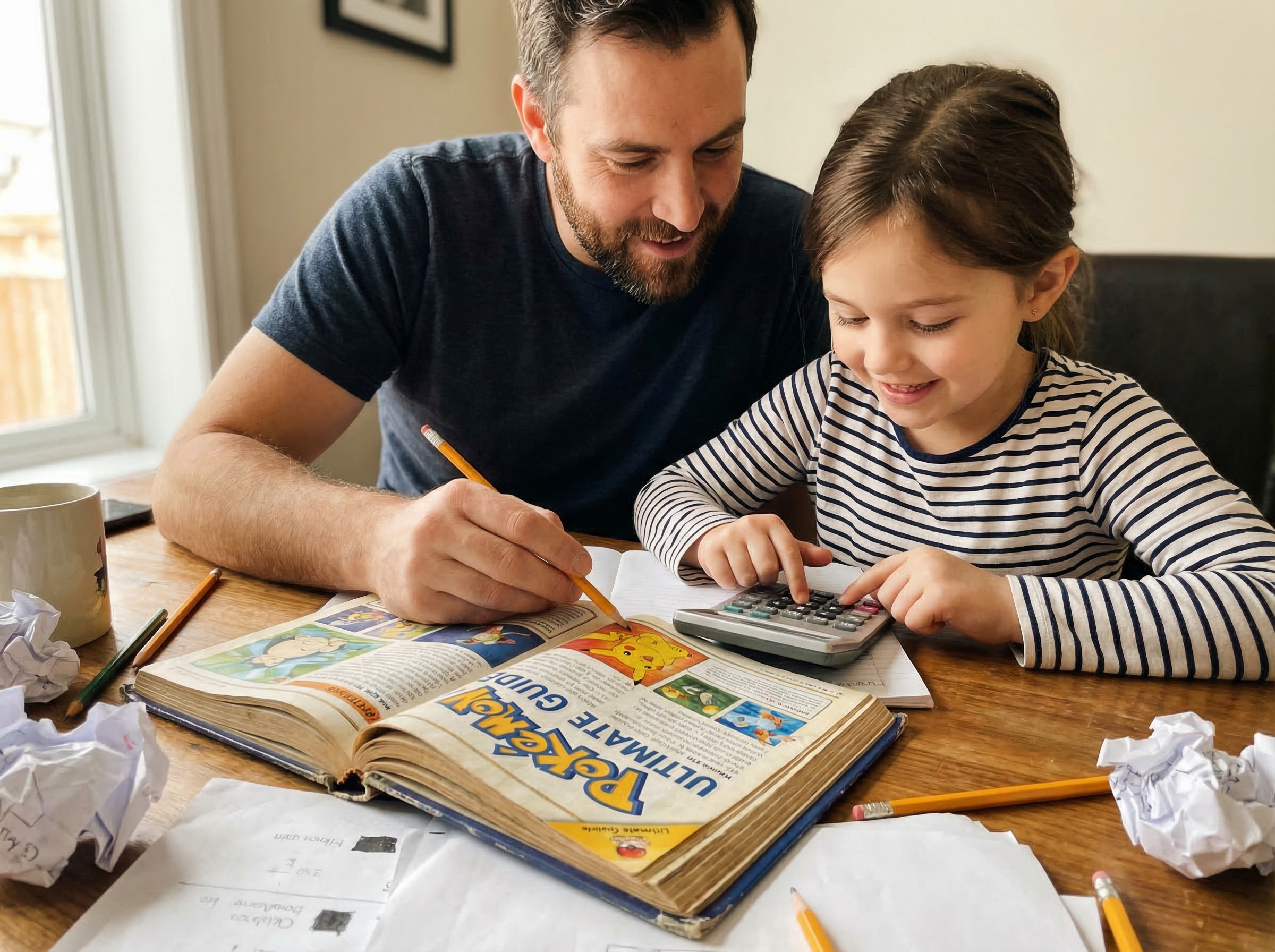
Within six months, she was reading above grade level (to understand Pokemon strategy guides), doing complex multiplication (to calculate battle outcomes), and voluntarily researching how real animals adapt to environments (to design her own Pokemon).
The special interest wasn't limiting her - everyone else's approach was.
I've seen Minecraft builders become interested in architecture, Roblox creators learn coding, and strategy gamers develop complex problem-solving skills. The trick isn't pulling them away from games - it's building bridges from their gaming world to everything else.
When we created Yakety Pack conversation cards about gaming, one was "If you could bring one game mechanic into real life, what would it be?" Sounds simple, but it opened discussions about fairness, second chances, and why real life feels harder than games. Those conversations led to real coping strategies, not despite gaming but because of it.
Your Permission Slip to Stop Fighting Their Safe Space
Last week, Jackson's aunt visited. Watched him game for an hour, then pulled his mom aside. "You're letting him waste his life on those games."
His mom's response was perfect: "Those games are where he practices being brave."
She's right. In games, autistic kids can:
- Practice social interactions with lower stakes
- Experience failure in manageable doses
- Control sensory input (volume, brightness, pace)
- Build confidence through measurable progress
- Connect with others who share their interests
Before you limit gaming, ask yourself:
- Is gaming causing problems or revealing them?
- What is my child getting from games they don't get elsewhere?
- Am I uncomfortable with the gaming or with not understanding it?
- Would I limit a different coping mechanism this strictly?
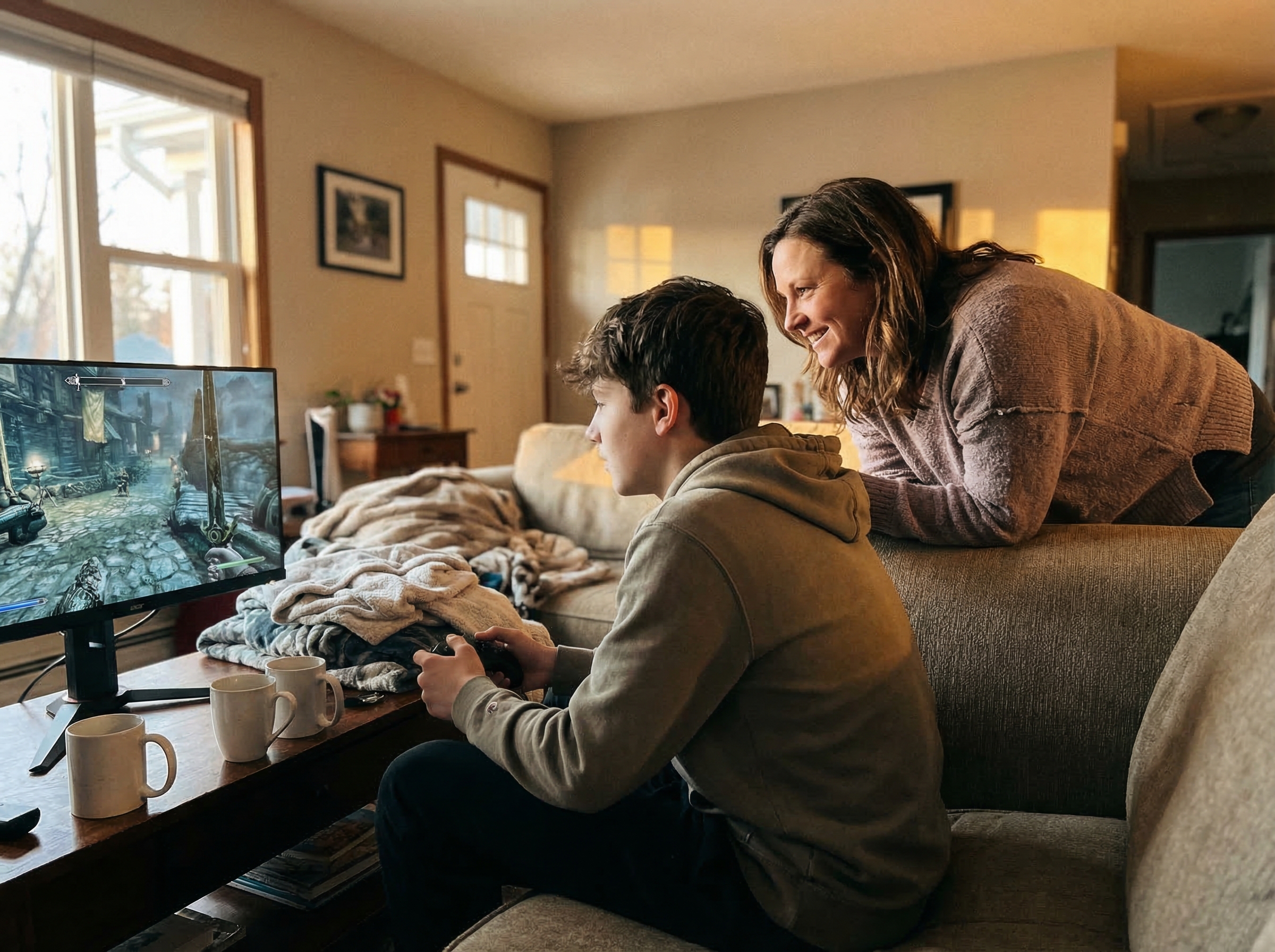
Here's what happened when parents joined the game instead of restricting it: kids started talking. About the game first, sure. But then about feelings the game brought up. About situations that reminded them of game scenarios. About how they wished real life had quick saves and respawn points.
The parents who learned to ask "Show me what you're building" instead of "Get off that game" got invited into their kids' worlds. Literally and figuratively.
The Bottom Line
Your autistic child's gaming might look obsessive, repetitive, or isolating. But before you panic about screen time, consider this: they might be showing you exactly how they process the world. They might be building coping skills in the safest space they know. They might be practicing for real life in the only environment where the rules make sense.
Next time your child is deep in a game, try this: sit down and ask them to teach you something about it. Not with judgment, not with time limits hanging over their head. Just genuine curiosity about their world.
You might be surprised what they've been trying to tell you all along.
The midnight meltdown mom I mentioned at the start? Her son now has a Wednesday night Minecraft session with her. She learned to build. He learned to talk about school stress. Turns out the problem was never the game - it was trying to fight his safe space instead of entering it.
Your kid doesn't need less gaming. They need you to understand why gaming matters to them. Start there, and everything else follows.
Cards that hand you wordsPause, Play, Connect: Core Deck172 prompts about games and daily life, written so you do not have to think one up.$49 CAD • 90 cards • 18 reviewsShop the deck
Related Articles
Looking for more? Check out these related articles:

