
I'm going to tell you something that might sting a little.
Your teenager wants to talk to you. They do. They just don't want to talk to you the way you're trying to make them talk to you.
I know this because I spent about two years getting one-word answers from my own kids. "Fine." "Nothing." "I don't know." Every question I asked felt like throwing a tennis ball at a brick wall. The ball just bounced right back with nothing useful attached to it.
Then something shifted. Not because my teenagers suddenly became chatty. Because I changed my approach. I stopped trying to force conversations that looked like what I thought parent-teen communication should look like, and started meeting my kids where they actually were. Understanding how conversations change at every age made all the difference. Which, honestly, was usually in front of a screen.
This isn't a listicle of generic tips. This is what actually worked for me, as a dad, an entrepreneur, and someone who builds conversation tools for families for a living. If I couldn't crack this code with my own teenagers, I had no business telling other parents how to do it.
Why Your Teenager Stopped Talking to You (It's Not What You Think)
The deeper pattern is in our pillar piece on turn screen time into connection time.
Want to understand the psychology behind teen silence? Read why teenagers won't talk to their parents first.
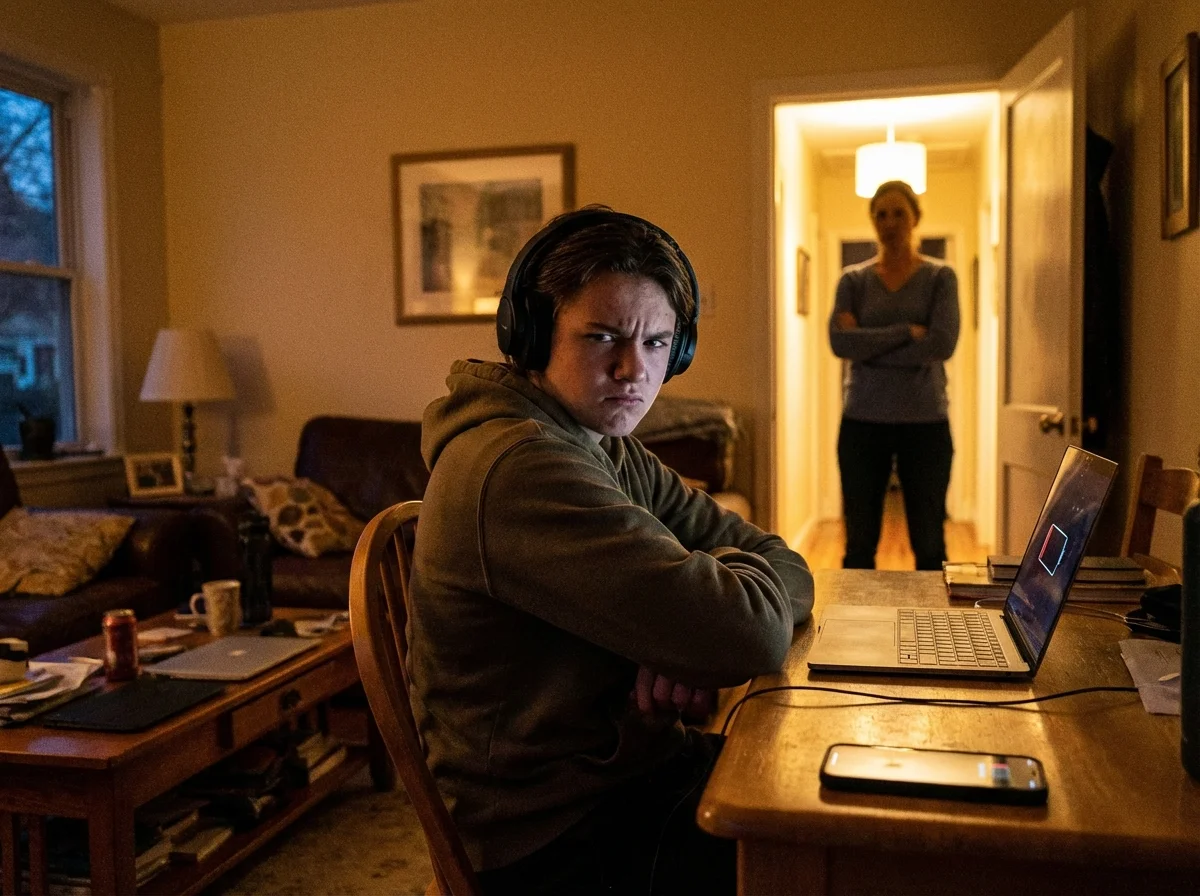 Here's the thing most parenting articles get wrong: they frame teen silence as a problem to fix. Like something broke and you need to repair it.
Nothing broke. Your kid is doing exactly what they're supposed to be doing developmentally. Between ages 13 and 17, teenagers are building an identity that's separate from their parents. That means pulling away. It means testing boundaries. It means keeping some things private because privacy is how they practice being their own person.
The silence isn't rejection. It's independence in its messiest, most frustrating form.
But here's what most articles also miss: just because pulling away is developmentally normal doesn't mean you should accept zero communication. There's a massive difference between healthy independence ("I don't want to tell you every detail of my social life") and total disconnection ("I have nothing to say to you ever").
Your job is to keep the door open so wide that walking through it feels effortless. Not forced. Not scheduled. Not interrogation-disguised-as-interest.
 Something easier than a talkPause, Play, Connect: Core Deck172 prompts that ask one small thing, so talking stays their choice instead of your agenda.$49 CAD • 90 cards • 18 reviewsShop the deck
The Interrogation Problem (And Why Your Questions Are Backfiring)
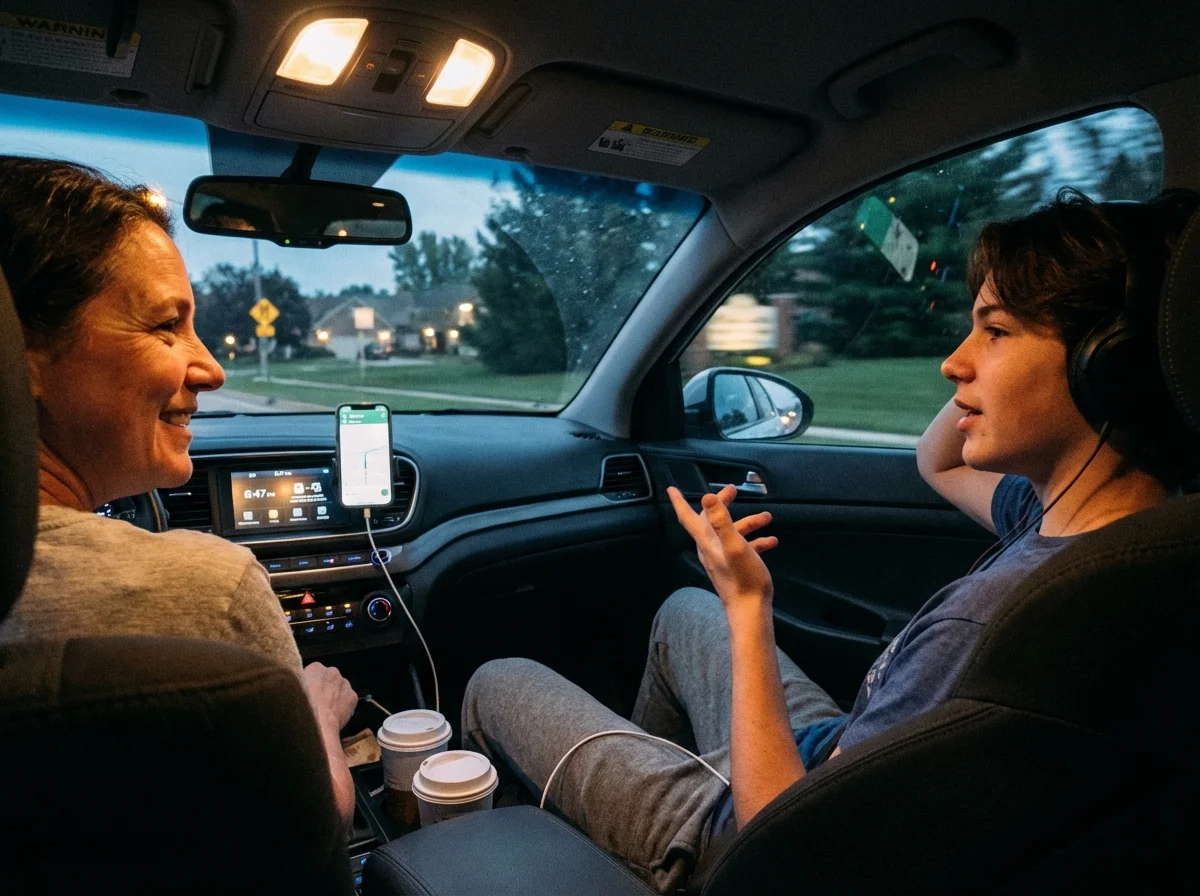 Most parents try to get their teenager to talk by asking questions. Seems logical, right? You want information, so you ask for it.
Except from your teen's perspective, your questions sound like an interrogation. And I don't mean the dramatic movie kind. I mean the subtle, everyday kind that makes them want to shut down.
"How was school?" "What did you do today?" "Who did you hang out with?" "Did anything happen?"
Each question, on its own, is perfectly reasonable. But string three or four of them together when your kid walks in the door, and you've created a gauntlet. They didn't come home to give a debrief. They came home to decompress.
I used to hit my kids with a wall of questions the second they sat down. I told myself I was showing interest. What I was actually doing was making conversation feel like homework.
The fix is counterintuitive: talk less, and talk later.
When your teenager comes home, say hi. Maybe mention something completely unrelated. "I made pasta" or "the dog did something hilarious." Then let them breathe. Give them 30 to 45 minutes of decompression time. No questions. No fishing for information.
The conversations that matter almost never happen right when you want them to. They happen at 9:30 PM when you're both in the kitchen getting a snack. Or in the car when nobody's making eye contact. Or during a loading screen when you're playing a game together.
Timing is everything. And the best time to talk to a teenager is almost never when you decide it should be.
The Side-by-Side Secret
The side-by-side window is mapped beat by beat in our companion piece on how to use Yakety Pack in real life.
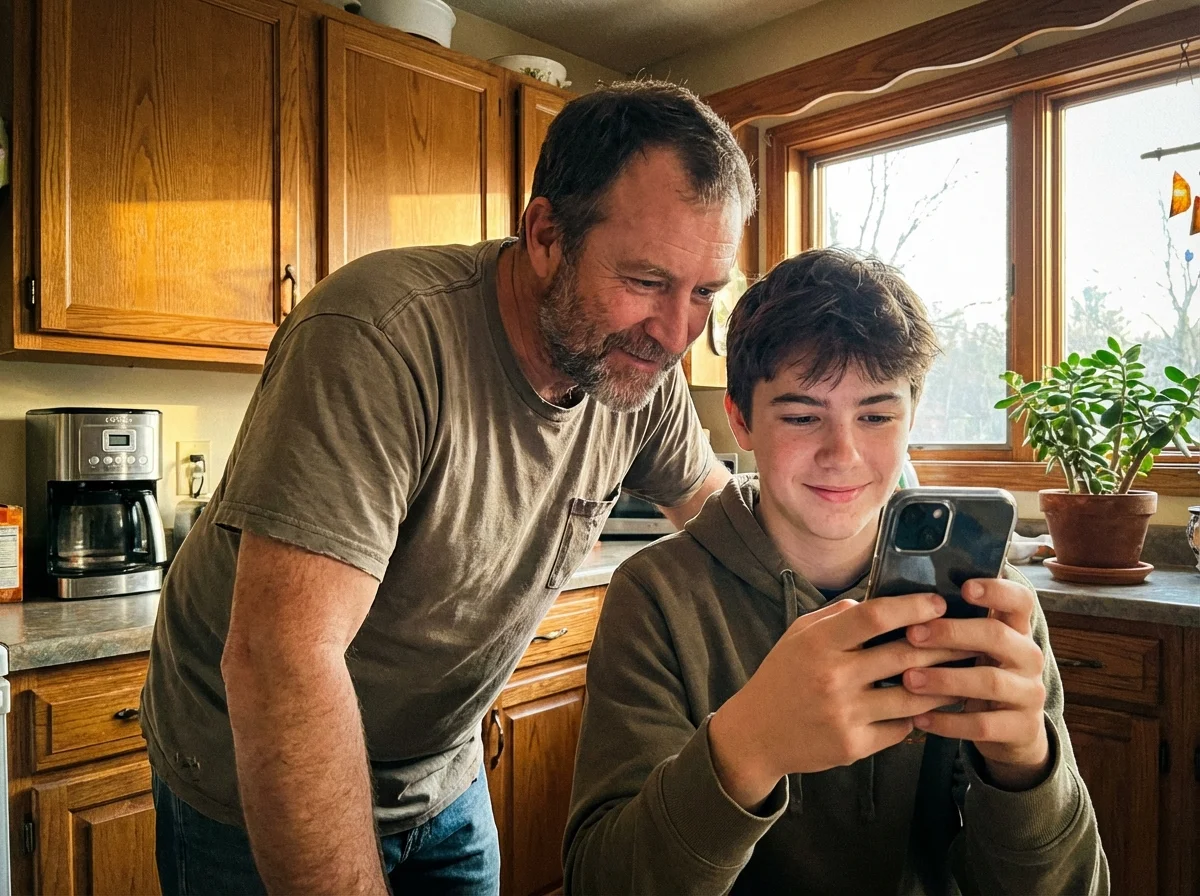 Here's the single most useful thing I learned about getting my teenagers to talk: stop trying to have face-to-face conversations.
Think about it. When you sit across from your teenager and try to have a "talk," what happens? They feel cornered. The eye contact feels intense. The setup screams "this is serious." Their guard goes up before you've said a word.
Now think about the last time your teen actually opened up. I'd bet money it was during a car ride. Or while you were both doing something else. Cooking dinner. Walking the dog. Playing a video game together.
There's real psychology behind this. Researchers call it "shoulder-to-shoulder" communication versus "face-to-face." Teenagers (especially boys, but girls too) are significantly more likely to open up during shared activities where conversation can happen naturally without the pressure of direct attention.
This is exactly why gaming became my secret weapon.
Gaming: The Conversation Hack Most Parents Miss
 I know what some parents are thinking. "Gaming is the problem. My kid won't talk to me because they're always gaming."
I thought the same thing for a while. Then I realized I had it backwards.
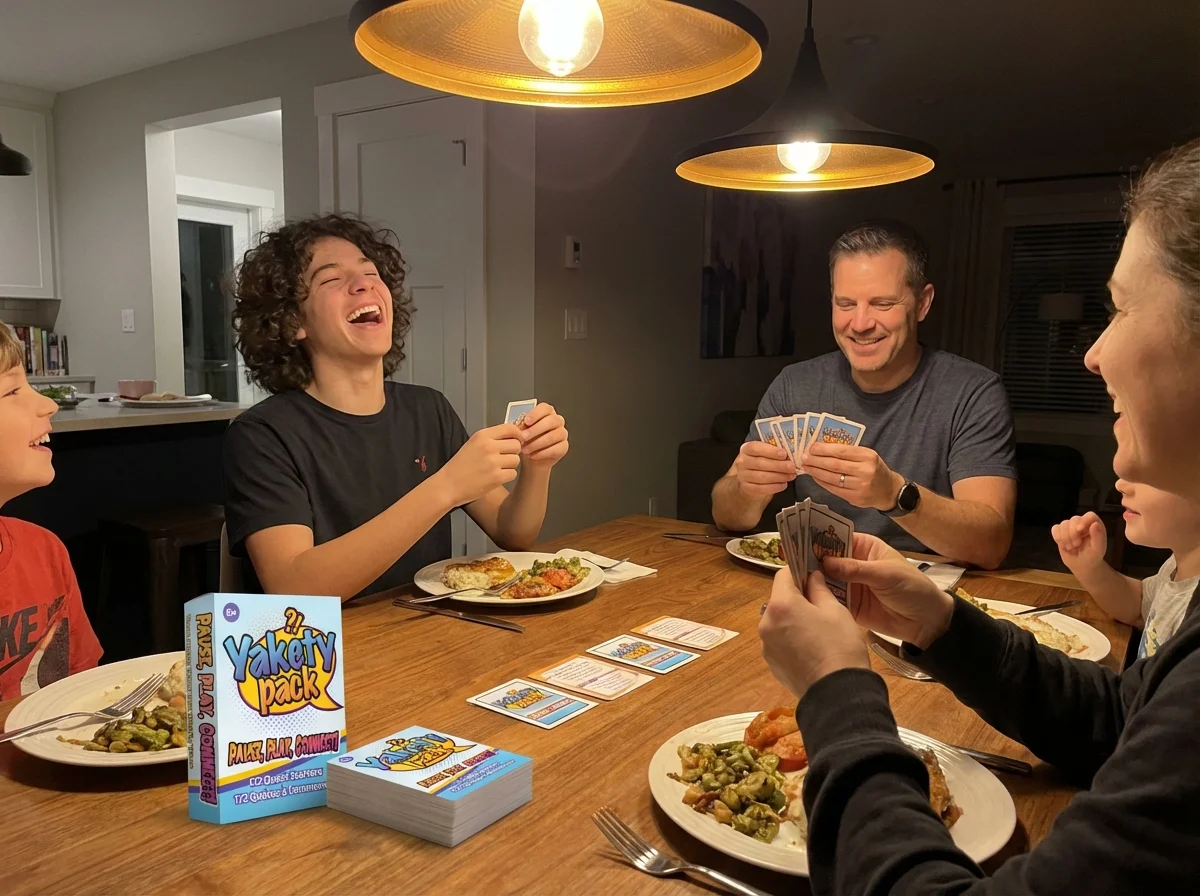
Gaming isn't the wall between you and your teenager. It's the door. You're just not walking through it.
When my son is playing a game, he's in his element. He's relaxed. He's doing something he loves. His guard is down. If I sit next to him and show genuine curiosity about what's happening on screen, that's when the good conversations start.
Not conversations about the game, necessarily. Though those are valuable too. I mean the conversations that start with the game and end up somewhere real. He tells me about a teammate who was being toxic, and that leads to a conversation about how he handles conflict. He mentions a friend quit their squad, and suddenly we're talking about friendship dynamics I'd never have known about otherwise.
If you want to understand this better, our guide to understanding gaming culture as a parent breaks down why your kid's gaming world is worth paying attention to. And if your teen plays Fortnite specifically, we've got a whole breakdown on how to actually talk to your kid about Fortnite without getting one-word answers.
The point isn't that you need to become a gamer. The point is that your teenager has interests, and those interests are conversation fuel if you take them seriously instead of dismissing them.
Here's what worked for me:
-
Watch them play for 10 minutes. Don't ask to play. Don't comment on screen time. Just watch and ask one genuine question about what's happening. "What are you building?" or "Why did that guy attack you?" Something specific.
-
Learn three things about their favorite game. Not everything. Just three specific things so you can ask informed questions. Knowing what a "clutch" is or what "the meta" means gives you conversation entry points.
-
Ask to play together. Not every day. Once a week. Pick something cooperative, not competitive. You'll be terrible at first. That's actually a good thing, because your teen gets to be the expert, and people love talking about things they're good at.
-
Stay during the loading screens. This is underrated. Loading screens, matchmaking queues, and lobby wait times are natural conversation windows. Your teen is already paused. They're not interrupting gameplay to talk to you. Some of my best conversations have happened in the 60 seconds between matches.
The Art of the Non-Question
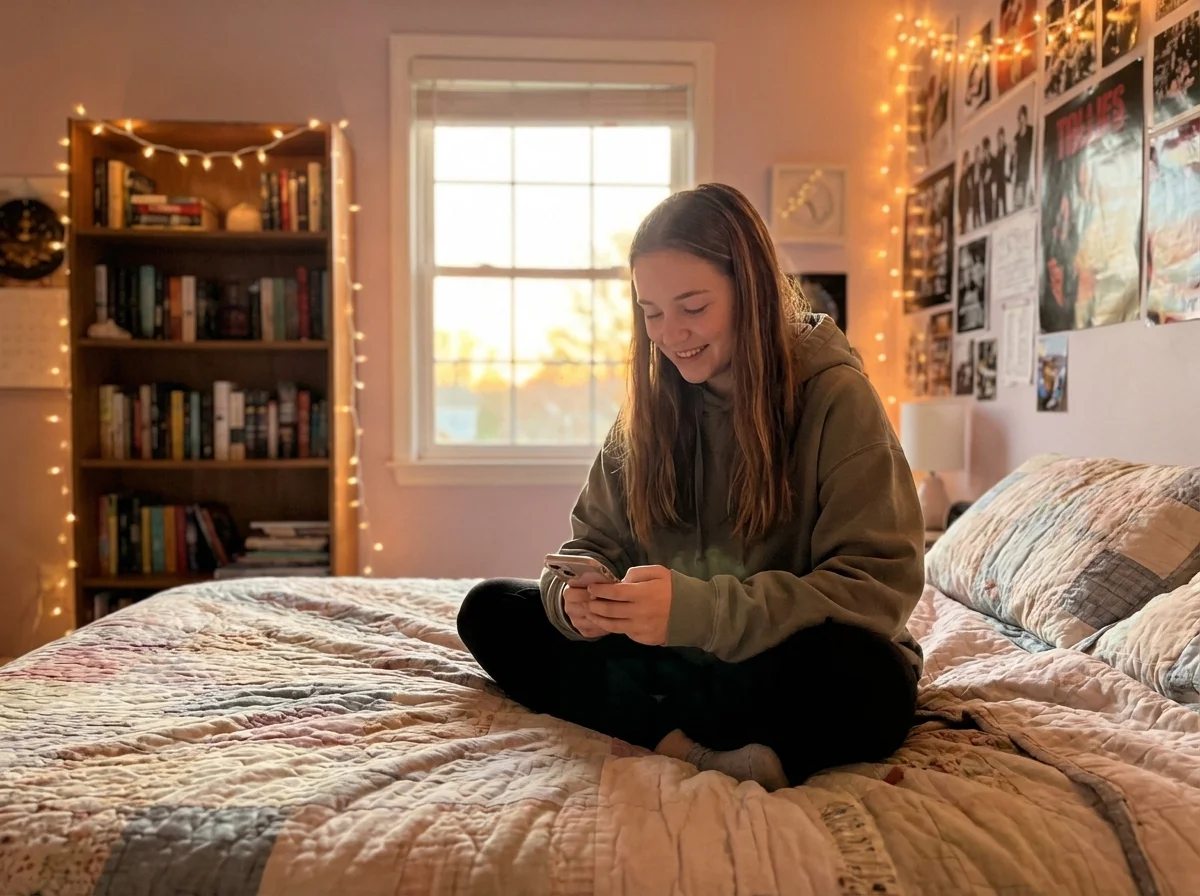 One of the biggest breakthroughs I had was learning to start conversations without asking questions at all.
Instead of "How was school?" try statements:
- "I heard there was some drama with the schedule changes at your school."
- "Your friend Jake seems cool. He's into music production, right?"
- "I read something wild about Minecraft today."
Statements invite conversation without demanding a response. They give your teenager the choice to engage or not. And that choice, that feeling of control, is everything to a teenager who's trying to establish autonomy.
When you make a statement, you're sharing instead of extracting. You're opening a door instead of pulling them through it.
Another approach that works surprisingly well: share something about your own day first. Not in a "let me lecture you about adult responsibility" way. In a genuine, "something funny happened" way.
"I had the most ridiculous meeting today. My coworker accidentally screen-shared his fantasy football draft."
Now your teenager has something to react to. Maybe they laugh. Maybe they share something from their day. Maybe they don't. But you've set a tone of casual exchange instead of interview.
 Questions a teen will toleratePause, Play, Connect: Core Deck$49 CAD • 172 promptsSee the deck
The Car Is Your Secret Weapon
 I mentioned this earlier, but it deserves its own section because of how powerful it is.
Something almost magical happens in the car. You're side by side. Nobody has to make eye contact. There's a natural endpoint (arriving at the destination). And most importantly, your teenager can't leave. Not in a trapped way, more in a "well, we're both here, might as well talk" way.
My best conversations with my teenagers have happened:
- Driving to practice or activities
- Late-night snack runs (this is a goldmine)
- Running errands together (boring errands are best, because there's nothing else to do)
- Road trips (the 30-minute-plus drives where the phone battery starts dying)
The key is not ambushing them. Don't get in the car with an agenda. Don't use the captive audience to bring up grades or chores. Just let conversation happen.
If you want to seed a conversation in the car, play a podcast or put on music they like. Then react to it together. Shared experiences create shared conversation.
What to Do When They Actually Start Talking
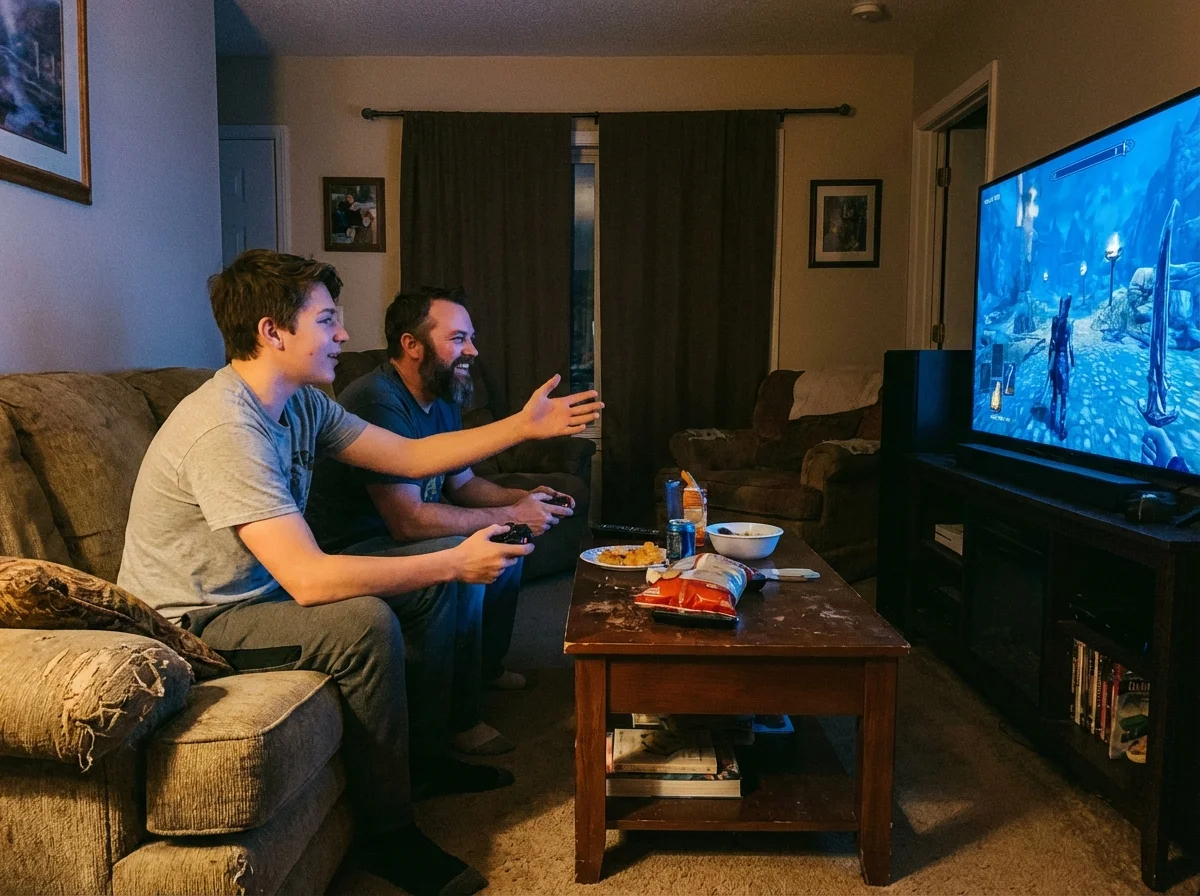 This is where most parents blow it. You've done everything right. You waited for the right moment. You didn't interrogate. You were side by side. And now your teenager is actually telling you something real.
And then you ruin it.
How? By reacting too big. By immediately trying to solve the problem. By turning it into a teaching moment. By making it about you.
When your teenager opens up, your only job is to keep the conversation going. That's it. Not to fix anything. Not to share your wisdom. Not to redirect toward a lesson.
Rules for when your teen is talking:
-
Don't interrupt. Even if they say something wrong or concerning. Let them finish.
-
Respond with "tell me more" not "well, you should..." Advice kills vulnerable conversations. They're not asking for your solution. They're testing whether it's safe to talk to you.
-
Mirror what they said. "So your friend basically ghosted the whole group?" This shows you're listening and gives them a chance to elaborate.
-
Save your reaction for later. If they tell you something that worries you, resist the urge to flip into parent-panic mode. You can address it later, after the trust deposit has been made. React now, and they'll never tell you anything risky again.
-
Don't bring it up the next day unless they do. This is huge. If your teen shares something personal and then you reference it the next morning at breakfast, they feel exposed. Let them control when and how that topic resurfaces.
I learned rule number 4 the hard way. My daughter told me about a situation at a party. My immediate instinct was to go full protective dad. Instead, I forced myself to just listen and say "that sounds really stressful." She kept talking. I got the full picture. Turns out she'd handled it well on her own, and she just needed to process it out loud. If I'd reacted with alarm, I would've gotten the censored version, or no version at all.
The Controversial Take: Stop Trying So Hard
I'm going to say something that goes against every parenting article you've ever read.
Sometimes the best thing you can do is stop trying to get your teenager to talk to you.
Not forever. Not as giving up. But as a strategic reset.
If every interaction with your teen has become you trying to extract conversation, they feel the pressure. They know you're working an angle. Teenagers have incredible radar for inauthenticity, and "parent desperately trying to connect" reads as inauthentic to them, even when it's coming from a genuine place.
Try going three days without asking your teenager a single question about their life. Don't ask about school. Don't ask about friends. Don't ask what they did today. Just exist in the same space and let them come to you.
What usually happens is this: by day two or three, they start volunteering information. Because the pressure is gone. Because talking is their choice again, not your requirement.
This was one of the hardest things I've done as a parent. Every instinct said "engage, connect, ask, show interest." But sometimes showing interest means showing restraint. Sometimes the most connecting thing you can do is give them space and trust that the connection is still there, even when it's quiet.
For the Quiet Drive: The hardest teen-talk windows benefit from a prompt. Keep a few Pause, Play, Connect cards in the glovebox so a teen-safe card is ready for the drive.
Conversation Starters That Actually Work With Teens
A deck of conversation cards for families with gamer kids is the soft-on-ramp starter the section describes.
Okay, practical tactics. When the moment is right, here are conversation approaches that work way better than "how was your day."
Opinion-based instead of fact-based:
- "Do you think AI is going to change how your generation works?" (instead of "what did you learn today?")
- "What's the most overrated thing at your school right now?"
- "If you could skip one class permanently, which one and why?"
Would-you-rather format:
- "Would you rather have your search history made public or your camera roll?"
- "Would you rather be famous online or successful and anonymous?"
These work because they're fun, they don't have a right answer, and they reveal how your teenager actually thinks without feeling like a report.
Their-world questions:
- "Who's the most interesting person you follow online right now?"
- "What's a game you think I'd actually like?"
- "Is there a song that's been stuck in your head this week?"
Hypothetical scenarios:
- "If you had to teach a class at your school, what would it be on?"
- "If our family had to move anywhere in the world, where would you vote for?"
If you want a structured way to do this, Pause, Play, Connect is literally a deck of conversation cards we designed for exactly this kind of thing. Pull a card during dinner or a car ride. It takes the pressure off you to come up with the question and gives everyone a shared prompt to react to.
For the Long Game: Teen talk grows from many small low-pressure cards. A deck of Yakety Pack conversation cards on the table is the easiest thing that keeps working.
The Long Game: Building a Talking Relationship Over Time
Getting your teenager to talk to you isn't a one-time fix. It's a slow, ongoing process of proving that you're a safe person to talk to. Every conversation is a deposit in the trust bank. Every overreaction is a withdrawal.
Weekly habits that build the talking relationship:
-
One shared activity per week. Doesn't matter what. Gaming, cooking, driving to get coffee, watching a show together. The activity isn't the point. The proximity is.
-
One vulnerable share from you per week. Tell your teenager about something you messed up, something you're worried about, or something you don't know. Vulnerability from you gives them permission to be vulnerable back.
-
One text that isn't logistical per week. Send them a meme. A funny video. A song. Something that says "I was thinking about you" without saying "we need to talk."
-
Zero interrogations per week. This is the hardest one. If you catch yourself stringing three questions together, stop at one.
What this looks like over months:
Month 1: Awkward. They're suspicious of the new approach. You'll get some weird looks. Stay the course.
Month 2: Small openings. They might share something unprompted. Don't celebrate too visibly or they'll clam up.
Month 3: A real conversation happens. Maybe in the car. Maybe at 10 PM. Maybe about something you never expected. This is the breakthrough.
Month 6: Talking to you is normal again. Not constant. Not everything. But the channel is open and they know it's safe.
This timeline isn't universal. Some teens warm up faster, some slower. The point is that this is measured in months, not days. Patience isn't just a virtue here. It's the whole strategy.
When Silence Means Something More
I want to be honest about something. Most of the time, teenage silence is normal developmental stuff. But sometimes it's not.
If your teenager has gone from somewhat communicative to completely shut down, and it happened suddenly, pay attention to these signs:
- Withdrawing from friends, not just you. Normal teen independence means pulling from parents but staying connected to peers. Pulling from everyone is different.
- Changes in sleep, appetite, or energy. These are the physical signals that something beyond normal teen moodiness is happening.
- Dropping activities they used to love. Including gaming. If your gamer kid stops gaming, that's worth noticing.
- Anger that seems disproportionate. Slamming doors over nothing. Explosive reactions to simple requests.
If you're seeing these patterns, the conversation approach shifts. This isn't about better questions or timing. This is about saying, clearly and without judgment: "I've noticed you seem different lately, and I'm here whenever you're ready to talk. No pressure, no questions, just here."
And if your gut says something is really wrong, trust it. Talk to a school counselor. Talk to your pediatrician. Being a safe parent sometimes means getting professional support, not because you failed, but because you care enough to get help.
FAQ
How long does it take to get a teenager to open up? Every teen is different, but most parents who shift their approach see small changes within 2 to 4 weeks and meaningful conversations within 2 to 3 months. The key is consistency. One good conversation doesn't fix years of interrogation-style communication. It takes repeated proof that you're safe to talk to.
What if my teenager literally won't say anything? Start with proximity, not conversation. Be in the same room. Watch what they're watching. Sit nearby while they game. Don't force words. Some teens need weeks of low-pressure presence before they'll test the waters. If total silence persists for months and is paired with other behavioral changes, consider whether professional support might help.
Should I be worried if my teen only talks to friends and not to me? Not necessarily. Teens naturally shift their primary social connection to peers. That's healthy. The concern is if they have zero trusted adults they'll open up to, not just you, but any adult. If they talk to a coach, teacher, aunt, or family friend, that counts. You want them to have at least one adult in their corner.
Is it okay to text my teenager instead of talking face to face? Absolutely. Some teens communicate better through text. It gives them time to think, removes the pressure of face-to-face reactions, and meets them on a platform they're comfortable with. Send a meme. React to their story. Keep the digital channel open alongside the in-person one.
How do I get my teenage daughter vs. son to talk to me? The core strategies are the same, but boys tend to respond better to shoulder-to-shoulder activities (gaming, driving, building something) while girls sometimes prefer one-on-one time in comfortable settings (late-night kitchen conversations, coffee runs). These are generalizations, not rules. Follow what works for your specific kid.
What if I've already damaged the relationship with too many interrogations? It's not too late. Teens are remarkably forgiving when they see genuine change. You might even acknowledge it directly: "Hey, I realize I've been asking you a million questions every day and that's probably annoying. I'm going to try to dial it back." That kind of honesty can be the reset button.
Does gaming really help parents connect with teenagers? It does for many families, including mine. Gaming provides shared experience, natural conversation openings, and a space where your teen is comfortable and confident. You don't need to be a gamer yourself. Showing genuine interest in their gaming world, learning about their favorite games, or even just watching them play, goes a long way. Check out our guide on understanding gaming culture for a deeper dive.
Month one starts tonightPause, Play, Connect: Core Deck172 prompts that sit on the table until a teenager feels like picking one up.$49 CAD • 90 cards • 18 reviewsShop the deck
Related Articles
- Understanding Gaming Culture as a Parent - Learn the basics of your kid's gaming world
- How to Talk to Kids About Fortnite - Specific conversation strategies for Fortnite families
- What Do Video Games Actually Teach Kids? - See the skills behind the screen time
- Handling Toxic Behavior in Online Gaming - When gaming conversations get serious

About Kevin Hinton
Dad and co-founder of Yakety Pack and Tru Earth. Kevin writes about parenting in the digital age, helping families turn gaming and screen time into opportunities for connection instead of conflict.
