
I ruined more conversations with my kids by talking than I ever ruined by staying quiet.
That's a strange thing for someone who co-founded a conversation card game for families to admit. But it's true. For years, I operated under a simple parenting assumption: connection requires conversation. If my kid was upset, I needed to ask what was wrong. If they were quiet, I needed to draw them out. If we were in the same room, someone should be talking.
I was wrong about all of it.
The hardest parenting skill I've ever had to learn isn't knowing what to say to my kids. It's knowing when to say nothing at all. When to sit next to them in silence. When to play a game together without turning it into a therapy session. When to just be there without an agenda.
If you're trying to figure out when to talk to your kids versus when to simply be present, you're already asking a better question than most parents ever think to ask.
 When they open the doorPause, Play, Connect: Core Deck172 prompts for the moments your kid is open, so you have something ready.$49 CAD • 90 cards • 18 reviewsShop the deck
Why We Default to Talking
The deeper pattern fits inside our pillar take on how to turn screen time into connection time.
Before I get into the practical stuff, I need to explain why this is so hard. Because it's not a skill deficit. It's a wiring problem.
We Were Taught That Good Parents Talk
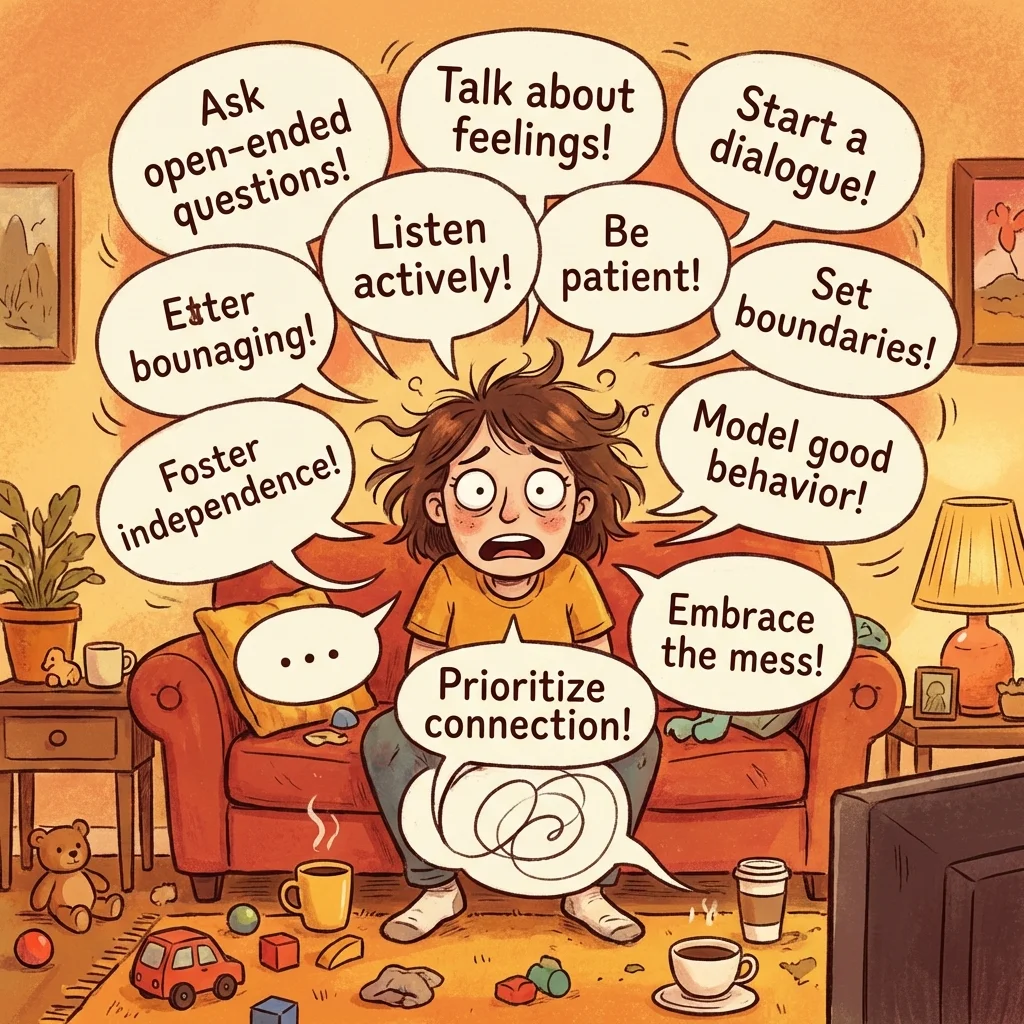 Every parenting book, podcast, and Instagram reel delivers the same message: communicate with your kids. Ask open-ended questions. Create dialogue. Share feelings. The entire parenting-advice industry is built on the premise that more conversation equals better connection.
And it's not wrong, exactly. It's just incomplete. Nobody tells you about the other half of connection - the part that happens without words.
Talking Feels Like Doing Something
Here's what I eventually figured out about myself: when my kid was struggling, talking was how I managed my anxiety, not theirs. Asking "What's wrong?" gave me the illusion of helping. Offering solutions made me feel useful. Filling silence with words was my way of convincing myself I was being a good dad.
But my kids didn't always need me to do something. Sometimes they just needed me to be somewhere.
Silence Feels Like Failure
This is the part that gets most of us. When your twelve-year-old is clearly upset and you're sitting there not saying anything, every instinct screams that you're failing. You're neglecting them. You're being passive. A good parent would say something.
It took me an embarrassingly long time to understand that sitting with your kid in their hard moment, without trying to fix it or talk about it, is one of the most active things you can do as a parent.
Reading the Room: When Words Help vs. When They Don't
So how do you know which moments need words and which ones need presence? After years of getting it wrong (and occasionally getting it right), here's what I've learned.
When to Talk
 They're asking questions. This sounds obvious, but it's worth stating. When your kid asks you something - even something that seems small - they're opening a door. Walk through it. If your teenager asks "Did you ever get in trouble at school?" that's not casual conversation. That's an invitation.
They're sharing voluntarily. If your kid starts telling you about their day, their friends, their game - lean in. Don't interrogate. Don't redirect. Just receive what they're giving you and ask gentle follow-ups. These moments are gifts, and they dry up fast if you turn them into interrogations.
They've had time to process. Most kids, especially teenagers, need a buffer between experiencing something and talking about it. If something happened at school today, tonight might not be the right time. Tomorrow in the car? That might work. Next week during a walk? Even better. Knowing how to get your teenager to talk to you often means knowing when not to push.
You need to share something important. Sometimes you have information or a perspective that genuinely matters. A family change, a safety concern, something you observed that worried you. In these cases, talk - but briefly. Say what you need to say, then stop.
When to Just Be Present
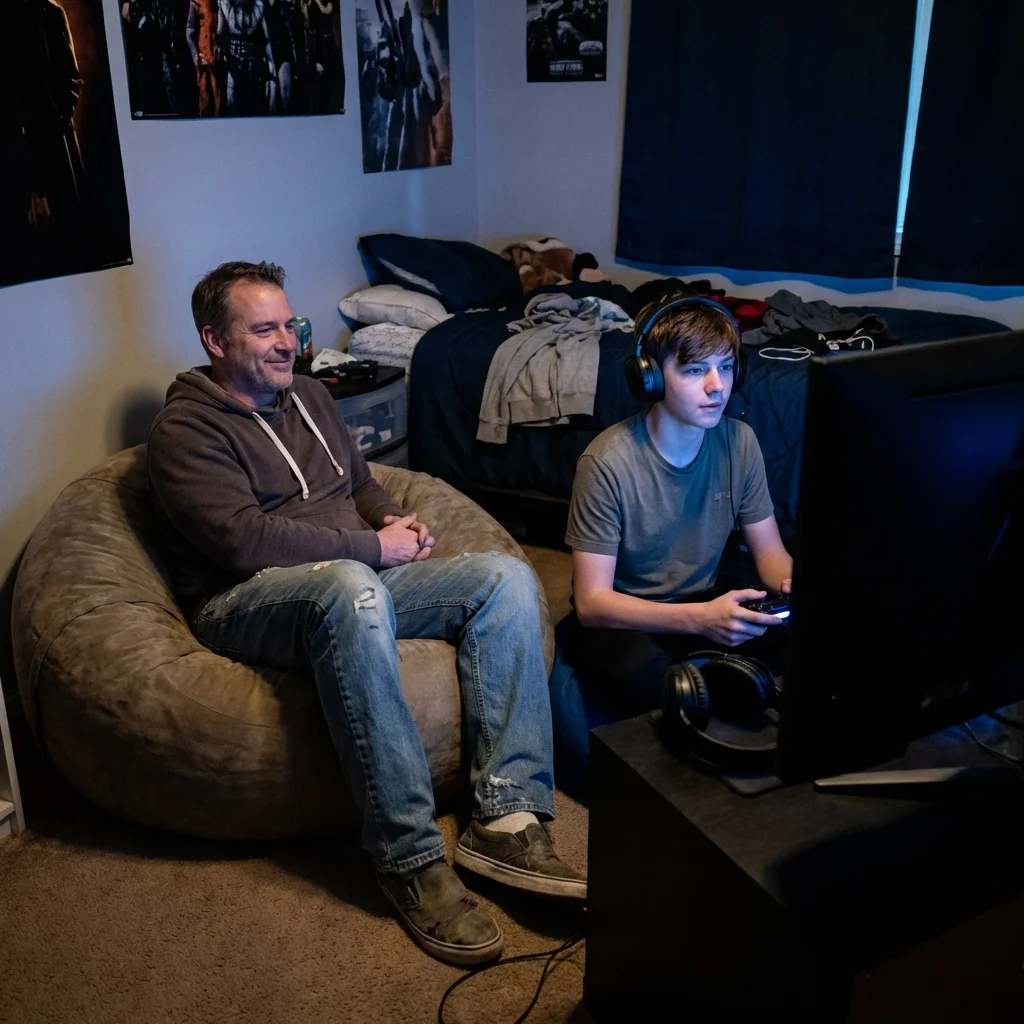 They just got home and look drained. The first fifteen minutes after school or work is almost never the right time for conversation. They need to decompress. Be nearby. Be available. But don't be waiting at the door with a list of questions.
They're crying or visibly upset. I know. This is the hardest one. Everything in you wants to fix it, ask about it, make it stop. But in those first raw minutes of big emotion, what most kids need is a warm body next to them. A hand on their back. Maybe "I'm here" or "I'm not going anywhere." That's it. The talking comes later, if it comes at all.
They're doing something they enjoy. If your kid is gaming, drawing, building something, reading - and you want to connect - you don't have to start a conversation. Sit in the room. Watch them play. Pick up a controller yourself. Some of the deepest connection happens in shared activity with zero dialogue.
They've told you (in any language) to back off. Teenagers communicate boundaries constantly. Eye rolls, headphones going on, one-word answers, physically turning away. These aren't rude behaviors to correct. They're signals to respect. Back off. Stay close. Try again later.
For Quiet Moments: Sometimes a card in your pocket beats a question on your tongue. Keep the Pause, Play, Connect deck within reach so a gentle prompt is right there when the silence calls for it.
The Art of "Being With" vs. "Talking To"
There's a concept in therapy called "holding space." It means being fully present with someone without trying to change what they're feeling. Most therapists train for years to learn this. Most parents are expected to figure it out while also making dinner.
"Being with" your kid means:
- Your phone is put away (not just flipped over - actually away)
- You're physically near them, not across the house
- You're not multitasking
- You have no agenda for the interaction
- You're available if they want to talk, but you're not initiating
"Talking to" your kid means:
- You have something specific to discuss or ask
- You're directing the interaction
- There's an agenda, even if it's gentle
- You're expecting a response
Neither is better. Both are necessary. The skill is matching the right mode to the right moment.
Kevin's Rule of Three
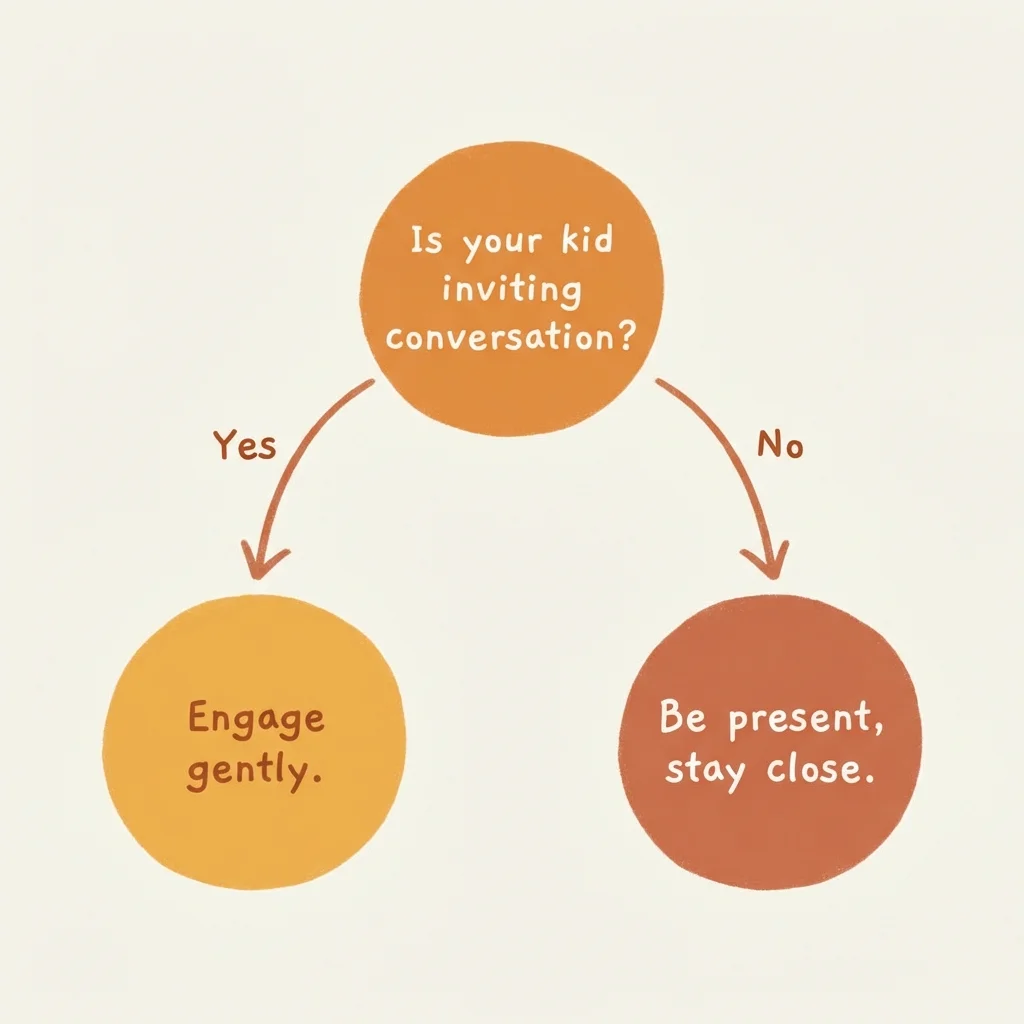 Here's a guideline I developed after years of overcorrecting in both directions. When I'm not sure whether to talk or be present, I ask myself three questions:
- Did they invite this conversation? (Even indirectly - eye contact, sitting near me, showing me something)
- Have they had time to process whatever's going on?
- Am I talking for them or for me?
If I get two or more "no" answers, I default to presence. I sit nearby. I stay quiet. I wait.
It doesn't always work. But it works a lot more often than my old approach of filling every silence with a question.
 When they are finally readyPause, Play, Connect: Core Deck$49 CAD • 172 promptsSee the deck
Gaming Together: The Ultimate Silent Presence
The everyday version is mapped in our companion piece on how to use Yakety Pack in real life.
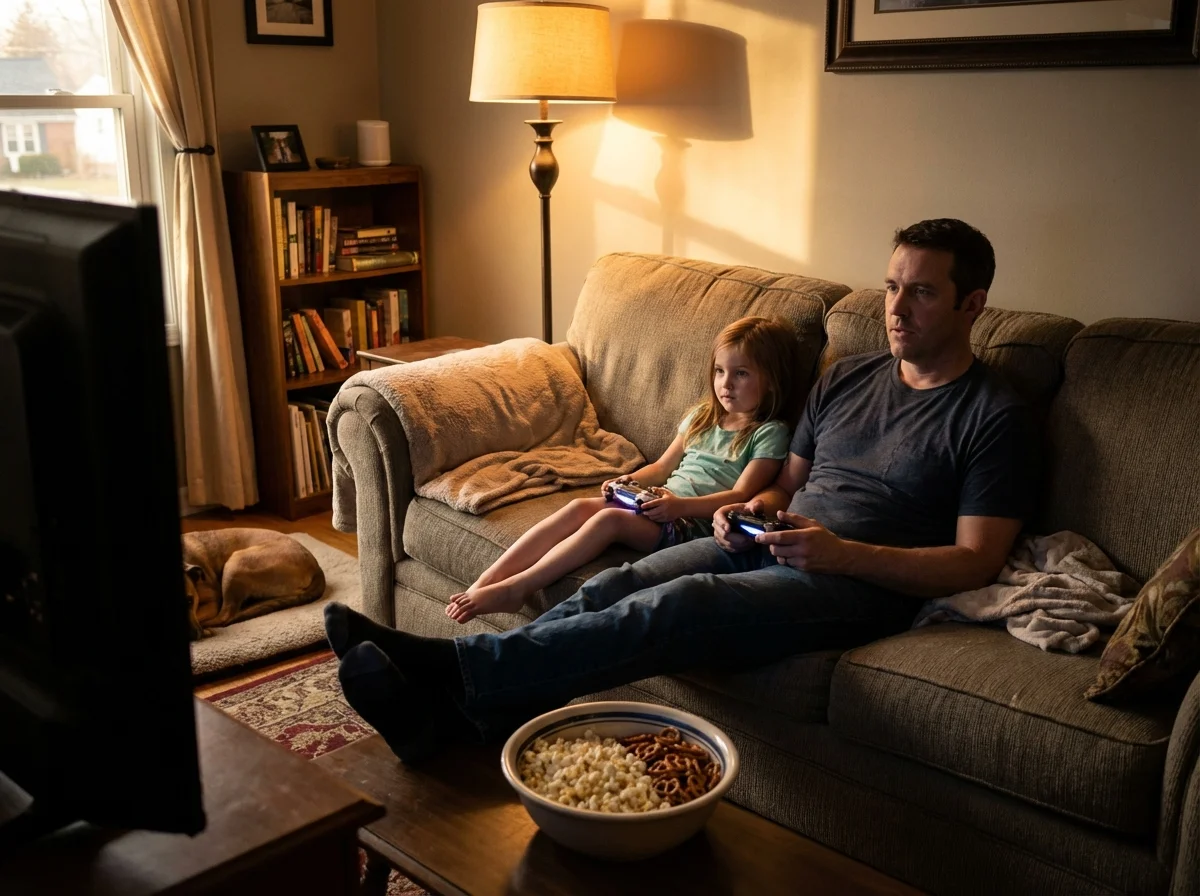 I want to talk about this specifically because it changed my relationship with my son more than any conversation ever did.
For months, I'd been trying to connect with him through talking. Asking about his day, suggesting activities, trying to start conversations at dinner. If you've read about why teenagers stop talking to their parents, you know how that tends to go. One-word answers. Retreating to his room. The whole cycle.
Then one evening, instead of asking him anything, I just sat down while he was playing a game and watched. Didn't ask what it was. Didn't comment on the violence or the screen time. Just watched.
After about ten minutes, he started explaining things to me. "That's my base. I built that part last week. Watch this - this is the hard part." No prompting. No questions. He just started talking because I created space without pressure.
A week later, I asked if I could play with him. We spent an hour building something together in near-complete silence. It was one of the best hours of parenting I've ever had.
Gaming together doesn't require conversation. You're doing something side by side. You're in the same world. You're cooperating or competing or just existing in the same digital space. And something about that parallel activity, that shared focus on something external, makes kids feel safe enough to talk when they're ready.
Not every session turns into a deep conversation. Most don't. That's not the point. The point is that you showed up in their world without demanding anything from them.
The Times I Got It Wrong (So You Can Get It Right)
I want to be honest about this because I think parenting advice that only shows the successes is useless.
The Interrogation After the Bad Day
My daughter came home from school one day looking like she'd been hit by a truck. Emotionally, not physically. Everything in her body language screamed "something happened." And I did what I always did: I asked.
"What happened?" Nothing. "Did something happen at school?" Shrug. "Was it your friends? A teacher? Did someone say something?" And now she's annoyed on top of upset, because my rapid-fire questions turned her bad day into an interrogation.
What I should have done: made her a snack, sat in the same room, and waited. Maybe hours. Maybe until the next day. The information would have come eventually - on her timeline, not mine.
The "Quality Time" That Was Really a Lecture
I once suggested we go for a walk together, framing it as quality time. But I had an agenda. I wanted to talk about her grades. She figured this out within about ninety seconds and completely shut down. The walk became twenty minutes of me talking at a person who'd mentally left the conversation.
She didn't agree to another walk for months. I'd poisoned the well by disguising a lecture as connection.
The Time Silence Actually Worked
 My son failed a test he'd studied hard for. He came home and went straight to his room. Old me would have followed him. Would have knocked on the door, offered a pep talk, maybe some problem-solving about study strategies.
Instead, I left a plate of food outside his door and texted him: "That sucks. I'm downstairs if you want company."
Two hours later, he came down, sat next to me on the couch, and said, "I don't want to talk about it, but can I just sit here?"
We watched TV for an hour. He leaned against my shoulder at one point. We didn't discuss the test that night or the next day. When he was ready, he brought it up himself - about a week later, in the car, when I wasn't expecting it.
That was the moment I understood. Presence first. Words later. Maybe.
Practical Strategies for Building "Presence" Into Your Routine
Okay, so you're convinced that sometimes silence beats conversation. Now what? Here are specific things you can do.
1. Create Overlap Time, Not Face Time
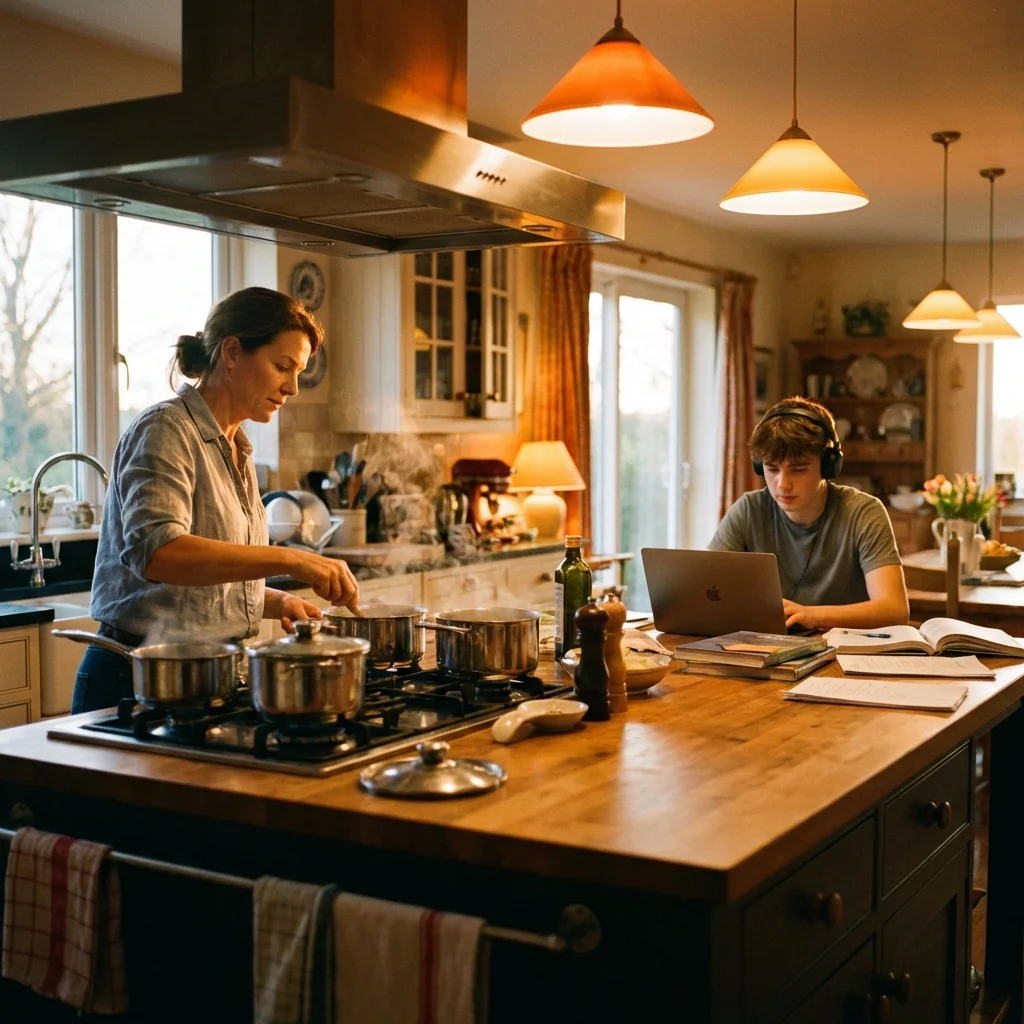 Stop scheduling "talks" with your kids. Instead, schedule proximity. Cook while they do homework in the kitchen. Read in the living room while they game. Drive them places instead of having them take the bus. The goal is to be around each other without the pressure of interaction.
2. Learn Their Signals
Every kid has tells. My son puts his headphones around his neck (not on his ears) when he's open to interaction. My daughter sits in the common areas instead of her room when she wants company. Learn your kid's version of "I'm available but I'm not going to say so out loud."
3. Master the One-Liner
When you do speak during a presence moment, keep it to one line. "I'm here if you need me." "That looks cool." "Want some water?" One-liners don't create pressure. They acknowledge your kid without demanding anything back.
4. Let Car Rides Be Quiet
The car is magical for parent-teen conversation precisely because nobody has to make eye contact. But it's also okay for a car ride to be silent. Put on music you both like. Let the quiet exist. Some of the best car rides I've had with my kids involved zero words and a shared playlist.
5. Play Their Games (Literally)
You don't have to be good at it. You don't even have to understand it. Asking your kid to teach you their favorite game gives them expertise status (they love this) and creates shared activity without forced conversation. And when you're genuinely struggling with a game, they'll talk to you - to help, to laugh, to show off. That's connection.
6. Use Structured Tools When the Time Is Right
Here's where I'll be transparent about my bias: I co-founded Yakety Pack because I believe in the power of structured conversation tools for families. But even I know there's a time and place. Card games and conversation starters work beautifully when the mood is right - game night, road trips, moments when everyone's already relaxed and open. They don't work when your kid is shut down and needs space.
Read the room first. Always.
7. Debrief With Yourself, Not Them
After a tough moment with your kid, journal about it or talk to your partner. Don't go back to your kid with "So I've been thinking about earlier..." They've moved on. The thing you're still processing at 11 PM, they resolved at 4 PM. Let it go.
For the Long Build: Presence builds through many small low-pressure rituals. A deck of conversation cards for families with gamer kids on the dinner table makes the talking optional and the presence the point.
The Counterintuitive Truth About Connection
Here's what I wish I'd known ten years ago: the parents who seem most connected to their teenagers aren't the ones who talk the most. They're the ones who've learned to tolerate silence without filling it. Who can sit in a room with their kid and not need anything to happen. Who've accepted that connection doesn't always look like conversation.
Sometimes connection looks like two people on a couch, one gaming and one reading, existing in comfortable silence. Sometimes it looks like a car ride with nothing but music. Sometimes it looks like a plate of food outside a closed door.
Knowing when to talk to your kids is important. But knowing when to stop talking - when to just show up and be there - that's the skill that changes everything.
You won't get it right every time. I still don't. Last week I asked my daughter about something at school when she clearly wasn't ready, and I watched her face close like a door. Old mistake, new day.
But I'm better at catching myself now. Better at reading the room. Better at sitting in the discomfort of silence because I've learned what comes after it: trust, connection, and eventually - on their timeline, not mine - words.
For the easy nightsPause, Play, Connect: Core Deck172 prompts for the relaxed nights when everyone is already up for talking.$49 CAD • 90 cards • 18 reviewsShop the deck
Figuring out the balance between talking and listening is part of the bigger picture of having real conversations with your kids. It's not about choosing one over the other. It's about learning to read the moment.

