
I want to be honest about something before we start: I spent three years trying to get my teenagers to open up, and most of what I tried was garbage.
Not garbage because it was bad advice. The parenting books were well-intentioned. The therapist tips were technically sound. The "36 questions to ask your teen" articles were written by people who clearly cared. But when I actually tried this stuff with my own kids, in my own kitchen, after my own long day at work? It flopped. Over and over again.
I'm Kevin, co-founder of Yakety Pack and a dad who has fumbled, recovered, fumbled again, and eventually figured out what actually moves the needle when it comes to getting teens to open up. Not the theoretical version. The messy, real-world version that accounts for the fact that your teenager just spent nine hours at school and doesn't want to be interviewed when they walk through the door.
If you've been wondering why your teenager won't talk to you, this is the companion piece. That one explains the why. This one is the what I actually did about it.
What I Tried That Didn't Work (The Honest Version)
The deeper pattern is in our pillar piece on turn screen time into connection time.
 I need to start here because every article about getting teens to open up jumps straight to the solutions. Nobody talks about the graveyard of failed attempts that came first. But the failures taught me more than the wins did.
Failure #1: The "Open-Ended Question" Blitz
Every parenting article says to ditch "how was school?" and replace it with open-ended questions. So I did. I came armed with carefully crafted questions like "What was the most interesting part of your day?" and "If you could change one thing about school, what would it be?"
You know what my son said? "I dunno." Same answer, fancier question.
The problem wasn't the question format. The problem was that I was asking at 3:45 PM when he'd just walked in the door, still decompressing from a full day of social performance. The timing was wrong. The setting was wrong. He felt interrogated regardless of how I phrased it.
What I learned: Better questions don't fix bad timing.
Failure #2: The Forced Family Dinner Conversation
I read that families who eat dinner together have better communication. So I made dinner mandatory. No phones. Eye contact. "Let's go around and share one thing from our day."
It lasted about two weeks. My daughter would give the bare minimum. My son started eating as fast as humanly possible to escape. Dinner became a performance, not a connection point. I was so focused on making conversation happen that I'd accidentally made the table the last place anyone wanted to be honest.
What I learned: Forced vulnerability creates resistance, not openness.
Failure #3: The Ambush After School
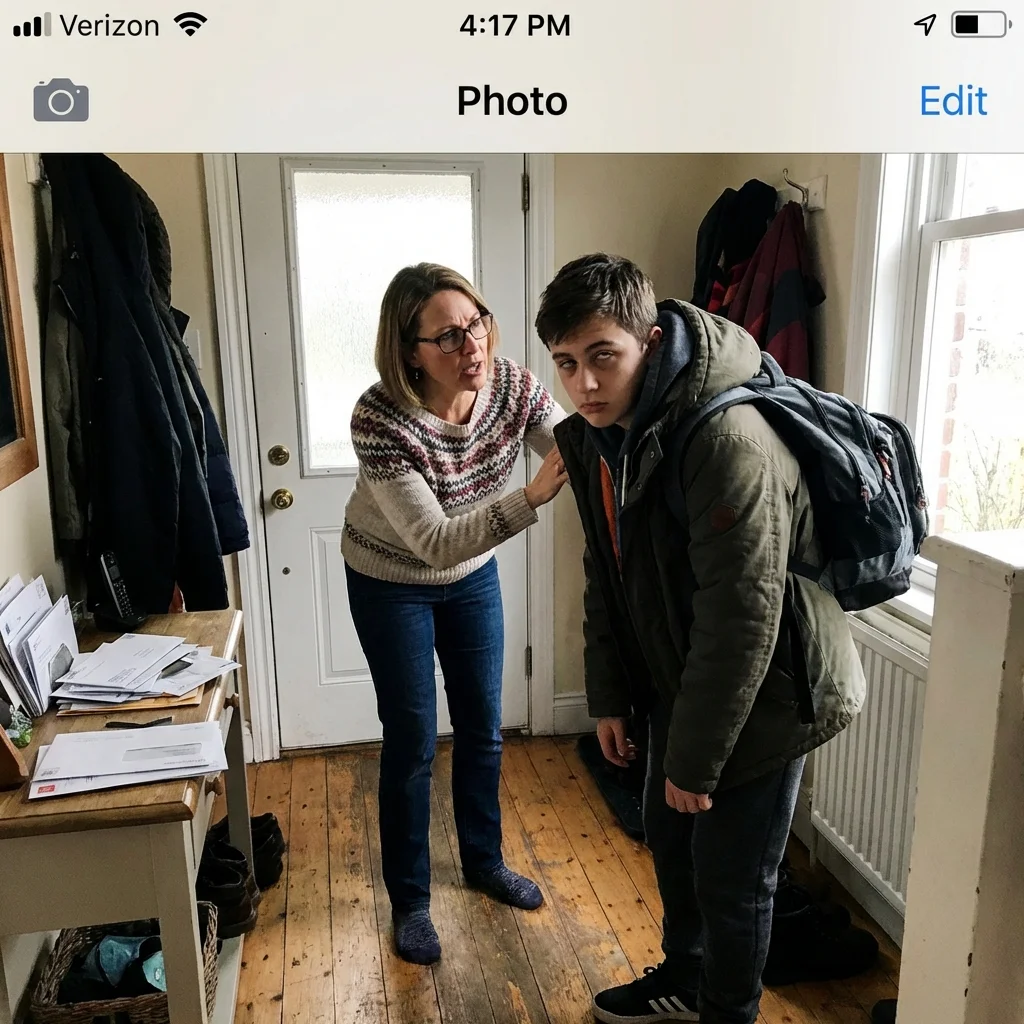 This one's embarrassing. I started working from home specifically so I could "be available" when my kids got home. Noble intention. Terrible execution. I'd meet them at the door, coffee in hand, ready for connection.
Imagine being fifteen. You've navigated friendship drama, a pop quiz, and a cafeteria that smells like industrial cleaner. You walk through your front door desperate for silence. And there's your dad, grinning, asking how your day was.
I was the emotional equivalent of a golden retriever when they needed a cat.
What I learned: Availability is not the same as approachability.
Failure #4: The "I'll Just Wait" Strategy
After the ambush approach failed, I swung to the opposite extreme. I'll just be patient. I'll wait for them to come to me. I'll create a safe space and they'll talk when they're ready.
I waited. And waited. Weeks passed. The conversations didn't come because my teenagers didn't know I was waiting. They just thought I'd stopped caring. My silence, which I intended as respectful space, felt like disinterest to them.
What I learned: Passive availability isn't a strategy. Kids need signals that you're open, not just quiet.
Failure #5: Bringing Up My Own Teen Years
"When I was your age..." might be the fastest way to make a teenager's eyes glaze over. I thought sharing my own experiences would create common ground. Instead, it created a lecture they didn't ask for. My daughter once literally said, "Dad, your teenage years were in a completely different century." She wasn't wrong.
What I learned: Relating through your own stories only works after trust is already established, not as a tool to build it.
 When better questions still flopPause, Play, Connect: Core Deck172 prompts that work because they arrive as a game, not as another question at the door.$49 CAD • 90 cards • 18 reviewsShop the deck
The Turning Point: It Wasn't a Conversation
The breakthrough didn't come from a question, a book, or a strategy. It came from a video game.
My son was playing Fortnite one evening and I sat down on the couch. Not to talk. Not to bond. I was just tired and it was the closest seat. I watched for a few minutes and asked a genuine question: "What's the point of the storm circle thing?"
He explained it. I asked another question. He explained that too. Then, without any prompting, he started narrating what he was doing. Why he chose that weapon. Why he was avoiding that area. What his strategy was.
Twenty minutes later, we'd had the longest conversation we'd had in months. And I hadn't asked a single question about school, feelings, or his day.
That night, everything I thought I knew about getting teens to open up shifted.
For the Quiet Window: Teens open up faster with a soft prompt. Keep a Pause, Play, Connect deck within reach so a teen-safe card is ready when the window opens.
7 Strategies That Actually Work (With Real Examples)
A deck of conversation cards for families with gamer kids is the soft on-ramp the strategies below build around.
After that Fortnite moment, I started paying attention to when my kids actually opened up. Not when I wanted them to, but when they naturally did. Patterns emerged. And I built strategies around those patterns instead of around parenting theory.
1. Enter Their World First (The Gaming Bridge)
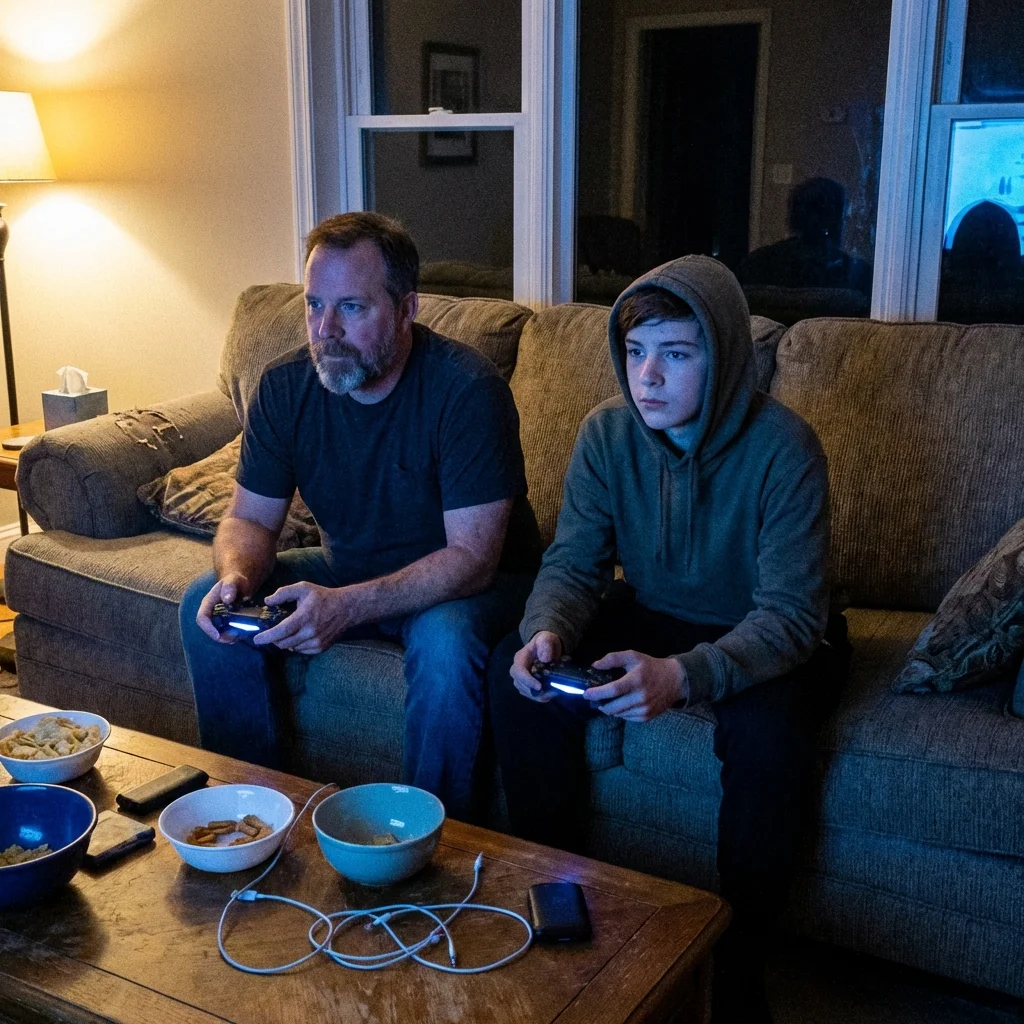 This is the biggest one, and it's the one most parents resist. Your teenager has a world they care deeply about, whether it's gaming, a show, music, or something online, and that world is the bridge to real conversation.
For my son, it was gaming. I didn't try to understand everything. I just showed up with curiosity. I asked him to teach me Minecraft. I was terrible. He thought it was hilarious. But somewhere between laughing at my awful house-building and him explaining redstone circuits, he started telling me about a friend who'd been acting weird at school.
That's how it works. You enter their territory, you let them be the expert, and the real stuff comes out sideways.
If you're not sure where to start with understanding your teen's gaming world, you don't need to become an expert. You just need to show genuine interest. Even learning a few gaming terms your kid uses signals that you care about their world.
Real example: I started watching one Twitch streamer my son liked. Just one. The next day I mentioned something the streamer said, and my son's face lit up. "You watched Myth?!" That single moment bought me more conversation credit than six months of dinner-table questions.
2. Use Parallel Activities (Side-by-Side > Face-to-Face)
 Teenagers find face-to-face conversation intense. It feels like a spotlight. But side-by-side? That's where the magic happens.
Driving in the car. Walking the dog. Cooking together. Shooting hoops. Doing dishes. Any activity where you're physically next to each other but not staring at each other removes the pressure that makes teens clam up.
My daughter opens up on car rides. Something about staring at the road instead of at me makes it easier for her. My son opens up while we're both doing something with our hands. These aren't the same triggers, which is important: what works for one kid might not work for another.
Real example: My daughter told me about a friendship breakup during a twenty-minute drive to her guitar lesson. I didn't ask. She just started talking at minute seven. If I'd sat her down at the kitchen table and asked about her friends, I'd have gotten "they're fine."
3. Master the Art of Terrible Timing (Be Available at 10 PM)
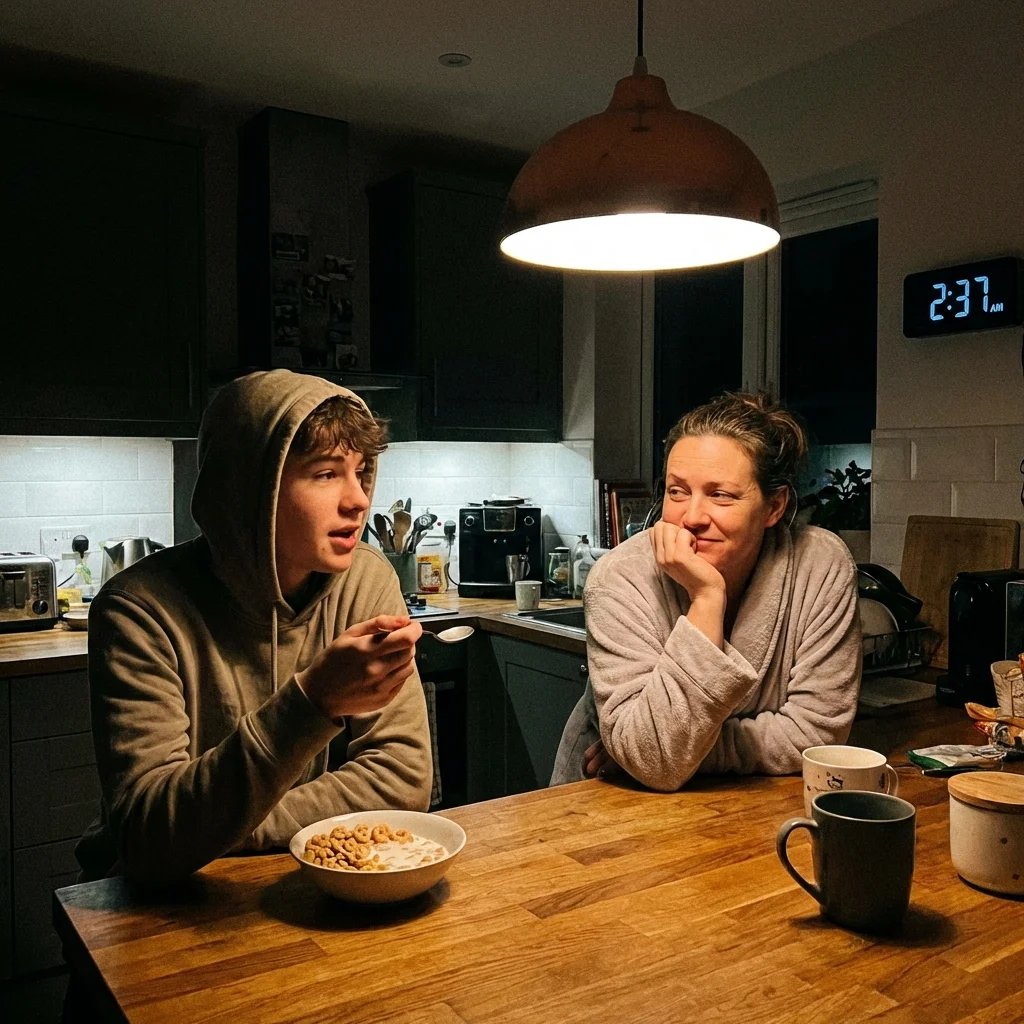 Here's an inconvenient truth: teenagers open up at the worst possible times. Late at night when you're exhausted. In the car when you're running late. During halftime of the game you're actually watching.
My biggest conversations with both kids have happened after 9:30 PM. My son will wander into the kitchen for a snack and suddenly he's talking about something that happened three weeks ago that's been bothering him. If I say "can we talk about this tomorrow?" the window closes. Permanently.
Getting teens to open up means being ready when they're ready, not when it's convenient for you.
Real example: My daughter came into our room at 11 PM on a school night to tell me she was worried about a friend who might be depressed. Was I tired? Yes. Was that one of the most important conversations of the year? Absolutely. I made coffee and we talked for an hour.
4. React Small (The Poker Face Protocol)
This one took me the longest to learn. When your teenager finally opens up and tells you something, your reaction determines whether they'll do it again.
My son once casually mentioned that a kid at school had offered him a vape. My internal reaction was full-blown parental alarm. But I'd learned by then. I kept my voice even. "Oh yeah? What did you think about that?" He told me everything: who offered it, what he said, what his friends think about vaping, the whole landscape.
If I'd reacted with panic, interrogation, or a lecture, that would have been the last time he told me anything risky. Teens are constantly testing whether you can handle what they share. Fail the test once and you're locked out for months.
Real example: My daughter mentioned a boy she thought was cute. I wanted to ask forty-seven questions. Instead I said, "Yeah? What's he like?" She talked for ten minutes. When I got my teenager to actually talk to me about relationships, it was because I'd learned to keep my reactions smaller than my feelings.
 When they finally start talkingPause, Play, Connect: Core Deck$49 CAD • 172 promptsSee the deck
5. Text Like a Human (Digital Connection Counts)
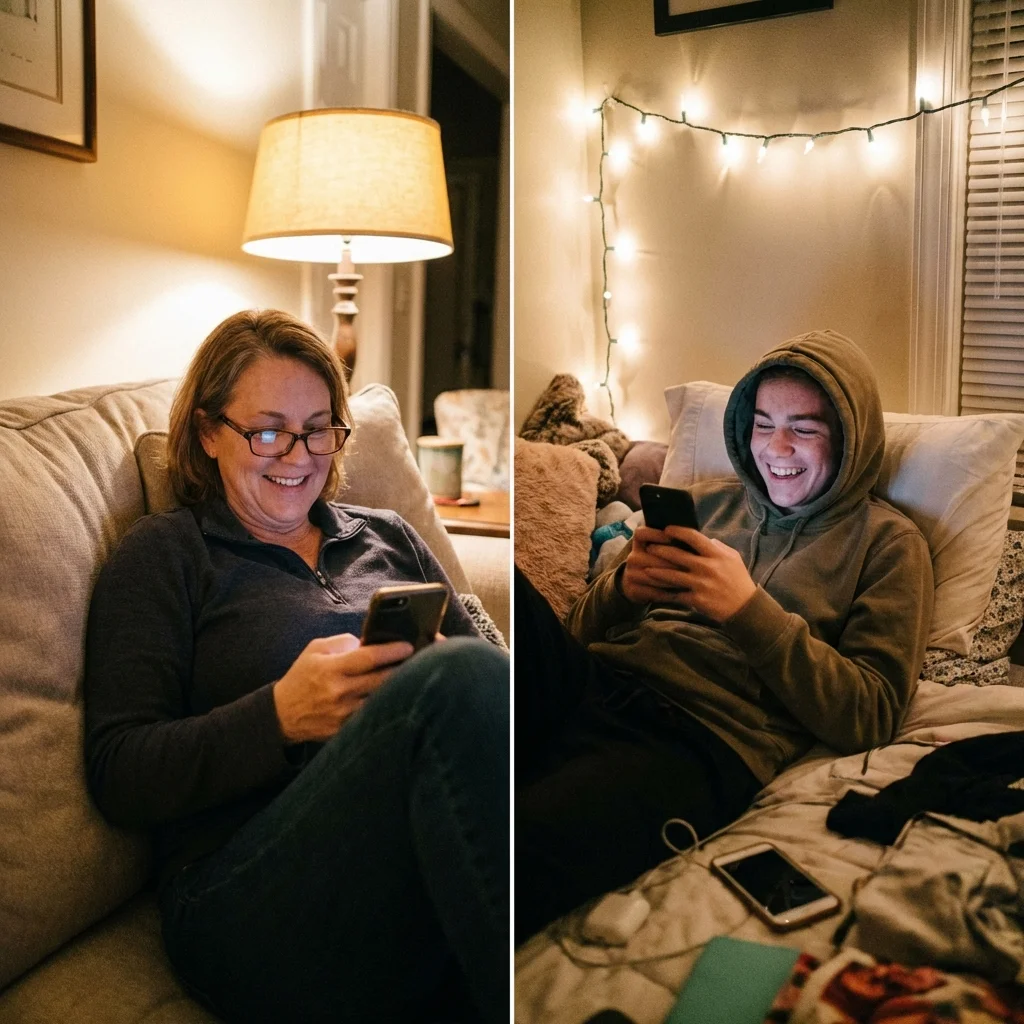 I resisted this for a long time. I wanted "real" conversations, not text messages. But here's the reality: your teenager communicates through their phone. Meeting them there isn't giving up; it's being smart.
I started sending my son random memes. Not parenting memes. Memes that were actually funny. I sent my daughter songs I heard that reminded me of her. I texted "good luck on your test" instead of saying it at breakfast when she was barely conscious.
These micro-connections build something. They say "I'm thinking about you" without requiring anything in return. And they create a channel where, eventually, real stuff starts flowing too.
Real example: My son once texted me from his bedroom (twenty feet away) to tell me he was having a bad day. That text led to a real conversation when he came downstairs an hour later. The text was the warmup he needed. If texting is the on-ramp to talking, I'll take it.
6. Give Them Structure When Freeform Fails
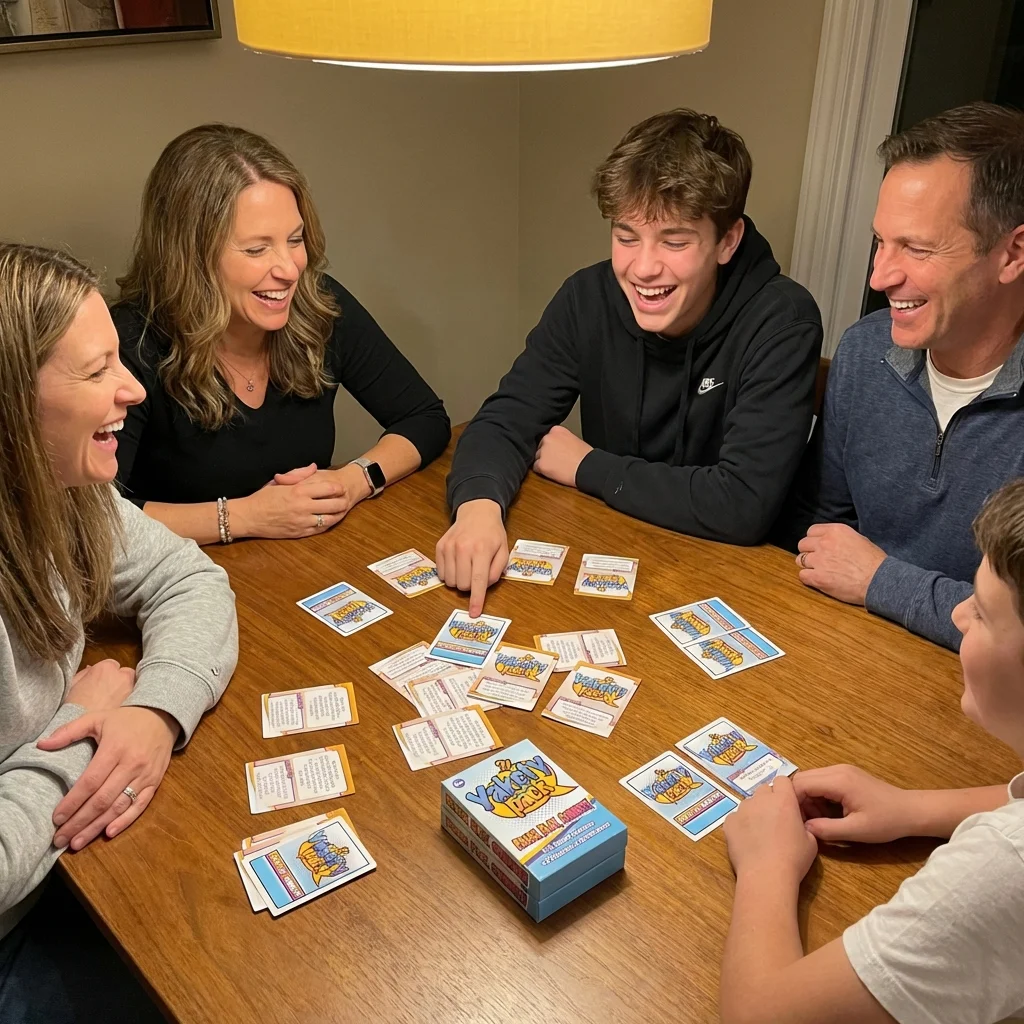 Some teens actually want to talk but genuinely don't know how to start. The blank canvas of "tell me anything" is overwhelming. A little structure helps.
We started using conversation cards at our house, not as a formal thing, but as a low-stakes game. Yakety Pack grew partly out of this realization: sometimes the best conversations start with a prompt that takes the pressure off. A card that asks "What's one thing you wish adults understood about being a teenager?" gives permission to say something they'd never volunteer on their own.
The key is framing it as fun, not therapy. The moment it feels like a parenting tool, teens smell it and disengage. But when it's "let's play this weird card game," the guard comes down.
Real example: One Sunday night we pulled out some conversation game cards just to kill time before a movie. One question asked about the best and worst parts of the week. My daughter talked about being excluded from a group project. She'd been carrying that all week and never mentioned it. The card gave her the opening.
7. Narrate Your Own Life (Without Expecting Reciprocation)
This is the subtlest strategy but maybe the most powerful long-term. Instead of asking your teen about their life, share yours. Not lectures or life lessons. Just... narration.
"This guy at work said something that really bugged me today." "I'm nervous about this presentation tomorrow." "I made a mistake with a client and I'm not sure how to fix it."
You're modeling vulnerability. You're showing that talking about hard stuff is normal, not a crisis event. And you're doing it without requiring anything from them.
Over time, this changes the culture of your household. Talking about real things becomes what your family does, not a special occasion that requires the right question at the right time.
Real example: I told my kids about a disagreement with a business partner over dinner one night. I wasn't looking for advice. I just shared it. A week later, my son told me about a fight with his best friend using almost the same framing: "This thing happened and I'm not sure how to handle it." He'd absorbed the template.
Why Gaming Is the Bridge Most Parents Miss
The everyday version is mapped beat by beat in our companion piece on how to use Yakety Pack in real life.
I keep coming back to gaming because it was genuinely the most effective tool in my arsenal for getting teens to open up, and most parents dismiss it entirely.
Here's what gaming provides that traditional conversation doesn't:
Shared experience in real time. When you play a game with your teen, you're both in the same world, reacting to the same things. That shared experience creates natural conversation without anyone having to manufacture it.
Your teen as the expert. In most parent-teen interactions, the parent holds the authority. In gaming, the teen is the expert. That power shift is profoundly important. It builds their confidence and makes them more willing to engage.
Low-stakes failure. You can die in a game, make a terrible decision, and laugh about it. That normalizes imperfection in a way that conversations about school or social life can't.
A language they already speak. If you've been wondering how to have real conversations with your kids, gaming is often the Rosetta Stone. It translates their world into something you can participate in.
I'm not saying every parent needs to become a gamer. I'm saying that whatever your teen is passionate about, whether it's gaming, music, art, basketball, or building mechanical keyboards, that passion is the door. Walk through it. The conversations will follow.
The Uncomfortable Truth About Getting Teens to Open Up
Here's what I wish someone had told me five years ago: getting teens to open up is not a problem to solve. It's a relationship to build.
There's no question you can ask, no technique you can use, no book you can read that will make your teenager suddenly want to tell you everything. What works is showing up consistently, reacting well when they do share, entering their world without an agenda, and being available at inconvenient times.
Some weeks will be great. You'll have a breakthrough conversation and think you've cracked the code. The next week, you'll get one-word answers and wonder what went wrong. That's not failure. That's teenagers.
The parents who succeed at this aren't the ones with the best strategies. They're the ones who keep showing up even when it feels like nothing's working. Who sit on the couch even when they're not invited. Who send the meme even when the last ten got no response. Who stay up past their bedtime because their kid finally wants to talk.
It's not glamorous. It's not efficient. But it's what works.
Quick Reference: What Works vs. What Doesn't
Stop doing:
- Asking questions the moment they walk in the door
- Forcing "family conversation time" with rigid structure
- Waiting passively for them to come to you
- Reacting big to small disclosures
- Comparing their experience to your teen years
Start doing:
- Entering their world (gaming, music, interests) with genuine curiosity
- Using side-by-side activities as conversation settings
- Being available during their peak hours (usually late)
- Keeping your reactions smaller than your emotions
- Texting, memeing, and meeting them in their communication style
- Sharing your own life without expecting reciprocation
- Using low-stakes conversation tools like card games
For the Long Game: Trust grows from many small low-pressure cards. A deck of Yakety Pack conversation cards on the kitchen counter keeps the door open.
You're Already Closer Than You Think
If you're reading this article at midnight, worried that you're losing your connection with your teenager, here's what I want you to know: the fact that you're here means you care enough to try. And in my experience, that's most of the battle.
Your teen knows you care even when they act like they don't. Every awkward attempt, every question that gets a one-word answer, every time you sit down to watch something you don't understand because they like it, it registers. They're keeping a mental tally even if they never acknowledge it.
So keep going. Keep entering their world. Keep reacting small. Keep being available at terrible times. Keep sending the memes.
One night, probably when you least expect it, they'll sit down next to you and start talking. And it'll be worth every bit of the wait.
Want more practical strategies for connecting with your teenager? Check out how to get your teenager to actually talk to you for the complete conversation playbook, or read why won't my teenager talk to me to understand the psychology behind teen silence.
FAQ
How long does it take for teens to start opening up? There's no fixed timeline. Some teens respond to changes within weeks; others take months. The key is consistency. My son took about three months of me entering his gaming world before he started volunteering real information. My daughter started opening up faster once I fixed my timing (car rides instead of kitchen table conversations).
What if my teen is dealing with something serious and won't talk? If you suspect depression, self-harm, bullying, or another serious issue, don't rely solely on these strategies. Talk to their school counselor, consult a family therapist, or call a helpline. These strategies build daily connection, but professional support is essential when safety is a concern.
Does this work with younger teens vs. older teens? Yes, but the approach shifts. Younger teens (13-14) often respond well to shared activities and structured conversation tools. Older teens (16-18) tend to prefer the texting bridge and late-night availability approaches. Both ages benefit from small reactions and entering their world.
What if I'm not into gaming at all? Gaming is just one bridge. The principle is entering whatever world your teen cares about. If they're into music, listen to their playlists. If they're into art, ask to see what they're working on. If they're into sports stats, talk fantasy leagues. The specific interest matters less than your genuine curiosity about it.
My teen only opens up to their friends, not me. Is that normal? Completely normal. Teens are developmentally wired to prioritize peer relationships. Your goal isn't to replace their friends as confidants. It's to remain a trusted backup, the person they come to when the friend advice isn't enough. If they're opening up to someone, that's healthy. Stay available and keep the door open.
Frame it as a gamePause, Play, Connect: Core Deck172 prompts that give a teen an opening they would never volunteer on their own.$49 CAD • 90 cards • 18 reviewsShop the deck

