
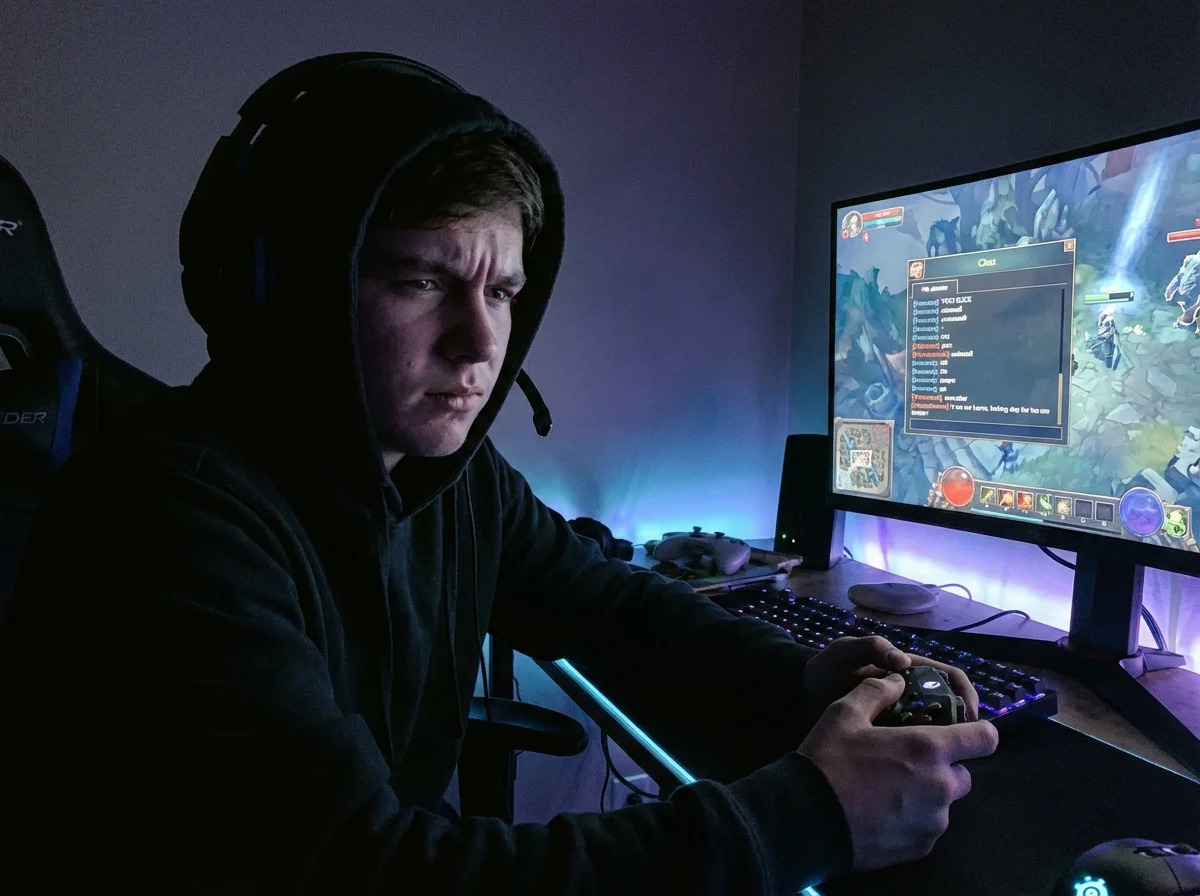
My daughter came downstairs crying after a Valorant match last year. Someone on her team had spent the entire game telling her she was trash, that girls shouldn't play shooters, and that she should uninstall. She was thirteen.
My gut reaction was to march upstairs, unplug everything, and ban online gaming forever. Instead, I sat down, asked her to tell me exactly what happened, and realized I had absolutely no idea what to do next. Should I report the player? Contact the game company? Call the other kid's parents? Take away the game?
I fumbled through it. Badly. I said some unhelpful things like "just ignore them" and "words can't hurt you," which are both terrible advice when you're thirteen and someone just verbally attacked you in front of your friends.
Since then, I've put together an actual plan. Not a perfect one, but a real one. This is the toxic gaming behavior parents guide I needed that night - practical steps for before, during, and after your kid encounters toxicity online.
What Toxic Behavior Actually Looks Like in Games
For the bigger frame, see our piece on what griefing means in gaming.
Before you can help your kid handle toxicity, you need to understand what you're dealing with. "Someone was mean in a game" covers a huge range of behavior, and your response should match the severity.
Trash talk
This is the mildest form. Players saying "you're so bad" or "uninstall" after someone makes a mistake. It's rude, but it's also incredibly common. Most kids who've played online for more than a week have heard this. It's the background noise of competitive gaming.
Trolling and griefing
Trolls intentionally ruin the game experience. They might team-kill (attacking their own teammates), block doorways, destroy things other players built, or feed the enemy team on purpose. Griefers aren't angry at your kid specifically - they just enjoy making everyone miserable.
Targeted harassment
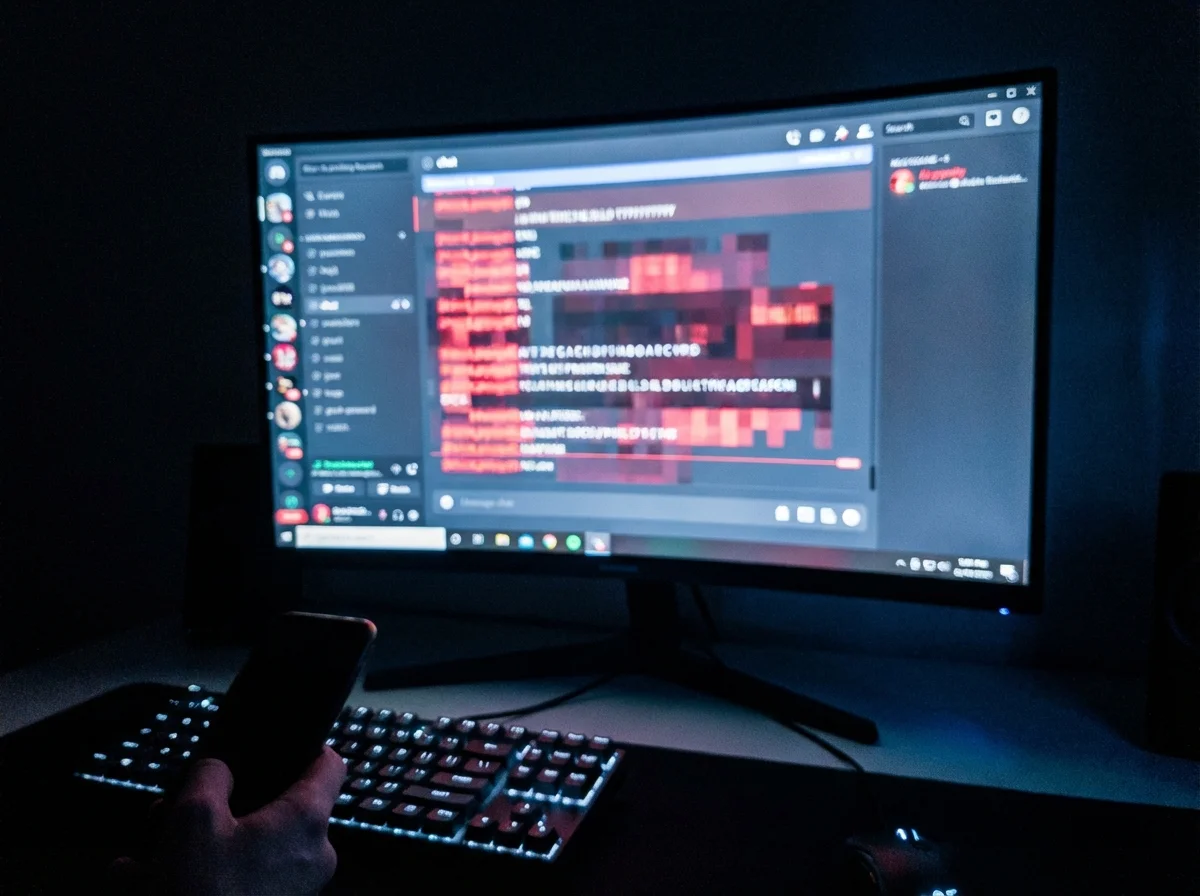
This is where it crosses a line. When someone singles out your kid specifically - following them between matches, sending repeated hostile messages, or rallying others to pile on - that's harassment. It's personal, it's sustained, and it's the kind of thing kids struggle to shake off.
Identity-based attacks
Racism, sexism, homophobia. The moment another player hears a young voice, a female voice, or an accent, some lobbies turn ugly fast. My daughter's experience wasn't unusual. Studies show that women and girls in gaming face significantly more harassment than male players, and it's often specifically gendered.
Doxxing and real-world threats
The most serious category. If someone threatens to find your kid's address, shares personal information, or makes threats of physical violence, that's not gaming toxicity anymore. That's a safety issue that may require involvement beyond the game platform.
Understanding these categories matters because your response to "someone called me a noob" should be very different from your response to "someone said they know where I live."
 After the lobby turns uglyPause, Play, Connect: Core Deck172 prompts that make it easier to ask what happened in the match without starting a fight.$49 CAD • 90 cards • 18 reviewsShop the deck
Why "Just Ignore It" Doesn't Work
I know. It's the first thing that comes out of your mouth. It was the first thing out of mine. But here's why it fails.
Telling a kid to "just ignore it" implies the problem is their reaction, not the other person's behavior. It puts the burden on the victim. It also assumes ignoring is easy, which anyone who's been bullied knows is not true. When someone attacks you in front of your friends during an activity you love, you can't just flip a switch and not care.
What works better is giving your kid tools and agency. Instead of "ignore it," try:
- "You don't have to listen to that." Then show them how to mute.
- "That person is breaking the rules." Then show them how to report.
- "How did that make you feel?" Then actually listen.
- "What do you want to do about it?" Then help them follow through.
The goal isn't to toughen your kid up. It's to teach them that they have the power to control their online experience, and that coming to you about it won't result in losing their gaming privileges.
Toxicity is one of the real concerns in gaming culture. Understanding the bigger picture helps you respond with context rather than panic.
For the Hard Talk: A soft prompt lands when feelings are still raw. Keep a Pause, Play, Connect deck near the console so a curiosity card is ready right after a bad match.
The Conversation After It Happens
The full set of post-match starters is in our conversation cards for families with gamer kids.
This is the most important part, and it's the part most parents (including me) get wrong the first time.
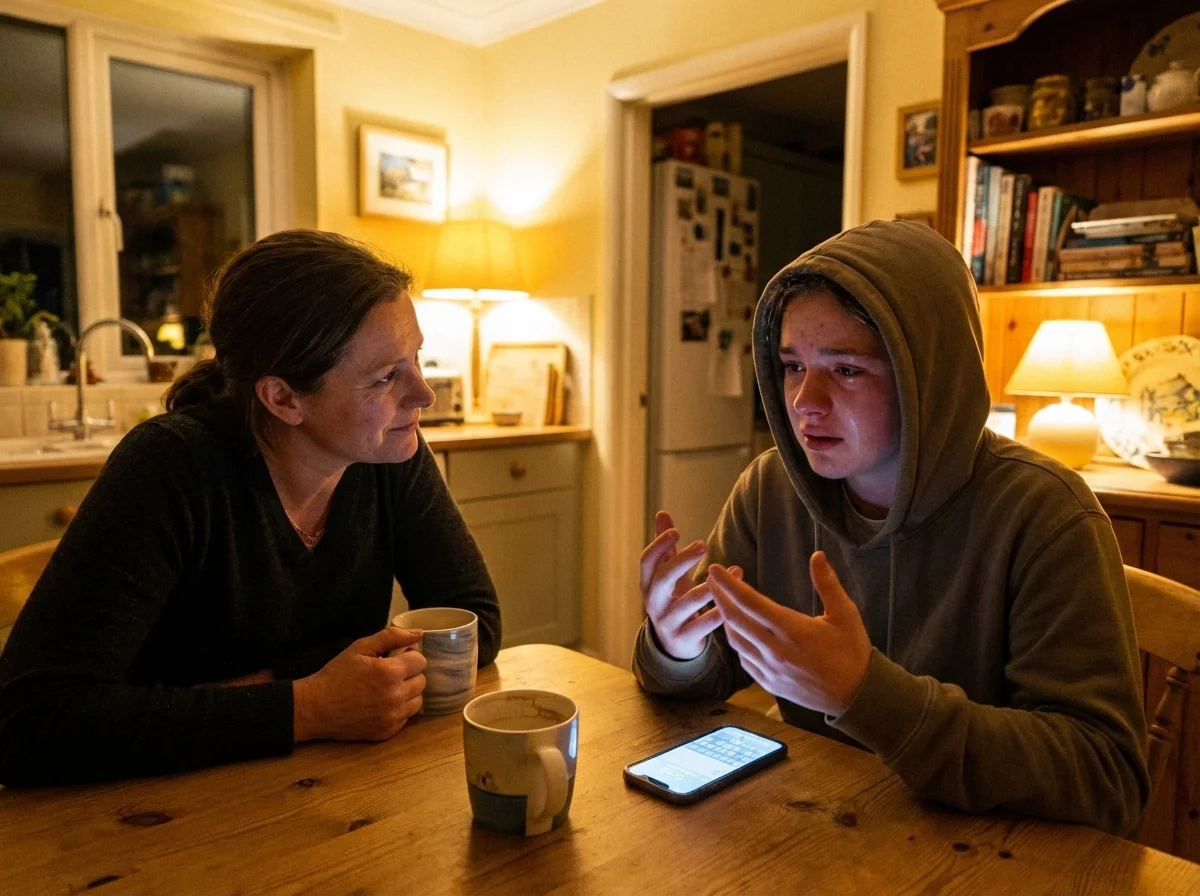
When your kid tells you about a toxic encounter, your first job is not to fix it. Your first job is to listen. Resist the urge to immediately say "well, did you report them?" or "maybe you shouldn't play that game." Just let them talk.
Step 1: Validate the feeling
"That sounds really frustrating" or "I'd be upset too" goes further than you think. Your kid needs to know that being hurt by mean words is normal, not weak.
Step 2: Ask questions (gently)
- What happened exactly?
- Was this someone they know or a stranger?
- Has this person done this before?
- Did anyone else in the game respond?
- How are they feeling right now?
Step 3: Separate the behavior from the game
This is critical. If your kid tells you about a toxic encounter and your response is "well, that's why you shouldn't play online games," you've just guaranteed they'll never tell you about the next one. The behavior is the problem, not the platform. You don't ban driving because someone cut you off in traffic.
Step 4: Make a plan together
Based on what happened, decide together what the next step is. Report the player? Mute and move on? Take a break from that game for a bit? The key word is "together." Giving your kid input in the response helps them feel in control rather than victimized twice - once by the bully and once by a parent who took their game away.
Step 5: Check in later
Don't let it be a one-time conversation. Circle back the next day. "Hey, did you play again today? How did it go?" This signals that you care about their online life the same way you care about their school day.
 When you circle backPause, Play, Connect: Core Deck$49 CAD • 172 promptsSee the deck
How to Report Toxic Players (Platform by Platform)
Knowing how to report is half the battle. Most kids know reporting exists but think it does nothing. And honestly, they're partially right - not every report results in action. But cumulative reports do lead to bans, and teaching your kid to report normalizes standing up rather than accepting abuse.
Xbox
Go to the player's profile → "Report" → select the reason. Xbox actually has one of the better enforcement systems. Repeated reports trigger reviews, and serious violations can result in temporary or permanent bans. You can also check your kid's report history in the Xbox Family Settings app.
PlayStation
During gameplay, press the PS button → go to the player's profile → "Report." PlayStation also allows you to record voice chat clips as evidence, which was added specifically to address toxic voice chat.
Nintendo Switch
Nintendo's approach is more limited. For games like Splatoon or Smash Bros online, reporting options exist in the game itself, not through the console. The Switch's limited communication features mean toxicity is less common but not absent.
PC (Steam, Epic Games, Riot Games)
Each platform has its own reporting system. In Steam, right-click the player's name and select "Report." In Riot Games (Valorant, League of Legends), use the post-match scoreboard. Epic Games (Fortnite) has an in-game reporting tool - press Esc, go to Reporting, select the player and reason.
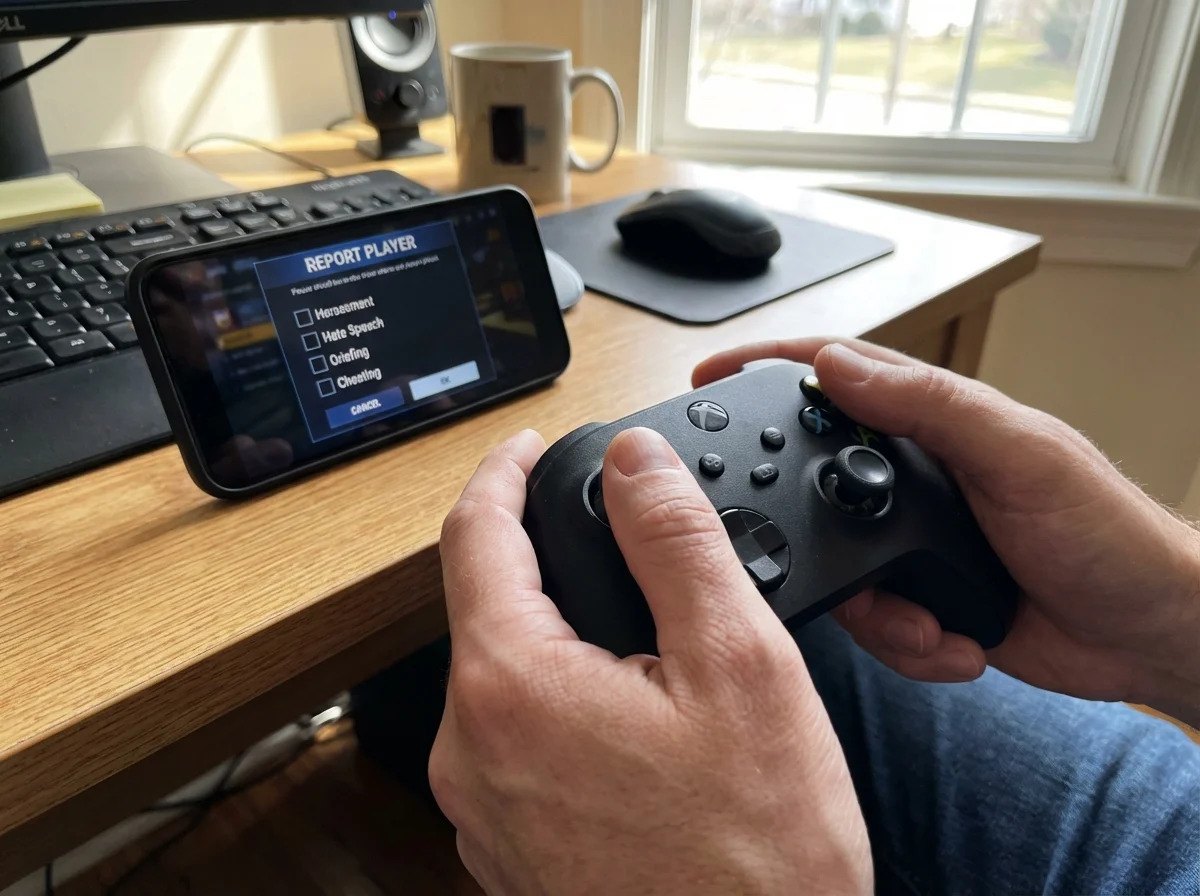
If your kid plays Fortnite, the reporting system there is relatively straightforward and Epic does take action on reported accounts.
Mobile games
Most mobile games have a report button on the player's profile or in the chat interface. Roblox, for example, has a fairly robust reporting and moderation system. Look for the flag icon or three-dot menu near a player's name.
The nuclear option: platform-level reports
If in-game reporting isn't enough, you can escalate to the platform level. Xbox, PlayStation, and PC platforms all allow you to report players through their websites or support portals. For severe cases (threats, doxxing, CSAM), report directly to the platform's trust and safety team, not just the in-game tool.
Teaching Kids to Protect Themselves
Reporting is reactive. What you really want is to give your kid proactive tools so they can manage their experience in real time.
The mute button is their best friend
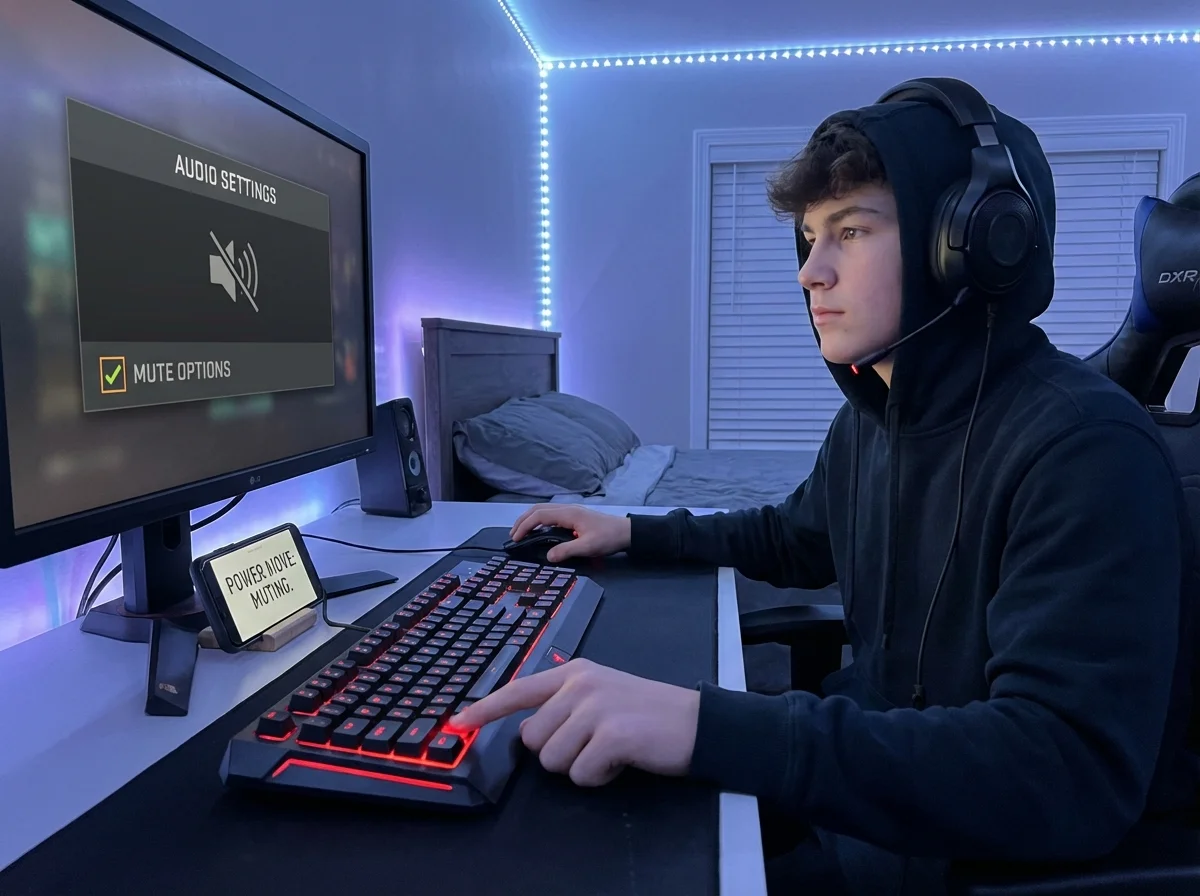
Seriously. The single most effective tool against voice chat toxicity is the mute button. Teach your kid that muting someone isn't weakness - it's a power move. They're choosing not to give that person their attention. In most games, muting is one or two button presses. Practice it before they need it.
Privacy settings matter
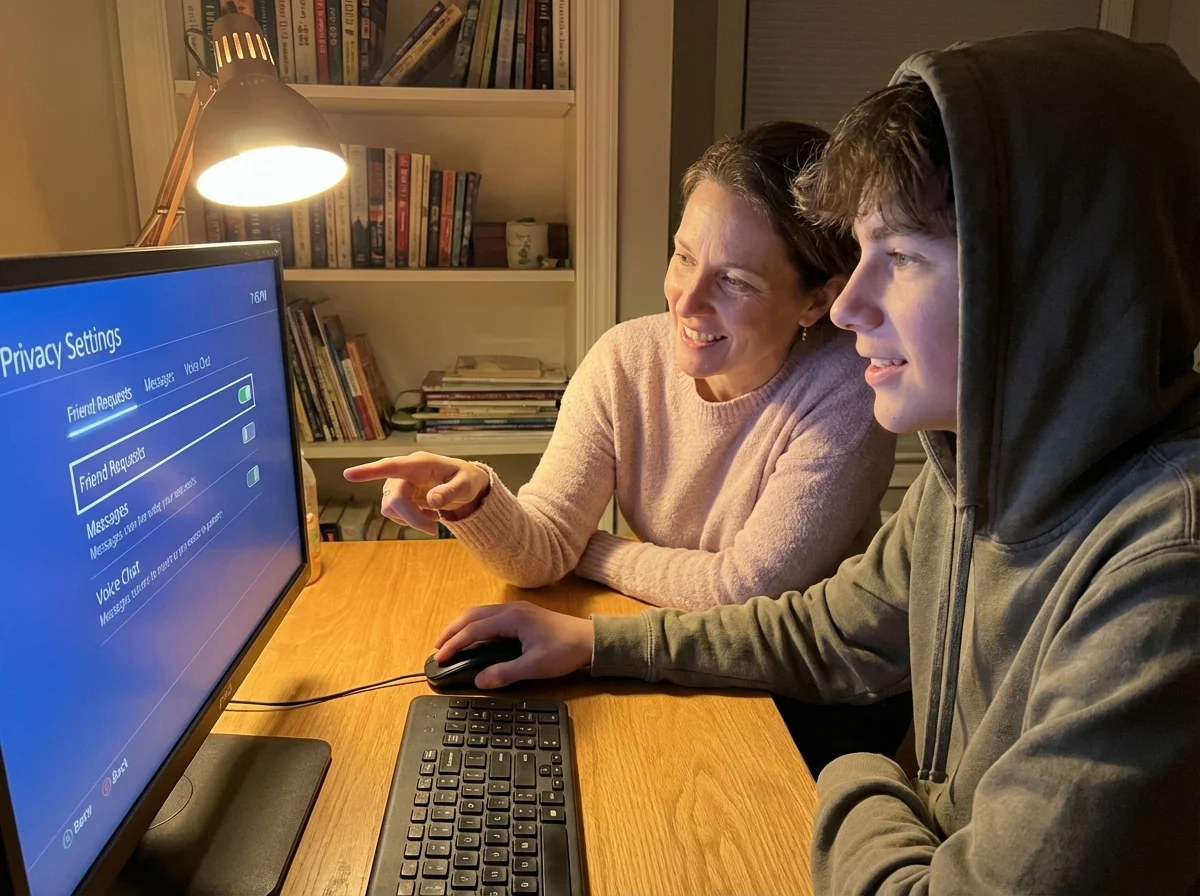
Most platforms let you restrict who can send direct messages, friend requests, and party invites. Lock these down to "friends only" or "friends of friends." This prevents random strangers from contacting your kid outside of the game itself. Our Discord safety guide covers these settings in detail for that platform specifically.
The "walk away" rule
Agree on a family rule: if a game lobby is toxic, your kid has permission to leave. No finishing the match, no "but we're about to win." If someone is making them miserable, they close the game or switch to a different lobby. This needs to be pre-established so they don't feel like quitting means losing.
Build a positive crew
The best protection against toxic randoms is not playing with randoms. Encourage your kid to build a friend group they enjoy gaming with. If they're playing with three friends in a four-person squad, there's only one slot for a random player - and they can mute that person immediately if needed.
Teach the "don't feed the trolls" principle
This is different from "ignore it." It means understanding that trolls are performing. They want a reaction. When your kid responds with anger, the troll wins. When they mute and move on, the troll gets bored. This isn't about pretending it doesn't hurt - it's about understanding the psychology. Most toxic players are looking for power, and silence takes that power away.
Opening up these conversations doesn't always come naturally. Sometimes you need a starting point. That's actually why we created Yakety Pack - it's a deck of conversation cards designed to help parents and kids talk about the stuff that matters, including online life, friendships, and tough situations. Having a card prompt the conversation takes the awkwardness out of bringing it up yourself.
When to Escalate Beyond the Game
Most toxic encounters are unpleasant but manageable. Mute, report, move on. But some situations require more.
Involve school if it's a classmate
If the toxic player is someone from your kid's school, this isn't just gaming toxicity - it's bullying that happens to take place in a game. Schools increasingly recognize cyberbullying as falling under their anti-bullying policies, even when it happens outside school hours. Document everything (screenshots, recordings) and contact the school.
Contact platform trust and safety for sustained harassment
If someone is repeatedly targeting your kid across multiple games or sessions, file a detailed report with the platform's trust and safety team. Include dates, usernames, and any evidence. Platforms take pattern behavior more seriously than individual incidents.
Involve law enforcement for threats
If someone threatens physical violence, shares your kid's personal information (doxxing), or engages in any behavior that makes you fear for your child's safety, contact local law enforcement. Many police departments now have cybercrime units. Also report to the FBI's IC3 (Internet Crime Complaint Center) if the behavior involves threats or exploitation.
When to hit pause on a specific game
Sometimes a particular game's community is just too toxic for your kid at their current age. This isn't banning gaming - it's making a specific judgment call. "I think Valorant's voice chat is too rough for right now. Let's find something with a better community and revisit this in six months." That's reasonable. That's parenting.
For the Long Build: Resilience grows from many small post-game conversations. A deck of Yakety Pack conversation cards on the table makes those talks routine.
Building Long-Term Resilience
The goal isn't to shield your kid from every toxic encounter. That's impossible. The goal is to build their ability to handle it, recover from it, and not let it define their experience.
Normalize talking about it. Ask about their gaming the same way you ask about school. "Any weirdos in your lobbies today?" said with a smile opens the door without making it feel like an interrogation.
Share your own experiences. If you've dealt with jerks online - in comments, on social media, at work - share those stories. Kids need to know that dealing with difficult people is a lifelong skill, not a gaming-specific problem.
Celebrate when they handle it well. "You muted that person and kept playing? That's actually really mature." Positive reinforcement for healthy responses is more effective than punishment for unhealthy ones.
Keep perspective. For every toxic encounter, there are dozens of positive ones. Kids make real friends through gaming. They learn real skills. They have experiences that genuinely matter to them. The existence of toxic players doesn't erase that. If you and your kid play together, you'll see firsthand that most interactions are neutral or positive.
Your kid is going to encounter mean people online. That's unavoidable. What's not unavoidable is how prepared they are, how supported they feel, and whether they know you're someone they can talk to about it. That's the action plan. Not a perfect shield - a strong foundation.
Handling toxic behavior is part of understanding modern gaming culture. For more on keeping your kid safe and connected, explore our guides on Discord safety, Fortnite conversations, and playing games together.
Make the asking routinePause, Play, Connect: Core Deck172 prompts that turn checking in about their online life into a normal part of the week.$49 CAD • 90 cards • 18 reviewsShop the deck

