
"How was Fortnite?"
"Good."
"Did you win?"
"No."
"What did you do?"
"Played."
Sound familiar? I had this exact exchange with my son for months. Every single day. Three questions, three dead-end answers, and the slow realization that I was losing the thread of connection with my own kid.
Here's what I eventually figured out: the problem wasn't that my son didn't want to talk about Fortnite. He was desperate to talk about it. The problem was that I was asking the wrong questions because I didn't understand what Fortnite actually is to him. It's not just a game. It's his social life, his creative outlet, his status symbol, and his shared language with friends, all wrapped into one colorful, chaotic package.
Once I learned enough to ask better questions, everything changed. Not overnight. But steadily. And now I want to share what worked, because if you're reading this, you're probably stuck in the same "good/no/played" loop I was.
This is part of our bigger guide to understanding gaming culture as a parent. Consider this your Fortnite-specific deep dive.
Why Your Kid Is Obsessed With Fortnite (And Why That's Not a Bad Thing)
For the bigger frame, see our pillar piece on turn screen time into connection time.
Before you can talk to your kid about Fortnite, you need to understand why it matters so much to them. And I don't mean "it's fun." I mean the real reasons.
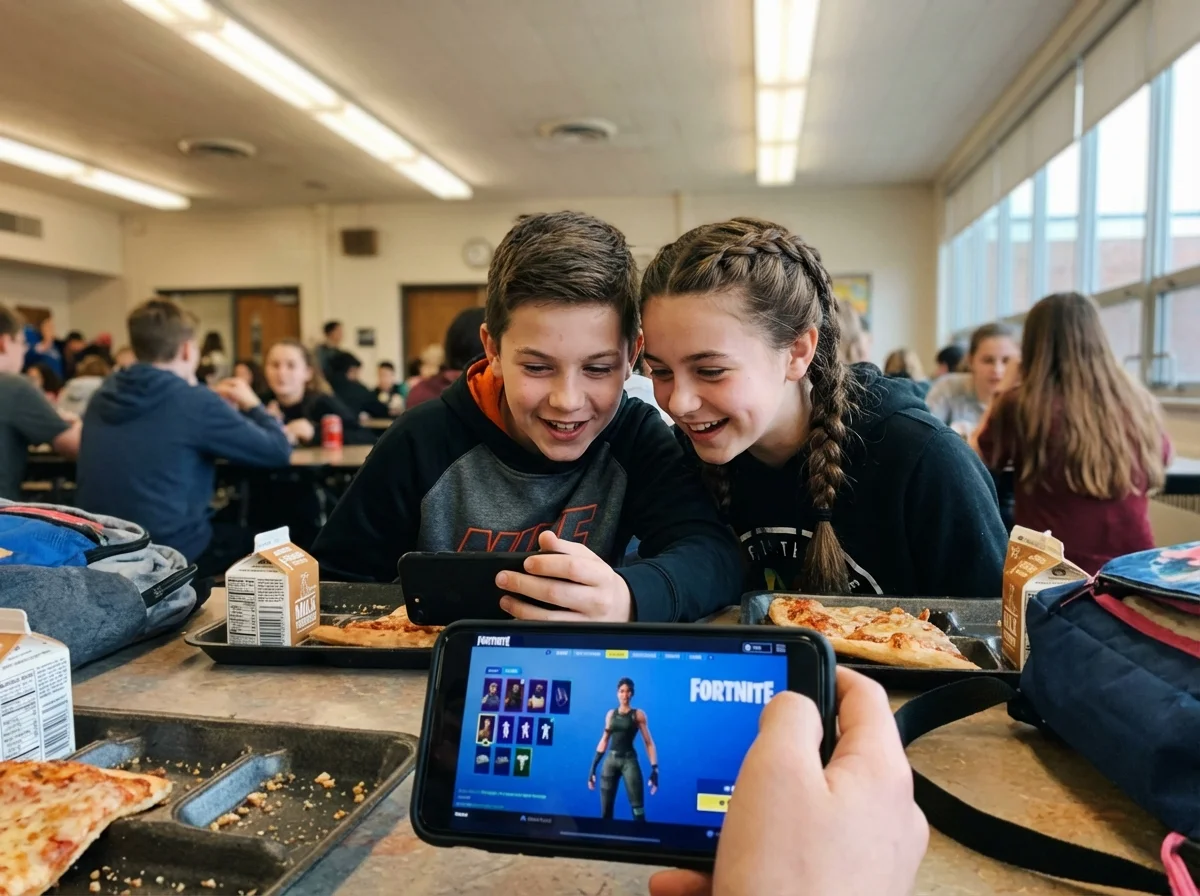
It's where their friends are. Fortnite isn't just a game your kid plays. It's the place where they hang out with friends after school. When my son loads into a Fortnite lobby with his three best friends, that's the 2026 equivalent of riding bikes to the park. They're socializing, joking around, making plans. The game is almost secondary.
It's social currency. Knowing about the latest season, having a rare skin, landing a crazy clip, these things matter in the hallways and group chats. When your kid says "I got the OG skin," they're not just talking about a digital outfit. They're talking about status. Think of it like wearing the right shoes in middle school. Different medium, same psychology.
It's constantly changing. Fortnite runs on seasons, and every new season feels like a mini holiday. The map changes, new weapons drop, there are live events that happen once and never again. That's why your kid freaks out about "the event." Missing a Fortnite live event is like missing the Super Bowl halftime show, except it literally never replays.
FOMO is built into the design. Battle passes expire. Limited-time skins disappear. Seasonal events end. Epic Games has engineered urgency into every corner of Fortnite, and your kid feels it. This isn't necessarily sinister, but it's worth understanding because it explains the intensity.
Once I understood all this, I stopped seeing Fortnite as a time-waster and started seeing it as a window into my kid's social world. That shift changed everything about how I talked to him.
 For the one-word answersPause, Play, Connect: Core Deck172 prompts that get past one-word answers and into what the game actually means to them.$49 CAD • 90 cards • 18 reviewsShop the deck

The Questions That Actually Work
Generic questions get generic answers. Specific questions get stories. Here's what I learned the hard way.
Stop Asking "Did You Win?"
This is the number one mistake parents make when trying to talk to kids about Fortnite. Winning (getting a Victory Royale) happens maybe 1-3% of the time in a 100-player lobby. So you're basically asking "did you fail today?" and your kid knows it.
Instead, try these:
- "What was the wildest thing that happened in your game today?"
- "Did you and your squad pull off anything crazy?"
- "What's the current meta right now? Is it still shotguns?"
That last question is gold because it shows you know enough to be specific. The "meta" is whatever weapons or strategies are currently dominant. It changes every few weeks, and kids love explaining why.
Ask About Their Squad
Fortnite is a team game for most kids. They play duos, trios, or squads with friends. Ask about the people, not just the game.
- "Who were you playing with today?"
- "Does anyone in your squad have a specific role, like who's the builder?"
- "Did anyone pull off a clutch play?"
My son once spent 20 minutes telling me about how his friend "cranked 90s" to save the whole squad. I had no idea what cranking 90s meant at the time (it's a building technique where you rapidly build walls and ramps to gain high ground). But I listened, asked follow-up questions, and learned. He was thrilled that I cared enough to ask.
Ask About What's New
Fortnite changes constantly. New seasons, new collabs, new weapons.
- "What's the new season about? Anything cool?"
- "Are there any new collabs? Last time it was Marvel, right?"
- "Did they vault anything you liked?"
"Vault" means Epic removed a weapon or item from the game. Kids have strong feelings about this. Asking about it is like asking a sports fan about a controversial trade. You'll get opinions.
Fortnite Slang You Should Actually Know
You don't need to memorize a dictionary. But knowing five or six key terms makes a huge difference in how your conversations flow. Here are the ones that come up most:
Cranking 90s - Building walls and ramps rapidly in a 90-degree pattern to gain height advantage. If your kid says they "cranked on someone," they outbuilt them.
Sweaty/Sweat - A player who tries extremely hard. Not always a compliment. "That lobby was so sweaty" means every opponent was playing like it was a tournament.
Bot - A player who's terrible. Also used for the AI-controlled players Epic adds to fill lobbies. "He's such a bot" is the ultimate insult.
One-shot - An enemy with very low health. When your kid yells "HE'S ONE-SHOT!" they're telling teammates to finish off a weakened opponent.
GG - Good game. Said after a match, win or lose. It's sportsmanship, gaming style.
Skin - A character outfit. This is where the money lives. Skins don't give any gameplay advantage, they're purely cosmetic, but they're everything socially.
OG - Original. Refers to skins, weapons, or map locations from early Fortnite. Having an "OG skin" is a flex.
You don't need to use these terms yourself (please don't force it, kids can smell that from a mile away). But understanding them means you can follow the conversation instead of nodding blankly. For a broader breakdown beyond Fortnite, check out our gaming slang guide for parents.
The V-Bucks Conversation (Let's Talk Money)
V-Bucks are Fortnite's in-game currency. 1,000 V-Bucks costs about $8 USD. A typical skin costs 800-2,000 V-Bucks. The Battle Pass costs 950 V-Bucks per season (roughly every 2-3 months).
Here's what I wish someone had told me earlier: the Battle Pass is actually a pretty reasonable deal. For about $8, your kid gets a season's worth of challenges, rewards, and goals. It gives them something to work toward and, if they play enough, they earn enough V-Bucks back to buy the next Battle Pass. It's self-sustaining.
The money pit is the Item Shop. New skins rotate daily, limited-time offers create urgency, and rare skins coming back triggers "I NEED IT" energy. This is where boundaries matter.
What worked for us:
- Battle Pass each season: yes. It's cheap entertainment per hour and gives structure.
- Item Shop purchases: earned, not automatic. Chores, good grades, birthday money, whatever system fits your family.
- A monthly V-Bucks budget. We settled on a small amount. It teaches budgeting because they have to choose what matters most.
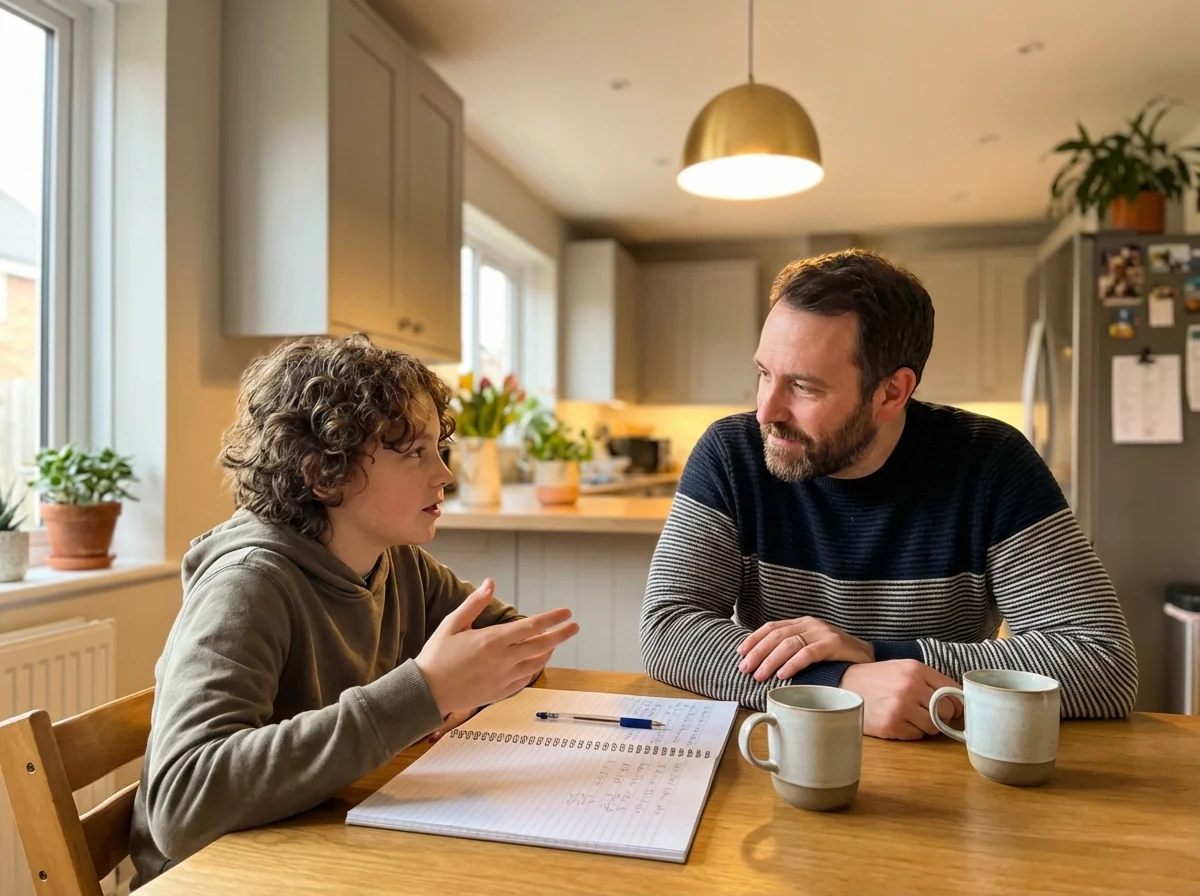
The key is having the conversation about why skins feel important (social currency, self-expression) without dismissing it. "It's just a game" shuts the door. "Help me understand why this skin matters to you" opens it.
 Help me understand whyPause, Play, Connect: Core Deck$49 CAD • 172 promptsSee the deck
Creative Mode: Your Secret Weapon
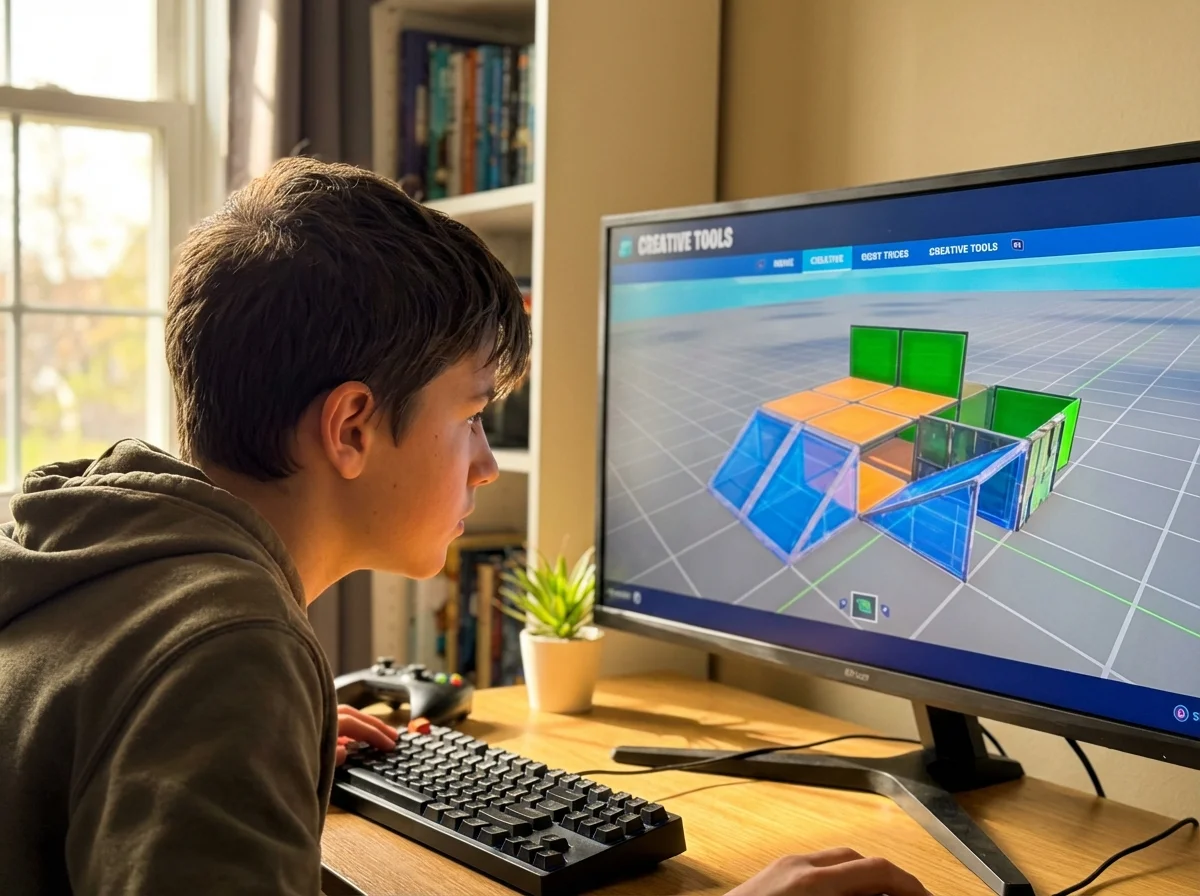
Most parents think Fortnite is just Battle Royale, the 100-players-drop-from-a-bus mode. But Fortnite Creative is a completely different experience, and it's where some of the most interesting stuff happens.
In Creative mode, kids build their own worlds, design games, create obstacle courses, and collaborate on projects. It's closer to Minecraft than it is to a shooter. My son built an entire escape room in Creative and had his friends play through it. That's game design. That's real skill development.
If Battle Royale makes you uncomfortable (it is a shooter, even if it's cartoonish), Creative mode is worth exploring. You can even play it together. Ask your kid to show you their favorite Creative maps. Or better yet, ask them to build something and walk you through it.
"Show me what you built" is one of the most powerful conversation starters I've found. It works for Minecraft, it works for Fortnite Creative, it works for anything where kids are making something.
For the Co-Play Window: A curiosity card lands during the in-between beats. Keep the Pause, Play, Connect deck beside the console so a prompt is within reach when you sit down together.
Is Fortnite Safe for My Kid?
For the Long Build: Connection grows from many small low-pressure conversations. A deck of conversation cards for families with gamer kids on the table makes those talks routine.
This is the question underneath all the other questions, so let's address it directly.
Age rating: Fortnite is rated T for Teen (13+) by the ESRB. There's cartoon violence (no blood or gore), online voice chat with strangers, and in-game purchases.
Voice chat: This is the biggest risk area. Your kid can talk to strangers in public lobbies. Most of the time it's other kids being silly or competitive. Sometimes it's toxic. Rarely, it's genuinely concerning. Turn on parental controls so your kid can only voice chat with friends, not randoms. Epic has solid parental control options, use them.
Screen time: Fortnite matches last about 20 minutes each, which makes it easier to set boundaries than open-ended games. "Three matches and then dinner" is a natural stopping point.
The violence question: Fortnite's violence is cartoonish. Characters get eliminated and teleport away. There's no blood, no realistic weapons, no graphic content. It's closer to a Nerf war than anything disturbing. That said, you know your kid. If gaming intensity concerns you, trust your instincts.
My honest take: for most kids 10 and up, Fortnite is fine with basic parental controls and open conversation. The social benefits, playing with friends, teamwork, communication, often outweigh the concerns.

Common Mistakes Parents Make
I made all of these. Sharing so you don't have to.
Banning it without understanding it. This creates secrecy, not safety. Your kid will play at a friend's house and just stop telling you about it.
Comparing it to "when I was a kid." Your childhood didn't have 100-player online lobbies. The comparison doesn't land and it makes your kid feel dismissed.
Treating every purchase request as a battle. Having a clear system (budget, earning, etc.) eliminates 90% of the fights. The argument isn't about V-Bucks, it's about not having agreed-upon rules.
Only engaging when there's a problem. If the only time you talk about Fortnite is when you're setting limits or expressing concern, your kid learns that gaming talk equals lecture. Show interest when things are good too.
Pretending to understand when you don't. Kids know. Just say "I don't know what that means, explain it to me." They usually love being the expert.
Your Next Move
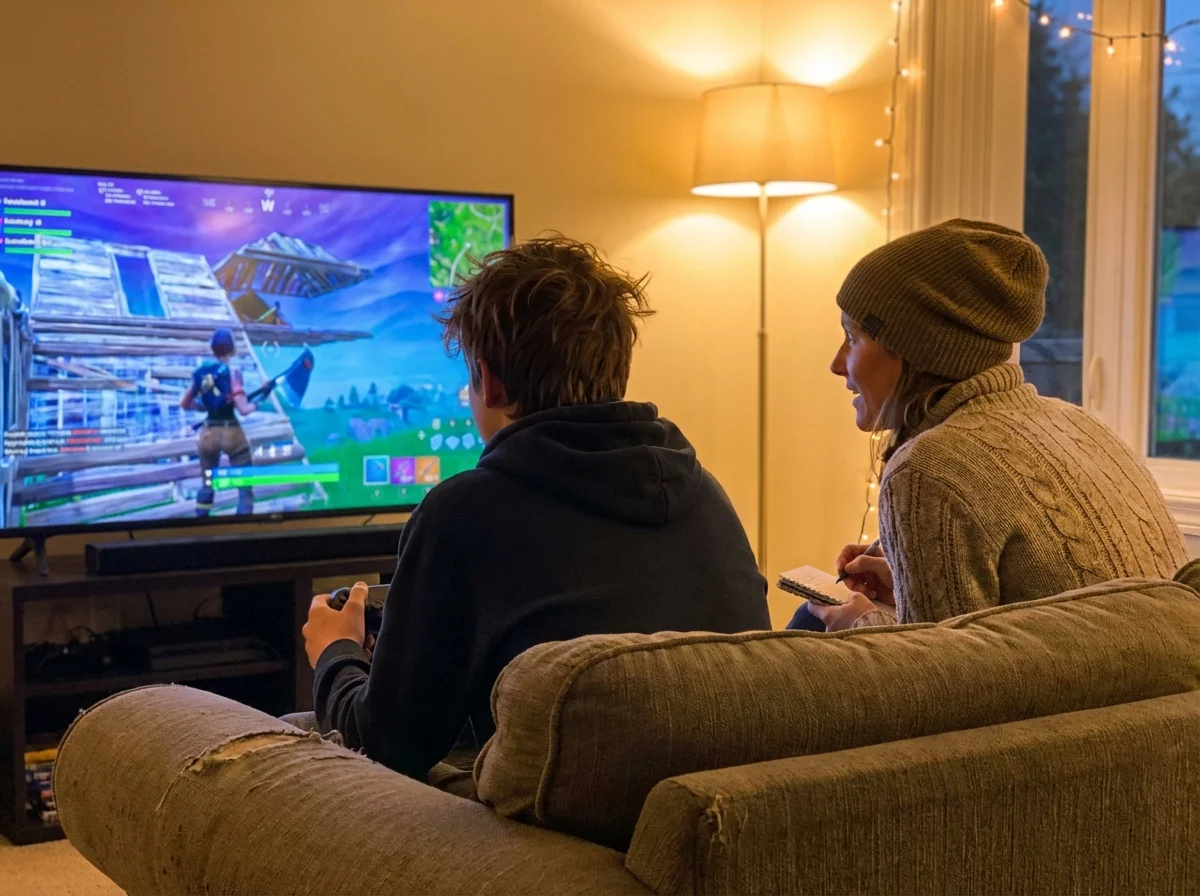
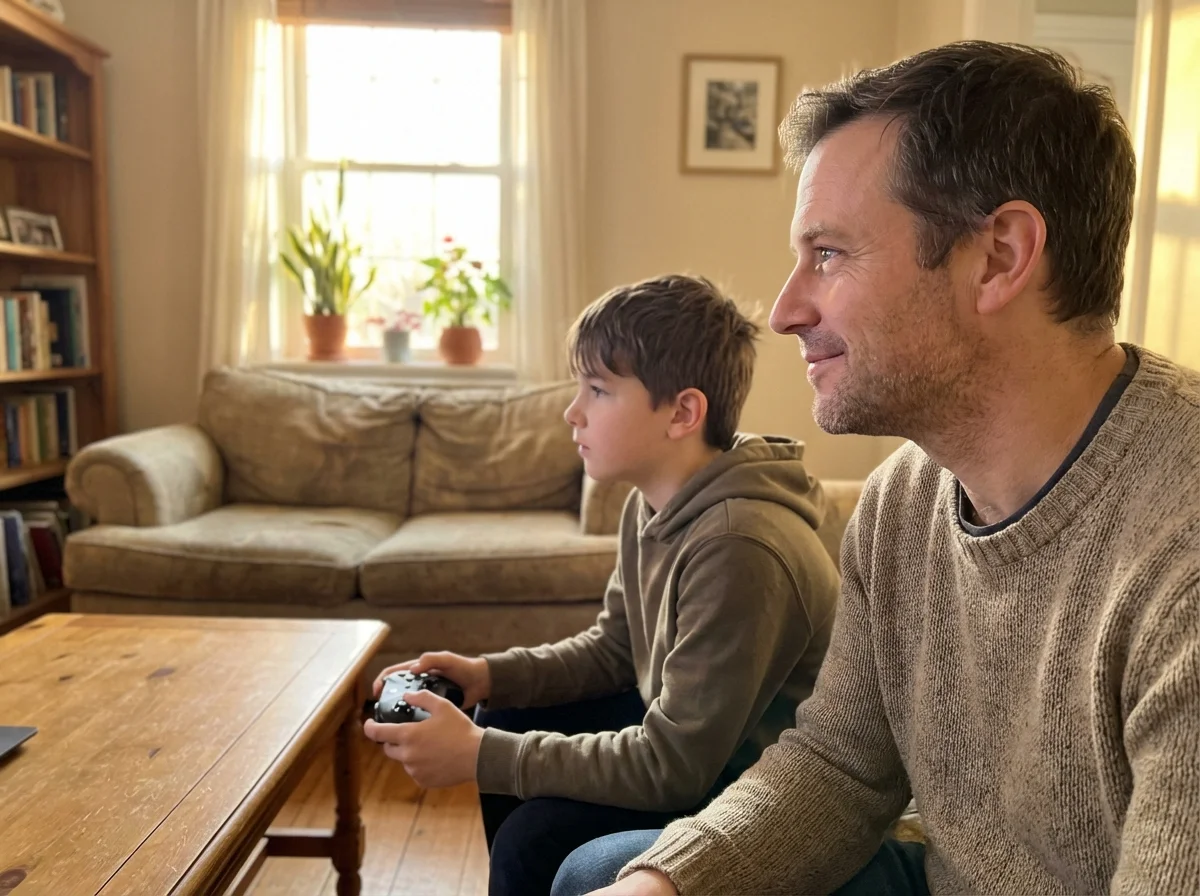
Tonight, try this. Sit down near your kid while they're playing (not over their shoulder, beside them) and ask: "What's the craziest thing that's happened in Fortnite this week?"
Then just listen. Don't judge. Don't redirect to homework. Don't check your phone. Just be there for whatever they tell you.
If that feels awkward, or if you want more conversation starters that meet kids where they are, that's exactly why we built Yakety Pack. It's a conversation card game with questions designed for digital-age families, things like "What game character would you want as a friend?" and "What's the funniest thing that happened online this week?" It's not about getting kids off screens. It's about understanding what they love and using that as a bridge.
One real conversation about Fortnite is worth more than a hundred "get off the screen" arguments. Trust me on that one.
Frequently Asked Questions
How do I talk to my kid about Fortnite if I've never played it?
You don't need to play it to have good conversations about it. Learn five or six key terms (we covered them above), ask specific questions instead of generic ones, and let your kid be the teacher. Most kids light up when a parent genuinely wants to understand their world. If you want to go deeper, watch a few minutes of a Fortnite stream on YouTube or Twitch to see what the gameplay actually looks like.
Is Fortnite too violent for a 10-year-old?
Fortnite is rated T for Teen (13+), but its violence is cartoonish with no blood or gore. Most gaming experts and parents consider it appropriate for kids 10 and up with parental controls enabled. The bigger concern is voice chat with strangers, which you can restrict through Epic's parental settings. Every kid is different though, so watch a few minutes of gameplay and decide what fits your family.
How much should I let my kid spend on Fortnite?
The Battle Pass (about $8 per season) is reasonable value. Beyond that, set a clear monthly or per-season budget and let your kid decide how to spend it. This teaches prioritization and budgeting. Avoid open-ended "ask me every time" systems because they turn every skin into a negotiation.
Why does my kid get so upset about Fortnite events?
Fortnite live events happen once and are never replayed. Missing one means missing a shared cultural moment with every friend at school. It's the equivalent of missing a big game or season finale. If possible, treat announced Fortnite events like you would any other social event your kid cares about, worth accommodating when reasonable.
Should I play Fortnite with my kid?
If you're willing, absolutely. Start with Creative mode rather than Battle Royale, the learning curve is gentler and there's no pressure to perform. Your kid will probably love teaching you, and the shared experience gives you a reference point for future conversations. Don't worry about being terrible at it, that's actually part of the fun.
Sit down beside themPause, Play, Connect: Core Deck172 prompts that give you a better question than "how was Fortnite" every night of the week.$49 CAD • 90 cards • 18 reviewsShop the deck
Related Articles
Looking for more ways to connect with your gaming kid? Check out these guides:

