
For about a year, I treated Fortnite like the thing standing between me and my son.
I'd hover near his door at dinner time, hear the squad chatter through his headset, and feel myself getting tense before I even said anything. "Five more minutes" became my whole personality. He'd grunt, I'd nag, we'd both end up annoyed, and somehow I convinced myself this was parenting.
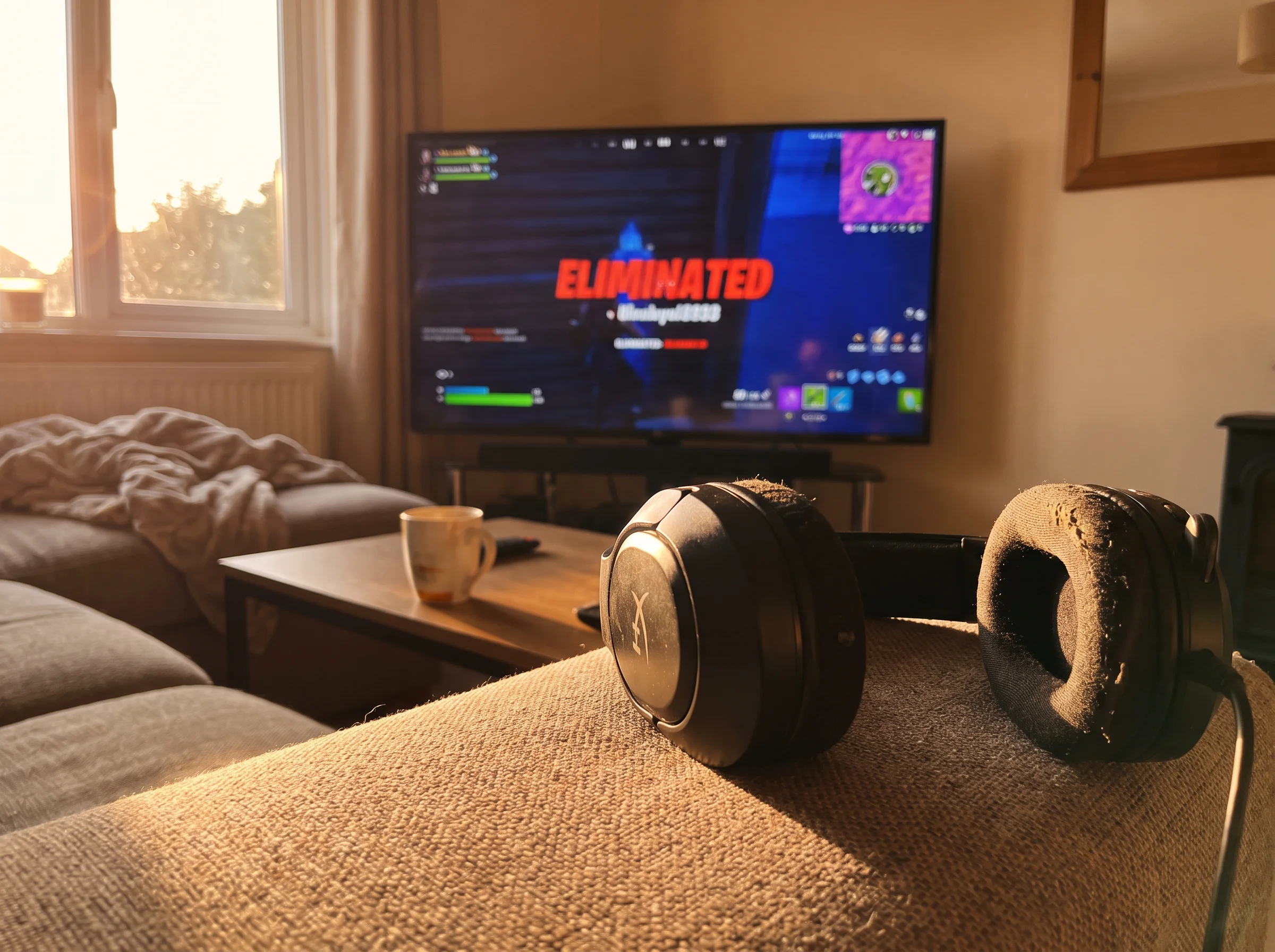
Then one night I watched him get eliminated in the final two of a match, throw his headset across the bed, and storm out of the room. I sat there in his empty chair looking at the "ELIMINATED" screen, and I realized I had no idea what just happened to him. Not the game part. The feeling part. Some 12-year-old in a Peely skin had just crushed something my kid had been working toward for 45 minutes, and I didn't know enough about his world to even ask the right question.
That's the night I started asking different questions. This is everything I've learned since, and why Fortnite conversations with kids are easier than you think once you stop treating the game like the enemy.
 In the loot round lullPause, Play, Connect: Core Deck172 prompts that give you a specific question to ask instead of how was Fortnite.$49 CAD • 90 cards • 18 reviewsShop the deck
Why "How Was Fortnite Today?" Always Fails
Here's the thing nobody told me: the question itself was the problem.
"How was Fortnite today?" sounds friendly in your head. To your kid, it sounds like a test. It's vague, it's broad, and it has the same energy as "how was school?" They've been answering that one with "fine" since first grade. They've got reps.
Worse, it tells them you don't actually know anything about the game. You're asking the way you'd ask about a doctor's appointment you didn't go to. Kids can smell that from a mile away. They give you the shortest answer that ends the conversation, because the conversation feels like an obligation, not an interest.
I spent weeks doing this. Weeks. Grunt after grunt. I'd come downstairs and tell my wife, "He just doesn't want to talk to me anymore." She, being smarter than me, said, "Or you're asking him questions that aren't worth answering."
Brutal. Correct.
The shift wasn't asking MORE questions. It was asking SPECIFIC ones. Specific questions prove you're paying attention. They also give your kid a lane to actually say something interesting back. "What's the craziest thing that happened in your match?" beats "how was Fortnite?" every time, because one of them has an answer and the other one doesn't.
And tone matters as much as the words. If you ask with concern in your voice, they hear an interrogation. If you ask with actual curiosity, they hear an invitation. Kids know the difference instantly. I had to consciously drop the "I'm a worried parent" tone and just ask the way I'd ask a friend about their fantasy football team.
A Quick Fortnite Vocabulary Crash Course
If you don't speak any of the language, your kid knows you're faking it. You don't need to be fluent. You just need enough so that when they say "I got third-partied in Tilted," you don't blink like a deer.
Here's the survival kit:
W and L. Win and Loss. "That was a W" or "Took the L on that one." This is just universal kid slang at this point, not even Fortnite specific.
Skin. The character outfit your kid is wearing. They care about this way more than you think. We'll get to that.
Locker. Where all their skins, pickaxes, gliders, and emotes live. It's basically their wardrobe.
V-Bucks. The in-game currency. This is what costs real money. Battle Pass costs around 950 V-Bucks. Skins range wildly.
Battle Pass. The seasonal subscription thing that unlocks rewards as you play. New one every season (roughly every 2-3 months).
Squad / Duos / Solos. How many people are on your team. Squad is four, duos is two, solos is just you.
Building / Cranking 90s. Fortnite's signature mechanic. Players build walls and ramps fast for cover. "Cranking 90s" is a specific rapid build pattern that goes up vertically. If your kid is good at this, they've spent serious hours practicing it.
No-build / Zero Build. A mode without building. Newer, more chill. A lot of kids prefer it because it's less sweaty.
Sweaty. A lobby or player that's intensely competitive. The opposite of chill.
Third-partied. When you're fighting someone, and a third player swoops in and finishes you both off. Devastating. Worth empathy when they mention it.
Tilted (Tilted Towers). A famous high-traffic area on the map. Lots of fights happen there.
The storm. The shrinking circle that forces players together. "I got caught in the storm" means they got squeezed out by the closing zone.
Henchmen. AI enemies, not real players.
You don't need to memorize this. Just recognize a couple. Next time your kid says, "We got third-partied right before the final circle," you can say, "Oh man, that's the worst feeling, right?" and watch their face. They'll look at you like you just spoke a foreign language they didn't know you knew.
Questions That Work DURING Gameplay
This was my biggest unlock. Mid-match is the best time to talk to your kid.
Their hands are busy. Their eyes are on the screen. They're not making weird forced eye contact with you. Their guard is somewhere between "down" and "doesn't even exist." It's basically the gaming version of the car-ride conversation, where teenagers spill their guts because they don't have to look at you. Research on adolescent communication has shown for years that side-by-side activities lower kids' defenses more than face-to-face talks.
Pull up a chair. Sit on the arm of theirs. Don't talk during a firefight (you'll mess them up and lose your invite). Wait for the lulls, the loot rounds, the waiting-for-the-storm moments.
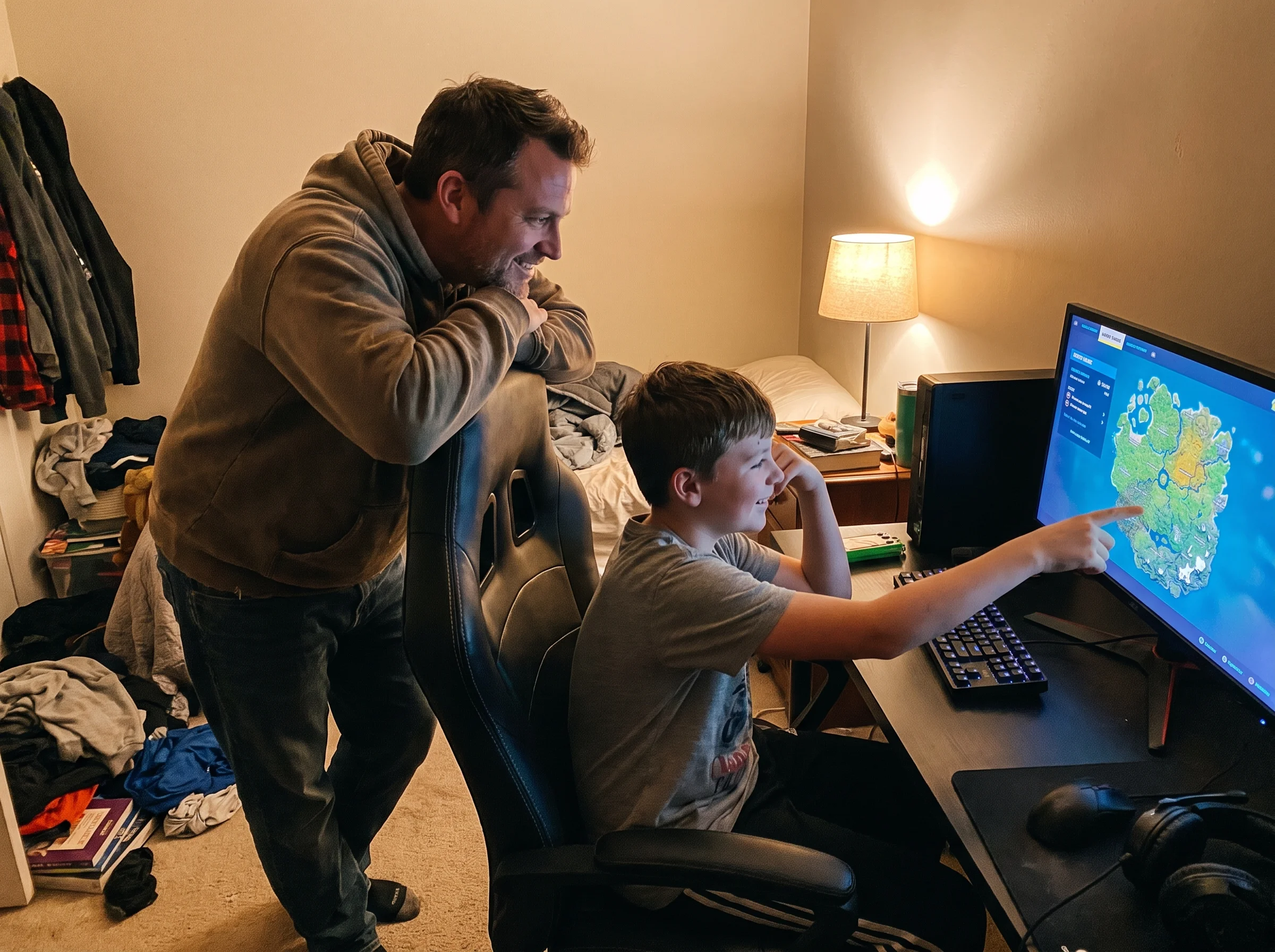
Then try things like:
- "Who are you playing with tonight?"
- "What skin are you rocking right now?"
- "Is this a sweaty lobby or chill?"
- "Who's the best one in your squad?"
- "Wait, is that the new Battle Pass skin?"
- "What's that thing you keep building? The little ramp move?"
The "who are you playing with" question is the goldmine. One night I sat down with my son and asked it casually, and within twenty minutes I knew who in his friend group was getting along, who was salty because Jake didn't invite him to the squad last weekend, who'd been grounded from gaming, and who his new friend from school was. Twenty minutes. I'd been trying to get this information through "how was school today?" for months.
The car ride couldn't compete. The dinner table couldn't compete. The arm of his gaming chair, while his hands were building walls, that was where the door opened.
Questions for AFTER a Match (Win or Loss)
Post-match is a different game. Emotions are high. The question you ask matters even more.
After a win, lean in. They want to brag and they should get to. Try:
- "Who got the most kills? Was that you or your squad?"
- "What was the moment you knew you had it?"
- "Anybody do something insane?"
This isn't fishing for content. It's letting them experience the win with you. Most parents skip this because we're so worried about gaming that we forget to celebrate it. If your kid scored a goal in soccer, you'd ask about the goal. Do the same thing here.
After a loss, be careful.
Do NOT ask "what happened?" That sounds like you're asking them to explain a failure. It feels like a parent-teacher conference.
Instead try:
- "That looked brutal. What'd they get you with?"
- "How close were you?"
- "Who took you out?"
You're framing the loss as something that happened TO them, not something they did wrong. Subtle. Huge difference. They're already mad at themselves. They don't need you to add to the pile.
And the universal question that works for both wins and losses: "What was the craziest moment of the night?" This one is gold. It lets them pick the highlight, good or bad, and the story comes out naturally.
 Right after a rough onePause, Play, Connect: Core Deck$49 CAD • 172 promptsSee the deck
What to Say When They Rage
Every Fortnite parent has seen the controller-throw. The headset rip. The slammed door. The "I'M NEVER PLAYING THIS GAME AGAIN" speech that lasts approximately 14 hours.
Here's the most important sentence in this whole article: don't say "it's just a game."
I know. I get it. To you, it IS just a game. To them, in that moment, it isn't. They just lost something they were invested in, often in front of their friends, often after a long match where they thought they had it. The frustration is real even if the stakes look fake to you.
Saying "it's just a game" lands the same way "it's just a bad grade" or "it's just a breakup" would have landed on you. Dismissive. It tells them their feelings are stupid. They'll stop telling you anything.

The first time my son rage-quit in front of me, I said something like "okay, well, maybe take a break then." Reasonable, right? Calm dad voice. He looked at me like I'd told him to take a break from breathing. He stomped off and didn't come down for an hour.
What I should've said, and what I say now, is something like:
- "That was a brutal one."
- "Yeah, third-party in the final circle is the worst."
- "You wanna walk it off or run it back?"
Naming the feeling beats fixing the problem. You're not solving the loss. You're sitting next to them in it for ten seconds. That's all they need. Then they'll either go again, or come find you in the kitchen and start talking about something completely unrelated, because the emotional pressure released.
Going Deeper: Questions About Their Fortnite World
Once the basic questions are working, you can start going deeper. These are the questions that turn a gaming conversation into a real conversation.
- "If you could design a skin, what would it look like?"
- "What character would you want as a real friend?"
- "Who's the best player in your friend group, and what makes them good?"
- "If your squad was a real-life crew, what would each person's job be?"
- "What's the dumbest way you've ever been eliminated?"
- "What do you wish I understood about why you like it?"
That last one is dangerous and powerful. The first time I asked my son that, he paused his game. Actually paused it. And he said, "I like it because I'm good at something with my friends." That was it. That was the whole thing. He wasn't escaping reality. He was building one with people he cared about. (The American Psychological Association has written about this exact dynamic, how multiplayer games meet kids' needs for competence and connection.)
Honestly, this is the part of parenting where my brain runs out of fuel the fastest. After a long workday, when I want to connect but I can't think of a single interesting thing to ask, I just blank. That's actually why my co-founder and I built Yakety Pack, a card deck of conversation prompts you can grab when your brain is fried. One of the cards literally asks "what game character would you want as a real friend?" because that single question opened up like three different conversations with my kid about loyalty, humor, and what makes someone trustworthy. The deck isn't about pulling kids off screens. It's a tool for the nights when you want to be curious but you can't think of where to start.
The Bigger Conversation: Spending, Time, and Friends
Eventually, the harder topics come up. Here's how to talk about them without turning every conversation into a rulebook.
V-Bucks and Spending
Don't ambush them with the spending conversation right after they ask for the new Battle Pass. That's a fight, not a conversation.
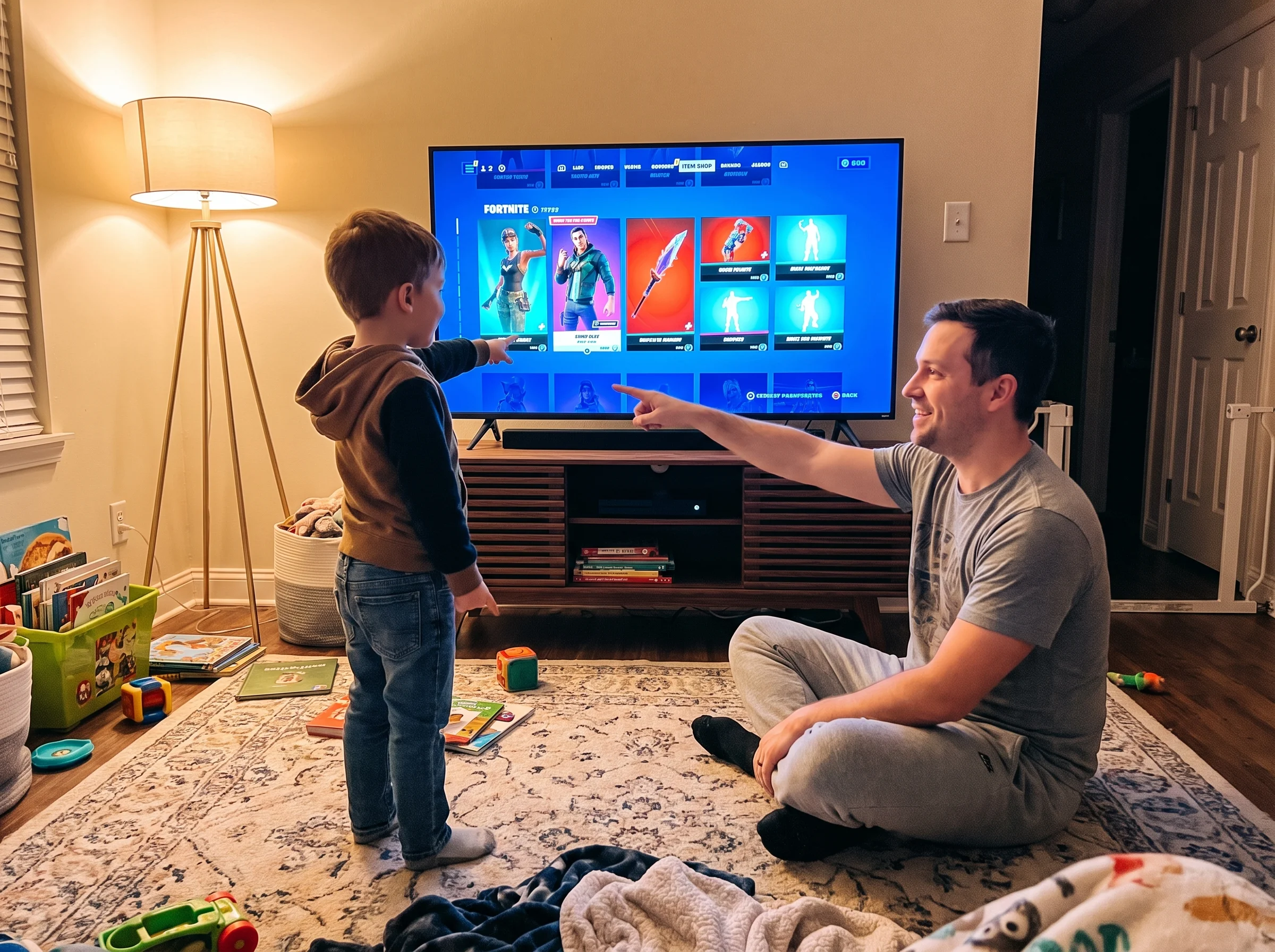
Try having it during a chill moment, ideally while they're playing. "Hey, walk me through how V-Bucks work. How much is the Battle Pass? What do you actually get?" Let them teach you. Then later, you can come back with "okay, so if we did a monthly thing for V-Bucks, what would feel fair?"
The goal isn't to say yes to everything. The goal is to make them feel like a partner in the decision, not a defendant in court.
The "Wrap It Up" Trap
When you tell your kid to "wrap it up" mid-match, you're not interrupting a video game. You're interrupting a hangout. His three friends are in voice chat. If he bails, the squad is down a player. That's a real social cost.
I learned to give 15-20 minutes of warning, not 5. "Hey, finish out this match and one more, then we're eating." That gives him time to tell his squad, finish whatever they're doing, and exit gracefully. Same result, no fight.
Vetting Their Gaming Friends
You can learn more about your kid's online friends through casual questions than through any monitoring app. Common Sense Media has a useful breakdown of the social side of Fortnite if you want more on that.
- "Who's the chillest one in your squad?"
- "Anybody ever toxic in your voice chat?"
- "Has anyone said something weird you didn't know how to handle?"
That last one is critical. You're not asking IF it's happened. You're asking how they HANDLED it. Different question. The first puts them on trial. The second treats them like someone with judgment, and invites them to tell you the truth.
Healthy gaming friend groups roast each other, hype each other up, get over losses together, and don't pressure anyone to spend money. Toxic ones gang up on one kid, exclude on purpose, talk crap about people not in the chat, or pressure your kid to gift skins. You'll hear the difference if you're listening.
The Move That Changed Everything: Play One Match. Be Bad on Purpose.
This is the most counterintuitive advice I have, and the one that worked the fastest.
Pick up the controller. Ask your kid to teach you. Play one match. Be terrible.
The first time I did this, I got eliminated in 30 seconds by a henchman. A literal NPC. The lowest level enemy in the game. My son watched me die and laughed so hard he fell off his chair. Then he picked himself up, sat right next to me, and started teaching me. How to aim. How to swap weapons. Why I should never, ever, run into Tilted in the first three minutes.
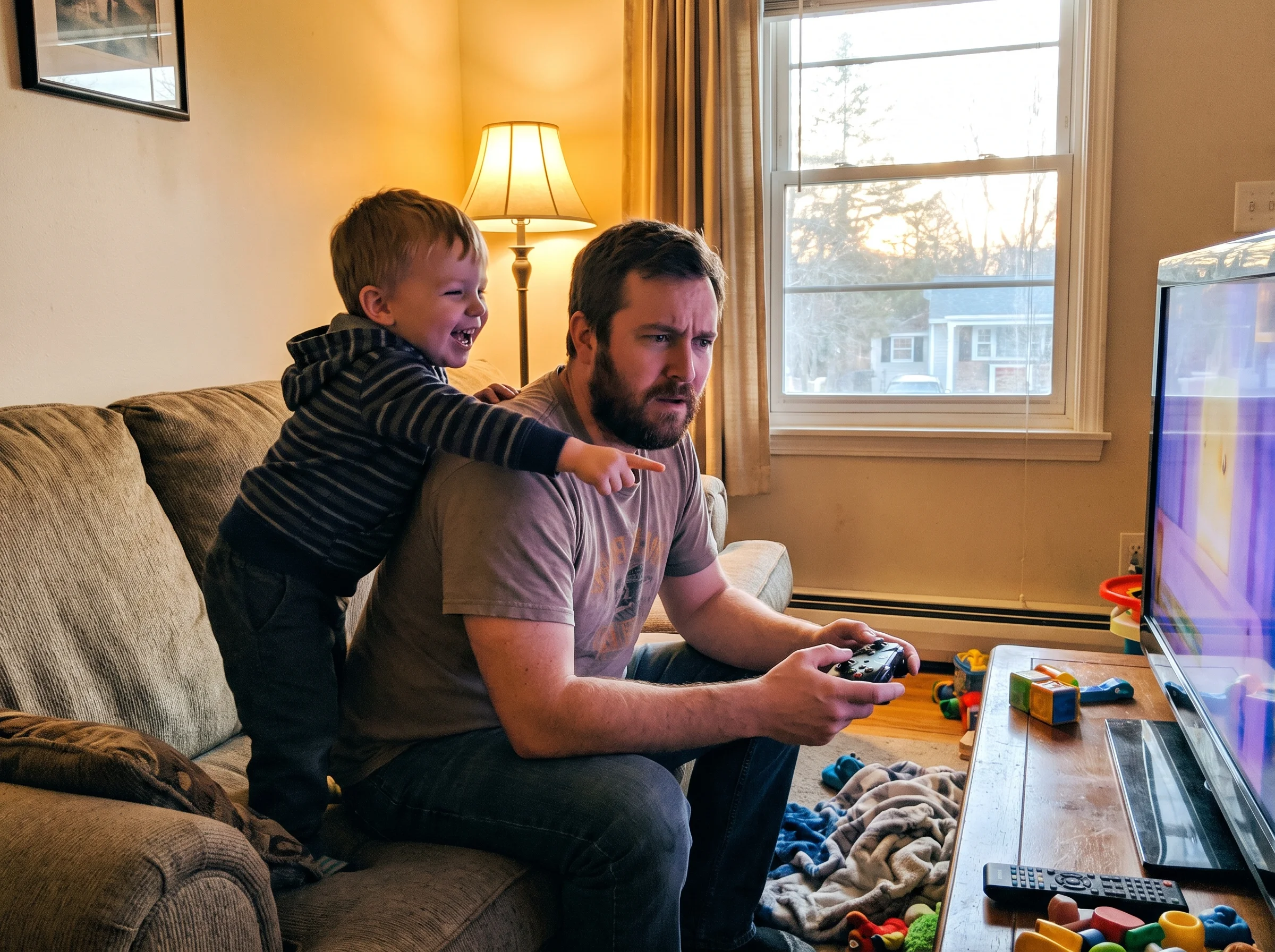
He talked to me for two hours that night. Not just about the game. About school. About his friend who was being weird. About a teacher he didn't like. The game was the thing that made him relaxed enough to say all of it.
There's something about you being bad at something they're good at that flips the dynamic. Suddenly they're the expert. You're the rookie. They get to be in charge for once, and you'd be amazed at how generous and patient kids are when they get to be the teacher.
You don't have to keep playing. You don't have to get good. You just need one match, one humiliating defeat, and a willingness to laugh at yourself. That's the entry fee to the conversation.
A Few Common Mistakes I Made (So You Don't Have To)
Walking in and asking questions like a podcast host. Don't sit down ready to extract content. Sit down and watch. Be there for ten minutes before you say anything. Let them notice you're interested, not auditing.
Acting impressed at things that aren't impressive. Kids can tell when you're faking. "Wow, you killed that guy! Amazing!" when they did something basic just makes them roll their eyes. Real curiosity beats fake enthusiasm every time.
Bringing up "we should talk about your screen time" while they're playing. This poisons the well. Now every time you sit down to watch, they're waiting for the lecture. Keep those conversations completely separate. Watching = curiosity time. Rule-setting = a different conversation at a different time.
Assuming if they only want to talk about Fortnite, something's wrong. It isn't. It just means Fortnite is the thing they have the most expertise and pride in. Soccer kids only want to talk about soccer. Theater kids only want to talk about theater. Let them have their thing. The wider conversations will come once they trust that you find their world interesting.
FAQ
My kid won't stop playing when I ask. What do I do? Give more warning time, and frame it as "finish your match" not "stop now." Mid-match exits cost them real social capital with their squad. If you respect the match, they'll respect the off switch.
Should I play with my kid even if I'm terrible? Yes. Especially if you're terrible. Being bad gives them permission to be the expert, and that's where real conversation lives.
My kid only wants to talk about Fortnite. Is that okay? Totally. It's their thing. If you become a safe person to talk about Fortnite with, eventually you become a safe person to talk about everything with. The topic is the doorway, not the destination.
How do I know if their gaming friends are actually good for them? Listen to the voice chat occasionally. Healthy groups roast and hype. Toxic groups exclude and pressure. Ask "who's the chillest one in your squad?" and "anybody ever toxic in there?" and listen for who they mention and how they describe them.
What if I genuinely don't have time to learn all this? You don't need to learn the game. You need to learn three or four terms and be curious about the rest. Curiosity beats expertise. Always.
One Thing You Can Do Tonight
Here's the actual move. Don't try to do everything in this article.
Tonight, walk into your kid's room while they're playing. Don't say anything for two minutes. Just watch. When there's a lull, ask one specific question: "Who are you playing with tonight?"
That's it. That's the whole assignment.
See what happens. You'll be surprised how much comes out of that one question, asked at the right time, with real curiosity in your voice.
Fortnite isn't the obstacle. It's the doorway. Walk through it.

From this article
Pause, Play, Connect: Core Deck
For the post-match lull: Those loot-round pauses are your window, and a fried brain blanks right when your kid finally talks. A deck of Pause, Play, Connect cards by the gaming chair keeps the next question ready.
If you want the deeper kit, the full bundle throws in the Parent Power-Up deck plus two digital parent guides, $146 of family fun for $59.

