
Last week, my daughter screamed so loud the neighbors texted to check if everything was okay. Her crime? Coming in second place in Fortnite. If you're wondering what is a battle royale game and why losing causes this much drama, or what a "Victory Royale" even means, you're in the right place.
Look, I used to be that parent who heard "battle royale" and pictured kids training for warfare. Then I actually sat down and watched my kids play. What I saw changed everything about how I understood their gaming world.
The 30-Second Explanation (For When You Need It Fast)
For the bigger frame this fits into, see our parent guide to gaming culture.
Here's what a battle royale game actually is: 100 players start on a massive map, and through a mix of strategy, skill, and pure luck, one player (or team) survives to the end. Think musical chairs meets hide-and-seek meets that feeling when you were the last one found in neighborhood tag.
The map shrinks over time, forcing players closer together. No camping in a corner for 20 minutes. You have to move, adapt, and eventually face other players. Every game lasts about 20 minutes, which is why "just one more game" is never actually just one more game.
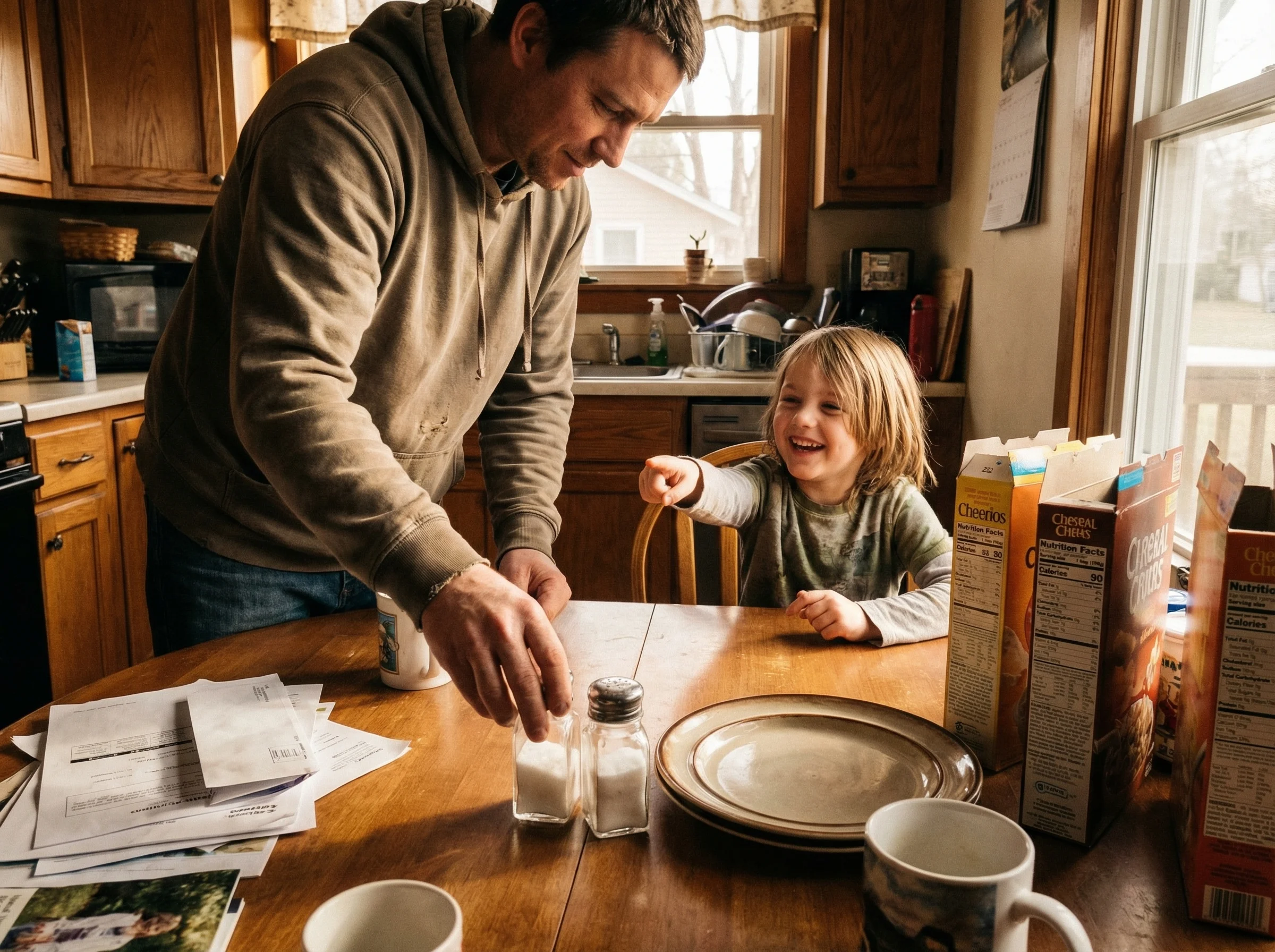
I tried explaining this to my mom using dodgeball as an example. "Remember when we'd all start scattered around the gym, and as people got out, the remaining players had to get closer? It's like that, but with building forts and dancing." She got it immediately.
The genius part? Every match feels completely different. Different landing spot, different items you find, different opponents. It's like starting a new adventure every single time.
 About that 73rd place finishPause, Play, Connect: Core Deck172 prompts that get a kid talking about a match the way they lived it.$49 CAD • 90 cards • 18 reviewsShop the deck
Why Your Kid Keeps Playing Even When They Lose
Here's something that took me forever to understand: your kid will lose approximately 99 times out of 100. That's not hyperbole. That's math. And they're totally fine with it.
My son once spent 45 minutes telling me about a match where he finished 73rd out of 100. Not 3rd. Not 13th. 73rd. But to hear him tell it, you'd think he'd won the Super Bowl. He'd discovered a secret tunnel, barely escaped another player, found rare loot, then got ambushed while crossing a river. Every decision, every close call, every "if only I'd gone left instead of right" moment became part of his story.
That's when it clicked for me. These games aren't about winning. They're story generators. Every loss teaches something new. That spot where they got ambushed? They'll check it next time. The weapon combo that didn't work? They'll try something different. It's the world's most engaging trial-and-error classroom.
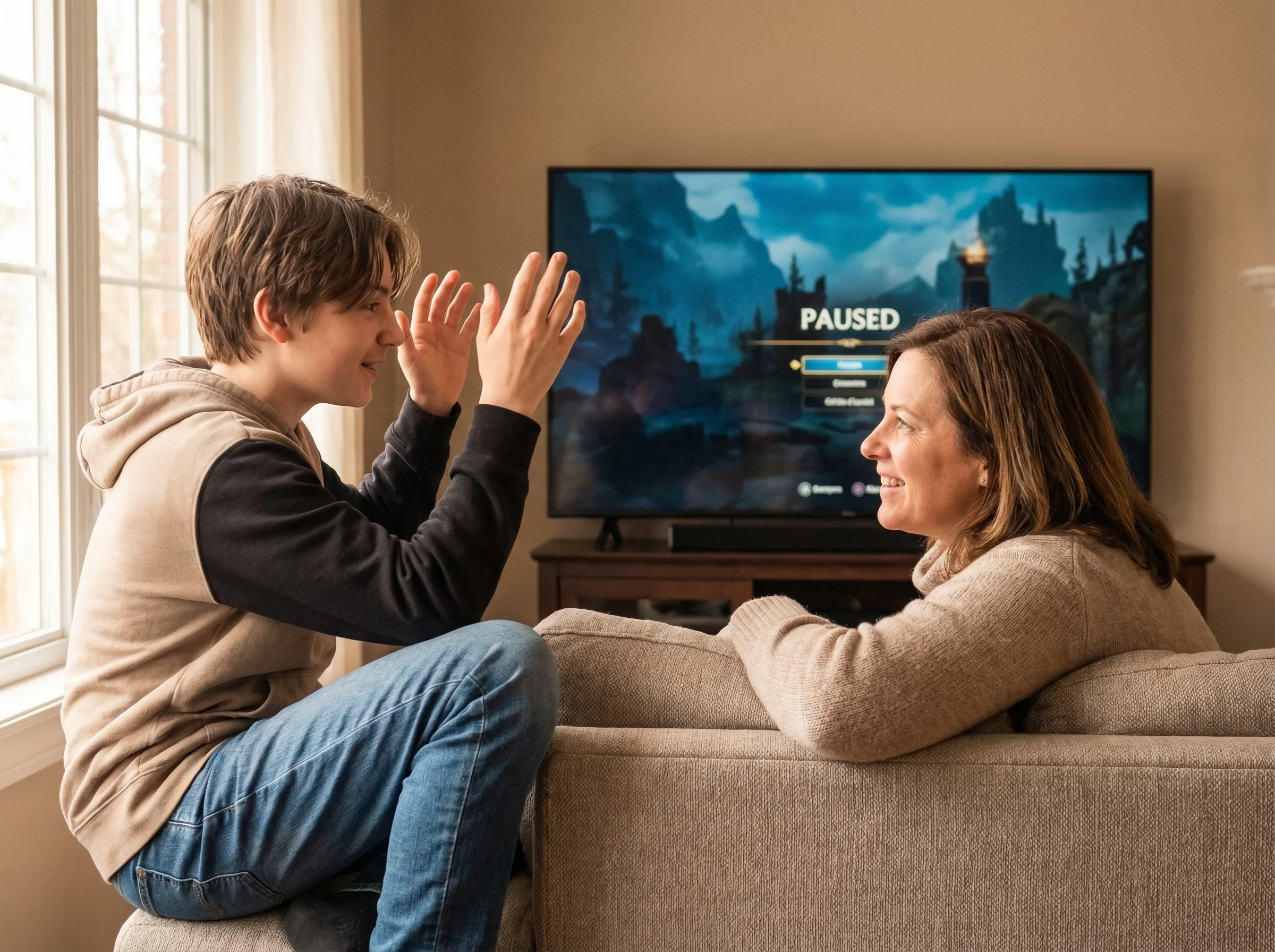
The "just one more game" phenomenon makes perfect sense now. When you lose at Monopoly, you're stuck with that loss until next family game night. When you lose in a battle royale, you can jump back in immediately with all that knowledge fresh in your mind. It's not addiction. It's iteration.
It's Not About the Violence (Really)
I know what you're thinking because I thought it too. "Great, my kid's playing shooting games." But here's what surprised me: my daughter once spent 20 minutes in Fortnite just decorating and rearranging items in her character's backpack. Then she did a dance emote for another five minutes. She never even encountered another player.
The cartoon graphics in games like Fortnite matter more than you think. When players are "eliminated," they don't die gruesome deaths. They turn into a little robot and teleport away. It's more tag than combat. Compare that to something like Call of Duty, which aims for military realism, and you'll see why one is rated T for Teen and the other is M for Mature.
What kids actually focus on will blow your mind. They care about:
- Finding the perfect landing spot
- Collecting materials to build with
- Coordinating outfits with their friends
- Mastering new dance moves
- Exploring map changes each season
The "battle" part is almost secondary to the "royale" experience of being in this massive, ever-changing world with their friends.
 Where did you land todayPause, Play, Connect: Core Deck$49 CAD • 172 promptsSee the deck
The Secret Social Life Inside the Game
If you really want to understand why battle royales have taken over, forget the gameplay and focus on the social dynamics. These games are where kids hang out now. It's their mall, their basketball court, their Friday night.
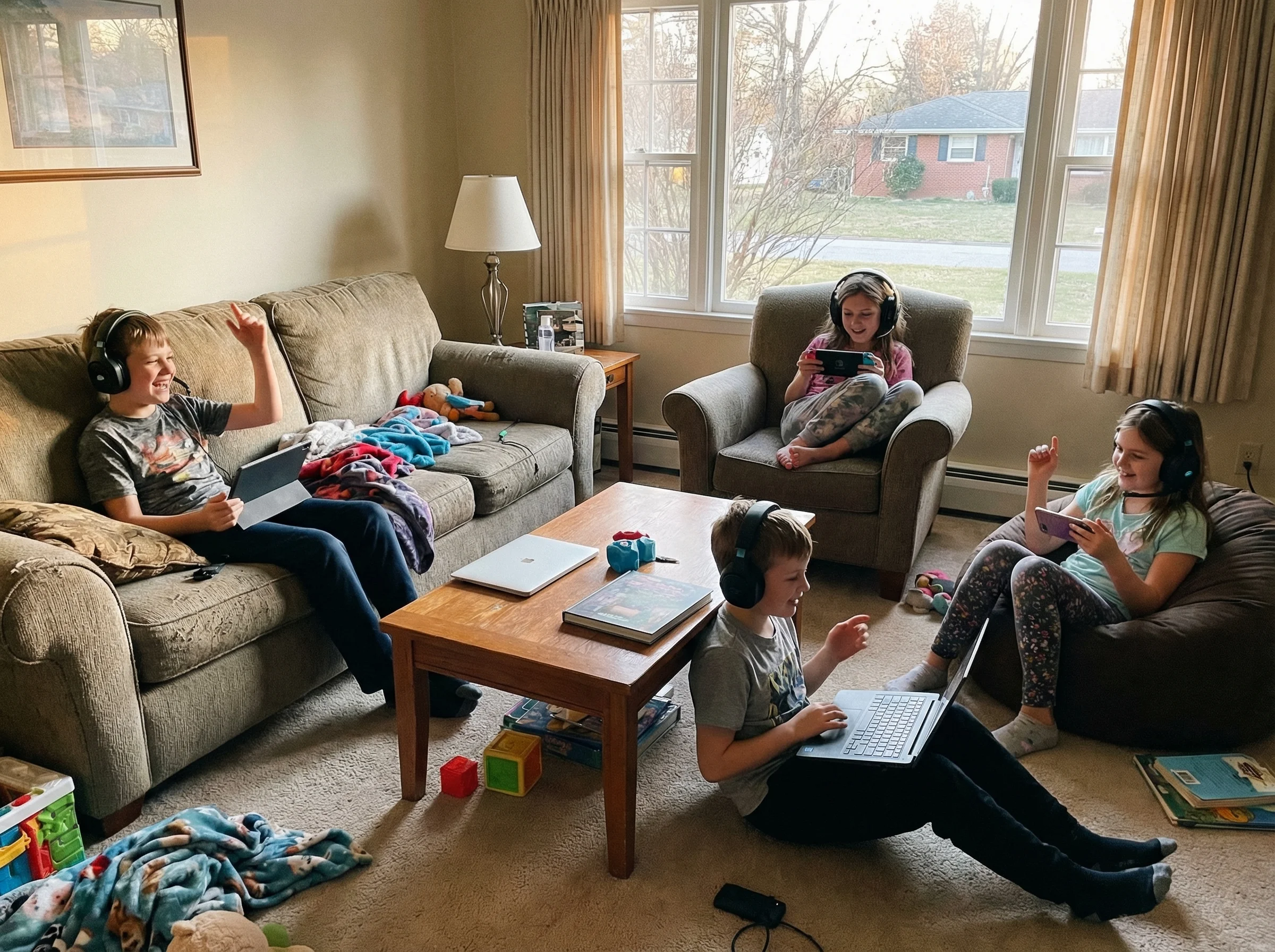
I'll never forget overhearing my kids coordinate a rescue mission in Fortnite. One was knocked down, another was pinned by enemy fire, and the third had to decide whether to help or save themselves. The tactical discussion that followed sounded like Navy SEALs planning an operation. "You draw their fire, I'll build cover, then we both push together on three."
They failed spectacularly, but the teamwork, quick thinking, and communication blew me away. These weren't kids mindlessly shooting at pixels. They were problem-solving under pressure, supporting each other, and learning that sometimes the best plan still doesn't work out.
Playing with friends transforms the entire experience. Solo mode is one thing, but "squads" (teams of up to four) is where the magic happens. Kids learn to:
- Share resources even when they want that legendary weapon
- Communicate clearly and quickly
- Accept different play styles (one friend might be aggressive, another cautious)
- Celebrate each other's successes
- Handle failure as a group
A Parent's Phrasebook for Battle Royale
Want to actually understand what your kid is talking about? Here's your translation guide:
"The Storm is coming!" - The playable area is shrinking. They need to move or take damage. It's the game's way of preventing camping and keeping matches moving.
"I'm dropping hot" - Landing in a popular area where lots of players go. High risk, high reward. Like choosing to start Monopoly by buying Boardwalk.
"We got third-partied" - While fighting one team, another team attacked them. Classic opportunistic play. Frustrating but smart.
"I need shields" - Extra health that sits on top of regular health. Like armor in other games. Finding shields is always exciting.
"They're cracked" - They've damaged an opponent's shields. Not broken, just damaged. Yes, gaming has its own vocabulary for everything.
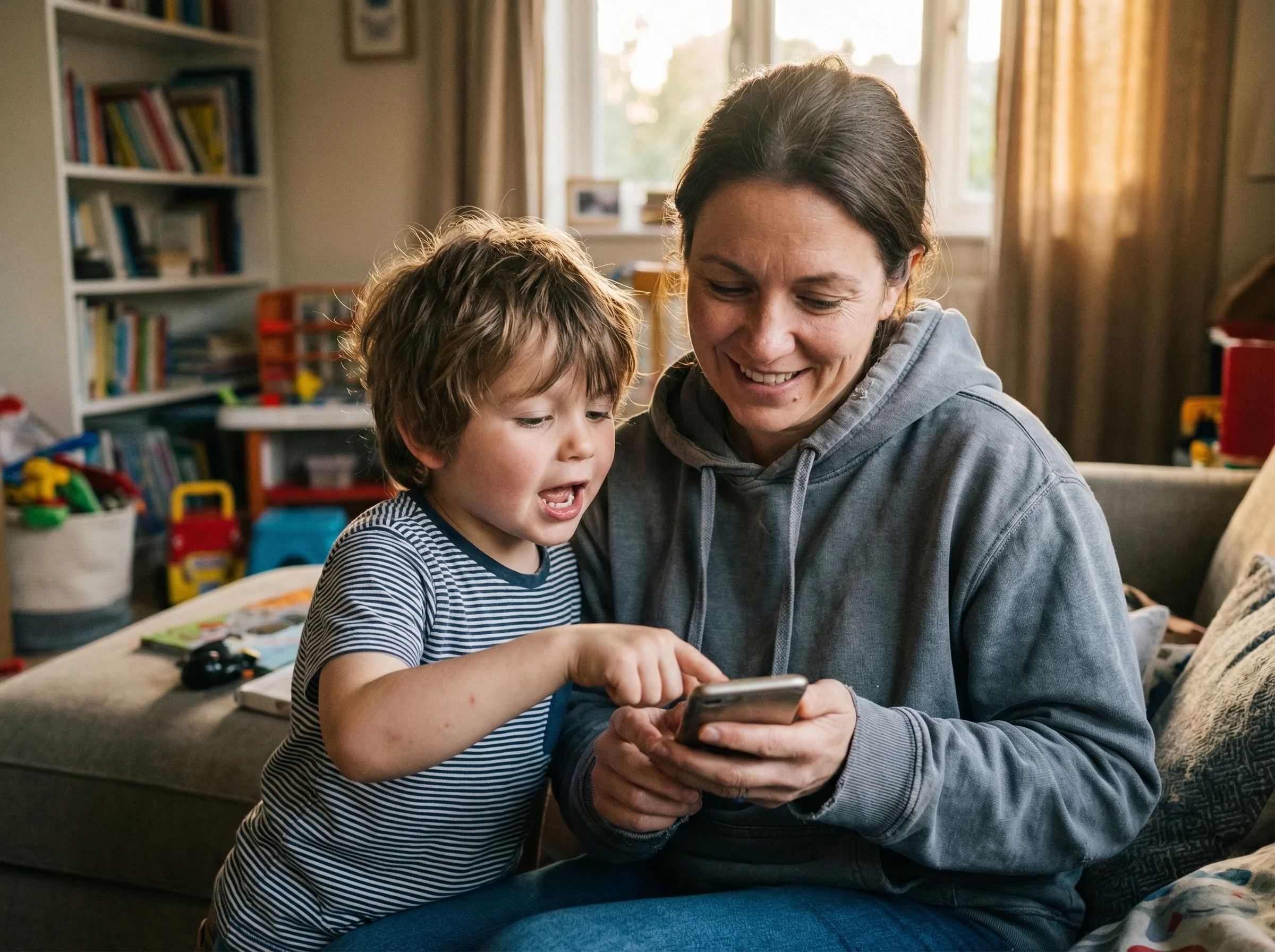
The day I asked my son "Where did you land?" instead of "How was your game?" everything changed. He pulled up the map on his phone and gave me a geography lesson about elevation advantages, loot probability, and rotation paths. Who knew gaming could be so educational?
Red Flags vs Normal Drama
Let me tell you about the "controller almost through the wall" incident. My usually calm son lost it after dying to what he called a "stream sniper" (someone who watches livestreams to find and target specific players). The controller went flying. Not my proudest parenting moment when I just yelled back.
But here's what I learned: some emotional response is normal. These games are designed to create tension and release. The problem isn't the emotion. It's what they do with it.
Normal drama looks like:
- Loud celebration for wins
- Groaning or mild frustration at losses
- Excited play-by-play commentary
- Quick recovery and "run it back" mentality
Red flags include:
- Physical aggression beyond the moment
- Sustained anger after logging off
- Blaming losses on cheating every time
- Inability to take breaks
- Mean-spirited comments about teammates
The key is helping them process the emotions, not eliminate them. Now when my kids get frustrated, we talk about what went wrong tactically, not personally. "The game cheated" becomes "what could you do differently next time?"
For the Mid-Match Beat: A curiosity card lands during the lobby. Keep a deck of Pause, Play, Connect by the console so a prompt is within reach between games.
How to Actually Connect Through Battle Royales
The full set of soft starters is in our conversation cards for families with gamer kids.
Here's my challenge to you: watch one full game without commenting. Just watch. Notice what your kid focuses on. Listen to how they communicate. See what excites them. You'll learn more in those 20 minutes than in weeks of "how was your day?" conversations.
After that, try these conversation starters:
- "What's your favorite place to land and why?"
- "What was your best play today?"
- "If you could add anything to the map, what would it be?"
- "Who's the best player in your friend group at what?"
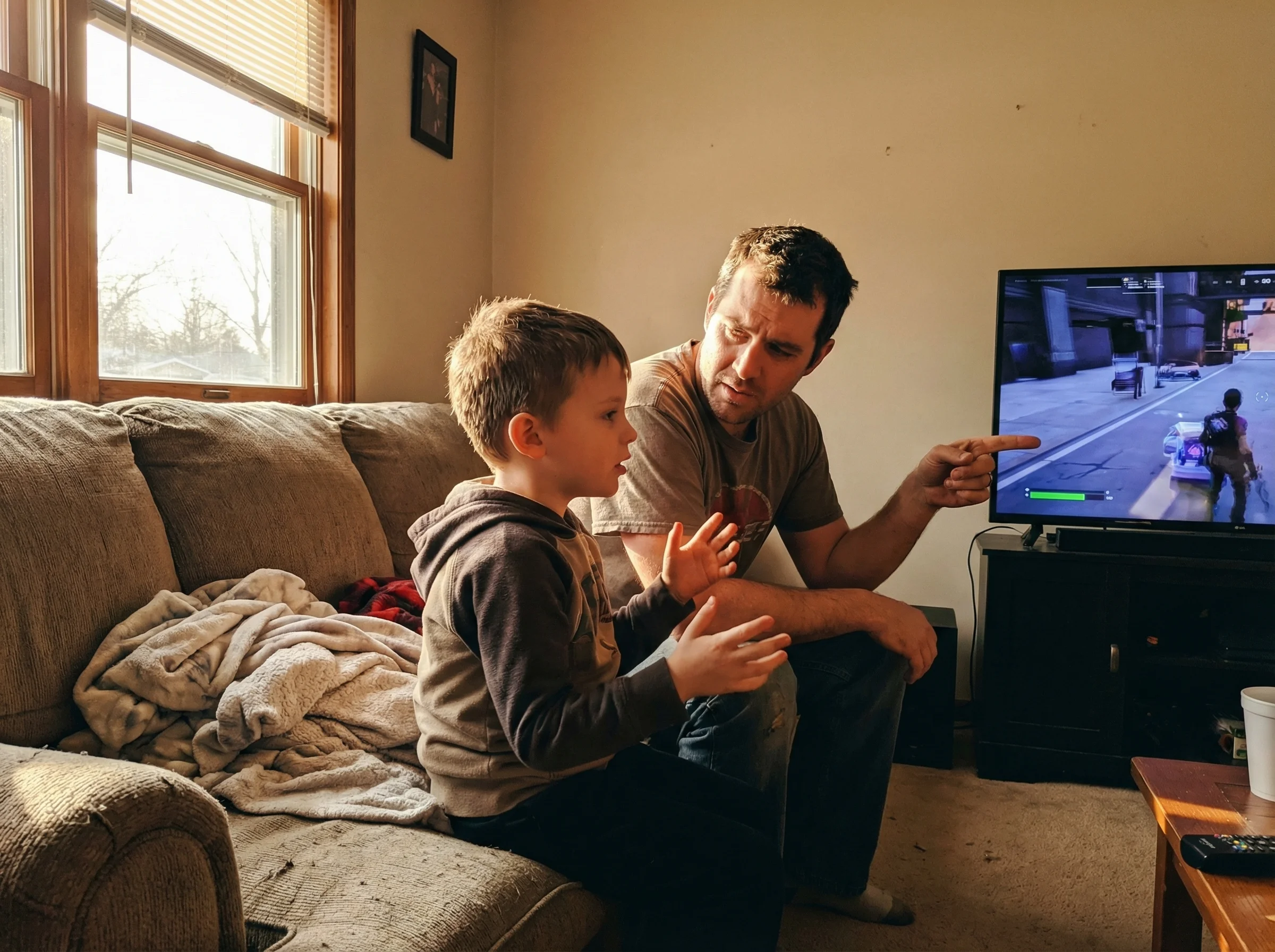
One dad told me the Yakety Pack gaming questions saved his relationship with his teenager. Instead of "how was your day?" he now asks "if you could design a battle royale map, what would be your signature feature?" The conversations last for hours.
The magic isn't in understanding every mechanic or term. It's in showing genuine interest in their world. When you ask specific questions about their gaming experiences, you're not just asking about a game. You're asking about their decisions, their creativity, their friendships, their problem-solving. You're asking about them.
For the Long Build: Connection grows from many small lobby-time chats. A deck of Yakety Pack conversation cards on the table near the console makes those talks the default.
The Night Everything Changed
Let me leave you with this: I finally agreed to play Fortnite with my kids. I was terrible. Historically, legendarily bad. But something beautiful happened. They became the teachers. They coached me through building (badly), warned me about enemy positions (too late), and cheered when I got my first elimination (largely by accident).
For one night, they were the experts and I was the student. The pride in their voices as they explained strategies, the patience as I fumbled with controls, the genuine excitement when I finally understood a concept - it flipped our entire dynamic in the best way.
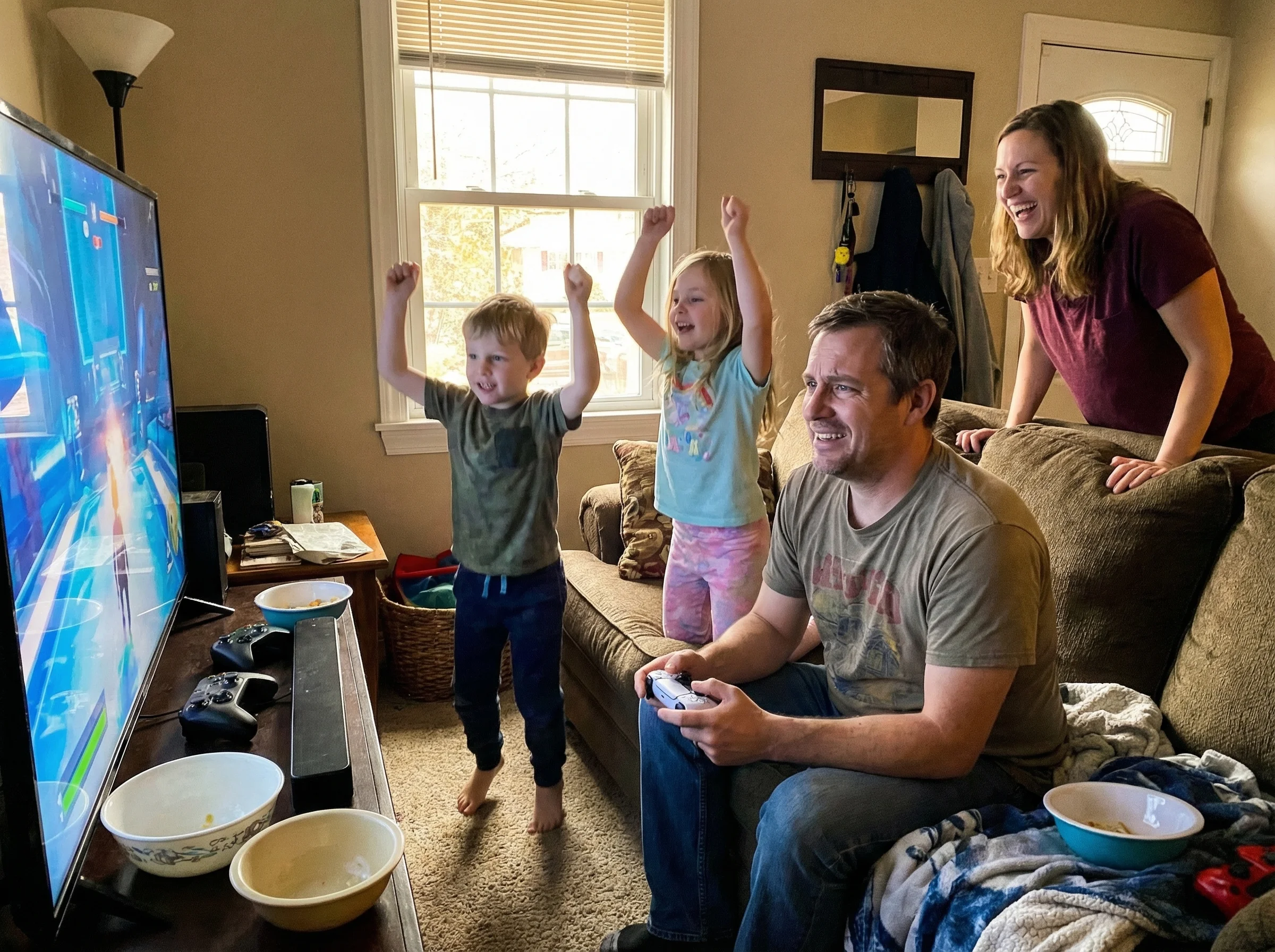
You don't need to become a gamer to connect with your gaming kids. Sometimes the right question is all it takes. Remember, battle royales aren't about the battle. They're about the stories, the teamwork, the iteration, and yes, the royale treatment of being the last one standing.
Next time your kid asks for "one more game," maybe ask to watch. You might be surprised by what you learn about the game, and more importantly, about them. We created Yakety Pack after realizing that "what happened in your game?" beats "time to get off" every single time.
The neighbors still text occasionally when the victory screams get loud. But now I text back: "She must have gotten her first solo win." And I'm usually right.
The squad rescue that failedPause, Play, Connect: Core Deck172 prompts that ask about the teammates, the plan, and what happened when the plan failed.$49 CAD • 90 cards • 18 reviewsShop the deck
Related Articles
Looking for more? Check out these related articles:

