
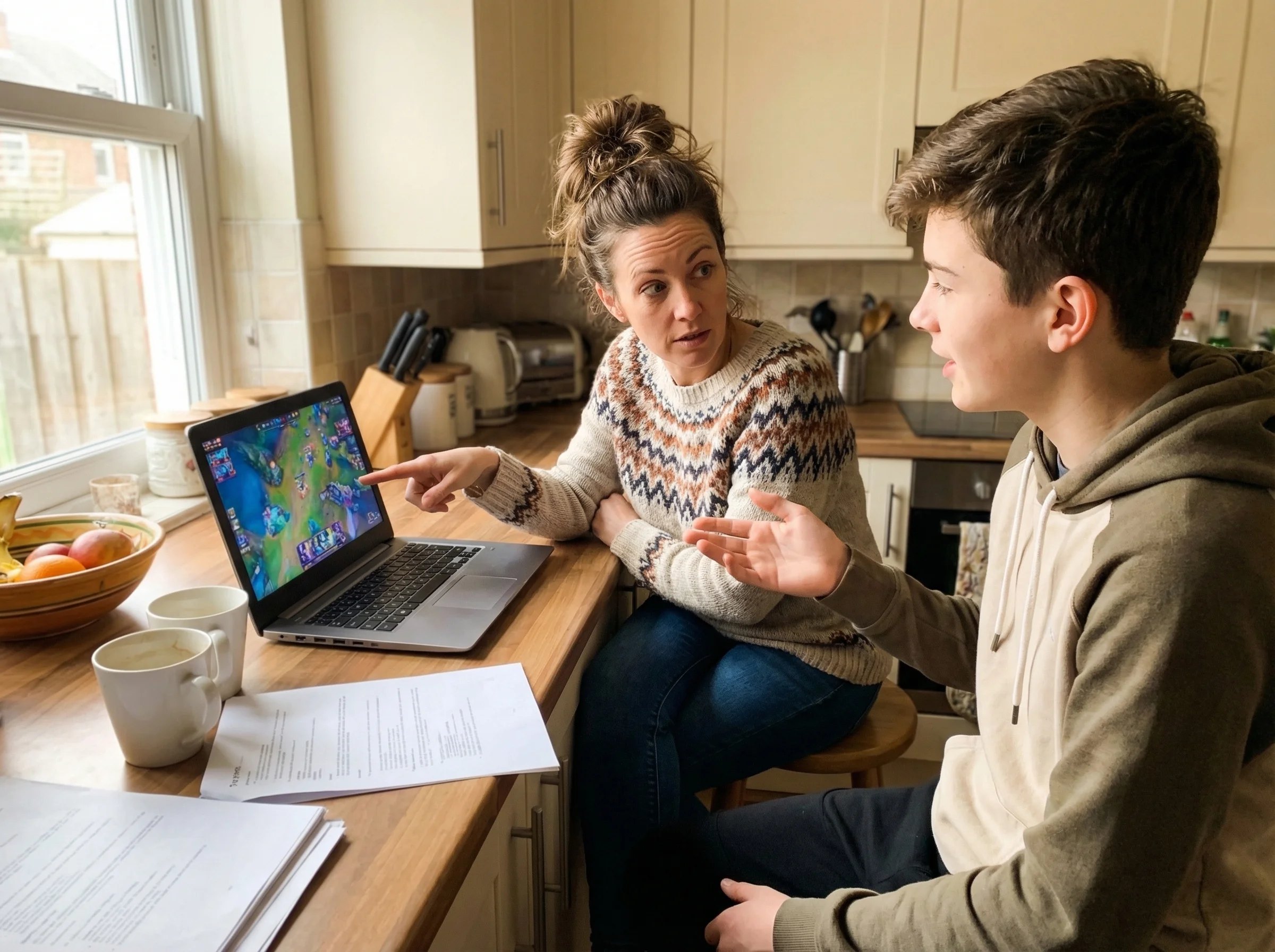
My 14-year-old announced he was "joining a raid in his MMORPG after finishing dailies" and I realized I understood exactly zero words in that sentence. If you're nodding along in confused solidarity, you're not alone. Getting mmo rpg fps gaming acronyms explained helped me crack the code, but what really mattered was understanding why these letters represent entire worlds my kids care deeply about. Sound familiar?
I used to smile and nod when my kids rattled off gaming acronyms, pretending I got it. MMO this, RPG that, something about an FPS. I figured learning what the letters stood for would help me connect with them. Spoiler: memorizing that RPG meant "role-playing game" didn't help me understand why my son would spend entire Saturdays on Final Fantasy XIV.
The breakthrough came when I stopped treating gaming language like vocabulary homework and started seeing it as a window into what my kids actually care about. Turns out, when your kid talks about their favorite game type, they're telling you who they are. Here's what those MMO RPG FPS gaming acronyms explained really mean - and more importantly, why your kid cares.
The Big Three: MMO, RPG, and FPS Decoded
For the bigger frame, see our parent guide to gaming culture.
Let me save you the Wikipedia dive. MMO stands for Massively Multiplayer Online - games where thousands of players share the same digital world. RPG means Role-Playing Game - interactive stories where players control a character and make choices that matter. FPS is First-Person Shooter - competitive games viewed through the character's eyes.
But those definitions are like saying basketball is "a game with a ball and hoops." Technically true, completely misses the point.
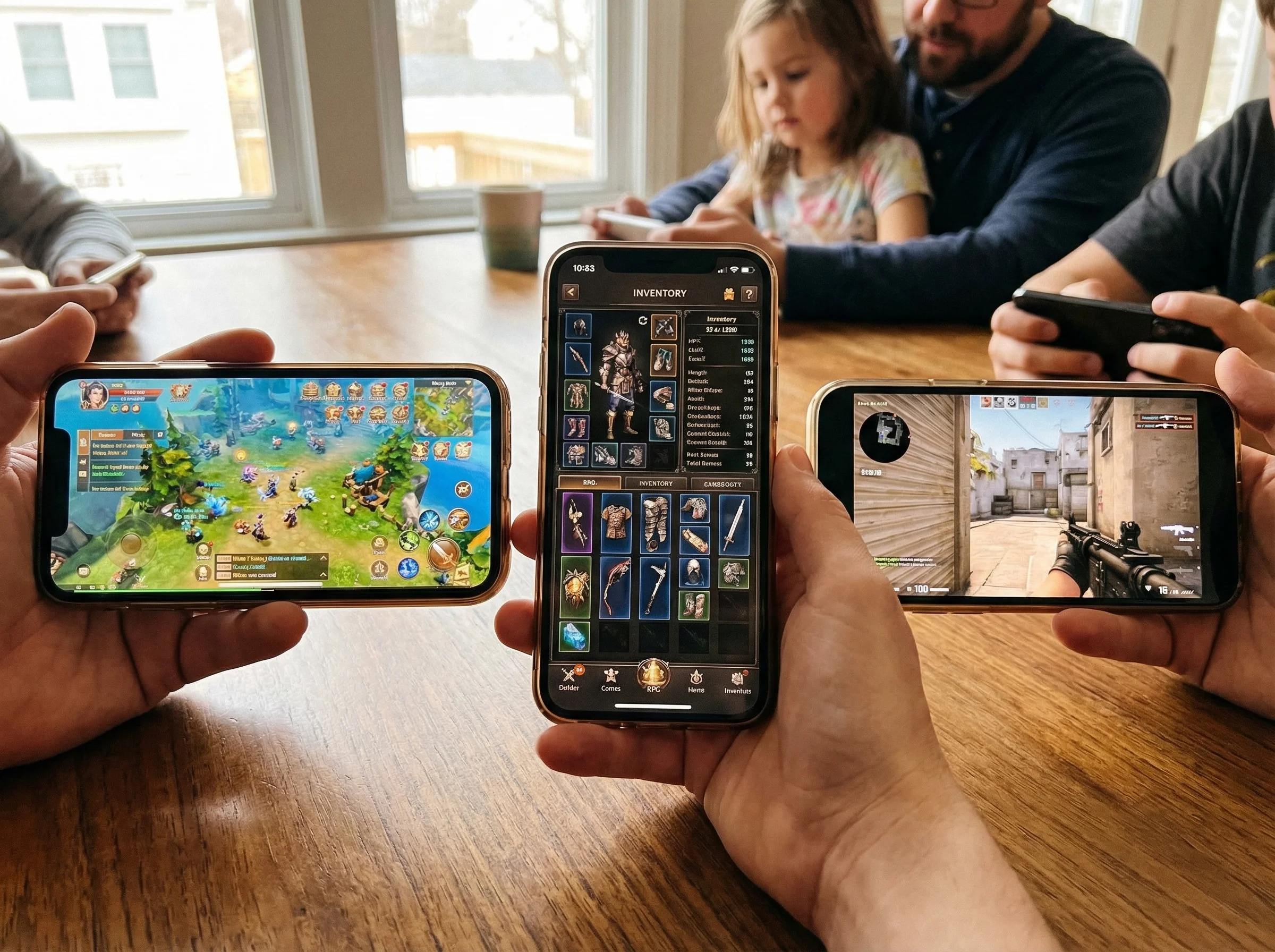
My son explained MMOs better than any gaming site: "It's like playing tag with kids from Japan at 2am." That clicked. These aren't just games, they're global playgrounds that never close.
RPGs? My daughter calls them "choose your own adventure books where I get to be the hero."
FPS games? "It's not about shooting, Dad. It's about reflexes and teamwork. Like digital laser tag but way more intense."
Once I understood what drew them to each type, our conversations went from "turn that off" to "tell me what happened."
 Once you know the lettersPause, Play, Connect: Core Deck172 prompts that go past the acronym to what your kid actually does in there.$49 CAD • 90 cards • 18 reviewsShop the deck
MMOs: It's Not About the Game, It's About the People
Your kid playing Minecraft, Roblox, World of Warcraft, or Fortnite for hours? They're not addicted to pixels. They're hanging out with friends.
MMOs create persistent worlds where relationships form naturally. My daughter has Minecraft friends from Australia she's "known" for three years. They've never met in person, but they built an entire city together, block by block. When those friends threw her a virtual birthday party complete with pixel cake and fireworks, I finally got it. This is her neighborhood. These are her people.
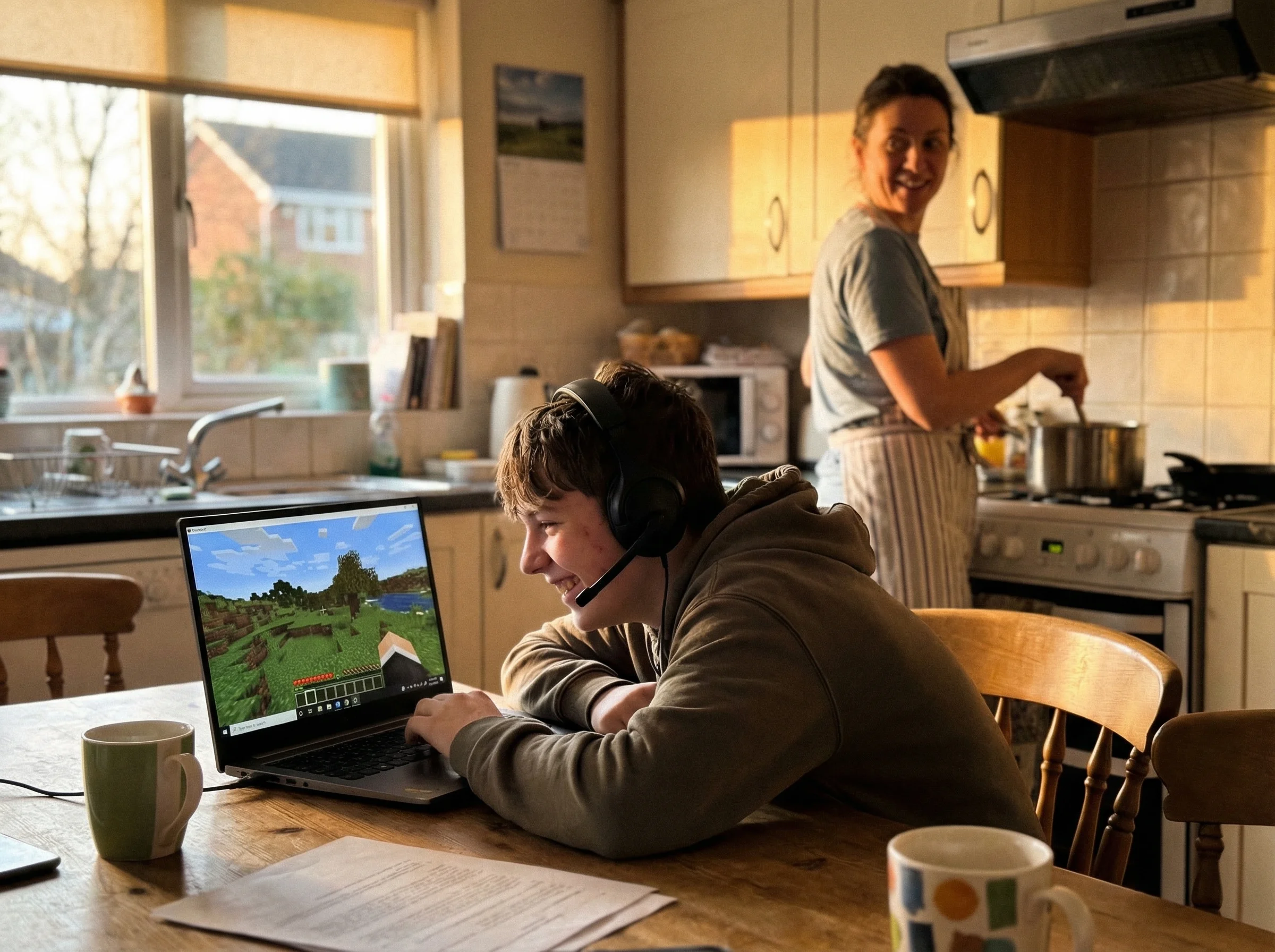
The social structure in MMOs mirrors real life. Kids form guilds (basically clubs), take on group challenges, and develop genuine friendships. They learn to coordinate with teammates across time zones, resolve conflicts when someone doesn't pull their weight, and celebrate shared victories.
But yes, I had safety concerns. Who are these people my kids are talking to? Here's what I learned: younger kids (7-10) do best in closed servers with known friends or heavily moderated games like Roblox. Tweens can handle more open environments with supervision. By high school, if you've had ongoing conversations about online safety, they're usually savvy enough to navigate these spaces.
The key? Ask about their guild or server drama the same way you'd ask about school friendships. Because that's what they are.
RPGs: Your Kid Isn't Wasting Time, They're Living a Story
When my son plays Zelda for six hours straight, he's not vegetating. He's problem-solving, making moral choices, and watching his decisions play out. RPGs like Pokemon, Skyrim, or Genshin Impact aren't passive entertainment - they're interactive novels where your kid is the protagonist.
The "leveling up" that seems meaningless to parents? It represents growth and achievement to kids. Every level gained, every skill learned, every piece of gear earned tells them they're progressing. In a world where so much feels out of their control, RPGs let them see direct results from their efforts.
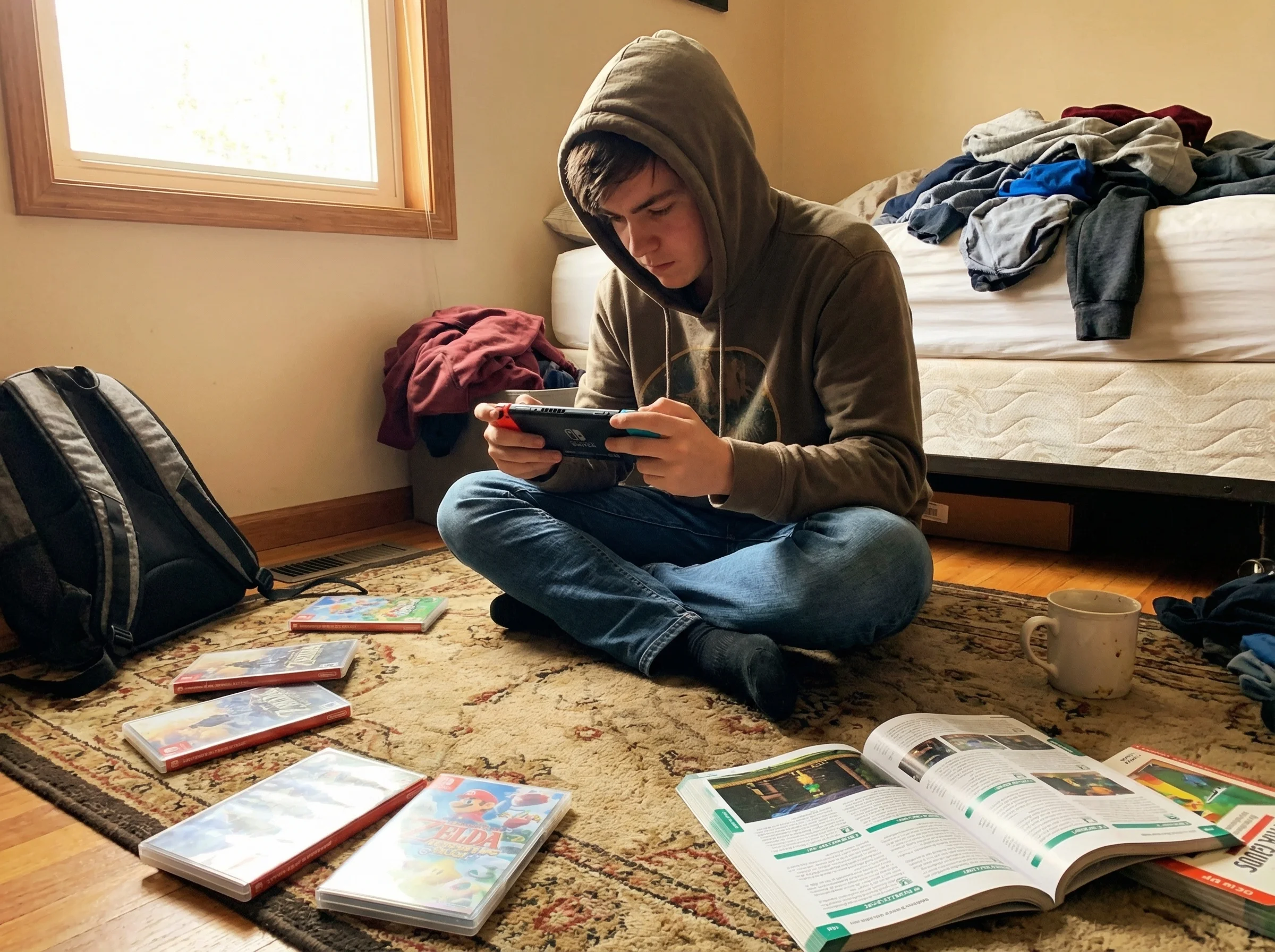
Single-player RPGs offer different benefits than multiplayer ones. Solo games like Zelda let introverted kids decompress and process at their own pace. Multiplayer RPGs add social dynamics - coordinating strategies, sharing resources, showing off achievements.
One night, my son was agonizing over a choice in his game - save one character or save a village. We ended up discussing moral dilemmas and unintended consequences for an hour. That game choice led to deeper conversations than any "how was school?" ever has.
FPS Games: Yes, There's Shooting. No, It's Not Just Violence.
I'll be honest - FPS games worried me most. Call of Duty, Valorant, Overwatch, Apex Legends... all that shooting couldn't be healthy, right?
Then I watched my son coordinate his Overwatch team like a mini quarterback. "Healer, stay behind the tank! DPS, flank left! I'll cover high ground!" These games require split-second decisions, constant communication, and trust in your teammates. It's digital sports, not violence simulators.
The key is understanding the spectrum. Overwatch and Fortnite feature cartoon graphics and silly characters. Call of Duty aims for military realism. Most kids understand the difference - they're not confused about reality, they're enjoying competition.
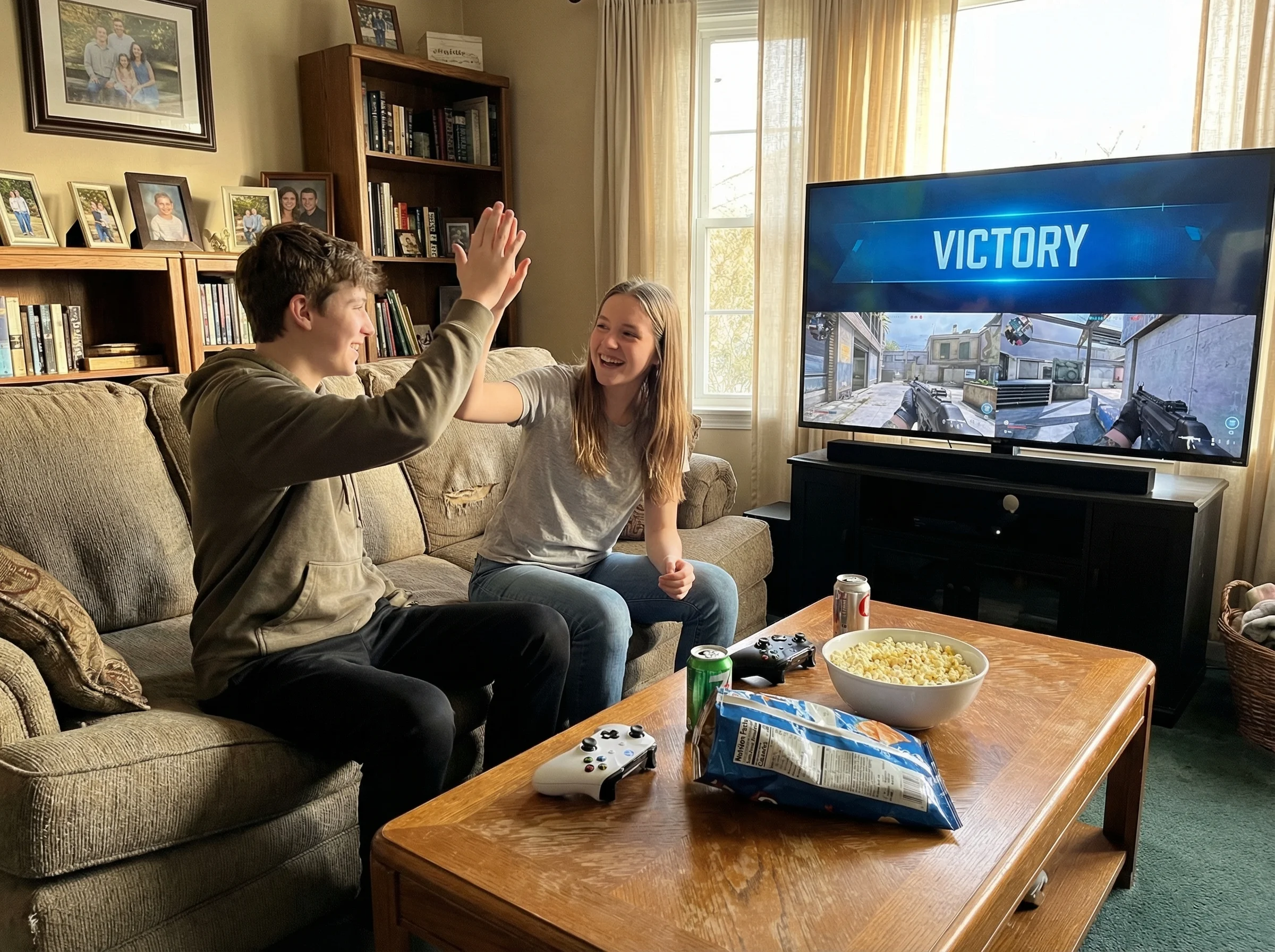
Age matters here. Cartoon-style shooters can work for 10+, while realistic military games should wait until teens. But more important than graphics? Watch how your kid acts after playing. My son gets energized after competitive matches, talking strategy and analyzing plays. If your kid seems aggressive or upset regularly, that's worth addressing.
 For the guild dramaPause, Play, Connect: Core Deck$49 CAD • 172 promptsSee the deck
When Games Mix Genres: The New Normal
Here's where modern gaming gets confusing for parents. Fortnite isn't just a shooter - it's an MMO where kids hang out, with RPG elements like character customization. Destiny 2 combines FPS gunplay with MMO raids and deep RPG progression systems.
My daughter plays Fortnite but rarely shoots anyone. She's there for the social aspect, exploring new areas with friends, doing dance emotes, and yes, occasionally competing. When I asked why she prefers Fortnite to other games, she said, "It's where my friend group hangs out after school."
These hybrid games dominate because they offer something for everyone. The kid who loves stories gets RPG elements. The social butterfly gets MMO features. The competitive player gets FPS action. Understanding which aspect draws your kid helps you understand them better.
Red Flags vs Normal Behavior by Genre
Not all gaming behavior is created equal. Here's what's normal and what might need attention:
MMO Warning Signs:
- Giving personal information to guild members they just met
- Spending real money without permission
- Prioritizing game events over real-life consistently
- Extreme emotional reactions to guild drama
Normal MMO Behavior:
- Having scheduled play times with online friends
- Feeling upset when a long-term guild breaks up
- Wanting to participate in special events
RPG Concerns:
- Using games to avoid all social interaction
- Extreme distress when unable to play
- Losing interest in all non-game activities
Normal RPG Behavior:
- Getting deeply invested in stories and characters
- Wanting to complete every side quest
- Feeling proud of achievements
FPS Red Flags:
- Physical aggression after playing
- Extreme rage at losses
- Bullying or toxic behavior toward teammates
Normal FPS Behavior:
- Excitement after wins
- Frustration at losses (within reason)
- Competitive trash talk with friends
The difference? Duration and intensity. Being upset for five minutes after a loss is normal. Breaking controllers or punching walls isn't.
For the Genre Talk: A curiosity card lands when you can speak their language. Keep a Pause, Play, Connect deck on the shelf so a prompt is always at hand.
Turn Their Genre Love into Connection
The full set of starters is in our conversation cards for families with gamer kids.
Want to actually connect with your gaming kid? Stop asking "how was your game?" and get specific based on what they play:
For MMO players:
- "What's the drama in your guild lately?"
- "Show me what you and your friends built"
- "Who's the funniest person in your group?"
For RPG lovers:
- "What's the hardest choice you had to make in your game?"
- "Tell me about your character's story"
- "What happens next in your quest?"
For FPS gamers:
- "What was your best play today?"
- "How does your team usually strategize?"
- "Teach me about the different roles"

These questions show you understand their world. My son's face lit up the first time I asked about his MMO guild drama. We talked for an hour about leadership challenges, personality conflicts, and group dynamics. It was like discussing his friend group, because that's exactly what it was.
We created Yakety Pack with gaming-specific conversation starters because generic "how was your day" doesn't work when their day included defeating a dragon with friends from three continents. The right questions turn acronyms into actual conversations.
For the Long Build: Connection grows from many small genre-aware conversations. A deck of Yakety Pack conversation cards on the dinner table is the easiest way to keep them coming.
The Plot Twist Parents Need to Hear
Here's what surprised me most: the kids who spend the most time in MMORPGs often aren't escaping reality. They're the social butterflies who found a bigger playground. My introverted son who struggles with school social dynamics? He successfully manages a 40-person guild, mediating conflicts and organizing events. Those leadership skills emerged online first.
Gaming genres tell you about your kid's personality. MMO lovers are often social and collaborative. RPG fans tend to be creative storytellers. FPS players frequently have competitive drives and quick decision-making skills. Instead of fighting against their gaming preferences, use them as a map to understand who your kid is becoming.
Understanding what MMO, RPG, and FPS actually mean is just step one. Having the right questions ready turns that knowledge into real connection. Next time your kid mentions their game, you'll hear more than random acronyms. You'll hear what matters to them.
And maybe, just maybe, they'll even invite you to play.
When they explain it backPause, Play, Connect: Core Deck172 prompts that turn a genre you just learned into a question worth asking.$49 CAD • 90 cards • 18 reviewsShop the deck
Related Articles
Looking for more? Check out these related articles:

