
My kids went from sabotaging each other's Minecraft builds to spending three hours creating an elaborate castle defense system together. If you're wondering "what are teamwork games for siblings?" because your own kids turn everything into a battle, I was in the exact same spot. The difference? I finally stopped fighting their competitive instincts and learned to redirect them instead.
Look, if you're searching for what are teamwork games for siblings, you're probably where I was two years ago - watching your kids turn every activity into World War 3 and wondering if they'll ever actually like each other. I tried everything. Board games ended with flipped tables. "Cooperative" activities became races to see who could contribute more. Even cleaning their room together somehow turned into a competition about who picked up more socks.
Then one day, I watched them play Fortnite duos. These same kids who couldn't share a bag of chips were calling out enemy positions, sharing resources, and strategizing like tiny Navy SEALs. They high-fived when they won. They problem-solved when they lost. They were actually... working as a team?
That's when it hit me. They already knew how to work together. I just kept trying to force it in all the wrong places.
 After a good team roundPause, Play, Connect: Core Deck172 prompts that give two siblings something to talk about once the match ends.$49 CAD • 90 cards • 18 reviewsShop the deck
Why Traditional Teamwork Games Fail with Siblings
Before we dig into formats, it helps to read our broader take on sibling gaming conflicts, because the same forces that make sharing hard also make team play hard.
Here's what nobody tells you about siblings and teamwork: they're biologically programmed to compete. It's not a bug, it's a feature. Thousands of years of evolution have wired them to jostle for resources (aka your attention), and no amount of "just be nice to each other" is going to override that.
I learned this during what I now call the Great Jenga Meltdown of 2019. Picture this: family game night, I proudly announce we're playing "cooperative Jenga" where everyone wins if the tower stays up. Sounds sweet, right? Within three turns, my older son was "helping" his sister by pointing out every wobble. She retaliated by "accidentally" bumping the table. The tower fell, everyone cried, and I stress-ate an entire sleeve of Oreos in the pantry.
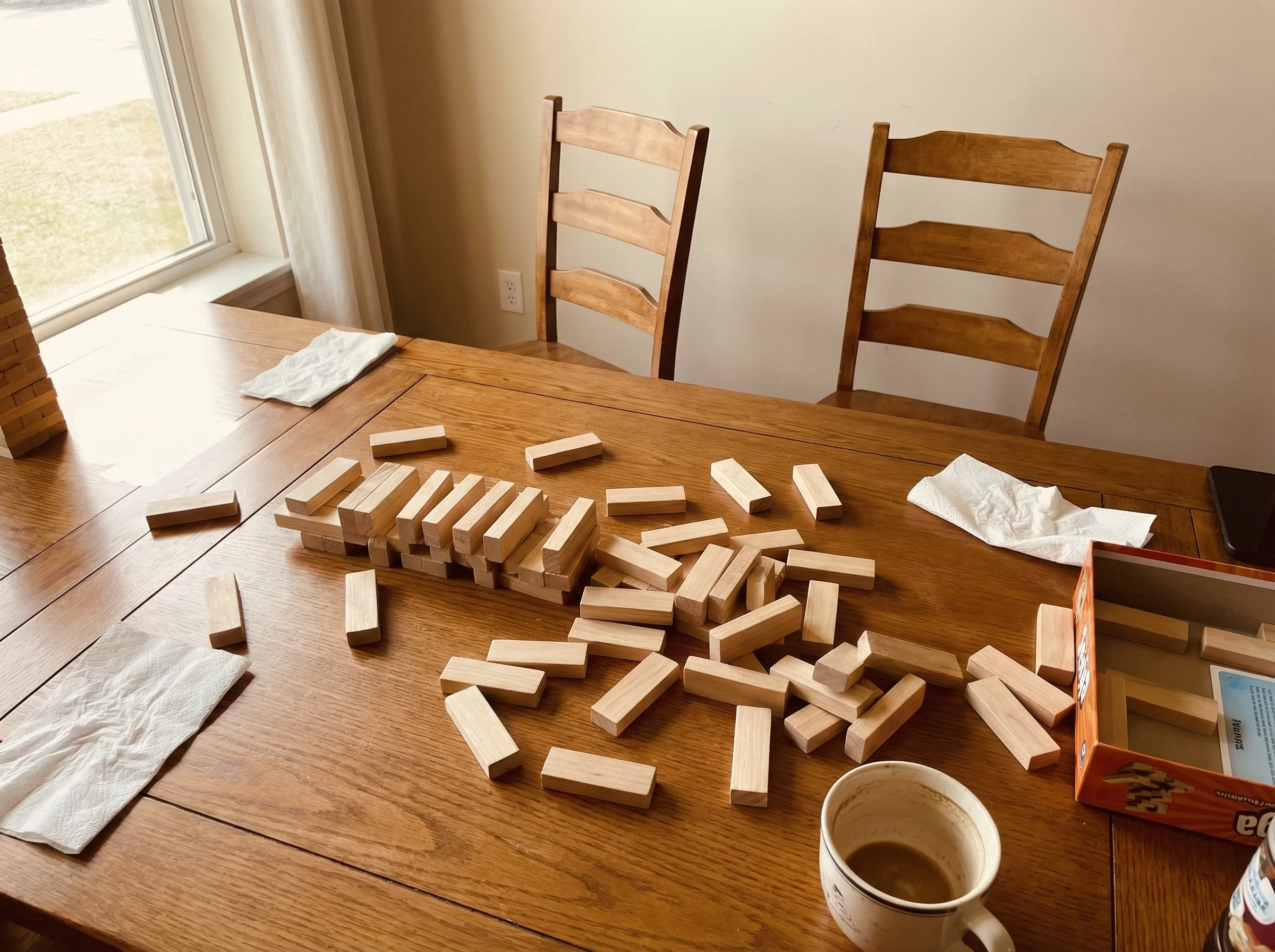
The problem wasn't the game. The problem was that I was fighting against their nature instead of working with it. Every "teamwork" activity I introduced had the same fatal flaws:
- The age gap made true cooperation impossible (a 7-year-old and 11-year-old have wildly different abilities)
- There was no real stakes or motivation beyond "be nice"
- I was forcing fun, which is the fastest way to make something decidedly unfun
- Most importantly, I was trying to eliminate competition instead of redirecting it
Start Where They're Already Winning: Video Games as Teamwork Training
Remember how I mentioned my kids crushing it in Fortnite duos? That became my starting point. Instead of dragging them away from screens to "practice teamwork," I leaned into what was already working.
Minecraft Creative Mode became our teamwork laboratory. No enemies, no pressure, just building together. The rule was simple: create something neither of you could make alone. My daughter designed an underwater city while her brother handled the redstone mechanics. They negotiated, compromised, and problem-solved without a single meltdown. Why? Because they both wanted that city to be awesome.
Rocket League 2v2 against bots taught them communication. You can't win without calling "I got it!" or "Defending!" They learned to trust each other's calls and play to each other's strengths. My younger one became the goalkeeper specialist while the older one handled offense.
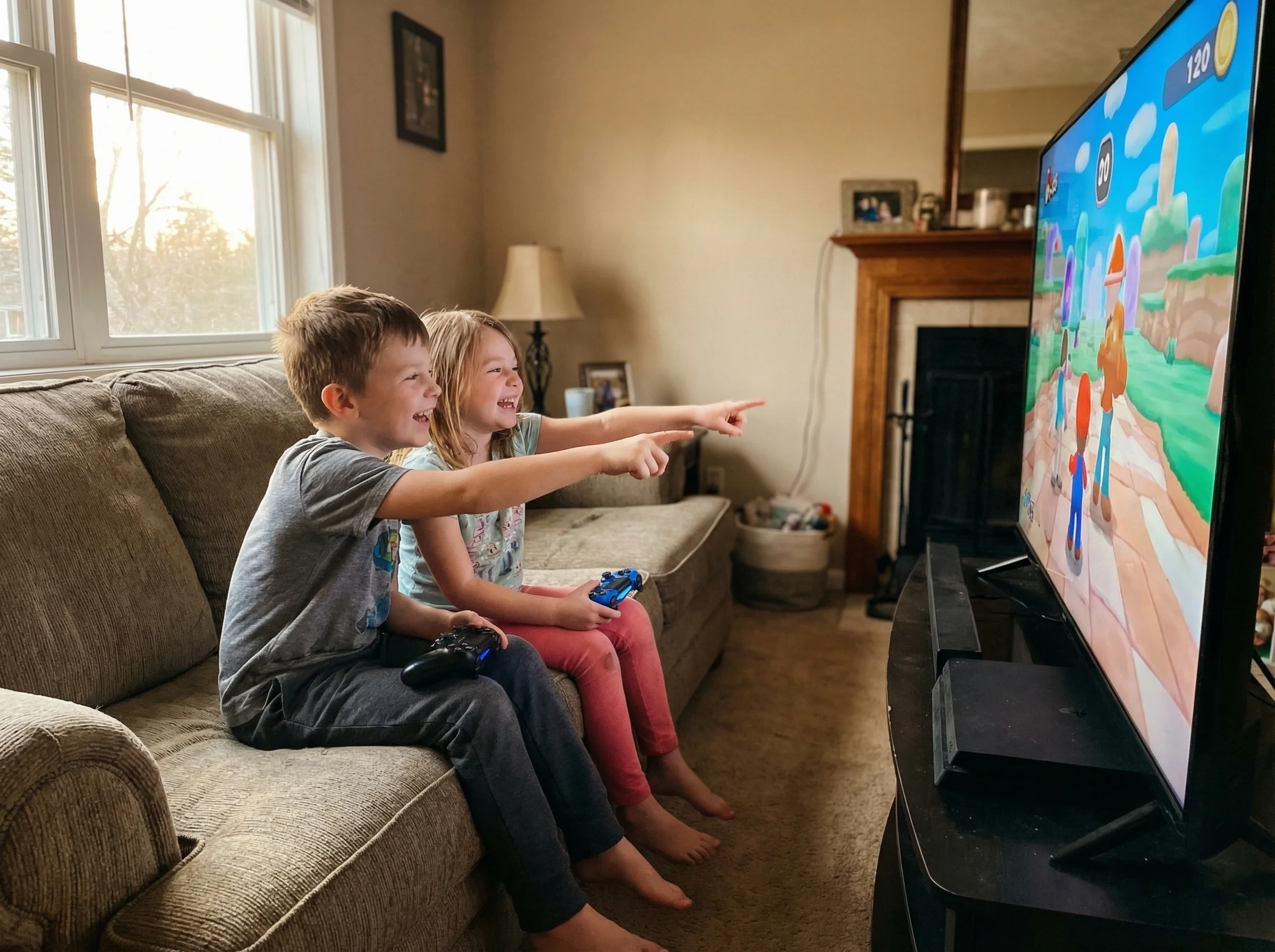
Mario Kart Team Races (where your combined score matters) showed them that helping each other meant beating the computer teams. Suddenly, the older one was teaching shortcuts instead of hoarding them.
For older siblings, It Takes Two is literally designed for cooperation. Every puzzle requires both players. You can't progress by leaving someone behind. My neighbor's teens went from constant bickering to laughing their way through challenges.
The magic? These games have built-in reasons to cooperate. It's not mom saying "work together or else." It's "work together or we lose to these bots." Totally different motivation.
The Bridge Strategy: Moving from Screens to Reality
Once I saw them succeeding in games, I started creating real-world versions of their favorite mechanics. This wasn't about getting them off screens - it was about showing them their gaming skills worked everywhere.
Tower Defense with couch cushions: Just like their favorite games, they had to protect a "base" (usually the dog's bed with stuffed animals) from incoming "enemies" (rolled up socks I threw). They built walls, assigned roles, and strategized together. The older one handled architecture while the younger one was the ammunition supplier.
These are essentially offline versions of the cooperative games for arguing siblings playbook we use in our family. Resource gathering scavenger hunts: I'd hide ingredients around the house for making cookies. They had to find everything in 10 minutes or no cookies. Suddenly they're dividing zones, communicating finds, and working like a well-oiled machine.
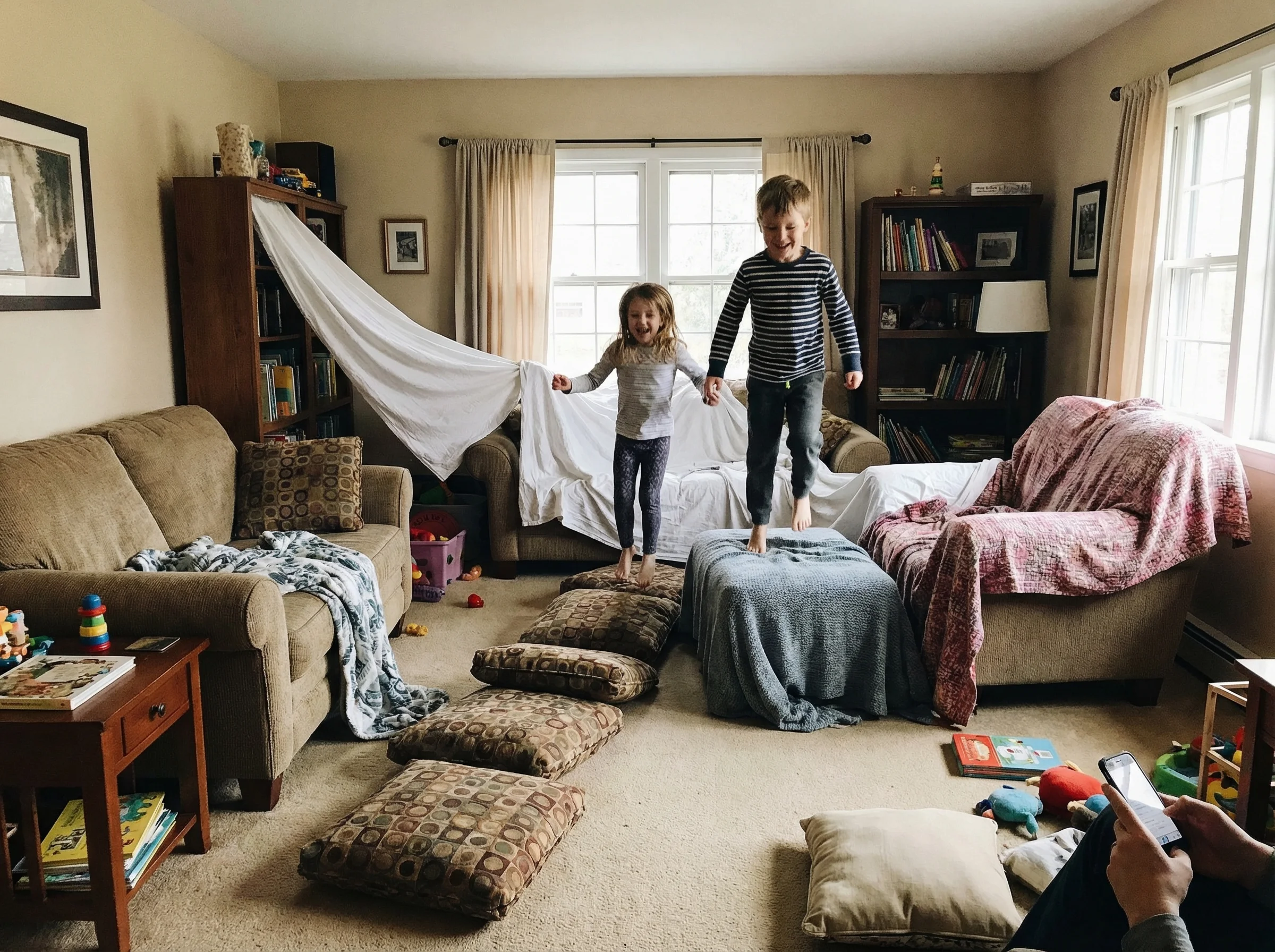
The Floor is Lava Rescue Mission: Instead of every person for themselves, I'd put their favorite toy on the other side of the room. They had to work together to rescue it without touching the floor. Watching them coordinate furniture moves and create paths was like watching a two-person physics puzzle game.
The key was keeping the game mechanics they understood - time limits, clear objectives, and us-versus-the-challenge mentality.
For the In-Between Beats: Teamwork sticks faster when you have a prompt for the cooldown. Leave a Pause, Play, Connect deck by the couch so a quick question is in hand when the round wraps.
Quick Wins: 10-Minute Teamwork Builders
Not every teamwork moment needs to be an elaborate production. Some of our best connections happen in tiny pockets of time:
Partner Drawing Challenge: One kid describes a silly creature while the other draws. Then switch. No peeking allowed. The weirder the creature, the more they laugh.
Two-Person Story Creation: First person says one sentence, second adds the next. I usually start with something ridiculous like "The pizza decided to run for president." Chaos and giggles ensue.
Kitchen Science Experiments: One measures, one mixes. Making slime, volcano explosions, or even just seeing what happens when you microwave a marshmallow. They're learning to follow steps together while I'm right there if things go sideways. Science Kids has great simple experiments perfect for siblings to tackle together.
Beat the Timer Room Cleaning: Set a timer for 5 minutes. If they beat yesterday's record for toy pickup, they get to pick tonight's dessert. They went from arguing about who does what to strategizing zones like they're planning a speedrun.
My secret weapon? Yakety Pack conversation starters. When energy is ramping up toward a fight, I'll pull a card. "If you two were a superhero team, what would your team name be?" Twenty minutes later, they're designing costumes and forgot what they were mad about.
Handling the Skill Gap: What Are Teamwork Games for Siblings of Different Ages?
The biggest challenge? My kids are four years apart. Most activities leave someone frustrated. Here's what actually works:
Asymmetric Roles: In building challenges, the younger one is the "idea person" who designs on paper while the older one builds. Both crucial, neither can succeed alone.
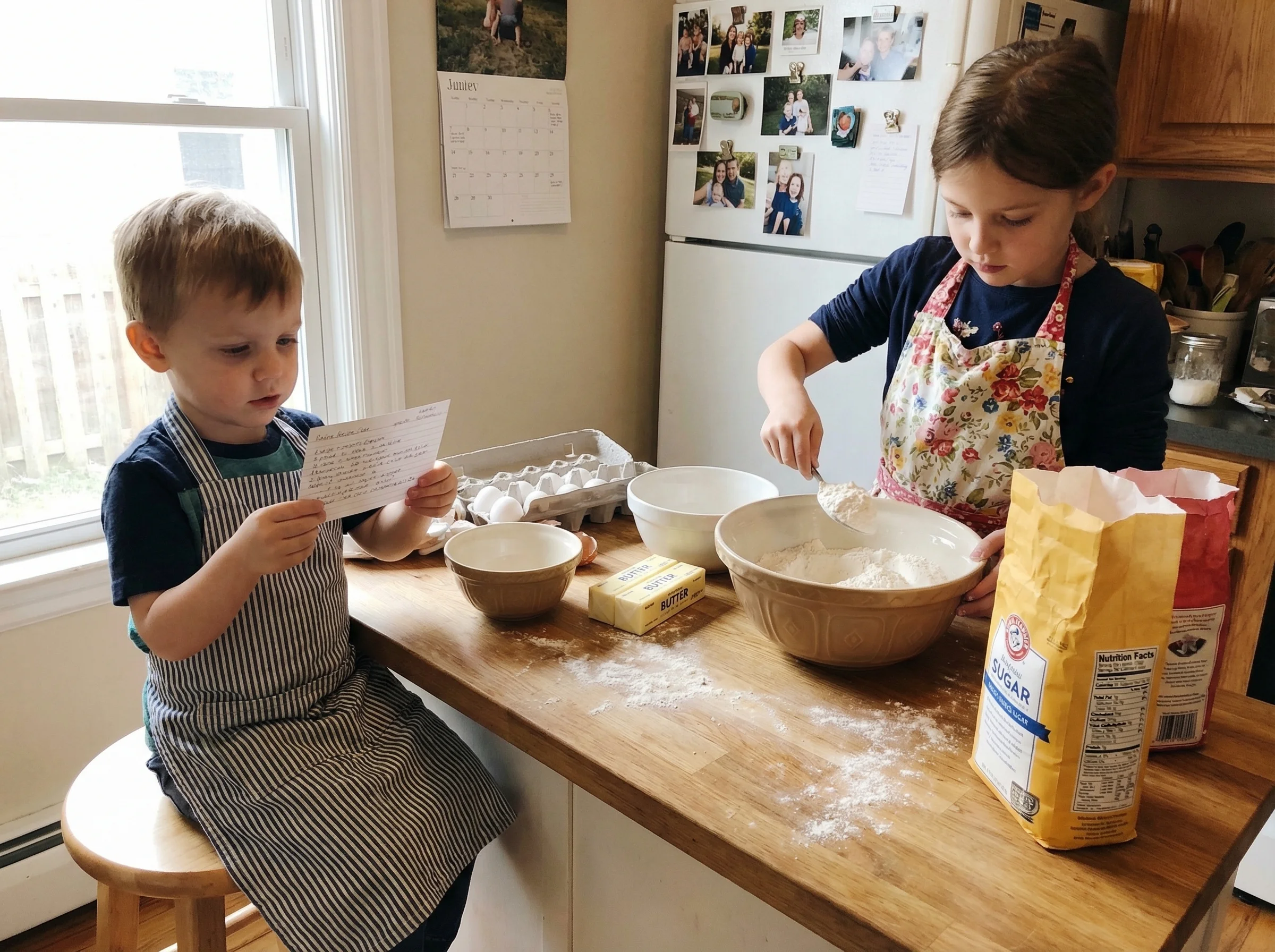
Games Where Different Skills Matter: In our backyard obstacle course, speed matters for some challenges, but others need careful balance or puzzle-solving. Everyone gets to shine somewhere.
The Specialist Approach: My 6-year-old became our family "maze master" - she designs paper mazes that her brother has to solve. She's the expert creator, he's the expert solver.
Rotating Leadership: "Mission leader" changes every round. When the younger one leads, the older has to follow their plan. It's hilarious watching my 11-year-old follow elaborate 7-year-old logic, but he does it.
 Between the older and youngerPause, Play, Connect: Core Deck$49 CAD • 172 promptsSee the deck
When Teamwork Falls Apart: Reset Strategies
Let's be real - sometimes it all goes wrong. Someone rage quits, tears flow, doors slam. Here's how we reset:
The Pause-and-Pivot: When competition creeps in, we literally pause and change the enemy. "Oh no! The couch cushions are falling! Save the fort!" Suddenly they're united against gravity instead of each other.
Snack Break Reset: Rage quit? That's fine. Mandatory snack break. By the time they're done with apple slices, the intensity has dropped and we can try again or move on. Research from the American Psychological Association shows that taking breaks helps with emotional regulation - it works for kids too.
Reframing Failure as Data: "Okay, that way didn't work. What should we try differently?" My kids now say "that was good data" when something fails, which cracks me up every time.
Switch to Us vs. The Game: If they're competing against each other, I become the challenge. "Bet you two can't build a tower taller than mom in 3 minutes." Now I'm the opponent, not each other.
Building Long-Term Team Identity
The real magic happens when they start seeing themselves as a team beyond individual games:
Sibling Guild Names: They're officially "The Chaos Squad" (their choice). They have a secret handshake and everything. When I say "Chaos Squad, assemble!" they know it's time to work together.
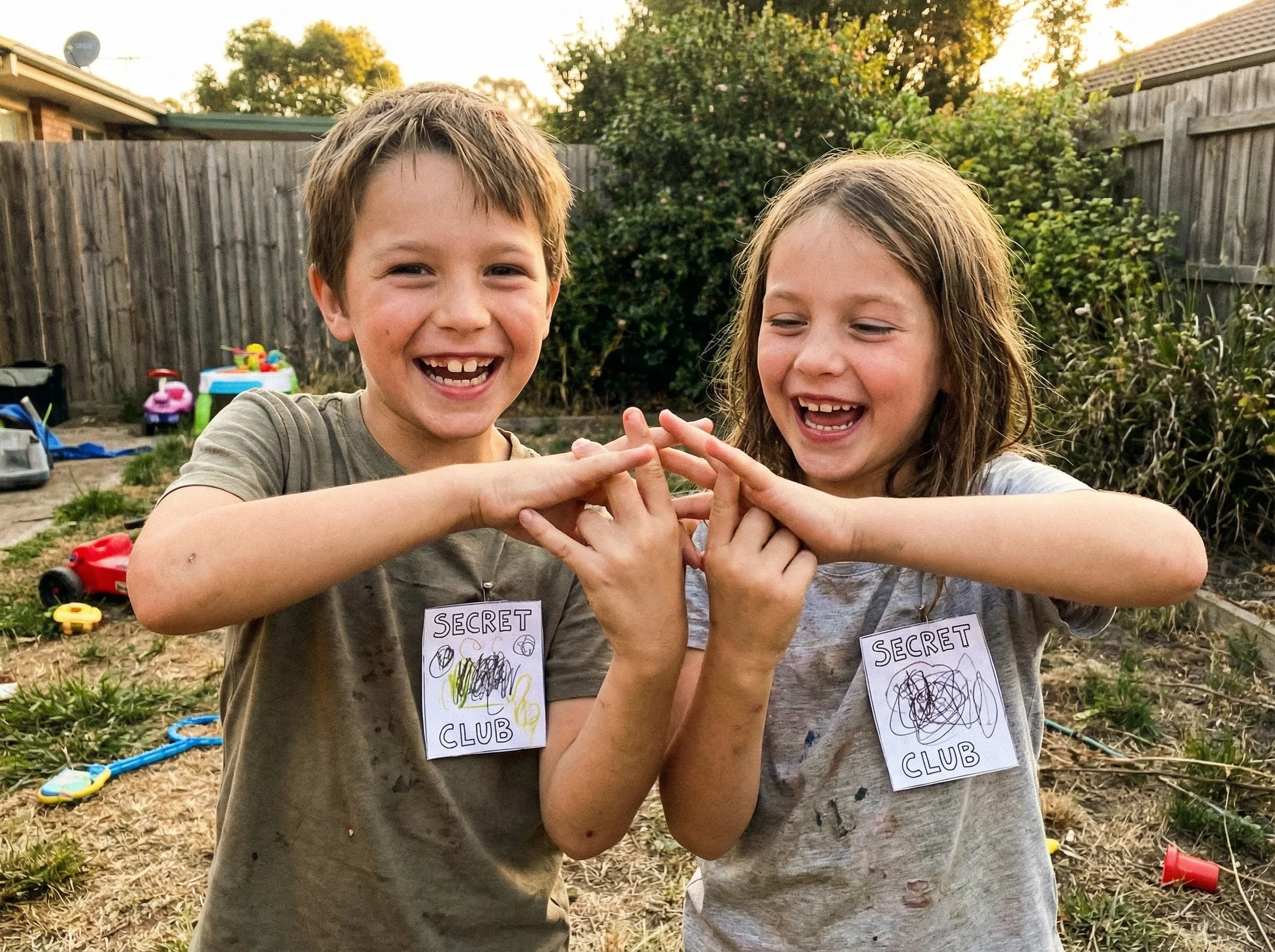
Team Achievement Tracking: We have a poster where they add stickers for team wins - beating a timer, completing a building challenge, successfully making lunch together without fighting. Visual progress they both contributed to.
Celebrating Weird Wins: They once spent 45 minutes trying to get the cat to wear a paper hat they made together. Total failure. We celebrated their "excellent teamwork in the face of feline resistance" anyway.
Inside Jokes from Failures: Remember that flooded Minecraft village I mentioned? Now anytime something goes wrong, someone yells "SAVE THE VILLAGERS!" and everyone laughs. Shared failure became shared humor.
Monthly Mega-Challenge: First Saturday of every month, they get a big team challenge. Last month: build the tallest possible structure using only newspaper and tape. They're already planning strategies for next month.
For the Long Build: Real team identity grows from many small post-game conversations. A deck of Yakety Pack conversation cards on the table makes the wind-down chats the default.
Practical Next Steps
Start where your kids are already succeeding. Tonight, watch them play together - video games, pretend play, whatever. Notice when they naturally cooperate. Then tomorrow, create one situation that uses those same dynamics.
Don't announce it as "teamwork practice." Just set up a challenge that's more fun to tackle together. Maybe it's building the ultimate blanket fort. Maybe it's a race to clean the playroom before the timer runs out. Maybe it's designing the world's weirdest sandwich together.
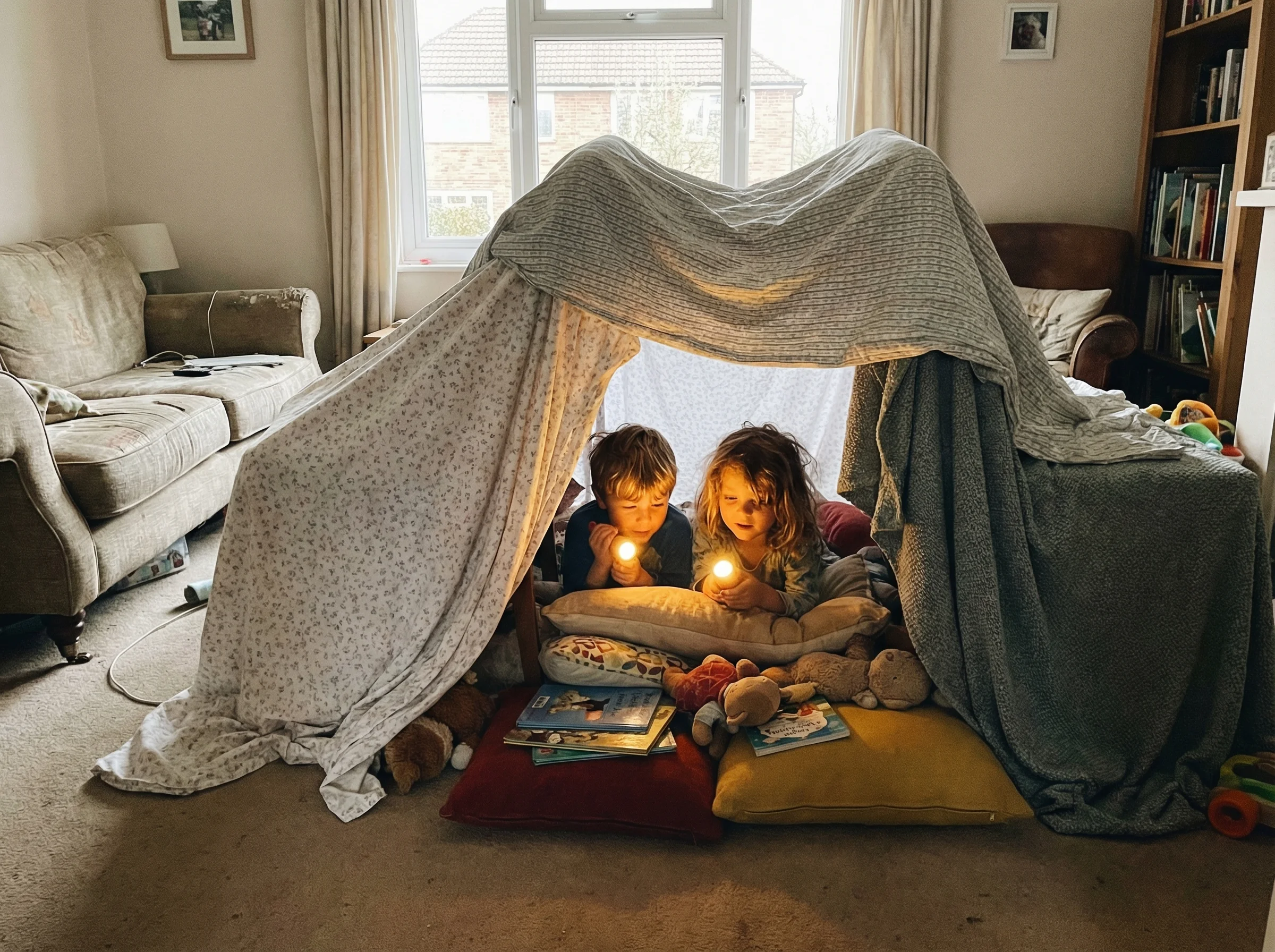
And when they start bickering? Pull out a conversation starter. Sometimes the best teamwork happens when they're laughing about whether they'd rather fight one horse-sized duck or a hundred duck-sized horses. Those shared moments of silliness build connection faster than any forced cooperation.
Remember: your kids already know how to work together. You've seen it in their games. You just need to create the right opportunities for those skills to shine in the real world.
The chaos isn't going away. But occasionally, just occasionally, it becomes beautiful, coordinated chaos. And that's worth celebrating.
When the fort comes downPause, Play, Connect: Core Deck172 prompts that help siblings keep talking after the game is packed away.$49 CAD • 90 cards • 18 reviewsShop the deck

