
It's 9:47 a.m. on a Saturday. It's been raining for two hours. My son has already asked for the Switch four times, my daughter is methodically destroying a couch cushion, and I've burned through every Pinterest idea I can remember from the last rainy day. Sound familiar?
Here's the thing nobody tells you about screen-free indoor activities for rainy days with children: most lists are built for a kid who doesn't exist. A perfectly behaved 6-year-old who's thrilled about pom-poms and washi tape. Meanwhile you've got a tween who thinks coloring is babyish, a preschooler who needs you in the same room at all times, and a job that doesn't take rainy days off.
Let's fix that.
First, Let's Reframe the Whole Day
I'll save you 800 words of theory with one story.
One Sunday, I declared it a "no screens day." I made the announcement at breakfast like I was a TV dad in a sitcom. My kids dug in like soldiers. By 10 a.m. we were negotiating. By noon we were fighting. By 2 p.m. I caved because I needed to make a phone call.
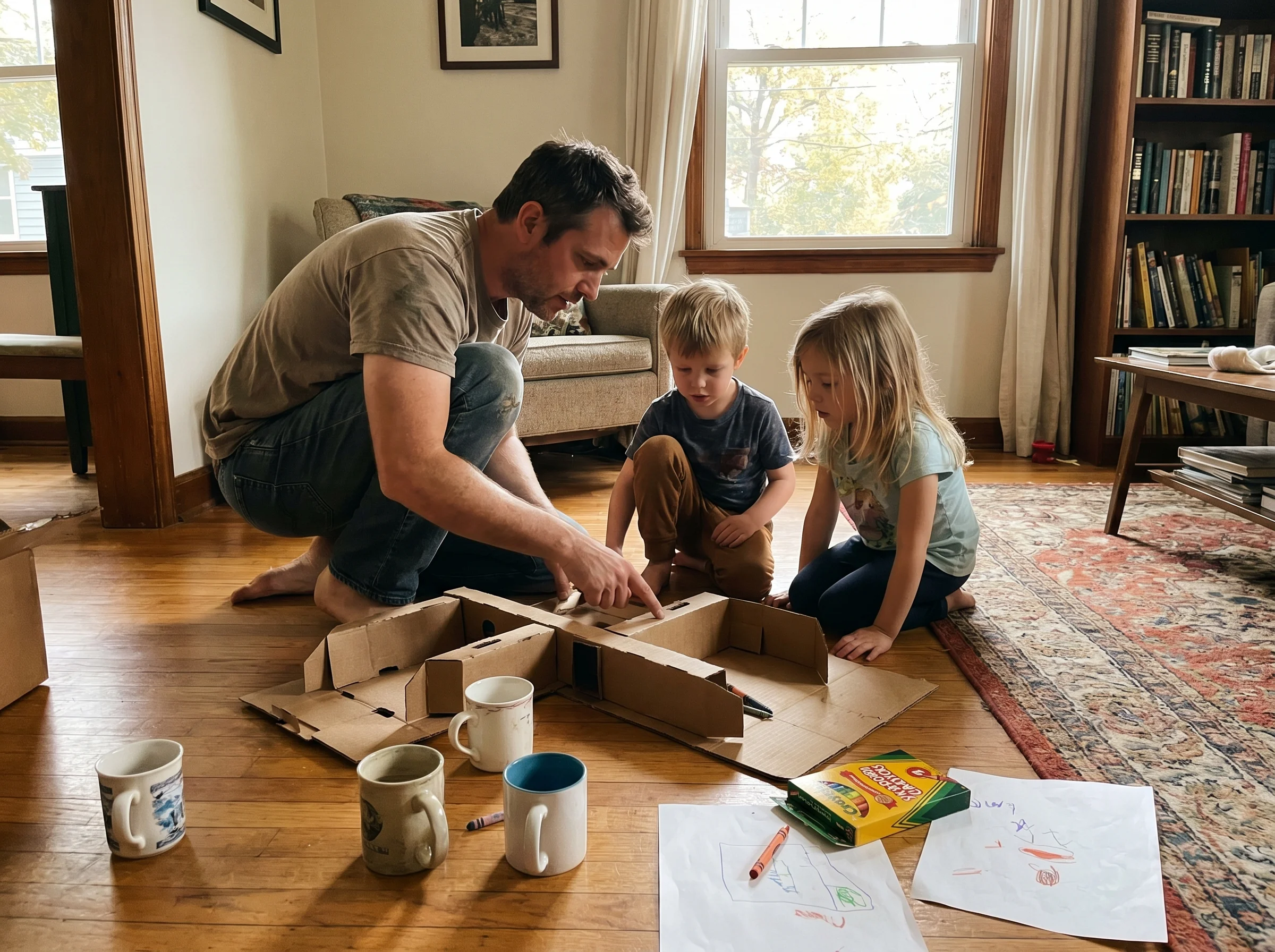
A few months later, different rainy Sunday, I tried something different. I didn't mention screens at all. I just said, "I bet you can't build a marble run that goes all the way around the living room." My son looked up. My daughter ran for the tape. Four hours later we had a marble run that involved two paper-towel tubes, the dog bowl, and one of my work folders. Nobody asked for a screen.
Same kids. Totally different day.
The reframe: it's not about avoiding screens. It's about offering something they'd actually pick. The minute "screen-free" becomes the goal, you've already lost, because now you're the warden and they're the inmates. Don't be the warden.
 Something they would actually pickPause, Play, Connect: Core Deck172 prompts that give you something to offer besides the Switch when the rain settles in.$49 CAD • 90 cards • 18 reviewsShop the deck
Screen-Free Indoor Activities by Age (Because a 4-Year-Old and a 10-Year-Old Are Not the Same Species)
Most rainy day lists pretend kids are interchangeable. They're not. Here's what actually works at each stage.
Ages 2-4
- Mystery bag. Throw five random household objects in a pillowcase. They reach in, guess by touch. That's it. Endlessly replayable.
- Painter's tape race tracks. Lay tape down on the floor as roads, intersections, parking spots. Hot Wheels do the rest.
- Frozen toys. Freeze a few small toys in a Tupperware of water the night before. Hand it over with a spoon and a cup of warm water. You've just bought yourself 40 minutes.
- Dinner prep helper. Washing veggies, stirring, tearing lettuce. They feel important. You're making progress on dinner.
Ages 5-8
- Obstacle course with a stopwatch. The timer is the magic. Without it, it's a course. With it, it's a competition.
- Sock basketball tournament. Rolled-up socks, a laundry basket, brackets drawn on a piece of printer paper. Take it seriously. Announce the games.
- Restaurant. They take orders, "cook" snacks (crackers and cheese count), and bring you a check. Pay them in compliments.
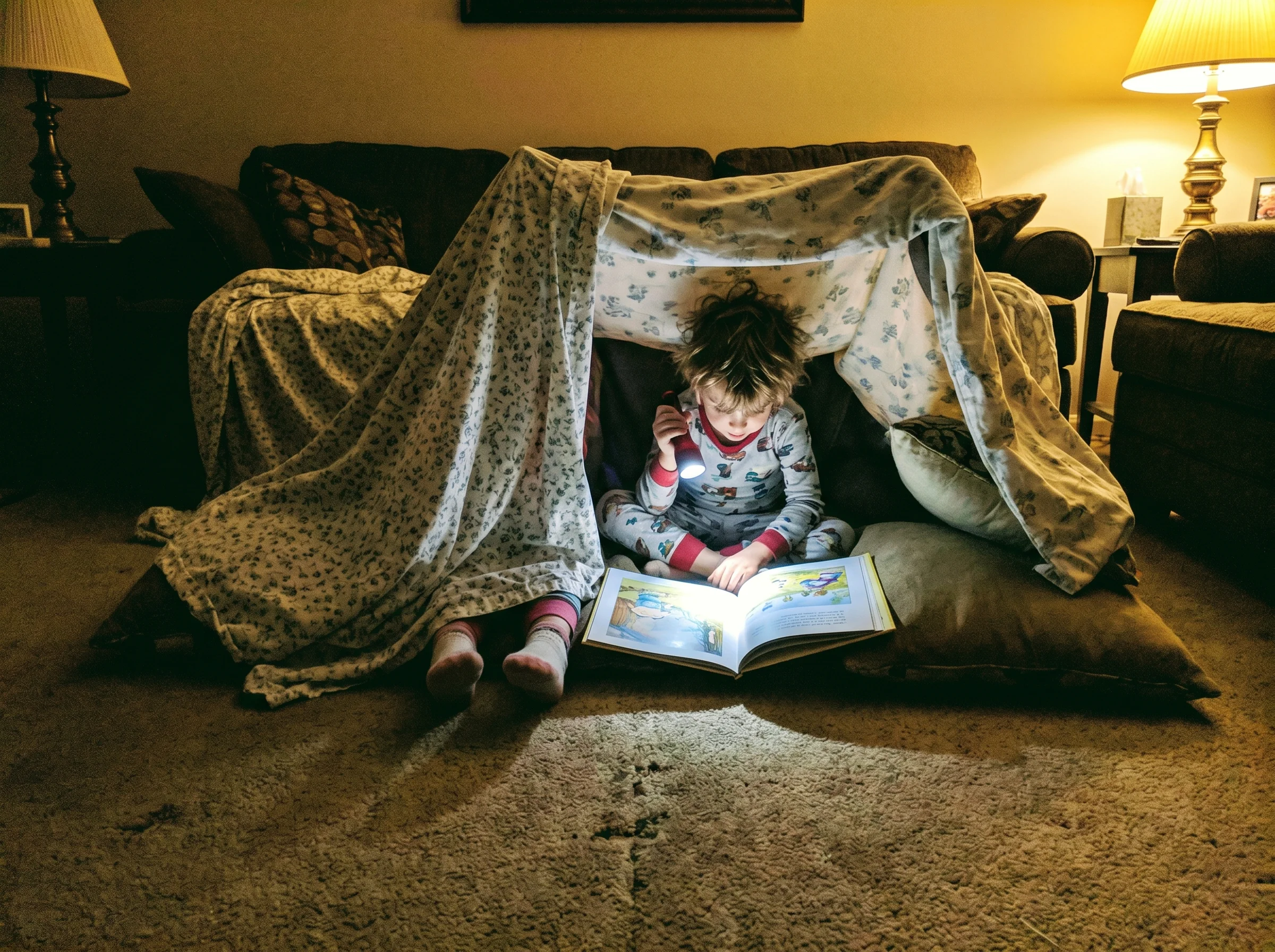
- Fort with flashlights. Build the fort. Then read inside it. The flashlight is non-negotiable.
Ages 9-14 (The Forgotten Zone)
This is where most lists fail you. Tweens think obstacle courses are babyish but aren't ready to be unsupervised for six hours.
- House tournament. Ping-pong on the dining table with books as the net. Nerf gun accuracy challenge with paper cups. Card game brackets. Real stakes, real trophies (a granola bar works).
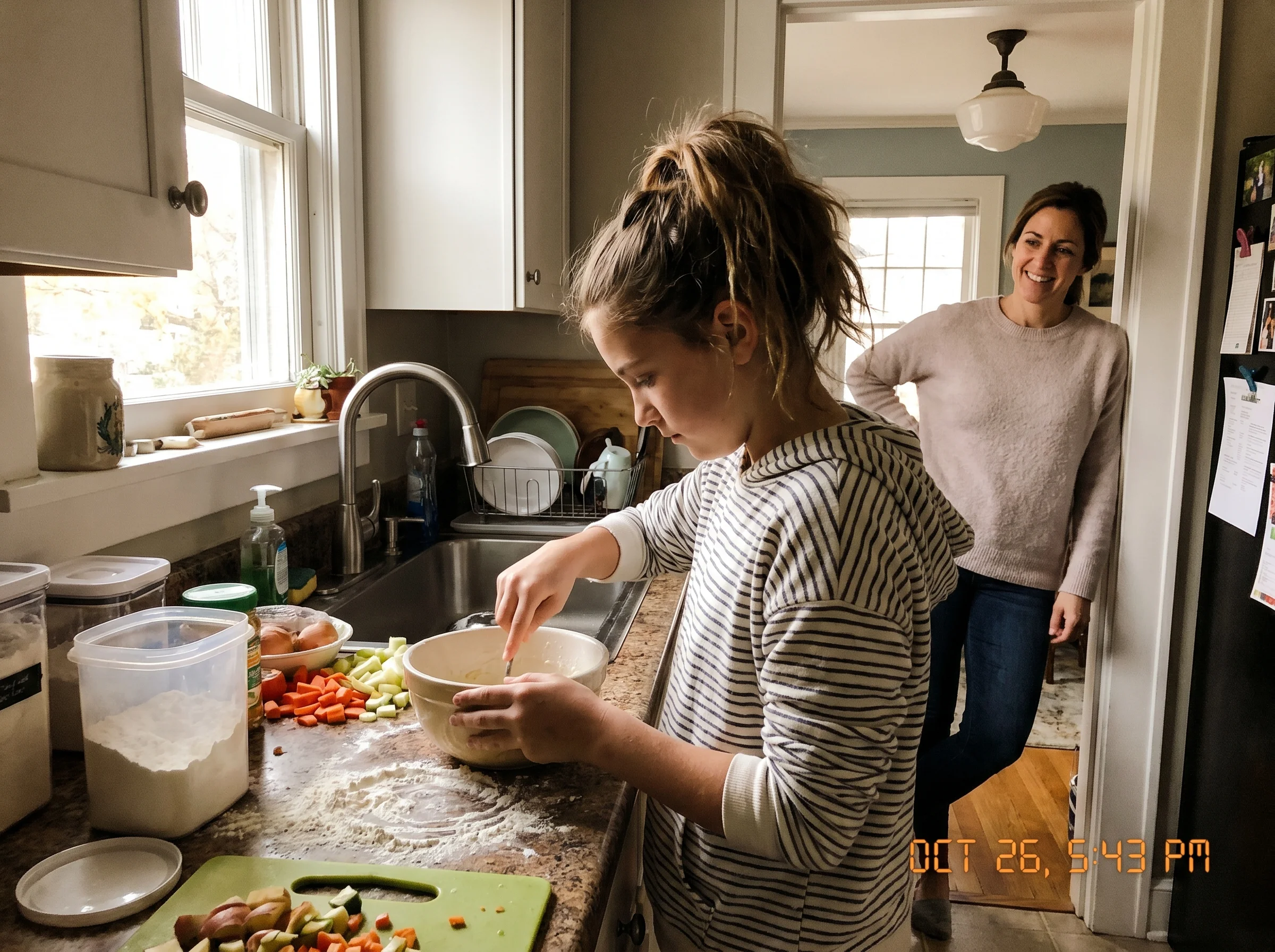
- Cooking challenge. Hand them the pantry and a budget of ingredients. They make lunch. You eat it without complaining.
- Board game with consequences. Loser does dishes for a week. Suddenly Monopoly matters.
- Learn a magic trick. Yes, this involves a screen. They watch YouTube with a goal, then perform for you. That's a screen used well. (The American Academy of Pediatrics actually backs this idea, that purposeful, co-viewed screen use lands differently than passive scrolling.)
My son rolled his eyes when I said "build a fort" last spring. So I changed the pitch: "Design a base with traps for your sister to navigate without getting hit by a pillow." He spent three hours on it. Same activity, different framing.
The "I Still Have to Work" Survival Pack
Not every rainy day is a Hallmark movie. Sometimes you have a deadline and the kids need to function without you being the cruise director.
Here's what's worked for me when I need 60-90 minutes of focus:
- The 100 things challenge. Find 100 of something in the house and count it out loud when done. LEGO bricks, Cheerios, hair ties. The counting is half the time.
- LEGO challenge cards. Write ten build prompts on index cards. "A vehicle that goes underwater." "A house for a giant." They draw one and go.
- The store. They set up a store with toys and price tags. You're the customer at 3 p.m. They handle inventory in the meantime.
- Audiobook plus drawing. Yoto, the library's Libby app, even Alexa. They draw what they hear. This combo is gold.
- The Treehouse Project. I've absolutely told my kid, "Design the ultimate treehouse on paper. Floor plans, features, the whole thing. Present it to me at 3 p.m." Bought me 90 minutes. He still has the drawings.
You're not a bad parent for needing to work. You're a bad parent if you pretend you don't and then snap at them at hour three.
 The rare empty SaturdayPause, Play, Connect: Core Deck$49 CAD • 172 promptsSee the deck
When You Actually Want to Connect (Not Just Survive)
The rainy day's real gift is unstructured time. Modern family life almost never has this. Most weekends are sports, errands, scheduled stuff. A rainy Saturday is a rare window.
Co-op board games are great here, because nobody has to lose and everybody has to talk. Cooking together works too, especially if they pick the recipe. But my favorite thing is just sitting down and asking questions I've never asked before.
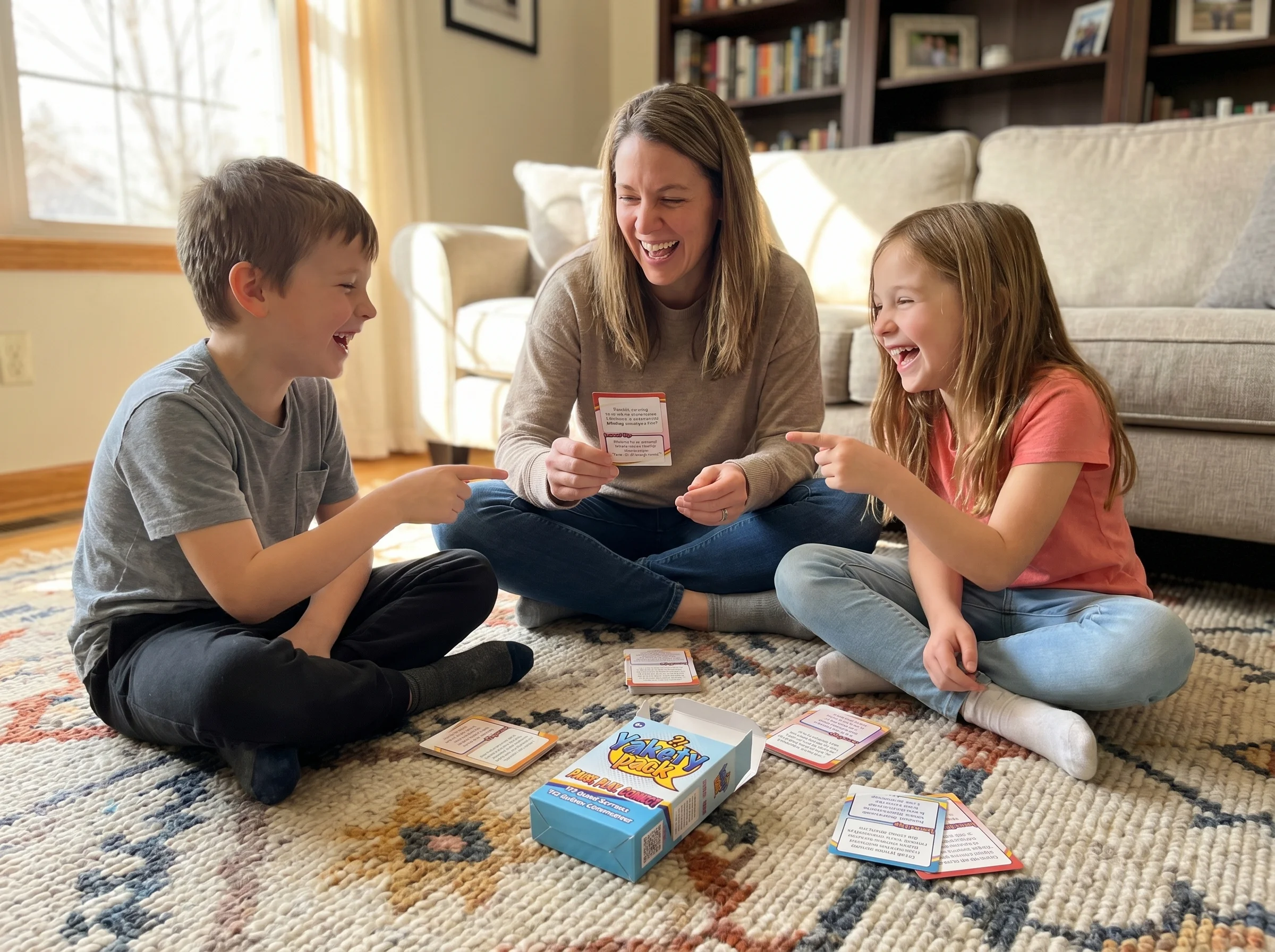
A few months ago, stuck inside, I pulled out a Yakety Pack card and asked my son, "What game character would you want as a real friend?" He talked for twenty minutes about Steve from Minecraft. Why Steve is loyal. Why he'd be fun in real life. Why some of his actual friends remind him of him. I learned more about how my son thinks about friendship in that conversation than in six months of "how was school?"
That's what rainy days are actually for. Not killing time. Spending it.
How to Handle "Can I Have the iPad?" Without a War
Spoiler: the hard "no" creates the exact dynamic you're trying to avoid.
Try the "yes, after" formula. "Yes, after we play one game." "Yes, after you build one thing." "Yes, after we read for 20 minutes." You've given them a clear path, not a brick wall. Nine times out of ten, the "after" thing goes long enough that the screen request fades.
The bigger move? Ask them to teach you what they're playing.
One Saturday I asked my son to teach me Fortnite. I was genuinely bad at it. He thought it was hilarious. After 30 minutes, he was the one who said, "Wanna go build something?" Because I hadn't restricted him, he wasn't defensive. He was satisfied. He moved on.
You can't beat screens by demonizing them. You bridge from them. If you want a deeper dive on that mindset shift, here's our take on why playing your kid's video game beats banning it.
Activities That Burn Actual Energy
Rainy day = pent-up body. Crafts don't solve this. Move them.
- Couch cushion floor-is-lava. A classic for a reason.
- Dance party with their playlist. Not yours. Theirs.
- Balloon volleyball. One balloon. Don't let it touch the ground. Watch them lose their minds.
- Indoor Olympics. Sock toss, hallway long-jump, pillow shot-put. Keep score on the fridge.
- Stair sprints. I'm not proud of this one but it works.
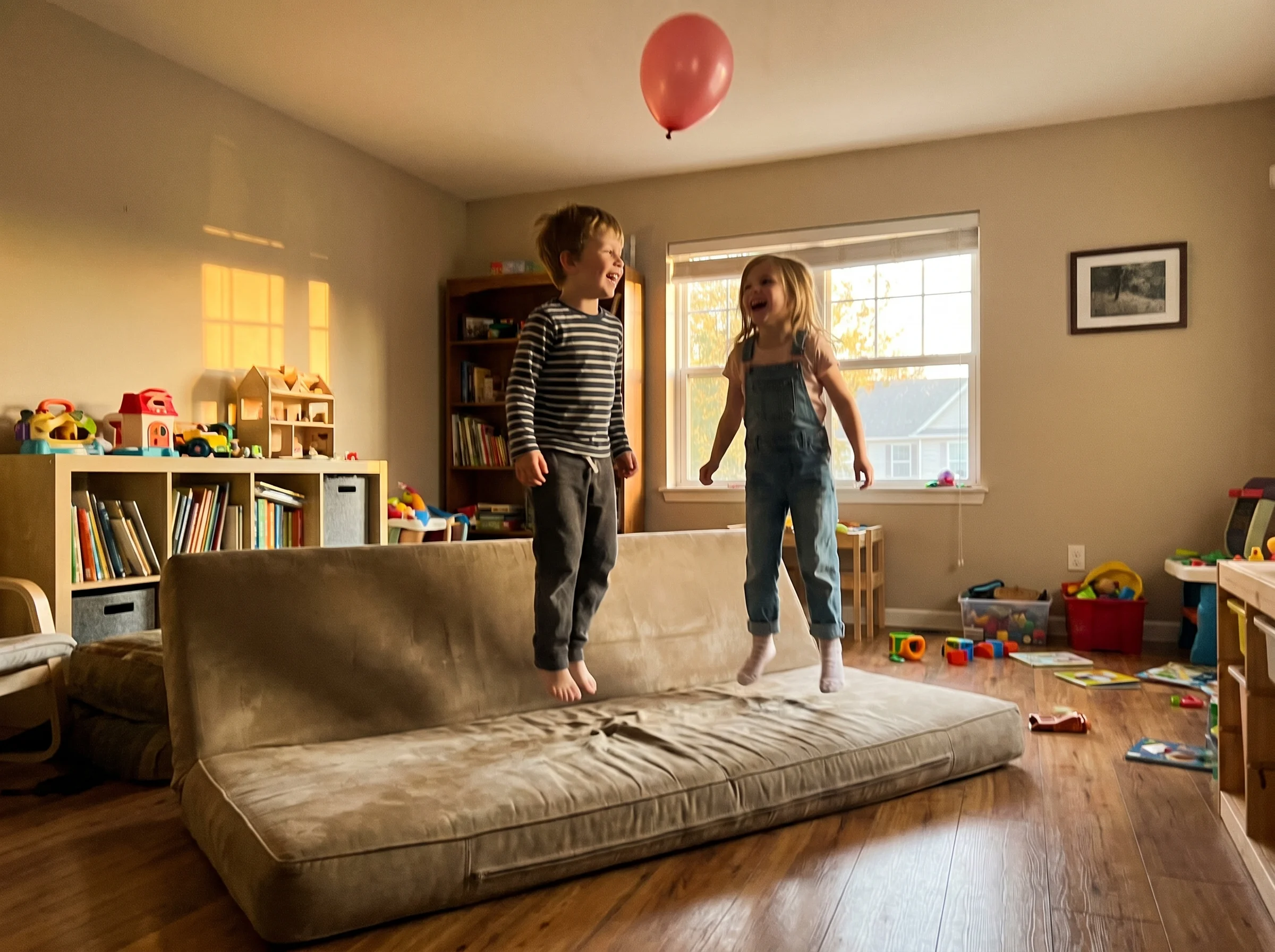
If you skip this section, you'll pay for it at bedtime.
When the Activity Flops in 8 Minutes (It Will)
This is the part nobody admits. Most activities have a 15-minute lifespan. Some die at 8. That's normal.
The fix isn't finding the ONE perfect 3-hour activity. The fix is having four short ones ready and stacking them. Marble run dies? Pivot to sock basketball. That dies? Snack break. Then the fort. You're a DJ, not a movie director.
And honestly? It's okay to let them be bored. Researchers have been saying for years that boredom is actually good for kids, it's where ideas come from.
One afternoon nothing I tried worked. I gave up and sat down with a book. Twenty minutes later, my kids had built a "hotel" for their stuffed animals out of every blanket in the house. I didn't plan it. I just got out of the way. That was the best activity of the day, and it wasn't on any list.
The One Thing to Try This Weekend
Next rainy day, don't announce anything. Don't make it a "no screens" event. Just pick one screen-free indoor activity from this list, frame it as something you bet they can't do, and see what happens. If it flops in 10 minutes, pivot. If it goes 3 hours, get out of the way.
And if you want to go deeper on actual games to play together, I'd start with our pillar guide on the best games to play with your kids by age and skill level, or the spoke on cooperative games that build teamwork for families. Those are where the real connection happens once you've used a rainy day to remember what playing together feels like.
The rain's not the problem. It's the invitation.

From this article
Pause, Play, Connect: Core Deck
For hour three of the rain: Every activity on this list has a 15-minute lifespan, but one unexpected question can fill a whole gray afternoon. The Pause, Play, Connect Core Deck is what I reach for when the marble run dies.

