
Look, I used to think my kids were just being difficult when they'd throw down over who got the "good" controller. Then one day, mid-meltdown, I realized I was asking the wrong question. Instead of wondering why they couldn't just share nicely, I started asking how to get siblings to stop fighting over toys by actually understanding what the fight was really about.
They stopped arguing. Looked at each other. Twenty minutes later, they'd mapped out a whole system with point values, trade agreements, and bonus rounds for good behavior. We haven't had a controller fight since.
That's when it hit me. We've been trying to force 1980s sharing rules on kids who live in 2024. They're not being brats. They're operating on completely different logic than we are.
Why "Just Share" Sounds Like Nonsense to Your Kids
The same dynamic plays out in pixels too, and we covered the larger pattern in our piece on sibling gaming conflicts.
Here's what took me way too long to figure out: when my kids fight over gaming gear, they're not fighting over plastic. They're fighting over competitive advantage.
That black Xbox controller with the better thumbsticks? That's not just a controller. That's the difference between landing a headshot and losing rank. The gaming chair with better back support? That's two more hours of comfortable play during a tournament. The mechanical keyboard? Faster response time.
We tell them "it's just a toy" but to them, that's like someone telling you "it's just a car" when you need the reliable one for your work commute, not the one with the wonky transmission.
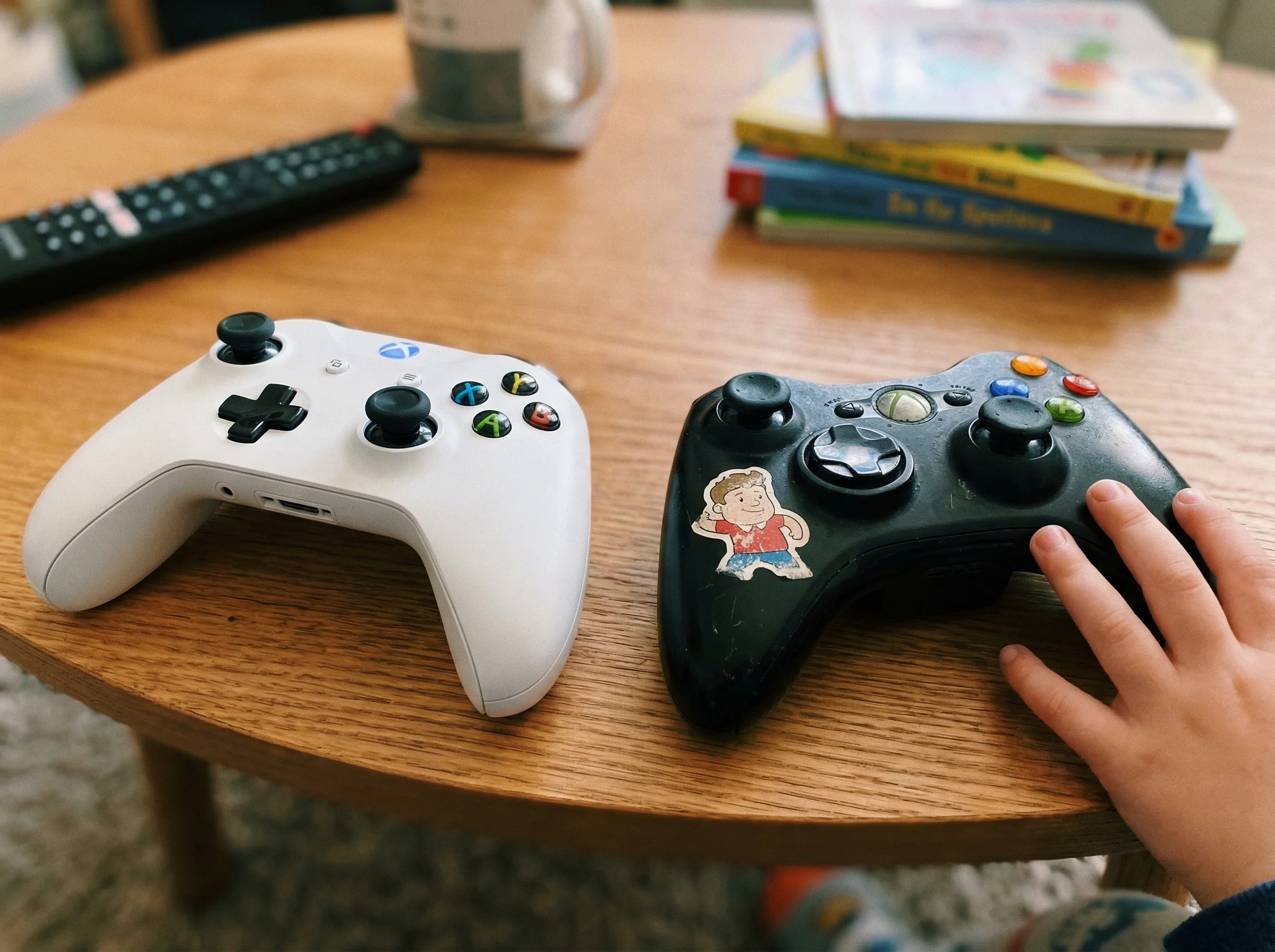
My wake-up call came during the Great Controller War of 2021. My boys were literally wrestling over who got the newer controller. I gave my usual speech about sharing and taking turns. My 12-year-old looked at me and said, "Dad, you don't use the crappy keyboard for important emails, do you?"
Touché, kid.
 When both kids want itPause, Play, Connect: Core Deck172 prompts that give you something to ask about once the toys are back on the shelf.$49 CAD • 90 cards • 18 reviewsShop the deck
Your Kids Are Already Master Negotiators (They Just Don't Know It)
Want to blow your mind? Sit behind your kids during any gaming session. Listen to how they trade, negotiate, and problem-solve with other players.
Last week, I overheard this gem:
"I'll give you my legendary sword, but only if you throw in those crafting materials AND help me with that dungeon run tomorrow."
"Deal, but the dungeon run can't be during my soccer practice."
"Fine, but then I want first pick on loot drops."
These are the same kids who "can't figure out" how to share a football? Please. They're running complex negotiations that would make a Wall Street trader proud. They understand market value, timing, leverage, and conditional agreements.
The problem isn't their capability. It's that we're asking them to ignore all that sophisticated thinking and follow rules that make zero sense in their world.
The Translation Method That Actually Works
For a shared activity that practices the translation muscle, try our list of cooperative games for arguing siblings.
So here's what changed everything for us: instead of imposing my rules, I started speaking their language.
When fights break out now, I ask: "How would you solve this in your game?"
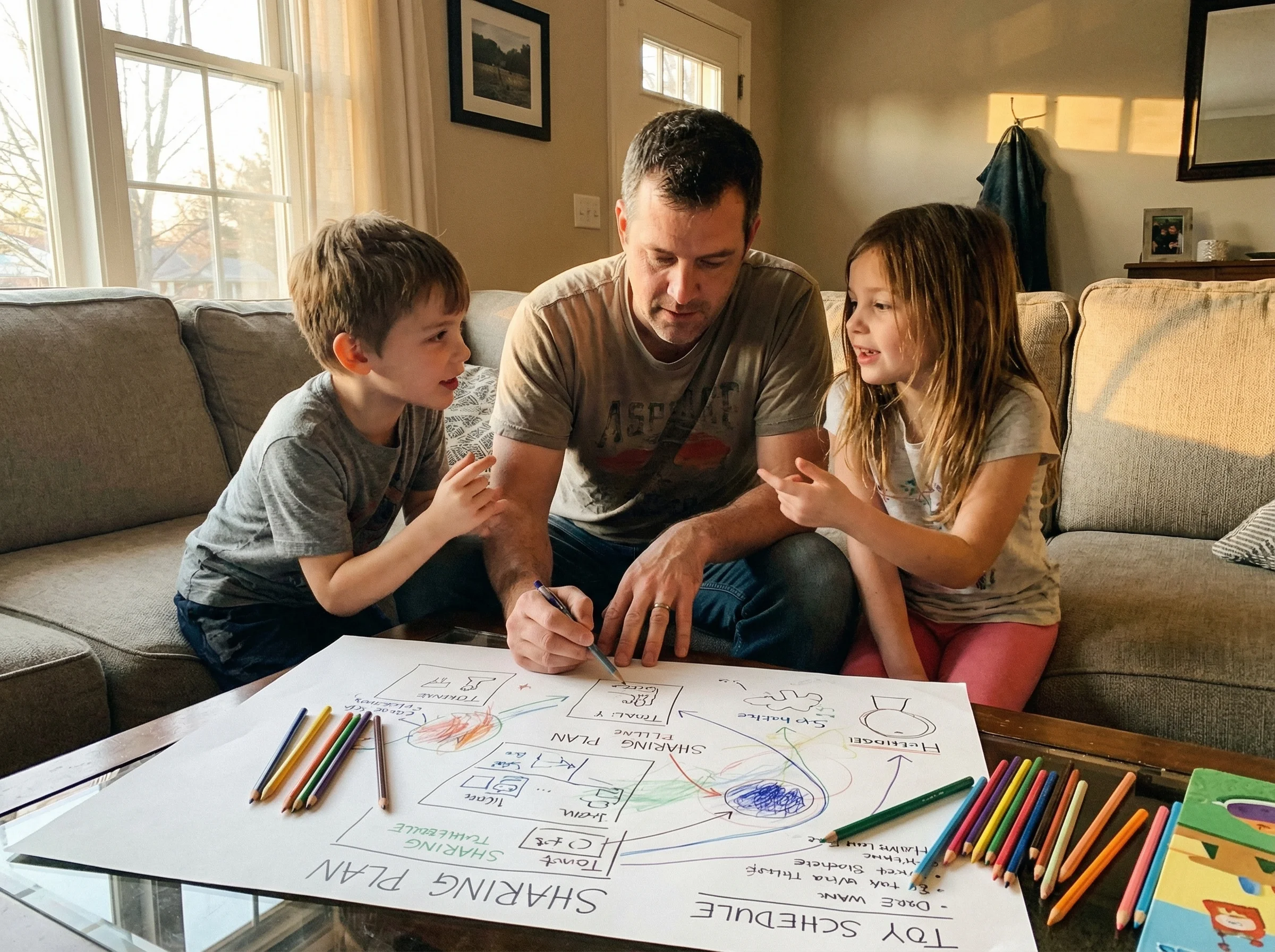
The first time I tried this, they were fighting over some Pokemon cards. Instead of my usual "figure it out or I'm taking them all," I asked how they'd handle rare item distribution in their games.
My 10-year-old immediately said, "Well, in Fortnite, whoever contributes most to the win gets first pick of loot."
"But that's not fair," my 8-year-old said. "He's older so he always contributes more."
"What about handicaps?" the older one suggested. "Like in Mario Kart?"
Boom. They created a whole system where the younger kid got "bonus contribution points" for effort, and they tracked who helped most with chores that week to determine Pokemon pack opening rights.
I didn't solve anything. I just translated the problem into their language.
The Legendary vs Common System (And Why It Ended Our Daily Battles)
Here's the framework my kids invented that might save your sanity:
They classified all our toys and gaming gear into tiers, just like item rarity in games:
- Legendary (gold): The best controller, the gaming chair, new games
- Epic (purple): Good controllers, preferred headsets, newer toys
- Rare (blue): Standard stuff that works fine, most board games
- Common (white): Basic items, older toys, things with multiple copies
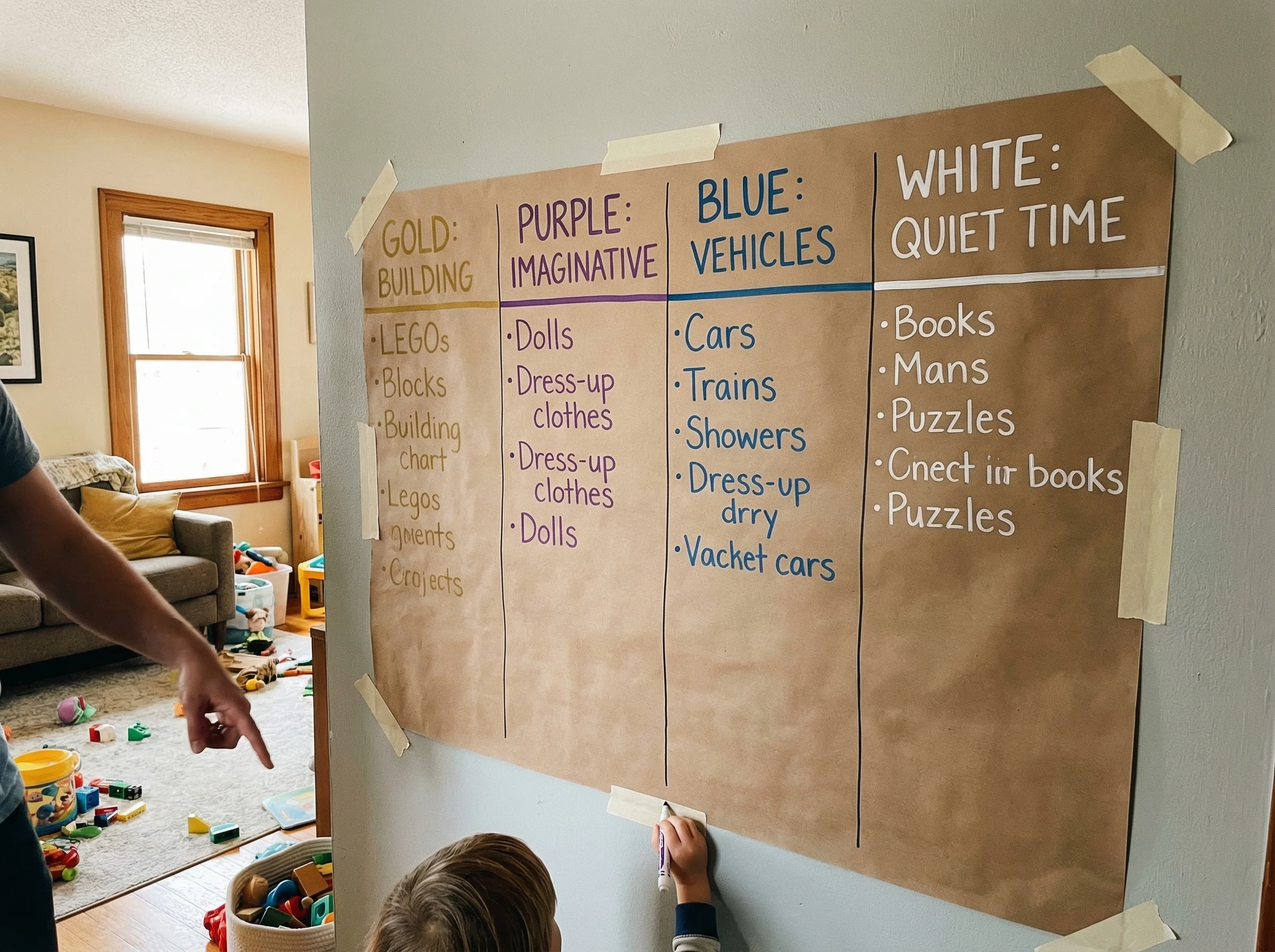
Then they created rules:
- You can only claim one Legendary item per day
- If you have a Legendary, you can't also claim an Epic
- Commons are free-for-all
- Trades are allowed but must be "fair" (epic for epic, or multiple rares for one epic)
Is it more complex than "share nicely"? Sure. Does it work better? Absolutely.
Why? Because it respects what they already understand. It's not arbitrary adult rules. It's game logic applied to real life.
 Beside the toy binPause, Play, Connect: Core Deck$49 CAD • 172 promptsSee the deck
Different Ages Need Different Strategies (But Not What You Think)
Most advice says older kids get priority. That's a recipe for resentment.
Instead, we use the "skill balance" approach from fighting games. You know how games give newer players advantages to keep matches competitive? Same principle.
My 12-year-old gets first controller pick for competitive games where skill matters. But for casual games, my 8-year-old gets first pick. For single-player games, whoever hasn't played recently gets priority.
Building toys? The younger one gets more pieces to balance out the older one's building experience. Board games? We might spot the younger one some extra money in Monopoly or let him reroll once per game.
The key is making it feel fair to both kids, not just following age hierarchy.
For the Pre-Fight Window: Most toy fights start with a small comment. Leave a Pause, Play, Connect deck out where the toys are so you have a redirect question on hand before it escalates.
Prevention Systems That Run Themselves
The best fight is the one that never happens. Here's what works:
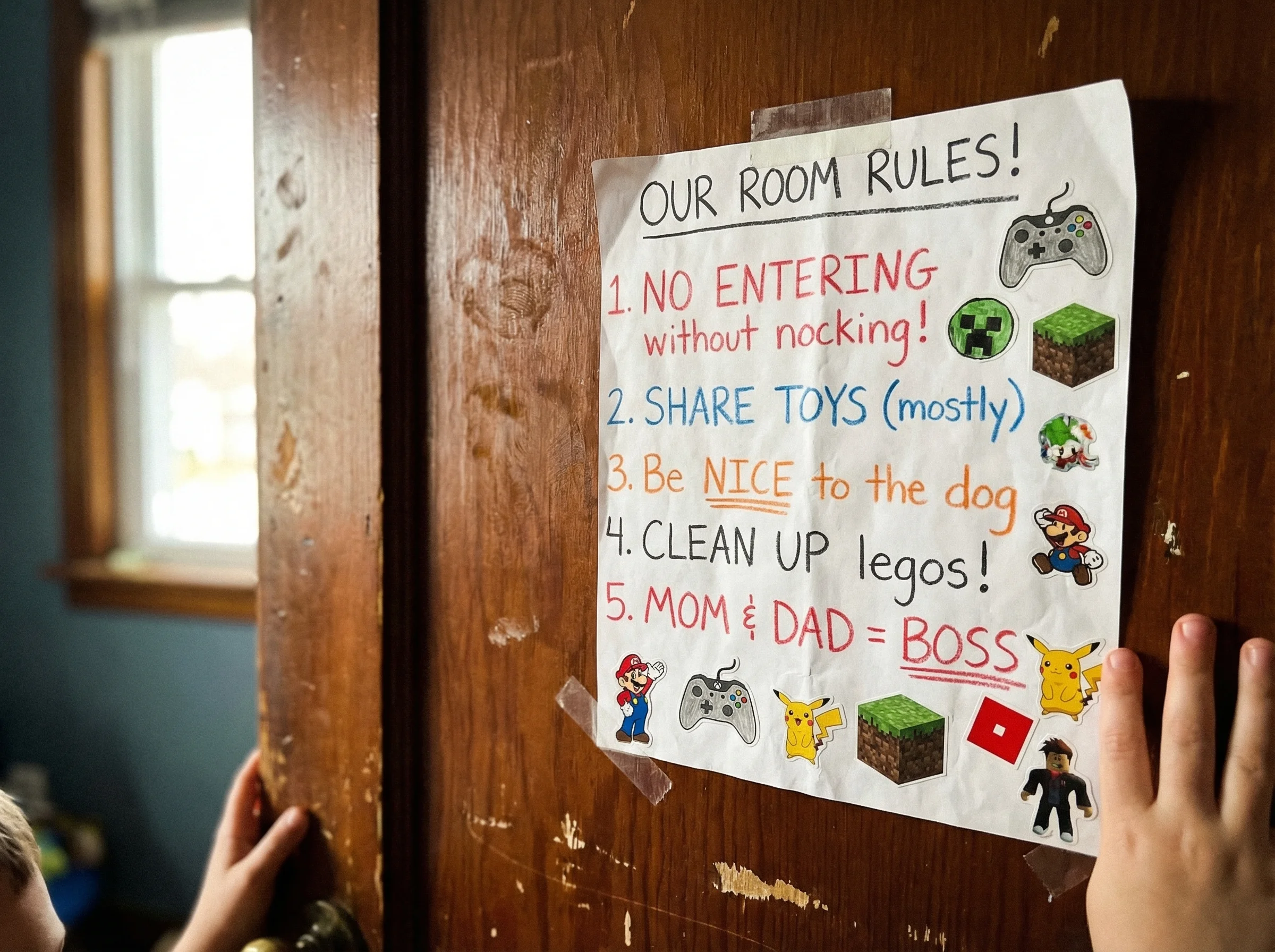
"Server Rules" Posted on the Wall: Just like game servers have rules, your house needs clear, visible guidelines. Ours include:
- New toy introduction protocol (everyone gets a turn day one)
- Controller rotation schedule for different game types
- "Patch notes" every Sunday where kids can propose rule changes
Clear "Spawn Points": Everything has a home. Controllers charge in specific spots. When someone's done, items go back to spawn. No arguments about whose turn it is - check the rotation chart.
The Sunday Server Meeting: Every Sunday, we spend 10 minutes on "patch notes." Kids can propose rule changes, report bugs in the system, or call out unfair advantages. They vote on changes.
Last week they voted to add "bonus legendary claims" for whoever helps with groceries. I didn't suggest it. They recognized the value exchange and created their own incentive system.
When Fighting Is Actually Good (And When to Worry)
Not all conflict is bad. Sometimes I almost step in, then realize they're working it out.
Last month, they had a massive blowout over who got to open a new game first. I was heading over to intervene when I heard:
"Wait, what if we both open it but whoever loses at rock-paper-scissors has to set everything up?"
"No, that's dumb. What if we speedrun the tutorial and whoever finishes first gets to pick the first real mission?"
They spent 30 minutes negotiating, getting frustrated, proposing new solutions. By the end, they'd created this elaborate co-op plan where they'd alternate who led each mission.
That's healthy conflict. They're learning to negotiate, compromise, and find creative solutions.
Worry when:
- It gets physical beyond normal sibling wrestling
- One kid always gives in (that's not compromise, that's domination)
- They stop trying to resolve and just come to you immediately
- The same fight happens daily with no progress
The Long Game Payoff
Here's what nobody tells you: siblings who learn to negotiate over toys become teenagers who can collaborate.
My boys used to fight constantly. Now they run a YouTube channel together. The older one does editing (his strength), the younger one handles commentary (he's funnier). They split revenue based on effort tracking they designed themselves.
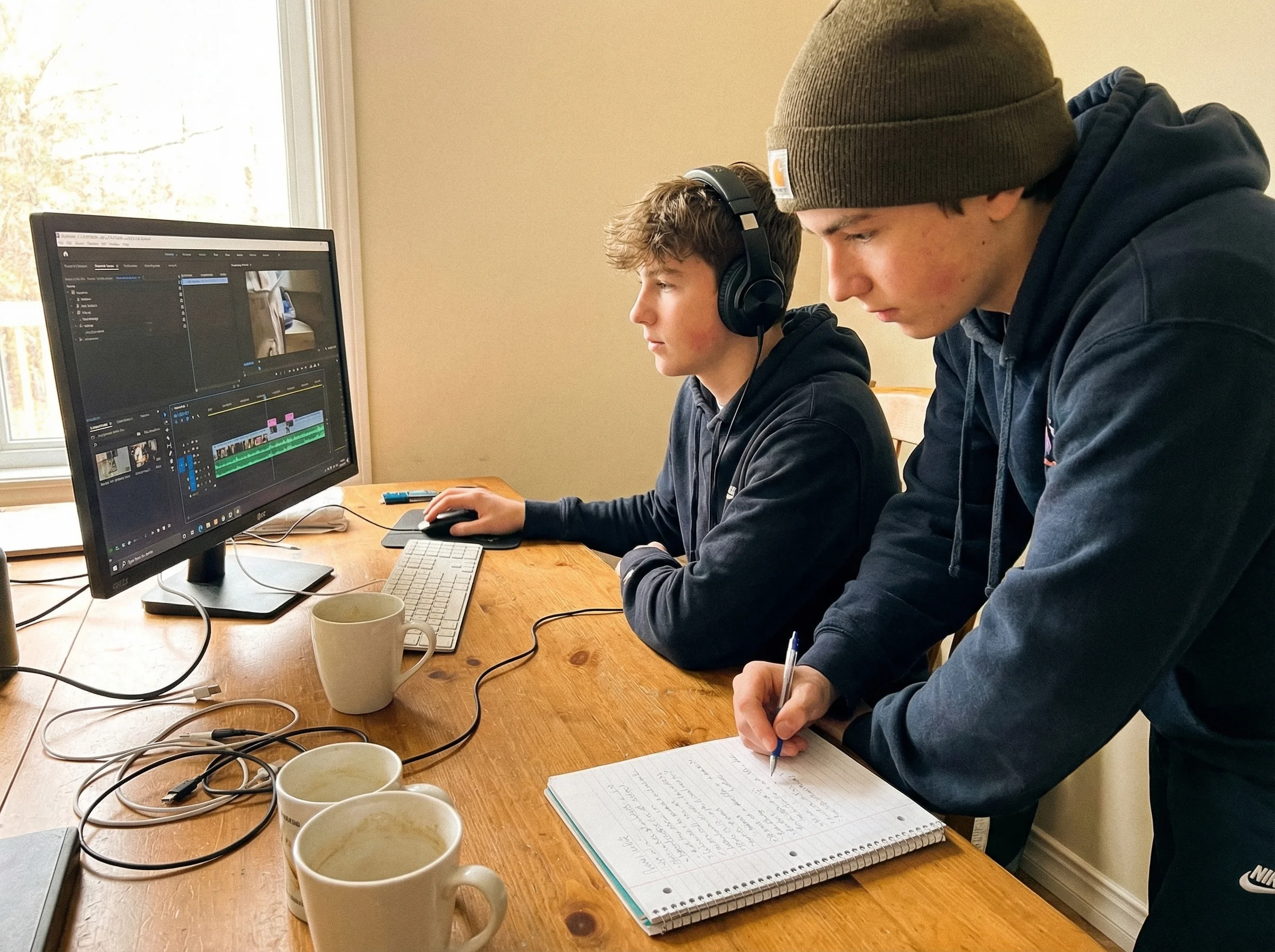
Those early fights over controllers? They were training for actual partnership.
When they disagree now, I hear them use the same frameworks: "That's not balanced," "What would make this fair for both of us?" "How about a trade?"
They're applying gamer logic to real life, and it works.
For Repeat Use: The one question that breaks the fight cycle is usually a curiosity question, not a discipline one. A deck of conversation cards for families with gamer kids on the toy bin keeps it close to where you need it.
Your Turn: Start With One Question
Next time your kids fight over something, resist the urge to jump in with solutions. Instead, ask: "How would you handle this in your favorite game?"
Then shut up and listen. They might just surprise you with their problem-solving skills.
Sometimes we overcomplicate parenting. Our kids already have the tools. They just need us to recognize that their digital world has taught them valuable skills for the real one.
Oh, and that Yakety Pack thing we created? One of our favorite questions is "What's the best trade you ever made in a game?" You'd be amazed how fast kids can pivot from fighting to storytelling when you ask the right question. One dad told us his kids spent an hour designing a real-world trading system based on their answers.
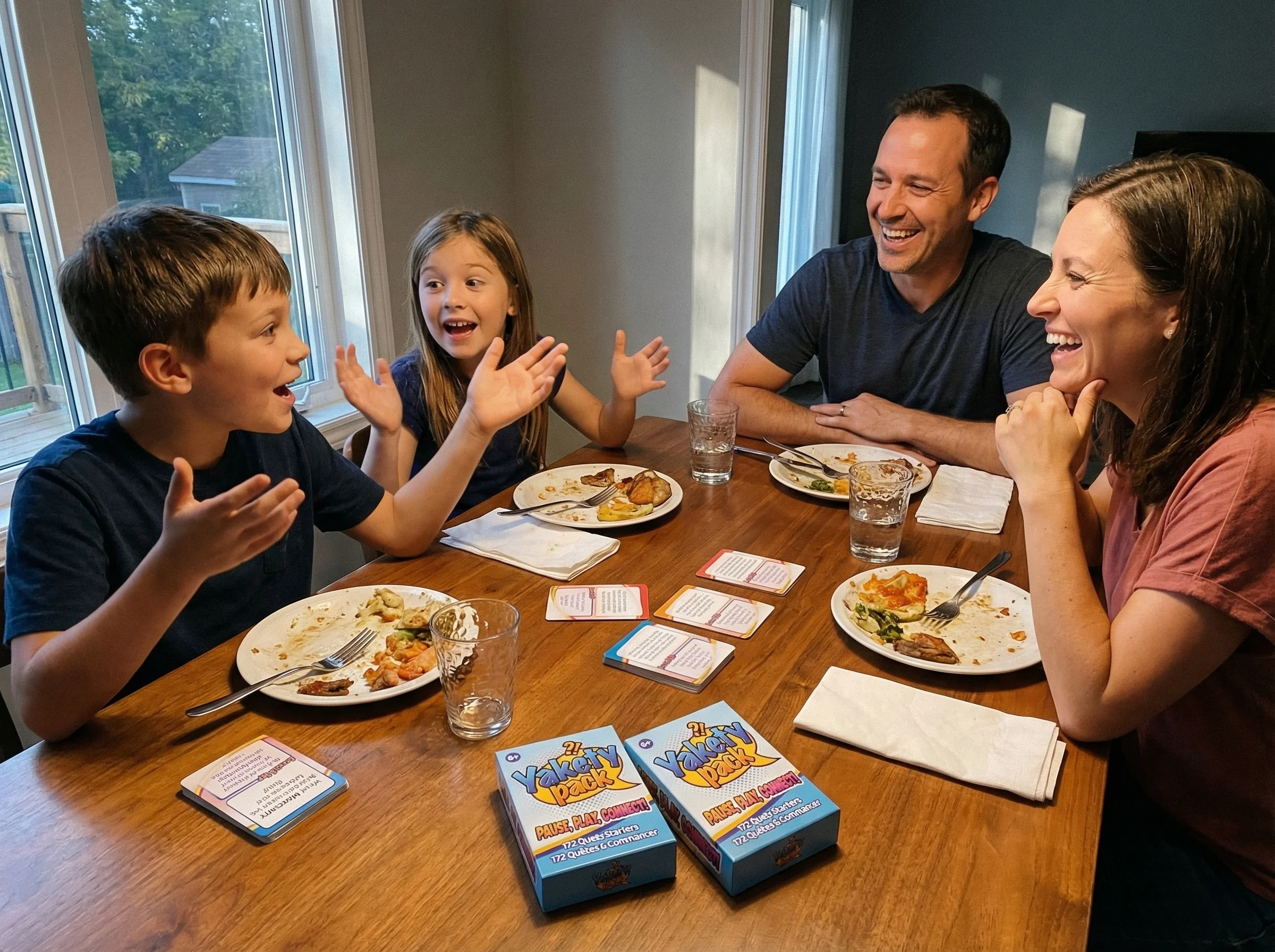
But honestly? You don't need special questions. You just need to speak their language. They're already fluent in fairness, negotiation, and conflict resolution.
They learned it from gaming. We just have to help them translate it.
Once the trade is settledPause, Play, Connect: Core Deck172 prompts that hand you something to ask once the argument is over and settled.$49 CAD • 90 cards • 18 reviewsShop the deck

