
My 15-year-old talked for three hours straight yesterday. Full sentences, emotions, detailed stories about conflicts with friends and achieving impossible goals. The catch? He was on Discord with his squad, and I only heard it because his headset was broken.
For ten minutes, I sat frozen in the hallway, listening to my "quiet" son mediate a dispute between teammates, encourage someone who was struggling, and share his own frustrations about a teacher who "doesn't get it." This was the kid who gives me one-word answers at dinner.
That's when it hit me. My teenager wasn't refusing to talk. He'd just migrated to a different platform, and I'd been too stubborn to follow.
The Great Conversation Migration
Here's what most parents miss: our teenagers haven't stopped talking. They've just moved the conversation to places we don't think to look. While we're waiting for them at the dinner table, they're having deep conversations in voice chat. While we're asking about their day in the car, they're already processing it with their squad in Discord.
Last month, I overheard my daughter comforting a friend whose parents were divorcing. Not a school friend. A teammate from Australia she's never met in person. They talked for an hour, my daughter offering support with more emotional intelligence than I knew she had. When I asked her about it later, she shrugged. "Yeah, we talk about real stuff all the time."
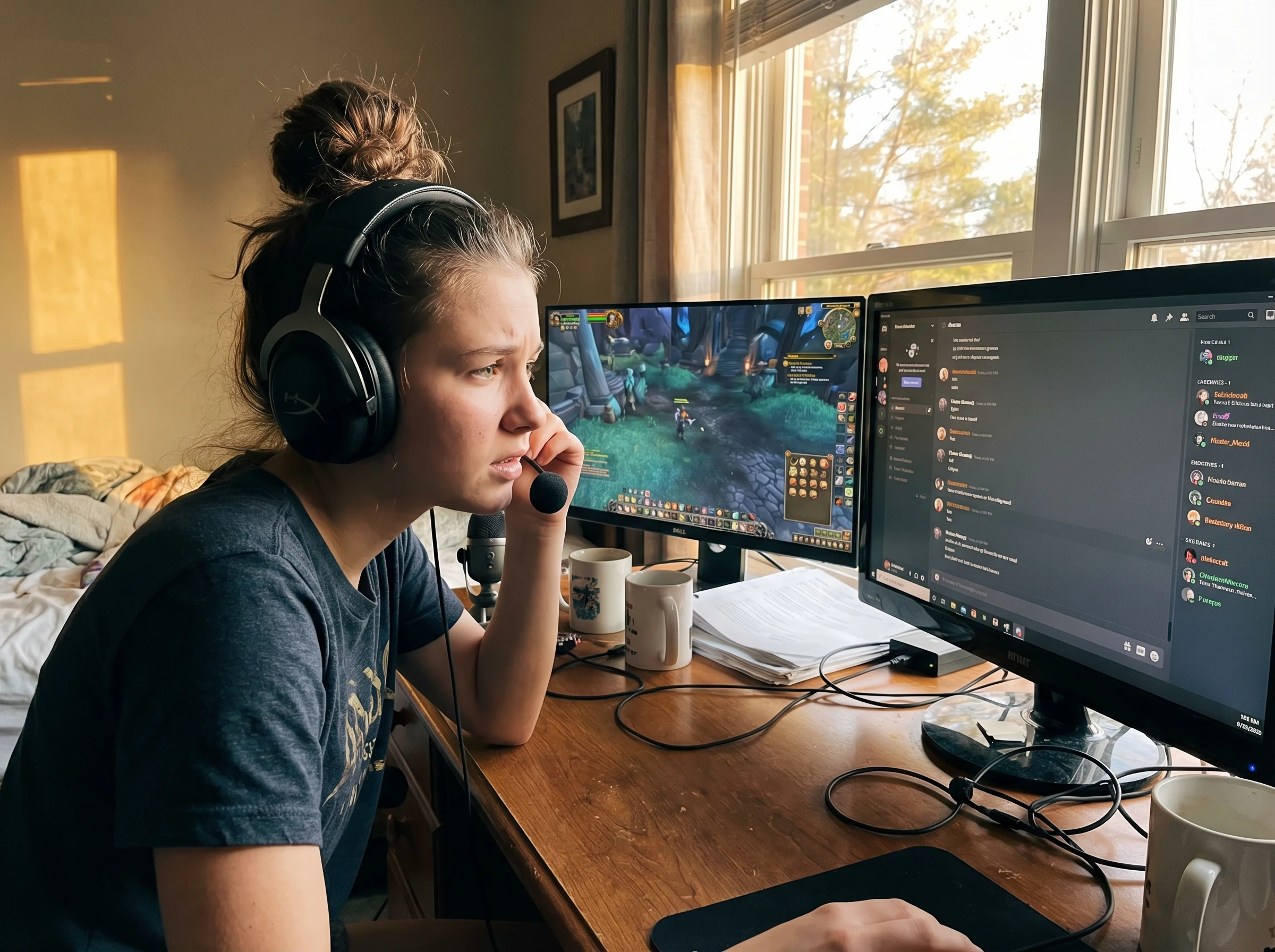
The difference between "not talking" and "not talking to you" is huge. And once I understood that, everything changed.
These digital spaces feel safer for emotional topics. There's something about talking while focused on a game that makes vulnerability easier. You're not making eye contact. There's a shared activity to fill the silences. And if things get too heavy, you can always pivot back to the game.
My son explained it perfectly: "When I'm talking to my friends online, we're all doing something together. When you corner me after school asking about my feelings, it feels like an interrogation."
Ouch. But he was right.
 Talking, just not to youPause, Play, Connect: Core Deck172 prompts that use the game as the way in, since that is where they already talk.$49 CAD • 90 cards • 18 reviewsShop the deck
Learning the Language of Their World
The first step to joining these conversations? Learning the vocabulary. When your kid says "I got griefed today," they're not talking about mourning. They're telling you someone deliberately ruined their gaming experience. That's bullying, digital style.
Here's your starter pack for gaming language that matters:
- Throwing: Deliberately losing or not trying. When your teen says a teammate "threw," they're talking about betrayal and broken trust.
- Carrying: Being the best player keeping everyone else afloat. "I had to carry my team" often means they're feeling pressure to perform.
- Tilted: Emotionally frustrated to the point it affects performance. "I'm so tilted" is teen-speak for "I'm overwhelmed and need a break."
- Toxic: Someone who creates a negative environment. If they mention toxic players, they're navigating social conflicts.
- Clutch: Succeeding under extreme pressure. A "clutch play" story is really about overcoming anxiety.
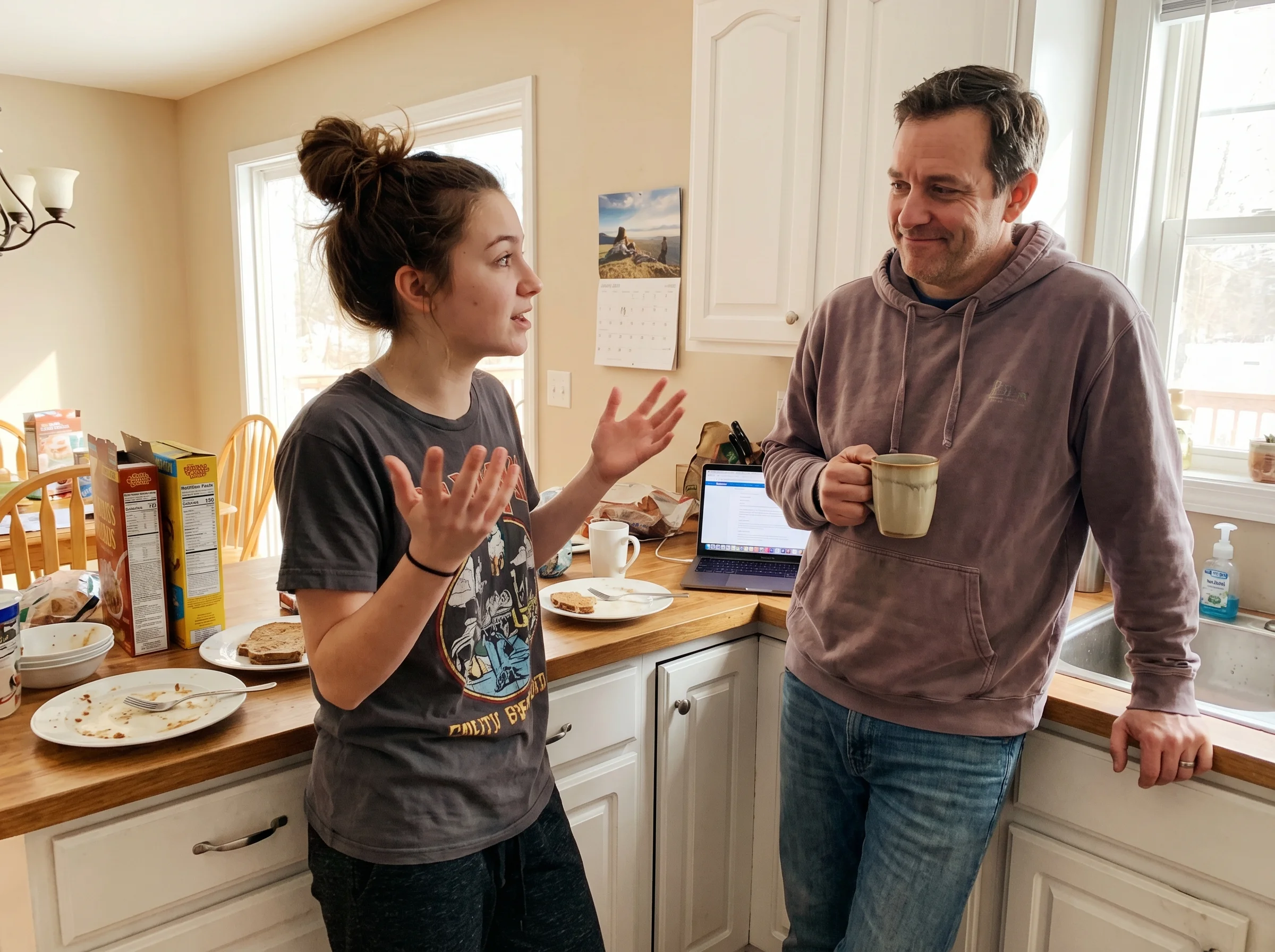
Last week, my daughter came downstairs and announced, "My teammate threw our ranked match because his girlfriend was watching and he wanted to show off."
Six months ago, that sentence would have been gibberish. Now I heard: "My friend let me down because he was trying to impress someone else." We had a great talk about peer pressure and staying true to your commitments. All because I understood what "throwing" meant.
The Best Conversations Happen at 10 FPS
Timing is everything. The best conversations don't happen when you pause their game. They happen during loading screens, respawn timers, and those moments when the frame rate drops and everyone's lagging.
I learned this accidentally. I was sitting next to my son while he played Minecraft, not to supervise, just to hang out. He was giving me a tour of his world, explaining each building. Then we reached a half-finished castle.
"I started building this when we found out we were moving," he said, still focused on the screen. "I keep meaning to finish it, but... I don't know. It feels weird now."
That pixelated castle opened up a conversation about leaving friends, starting over, and why he'd been so angry about the move. All while he was placing blocks. The game gave him something to do with his hands and eyes while his heart did the hard work of opening up.
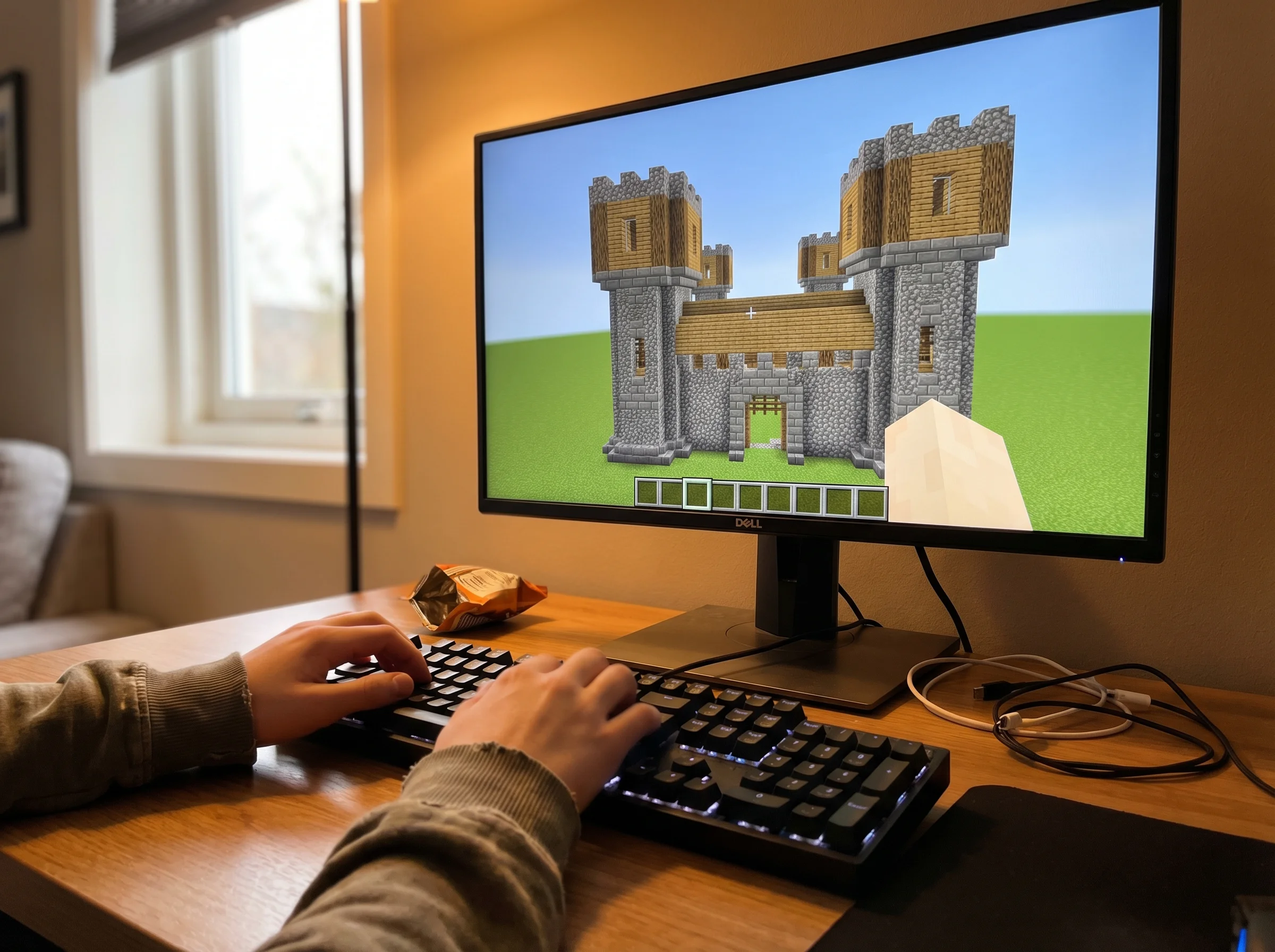
Now I know: be present during the natural pauses. Don't force them to stop. Work with the rhythm of their world:
- Loading screens are perfect for quick check-ins
- Creative modes allow for longer conversations
- Spectating while they play competitive modes shows support without pressure
- Building or farming together in games creates natural conversation flow
The magic question isn't "how was your day?" It's "show me what you're working on."
 With their eyes on screenPause, Play, Connect: Core Deck$49 CAD • 172 promptsSee the deck
From Fortnite to Feelings
Games aren't just distractions. They're metaphor machines. Every gaming scenario can bridge to real-life conversations if you know how to build the connection.
My son was struggling with a group project at school. I knew because his Apex Legends squad was having similar issues. "So how do you handle it when your teammates won't communicate in Apex?" I asked.
"It's the worst," he said. "You can't win if people won't share information or coordinate. Sometimes you just have to—" He stopped. Looked at me. "Oh. You're doing the thing where games are like life."
"Is it working?"
He laughed. "Yeah, okay. I get it. I need to be the one who starts communicating in the group."
Here's how gaming scenarios map to life:
- Team composition discussions = understanding different strengths
- Dealing with losses = building resilience
- Resource management = responsibility and planning
- PvP conflicts = handling competition
- Guild drama = navigating social dynamics
- Grinding for gear = working toward long-term goals
The key is letting them make the connection. Ask about their gaming situation first, then let them draw the parallel. Works every time.
The Discord Dilemma
"Mom, can Tyler come over?" my daughter asked.
"Sure, where does he live?"
"Sweden."
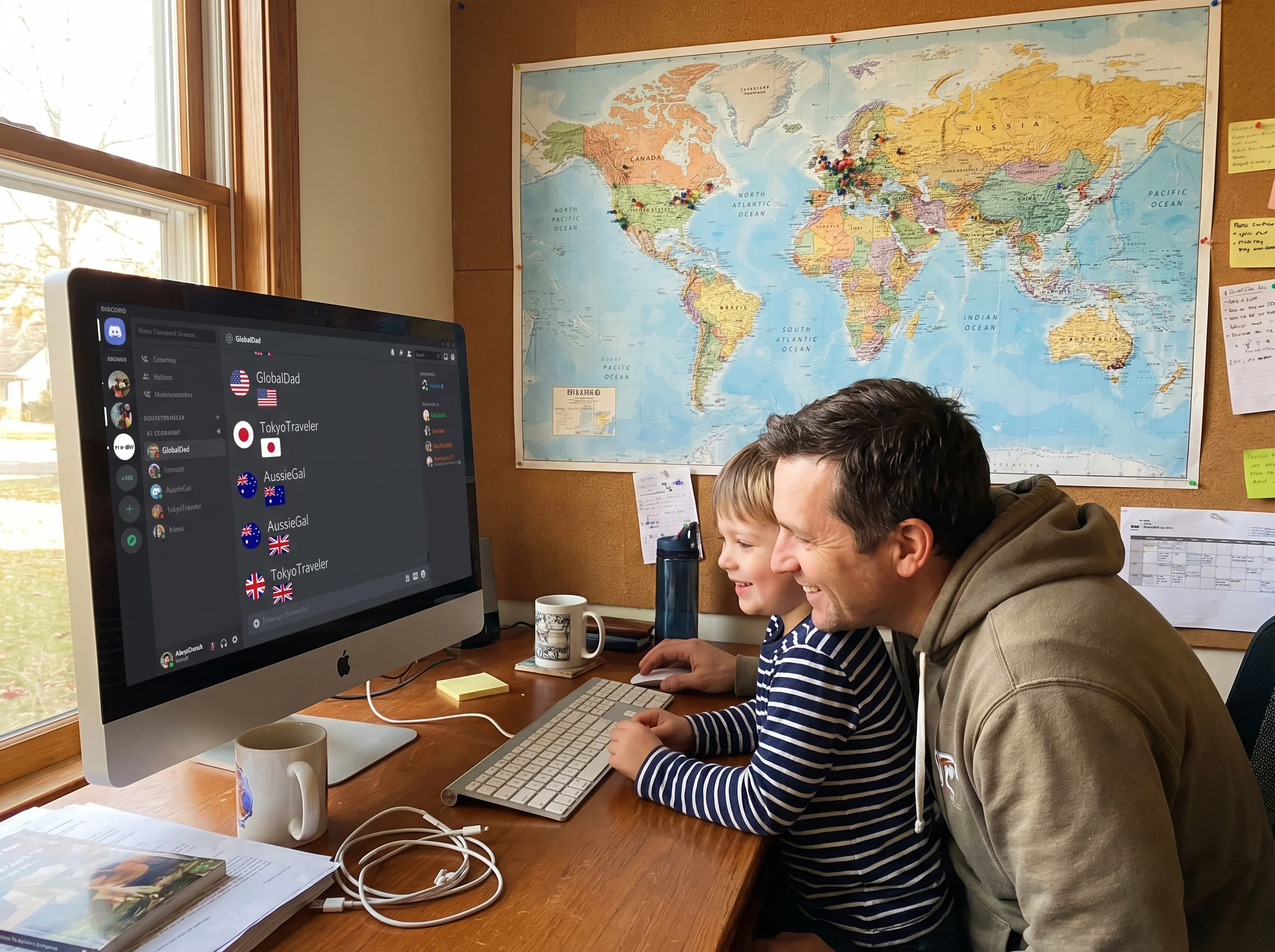
This is the new normal. Your teenager's best friend might live three time zones away. Their support system includes people they've never met in person but who've been there for every gaming session for two years straight.
I met my son's best friend over Discord. They've played together almost daily for three years. This kid knows more about my son's life than most of his school friends. They've celebrated victories, mourned defeats, and supported each other through family struggles. The friendship is as real as any I had growing up, just digitally mediated.
But yes, online safety matters. Here's how to balance it:
- Ask about their online friends like you'd ask about school friends
- Understand which platforms they use and basic safety features
- Discuss red flags openly (anyone asking for personal info, trying to move conversations off-platform, etc.)
- Celebrate the positive connections they make
- Set boundaries around sharing personal information, not around forming friendships
The goal isn't to shut down these relationships. It's to help them navigate them safely.
Creating Your Own Party Chat
Want to really connect with your teenager? Stop trying to pull them out of their world. Join it instead.
"Dad, you're terrible at this," my daughter laughed as I died for the fifth time in Valorant.
"I know! How do you even see people that fast?"
That admission changed everything. Suddenly, she was the expert, teaching me about crosshair placement and ability timing. For the first time in months, we were talking. Really talking. Not about the game, but through it.
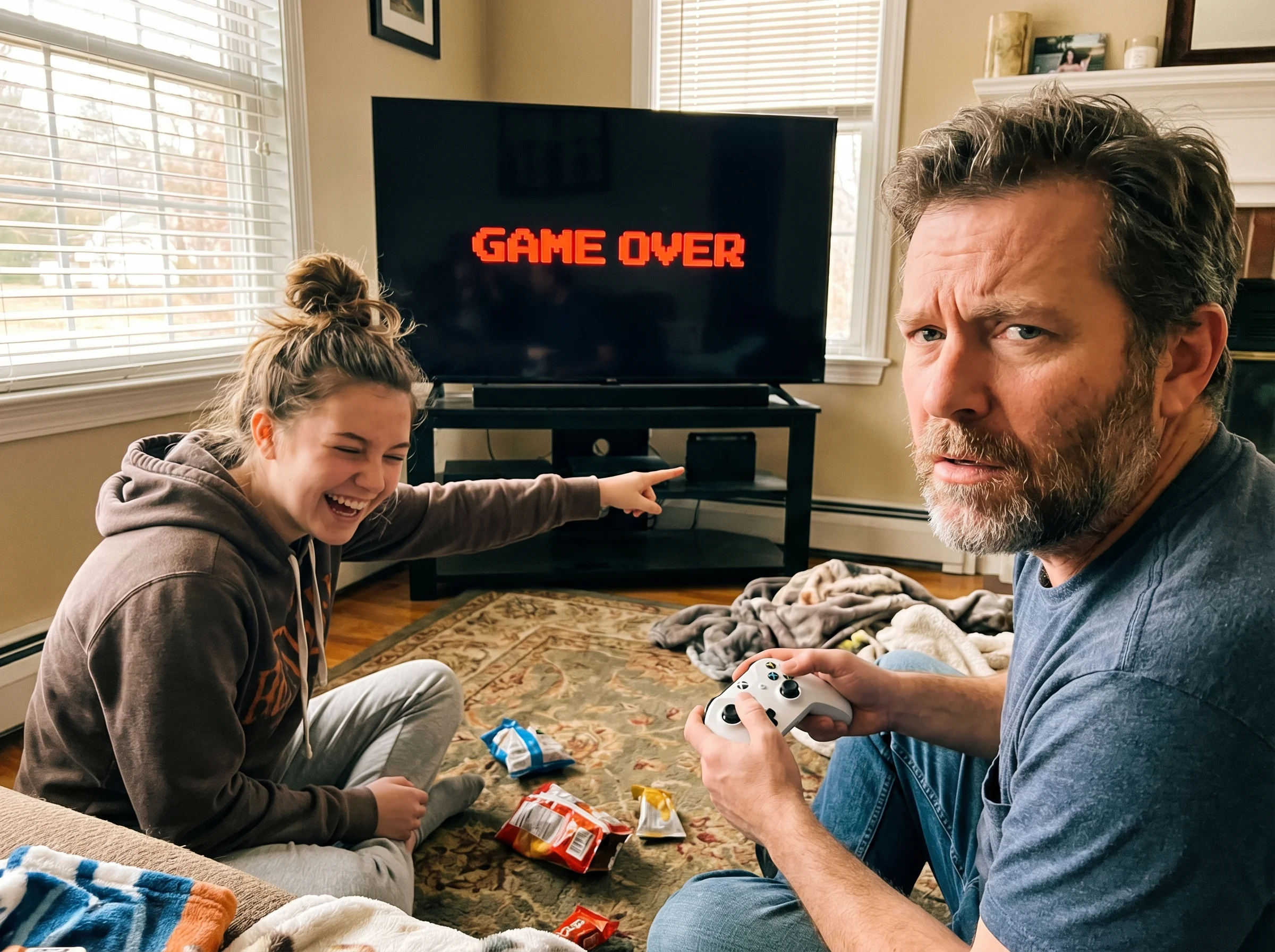
Here's your roadmap for entering their world:
- Ask them to teach you their current favorite game
- Be genuinely terrible (you probably will be anyway)
- Let them be the expert
- Play co-op games together (It Takes Two, Minecraft, Stardew Valley)
- Watch them play competitive games and ask questions
- Share in their victories and defeats
The secret? You're not trying to be good at gaming. You're trying to understand what they love about it. Once they see you making an effort to understand their world, they'll start sharing more of it.
Your Next Move
Tonight, don't ask your teenager how their day was. Ask them what game they're playing. Ask if you can watch. Ask them to explain what's happening. Be genuinely curious about their digital world.
When they're explaining why their team composition isn't working or why they're stuck on a certain level, really listen. There's always a deeper story there.
And if you want to take it further? We actually created Yakety Pack after realizing the best conversations happen when you ask unexpected questions. One of our favorite cards asks "If you could design a new level for any game, what would it include?" Sounds simple, but it opens up conversations about creativity, challenge, and what makes something fun. Way better than "how was school?"
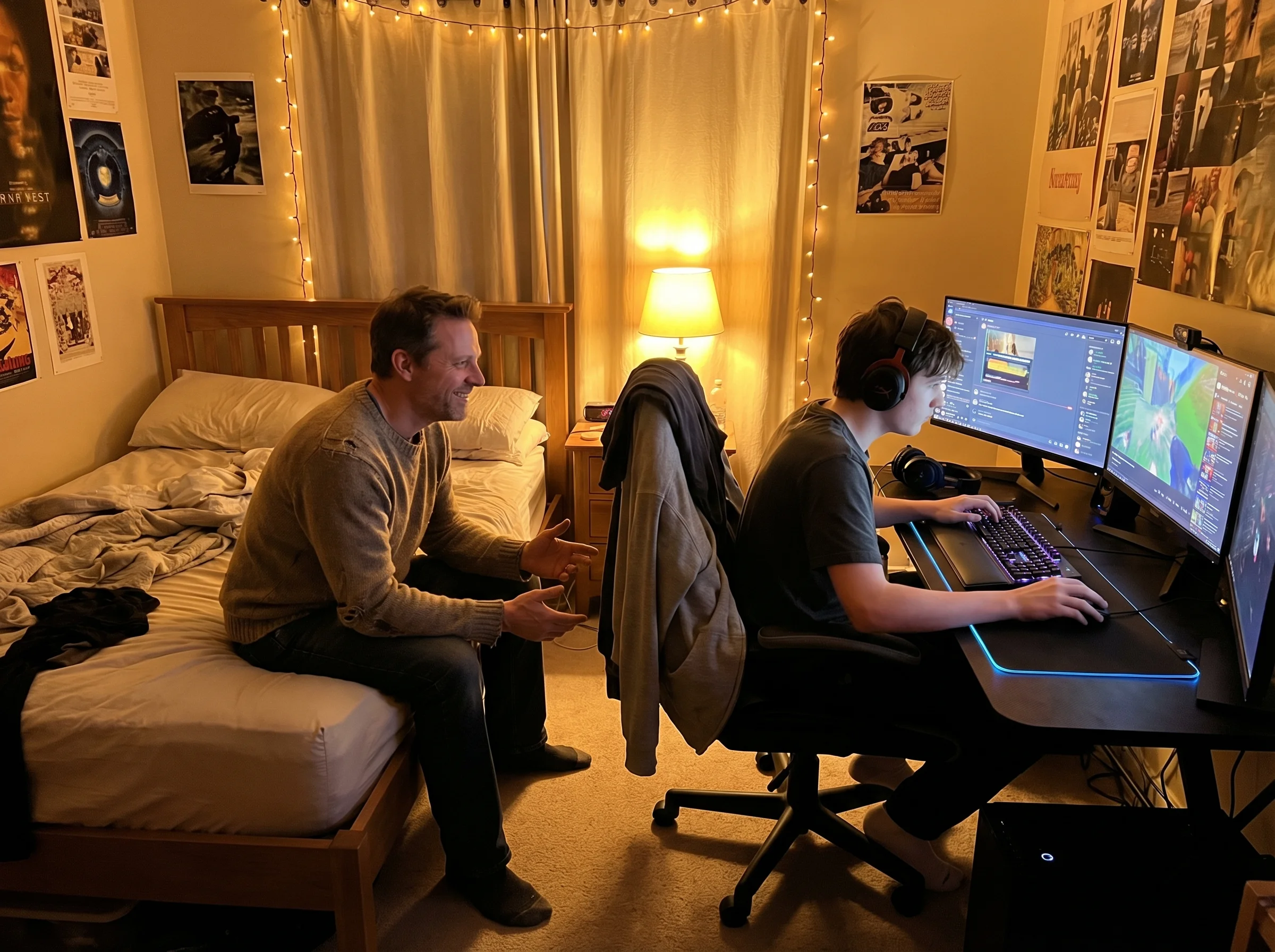
Your teenager is already talking. They're sharing their feelings, working through problems, and connecting with others. They're just doing it in Discord servers and voice chats instead of at the dinner table. The question isn't how to get teenagers talking more. It's whether you're willing to meet them where they already are.
Trust me, some of the best conversations you'll ever have with your teenager might happen while they're explaining why their random teammates are "literally the worst" or showing you their latest Minecraft creation. You just have to be willing to listen in a different language.
The broken headset that let me overhear my son's Discord conversation? I bought him a new one the next day. But I also started sitting nearby more often, playing games alongside him, and asking better questions about his digital life. Turns out, my quiet teenager had a lot to say. I just needed to tune into the right channel.
When you sit down nearbyPause, Play, Connect: Core Deck172 prompts that give you something to ask while you sit beside them and the game runs.$49 CAD • 90 cards • 18 reviewsShop the deck
Related Articles
Looking for more? Check out these related articles:
