
It's 6:47pm. The pasta's boiling, your kid's slumped on the couch with an iPad, and you've got exactly 15 minutes before bath. You don't want to be a Pinterest parent. You don't want to film anything. You just want to connect for a minute without it turning into a whole production.
Same. That's the entire reason I'm writing this.
Most articles about quick 15 minute games for busy parents read like they were written by someone who's never actually been a tired parent at 6:47pm. They list 30 games with no acknowledgment that you might be reading this with one hand while stirring something with the other. So I'm going to skip the Pinterest energy and give you what actually works.
Why Quick Beats "Quality Time"
I tried the big Saturday thing. Planned a 3-hour board game afternoon, snacks set up, the works. By hour one, my son was checking the clock. By hour two, my daughter had wandered off. By hour three, I was the only one still playing, which is its own kind of sad.
Two weeks later, we played a made-up game in the kitchen for 10 minutes while I cooked. We still reference it. My daughter brings it up randomly, months later.
Here's what I learned the hard way: kids don't remember the production. They remember the moment you were actually there. Fifteen minutes of real attention three times a week absolutely flattens a two-hour Saturday where everyone's secretly checking their phone. Small and frequent wins. That's the whole game. There's actually research from Harvard's Center on the Developing Child on this idea, they call it "serve and return," and short repeated interactions matter more than long staged ones.
So before we get into the specific games, give yourself permission to stop trying to be Magical Family Saturday. You're playing the long game with deposits, not withdrawals.
 The 6:47 windowPause, Play, Connect: Core Deck172 prompts that are ready when you have fifteen minutes and no plan at all.$49 CAD • 90 cards • 18 reviewsShop the deck
The Starting Friction Problem (Nobody Talks About This)
Here's the thing every other article skips: getting your kid to agree to play is harder than the game itself.
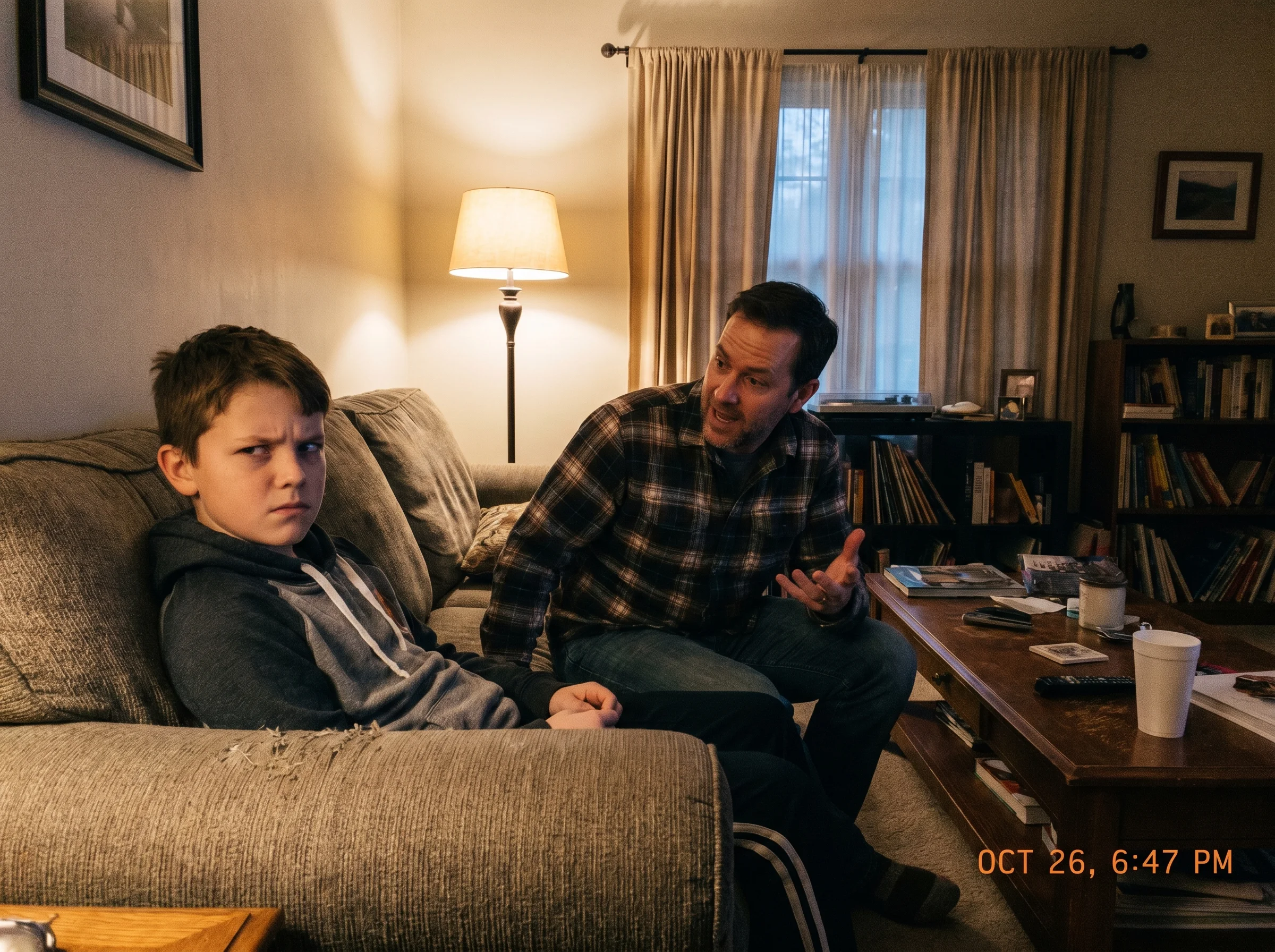
For about a year, I'd say "hey, want to play a game?" and get a grunt. Sometimes an actual "no." Sometimes the dreaded "that's boring" before I'd even said what the game was.
The fix isn't a better game. It's a better ask. Or actually, no ask at all.
Stop asking. Start the game.
"Bet you can't name 10 Minecraft mobs in 30 seconds. Go."
They're playing before they decided to play. The question "want to play a game?" gives them a chance to say no. Don't give them the chance.
Borrow gaming language. Kids who play Fortnite, Minecraft, or Roblox already live in a world of quests, challenges, speedruns, and boss battles. So pitch your game in that language:
- "Side quest. You in?"
- "Speedrun challenge: name every Pokemon starter in 20 seconds."
- "Boss battle. Me versus you. Rules are simple."
I'm not exaggerating when I say this changed everything in my house. The day I stopped asking and started challenging, my son went from grunting to actually engaging within seconds.
Quick 15 Minute Games for the Kitchen Window
You're cooking. Your kid's nearby. You can talk but you can't really do anything. These are the easiest deposits in the world and most parents miss them.

20 Questions, gaming edition. Same rules as classic 20 Questions, but the answer has to be a video game character. My son lit up the first time we did this. He'd been waiting his whole life for someone to ask him about Steve from Minecraft like it mattered.
Pantry Iron Chef. You name three ingredients. They invent a snack. Bonus points if they have to give it a name and a sales pitch. My daughter once invented a "spicy graham cracker situation" that I still think about.
Story tag-team. You say one sentence of a story. They say the next. Keep going. The dumber it gets, the better. We once ended up with a story about a raccoon who became a substitute teacher. Worth every minute.
Games for the Car (No Carsick, No Supplies)
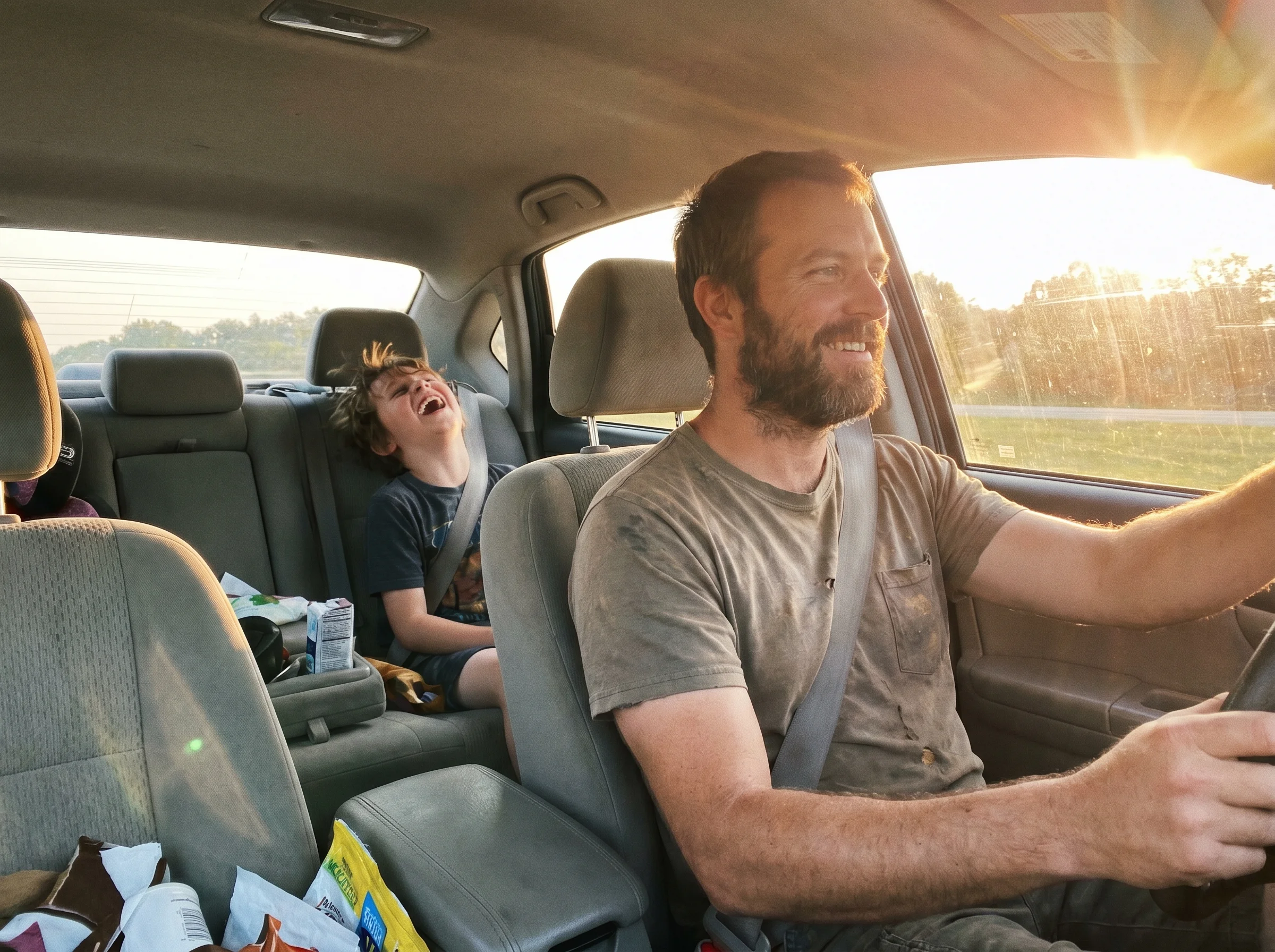
The car is gold and most parents waste it on podcasts or silence. Fifteen minutes in the car is a pocket of captive attention.
"I'm thinking of a..." Pick their world. Minecraft mob, Pokemon, Roblox game, Fortnite skin. They ask yes/no questions to figure out which one. You'll be terrible at this if you don't know the game. That's the point. Let them teach you.
License plate backstories. Make up the life story of the driver in the car next to you, just from the license plate and how they're driving. "Okay, that minivan's plate is HRT-902. Single dad, used to be a DJ, currently late to a parent-teacher conference."
Yes/And. Improv rules. Whatever the other person says, you start with "yes, and..." and build on it. My kids love this because it gets ridiculous fast.
 Nobody has the energy tonightPause, Play, Connect: Core Deck$49 CAD • 172 promptsSee the deck
Games for the "I'm Exhausted, So Are You" Couch Moment
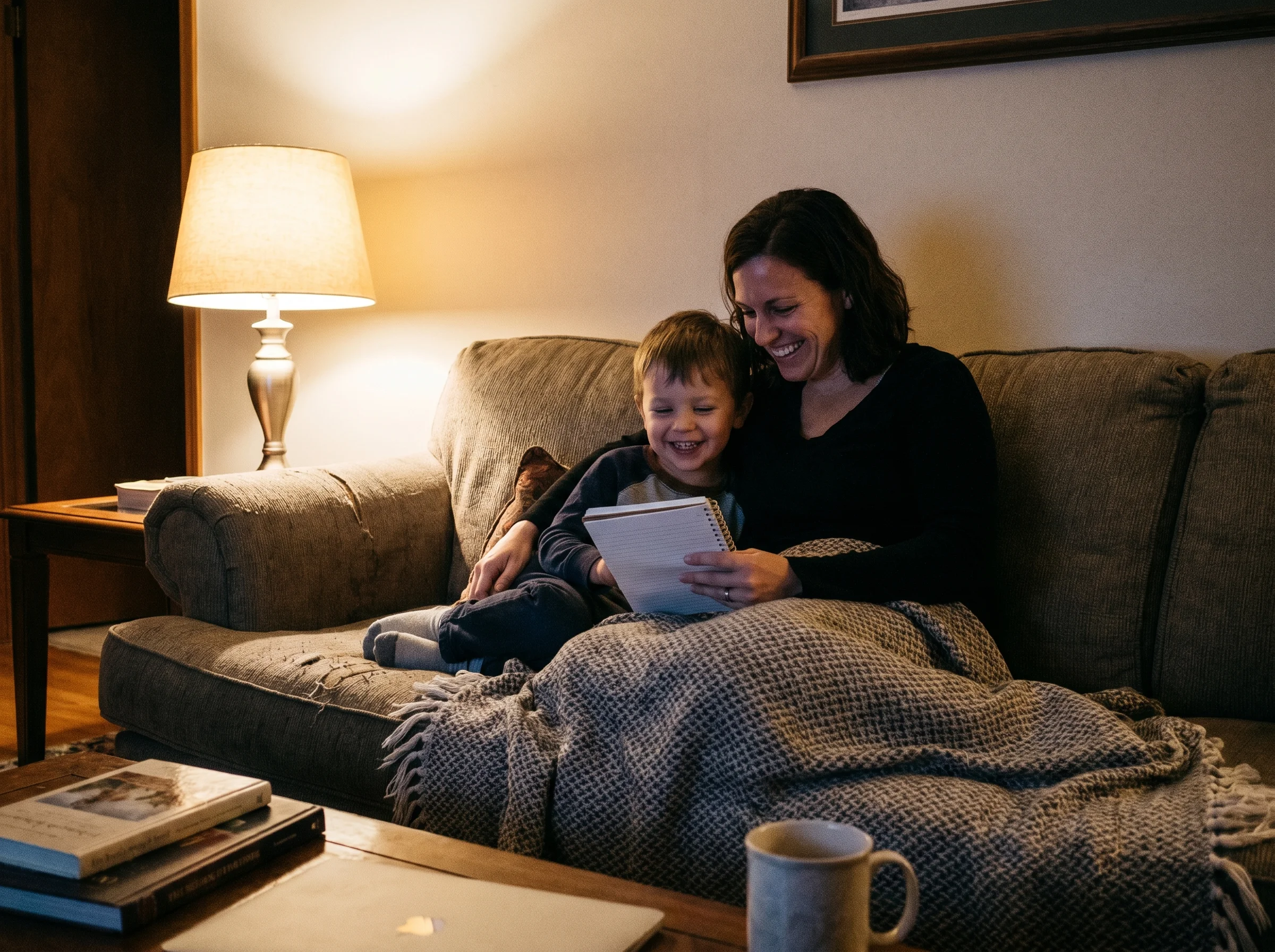
These are the ones I needed most and couldn't find anywhere. Games for when neither of you has the energy to be "on." No jumping jacks. No props. Just sitting next to each other and talking.
Two truths and a lie, but specific. Not "things about me" because your kid knows everything about you. Try "two truths and a lie about my day" or "about something that happened at school today."
"What would your video game character do?" Pose a real situation. "What would Kirby do if he had to give a speech in front of the class?" It's a sneaky way to get kids to talk about real stuff using a character as a buffer. Child psychologists call this kind of indirect prompt a low-pressure way to open up real conversations.
Drawing telephone. One notebook. One pen. You draw something for 15 seconds, pass it over. They write what they think it is, fold the paper, draw their interpretation, pass it back. Hilarious and zero energy required.
The question game. One real question each. No judgment. No follow-ups unless they invite them. This one's deceptively powerful, but it depends entirely on the questions.
Which brings me to something I should mention. This is exactly why I built Yakety Pack with my co-founder. I kept running out of good questions at 8pm. My brain was fried. I'd ask "how was your day?" for the hundredth time and get nothing. So we made a deck of cards with the kinds of questions that actually crack kids open. One card asks something like "what video game character would you want as your teacher?" and my kid talked for twenty minutes. Another one led to my daughter telling me about a friend situation I had no idea about. That's the whole point. The right question does the heavy lifting so you don't have to.
Mixed Ages: Playing With a 5-Year-Old and a 10-Year-Old at the Same Time
This one is brutal if you don't structure it right. The 10-year-old thinks everything is babyish. The 5-year-old can't follow complex rules. You're stuck.

The trick: give the older kid a leadership role.
Storytelling games where the older kid leads. They start the story, the little one adds a sentence, then back to the older one. The older kid feels in charge, the younger one feels included.
"Teach me your game." Let the 10-year-old explain Roblox or Minecraft to you while the 5-year-old listens. You're not playing the game, you're playing "let me really understand what you love." The older kid gets to be the expert. The younger kid absorbs by osmosis. You learn what your kid actually cares about. Everybody wins.
When the Game Flops (Because Sometimes It Will)
My daughter once quit a game after one round. Just got up and walked away. I almost did the dad thing where I'd say something like "we just started, can we please try a little harder?" Glad I didn't.
A 90-second exit is fine. A failed game is still a deposit. You showed up. You tried. You didn't make it a thing. That matters more than the game.
"Cool, we'll try something else tomorrow" is a complete sentence. Don't follow it with a lecture about effort. Don't sulk. Just let it land and move on.
The kid who quit a game after 90 seconds today is the kid who'll play for 20 minutes next week, if you don't make today weird about it.
A Few FAQs Real Parents Ask Me
What if I only have 5 minutes, not 15? Even better. Five-minute games have lower stakes. "Speedrun: name every Disney villain you can in 60 seconds, go."
What if I'm bad at making up games on the spot? Most of us are. That's literally why I built a deck of cards to do it for me. No shame in outsourcing the creative part when you're exhausted.
Can these replace screen time? No, and don't try. Screens aren't the enemy. The goal isn't replacement, it's connection. If your kid loves Minecraft, ask them about Minecraft. The gaming world is a window into your kid, not a wall to break down.
What about my kid who only wants screens? Meet them there. Don't pitch a game as "instead of your iPad." Pitch it as "30-second challenge, then back to your thing." Honor the deal. Trust gets built when you don't pull a bait-and-switch.
One Thing to Try Tonight
Pick one window. Dinner prep, the car ride home, or the couch before bath. Don't ask if they want to play. Just start.
"Bet you can't stump me. Think of a video game character. I get 20 questions."
That's it. That's the article. Fifteen minutes, one window, no production. If you want more games for longer windows, I wrote about the best games to play with your kids by age and skill level and cooperative games that build teamwork for families for the weekend extensions.
And if you want a stack of questions ready to go so you don't have to invent them at 8pm with a fried brain, that's why we built Yakety Pack. But honestly? Start with the bet. See what happens.
You've got this.

From this article
Pause, Play, Connect: Core Deck
Your 8pm backup plan: Most 15-minute windows die because the fried parent brain can't invent a good prompt on the spot. The Pause, Play, Connect Core Deck lives in our junk drawer for exactly those nights.
Going all in? The full bundle adds the Parent Power-Up deck and two digital parent guides, $146 of family fun for $59.

