
Last week, I heard a crash from the game room, followed by screaming. My 8-year-old had just deleted his brother's Minecraft world - three months of building, gone. As I stood between two furious kids, I realized every article I'd read about "taking turns" and "sharing nicely" was useless. Real sibling gaming conflicts aren't about sharing - they're about respect, understanding, and sometimes, virtual revenge.
If you've got multiple kids and any gaming device in your house, you know this scene. The fights. The tears. The accusations of cheating, screen-peeking, and the dreaded "you're not playing it right!" Maybe you've tried the timer method, the schedule, the threats to take it all away.
I tried all of that. Failed at all of that. Then I learned something that changed everything: gaming conflicts aren't problems to solve. They're windows into what your kids actually care about.
Why Traditional Sharing Rules Fail With Gaming
Here's what nobody tells you: gaming isn't like sharing a bike or taking turns on a swing. When we were kids, "sharing" meant one person used the toy, then handed it over. Simple. Clean. Gaming? Not even close.
I learned this the hard way with my "brilliant" 30-minute timer system. Each kid gets exactly 30 minutes, then switches. Fair, right?
The first day, the timer went off while my younger son was mid-battle with a gym leader in Pokémon. You know, those battles you've been preparing for, leveling up your team, planning your strategy. "Time's up!" I announced, proud of my fair system.
He burst into tears. Not tantrum tears - genuine heartbreak tears. "Dad, I was about to win! I worked so hard!"
His brother grabbed the controller, eager for his turn. "Not my problem."
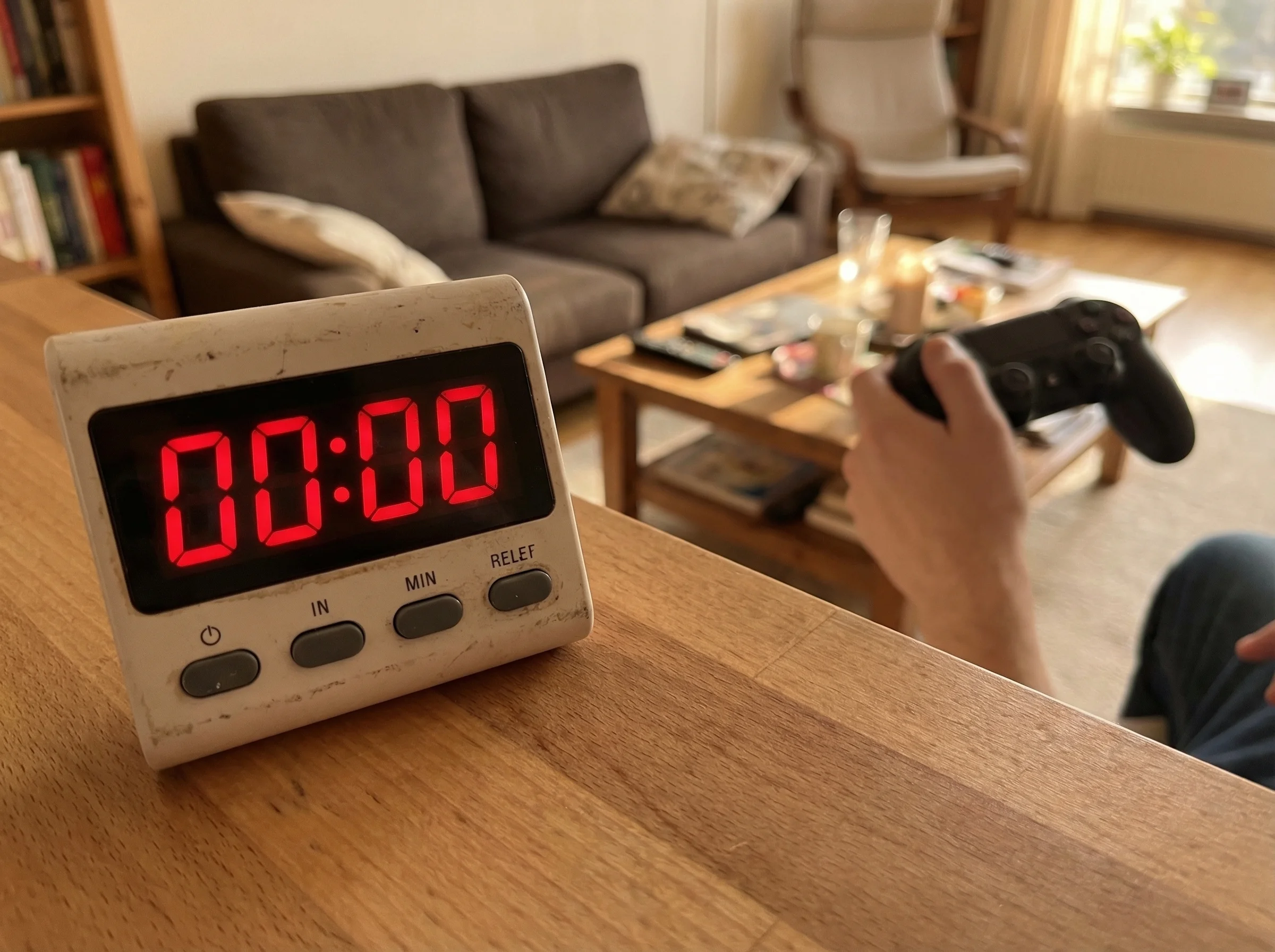
That's when it hit me: I'd just taught my kids that their gaming accomplishments didn't matter. That all their effort could be yanked away because a timer said so. Imagine someone forcing you to leave a movie theater 20 minutes before the ending because it was someone else's turn to watch something. That's what I was doing.
Gaming has commitment levels regular toys don't:
- Save points matter - You can't just stop anywhere
- Online games can't be paused - Those 12 other players aren't waiting for your family schedule
- Progress is personal - Hours of work can be lost in seconds
- Different games need different time - A Minecraft building session isn't the same as a quick Rocket League match
The worst part? My kids started gaming defensively. They'd pick short games during their turn, never starting anything meaningful because why bother? The timer would just ruin it anyway.
 When the timer ruins itPause, Play, Connect: Core Deck172 prompts that get two kids talking about their games instead of fighting over whose turn it is.$49 CAD • 90 cards • 18 reviewsShop the deck
The Real Conflicts (It's Not About the Controller)
Once I ditched the timer disaster, I started paying attention to what my kids were actually fighting about. Spoiler: it was rarely about whose turn it was.
The Skill Gap Massacre
My older son is good at games. Like, really good. My younger son... tries hard. Watching them play FIFA together was like watching the Harlem Globetrotters play your local middle school team. Except less funny and more tears.
"Play with your brother," I'd say.
"He just cries when he loses," older son would respond.
"He doesn't let me score any goals!" younger son would wail.
Neither was wrong. But "take turns being winner" doesn't work when one kid could beat the other playing blindfolded.
The Backseat Gaming Torture
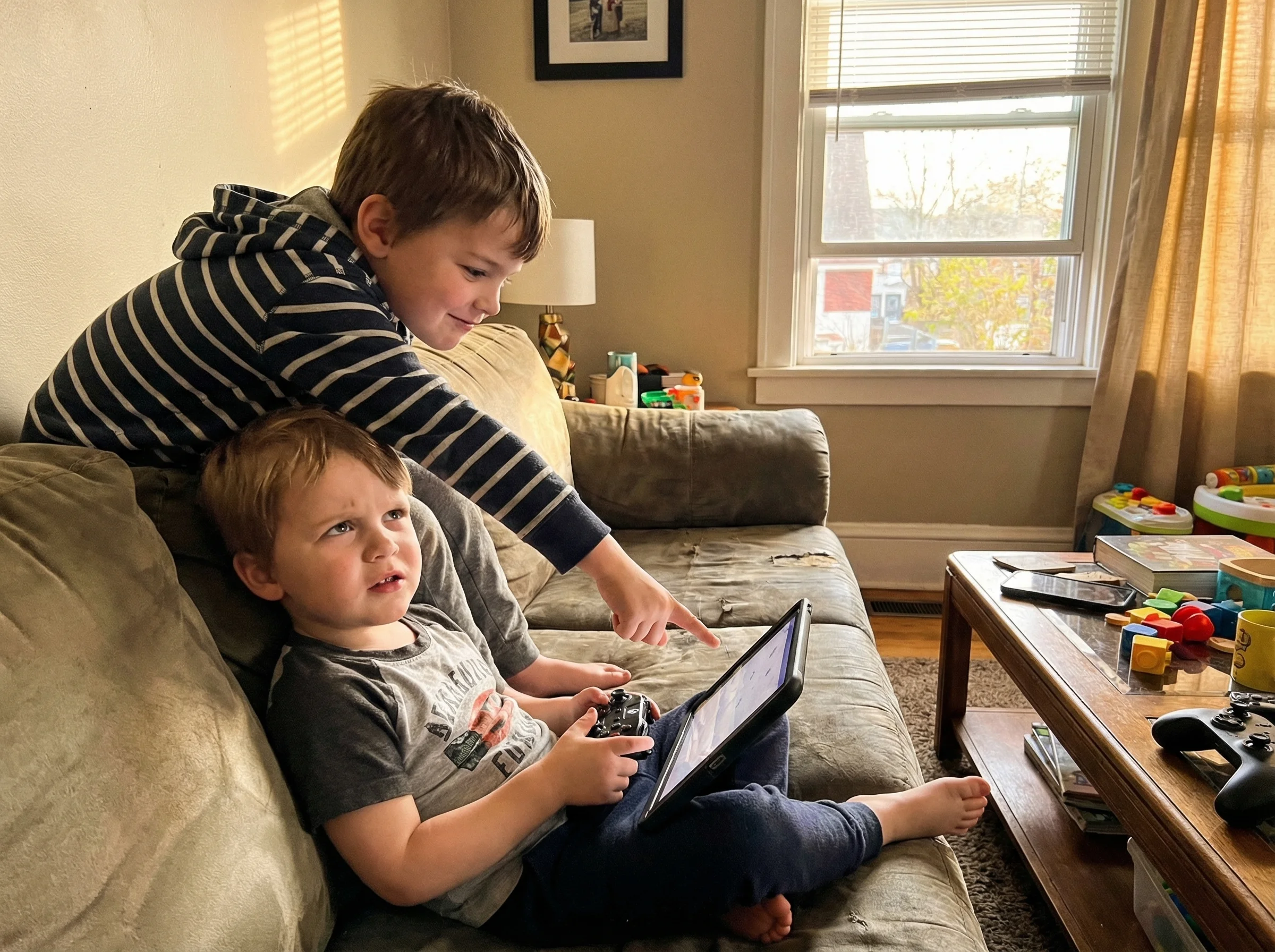
You haven't experienced true sibling conflict until you've heard one child narrate every "mistake" their sibling makes:
- "You're supposed to jump there."
- "That's not how you build that."
- "Why did you waste your diamonds on THAT?"
- "Oh my god, it's so easy, just let me do it."
My younger son once unplugged the TV rather than hear one more "helpful" tip from his brother.
The Progress Sabotage
Then there's the nuclear option. When my 8-year-old deleted his brother's Minecraft world, he knew exactly what he was doing. This wasn't random destruction - it was calculated revenge for being excluded from a friend's online session.
Three months of building. Gone. Creative structures his brother had shown me proudly. "Look what I made, Dad!" All deleted in five seconds of rage.
The silence when his brother discovered it was worse than any screaming.
Different Gaming Languages
My kids might as well have been from different planets:
- One loved building and creating (Minecraft, Animal Crossing, Terraria)
- The other lived for competition (Fortnite, Rocket League, anything with rankings)
Builder kid: "Why do you only play killing games?"
Competitive kid: "Why do you waste time building stuff that doesn't do anything?"
They weren't just playing different games - they were speaking different languages, valuing different things. No wonder they couldn't play together.
Understanding Your Kids' Gaming Languages
The breakthrough came when I stopped trying to manage the conflicts and started trying to understand them. I sat down with each kid separately and asked one question: "Help me understand why your games matter to you."
My older son lit up. "Dad, in Rocket League, I'm almost Diamond rank. Do you know how hard that is? Only like 10% of players make it that high. When I'm playing ranked, every game matters. If I lose because someone interrupts me, I lose rank points. It's like if someone made you lose a client because they wanted to use your phone."
Huh. When he put it that way, I got it. This wasn't just "playing games" - he was working toward something.
My younger son had his own revelation: "In Minecraft, I'm building a whole city. Each building tells a story. Like, this one is where the villagers go when zombies attack. And this farm feeds everyone. When I play, I'm not just placing blocks - I'm making something nobody else has made."
For the first time, I saw their gaming through their eyes:
- Competitive games = tests of skill, achievement, measuring improvement
- Creative games = expression, storytelling, leaving your mark
- Story games = experiences, emotions, journeys
- Social games = connection, teamwork, shared adventures
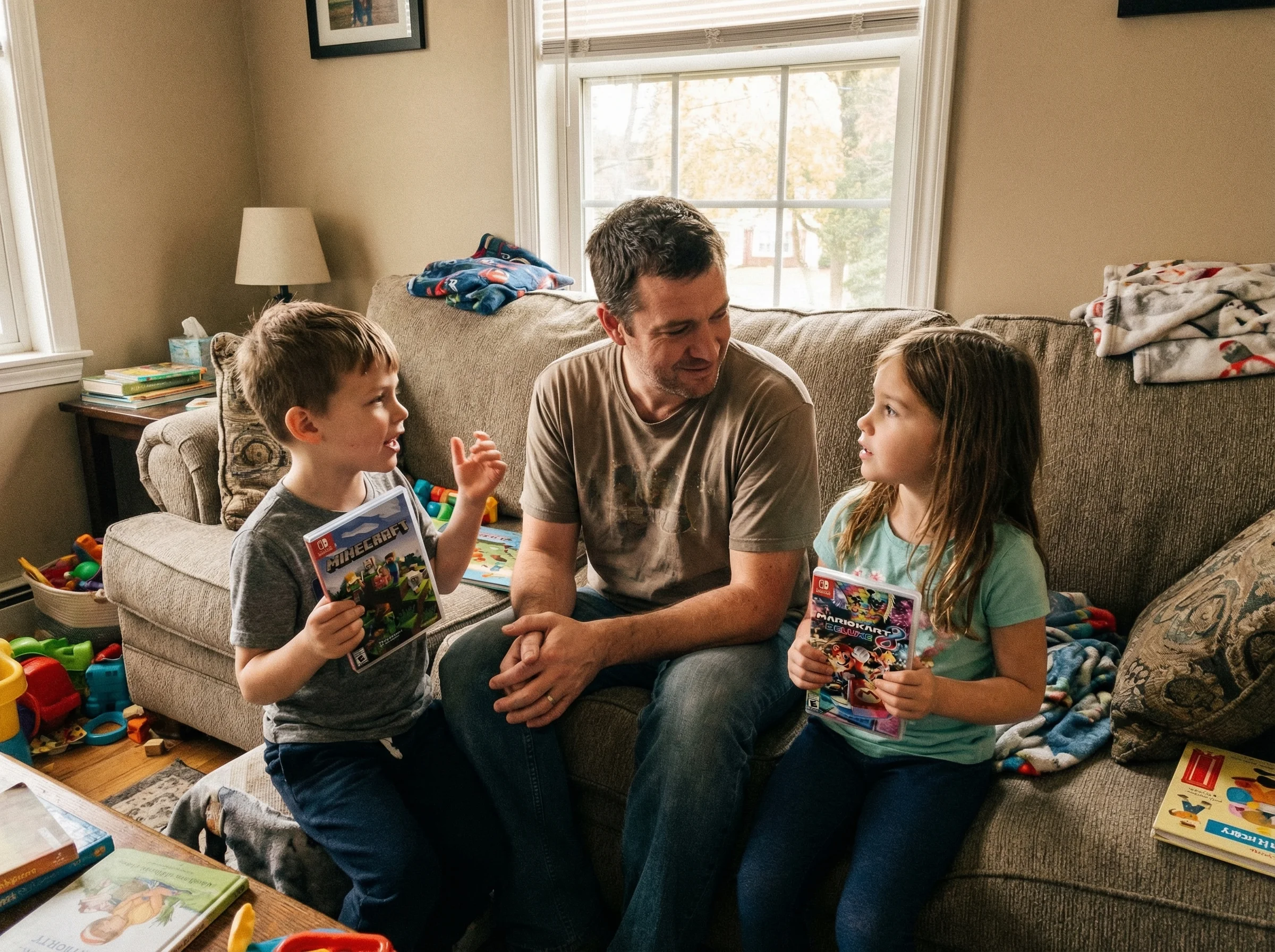
Once I understood this, I could help them understand each other. We had a family gaming show-and-tell. Each kid got 10 minutes to show us what they loved about their main game. No interruptions, no judging - just sharing.
The shift was immediate. My competitive son watched his brother give a tour of his Minecraft city and said, "Wait, you built ALL of that? That must have taken forever." His brother beamed.
When my builder watched his brother nail a ceiling shot in Rocket League after showing him failed attempts, he said, "Okay, that was actually cool."
They still preferred different games, but now they respected why.
Solutions That Actually Work
Armed with this understanding, we rebuilt our gaming approach from scratch. No more arbitrary rules - instead, we created systems based on how gaming actually works.
The "Gaming Goals" Conversation
Every gaming session now starts with a question: "What are you trying to accomplish today?"
The answers changed everything:
- "I want to finish building my castle"
- "I have three ranked matches before the season ends"
- "Me and Jake are doing the dungeon together at 4"
- "I just want to mess around in creative mode"
Now we could plan. Castle building? That needs time. Three ranked matches? About 20 minutes. Playing with Jake? Can't be interrupted. Messing around? Perfect for when dinner's in 30 minutes.
My kids started negotiating with each other: "If I can play my ranked matches now, you can have the TV until bedtime." They'd check each other's goals and work around them. No timer needed.
The Elder Sibling as Mentor
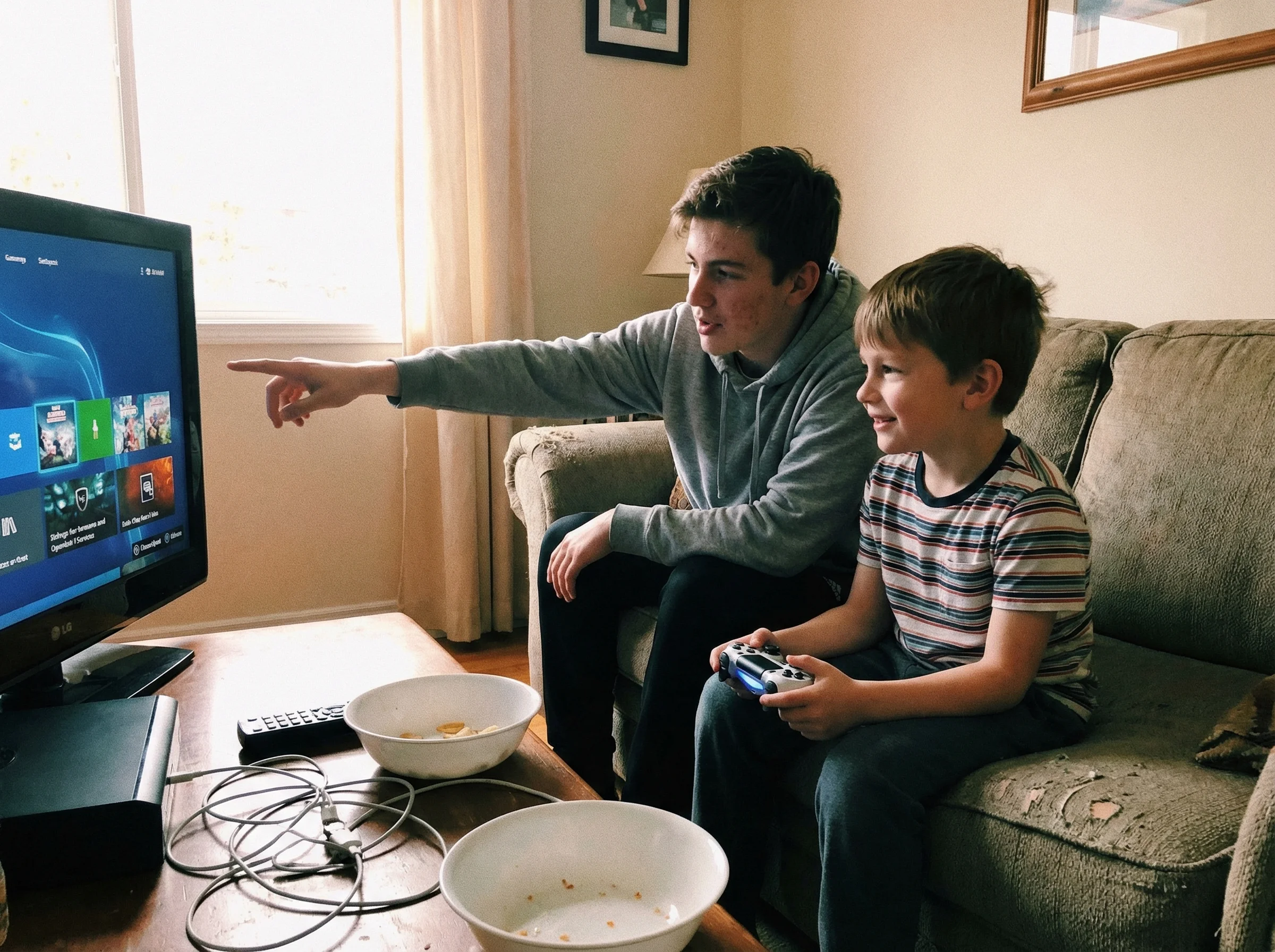
Remember that skill gap problem? We flipped it. I challenged my older son: "What if instead of beating your brother at FIFA, you coached him to beat your cousin?"
Game changer. Literally.
He created a "training camp" for his brother. Taught him moves, strategies, how to read the game. The pride on his face when his brother scored his first real goal against him? Priceless. They still don't play FIFA competitively together, but now my older son commentates his brother's matches like a sports announcer.
Co-op Games That Level the Playing Field
We found games where different skills mattered:
- Overcooked: Chaos that needs communication, not gaming skill
- Minecraft Dungeons: His combat skills, his brother's puzzle-solving
- Moving Out: Ridiculous fun that nobody can be "good" at
- Portal 2 Co-op: Requires actual teamwork or you both fail
The rule: Sunday mornings are co-op time. They pick a game together, play together, fail together, succeed together. We expanded the menu of titles that actually work for warring siblings in our companion piece on cooperative games for arguing siblings.
Natural Sharing Rhythms
Instead of rigid schedules, we found natural breaks:
- Story games = play until you hit a save point or finish a chapter
- Online matches = finish your current match, then switch
- Building games = complete your current project
- Social games = when your friends log off
Both kids learned to announce their intentions: "I'm starting a ranked session, probably 45 minutes." The other would plan accordingly.
For the Moment Before the Next Fight: Conflicts do not wait for you to go looking. Keep a Pause, Play, Connect deck near the console so a calm prompt is within arm's reach when the controller is about to fly.
Handling the Nuclear Options
But what about the big ones? The deleted saves? The physical fights? The using-games-as-weapons situations?
After the Great Minecraft Deletion Incident, we had to face hard truths. This wasn't about gaming - it was about respect, boundaries, and consequences.
The Recovery Plan:
- Immediate separation - Not just from each other, from games. Everyone needed to cool down.
- Understanding the damage - I had the destroyer explain exactly what was lost. No minimizing.
- Real consequences - He had to help rebuild. Every evening for a week, he assisted in recreating what he'd destroyed.
- Protect against future damage - Separate user accounts, cloud saves, backups.
The rebuilding sessions became bonding time. His brother explained each building as they rebuilt it. The destroyer learned to appreciate the work involved. They ended up improving some designs together.
Physical Fights
The rule is simple: games are supposed to be fun. The second it gets physical, gaming stops. Not as punishment - as reality. "If games make you hurt each other, we can't have games."
Only had to enforce this twice. Now they catch themselves: "I need a break before I get too mad."
When to Let Them Work It Out
Not every conflict needs parent intervention:
- Arguing about strategy? Let them figure it out
- Disagreeing about what game to play? They can negotiate
- Mad about losing? Natural consequence of competition
I intervene when:
- It gets personal (insults about skill/intelligence)
- Someone's progress is threatened
- The conflict moves beyond gaming
- One child is consistently excluded
 After the controller gets thrownPause, Play, Connect: Core Deck$49 CAD • 172 promptsSee the deck
Building Gaming Empathy
This is where everything clicked for our family. We started using Yakety Pack questions in real moments during our gaming conversations. Instead of "how was your game?" we asked things like:
"What was the most challenging part of your game today?"
"If you could change one thing about that game, what would it be?"
"What did you discover that surprised you?"
These questions, the same kind you find in our conversation cards for families with gamer kids, helped my kids articulate why gaming mattered to them. More importantly, they started asking each other these questions. When you understand what someone loves about something, it's harder to dismiss or destroy it.
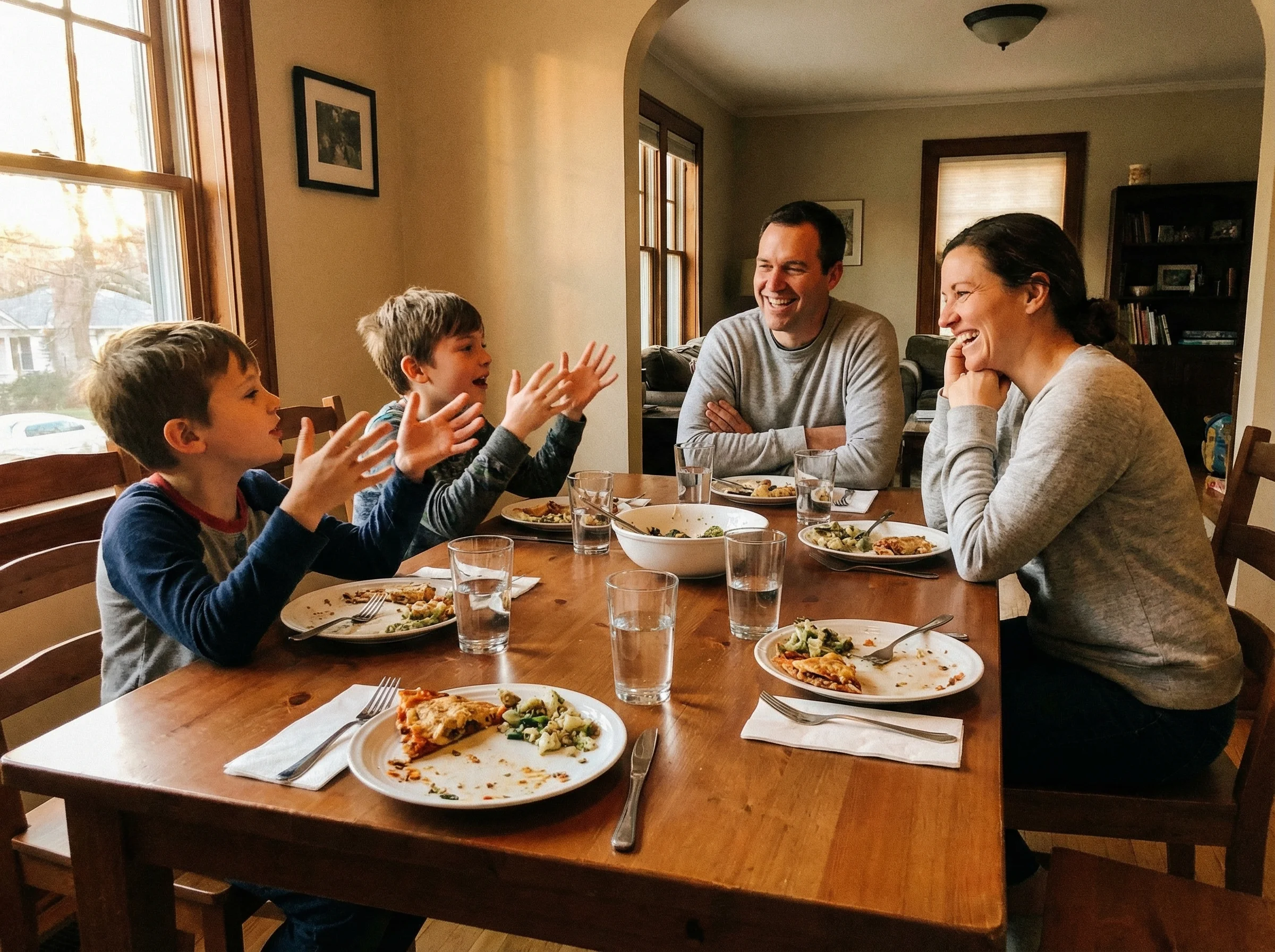
We created "Gaming Show and Tell" nights. Each kid gets to showcase something cool they did that week. Could be a building, a victory, a funny glitch, whatever. The only rule: celebrate each other's moments.
My builder son now sends his brother screenshots of cool Rocket League plays he sees on Reddit. My competitive son helped his brother design a PvP arena in Minecraft. They speak each other's languages now.
When Gaming Brings Siblings Together
The transformation didn't happen overnight. But slowly, the conflicts shifted to collaboration.
Signs it was working:
- They started planning gaming time together instead of fighting for it
- "Can you help me with this part?" replaced "Give me the controller"
- They created shared goals (beating a game together, building a world together)
- Gaming became something they talked about at dinner, not fought about
The moment I knew we'd made it: I came home to find them huddled together on the couch, controller passing back and forth naturally as they tackled a tough boss. No timer, no turns - just "you're better at this part" and "I got the next section."
Games That Brought Them Together:
- It Takes Two: Literally requires cooperation
- Minecraft (shared world): Different roles, same goal
- Rocket League (2v2): They became a team
- Super Mario 3D World: Helping each other find secrets
The unexpected part? Their gaming relationship improved their whole relationship. Learning to respect each other's gaming style taught them to respect each other's differences everywhere else.
The Part Nobody Talks About
Here's what surprised me most: some of their best sibling moments now happen around gaming. Not just playing together, but:
- Planning surprises (my older son secretly built a roller coaster in his brother's Minecraft world)
- Teaching each other (patient explanations instead of frustrated takeovers)
- Celebrating victories (genuine excitement for each other's achievements)
- Commiserating over defeats (bonding over shared frustration)
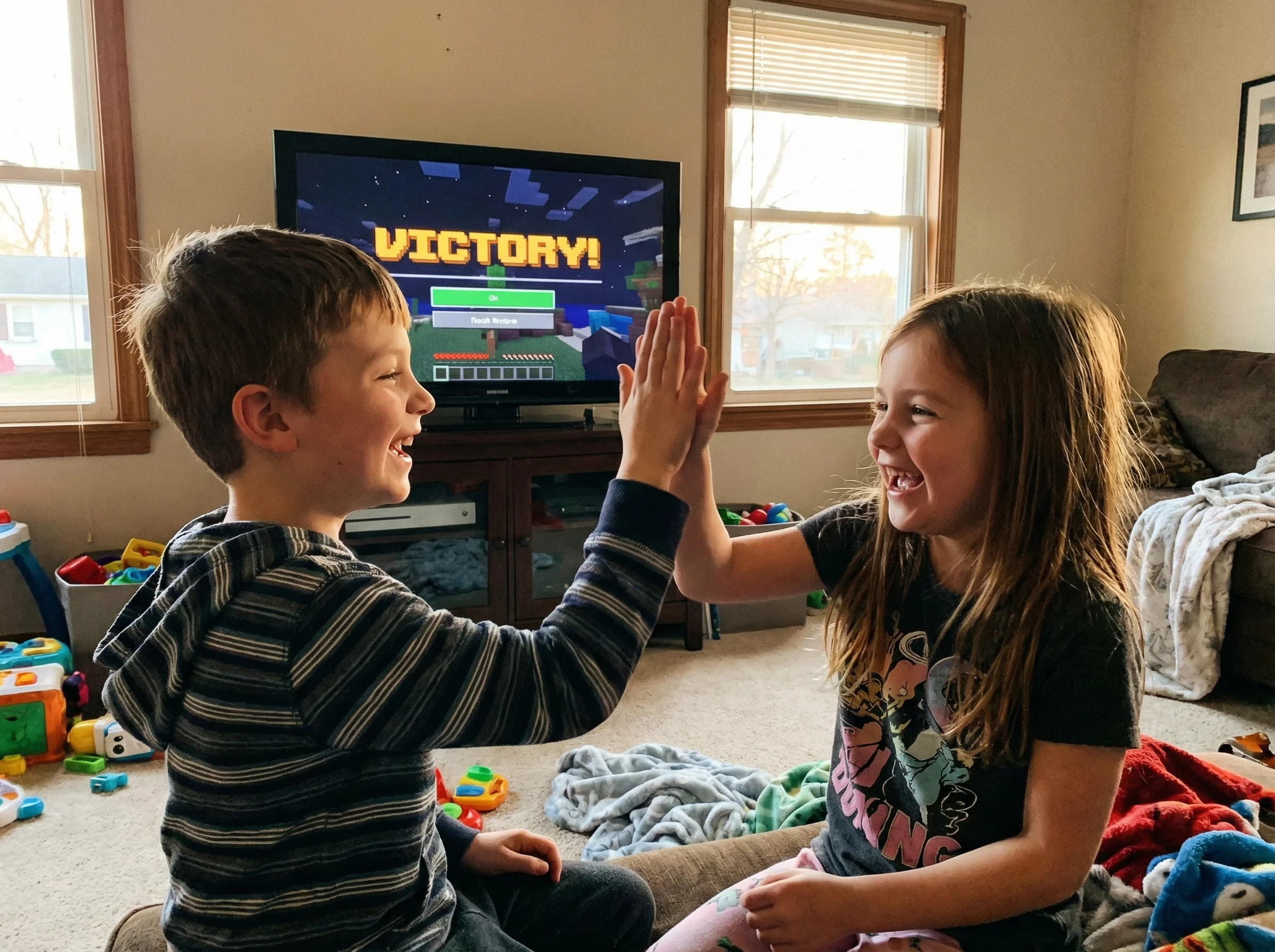
They still fight sometimes. Last week there was a shouting match over who used whose diamond sword. But now they have tools to work through it. They understand what games mean to each other. They've learned that destroying someone's gaming joy destroys more than just pixels.
Most importantly, they've learned that gaming is better when you have someone to share it with. Even if that someone is your annoying little brother who won't stop asking questions. Or your know-it-all older brother who thinks he's pro at everything.
For the Long Game: The fights ease faster when you have a shared script handy. A deck of Yakety Pack conversation cards on the kitchen counter turns post-game arguments into post-game conversations.
Your Next Step
Tonight, ask your kids one question: "What do you love most about the games you play?" Then actually listen to the answer. Don't judge it, don't redirect it, don't minimize it. Just listen.
You might be surprised what you learn. I discovered my "violent game" loving son was actually drawn to teamwork and strategy. My "time-wasting" builder was developing architecture skills and storytelling abilities.
Once you understand what gaming means to each of your kids, you can start building bridges instead of schedules. You can create connections instead of conflicts.
And maybe, just maybe, you'll walk in one day to find them choosing to play together. No timer needed.
Ask what each kid lovesPause, Play, Connect: Core Deck172 prompts that turn one kid's game into something the whole table wants to hear about.$49 CAD • 90 cards • 18 reviewsShop the deck
FAQ
Q: Should I just buy a second gaming system to avoid conflicts?
A: Maybe, but probably not for the reason you think. A second system solves the sharing problem but can create isolation. My kids game in the same room on different devices now, but they still share experiences. If you do get a second system, create times when they play together and times when they play apart. The goal isn't to eliminate interaction - it's to make interaction positive.
Q: My kids are too far apart in age to enjoy the same games. Help?
A: Focus on roles, not games. My kids are 3 years apart - huge in gaming years. But my younger one became the "resource gatherer" in survival games while his brother handled combat. In racing games, younger son designs tracks, older son sets time trials. Find ways they can contribute differently to the same experience.
Q: What if one child deliberately ruins games just to upset their sibling?
A: This is about more than gaming. If a child consistently sabotages their sibling's joy, gaming becomes the consequence, not the cause. Take a gaming break and address the underlying resentment. In our house, deliberate sabotage means you lose gaming privileges until you can explain why you did it and how you'll handle that feeling differently next time.
Q: How do I handle M-rated games when I have kids of different ages?
A: Clear boundaries and separate gaming spaces when needed. My older son can play certain games only when his brother isn't around. We talked with younger son about why some games aren't for him yet - not "because I said so" but explaining content concerns. Surprisingly, he was okay with it when he understood the reasoning. Create "all ages" gaming time and "big kid" gaming time.
Q: My kids get along fine until they game together, then it's war. Should they just not play together?
A: Start with games designed for cooperation, not competition. Some kids can't handle losing to siblings - it hits different than losing to friends. Try purely cooperative games first (Overcooked, Moving Out, It Takes Two). Build success together before introducing any competition. And sometimes? Yeah, some siblings game better in parallel than together. That's okay too.

