
My son spent 47 attempts beating a single boss in Hollow Knight. Same kid who claimed his book report was "impossible" after trying once. The difference wasn't ability or motivation. It was that nobody had shown him these were the same skill.
That conversation happened two years ago. I was frustrated, watching him grind away at this impossibly difficult game while his science project sat untouched. "Why can't you put this kind of effort into school?" Classic dad move. His response stopped me cold: "Because in games, I know exactly what I'm trying to do and why failing doesn't mean I'm stupid."
That's when it clicked. Gaming hadn't stolen my kid's motivation. It had already taught him everything about achievement, goal-setting, and persistence. I just needed to help him see that his "gamer brain" wasn't the enemy of real-world success. It was the key to it.
 While you think it overPause, Play, Connect: Core Deck172 prompts that give you something to ask your kid tonight, no chart and no tracking.$49 CAD • 90 cards • 18 reviewsShop the deck
The Achievement System Your Kid Already Mastered
For the bigger frame, see our pillar piece on turn screen time into connection time.
Watch your kid play any game for five minutes. They're not just playing. They're constantly setting micro-goals. "I'm gonna beat this level without getting hit." "Let's see if I can build this using only wood blocks." "What happens if I sequence-break here?"
They create these challenges naturally, without anyone assigning them. More importantly, when they fail (and they fail constantly), they immediately try again. No drama. No "I can't do this." Just a quick respawn and another attempt.

Last month, I watched my daughter spend an entire afternoon trying to complete a Mario Kart track backwards. Nobody told her to do this. There was no achievement for it. She just decided it would be cool and kept trying until she did it. This same kid had a meltdown the week before about learning fractions.
The skills are there. The persistence is there. Kids who game have already internalized that challenges are meant to be overcome, not avoided. They just don't realize this superpower transfers to the real world.
Why Traditional Goal-Setting Fails Gamers
Here's what I used to do wrong: I'd say things like "This isn't a game" or "Real life doesn't have respawns." I thought I was teaching them about consequences. Really, I was telling them their most developed problem-solving toolkit was useless.
Traditional goal-setting feels arbitrary to gaming kids because it is arbitrary. "Clean your room" isn't a quest. It's a command. There's no progression, no skill development, no meaningful outcome beyond avoiding parental disappointment. Compare that to any game objective: defeat the boss to unlock a new area, collect materials to craft better gear, level up to access new abilities. Every gaming goal has a "because" built in.
We also mess up with rewards. "If you finish your homework, you can have extra game time" sounds logical to us. But kids see through it immediately. That's not an achievement system. That's a transaction. In games, rewards are intrinsic to the accomplishment. You don't beat a boss to earn the right to play more. Beating the boss IS the point.
My biggest mistake was trying to be the quest-giver. In games, players choose which objectives to pursue. Even in linear games, there's agency in how you approach challenges. When I assigned all the "real life quests," I was removing the element that makes gaming achievements meaningful: choice.
The Three Elements That Make Gaming Achievements Addictive
After that Hollow Knight conversation, I started paying attention to what actually hooks kids about gaming achievements. It's not the points or badges. It's three specific elements that we can absolutely use in real life:
Clear objectives with visible progress. In games, you always know exactly what you're trying to do and how close you are. Health bars, progress meters, completion percentages. My son couldn't tell me how "done" his book report was, but he could tell me he was 73% through collecting all the Korok seeds in Zelda.
Immediate feedback loops. Games tell you instantly if something worked. Real life often doesn't. When my daughter practices piano, she might not hear improvement for weeks. But in Rocket League, she knows immediately if her aerial shot got better.
Meaningful challenge progression. Games don't throw you at the final boss first. They build your skills gradually. School often feels like random difficulty spikes with no clear progression path.
Here's what changed everything for us: we turned room cleaning into a speedrun challenge. First attempt: 47 minutes. Could we beat that time? Suddenly my son was strategizing about optimal routes, questioning whether making the bed first or last was more efficient. Same task, completely different engagement level. The room wasn't cleaner, but he'd discovered that real-life tasks could be approached with gamer logic.
 Ask them firstPause, Play, Connect: Core Deck$49 CAD • 172 promptsSee the deck
Building Your Real-Life Achievement System
Don't start from scratch. Your kid is already tracking something. K/D ratios, completion percentages, speedrun times, collection progress. Start there. My son kept meticulous stats on his Fortnite performance. So we started tracking other things the same way.
The key is letting them design their own quests. Not "do your homework" but "What would beating this homework look like to you?" My daughter decided finishing math problems without asking for help was like completing a level on normal difficulty. Finishing them in under 20 minutes? That's hard mode.
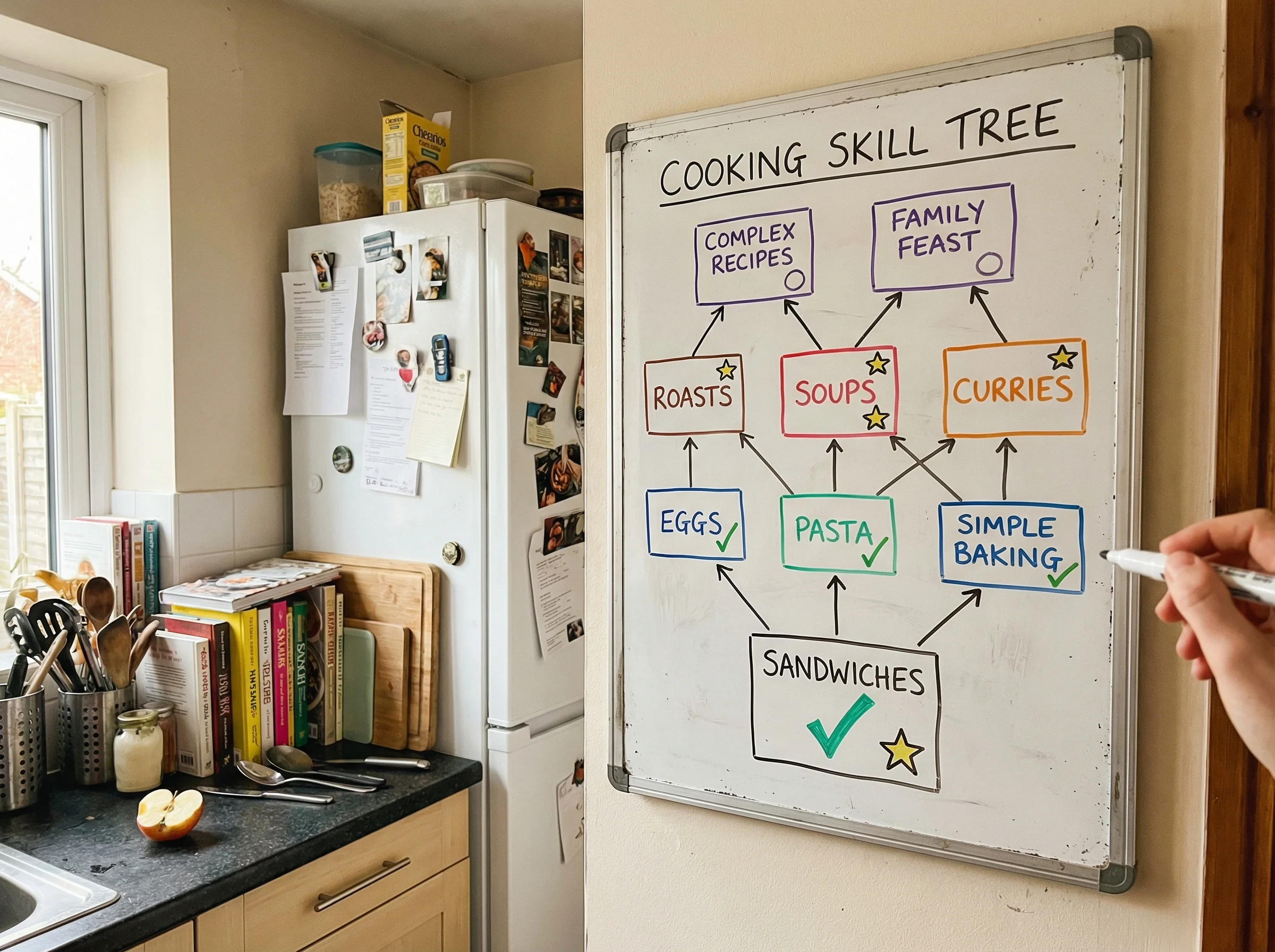
We created skill trees for real abilities. Cooking became a literal skill tree on our kitchen whiteboard. Level 1: Make a sandwich. Level 2: Cook eggs. Each level unlocked new "abilities" (recipes). She could see her progression and plan what to unlock next.
The balance between daily quests and main campaign objectives matters. Daily quests in our house are small, repeatable tasks. Brush teeth, pack backpack, 10 minutes of reading. Main campaign objectives are bigger: learn to ride a bike, finish science fair project, read entire Harry Potter book. Just like in games, you need both to stay engaged.
For the Achievement Talk: A curiosity card lands during the in-between beats. Keep a Pause, Play, Connect deck by the console so a prompt is within reach when you sit down together.
The Secret: Make Failure Cheap
For the Long Build: Connection grows from many small low-pressure conversations. A deck of conversation cards for families with gamer kids on the table makes those talks routine.
Games let you respawn instantly. No lecture about why you died. No "you should have been more careful." Just a quick reload and you're back in action. This is what we miss with real-life goals.
When my son was learning guitar, every wrong note felt like a massive failure. We introduced "save points." After learning each chord, that became a save point. Mess up the next part? No problem, restart from the last chord you nailed. Not from the beginning.
The attempt counter mindset changes everything. Instead of "I failed at this," it becomes "That was attempt number 3." My daughter keeps a tally mark system for her skateboard tricks. She's not failing to land a kickflip. She's on attempt 34 of probably 50-ish. Games taught her that attempts are just data points, not judgments.
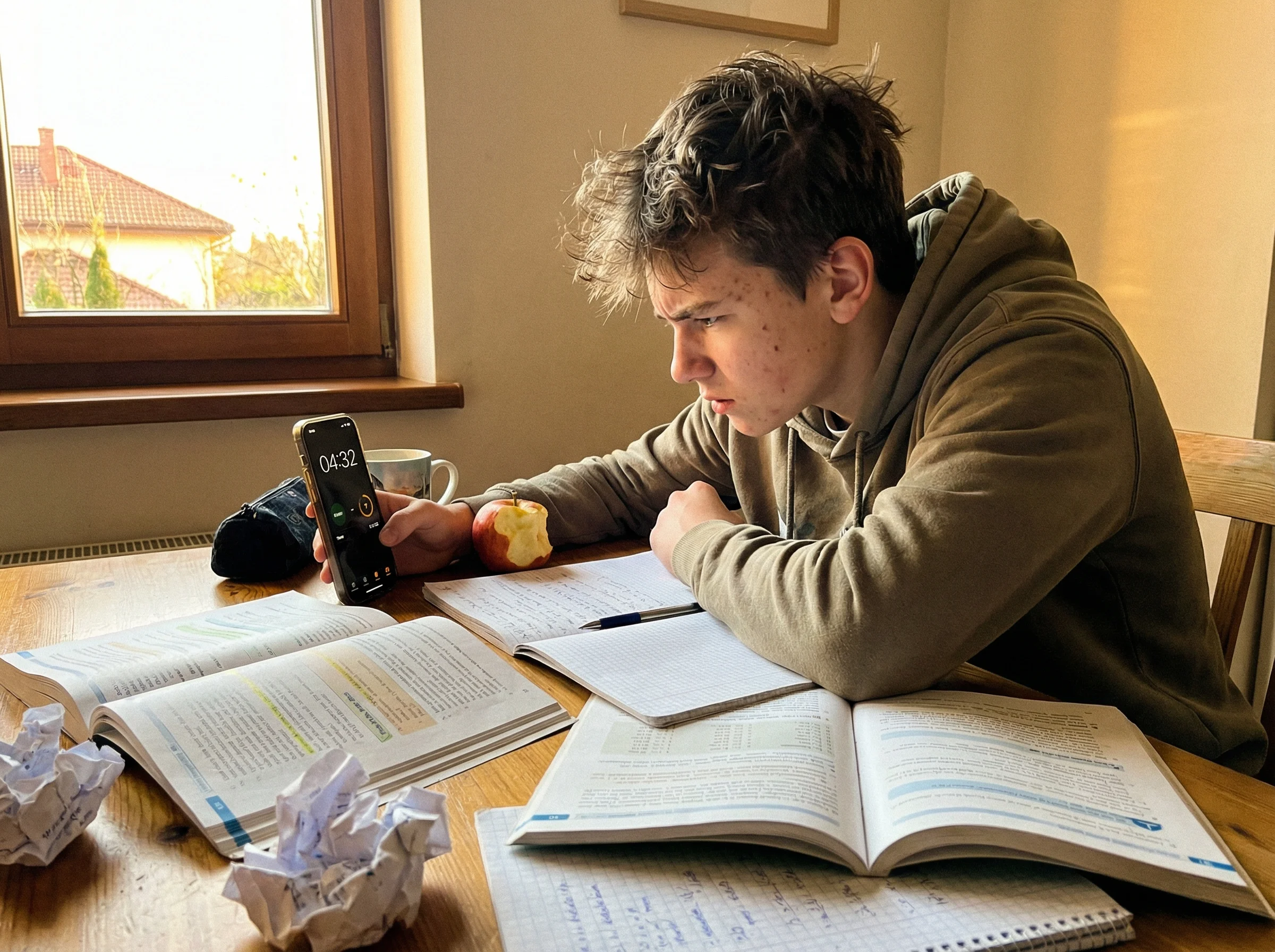
Speedrunning homework sounds ridiculous until you try it. Set a timer. Try to beat your previous time. Suddenly homework isn't about suffering through it. It's about optimization. My son discovered he could finish math way faster if he did all the similar problems in batches. That's strategic thinking, not cheating.
When Achievement Systems Go Wrong
Let me be honest about when this backfired. My daughter got so into the cooking skill tree that she wanted to "grind" experience by making the same sandwich 10 times. That's not skill development. That's exploiting the system.

Sometimes kids game the system because that's what gamers do. They find the optimal path, even if it defeats the purpose. When my son realized he could get "room cleaning achievement points" by shoving everything under his bed, we had to patch that exploit.
The bigger risk is killing intrinsic motivation. If everything becomes about points and levels, you've just created another arbitrary system. The goal is to use the gaming achievement system for real life goals as a framework to reveal intrinsic motivation, not replace it. When my daughter said "I don't need skill tree points for this anymore, I just like cooking," that was success, not failure.
Know when to let the system fade. Like training wheels, achievement systems should eventually become unnecessary. The framework gives them a way to approach challenges. Once they internalize that approach, they don't need the external structure.
The Long Game
The real victory isn't when your kid completes their achievement chart. It's when they start creating their own parameters for success. My son now approaches new challenges by asking himself: "What would beating this look like? What's level 1? What abilities do I need to develop?"
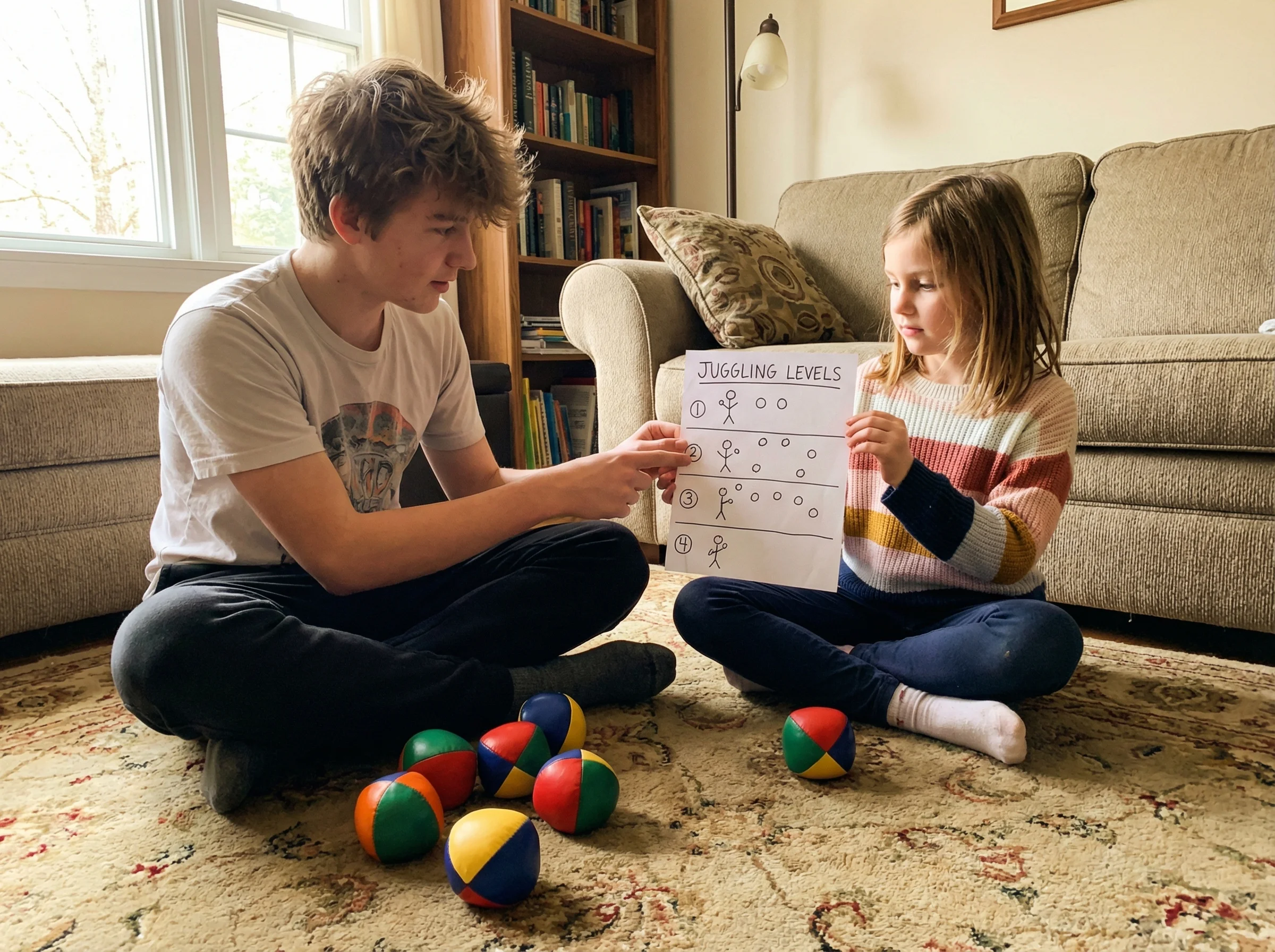
Last week, he taught his sister how to create her own achievement system for learning to juggle. He helped her break it down: two balls, then three, then different patterns. He naturally included attempt counters and skill progression. Watching him teach her what gaming had taught him about persistence? That's when I knew this actually worked.
The goal isn't to permanently gamify your kid's life. It's to help them recognize they already have incredible tools for tackling challenges. Every game they've beaten has taught them something about goal-setting, persistence, and achievement. They just need permission to apply that gamer brain to the rest of their world.
This shift in perspective is why we created Yakety Pack. Not to compete with gaming for attention, but to help families talk about what games are actually teaching. One of our cards asks "What's the hardest thing you've achieved in a game?" followed by "What made you keep trying?" Because that persistence is already there. We just need to help kids see it works everywhere.
What You Can Do Today
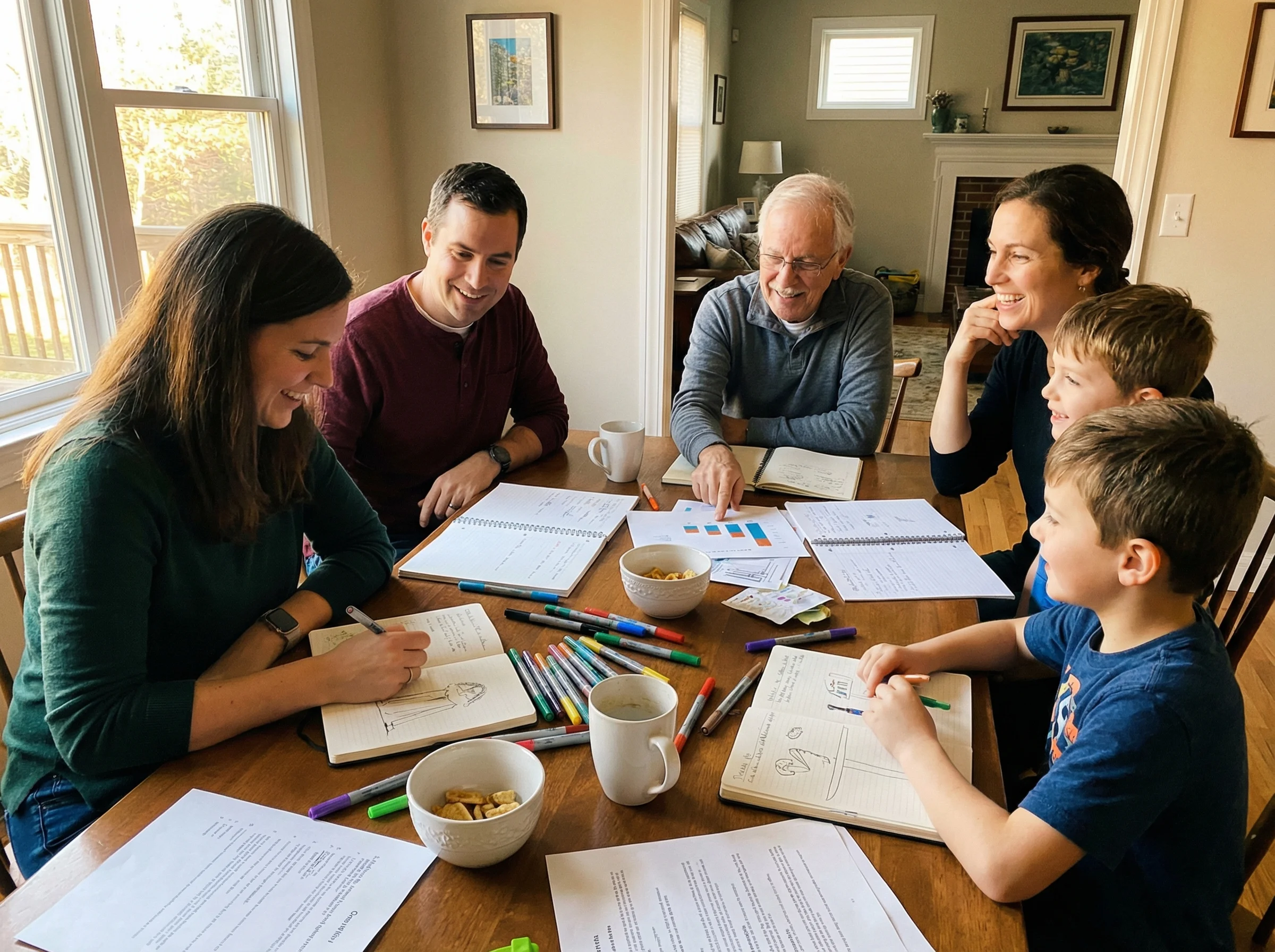
Pick one real-life challenge your kid is facing. Homework, chores, learning an instrument, whatever. Sit down with them and ask: "If this was a video game, how would you beat it?"
Let them design the system. What's the objective? What are the levels? How do you know if you're making progress? What happens when you fail?
Then step back and watch what happens when they approach a real-world challenge with their gamer brain fully engaged. You might be surprised to find they already know exactly what to do.
They've been training for this their whole gaming life.
For the Repeat Sessions: A deck of Yakety Pack conversation cards near the gaming setup keeps the post-game ritual going.
A question, not a chartPause, Play, Connect: Core Deck172 prompts that start a conversation instead, when you would rather just hear from them.$49 CAD • 90 cards • 18 reviewsShop the deck
Related Articles
Looking for more? Check out these related articles:

