
For about six months, I thought Pokemon was just a list of names my son wanted me to memorize. He'd rattle off his team and I'd nod like I was being briefed by the Pentagon. "Garchomp, Sylveon, Dragonite, Wooper..." Got it, buddy. Cool. Real cool.
Then one night, brushing teeth, he said, "I keep Wooper on the team even though he's not strong."
I almost said "okay" and walked out. But something made me stop. "Why?"
He shrugged. "Because nobody else picks him."
That was the moment I realized I'd been asking the wrong questions for almost a year. Pokemon wasn't a list. Pokemon was him telling me, in the only language he had for it, who he was and what he cared about. And I'd been treating it like a vocabulary test.
If you're reading this because your kid won't stop talking about Pokemon and you've run out of ways to nod convincingly, this article is the one I wish someone had handed me. Better pokemon conversations with kids don't require memorizing 1,000 names. You don't need to know what an EV is. You need better questions.
Why "What's Your Favorite Pokemon?" Is a Dead End
Let's start by killing the most common Pokemon question parents ask. It's the one every adult asks. Every uncle. Every teacher. Every well-meaning neighbor.
"So, what's your favorite Pokemon?"
Your kid says "Charizard" (or whatever), and now you're standing there with nothing. You nod. They wait. The silence does that thing where it gets louder. Then one of you changes the subject.
Here's why it fails:
- It's a closed question. One word answers it.
- Your kid has answered it about 400 times to adults who don't actually care.
- It signals you're trying to engage, not that you're actually curious.
Kids can tell the difference between "I'm asking because I want to seem interested" and "I'm asking because I'm interested." The favorite Pokemon question is the parenting equivalent of "how was school?" Technically a question. Practically a wall.
I asked it for weeks. Got names. Got nothing. I'd Google the Pokemon afterward, learn its stats, try to ask a follow-up the next day. "So, Greninja, huh? He's a water type, right?" My son would look at me like I'd just complimented his haircut three days late. The information wasn't the point. He didn't need a study buddy. He needed someone curious about him.
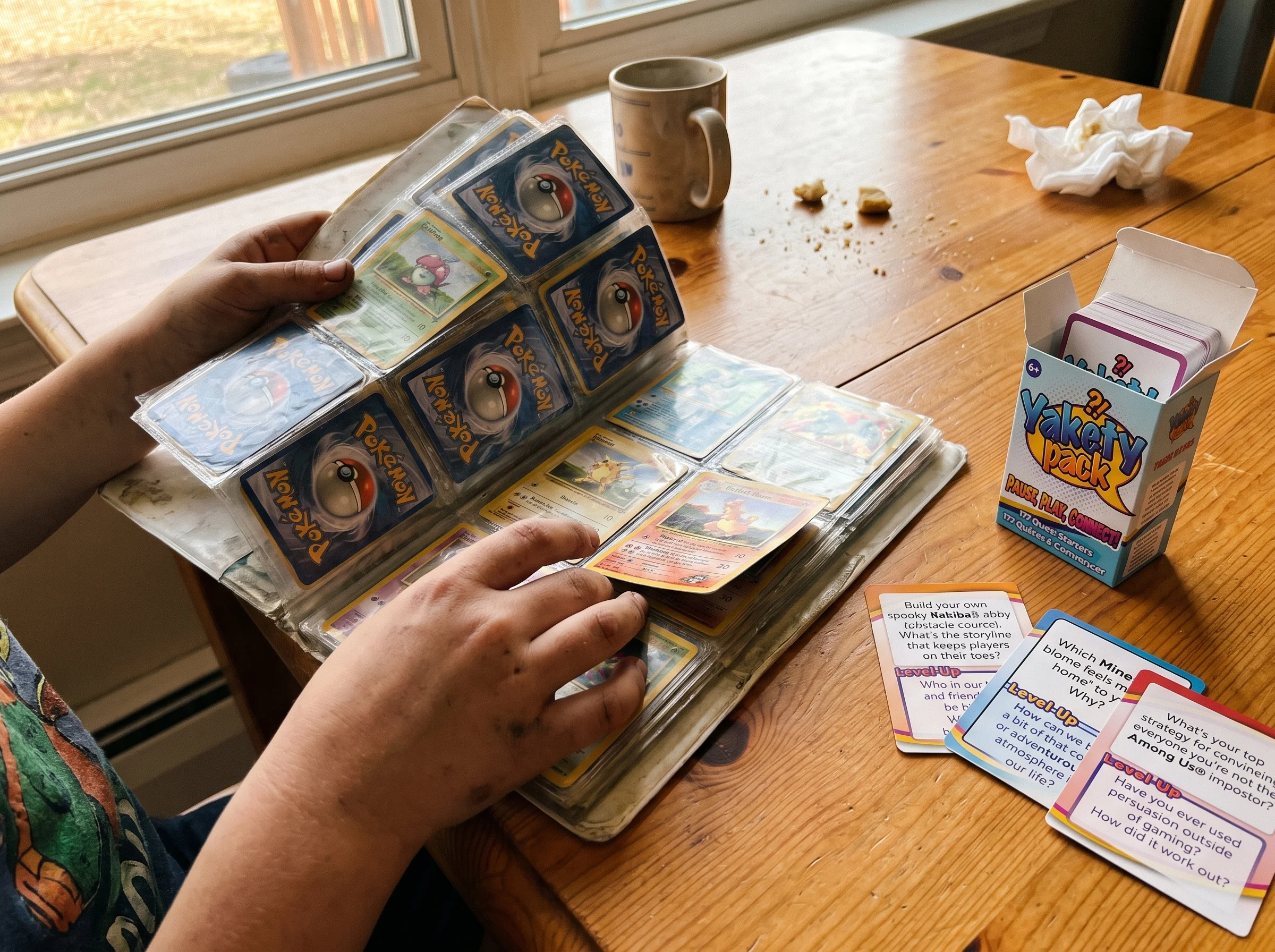
 Nodding is not listeningPause, Play, Connect: Core Deck172 prompts that get past the name and into why they picked it.$49 CAD • 90 cards • 18 reviewsShop the deck
The Five Questions That Actually Open Kids Up
Once I gave up on the favorites question, I started experimenting. These five are the ones that consistently get my son (and now my younger one) talking. Not just listing. Talking.
1. "Which Pokemon would you keep on your team even if it wasn't the strongest?"
This is the Wooper question. It reveals values. Kids don't pick weak Pokemon by accident. They pick them because of loyalty, because they feel sorry for them, because they think the Pokemon is cool in a way nobody else gets. When your kid answers this, they're telling you what kind of person they're trying to be.
2. "If you could be any Pokemon for a day, which one and why?"
The "why" is everything here. The Pokemon they pick is identity. Strong ones mean they want power. Cute ones mean they want to be liked. Sneaky ones mean they wish they could get away with stuff. Listen to the why more than the what.
3. "Who's the most underrated Pokemon nobody else respects?"
This question is gold because it asks them to defend somebody. Kids love defending things. And the way they talk about an underrated Pokemon is almost always the way they wish someone would talk about them.
4. "What's the worst trade you've ever made or seen?"
This one opens up the whole world of fairness, regret, and social dynamics. Trading is where kids first deal with real economic and emotional stakes. Bad trades stick with them. Ask this question and you'll usually hear a story about a friend, a school, a moment that mattered.
5. "If your best friend was a Pokemon, which one would they be?"
I asked my son this in the car once. He thought about it for a full minute, which for an 8-year-old is basically meditation. Then he said, "Probably Snorlax, because he's chill but you don't want to mess with him." I learned more about how he saw his friend in that one sentence than I had in a month of "how's school going."

What to Do When You Have NO Idea What They're Talking About
Real talk. You're going to be lost. Your kid is going to say "Tera Raid" or "competitive doubles meta" or "shiny hunting" and your face will do that thing.
The instinct is to nod and pretend. Don't.
The single most powerful sentence I've found in any gaming conversation with kids is this:
"Wait, explain that to me like I'm new."
Not "explain it to me like I'm dumb." Not "I have no idea what you're talking about." Just, "I'm new. Teach me."
Three things happen when you do this:
- Your kid becomes the expert. That role flip is huge. They're used to being the one being taught all day. You've just handed them the chalkboard.
- They have to slow down and explain, which is its own kind of bonding.
- You actually learn something, which means your next question can be smarter.
The story I tell people: I asked my son once what "EV training" was. I genuinely had no idea. He launched into a 45-minute explanation involving stat distributions, vitamins, specific Pokemon to fight for which stat boosts, and a tier list of "best EV training spots." At the end of it, he hugged me. Just walked over and hugged me. I didn't ask why. I knew why.
Kids can smell faking. They cannot resist genuine curiosity from a parent who's usually the expert in the room. Researchers at the Harvard Center on the Developing Child call this "serve and return," the back-and-forth that builds a kid's brain and a relationship at the same time.
 Explain it like I'm newPause, Play, Connect: Core Deck$49 CAD • 172 promptsSee the deck
Reading Between the Pokemon Lines
This is the part most articles miss completely, so pay attention.
When kids talk Pokemon, they are almost never just talking about Pokemon. They're talking about themselves, their friends, their fears, and how they see the world. Pokemon is the language. The content is something else entirely.
A rough translation guide based on what I've seen with my own kids and from talking to other dads who've figured this out:
When they talk about keeping a weak Pokemon on their team, they're often telling you how they think about friendship. Loyalty. Who they wouldn't abandon.
When they complain about type matchups being unfair, they're often processing real situations where they felt the deck was stacked against them. Type advantages are basically rock-paper-scissors, which is basically every unfair situation in life.
When they talk about Pokemon evolving, especially if they have feelings about it (sad when one evolves, refusing to evolve a starter), they're often processing how they feel about growing up. About change. About leaving things behind.
When they get furious about losing a battle, they're not just mad about a game. They're showing you how they handle setbacks, defeat, and unfairness.
When they're obsessed with a "legendary" Pokemon, they're often working through ideas about specialness, being chosen, standing out.
You don't have to psychoanalyze every conversation. Just know that when your kid says "I hate that my Charmander has to evolve into Charmeleon, I liked it better as Charmander," there's probably something underneath that. Maybe nothing big. Maybe something. The only way to find out is to follow up. "Yeah? What did you like about Charmander better?"
That's a Pokemon conversation. That's also potentially a conversation about your kid not wanting to leave third grade.
Age-by-Age Pokemon Conversations
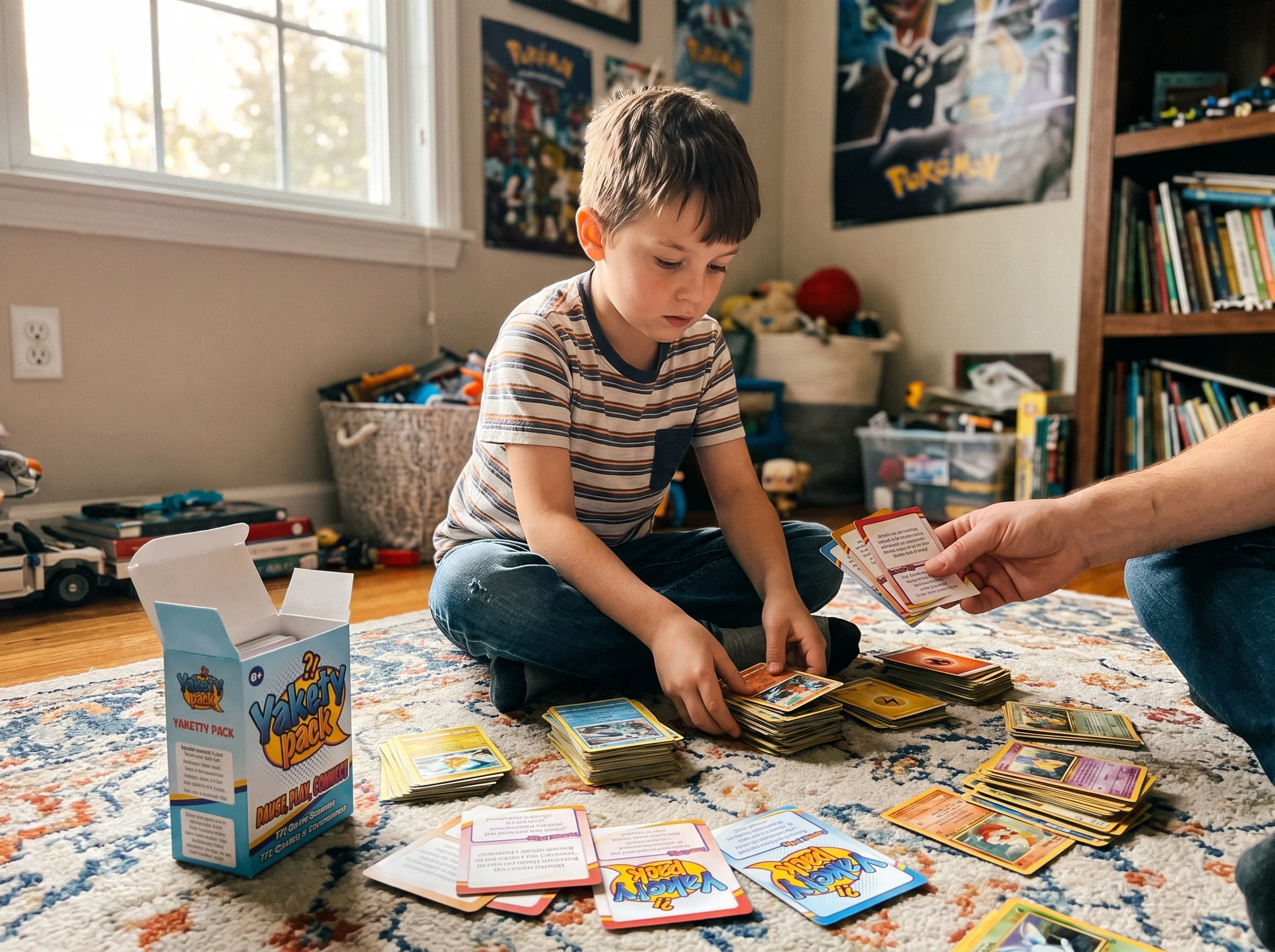
Pokemon is not one thing. It's a different thing at every age. If you're asking a 12-year-old the same questions you'd ask a 6-year-old, you're going to get shut down fast.
Ages 5-7: The Cute Ones
At this age, it's mostly vibes. They love the colors. They love the plushies. They love the way Pikachu says "Pika." Don't try to talk strategy. Talk feelings.
Good questions:
- "Which Pokemon would give the best hug?"
- "Which one would be scary if it was real?"
- "If a Pokemon lived at our house, what would it eat?"
Ages 8-10: Teams and Strategy
This is the golden age for Pokemon conversations. They're building teams. They care about fairness. They're starting to think strategically but they still have huge feelings about it all.
Good questions:
- "Which Pokemon do you trust the most on your team?"
- "If you had to drop one from your team, who would it hurt the most to lose?"
- "What's a Pokemon that looks weak but is actually really good?"
Ages 11-13: Identity and Social Currency
Now Pokemon is also social. Who their friends play with. Who's in the meta. Who's "cringe" to like. They might play less but care more. Be careful with the cute questions here. They'll get an eye roll.
Good questions:
- "Is there a Pokemon you used to love that you don't anymore? What changed?"
- "What's a Pokemon nobody at school respects that you still think is awesome?"
- "If you were building a team that represented you right now, who'd be on it?"
That last question, asked to a 13-year-old in the right moment, can pop open conversations you didn't think were possible.
Pokemon as a Gateway to the Harder Stuff
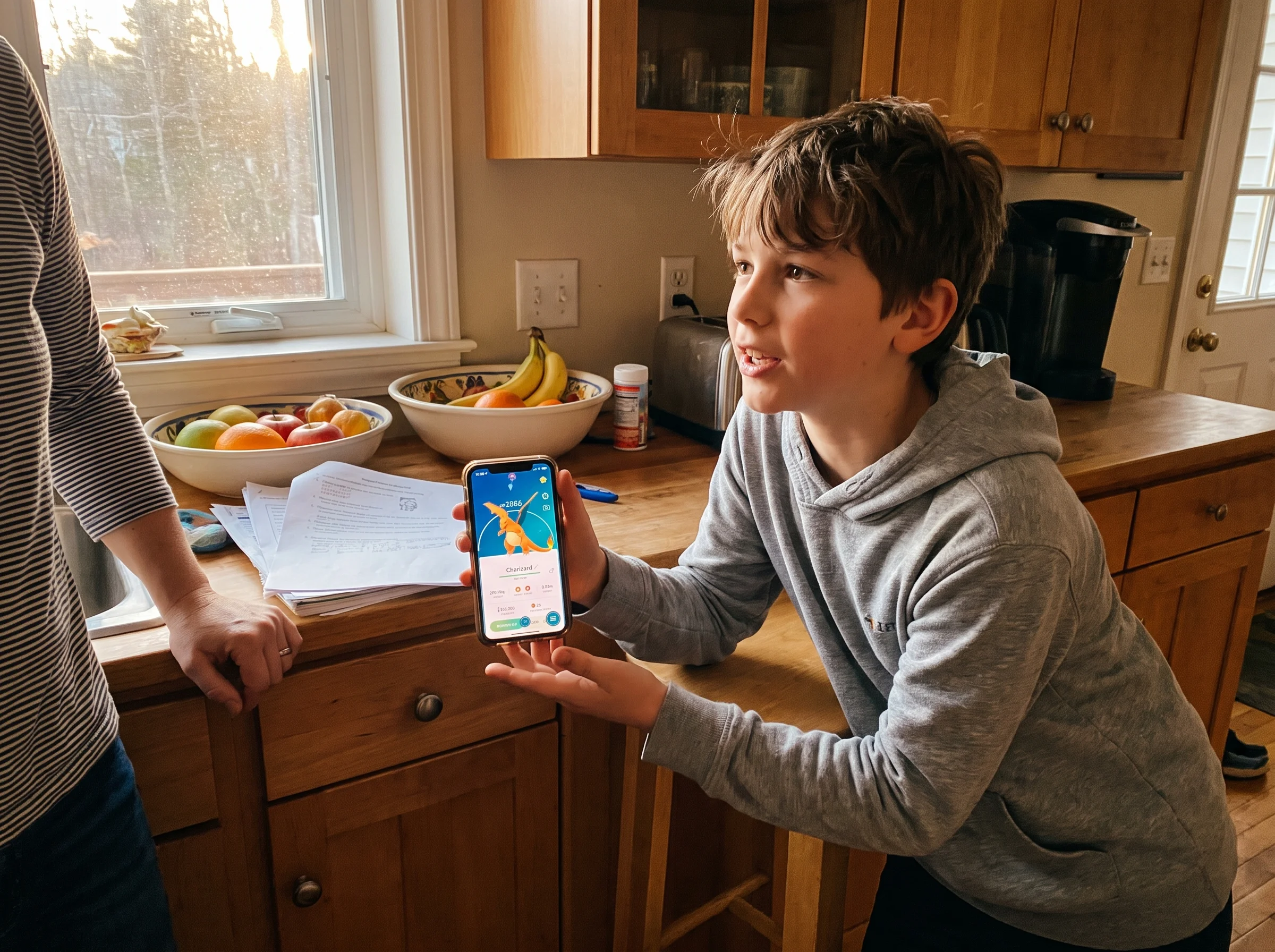
Once you've been doing this for a while, something kind of magical happens. The Pokemon conversation starts opening doors to real conversations. Not because you forced it. Because Pokemon already lives in that emotional territory.
I had a car ride with my son where he was venting about a friend who'd traded him a Pokemon, then asked for it back the next day, then got mad when my son had already traded it to someone else. He was furious. Going on and on about how unfair it was.
I almost said "well, that's just a game." Thank God I didn't. Instead I said, "Does he do stuff like that other times too?"
Long pause.
"Yeah. He does it at lunch sometimes. He'll say I can sit with him then change his mind."
That conversation went on for another twenty minutes. We talked about whether this kid was actually his friend. How he could handle it. Whether he should say something. None of it was about Pokemon anymore. But Pokemon got us there.
Some other gateways I've seen work:
- "This Pokemon evolved too fast" can become "do you ever feel like you're being asked to grow up faster than you want to?"
- "I lost a battle and it wasn't fair" can become a conversation about how to handle losing in real life.
- "Nobody else likes this Pokemon" can become a conversation about being into things your friends aren't.
You don't have to force the pivot. Just stay curious one question longer than you think you should. The American Academy of Pediatrics has been pointing out for years that the quality of media conversations matters more than the quantity of screen time. This is what they mean.
When the Conversation Stalls (And It Will)
The biggest mistake I made early on was treating one good question as the whole conversation. I'd ask the Wooper question, get a great answer, feel proud of myself, and then we'd both go silent. Mission accomplished, right?
Wrong. The opener is the spark. The follow-ups are the fire.
Here's the follow-up framework that's worked for me:
- "What made you pick that?" Almost always gets more detail.
- "Has that always been your favorite?" Opens up time, change, history.
- "When did you decide that?" Gets specific. Specific is where stories live.
- "Who else knows that about you?" Sometimes the answer is "nobody," which is its own thing.
- "Tell me more." Three words. Use them.
This is actually why we built Yakety Pack the way we did. One good question isn't a conversation. It's a doorway. The follow-ups are where the real stuff lives. We designed the prompts knowing that no kid opens up on question one. The magic happens at question three or four, when they realize you're still listening.
Also, silence isn't failure. Sometimes after a good Pokemon conversation, my son will go quiet for a minute. He's processing. I used to fill that silence. Now I let it sit. Half the time, he comes back with something even better.
Common Mistakes Parents Make (Including Me)
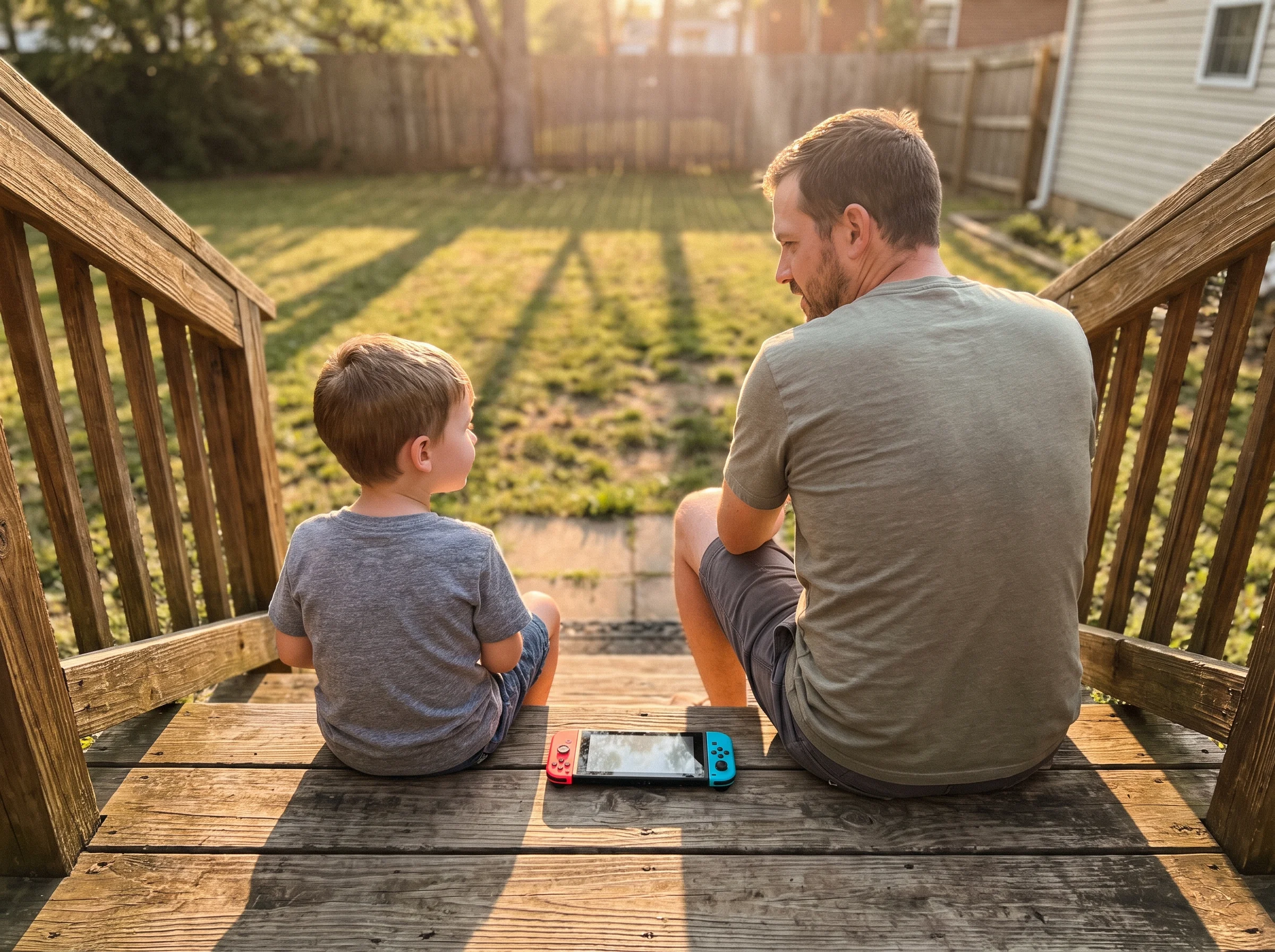
A quick list of the things I did wrong so you don't have to.
Mistake 1: Trying to learn all the Pokemon to "speak the language." I tried this. Bought a guide. Studied. It made conversations feel like quizzes. Worse, it took the expert role away from my kid, which was the one role he loved having with me.
Mistake 2: Asking the same question over and over. "What's your favorite Pokemon?" three days in a row tells your kid you're not actually listening to the answers.
Mistake 3: Correcting them. They will say things that are wrong. They will rank Pokemon "incorrectly" by the internet's standards. Do not correct them. It's their world.
Mistake 4: Pivoting too fast to "real talk." If every Pokemon conversation becomes a sneaky way to ask about school, your kid will catch on. Sometimes a Pokemon conversation is just a Pokemon conversation. Let it be.
Mistake 5: Phones out during the conversation. This is a me problem I had to fix. If you ask a great question and then check a text while they answer, the question doesn't count.
A Quick FAQ
My kid is 12 and still obsessed with Pokemon. Is that weird?
No. Pokemon has been around since 1996. There are 35-year-olds running tournaments. It's not a phase to grow out of. It's a fandom to grow with.
My kid only wants to talk about Pokemon. How do I get them to talk about other stuff?
Stop trying. Seriously. If Pokemon is the doorway, walk through it. Pokemon conversations done well become conversations about friendship, fairness, identity, and feelings. You don't need to change the topic. You need to follow the topic deeper.
What if I really don't care about Pokemon?
You don't have to care about Pokemon. You have to care about your kid. The questions in this article work whether or not you find Squirtle charming. The interest you're showing isn't in the franchise. It's in them.
My kid loses Pokemon battles and melts down. What do I say?
Don't fix it with logic. Don't say "it's just a game." Acknowledge it. "That sucks. You worked hard on that team." Then later, when they've calmed down, ask "what would you do different next time?" You're teaching them how to process losing, which is a life skill dressed up in pocket monsters.
Should I play Pokemon with them?
If you can, yes. Even badly. Especially badly. Being bad at it positions them as the expert and you as the learner, which is the best dynamic for these conversations.
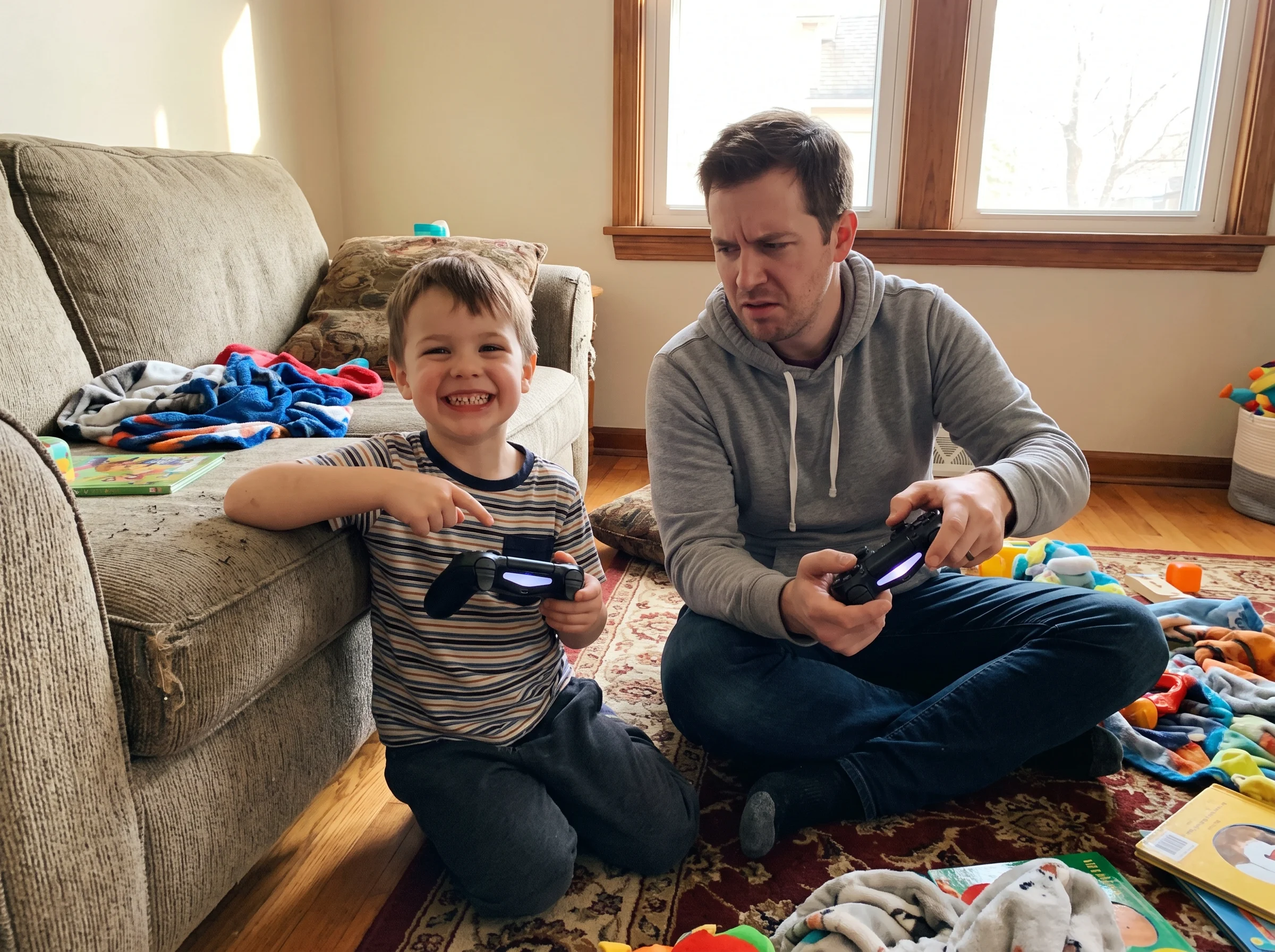
The One Thing to Do Tonight
If you read this whole thing and only remember one move, make it this one.
Tonight at dinner, or in the car, or at bedtime, ask your kid:
"Which Pokemon would you keep on your team even if it wasn't the strongest?"
Then ask, "Why?"
Then ask, "What made you decide that?"
Then stop talking. Listen. See what shows up.
That's it. That's the whole thing. No app required. No subscription. Just a better question than the one you asked yesterday.
We made Yakety Pack because kids want to connect, they just need questions that meet them in the worlds they already love. Pokemon is one of the best doorways there is. Walk through it.
Your kid is in there. They're just waiting for someone to ask about Wooper.

From this article
Pause, Play, Connect: Core Deck
Beyond the Wooper question: One good doorway question a night changed how my son talks to me, and you'll want more than five. The Pause, Play, Connect Core Deck keeps a fresh one on the table every dinner.
If you want the deeper toolkit, the full bundle adds the Parent Power-Up deck and two digital parent guides, $146 of family fun for $59.

