
My son threw his controller so hard it bounced off the TV stand. "This game is STUPID!" he screamed, storming off after dying to the same boss for the twentieth time. Six months later, that same kid calmly analyzed why his science fair project wasn't working and systematically fixed each problem. The difference? I learned to coach gaming frustration the same way I'd coach any life skill.
Look, I'll be honest. My first instinct was to shut down the game. Take away the controller. Give him the "when I was your age" speech about handling frustration. But something stopped me. Maybe it was remembering my own rage at losing my quarter to Dragon's Lair at the arcade. Maybe it was realizing that telling him to "just calm down" was about as useful as telling someone who's drowning to "just swim."
What I discovered changed how I see gaming completely. Those moments when our kids want to chuck their controller through the window? They're not character flaws. They're coaching opportunities. And the skills they build facing optional challenges in games? They transfer everywhere - but only if we help them see the connection.
Why Gaming Frustration Hits Different
Here's what took me way too long to understand: gaming frustration isn't like regular frustration. When my daughter's Minecraft house got destroyed by creepers, she sobbed like she'd lost a real home. My first thought was "it's just pixels." But to her? She'd spent six hours building that house. She'd picked every block, designed every room, created something from nothing. That's not "just a game" - that's her creativity, time, and effort blown up by green monsters.
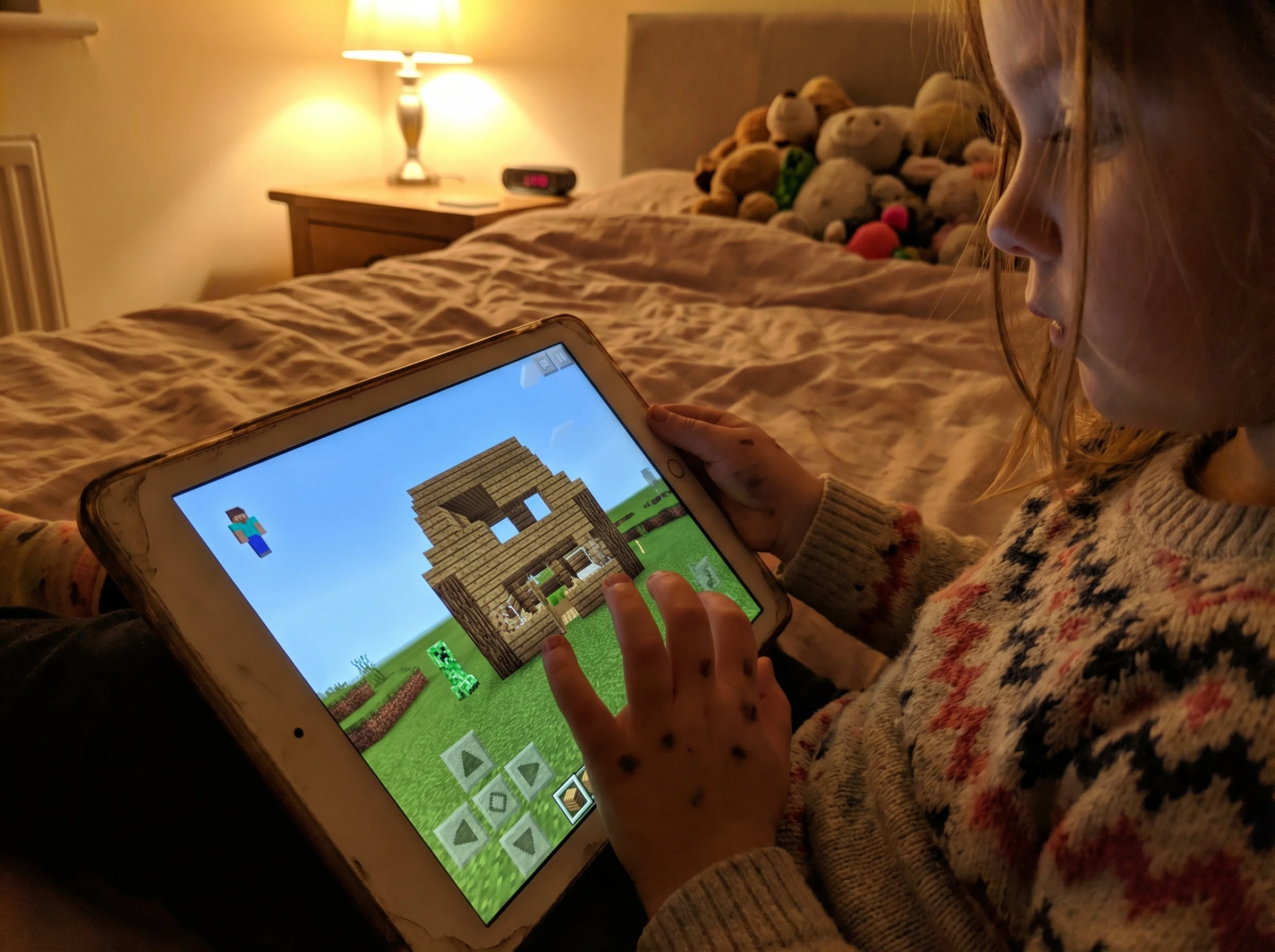
Gaming feels personal because it is personal. It's their world, their character, their progress. When they fail, it's not like missing a math problem where the numbers stay the same. Their character dies. Their building explodes. Their ranking drops. The failure is visible, immediate, and feels permanent even when it's not.
Then there's the streaming factor. My son watches YouTubers beat impossible levels while cracking jokes and making it look easy. When he can't beat the same level after fifty tries, he's not just frustrated with the game. He's frustrated with himself. "Why can't I do what they make look so simple?"
The dopamine hit from gaming progress is real, and so is the crash when that progress stops. One minute they're flying high from beating three levels in a row. The next, they're stuck, and their brain is literally going through withdrawal from that feel-good chemical. No wonder they melt down.
 After the controller landsPause, Play, Connect: Core Deck172 prompts that turn a rage quit into a conversation about what actually went wrong.$49 CAD • 90 cards • 18 reviewsShop the deck
The Secret: Not All Gaming Challenges Are Created Equal
This was my biggest revelation: teaching kids to recognize good difficulty from bad difficulty is just as important as teaching them to push through challenges. Not all frustration is worth working through.
Take Dark Souls - a game famous for being hard. But it's fairly hard. Every death teaches you something. Every boss has patterns you can learn. The game respects your intelligence even while it kicks your butt. Compare that to most mobile games, which are literally designed to frustrate you into spending money. They create impossible difficulty spikes, then offer you a $4.99 solution.
My son spent weeks trying to beat his friends at Fortnite, getting more miserable with each loss. Finally, I asked him how long his friends had been playing. "Since it came out," he said. "Like, two years." He'd been playing for two months. Suddenly his "failure" looked different - he wasn't bad at games, he was comparing himself to kids with literally hundreds more hours of practice.
Then there's developmental readiness. My 8-year-old wanted to play the same games as his 12-year-old cousin. But some games require abstract thinking, planning skills, or reaction times that younger kids' brains literally haven't developed yet. It's like expecting a third-grader to do algebra - the frustration isn't productive, it's just painful.
The Questions That Actually Help (And The Ones That Don't)
Want to make gaming frustration worse? Say these things:
- "Why don't you just try again?"
- "It's just a game."
- "Maybe you need a break from screens."
- "You need to control your temper."
I know because I said all of them. They shut down conversation faster than a power outage.
Here's what actually works:
"Show me what happens." This is magic. Instead of them ranting about how impossible it is, they have to slow down and demonstrate. Nine times out of ten, they spot their own mistake while showing me.
"What's the hardest part?" This helps them break down a big frustration into smaller, solvable problems. "Everything!" usually becomes "Well, I can't time the jump after the spinning blades."
"What have you figured out so far?" This shifts their brain from what's not working to what they've already learned. My daughter once listed six things she'd discovered about a boss pattern before realizing she was closer to beating it than she thought.
The game-changer came when I asked my son, "If you were teaching someone else this level, what would you tell them?" He paused, thought about it, then said, "I'd tell them to wait for the third fireball before moving." Then his eyes went wide. "Oh. OH! I've been going on the second one!"
When Quitting Is Actually Winning
This might be controversial, but here it is: sometimes quitting is the lesson.
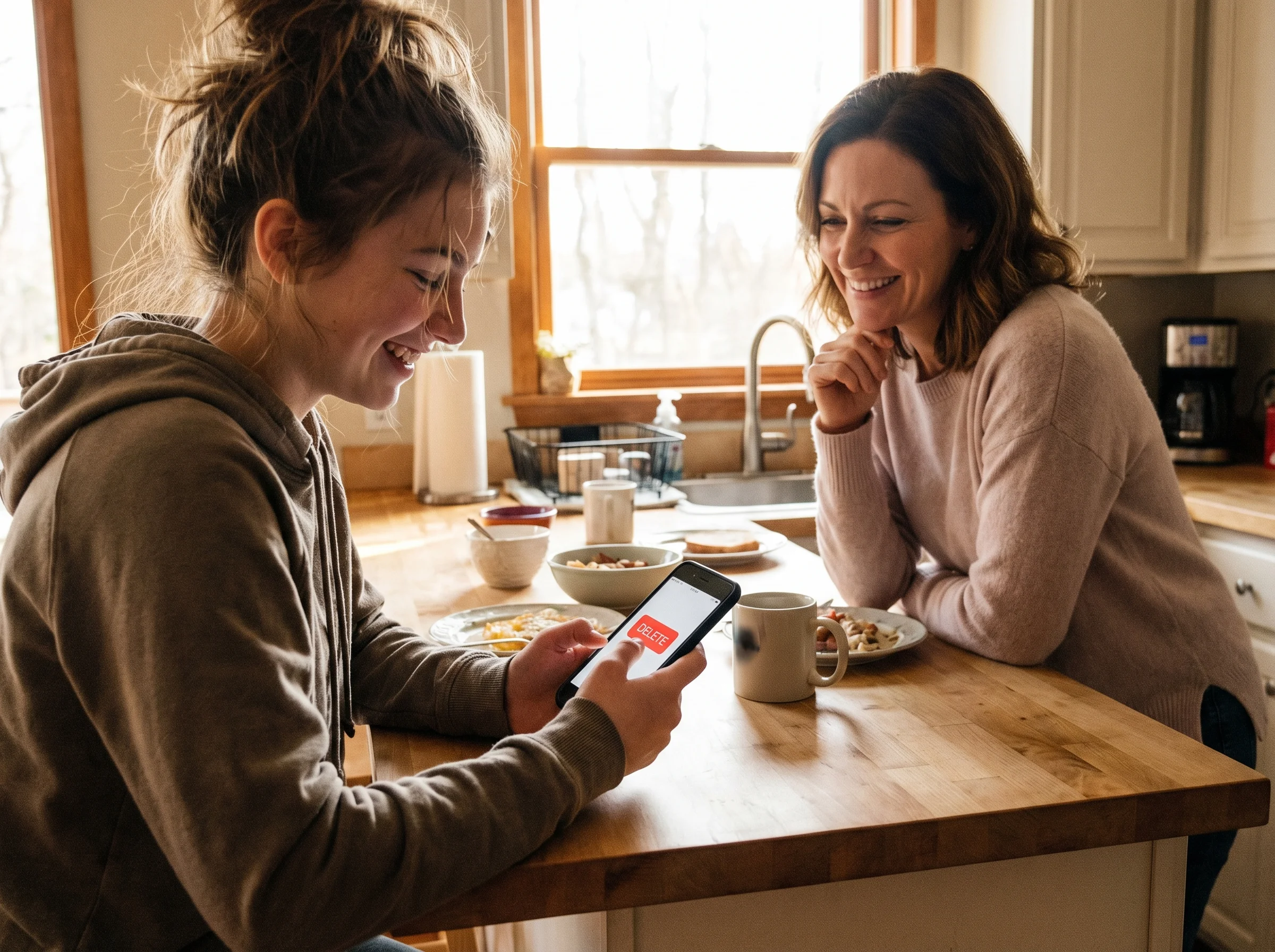
My daughter was obsessed with a mobile game her friends played. She'd get stuck on levels that seemed impossible, beg for "just one more try," then melt down when she failed again. One day I sat and really watched the game. The difficulty wasn't teaching her anything - it was manufactured to make her want to buy power-ups.
"Want to do an experiment?" I asked. We looked up the level online. Dozens of people complaining it was impossible without buying boosters. We calculated how much money she'd need to spend to beat the next ten levels at this rate. Her eyes got huge. "$50? For a phone game?"
She deleted it herself. Not in defeat, but in victory. She'd recognized predatory difficulty and chosen to walk away. That's a life skill.
Strategic retreat isn't giving up. It's recognizing when your effort isn't being respected. When a game has a massive difficulty spike with no learning curve. When it stops being fun and becomes a chore. When the social pressure is the only thing keeping you playing.
Help them articulate why they're stopping. "This is stupid" can become "This level requires reflexes I haven't developed yet" or "This game wants me to spend money, not get better."
 Good hard or bad hardPause, Play, Connect: Core Deck$49 CAD • 172 promptsSee the deck
Building a Frustration Toolkit Together
We developed family rules for handling gaming frustration that work for any challenge:
The Three Tries Then Analyze Rule: Try three times, then stop and think. What killed you each time? Was it the same thing? Are you making the same mistake or different ones?
The Stuck Strategy List: We made an actual list on the fridge:
- Try a different approach
- Watch someone else do it (YouTube tutorials)
- Ask for specific help (not "do it for me" but "watch what I'm doing wrong")
- Take a real break (not rage-quitting but strategic rest)
- Check if it's meant to be this hard (Google the level)
- Consider if it's bad difficulty or good difficulty
Finding YouTube tutorials together turned my kids into researchers instead of copiers. "Let's see how other people handle this" became our go-to. But here's the key - we watch together and discuss strategies, not just copy moves.
The biggest toolkit addition? I started playing frustrating games myself and letting them see me struggle. Watching Dad die fifteen times to the same Super Meat Boy level and say "Okay, so that doesn't work, what if I try..." taught them more than any lecture about perseverance.
The Transfer: From Gaming Grit to Life Grit
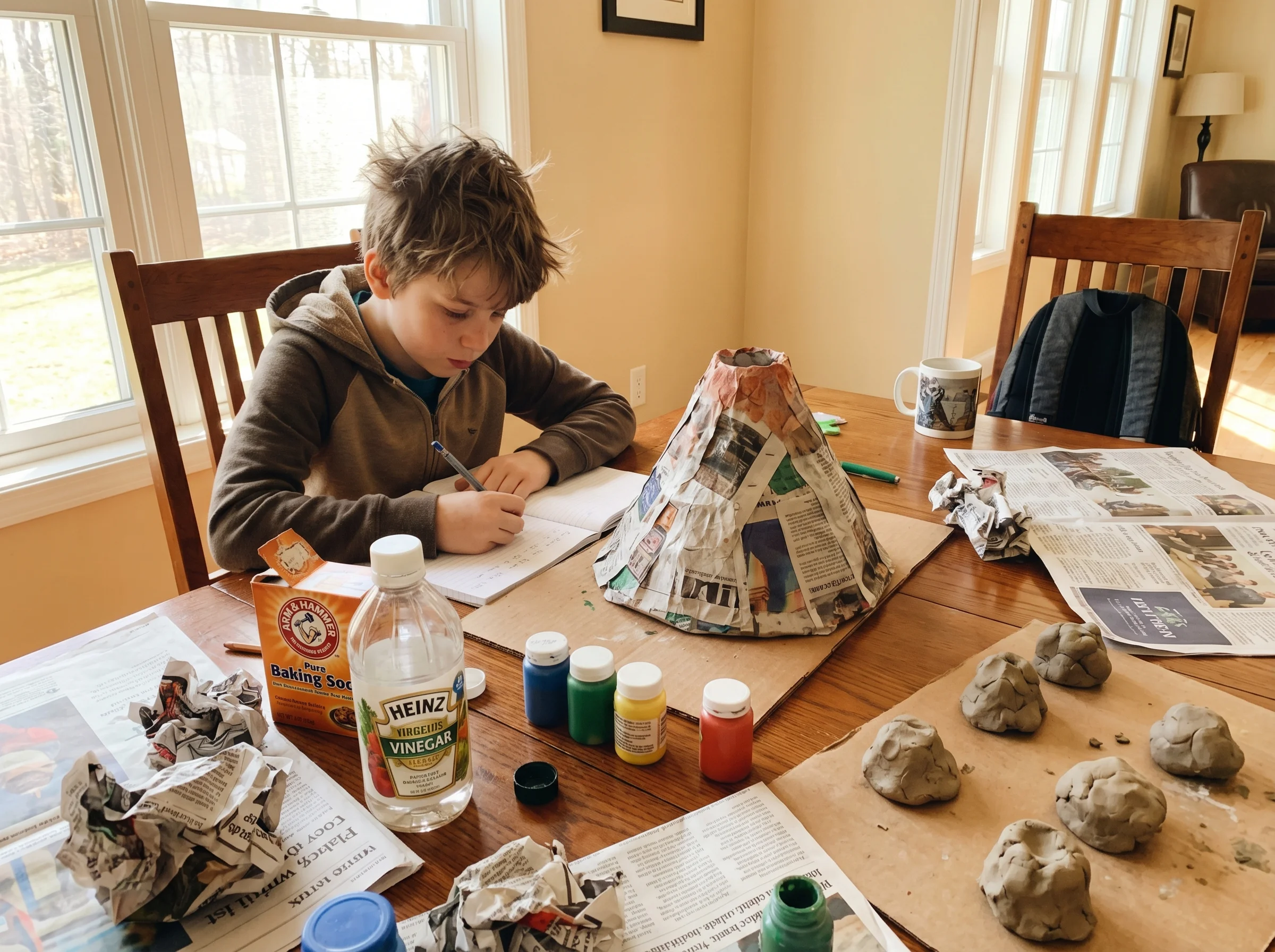
Here's where it all pays off. Six months after the controller-throwing incident, my son's science fair volcano wouldn't erupt. Instead of melting down, he said, "Okay, let's figure out the pattern." He tried three different approaches, analyzed what went wrong each time, then fixed it.
I couldn't help myself. "You just treated that volcano like a video game boss."
He grinned. "Yeah, I guess I did."
Now we use gaming language for real challenges all the time:
- "What's your strategy for this math boss?"
- "You just leveled up in guitar!"
- "Time to analyze the pattern in this spelling list."
We celebrate process victories now, not just outcomes. Trying five different approaches to a problem. Recognizing when something's unfairly hard. Asking for help with specific struggles instead of general complaints.
My favorite moment? When my son told his guitar teacher, "I'm going to treat this F chord like a Dark Souls boss - die a lot but learn something each time." His teacher had no idea what that meant, but I knew we'd cracked the code.
Your Next Steps
This week, pick one moment when your child gives up easily on hard gaming levels. Just one. Instead of your usual response, try asking "Show me what happens." See where it leads.
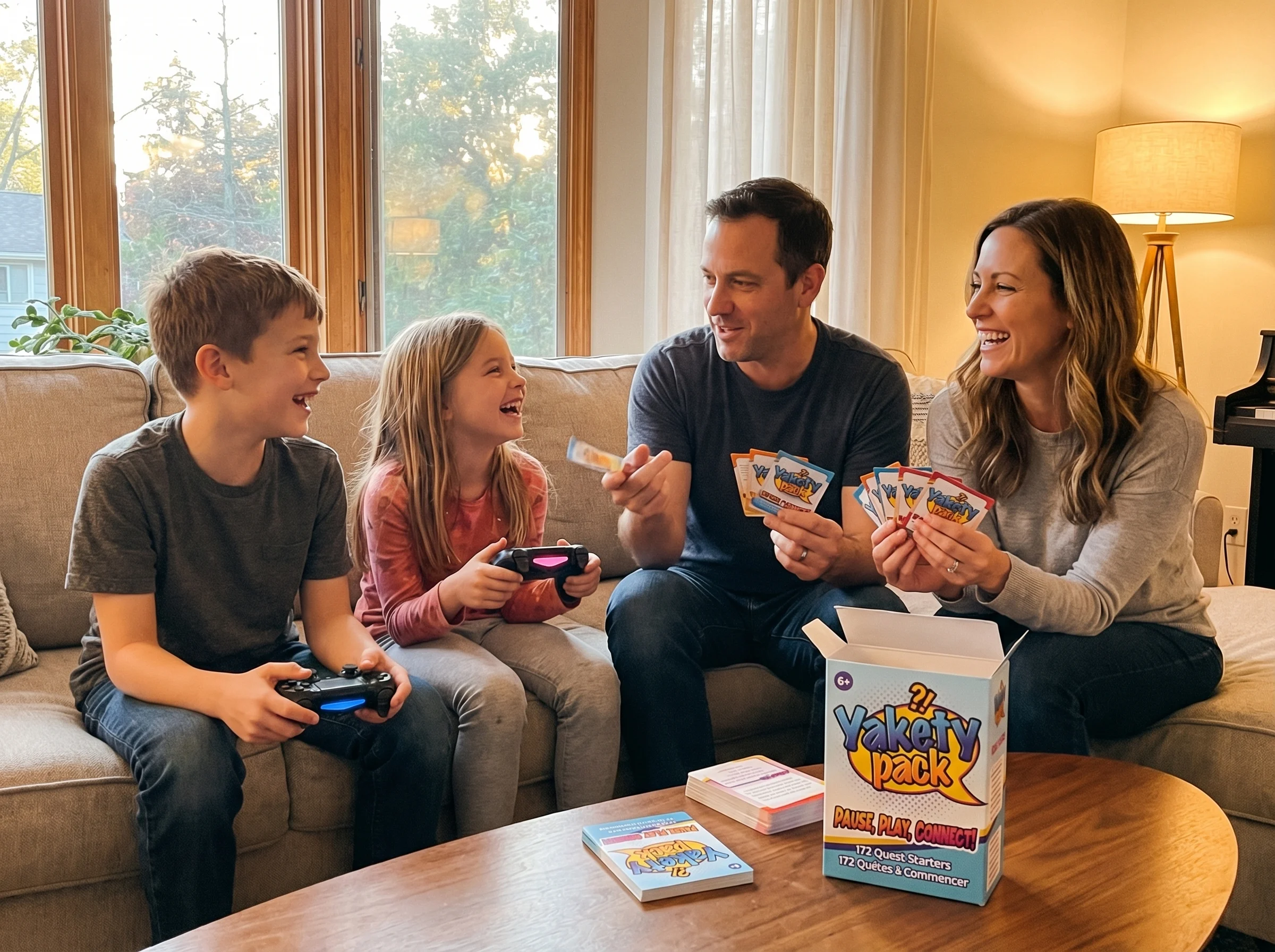
If you're looking for natural ways to start these conversations, we created Yakety Pack partly for this reason. One card asks "What's the hardest thing you've ever done in a game?" It's perfect for understanding how your kid sees challenge and where they draw the line between good-hard and bad-hard.
Share your own story of overcoming something difficult. Not a "when I was your age" story, but something recent. That coding problem that took you three days. The recipe you burned twice before getting right. Show them that productive struggle is part of adult life too.
Remember: you're not trying to eliminate their frustration or fix their reaction to it. You're teaching them how to use frustration as information instead of letting it use them.
Last week, my daughter came to me with a different kind of problem - a friendship issue at school. "I need to figure out the pattern," she said. "Like what happens right before things go wrong."
That's when I knew all those gaming frustrations had been worth it. She'd learned to see challenges as puzzles to solve, not walls to bang her head against.
And honestly? That's a skill I wish I'd learned at her age. Maybe that's why I'm so passionate about this. Our kids are learning emotional regulation, pattern recognition, and strategic thinking through gaming. We just have to help them see it.
So the next time you hear that controller hit the couch (or the wall), take a breath. You're not dealing with a kid who can't handle frustration. You're coaching a future problem-solver who just needs help seeing the pattern.
Show me what happensPause, Play, Connect: Core Deck172 prompts that help a kid put words to the difference between stuck and done.$49 CAD • 90 cards • 18 reviewsShop the deck
Related Articles
Looking for more? Check out these related articles:
