
Last week, my 11-year-old interrupted Thanksgiving dinner to announce his new Rocket League rank to confused grandparents. Again. "I'm Diamond 2 now!" he proclaimed to blank stares and polite nods. If your kid turns every conversation into a highlight reel of their gaming achievements, you're not alone. And here's what took me way too long to figure out: they're not trying to be obnoxious.
I used to shut it down. "Nobody cares about your K/D ratio," I'd say. "Stop bragging." But I was dead wrong. My kid wasn't bragging to put anyone down. He was desperately trying to share something that mattered to him in the only language he knew.
Why Gaming Kids Brag Differently
Here's what changed my perspective: I watched my son play Rocket League one night. Every goal triggered an explosion of lights. Every save got instant replay. Every rank-up literally announced itself across the screen in golden letters. The game was training him to celebrate loudly and publicly.
Gaming culture broadcasts achievements constantly. Your kills pop up in the feed. Your level shows next to your name. Your best plays get saved as highlights. Kids aren't being rude when they announce their gaming wins. They're following the social rules of their digital spaces.
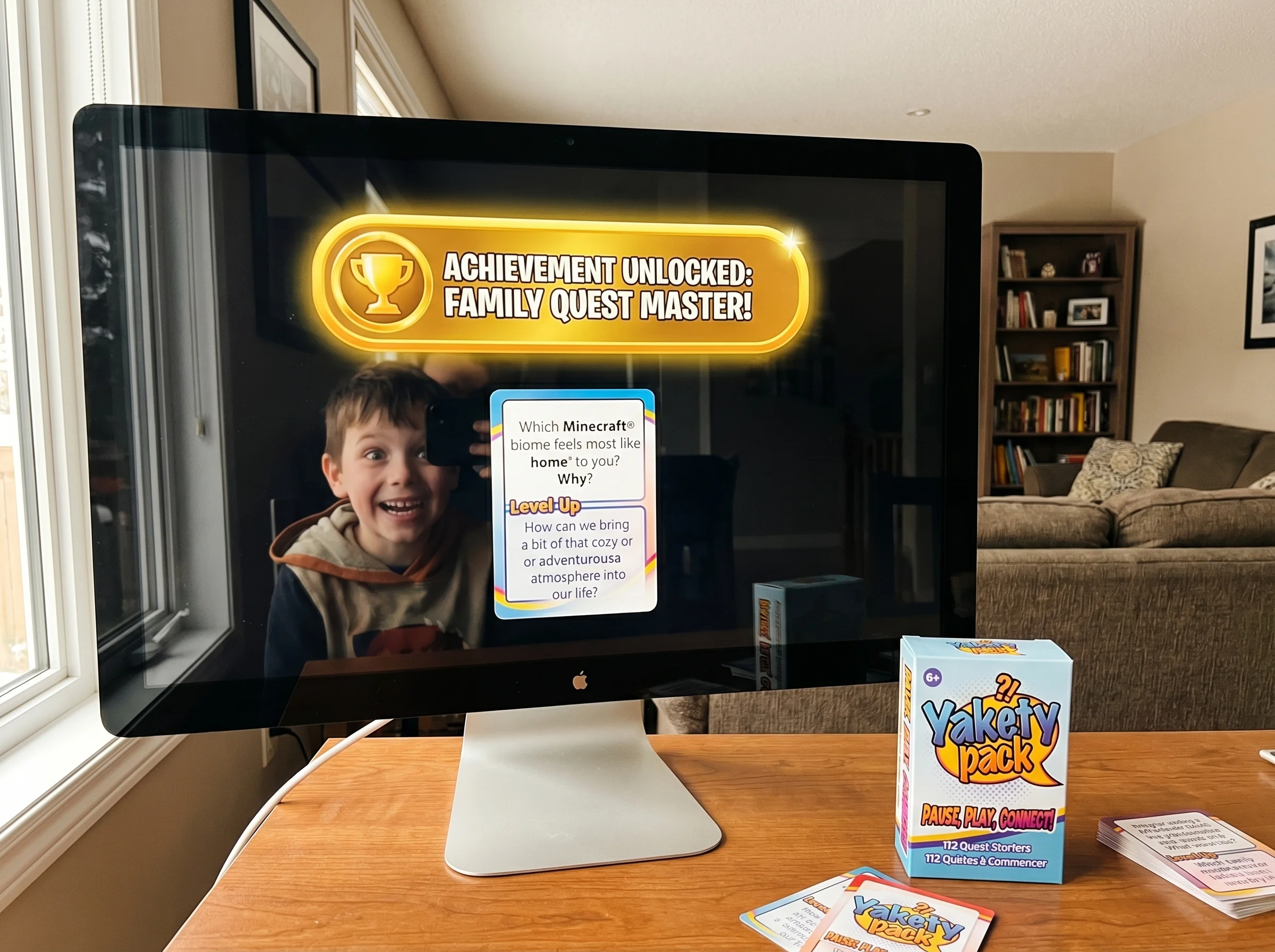
Think about it. When I played little league, I had to wait for the coach to maybe mention my good catch at the next practice. My son gets instant, public recognition for every achievement. No wonder he expects the dinner table to work the same way.
There's a huge difference between toxic flexing ("I destroyed those noobs, they're trash") and excitement sharing ("I finally hit that aerial goal I've been practicing!"). Most kids fall into the second category. They're not trying to make others feel bad. They just learned to communicate in achievement pop-ups.
 When the win needs a storyPause, Play, Connect: Core Deck172 prompts that give a kid something to tell you about besides the final rank.$49 CAD • 90 cards • 18 reviewsShop the deck
The Hidden Message Behind the Bragging
"I got a Victory Royale!"
What your kid means: "Something amazing happened in my world and I want to share this feeling with you."
What you hear: "I'm better than everyone and need constant attention."
See the disconnect? Your kid's bragging is usually a connection attempt, not a dominance display. They want to bring you into their world but don't know how to build a bridge you can cross.
My son once interrupted a family movie to tell us about getting matched against a famous streamer. Everyone groaned. But later, when I asked him about it, his face lit up. "It was like playing basketball against LeBron!" he said. "I lost, but I saved one of his shots and my whole Discord went crazy!"
That's not bragging. That's a kid trying to share one of the coolest moments of his young life. He just didn't know how to package it for a non-gaming audience.
Know the Difference: Excitement vs. Problem Bragging
Not all bragging is created equal. Here's how to spot the difference:
Healthy sharing looks like:
- Tells stories about the experience, not just the outcome
- Gets excited but can move on to other topics
- Celebrates with others, not at their expense
- "You should have seen this match..."
Problem bragging looks like:
- Only talks about being better than others
- Can't celebrate friends' achievements
- Uses wins to put siblings or friends down
- "I'm way better than you'll ever be"
Age matters too. An 8-year-old yelling "I beat the Ender Dragon!" is different from a 14-year-old constantly reminding friends about their superior rank. Younger kids literally might not understand that not everyone cares about their Minecraft house. Teenagers should know better.
Watch for these warning signs:
- Friends stop playing with them
- Every conversation becomes about their achievements
- They melt down when they lose
- They can't enjoy games unless they're winning
Scripts for Redirecting Without Shutting Down
I learned this the hard way: "Stop bragging" doesn't work. It just teaches kids to stop sharing with you. Here's what actually works:
Instead of: "Nobody cares about your game." Try: "Tell me about the match where that happened."
Instead of: "Stop showing off." Try: "What was the hardest part of getting that achievement?"
Instead of: "You're being annoying." Try: "Who were you playing with when that happened?"
My game-changer script for relatives: "Hey buddy, Grandma doesn't know what Diamond rank means. Can you explain what makes it special?" This shifts them from announcing to teaching, which changes everything.
At that Thanksgiving dinner, I helped my son translate: "Grandma, it's like if you played piano for two years and finally played at Carnegie Hall. That's how hard Diamond is to reach." Suddenly, she got it. She asked questions. He beamed. Connection made.
 Past the final scorePause, Play, Connect: Core Deck$49 CAD • 172 promptsSee the deck
Channel Bragging Into Better Sharing
Teach your kid the story sandwich: Context + Achievement + What's Next.
Bad: "I got a 20-bomb in Fortnite!"
Good: "I was in the final circle with just a gray pistol, somehow eliminated three teams, and got my first 20-bomb! I'm trying to do it again with different weapons."
See the difference? Same achievement, but now it's a story others can follow.
Help them recognize their audience. Gaming friends speak the language. Grandparents need translation. Teachers appreciate effort over outcomes. This isn't being fake. It's code-switching, and we all do it.
Practice during calm moments, not mid-brag. "Hey, you were so excited about that clutch play yesterday. How would you tell Aunt Sarah about it at dinner?" Make it a game. My son loves figuring out how to explain speedrunning to his baby cousin.
When Bragging Costs Friendships
Last spring, my son's regular Apex squad stopped inviting him. He was crushed. "They're just jealous," he said. But when we talked more, the truth came out. He'd been calling out every mistake they made while highlighting every shot he hit.
"Do you cheer when they make good plays?" I asked.
Silence.
"When Jake gets a kill, what do you say?"
"Nothing. I'm focused on my game."
"But when you get a kill?"
"I tell everyone."
That conversation hurt, but it clicked for him. Being a good teammate means celebrating together, not just your own highlights. We practiced being a hype man for others. "Nice shot!" "Great call!" "You saved us!"
Two weeks later, he was back in the squad. "Dad, I got Jake his first win today!" Notice what he bragged about? Helping someone else succeed. That's growth.
Building Identity Beyond the Scoreboard
Your kid needs to know they matter beyond their K/D ratio. But here's the trick: you can't build that by dismissing their gaming achievements. You build it by going deeper.
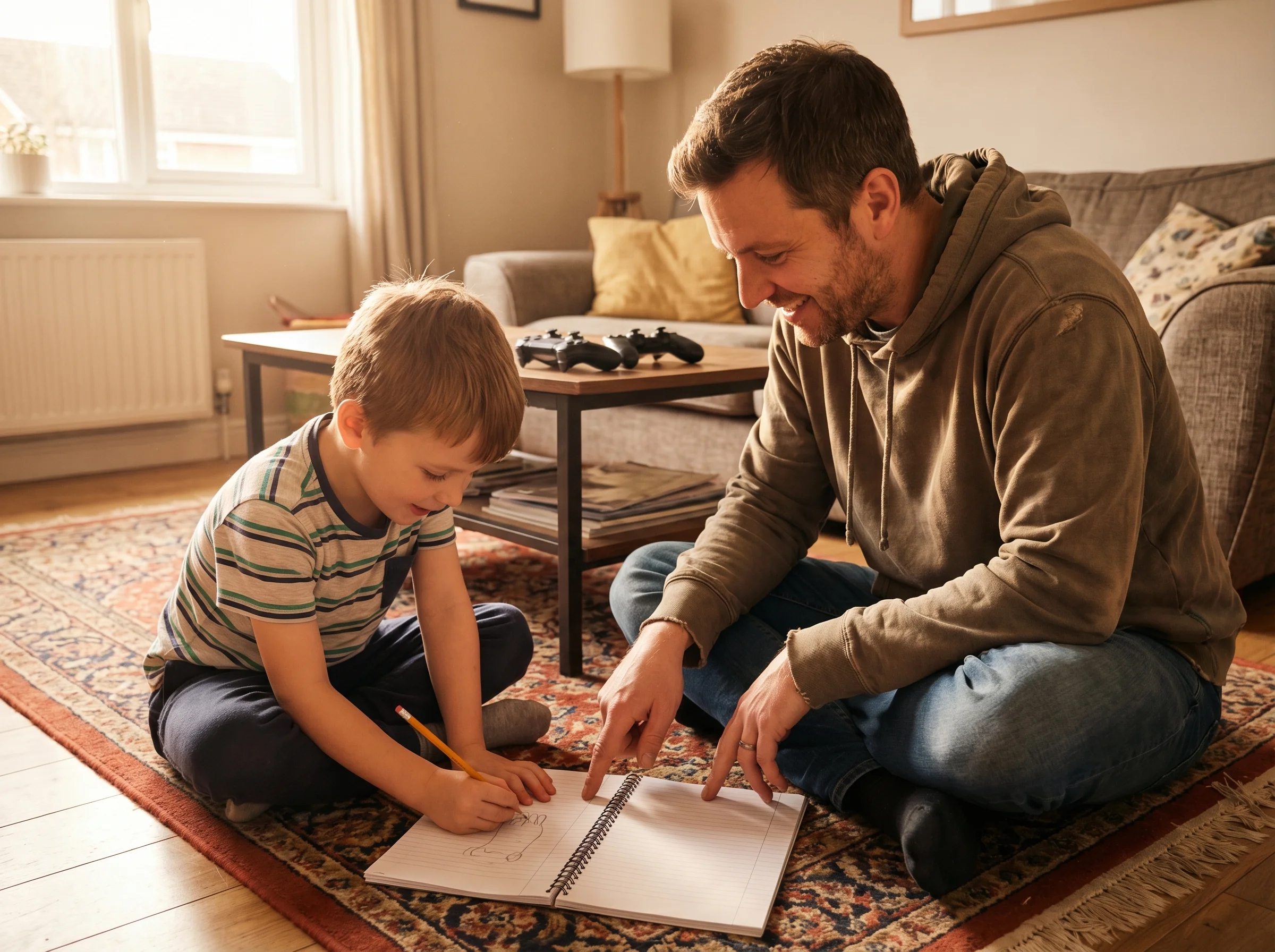
Ask questions that dig past the score:
- "What made you keep trying after dying 50 times?"
- "How did you figure out that strategy?"
- "What makes you a good teammate?"
- "What's the funniest thing that happened today in your game?"
My son thinks he's "only good at gaming." But through these conversations, we've discovered he's actually good at pattern recognition, strategic thinking, persistence, and teaching others. He just happens to develop those skills through gaming.
One night, we used a Yakety Pack card that asked about epic gaming fails. He told a story about accidentally blowing up his own base in Minecraft that had us crying with laughter. No bragging, just pure storytelling joy. Sometimes the best achievements aren't wins at all.
Here's What I Know Now
Stop trying to teach humility by minimizing their gaming achievements. When we say "it's just a game," we confirm their fear that nothing they do matters. Your kid brags because they're proud, excited, and want to matter to you.
The goal isn't to stop the bragging. It's to help them share their joy in ways that bring people in instead of pushing them away. They don't need less confidence. They need better communication skills.
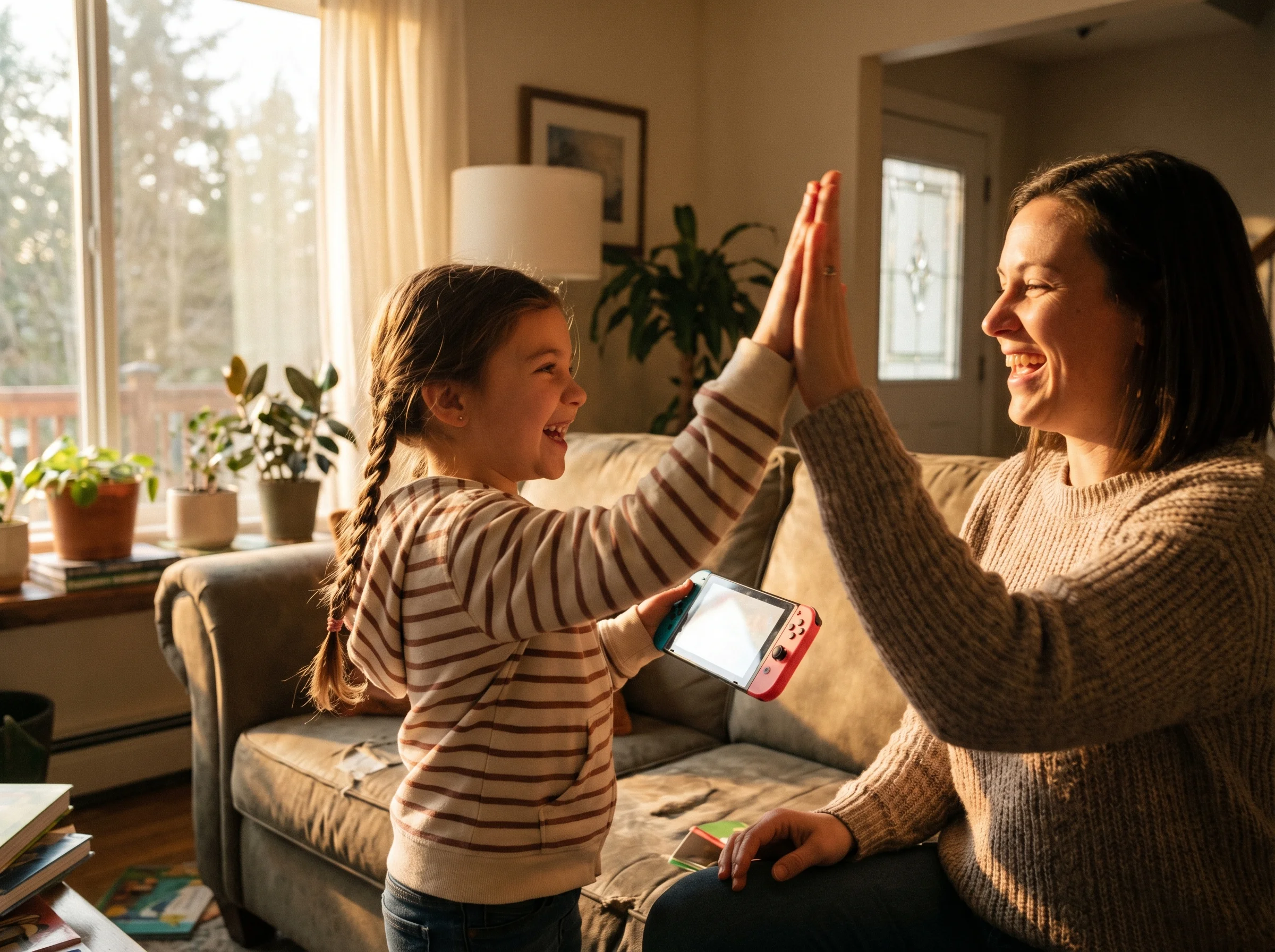
Tomorrow, when your kid launches into their daily achievement report, try this: "That sounds awesome! Tell me the whole story." Watch their face change. Watch them shift from announcing to connecting.
That's what they wanted all along.
From scoreboard to storyPause, Play, Connect: Core Deck172 prompts that ask for the story behind the achievement, not just the number.$49 CAD • 90 cards • 18 reviewsShop the deck
Related Articles
Looking for more? Check out these related articles:
