
Here's my son Jake, standing in our kitchen at 9 PM on a Tuesday, tears streaming down his face. "Dad, he destroyed everything. The whole castle. We worked on it for three weeks!"
My first instinct was to say what every parent thinks: "It's just a game, buddy." Thank God I caught myself. Because that castle wasn't just blocks in Minecraft. It was trust. Creativity. Friendship. And his buddy Tyler had just taken a flint and steel to all of it.
That night changed how I see children playing Minecraft together forever. What looks like kids staring at screens? It's actually a masterclass in human relationships, playing out in pixels.
The Hidden Social World Inside Minecraft
Last month, I asked Jake to give me a tour of the server he plays on with five school friends. I expected to see some houses, maybe a farm. What I got was a full civilization.
"That's City Hall," he explained, flying over an elaborate quartz building. "We vote on stuff there. Like last week, we voted on whether to ban TNT near builds. I lost."
"Who's the mayor?" I asked.
"We take turns. This month it's Emma. She's super organized but kind of bossy about where people can build."
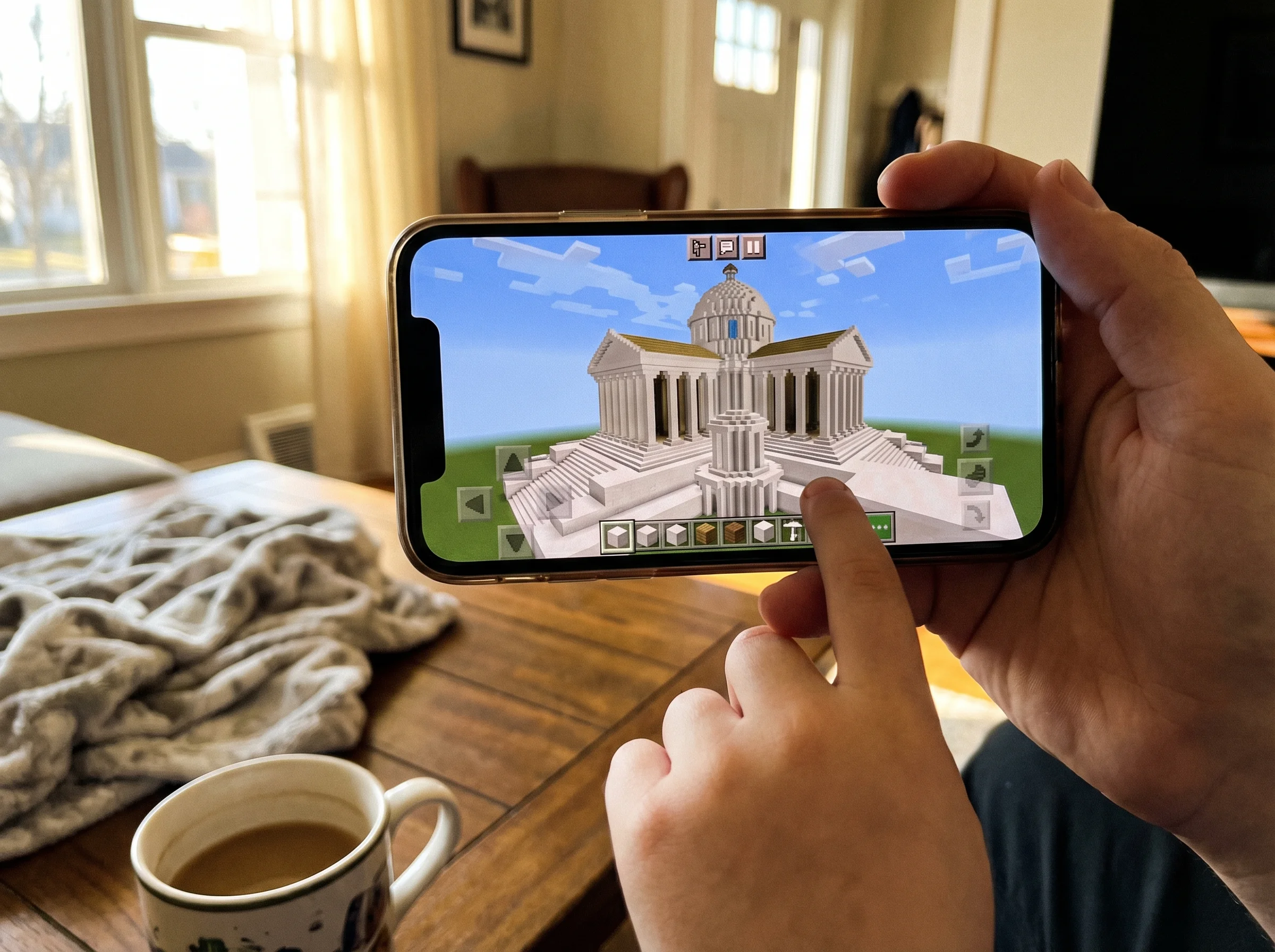
I'm listening to my 11-year-old casually describe democratic governance, term limits, and zoning laws. In a video game.
But here's what really got me: they'd created an entire economy. Jake's friend Marcus ran the "iron bank" where kids could store valuables. Another friend, Sophia, had cornered the market on enchanted books. They negotiated trades, argued about prices, and even had a crime problem when someone kept stealing from communal chests.
"How do you handle theft?" I asked.
"We have a jail now. If you get caught stealing three times, you go in timeout for 20 minutes real time. Marcus came up with that after someone took all his diamonds."
These aren't just children playing Minecraft together. They're learning to build society from scratch.
 Ask for the server tourPause, Play, Connect: Core Deck172 prompts that get a kid talking about the world they built and who they built it with.$49 CAD • 90 cards • 18 reviewsShop the deck
Why Fighting Over Minecraft Is Actually Healthy (Sometimes)
I used to panic when I heard Jake arguing with friends over Minecraft. Raised voices from his room meant I'd failed at teaching conflict resolution, right?
Wrong. Dead wrong.
The day Jake learned real negotiation skills wasn't in some school workshop. It was the afternoon his sister Sophie (then 6) accidentally released all the animals from his farm. She'd been trying to "pet" them by right-clicking with wheat.
Jake's first reaction: "SOPHIE! You ruined EVERYTHING! Get out of my world!"
Sophie burst into tears. I almost stepped in. Then I heard Jake take a deep breath.
"Okay, okay. Stop crying. Look, you can help me get them back. But you have to listen this time. Left click holds the wheat. Right click feeds them. Got it?"
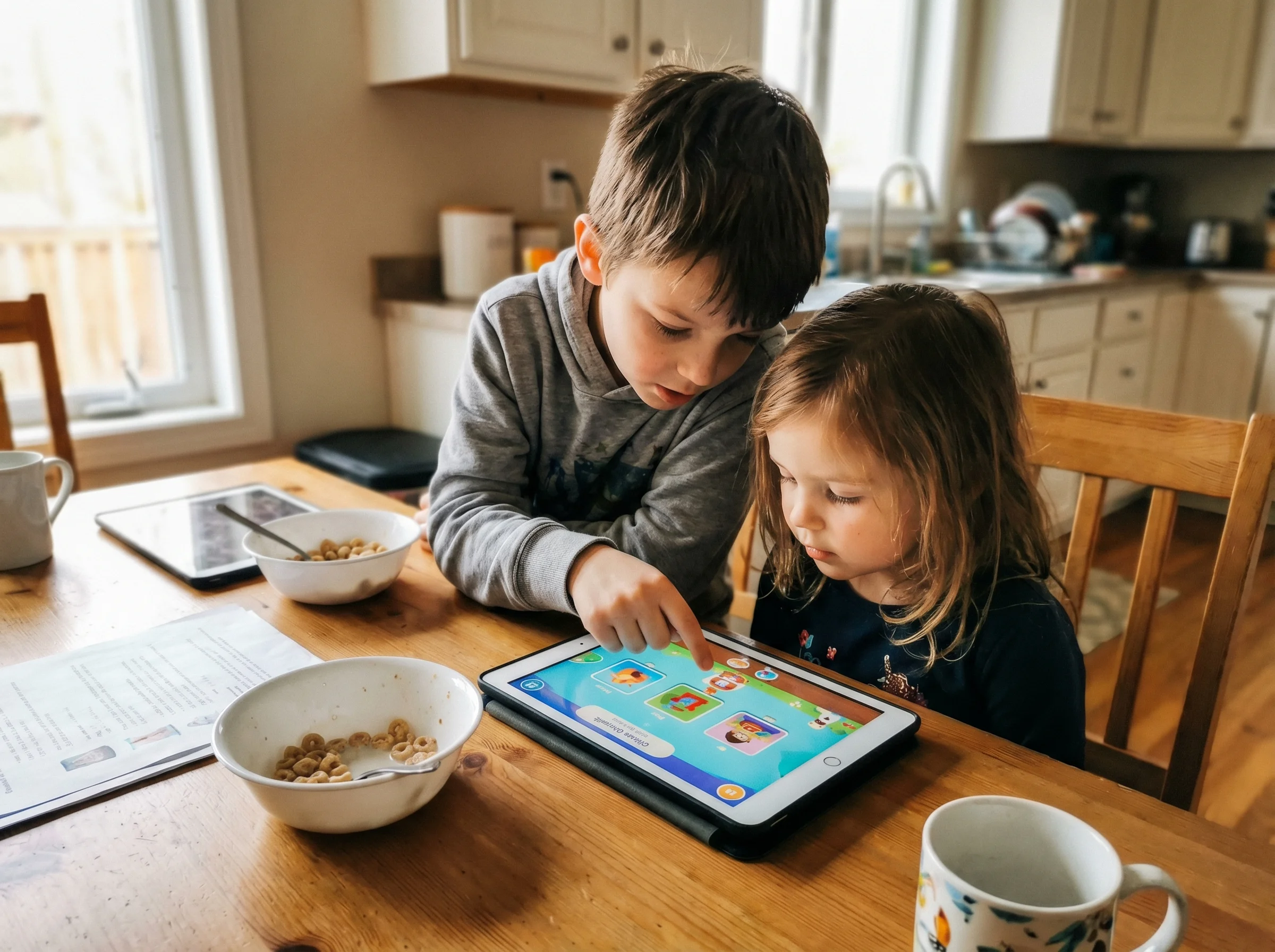
Twenty minutes later, they'd not only recaptured the animals but built a whole visitor center with signs explaining how to interact with different mobs. Jake had turned frustration into teaching. Sophie had learned from her mistake without being shamed.
But not all Minecraft conflict is created equal. There's a huge difference between kids working through disagreements and actual digital bullying. Here's what I've learned to watch for:
Healthy conflict sounds like:
- "That's not fair, you already have three beacons"
- "We agreed no building in the shopping district!"
- "I'm mad you changed our plan without asking"
Concerning behavior sounds like:
- "You can't play on our server anymore because you're bad at building"
- "We destroyed your house because it's ugly"
- "Give us your diamonds or we won't be your friend"
The griefing conversation is one every Minecraft parent needs to have. Explain that destroying someone's build without permission is like ripping up their artwork. It's not funny. It's not a prank. It's mean.
Age Differences Matter More Than You Think
Biggest mistake I made? Thinking Minecraft was Minecraft, regardless of age. Nope. Not even close.
When Sophie was 6 and Jake was 10, I figured they could play together. Bond over blocks, right? The first session ended with Sophie in tears because Jake's friends kept killing her, and Jake furious because Sophie had accidentally burned down part of their village.
Here's what actually works:
Ages 6-8: Keep it simple, keep it close
- Creative mode only (unlimited resources, no dying)
- Play with siblings or very close friends only
- Focus on building, not surviving
- Expect lots of "look what I made!" moments
- They need constant positive feedback
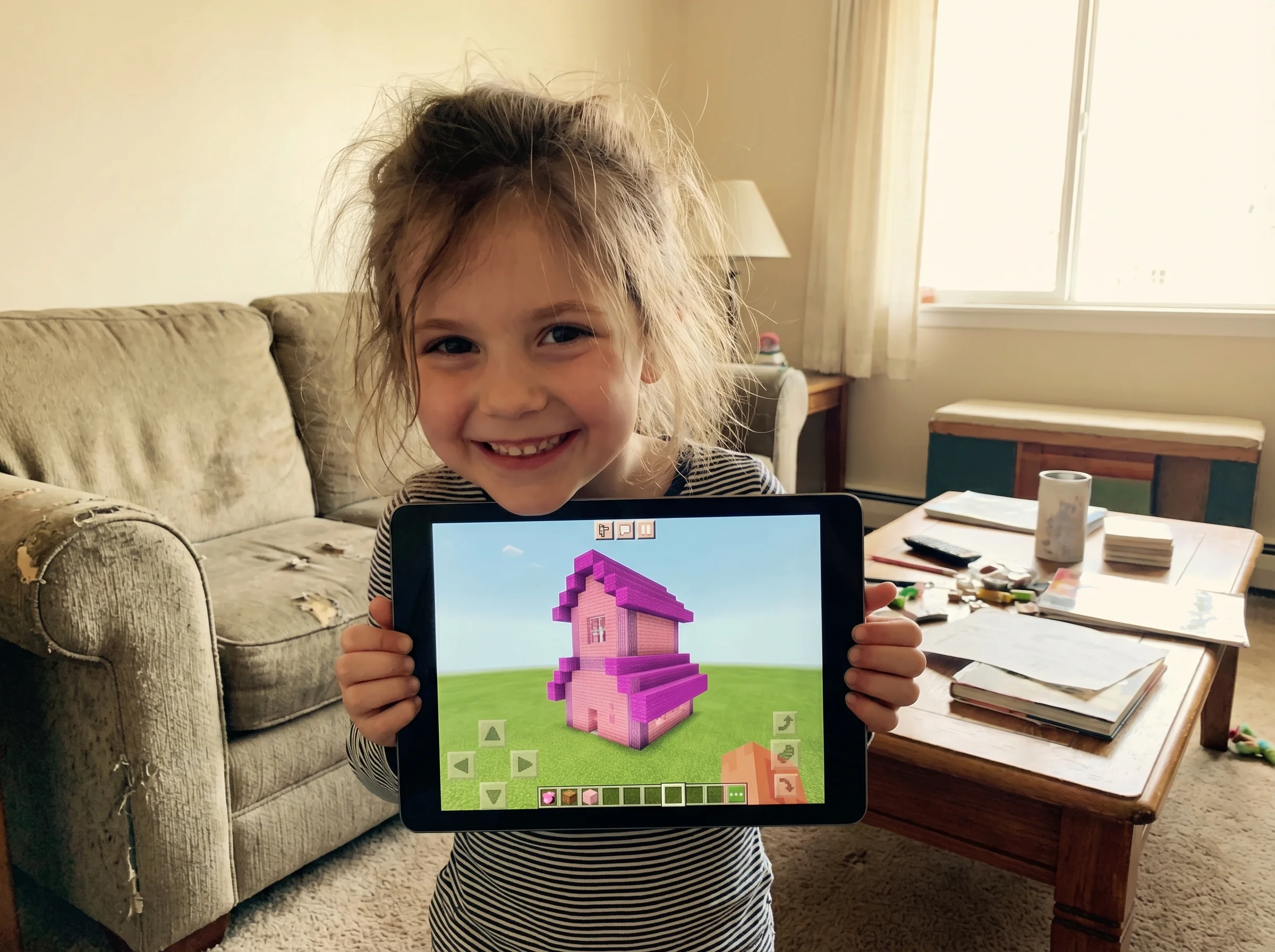
Sophie thrived once we set up "Sophie's Kingdom" - a creative world where she could build rainbow houses without anyone telling her they weren't "realistic."
Ages 9-11: Ready for real challenges
- Survival mode teaches resource management
- Can handle server rules and group decisions
- Start seeing complex social dynamics
- May get emotional about lost items or builds
- Ready for consequences (jail time, losing elections)
This is Jake's sweet spot. He's learning diplomacy, economics, and patience all at once.
Ages 12+: The full social experience
- Can navigate server politics
- Ready for playing with less familiar people
- Understand permanent consequences
- May create elaborate role-play scenarios
- Can mentor younger players
Jake's starting to hit this stage. He recently helped mediate a dispute between two younger kids on their server about territory boundaries. Watching him channel his own experiences into helping others? Pure gold.
 Questions that fit each agePause, Play, Connect: Core Deck$49 CAD • 172 promptsSee the deck
Decoding the Minecraft Emotional Meltdown
"It's gone. It's all gone. The file corrupted."
Jake stood at my office door, iPad in hand, looking like someone had died. Three months of builds - an entire city he'd created with his best friend Alex - had vanished due to a sync error.
My tech brain went straight to solutions. "Maybe we can restore from backup, or-"
"Dad, you don't get it!" He threw the iPad on my desk. "We built that together. Every Friday. Since his birthday. And now it's just... gone."
That's when it hit me. This wasn't about losing data. It was about losing memories. Every building had a story. The weird tall house they built when Alex's mom brought them too much candy. The underground base from when they were obsessed with secret tunnels. The chicken farm that started as a joke and became an empire.
Here's what I've learned about Minecraft meltdowns:
It's real loss when:
- Weeks or months of work disappear
- A shared world with meaning gets destroyed
- Friends exclude them from a longtime server
- Someone breaks trust by stealing or griefing
It might be obsession when:
- They can't handle ANY setback
- Real-world activities always lose to Minecraft
- Meltdowns happen over minor inconveniences
- They can't enjoy other activities anymore
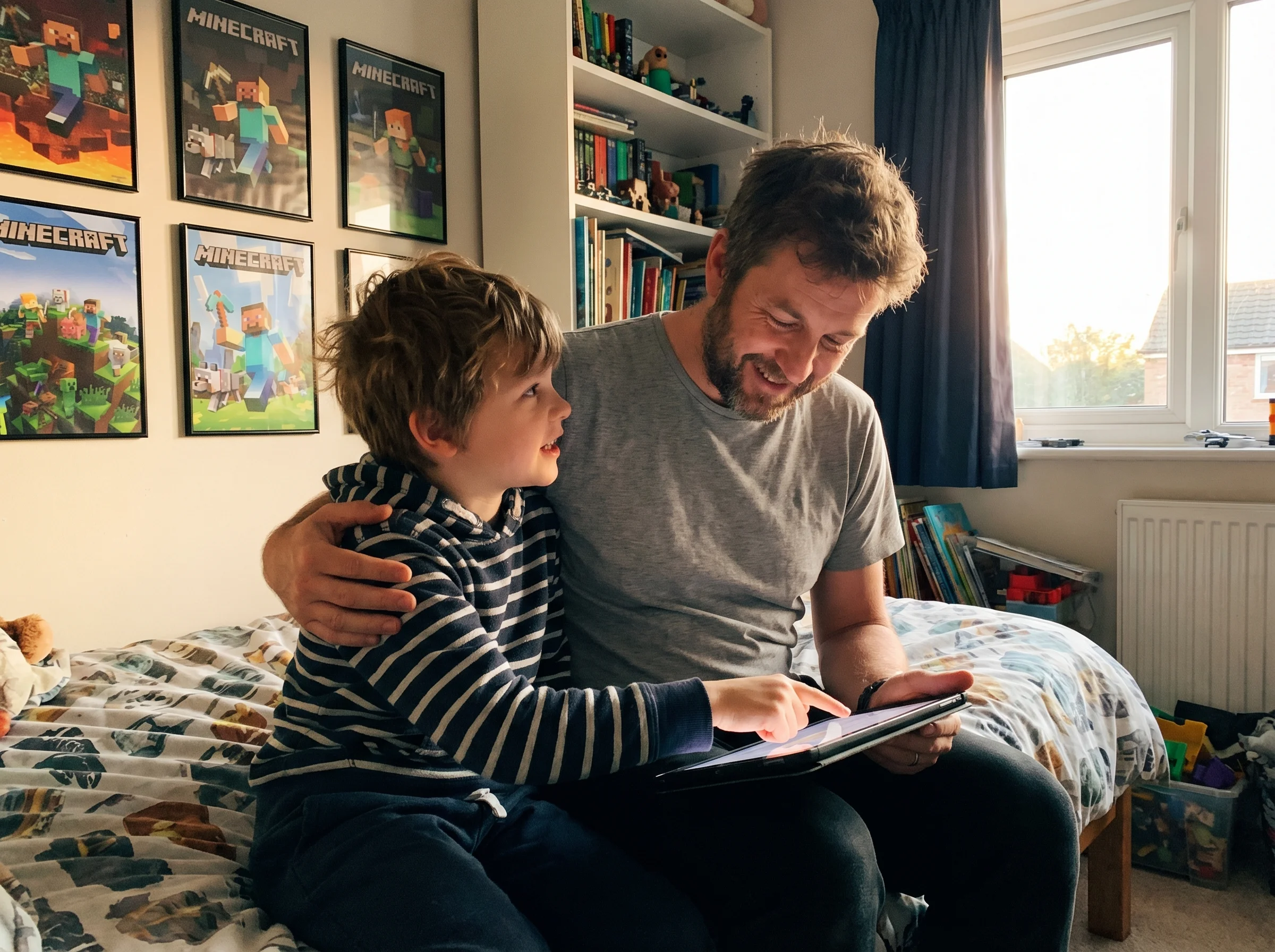
The night Jake's world corrupted, we didn't try to fix it. We sat on his bed and I asked him to tell me about his favorite builds. He talked for an hour. About the redstone door that took six YouTube tutorials to figure out. About the prank war with Alex involving hidden chickens. About the monument they built when the server dog died fighting a skeleton.
By the end, he was smiling through tears. "Maybe we can build something even cooler in the new world."
"Maybe you can," I said. "But it's okay to be sad about this one first."
Questions That Actually Work
For months, I asked Jake the wrong questions about Minecraft. "How was it?" Got me shrugs. "What did you do?" Got me "just played." I was failing the connection test daily.
Then one day, pure frustration made me specific: "What's the coolest thing someone built today?"
Jake lit up. "Oh man, Marcus made this insane flying machine with slime blocks and pistons. It actually moves! He's going to teach me tomorrow."
Since then, I've discovered the questions that actually open doors:
"Who surprised you today?" This one's gold. Kids love reporting the unexpected. "Tyler actually apologized for blowing up my farm last week. And he rebuilt it better!"
"What was frustrating?" Validates that gaming has real challenges. "The stupid pillagers keep spawning near our village. We've died like ten times trying to clear them out."
"Did you help anyone?" Highlights their kindness. "Yeah, the new kid didn't know how to make tools, so I gave him a whole set and showed him my mine."
"What made you laugh?" Gets the fun stories. "Sophie built a house entirely out of pink wool and called it the Princess Palace. Even put a sign saying 'No Boys Allowed' on Jake's server."
These conversations got so good, they actually inspired some of the connection questions we put in Yakety Pack. Because sometimes "what happened in Minecraft" opens the door to "what happened at school today."
Never ask: "Don't you think you've played enough?" or "Why can't you play something else?" Those shut down connection faster than a creeper explosion.
When to Worry (And When to Celebrate)
Hardest truth I've had to face? Sometimes Jake was the problem player on the server.
It started small. He'd make "jokes" about other kids' builds. "Wow, that's... interesting" with just enough sarcasm to sting. Then came the rules. So many rules. You can't build with dirt ("it's ugly"). You can't make houses smaller than 5x5 ("it's not realistic"). You can't use this area ("I might need it later").
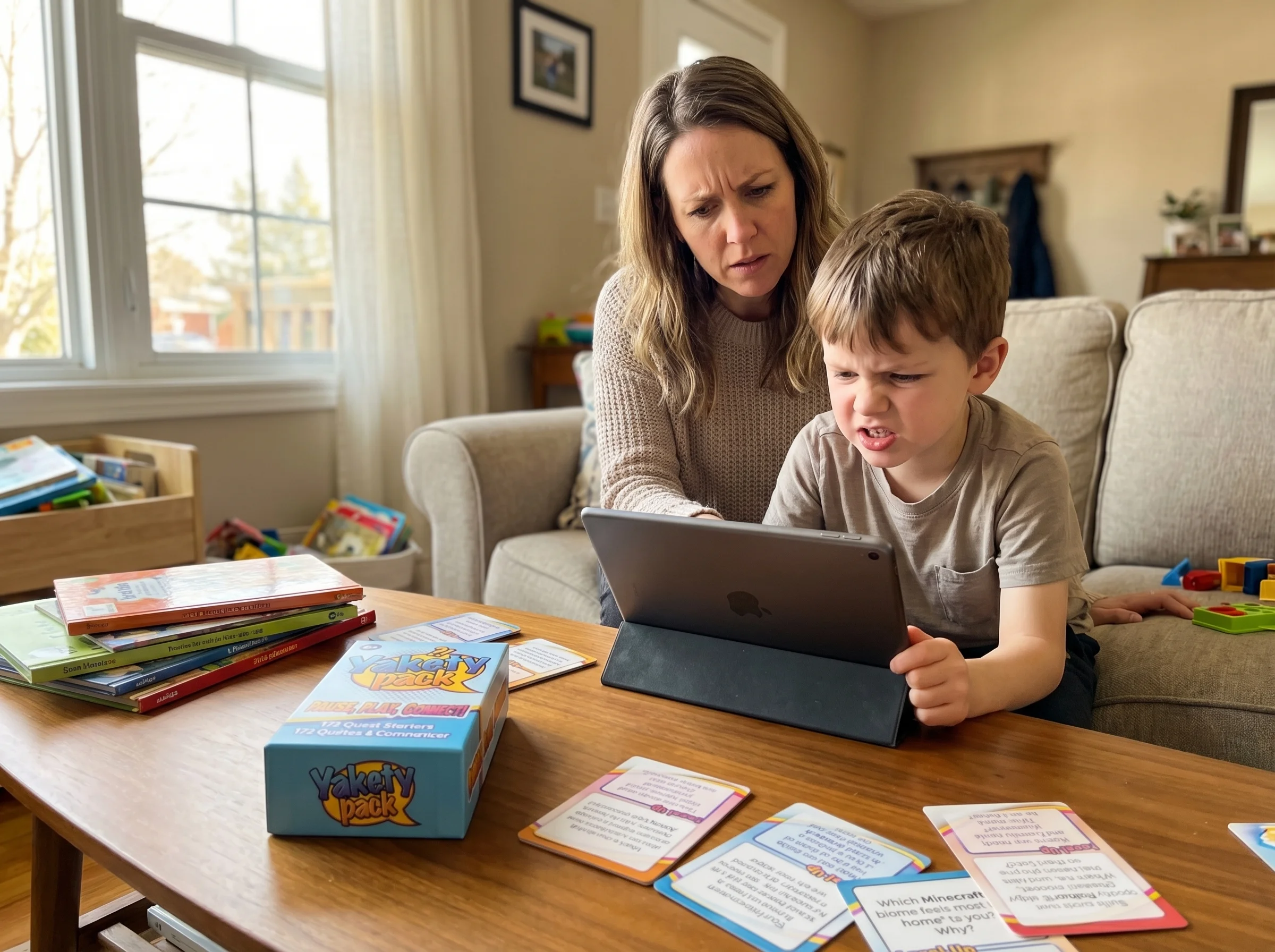
The wake-up call came when Emma's mom texted me. Emma didn't want to play on the server anymore because Jake kept criticizing her builds.
We had a hard conversation that night. About the difference between having standards and being a bully. About how creativity looks different for everyone. About why making others feel small doesn't make you bigger.
Here's what I watch for now:
Green flags to celebrate:
- Teaching new players without being asked
- Compromising on group decisions
- Celebrating others' achievements
- Creating inclusive spaces for different play styles
- Handling losses with grace (mostly)
Yellow flags to monitor:
- Only willing to play one specific way
- Frequent meltdowns over changes
- Always needs to be in charge
- Can't handle when friends play without them
- Every conflict is someone else's fault
Red flags requiring intervention:
- Destroying others' work "because it's funny"
- Excluding players repeatedly
- Using friendship as leverage ("do this or I won't play with you")
- Real-world mood depends entirely on Minecraft success
- Lying about in-game behavior
After our conversation, Jake made some changes. He created a "building help" chest with free materials for newer players. He started complimenting one build per session. He even made an "experimental zone" where people could try weird designs without judgment.
Emma came back to the server. Last week, she built a house shaped like a cat. Jake helped her with the whiskers.
Building Connection Through Their Builds
Saturday morning. Jake's showing me his latest creation - an automatic sugarcane farm using observers and pistons. I have no idea how it works, but I'm genuinely impressed by the complexity.
"Teach me," I said.
His eyes went wide. "Really? But it uses redstone. That's like, really complicated."
"Good thing I have a good teacher then."
For the next hour, my 11-year-old patiently explained concepts that would make some electrical engineers proud. Redstone dust carries power. Repeaters delay signals. Comparators detect changes. By the end, we'd built the world's ugliest but functional automatic wheat farm.
But here's what really mattered: Jake was glowing. Not because the farm worked, but because he got to be the expert. The teacher. The one who knew things Dad didn't.
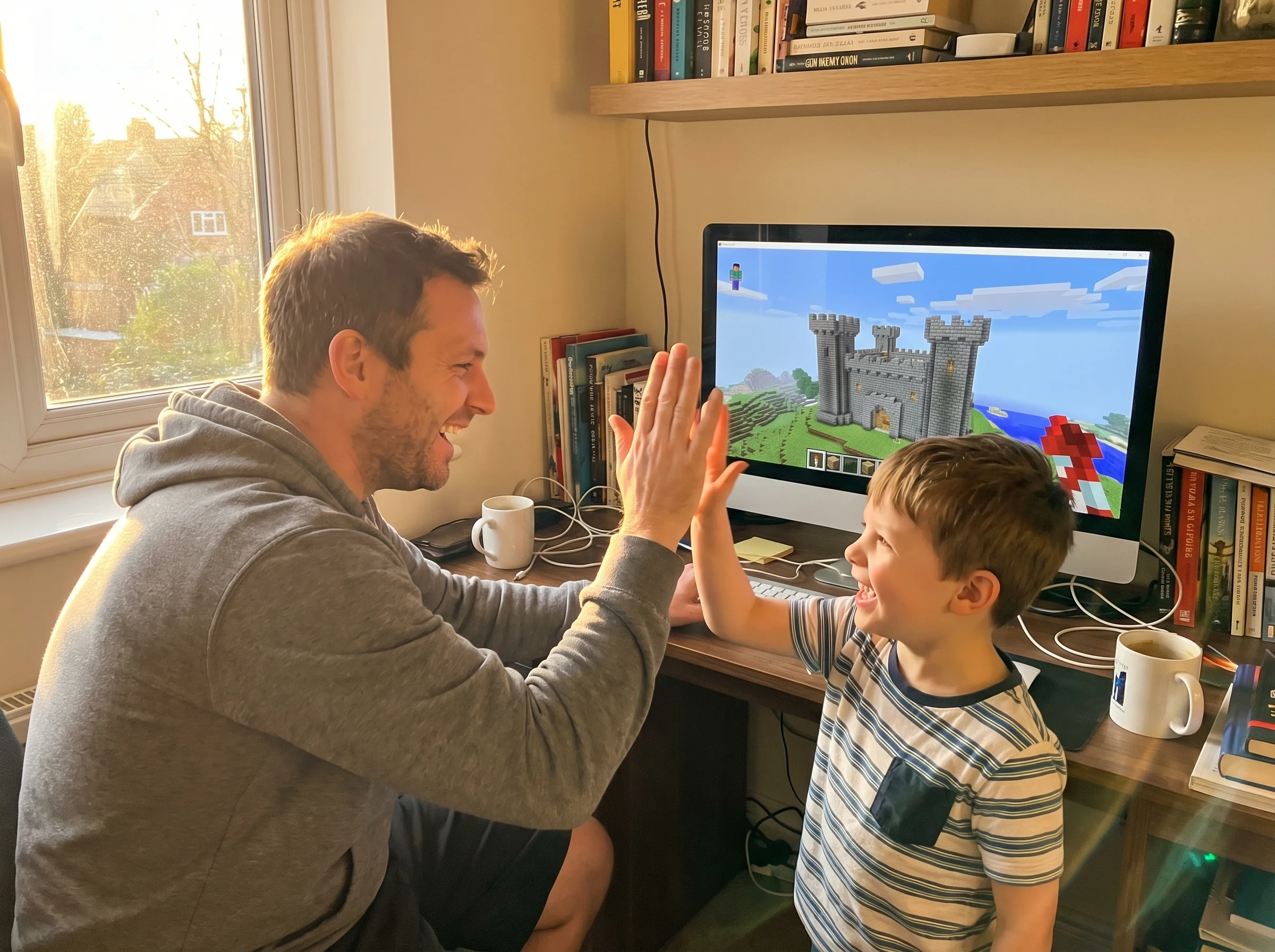
Now our Saturday morning Minecraft tours are sacred. He shows me new builds, explains the challenges, shares the drama. I've learned to ask specific questions:
- "How did you figure out that pattern?"
- "What was the hardest part?"
- "Would you change anything if you rebuilt it?"
Last month, he showed me a memorial they'd built for a server member's real dog who'd died. Nine kids had contributed something. Jake made the fence. Sophie added flowers. Marcus built a hidden chest with a book where everyone wrote memories.
"That's really beautiful," I told him. And meant it.
These digital spaces hold real emotions, real relationships, real growth. When we dismiss them as "just a game," we miss the chance to see our kids for who they're becoming.
The Bottom Line
That night when Tyler burned down Jake's castle, I thought I was dealing with a video game problem. I wasn't. I was watching my son navigate betrayal, forgiveness, and rebuilding trust. Literally rebuilding - Tyler helped Jake create an even better castle, complete with fire-resistant materials.
Children playing Minecraft together aren't just placing blocks. They're practicing for life. They're learning negotiation at the trading post, empathy at the grief counseling session, leadership at the town hall, and resilience every time a creeper blows up their work.
Your mission, if you choose to accept it: Stop asking "how long did you play?" Start asking "what did you build together?" Stop worrying about screen time. Start noticing the society they're creating. Stop trying to limit their world. Start letting them show you around it.
Tonight, when your kid logs off Minecraft, try this: "Show me your favorite thing you built with your friends." Then actually look. Actually listen. Actually care about those pixel blocks.
Because hidden in that digital world, your child is becoming exactly who they're meant to be. One block at a time.
After the build gets burnedPause, Play, Connect: Core Deck172 prompts that make room for the sad part before the rebuilding starts.$49 CAD • 90 cards • 18 reviewsShop the deck
Related Articles
Looking for more? Check out these related articles:
