
I'm going to be honest about something that most parenting articles won't tell you. The first time I tried playing Fortnite with my son, I died seventeen times in about ten minutes. He was embarrassed for me. Not in a cute way. In a "please stop talking to me about this at school pickup" kind of way.
That was three years ago. Since then, I've figured out how to actually play video games with my kids without making it weird, forced, or painfully awkward. And here's what surprised me most: the gaming itself isn't really the point. The conversations that happen while you're both staring at the screen? That's where the magic is.
If you're a parent who wants to connect with your gaming kid but doesn't know a Creeper from a Roblox, this guide is for you. No judgment. No lectures about screen time. Just practical advice from a dad who's been terrible at video games and still managed to build something real through playing them.
Why Playing Video Games With Your Kids Actually Matters
For the bigger frame, see our pillar piece on turn screen time into connection time.
Let me skip the part where I cite studies about cognitive development and get to what actually convinced me.
My son doesn't talk much after school. I get "fine" and "nothing" and occasionally a grunt that could mean anything. But put a controller in both our hands, and something shifts. He starts narrating what he's building. He explains strategies. He laughs at my mistakes and then, without being asked, teaches me how to do better.
That's not something I can manufacture at the dinner table.
Research backs this up, sure. A 2023 study from the University of Cambridge found that kids who play video games with their parents report feeling closer to them. But I didn't need a study. I just needed to see my kid light up when I asked if we could play together.
The thing most parents miss is that gaming is where your kid feels competent. School might be stressful. Social stuff might be confusing. But in their game world, they know what they're doing. When you step into that world, you're stepping into their confidence zone. And when they get to be the expert teaching you? That's a flip most kids rarely experience with their parents.
Playing together is also the fastest way to understand gaming culture, which makes every other conversation about games easier.
 Between the first two roundsPause, Play, Connect: Core Deck172 prompts that give you something to say while you are both losing badly.$49 CAD • 90 cards • 18 reviewsShop the deck
The Biggest Mistake Parents Make (I Made It Too)
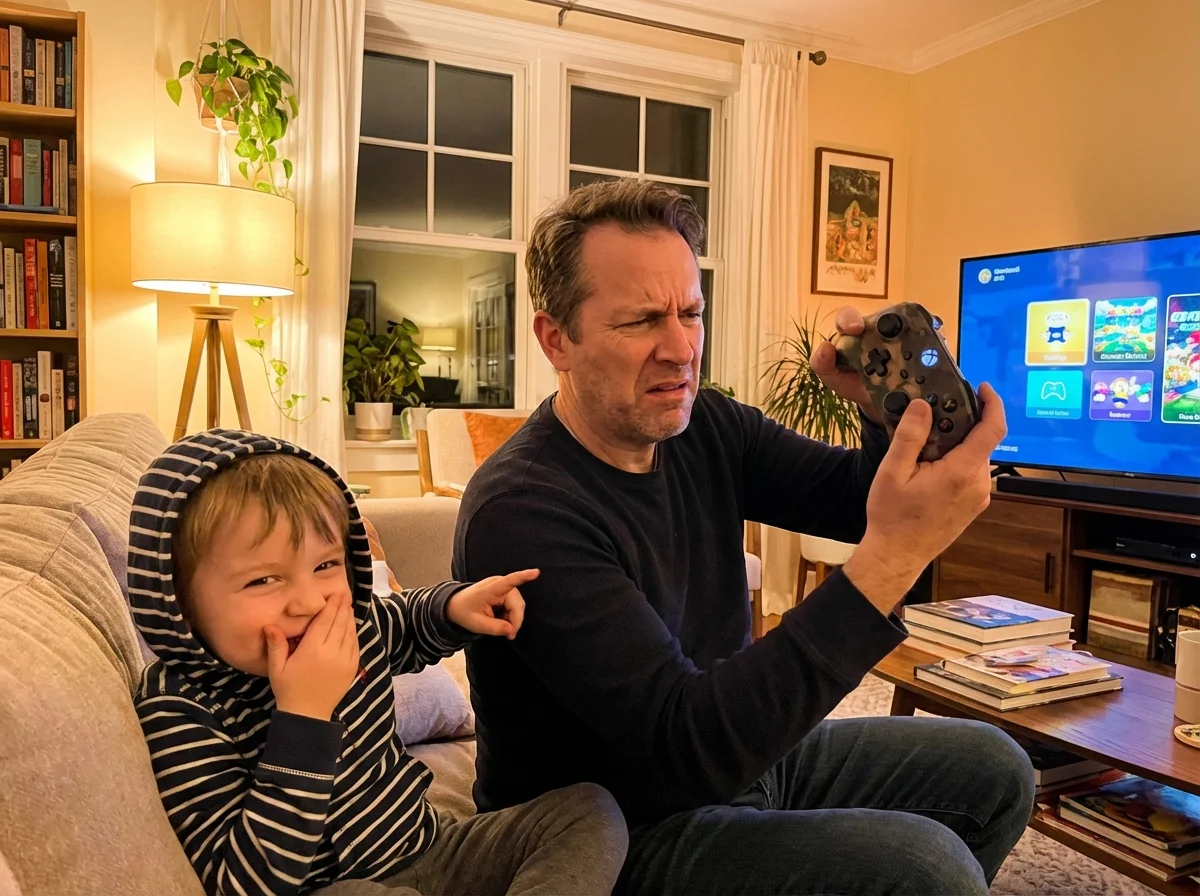
Here's what I did wrong at first, and what I see other parents do constantly: I tried to be good at the game.
I watched YouTube tutorials. I practiced when my kids weren't around. I wanted to show up and impress them. Big mistake. Kids don't want you to be good. They want you to be there. And honestly, being bad at the game is one of the best things you can do.
When you're bad at a game and your kid is good, the power dynamic flips. They become the teacher. They get to be patient with you (or hilariously impatient, which is also fun). They get to show off their skills to someone who genuinely appreciates it.
The moment I stopped trying to compete and started asking "okay, what do I do here?" everything changed. My son went from tolerating my presence to actively inviting me to play.
So here's my first piece of advice: embrace being terrible. Ask dumb questions. Let them carry you through the hard parts. That vulnerability is what opens the door to real conversation.
Best Games to Play Together (By Age and Skill Level)
Not every game works for parent-kid gaming. Some are too competitive. Some require reflexes you haven't had since 1998. Here's what actually works, broken down by what kind of experience you want.
For Complete Beginners (Ages 5-8)
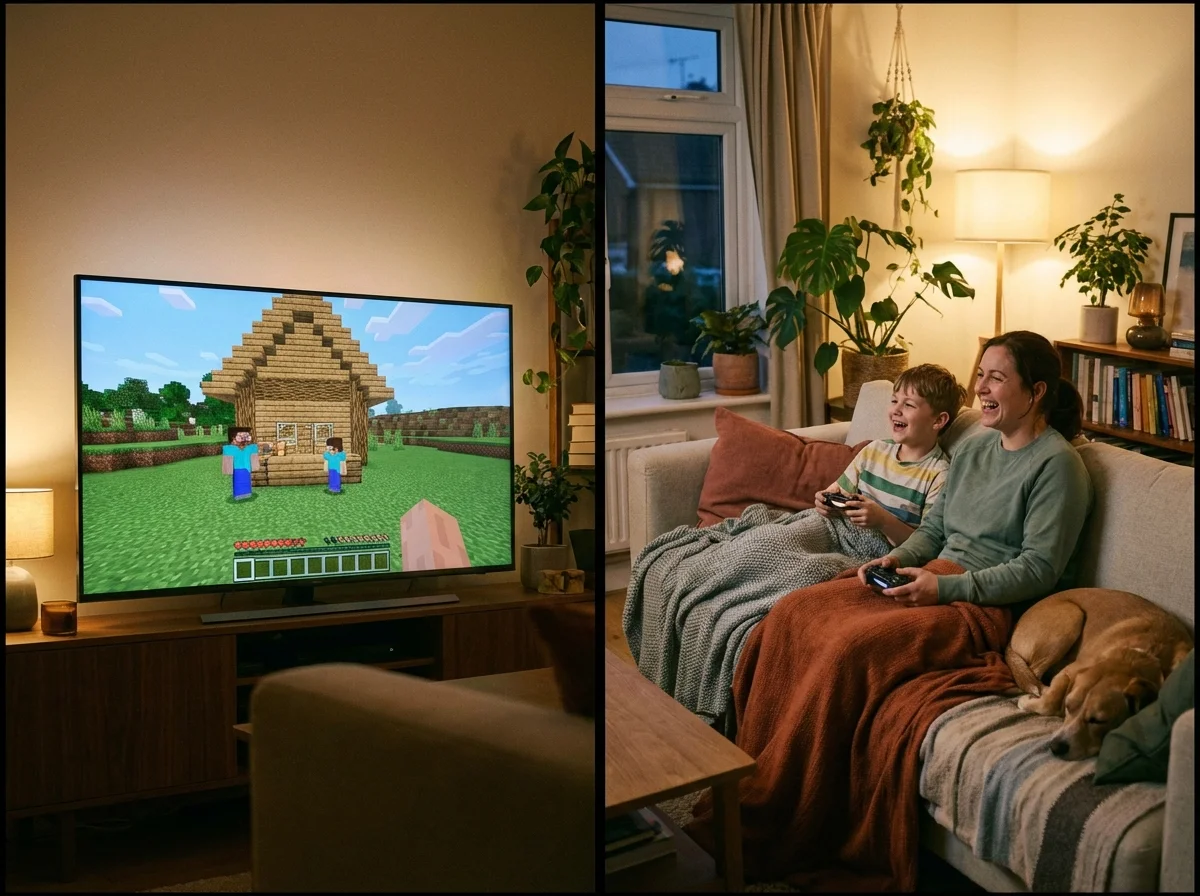
Minecraft (Creative Mode) is the perfect starting point. There's no dying, no time pressure, and you can build stuff together. My daughter and I spent an entire Saturday afternoon building a house for her cat. Was it architecturally sound? Absolutely not. Did she talk about it for a week? Yes. If you're curious about why Minecraft specifically is so good for kids, we did a deep dive into what Minecraft actually teaches.
Animal Crossing is another great one. It's basically a chill island life simulator where nothing bad happens. You can visit each other's islands and just hang out. It's the gaming equivalent of sitting on the porch together.
LEGO games (any of them) are specifically designed for co-op play with mixed skill levels. The experienced player can carry the newer one, and nobody really loses.
For the Middle Ground (Ages 8-12)
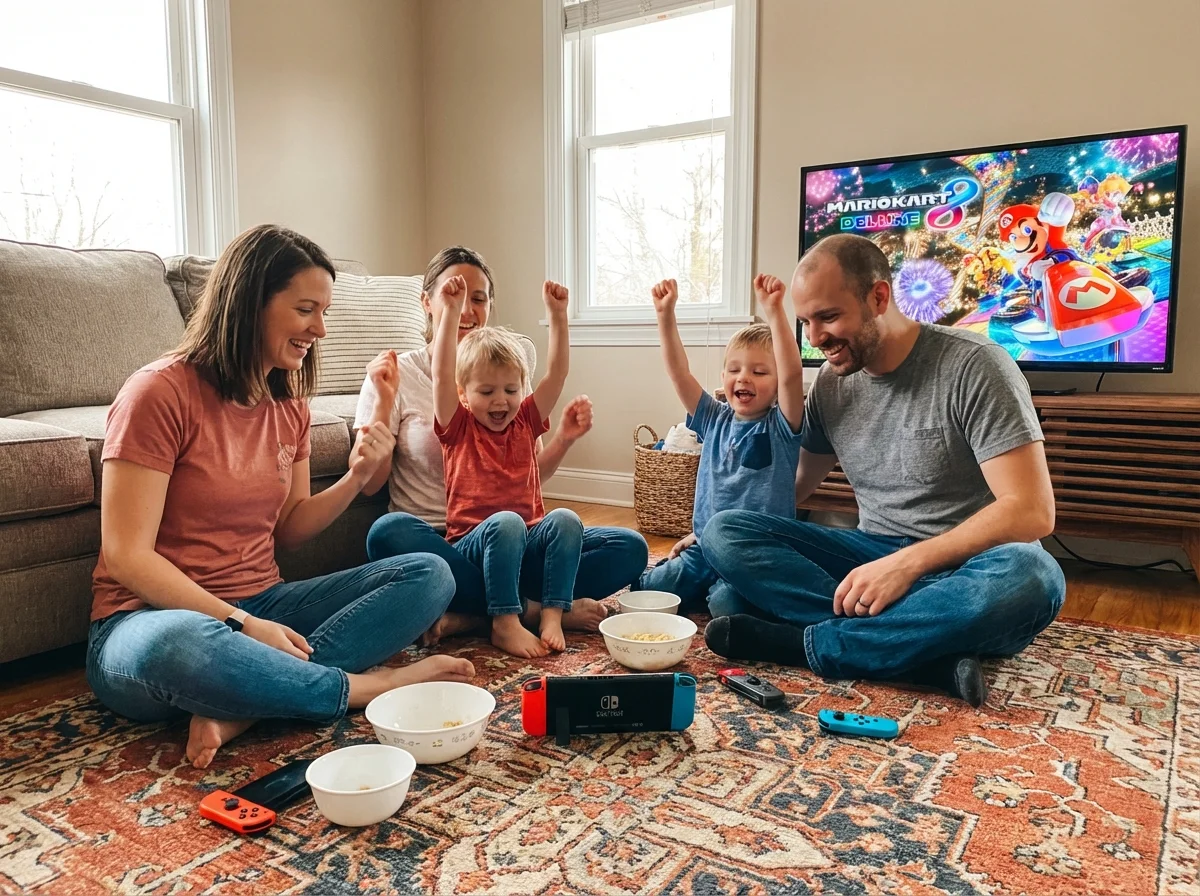
Mario Kart is the universal family game for a reason. Yes, you'll get hit with blue shells. Yes, your kid will trash talk you. That's the whole point. The races are short enough that losing doesn't sting, and the chaos is genuinely hilarious.
Stardew Valley is a farming game that's secretly about community and relationships. You can play co-op and build a farm together. It's surprisingly deep and gives you tons to talk about.
It Takes Two literally requires two players and is designed around cooperation. You can't progress without working together. It's one of the best co-op games ever made, and it'll force you to communicate in ways that feel natural rather than forced.
For Teens (Ages 13+)
Overcooked is a cooking game that will test your relationship in the best possible way. It's chaotic, hilarious, and requires real teamwork. Fair warning: you will yell at each other. That's part of the fun.
Rocket League is soccer with cars. Simple concept, endlessly fun, and you can play on the same team against other people online. Being on the same team against strangers creates a "us vs. them" bond that teenagers actually appreciate.
Valheim or other survival games let you build, explore, and fight together. Teens love the sense of adventure, and having a parent along as a teammate (not an authority figure) changes the dynamic completely.
How to Start Without Making It Awkward
The worst thing you can do is make a big announcement about it. "Family gaming night!" with a calendar invite and a speech about bonding will make your teenager physically cringe.
Instead, try this approach that worked for me:
Step 1: Watch first. Sit nearby while your kid plays. Don't ask a million questions. Just be present. After a few sessions, ask one genuine question about what they're doing. "That looks intense, what's happening?" works better than "what game is that and is it appropriate?"
Step 2: Ask to try. Not "let's play together" but "can I try?" Let them hand you the controller. Be bad. Laugh at yourself. Hand it back. This removes all pressure.
Step 3: Let them invite you. After you've shown genuine interest without forcing it, most kids will eventually say "want to play?" When that happens, say yes immediately. Drop what you're doing if you can. That invitation is gold.
Step 4: Keep sessions short at first. Twenty to thirty minutes is plenty. You want to leave them wanting more, not dreading it. End while it's still fun.
Step 5: Never make it about lessons. The second you turn gaming into a teachable moment about teamwork or problem-solving, you've lost them. Just play. The lessons happen on their own.
 When you hand it backPause, Play, Connect: Core Deck$49 CAD • 172 promptsSee the deck
What to Talk About While Playing (And What Not To)
Here's a secret that took me way too long to figure out: kids open up when they're doing something else. Direct eye contact, sit-down conversations feel like interrogations. Side-by-side gaming? That's when they talk.
Good conversation starters while gaming:
- "Who's your favorite character to play as and why?"
- "What would you do if you could add anything to this game?"
- "Have you played this with your friends? What's that like?"
- "Teach me the strategy here, I'm totally lost"
What not to do:
- Don't use gaming time to bring up grades, chores, or behavior
- Don't check your phone while playing (they notice instantly)
- Don't critique the game's violence, language, or content while playing it
- Don't try to limit the session when they're in the middle of something important
The same side-by-side principle works even when you're not gaming. If your kid is into Fortnite and you want to have better conversations about it, we wrote a whole guide on how to talk to kids about Fortnite that's full of specific questions that actually work.
If you want structured conversation starters that go deeper, we actually built Pause, Play, Connect for exactly this. It's a deck of conversation cards designed to get kids (especially gaming kids) talking about real stuff. We use them at our house during breaks between gaming sessions, and the questions are designed to feel natural rather than forced.
The real trick isn't what you say. It's being consistently present. Show up to play regularly, keep your phone away, and let the conversations happen organically. Some sessions you'll barely talk. Others, your kid will tell you things they'd never share at the dinner table.
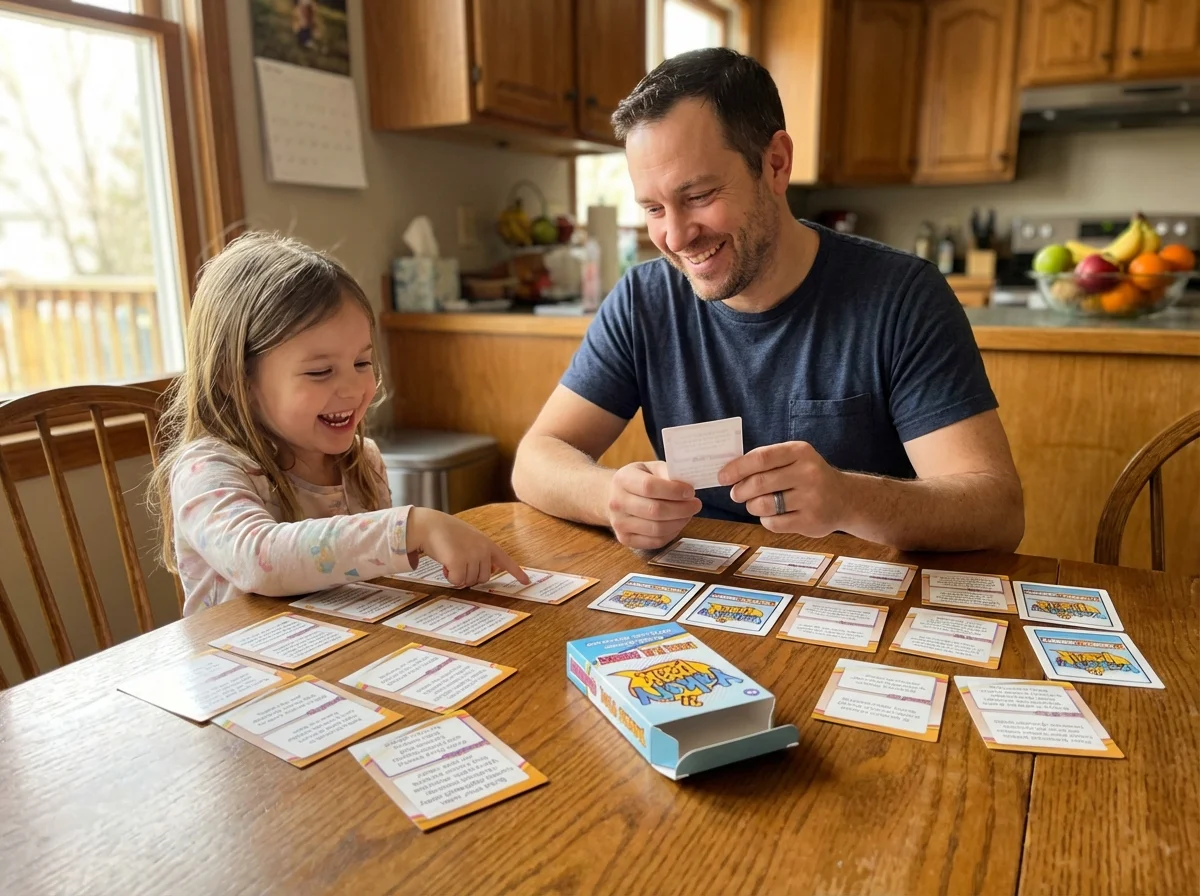
For the Co-Play Window: A curiosity card lands during the in-between beats. Keep a Pause, Play, Connect deck next to the console so a prompt is right there when you sit down together.
When Your Kid Doesn't Want to Play With You
For the Long Build: Connection grows from many small low-pressure conversations. A deck of conversation cards for families with gamer kids on the table makes those talks routine.
Real talk: not every kid will be thrilled about gaming with their parent. Especially teenagers. And that's okay.
If your kid says no, don't push it. Don't guilt them. Don't bring it up repeatedly. Instead, try these approaches:
Show interest in their gaming without participating. Ask about their matches, their rankings, their in-game achievements. You don't have to play to show you care about what they care about.
Play your own game nearby. Get a mobile game or play something on your own device in the same room. Sometimes parallel play is enough. They see you gaming and it normalizes the idea that games are something your family does.
Try a completely different game. Maybe they don't want you in their competitive Valorant matches (honestly, fair). But they might be open to a totally different game that's new to both of you. Starting fresh together, where neither of you has an advantage, can feel more equal.
Give it time. I've talked to parents who tried once, got rejected, and gave up. Kids change their minds. The fact that you asked and respected their "no" builds trust. Six months later, they might surprise you.
Gaming as a Gateway to Bigger Conversations
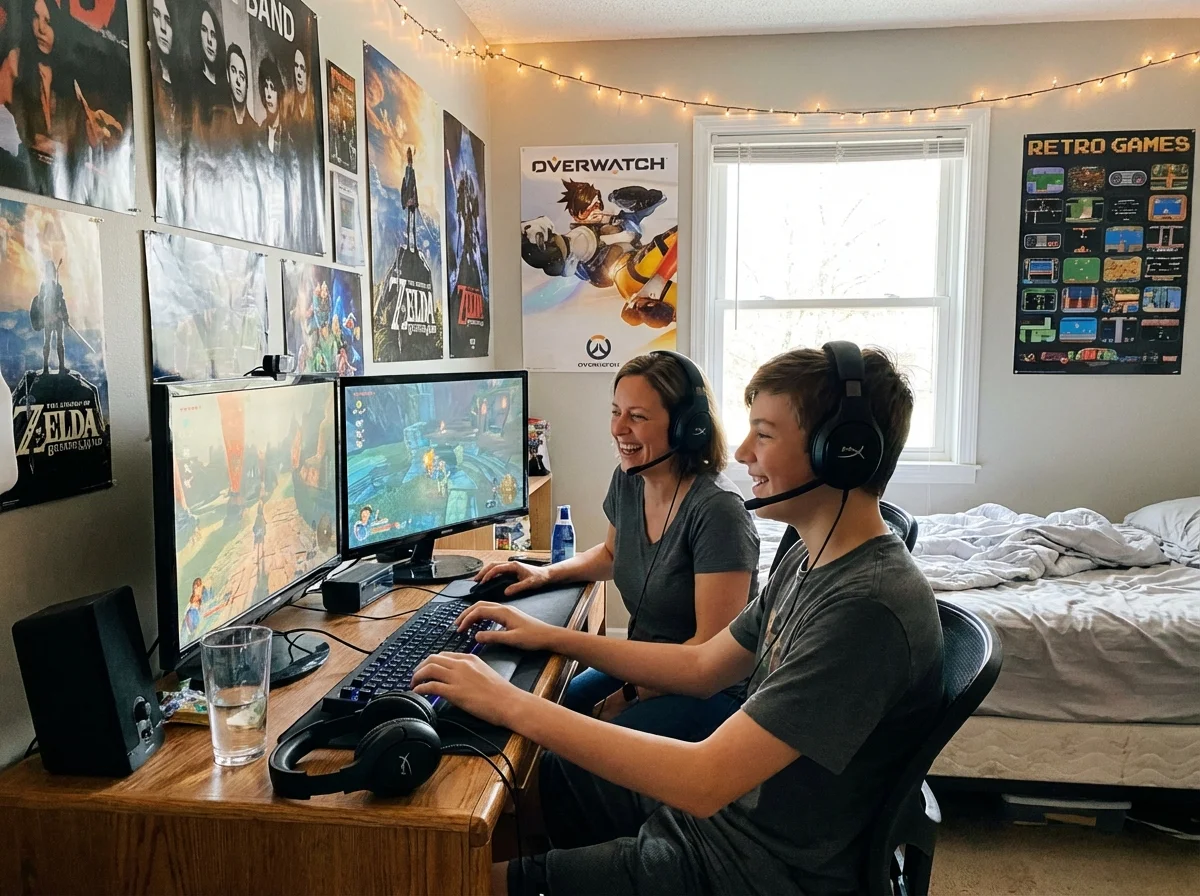
I didn't expect this when I started gaming with my kids, but some of our most important conversations have started in games.
My son's Minecraft village got griefed by another player online. He was devastated. What could have been a "it's just a game" moment turned into a real conversation about how it feels when someone destroys something you worked hard on, about trust, about how to handle people who are mean for no reason.
My daughter's Animal Crossing character got excluded from a group activity by her friends' characters. We talked about social dynamics, about being left out, about how online interactions have real feelings attached to them.
These aren't conversations I could have manufactured. They came up because I was there, paying attention, playing alongside them. If you're worried about when gaming becomes a problem, playing with them gives you a front-row seat to their gaming habits and emotional responses. It's the difference between monitoring from the outside and understanding from the inside.
Making It a Regular Thing (Without Forcing It)
The goal isn't one epic gaming session. It's building a pattern where gaming together is just a normal part of your relationship.
Here's what works for our family:
Pick a consistent time. Saturday mornings before anyone else is up became our thing. No schedule, no alarms. Just "if you're up, I'll be playing." Consistency matters more than duration.
Rotate who picks the game. Let your kid choose most of the time, but occasionally suggest something new. This keeps it from feeling like you're always in their territory.
Celebrate their wins genuinely. When they pull off something impressive in a game, react like it matters. Because to them, it does. A genuine "that was incredible, how did you do that?" means more than you'd think.
Don't keep score on the parenting stuff. Gaming time isn't a reward to be earned or taken away. If it becomes transactional ("finish homework and we can play"), it loses the connection element. Try to keep gaming together separate from the reward/punishment system. For more on setting up screen time rules that actually stick without constant battles, we have a whole guide on that.
Include siblings when it makes sense. Some of our best gaming moments have been all four of us in Mario Kart chaos. But also protect one-on-one time. Different kids need different things.
The Equipment You Actually Need
You don't need a $3,000 gaming PC. Here's the realistic setup for parent-kid gaming:
Nintendo Switch ($300): The best family gaming console, hands down. Portable, kid-friendly game library, easy to set up, and most games support local co-op right out of the box.
Extra controllers ($60-80): You'll want at least two. The Switch Pro Controller is more comfortable for adult hands than the tiny Joy-Cons.
A decent TV: Whatever you already have is probably fine. Don't let equipment be the barrier.
Optional but nice: A PlayStation or Xbox if your older kids play on those platforms. Meet them where they already are rather than asking them to switch.
The total investment to get started is under $400. That's less than most families spend on a single weekend activity, and this one can last years.
For the couch beside themPause, Play, Connect: Core Deck172 prompts that fill the pause between rounds without turning it into a lecture.$49 CAD • 90 cards • 18 reviewsShop the deck
Related Articles
Looking for more ways to connect with your kids in the digital age? Check out these guides:
- Understanding Gaming Culture for Parents (our complete guide to the world your kid lives in)
- How to Talk to Kids About Fortnite (Without Getting One-Word Answers)
- What Is Minecraft Teaching Your Kids? 7 Real Skills Explained
- Screen Time Alternatives That Actually Work
- When Gaming Becomes a Problem: Signs to Watch For
For the Repeat Sessions: A deck of Yakety Pack conversation cards near the gaming setup keeps the post-game ritual going.
Frequently Asked Questions
What age should I start playing video games with my kids?
Around 4-5 is when most kids can handle simple games. Start with tablet games or something like Minecraft Creative Mode where there's no losing. But honestly, there's no wrong age to start. I know parents who started gaming with their teenagers and it worked great. The best time to start is whenever you're ready to try.
How much time should we spend gaming together?
Start with 20-30 minutes and see how it goes. Some sessions will naturally stretch longer, especially on weekends. The key is stopping before anyone gets frustrated or bored. I'd rather have three fun 30-minute sessions per week than one painful two-hour marathon.
What if I'm terrible at video games?
Perfect. Seriously. Being bad at games makes you approachable and gives your kid a chance to be the expert. Don't try to get good in secret. Let them teach you. That dynamic, where they're the capable one and you're the learner, is incredibly powerful for building connection.
My kid only plays violent games. Should I play those?
This depends on your family's values and your kid's age. For teens playing rated-M games, I'd suggest playing together at least once so you can see what they're experiencing and have informed conversations about it. You might be surprised at the context. You might also decide certain games aren't okay. Either way, informed decisions beat uninformed bans.
Can gaming together really improve our relationship?
In my experience, absolutely. It's not magic, and it won't fix deep issues on its own. But it creates a shared language, regular quality time, and a context where kids naturally open up. Three years into gaming with my kids, I can say our relationship is stronger because of it, not despite it.
What if my partner thinks gaming is a waste of time?
Start by inviting them to watch one session. Don't argue about it in the abstract. Let them see the interaction, the laughter, the conversation that happens naturally. Most skeptics come around when they witness the connection firsthand. If not, that's okay too. This can be your special thing with your kids.
Should I set rules for gaming sessions?
Keep rules minimal during your together time. No phones for either of you, that's the big one. Beyond that, let it be free. Save the screen time limits and content discussions for separate conversations. Gaming together time should feel like a break from rules, not an extension of them.

