
Last Tuesday, my 10-year-old threw a controller at the wall because his brother's Fortnite match went three minutes over time. The week before, my 8-year-old deleted his brother's Minecraft world out of spite. After months of siblings fighting over video game turns in our house, I realized our turn-taking system wasn't broken. I'd been solving the wrong problem entirely.
For months, I'd been the turn-taking police. Timer on the counter. Schedule on the fridge. Threats when they didn't comply. Nothing worked. The fights got worse. The resentment grew. I was trying to force fairness into a situation I didn't actually understand.
Then I did something radical: I sat on the couch and watched them play for a week. Not to enforce rules. Just to watch. What I learned changed everything about how we handle gaming in our house.
Why Turn-Taking Timers Don't Work (And What Your Kids Really Want)
This is the small version of the bigger pattern we walk through in our piece on sibling gaming conflicts.
Here's the thing nobody tells you: that egg timer on your counter is basically useless. Sure, it dings after 30 minutes. But what if your kid just started a boss battle? What if their friends just logged on? What if they're one block away from finishing their castle?
My older son explained it to me like this: "Dad, imagine you're watching the Super Bowl and I turn off the TV at halftime because your time's up."
He had a point.
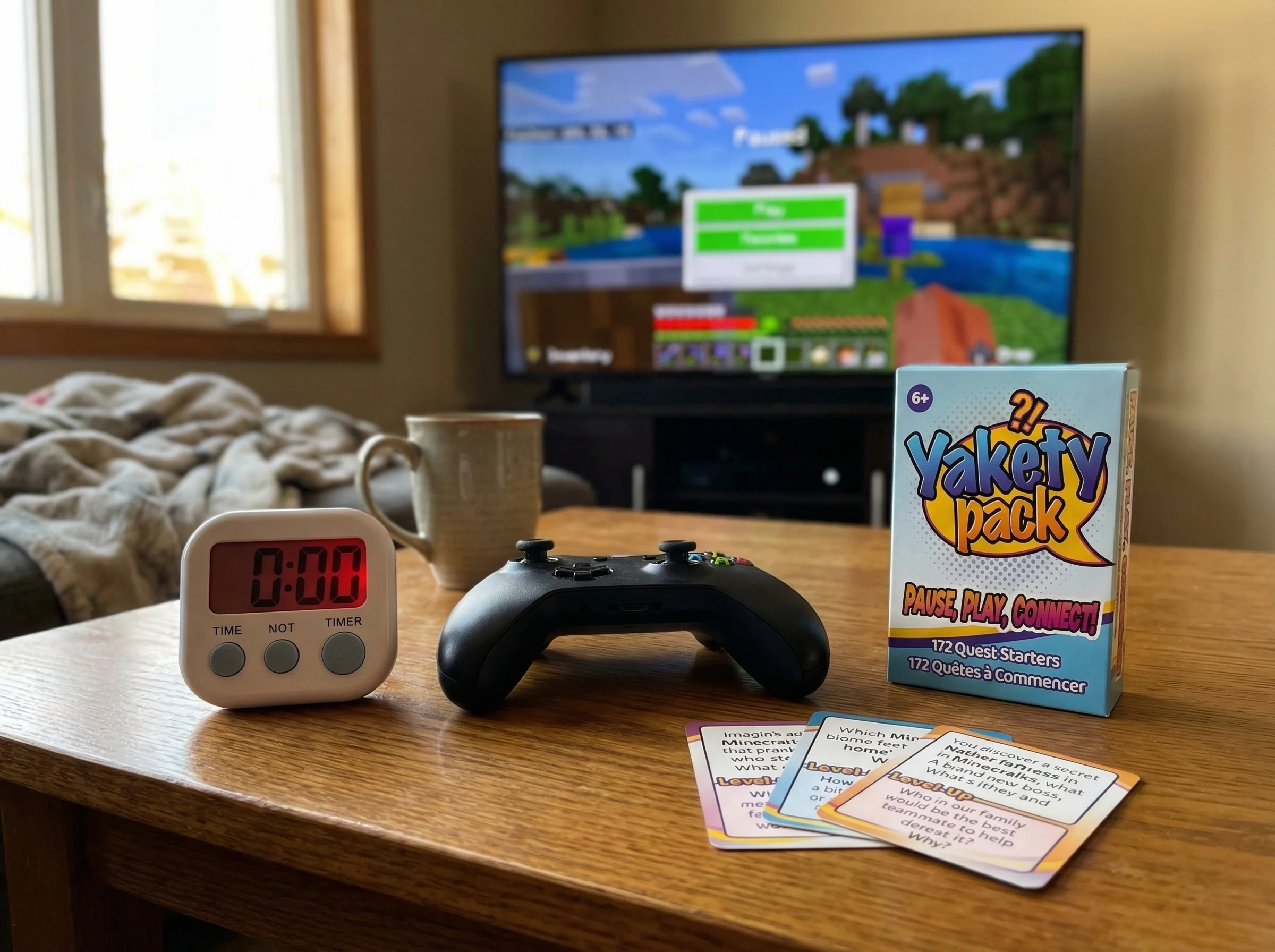
The real problem with rigid turn-taking? Games aren't built in neat 30-minute chunks. Some matches last 7 minutes. Some last 45. Some games you can pause anytime. Others, you're locked in until it's over.
I watched my younger son lose two hours of Minecraft progress because his turn ended mid-build and he forgot to save. His brother loaded a different world. Gone. Just like that. The screaming match that followed? Completely preventable if I'd understood what was actually at stake.
What kids really want isn't equal time. They want:
- To finish what they started
- To play when their friends are online
- To feel like their gaming matters
- To not lose progress
- To have their turn mean something
Once I got that, everything changed.
 Instead of counting minutesPause, Play, Connect: Core Deck172 prompts that let each kid say what their game is actually worth to them.$49 CAD • 90 cards • 18 reviewsShop the deck
The Real Reasons Siblings Fight Over Gaming
Most of those reasons trace back to screen-time framing; we wrote our north-star take on it in our guide to turn screen time into connection time.
For three months, I kept a notebook. Every gaming fight, I wrote down what triggered it. The patterns shocked me.
It was never actually about the controller.
My younger son didn't care that his brother played for 35 minutes instead of 30. He cared that his brother always got the "prime time" slots - right after school when all their friends were online. By the time his turn came, everyone had logged off.
"I only get garbage time," he told me one night. "Like when nobody wants to play anymore."
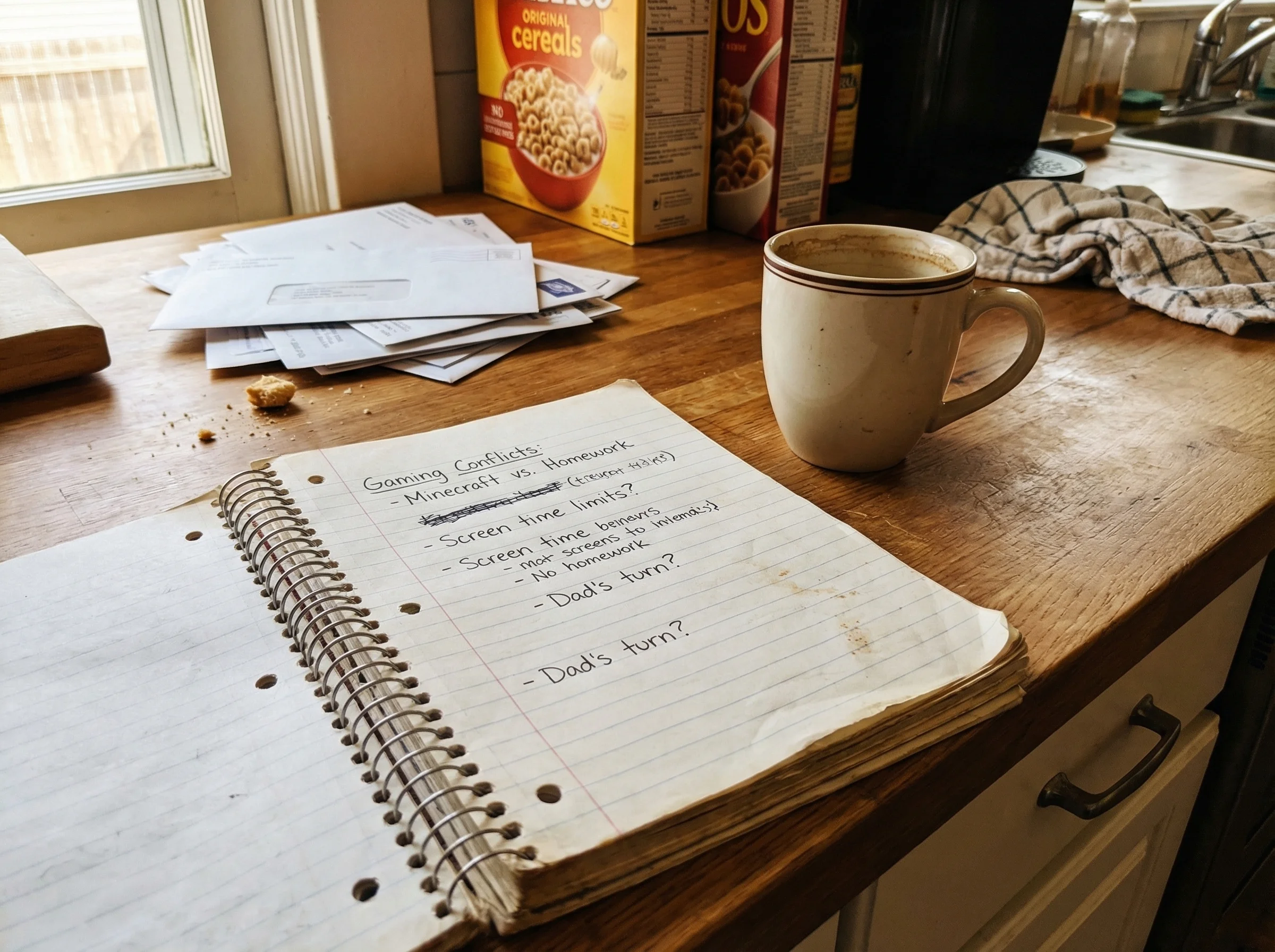
The power dynamics were brutal. Older kid picks the games. Older kid gets first turn. Older kid's friends matter more. Younger kid retaliates by "accidentally" messing with save files or crying to extend turns.
Then there's the gaming style clash. My older son plays to win - competitive shooters, ranked matches, leaderboards. My younger son plays to create - building elaborate worlds, designing characters, telling stories. When we forced them to share equal time, we were comparing apples to rocket launchers.
The FOMO hit different for each kid too. Missing a Fortnite event that happens once? Devastating. Having to stop building your zoo in Planet Zoo? Annoying but not catastrophic. But our one-size-fits-all turn system treated both the same.
Game-Specific Solutions That Actually Work
After my week of observation, we scrapped the egg timer. Instead, we built a system around how games actually work.
For online multiplayer games (Fortnite, Rocket League, Overwatch):
- Turns = number of matches, not minutes
- 3-5 matches depending on length
- If friends are online, negotiate for extended session
- Can't start a new match in the last 10 minutes of a turn
For creative/building games (Minecraft, Roblox, Animal Crossing):
- Natural stopping points (finished building, completed task)
- Minimum 45 minutes to make progress meaningful
- Must save before switching
- Screenshot cool builds to share later
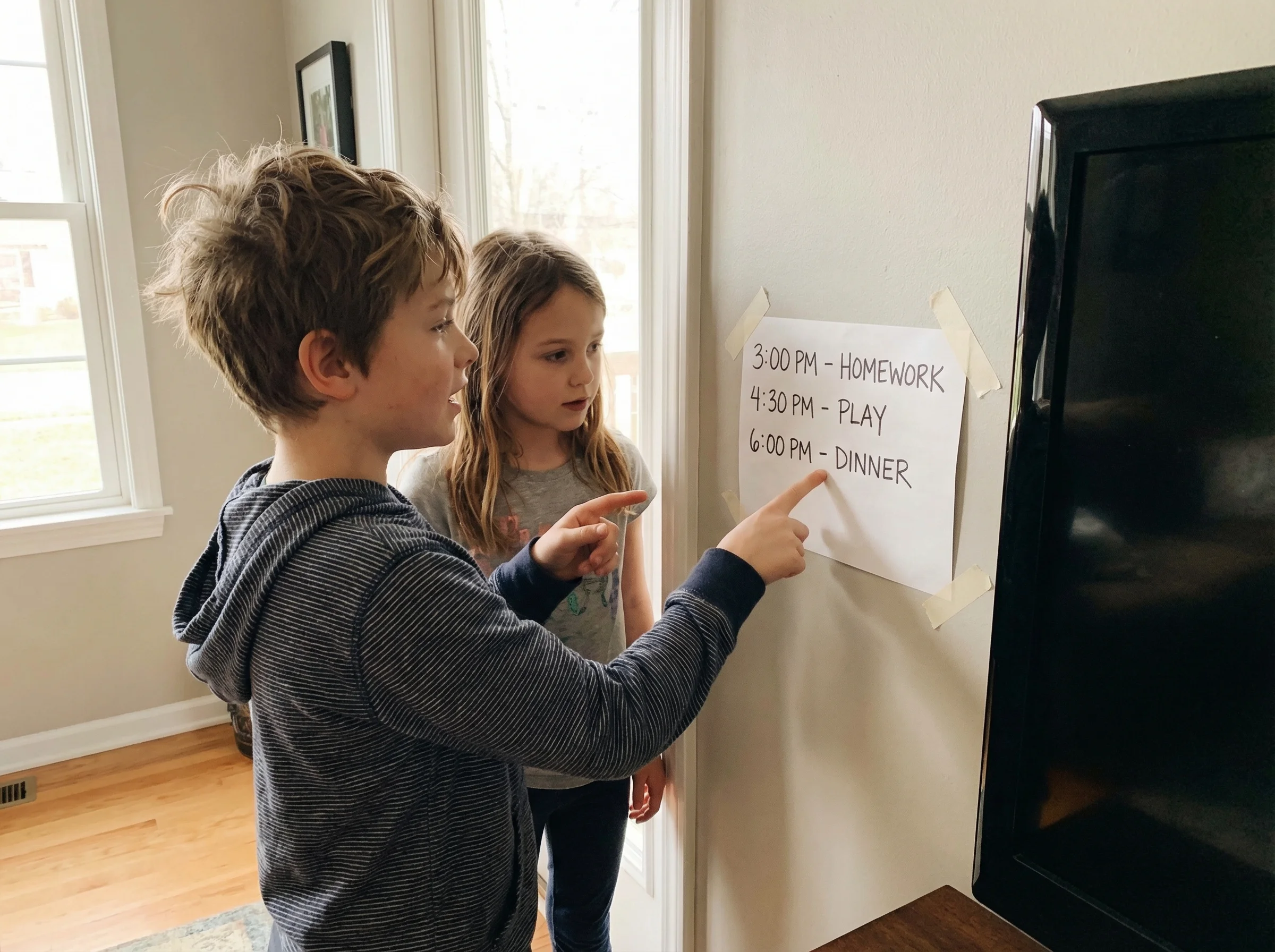
For story/campaign games (Spider-Man, Zelda, Pokemon):
- Play until end of mission or checkpoint
- Roughly 30-60 minutes but flexible
- No switching mid-boss battle ever
- Keep a shared notebook of where each person is in the story
The "After School Split": Monday/Wednesday/Friday: Older kid gets first slot (his friends play then) Tuesday/Thursday: Younger kid gets first slot Weekends: Negotiate based on who has plans
Is it perfect? No. Do they still argue sometimes? Yes. But the fights dropped by 80% because the system actually makes sense for how games work.
For the Middle of the Game: Your script makes or breaks the resolution. Pull a card from Pause, Play, Connect for a calm prompt that beats "figure it out yourselves."
Teaching Kids to Solve Their Own Gaming Conflicts
The best thing we ever did? Sunday night gaming meetings. Five minutes, max. Both kids present their gaming schedule for the week.
"I need extra time Tuesday because there's a Fortnite event." "Fine, but I get extra Thursday for my Minecraft realm party." "Deal."
We wrote a family gaming constitution. Sounds fancy, but it's just rules they helped create:
- Save files are sacred (touching someone else's = losing your next turn)
- Online events get priority
- If you negotiate a trade, stick to it
- State your case with reasons, not whining
- Controller throwing = automatic next turn loss
The magic happened when they started solving problems without me. Last month, I heard them in the living room:
"Dude, let me finish this match and you can have an extra match on your turn." "Only if you help me beat that boss later." "Deal."
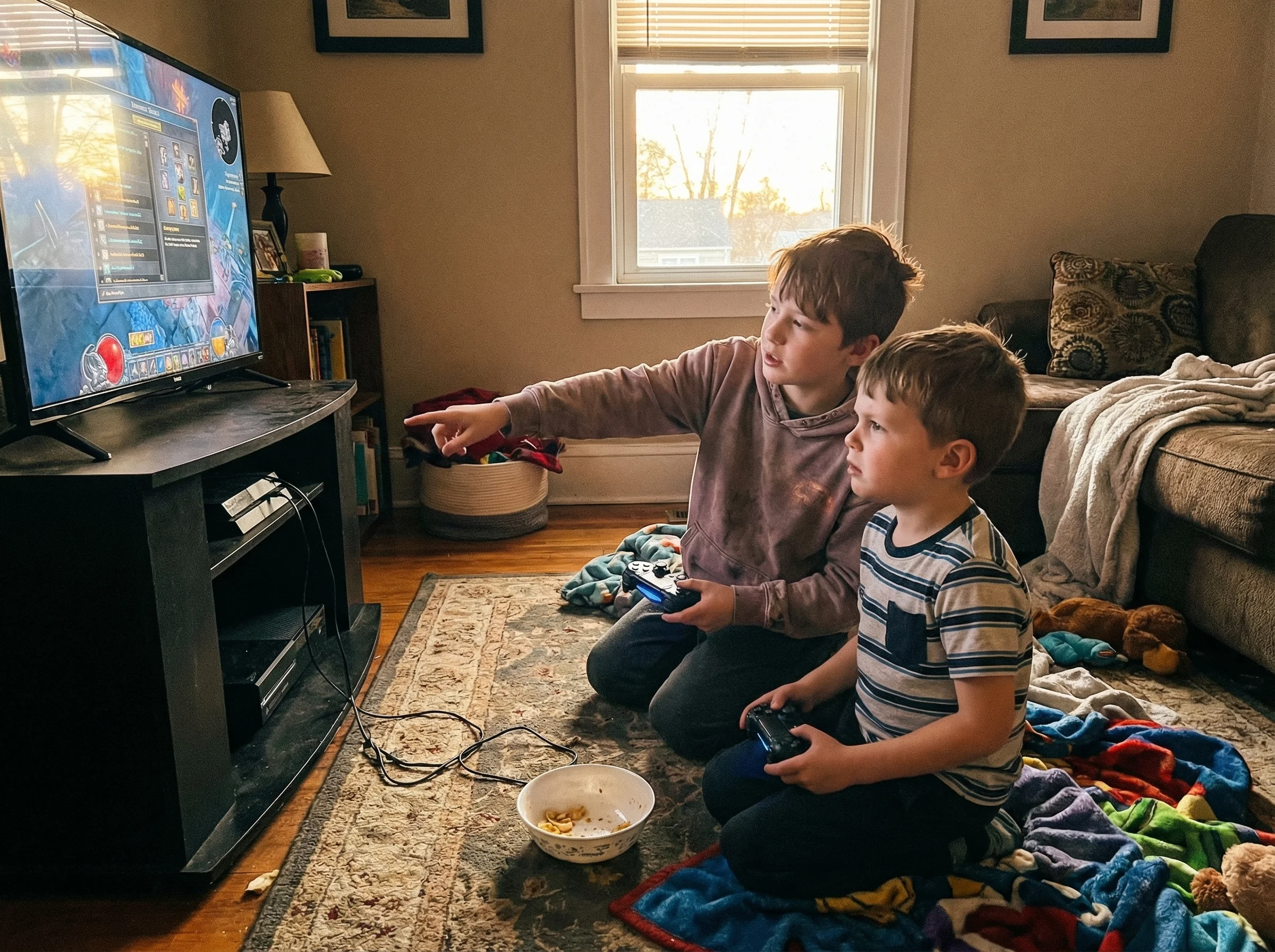
I almost cried. They were negotiating. Compromising. Treating each other's gaming as legitimate.
One trick that helped: We started using questions from Yakety Pack during our gaming meetings. Stuff like "What makes a trade fair in your favorite game?" got them thinking about fairness as a concept, not just "I want more time."
When to Step In vs Let Them Fight
Not every gaming fight needs parent intervention. Some of my best parenting moves were walking away.
Let them handle:
- Negotiating five more minutes
- Deciding who gets which game
- Minor schedule switches
- "That's not fair" complaints (unless it genuinely isn't)
Step in for:
- Physical aggression
- Deleted save files
- Repeated sabotage
- Bullying about skill level
- Complete communication breakdown
The deleted save file incident taught me the most. Instead of punishment, we had a conversation: "How would you feel if someone destroyed something you spent 20 hours building?" "Bad." "How do we make this right?" "I could help him rebuild?" "That's a start."
They spent the next three turns working together to rebuild the world. Turned a relationship disaster into a bonding experience.
 For the rebuild afterwardPause, Play, Connect: Core Deck$49 CAD • 172 promptsSee the deck
Alternative Solutions Nobody Talks About
Sometimes the best solution isn't taking turns at all.
Split-screen cooperation: Some games let both kids play simultaneously. Overcooked, Minecraft split-screen, It Takes Two. They're playing together, not against the clock.
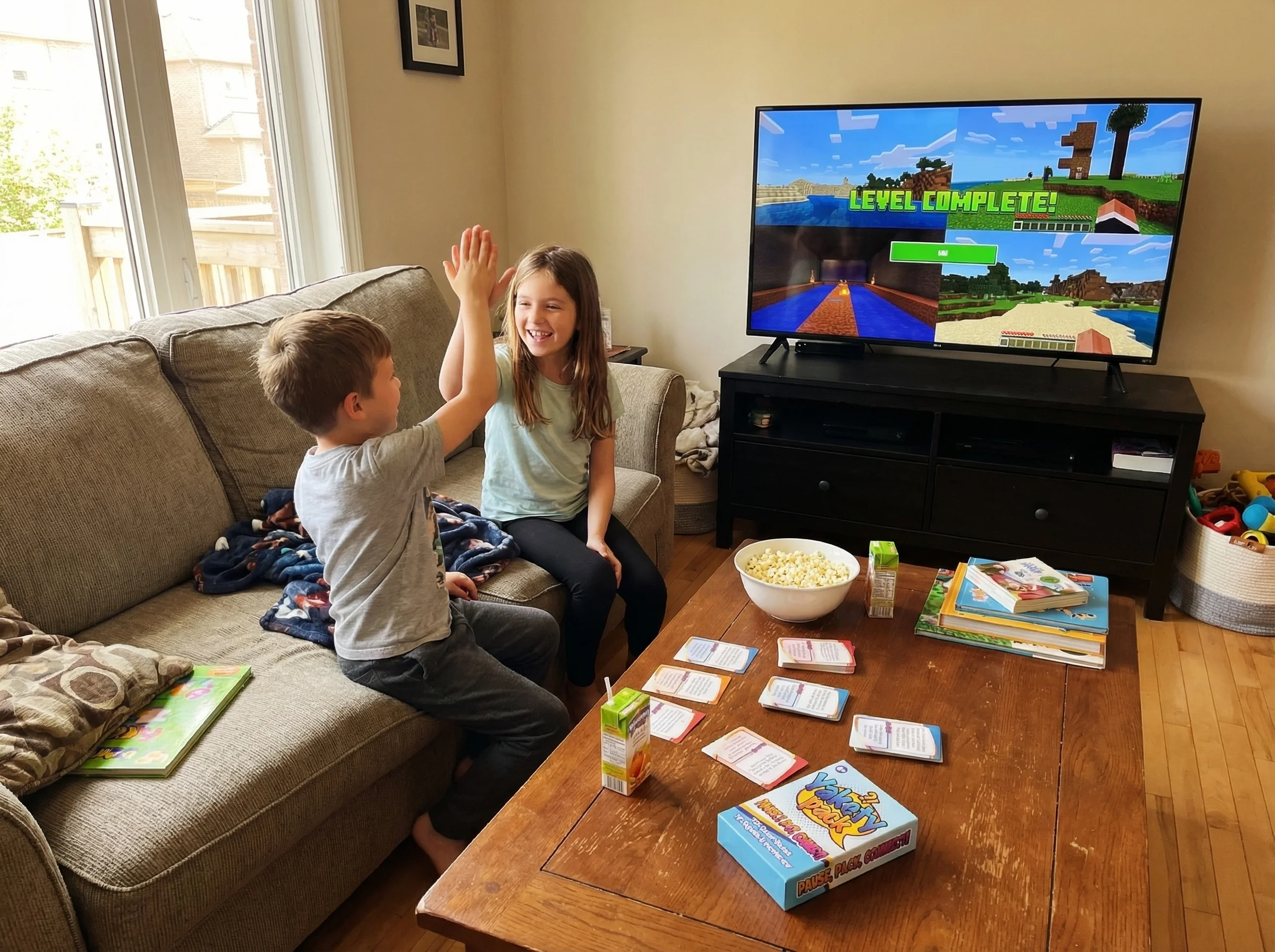
Gaming buddy system: Older kid struggling with a boss? Younger kid watches and cheers. Younger kid building something complex? Older kid offers design tips. They started interviewing each other about their games (inspired by Yakety Pack questions), which made watching someone else play actually interesting.
Tournament Saturdays: Once a month, we run family tournaments. Mario Kart, Smash Bros, Rocket League. Winner gets first pick of gaming times next week. Loser gets consolation prize (extra dessert, later bedtime). Turns competition into an event, not daily conflict.
Earning bonus time: Finished homework early? Extra 15 minutes. Helped your brother with his game? Extra match. Solved a conflict without parental help? Both get bonus time.
The key is flexibility. What works this month might not work next month. Their interests change. Their friend groups shift. The system has to evolve.
Making Peace With Imperfect Solutions
Real talk: Your kids will still fight about gaming sometimes. Mine do. That's normal.
What matters is the trajectory. Are they fighting less than last month? Are they solving more conflicts themselves? Are they respecting each other's gaming more?
My boys are 8 and 10 now. In two years, they'll have different friends, different games, different schedules. The turn-taking system we use today will be obsolete. That's okay.
What won't be obsolete? Their ability to negotiate. To compromise. To see someone else's perspective. To value fairness over rigid rules. These gaming conflicts are practice runs for roommate disputes, workplace negotiations, relationship compromises.
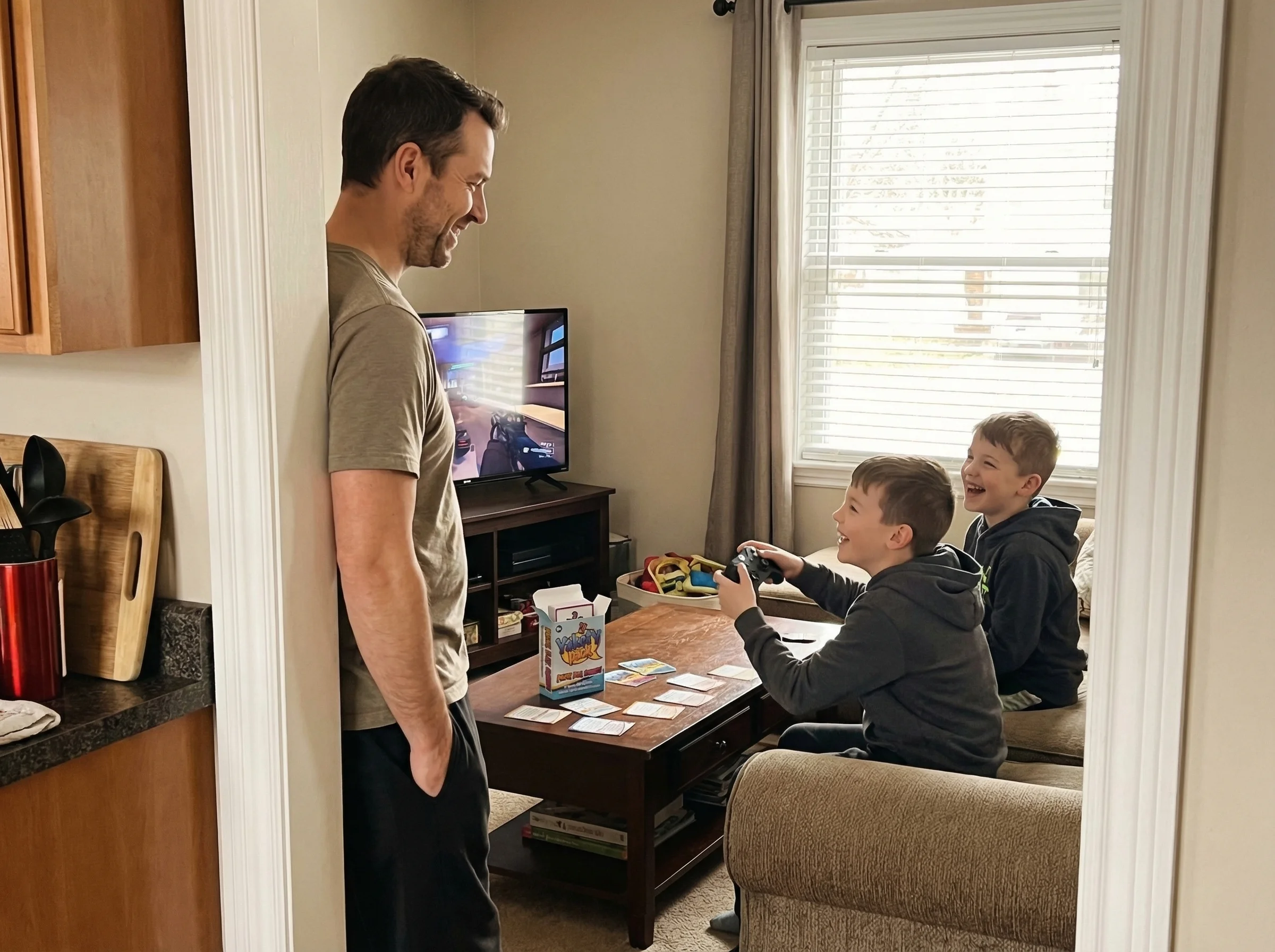
Last week, I heard my older son tell his friend: "Hold on, it's my brother's turn. I'll be on in like 20 minutes after he finishes his build."
No complaint. No eye roll. Just matter-of-fact respect for his brother's gaming time.
That's when I knew we'd figured something out. Not perfect turns, but something better: teaching them to actually give a damn about each other's gaming experience.
The controller hasn't hit the wall in two months. I'll take that win.
For the Repeat Sessions: Most lasting fixes come from many tiny post-game conversations. A deck of conversation cards for families with gamer kids on the gaming console is the easiest reminder.
What You Can Do Today
Stop counting minutes. Start counting what matters to your kids.
Watch them play for 30 minutes. Not to police, just to understand. What games are they playing? Can they pause? When are their friends online? What makes them upset about switching?
Then ask them: "What would make game turns feel fair to you?"
Their answer might surprise you. Mine sure did.
Before the Sunday gaming meetingPause, Play, Connect: Core Deck172 prompts that give a fairness argument somewhere better to go than the kitchen timer.$49 CAD • 90 cards • 18 reviewsShop the deck

