
It's Saturday afternoon. Your kid has been glued to Minecraft for three hours straight. Your partner shoots you That Look from across the kitchen - the one that says "are you seriously letting this happen?" You open your mouth to say "it's educational," but then you stop. Because honestly? You can't name a single specific thing they've learned today.
Here's the thing. You're probably right that something valuable is happening. You just don't know how to see it yet.
I've spent years watching my own kids play Minecraft. I've watched over a hundred other kids build, explore, fail, and rebuild in those blocky worlds. And what I've learned has completely changed how I think about screen time, gaming, and what it means for a kid to "learn something." The skills are real. They're specific. They transfer to school, to friendships, to life. But the part nobody talks about? The most important thing Minecraft can teach your kid has nothing to do with the game itself. It's the conversation it opens between the two of you.
This is the guide I wish I'd had five years ago. Not a vague list of "creativity and problem-solving" buzzwords, but a real breakdown of what's happening behind those pixelated blocks, how to recognize it, and how to turn it into genuine connection with your kid.
It Looks Like They're Just Stacking Blocks
Let's be honest about the perception problem. When you glance at your kid's screen and see a bunch of colored cubes, it doesn't exactly scream "rigorous education." The graphics are deliberately simple. There's no visible curriculum. No progress bar that says "Your child has mastered spatial reasoning: Level 4." Minecraft is not the only game with educational value; our roundup of best games to play with kids covers the other titles that earn their seat at the controller.
But think about LEGO for a second. Nobody questions a kid spending four hours building a massive LEGO set. Yet Minecraft is essentially LEGO with infinite pieces, no instructions, and a survival challenge layered on top. It's more cognitively demanding than following a printed LEGO manual step by step.
The key distinction most parents miss: active creation versus passive consumption. When your kid is building in Minecraft, they're making hundreds of small decisions per minute. What material? What shape? How tall? Will it hold water? They're constructing, testing, and revising. That's closer to woodworking than watching TV.
I remember the exact moment this clicked for me. I sat down behind my son one evening, planning to tell him to wrap it up for dinner. Instead, I watched for a few minutes. He was building an automated farm, and I realized he was doing math in his head - calculating how many blocks wide the water channels needed to be so crops would flow to a central collection point. He was troubleshooting water flow mechanics, adjusting the slope, redesigning sections that didn't work. This was more mentally demanding than anything in his homework folder that week. And he was doing it voluntarily, with total focus, for fun.
That was the evening I stopped seeing Minecraft as a problem and started seeing it as a window.
If you want to go deeper on bridging the gap between your world and your kid's gaming world, I wrote a whole guide on how to talk to kids about Minecraft that covers the conversation side in detail.
 Sit down behind themPause, Play, Connect: Core Deck172 prompts that give you a better opener than "how was Minecraft today."$49 CAD • 90 cards • 18 reviewsShop the deck
What Your Kid Is Actually Learning (Broken Down by Category)
Let me get specific. Not "Minecraft teaches creativity" specific. Actually specific.
Building and Spatial Intelligence
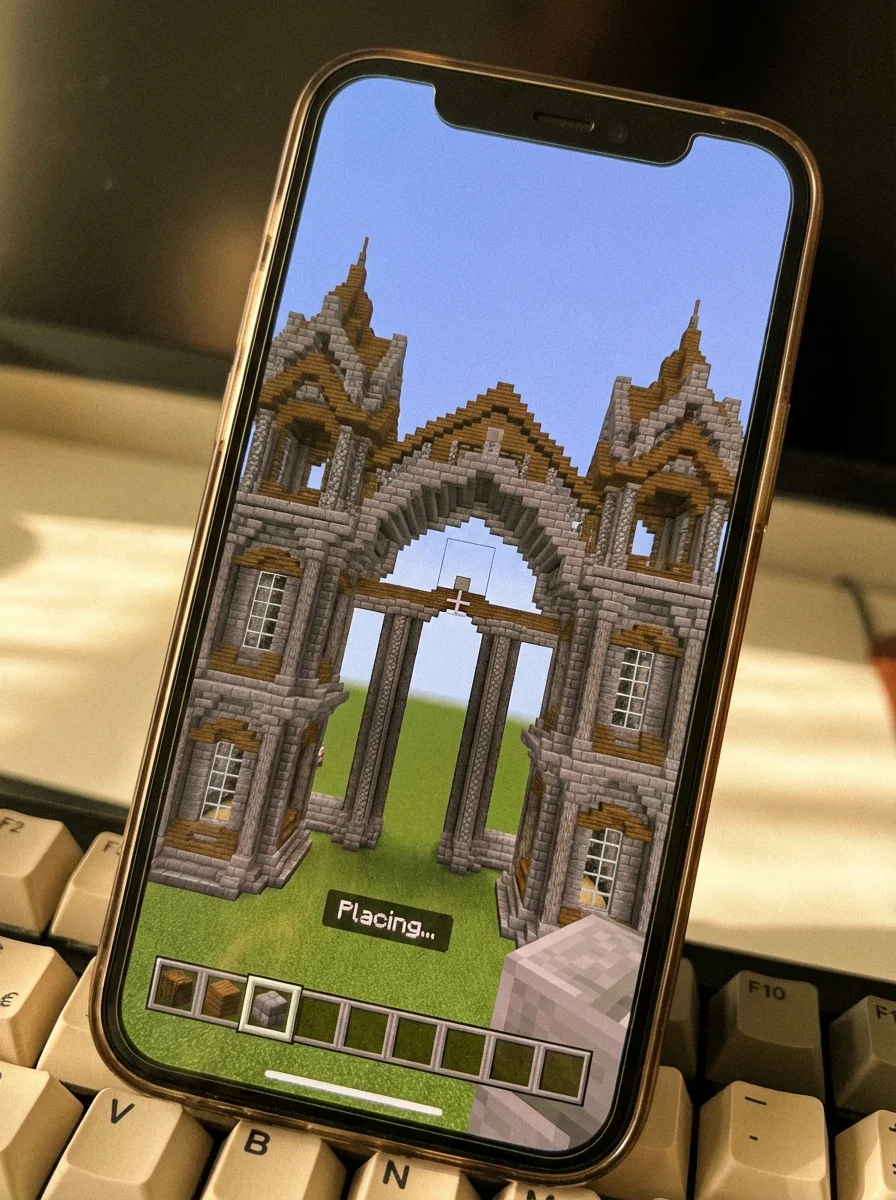
Every time your kid builds a structure in Minecraft, they're practicing 3D visualization. They're working with symmetry, proportion, and scale without anyone teaching them the vocabulary. A kid who builds a three-story house with a spiral staircase has internalized structural principles that architects study in school.
In real life, kids with strong spatial reasoning perform better in geometry, physics, and even reading comprehension. When your kid estimates they need 64 blocks to finish a wall, that's mental math in context. When they build a roof with the right pitch so it "looks right," that's intuitive geometry.
Resource Management and Financial Thinking
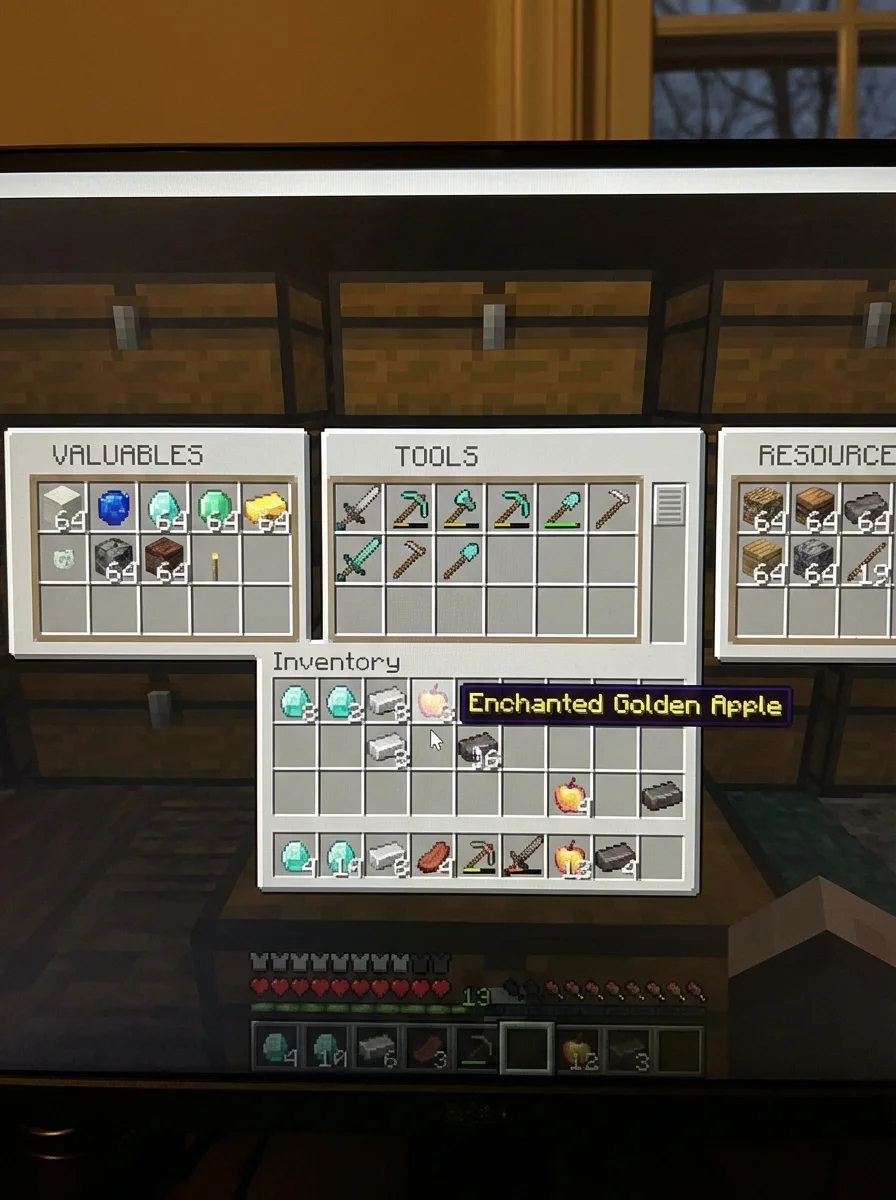
Minecraft's survival mode is basically a course in budgeting. Your kid finds diamonds, and they face a genuine decision: use them now on a sword that feels great immediately, or save them for an enchanting table that pays off way more in the long run. That's delayed gratification. That's cost-benefit analysis. That's the same mental muscle they'll need when they're deciding between spending a paycheck and investing it.
Inventory management forces prioritization too. You can only carry so much. What do you keep? What do you leave behind? Every trip into a mine is an exercise in "what matters most right now versus what might matter later." I know adults who struggle with that question daily.
Engineering and Systems Thinking Through Redstone
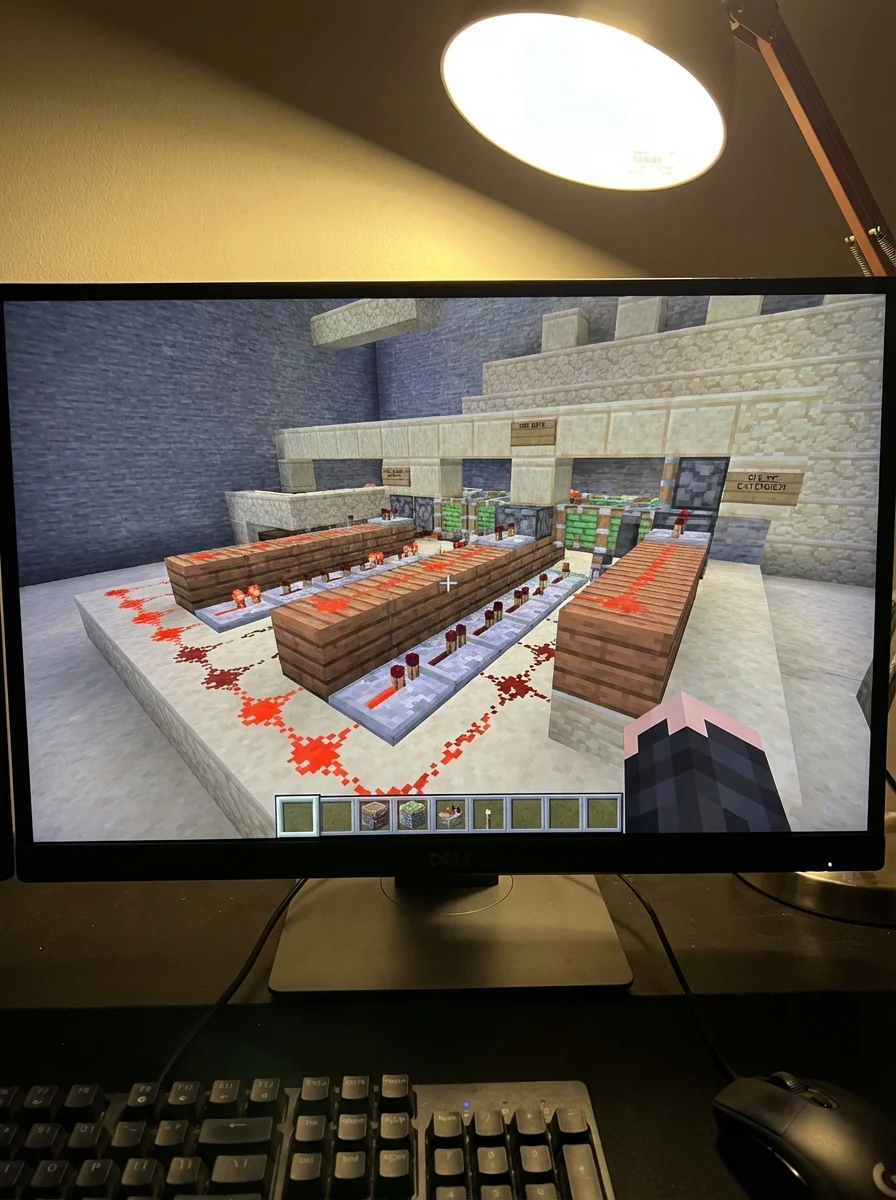
This is the one that blows my mind every time. Redstone - Minecraft's electrical system - lets players build functional circuits. We're talking AND gates, OR gates, NOT gates, timing circuits, and memory cells. These are the exact same logic concepts taught in university computer science courses.
One of the kids I work with, an 11-year-old, built an automatic item sorting system using comparators and hoppers. I asked him, "How does the game know which item goes where?" He said something like, "The comparator checks if the item matches what's in the hopper, and if it does, it sends a signal to unlock that chest." That's a perfect if-then statement. Built with his hands, debugged through trial and error.
Not every kid gets into Redstone, and that's fine. But for the ones who do, they're teaching themselves the foundations of programming and electrical engineering. For free. While having fun.
Persistence and Emotional Resilience
This might be the single most underrated skill Minecraft teaches, and it's the one I care about most as a parent.
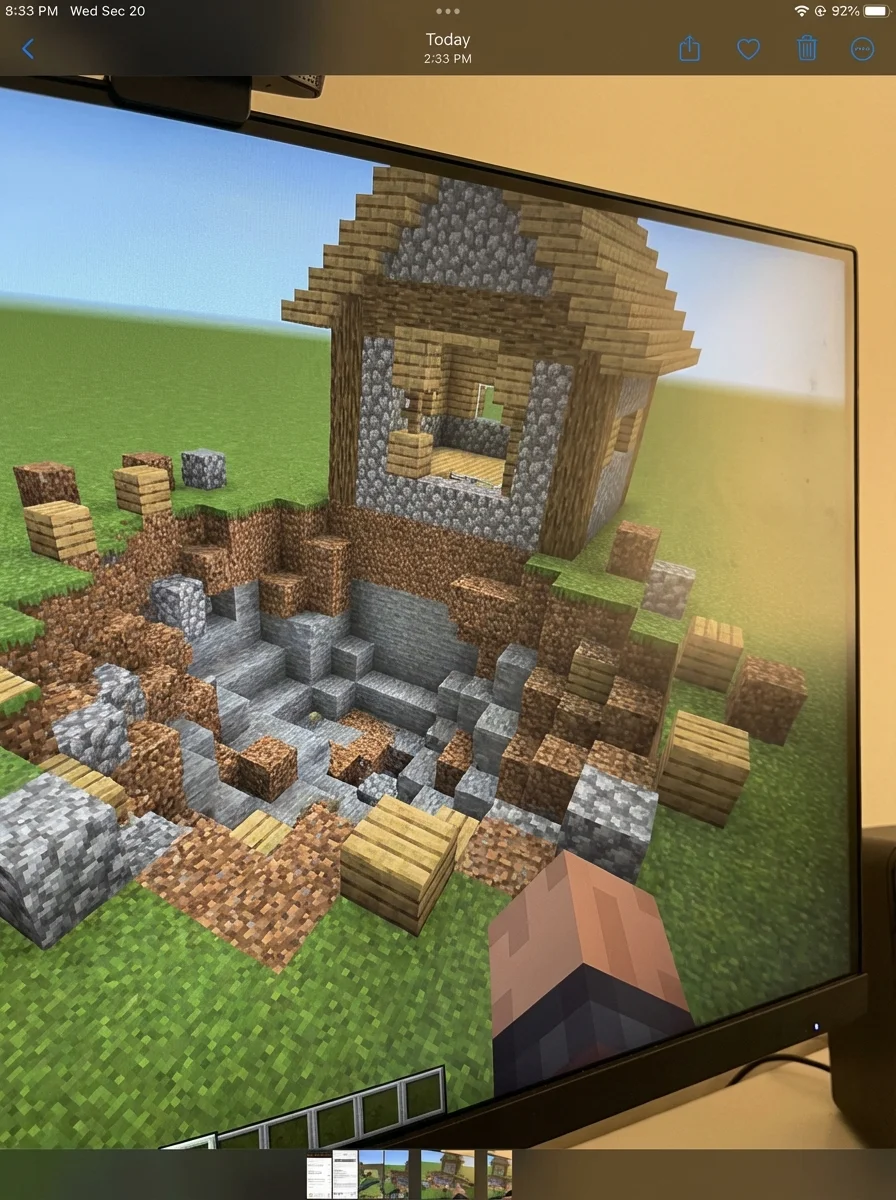
Minecraft doesn't have an undo button. When a Creeper sneaks up and detonates next to your kid's castle, that castle is gone. When they accidentally fall into lava carrying their best gear, that gear is gone. The game doesn't soften the blow. It doesn't offer a do-over.
My youngest spent two weeks building an elaborate base in survival mode. It had multiple rooms, a farm, an underground mine shaft, the works. One evening, a Creeper explosion triggered a chain reaction that destroyed the main wall and flooded half the structure with water. He was devastated. He walked away from the computer, went to his room, and didn't play for a full day.
Then he came back. And he rebuilt it. Better. This time with Creeper defenses, lit pathways, and a backup storage room in a separate location. He didn't need a lecture about resilience or growth mindset. Minecraft gave him the experience directly. Lose something you care about, feel the loss, choose to try again, and improve on the original. That cycle is worth more than any motivational poster on a classroom wall.
Social Skills and Teamwork in Multiplayer
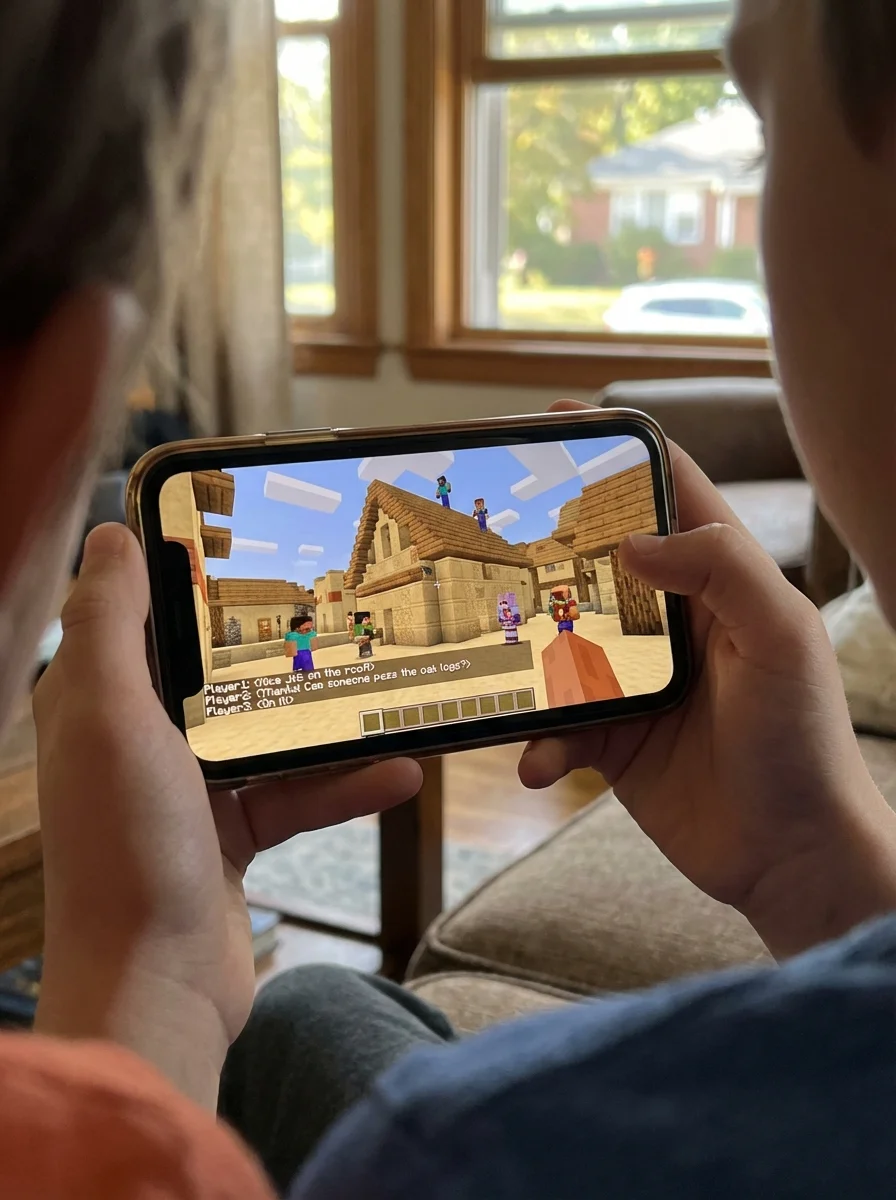
When kids play on multiplayer servers, the social dynamics get genuinely complex. They're negotiating trades, dividing labor on group builds, resolving conflicts when someone griefs their project, and building trust with teammates over weeks and months. The dynamics shift the moment your kid moves from a private Minecraft world to a public server; our breakdown of what does griefing mean in gaming covers the specific pattern of older players wrecking younger kids' builds, which is the most common version of the problem on Minecraft servers specifically.
I've watched kids naturally assign roles on a server without any adult telling them to. One kid mines, another builds, a third handles farming. That's division of labor. When disputes come up over territory or resources, they work through them - sometimes badly at first, but they learn. A kid who runs a small Minecraft server is essentially a project manager dealing with resource allocation, community standards, personality conflicts, and rule enforcement.
These aren't hypothetical skills. They're the exact dynamics these kids will navigate in college group projects and workplace teams.
Research and Self-Directed Learning
Nobody teaches kids how to play Minecraft. They teach themselves. They look up crafting recipes on the wiki, watch tutorials and extract the steps they need, compare strategies, and figure out what works. That's research methodology and information literacy, and they're doing it at age 9 because they want to build a better automatic chicken farm.
Carry the Conversation Forward: The skills your kid is building in Minecraft are worth asking about later. Grab a deck of Pause, Play, Connect to keep a stack of prompts on the shelf for the moments outside the build session.
When Minecraft Is Teaching vs. When It's Just Screen Time
Now, I'm not going to pretend all Minecraft time is equally valuable. It's not. And being honest about that is important if we want to be taken seriously when we say "Minecraft is educational."
Here's the spectrum, roughly from most to least educational:
Active building from imagination sits at the top. When your kid is designing something original, solving problems as they go, and making creative decisions, that's peak learning. Spatial reasoning, planning, creative expression - all of it is firing.
Survival mode challenges are close behind. The resource constraints, time pressure from the day-night cycle, risk-reward decisions - these force genuine thinking. Do I explore that cave with half health? Do I bring my best gear to the Nether? Every choice has real consequences.
Following a tutorial with a purpose falls in the middle. If your kid is learning a new technique to apply to their own project, there's solid learning happening. If they're just going through the motions, less so.
Copying builds block-by-block from YouTube is lower. It's fine for fine motor practice and exposure to new designs, but the cognitive engagement drops off when someone else has done all the thinking.
Watching Minecraft content without playing sits near the bottom. It can be entertaining and even inspiring, but let's call it what it is: it's TV. It's not the same as playing.
The question I use as a filter: "Is my kid making decisions, or following a script?" Decision-making is where the learning lives.
Here's a counter-intuitive one for you. Creative mode isn't automatically more educational than Survival mode. I know, I know. Most parents and even some teachers assume Creative mode equals "the learning mode" and Survival mode equals "the violent one." But Survival teaches more life skills precisely because it has constraints. It forces resource management, time management, risk assessment, and persistence through loss. Creative mode is wonderful for pure creative expression, but it removes the friction that drives the deepest learning.
Watch for these red flags that learning has plateaued:
- Same type of build repeated over and over without variation
- Refusal to try new game mechanics like Redstone, enchanting, or brewing
- Only watching other people play, never playing themselves
- Getting angry instead of curious when something goes wrong
That last one matters a lot. A kid who gets frustrated, takes a breath, and tries a different approach is learning. A kid who rages and quits every time has hit a wall that might need your attention. If you're noticing patterns like that, it might be worth reading about when gaming becomes a problem to understand where the line is.
What Minecraft Teaches at Ages 6, 10, and 14
One thing that bugged me about every "Minecraft is educational" article I've read is that they treat all kids the same. But a 7-year-old and a 13-year-old are having completely different developmental experiences in the same game. Here's what that actually looks like.
Ages 5 to 7: Foundation Skills
At this stage, kids are developing basic spatial awareness by navigating a 3D world. They're learning cause and effect at its most fundamental: punch a tree, get wood, turn wood into planks, turn planks into a crafting table. They're beginning to categorize (types of blocks, types of tools, types of animals) and building fine motor skills with mouse and keyboard or controller.
Your role at this age: play alongside them. Narrate what you see. "Wow, you figured out that wood makes planks!" reinforces their learning cycle more than you'd think.
Ages 8 to 10: Problem-Solving and Planning
Kids at this stage start decomposing big goals into smaller steps. "I want to build a castle" becomes "first I need stone, then foundation, then walls, then towers." They plan resource-gathering trips, build simple farms and Redstone contraptions, and research techniques on YouTube with genuine purpose. In multiplayer, you'll see real social negotiation: trading, territory agreements, collaborative builds.
Your role: ask about their process. "What's your plan for this build?" reinforces the planning skills already developing.
Ages 11 to 13: Complex Thinking and Social Dynamics
This is where Minecraft starts looking less like a game and more like a platform. Kids build genuinely complex Redstone machines, manage economies on servers, mentor younger players, and create elaborate adventure maps with actual narrative structures.
Your role: treat their projects like real accomplishments. "Tell me how that machine works" lets them practice technical communication while feeling valued.
Ages 14 and Up: Meta-Skills and Identity
Teens who stick with Minecraft often move into modding (writing actual Java code), content creation, server administration, and marketplace sales. Some earn real money through commissions.
Your role: connect it to the wider world. "This is basically what software engineers do" isn't a stretch. A teen modding Minecraft is learning version control, debugging, and user experience design whether they realize it or not.
 Whatever age they arePause, Play, Connect: Core Deck$49 CAD • 172 promptsSee the deck
How to See the Skills and Talk About Them
Here's where most "Minecraft is educational" articles drop the ball. They list the skills and walk away. But knowing that Minecraft teaches resource management doesn't help you at 7 PM on a Tuesday when your kid is absorbed in a build and you want to connect.
So let me give you something practical.
Don't do this: Walk up and say, "So, I hear Minecraft teaches problem-solving!" Your kid will look at you like you've lost your mind. They can smell a "parent read an article" moment from a mile away.
Do this instead: Sit down near them. Watch for five or ten minutes. Then ask about something specific you see on screen.
I've found three questions that work in almost any situation:
-
"What are you working on?" This opens the door without judgment. It says "I'm interested" without being weird about it.
-
"What's the hardest part?" This reveals their problem-solving process. The answer tells you exactly what skills they're developing right now.
-
"How did you figure that out?" This is the magic one. When a kid explains their thinking out loud, they consolidate the learning. You're not just observing their skills. You're actively deepening them.
I learned this the hard way. For weeks, I asked my son "how was Minecraft today?" and got grunts. Then I pointed at something on his screen and said, "That farm looks complicated. Does it work automatically?" He talked for twenty minutes. Every component, every design choice, every failed version. The kid who gave one-word answers at dinner became an enthusiastic engineer the moment I asked about something specific. Knowing what your kid is learning is one thing, having them show you is another; our guide on how to join your kid's gaming world covers the simple ask, "give me a tour," that opens up most kids more than any direct question would.
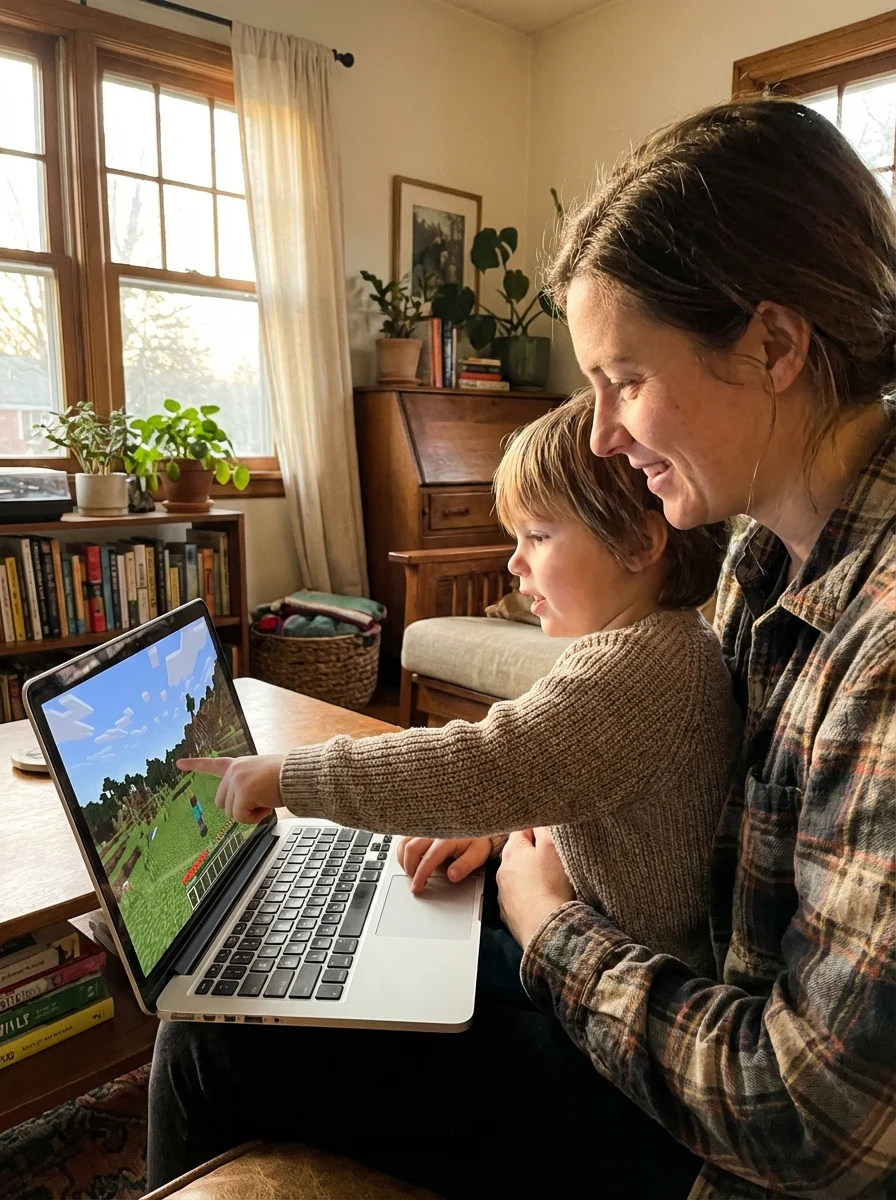
If you find yourself thinking "I want more questions like these," that's exactly why we created Yakety Pack. It's a deck of 172 conversation cards designed for families who want to turn moments like these into real connection. Not a quiz. Not a lecture tool. Just better questions that make kids want to talk.
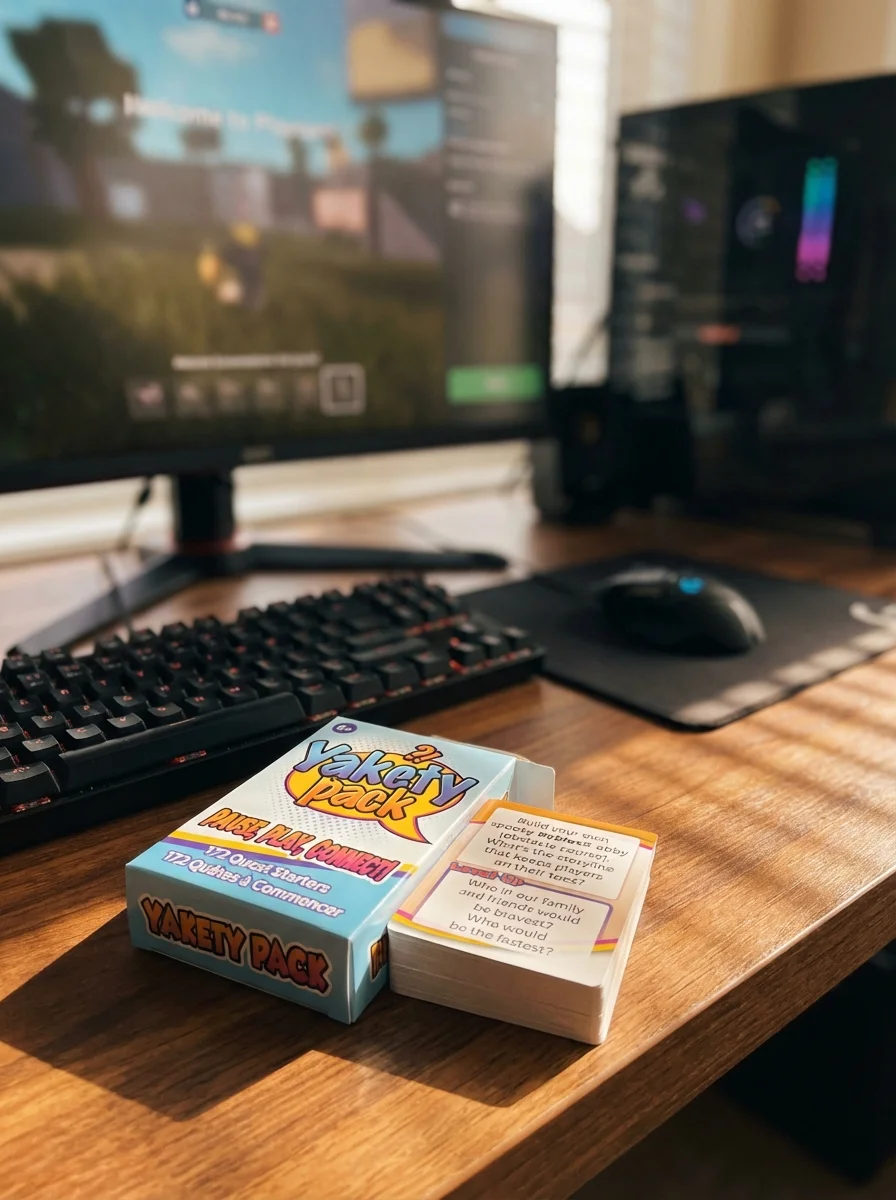
For more conversation approaches that work with gaming kids specifically, check out our guide to conversation starters for gaming kids.
Is Minecraft Actually Better for Learning Than Fortnite or Roblox?
Parents ask me this constantly, and I'm going to give you the honest answer instead of the easy one.
It depends on how your kid plays, not what they play.
That said, Minecraft does have some structural advantages when it comes to life-skill development:
- It's open-ended. There's no win condition, which means kids set their own goals. Self-directed goal-setting is a skill in itself.
- It's creation-focused. Builds persist. Your kid's castle is still there tomorrow. That's fundamentally different from a match-based game where everything resets.
- It supports long-horizon projects. A kid who works on the same world for months develops planning skills that a 15-minute Fortnite match can't replicate.
- It's lower intensity. Less adrenaline and cortisol flooding means the brain is in a better state for learning and reflection.
Fortnite teaches real skills too, like strategic thinking and teamwork, but it operates on shorter dopamine cycles. More reaction, less reflection. Roblox has similar creative potential, but quality varies wildly between experiences. Minecraft offers more consistent depth.
Here's the insight that actually matters: the best game for learning is the one your kid cares about, combined with a parent who asks good questions. A kid who's obsessed with Fortnite and has a parent who says "Tell me about your best play today, what was your strategy?" will learn more than a kid forced to play "educational Minecraft" who hates every second of it.
Passion plus attention beats platform every time.
The Real Skill Isn't in the Game
I want to end with the thing I think matters most, and it has nothing to do with Redstone circuits or resource management.
Every skill in this article is also a conversation topic. Resource management? Ask your kid: "Are you a saver or a spender in Minecraft? What about in real life?" Persistence? "What's the hardest thing you've had to rebuild after losing it?" Collaboration? "Who do you build with? What's each person good at?"
These aren't trick questions or therapy exercises. They're just genuine curiosity about something your kid cares about. And when you show that curiosity, something shifts. When you validate your kid's gaming skills, you're validating their intelligence, their creativity, their problem-solving ability. Kids who feel seen become kids who open up.
One evening, I asked my kid, "If you could build anything in Minecraft with unlimited resources, what would it be?" The answer started with a massive underwater city. But the conversation kept going. It moved from the underwater city to why he liked building things, to what he might want to build when he grew up, to what kind of life he imagined for himself. We ended up talking for an hour about things that had nothing to do with gaming and everything to do with who he's becoming.
That conversation didn't happen because Minecraft is educational. It happened because I asked.
The parent who understands what Minecraft teaches doesn't just tolerate screen time. They use it as a window into their kid's mind, a door into conversations that matter, and a bridge between the digital world and the relationship they both need.
Minecraft isn't teaching your kid behind your back. It's teaching them right in front of you. You just need to know where to look.
If this article gave you a new way to see your kid's gaming, Yakety Pack gives you a new way to talk about it. 172 conversation cards designed to turn exactly these moments into real connection. And if you're looking for ways to balance screen time with other activities, we've put together a practical guide to screen time alternatives that actually work.
The tour beats the quizPause, Play, Connect: Core Deck172 prompts that keep the talk going long after they have closed the laptop for the night.$49 CAD • 90 cards • 18 reviewsShop the deck
Related Articles
Looking for more insights on gaming and family connection?
- How to Talk to Kids About Minecraft - Conversation strategies that bridge the gap between your world and their gaming world
- Conversation Starters for Gaming Kids - Specific questions that open up meaningful dialogue about gaming
- When Gaming Becomes a Problem - How to recognize when screen time crosses into concerning territory
- Screen Time Alternatives That Actually Work - Practical ways to balance gaming with other enriching activities
Related: Playing Video Games With Your Kids: A Parent's Real Guide
Frequently Asked Questions
What life skills does Minecraft teach children?
Minecraft teaches spatial reasoning, resource management, persistence through failure, goal-setting, collaboration, basic engineering through Redstone circuits, research skills, and social-emotional skills like negotiation and empathy in multiplayer. The specific skills depend on how your child plays and what game modes they engage with.
Is Minecraft actually educational or just a game?
Both. Active building, survival challenges, and multiplayer collaboration develop genuine skills. Passively watching Minecraft content or repeating the same activity without variation offers less learning value. The key question: is your kid making decisions, or following a script?
What age is Minecraft most beneficial for learning?
Every age offers different benefits. Ages 5 to 7 develop spatial awareness and cause-and-effect thinking. Ages 8 to 10 build planning and social negotiation skills. Ages 11 to 13 develop complex engineering thinking and leadership. Teens progress into coding, content creation, and portfolio building.
Is Survival mode or Creative mode better for learning?
Survival mode teaches more life skills because it introduces constraints and consequences. Resource management, risk assessment, and persistence through loss all require friction that Creative mode removes. Both have value, but Survival offers broader skill development.
Is Minecraft better for kids than Fortnite or Roblox?
Minecraft has structural advantages: it's open-ended, creation-focused, and supports long-term projects. But the best game for learning is the one your child is passionate about, combined with a parent who asks thoughtful questions. A curious parent plus any game beats an indifferent parent plus the "right" game.
How much Minecraft is too much?
The hours matter less than the quality. A child actively building and collaborating for three hours is in a very different situation than a child mindlessly watching Minecraft YouTube for one. Watch for: declining interest in other activities, emotional meltdowns around gaming, and gaming as the only way they cope with stress.
How can I tell if my child is learning from Minecraft or just wasting time?
Look at whether they're making decisions or going through the motions. Planning builds, solving problems, experimenting with new mechanics? They're learning. Repeating the same activity without growth, or only watching rather than creating? The educational value has plateaued. The simplest test: ask about their current project. A kid who's learning will have a lot to say.
Bring the Build Talk to the Table: A deck of Yakety Pack conversation cards gives you natural openers about what your kid built today, which lands more than a generic "how was school" most nights.

