
My son once spent six hours straight trying to beat one level in Celeste. Six. Hours. The same kid who told me "goals are boring" when I tried to make a chore chart had just shown me more persistence than most adults have. That's when I realized: kids are already goal-setting experts. We're just looking in the wrong places.
Last week, I watched him explain his elaborate plan to get enough V-bucks for the next Fortnite season pass. He'd calculated daily challenges, figured out which game modes gave the best return on time, even made a chart. Meanwhile, his "official" goal chart from January was buried somewhere under his bed, three sad checkmarks and done.
Sound familiar? Here's what took me way too long to figure out: kids don't lack goal-setting skills. They're actually incredible at it. We just keep trying to stuff their goals into our boring adult categories, then wonder why they're not interested.
Why Traditional Goal Categories Don't Work for Kids
For the bigger frame, see our pillar piece on turn screen time into connection time.
I used to be that dad with the color-coded family goal board. Academic goals in blue. Fitness goals in green. Chores in yellow. You know what my kids called it? "Dad's homework board." It lasted exactly two weeks before becoming expensive wall decoration.
The problem wasn't that my kids couldn't set goals. The problem was I was speaking a completely different language. I was thinking like a manager. They were thinking like, well, kids.
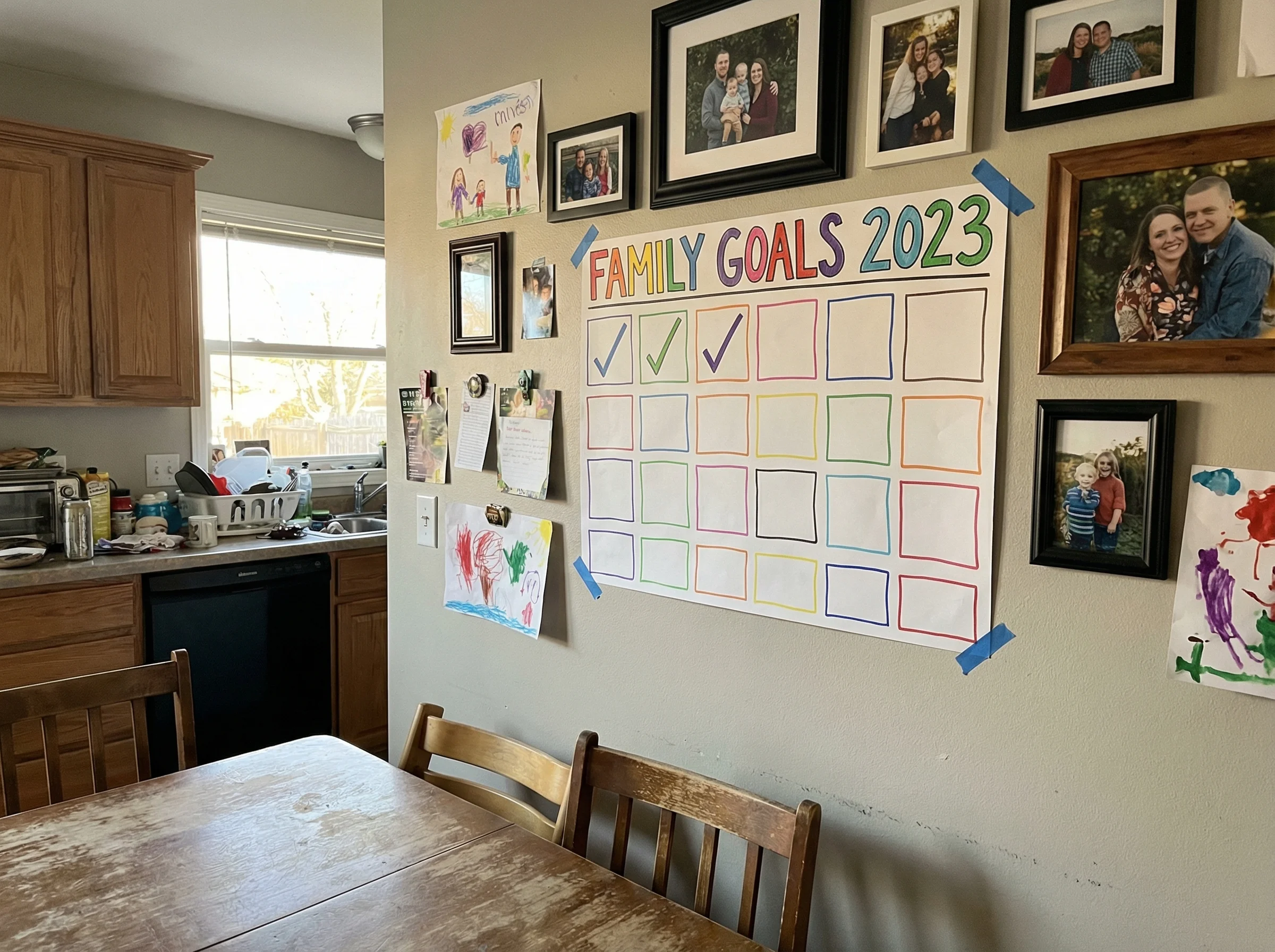
Kids don't wake up thinking "I need to set one academic goal and one physical fitness goal." They wake up thinking about stuff that matters to them right now. Which might be finally beating their sister at Mario Kart. Or getting invited to join their friend's Minecraft realm. Or figuring out how to save enough money for that thing they really want.
When we try to force kids into adult goal categories, we miss something crucial: they're already setting and achieving goals all the time. Just not the ones we're paying attention to.
 Six hours on one levelPause, Play, Connect: Core Deck172 prompts that get a kid talking about something hard they kept working at until it clicked.$49 CAD • 90 cards • 18 reviewsShop the deck
The Mastery Goals - "Getting Good at Stuff That's Hard"
Watch a kid try to land a kickflip for the first time. Or beat Sans in Undertale. Or learn that impossible TikTok dance. They'll practice for hours, fail spectacularly, try again. No parent forcing them. No reward chart. Just pure determination to get good at something hard.
My daughter once spent an entire weekend attempting the same Rainbow Road track in Mario Kart. Same track. Hundreds of attempts. She'd figured out that if she could nail one specific shortcut, she'd finally beat her older brother's time. By Sunday night, she did it. The victory screech probably woke the neighbors.
You know what she learned from those two days? How to break down a big challenge into smaller pieces. How to analyze what went wrong. How to adjust strategy based on failure. How to push through frustration when something feels impossible.
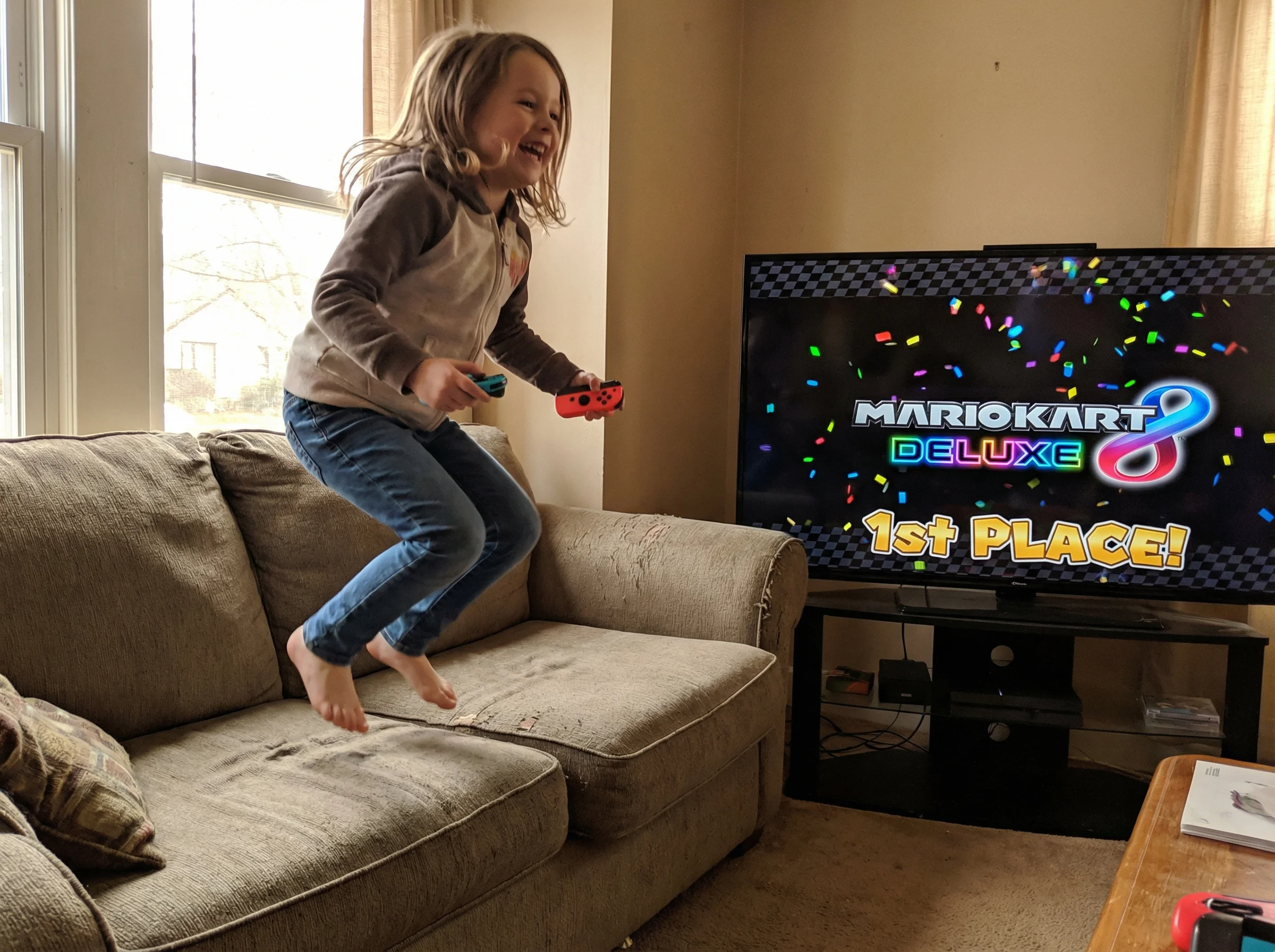
These mastery goals are everywhere in kids' worlds. Learning to build that complex Redstone contraption in Minecraft. Nailing the timing on a difficult combo move. Even non-gaming stuff like learning to juggle or mastering a skateboard trick. Kids pick insanely difficult challenges and pursue them with focus that would make CEOs jealous.
The key ingredient? They chose it themselves. Nobody assigned "beat Rainbow Road" as homework.
The Connection Goals - "Being Part of Something"
Here's a goal category most parenting blogs completely miss: social goals. And I'm not talking about "be nice to your sister" goals. I mean the real social goals kids care about desperately.
Making the friend group. Getting invited to play in someone's Minecraft world. Being included in the group chat. Having someone to sit with at lunch. These aren't just wishes - kids actively strategize about this stuff.
My son once had a goal to join a specific Roblox group his friends were in. But there were requirements. You needed certain achievements, had to pass building tests, needed recommendations from existing members. He worked on it for a month. Practiced building techniques. Helped other players to build reputation. Finally got in.
Was it "just a game"? Sure. But he learned networking, skill-building for a specific purpose, and how social systems actually work. These connection goals teach kids that relationships take effort, that belonging somewhere often requires meeting standards, and that social success is something you can actually work toward.
The brutal truth? Kids often care more about these connection goals than any academic achievement. Because in their world, social capital matters more than grades. Fighting this reality doesn't change it.
The Creation Goals - "Making Cool Stuff"
Give a kid Minecraft and they become an architect. Give them a phone and they become a filmmaker. Give them paper and they create entire worlds. Creation goals are where kids learn project management without realizing it.
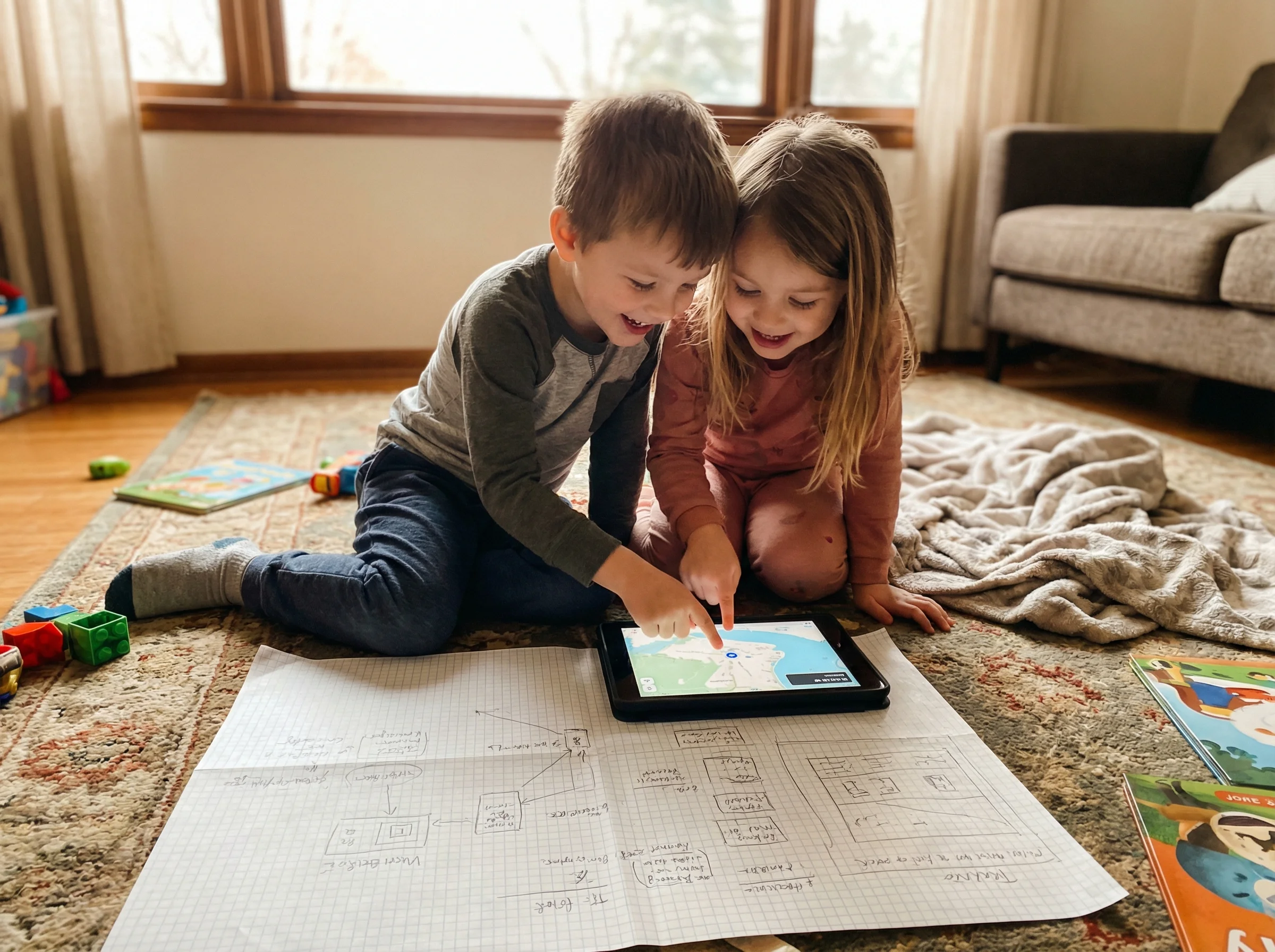
My kids once decided to build an entire city in Minecraft together. Not just any city - a planned metropolis with districts, transportation systems, even zoning laws (the sheep farms had to be downwind from the residential area). They spent two months on it. Had planning meetings. Divided responsibilities. Handled creative differences when my son wanted a giant lava fountain in the town square and my daughter wanted a garden.
Creation goals teach iteration better than any lesson. First video is terrible? Make another. Building collapsed? Figure out why and rebuild. Drawing doesn't look right? Try again. Kids intuitively understand that creating something good takes multiple attempts. They don't expect perfection on the first try.
What's wild is how sophisticated these creation goals get. Kids making entire animated series with their toys. Building elaborate Roblox games that other people actually play. Creating TikTok videos with better production value than local TV commercials. They're not just making stuff - they're learning to plan, execute, iterate, and ship.
 What they chose themselvesPause, Play, Connect: Core Deck$49 CAD • 172 promptsSee the deck
The Status Goals - "Leveling Up in Their World"
Every kid understands levels. Bronze to Silver to Gold. Level 1 to Level 100. White belt to black belt. They get progression systems in their bones because they're surrounded by them.
Status goals aren't about bragging rights (okay, not JUST about bragging rights). They're about visible progress in areas that matter to their peer group. Could be game rankings. Could be actual sports achievements. Could be followers on whatever platform they care about.
My son had a goal to reach Diamond rank in Rocket League. This wasn't some casual wish. He studied YouTube tutorials. Practiced specific moves in training mode. Found a teammate who played at similar times. Analyzed replays of losses to spot mistakes.
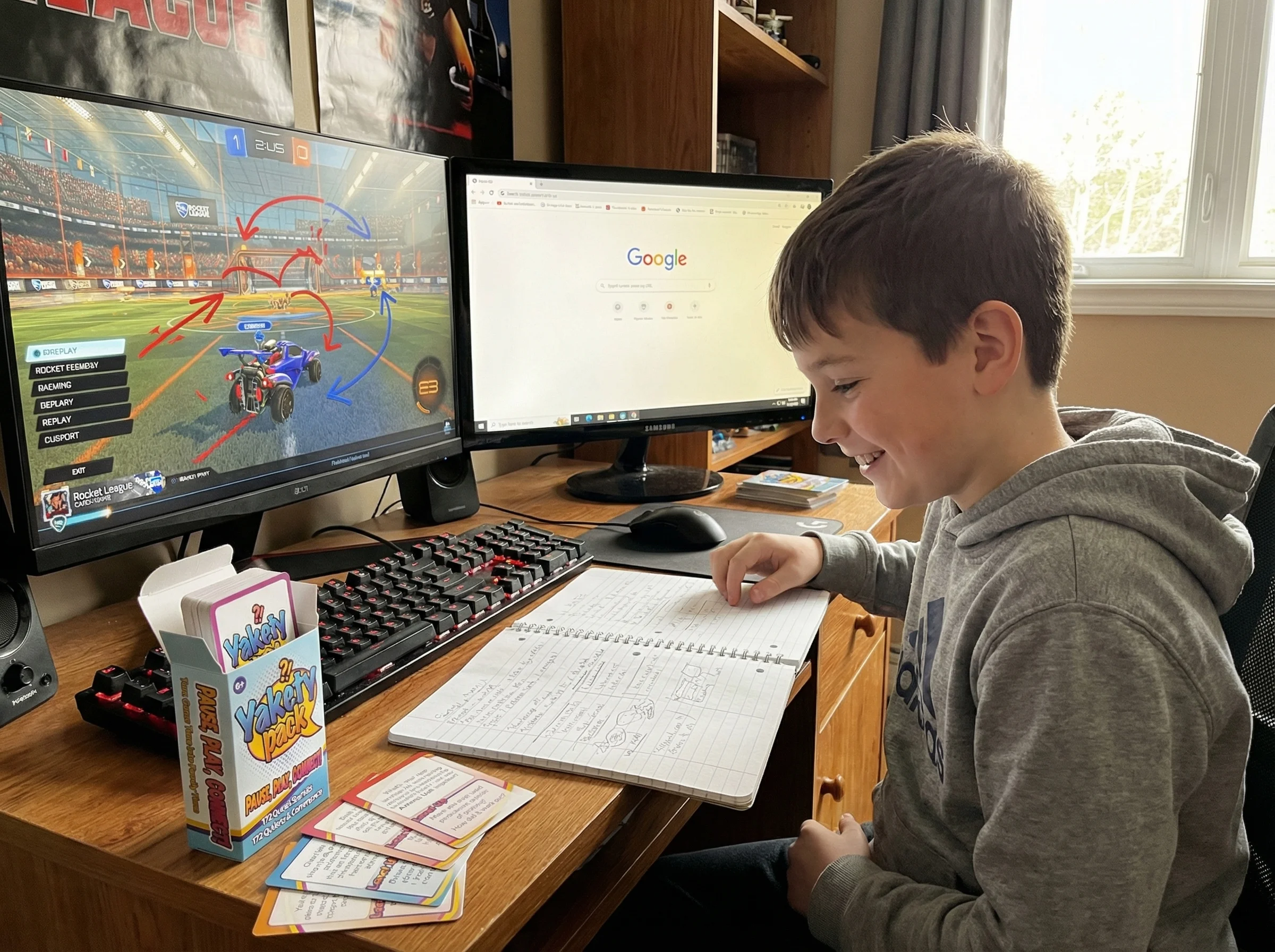
The beautiful thing about status goals? They come with built-in feedback systems. You always know where you stand. You can see progress happening. There's a clear next step. No wonder kids find them more motivating than vague goals like "do better in math."
Here's where it gets interesting: kids who understand gaming progression systems already understand way more about goal-setting than we give them credit for. They know about incremental progress, skill requirements for advancement, the grind between levels. We just need to help them see how it translates.
For the Goal Talk: A curiosity card lands during the in-between beats. Keep a Pause, Play, Connect deck within reach so a prompt is ready when you sit down together.
How to Work WITH Their Categories (Not Against Them)
For the Long Build: Connection grows from many small low-pressure conversations. A deck of conversation cards for families with gamer kids on the table makes those talks routine.
Stop trying to replace their goals with yours. I know, revolutionary concept. Instead, get curious about what they're already working toward. Then look for overlap.
Kid wants to be a YouTube creator? That's writing, public speaking, video editing, project management, and audience analysis all rolled into one. Support it. Help them set subscriber milestones. Talk about upload schedules. Treat it as seriously as you'd treat piano practice.
Kid grinding for a specific game achievement? Ask them to break down their plan. What skills do they need to develop? What resources are they using to learn? How are they tracking progress? You're teaching planning skills, just using their language.
Try questions like: "What would happen if you applied your Fortnite practice schedule to learning guitar?" Or "How could you use your Minecraft planning skills for that science project?" Not as sneaky manipulation - as genuine curiosity about skill transfer.
The magic happens when kids realize themselves that their goal-setting skills work everywhere. But that realization has to come from them, not from you forcing connections.
When Goal Categories Become Problems
Let's be real: sometimes kids hyperfocus on one category to the exclusion of everything else. Gaming goals consuming all free time. Social goals creating anxiety. Creation goals leading to perfectionism that prevents finishing anything.
When my son hit his "only gaming goals matter" phase, my first instinct was to limit screen time and force other activities. Brilliant plan. He responded by caring about exactly nothing and resenting me. Success!
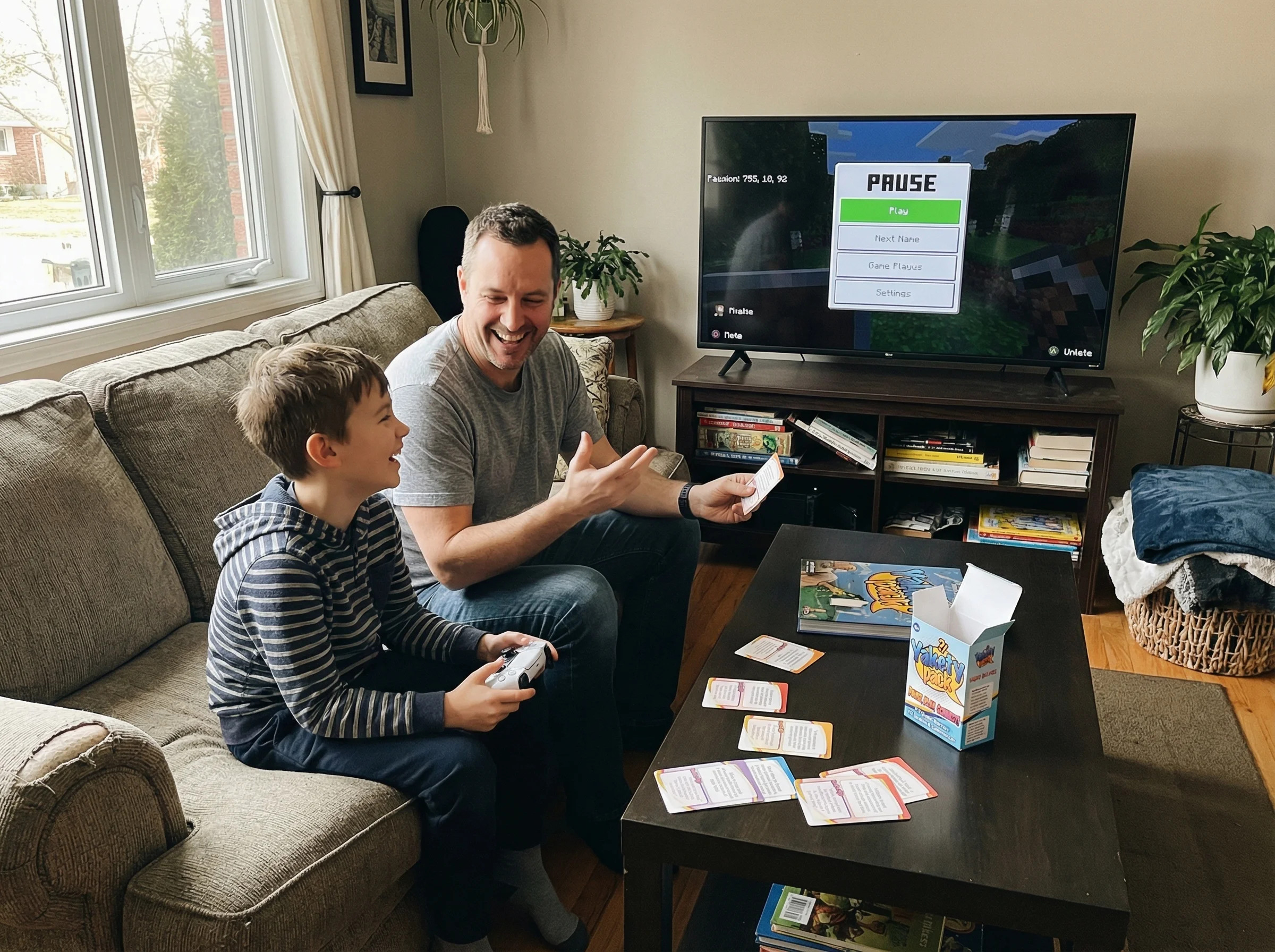
What actually worked was speaking his language. We talked about how professional gamers cross-train. How they exercise to improve reaction times. How they study strategy away from the game. How they need other skills to succeed long-term. Suddenly, those "boring" goals had context in his world.
Red flags are different from normal kid focus. If goals are causing serious anxiety, social isolation, or physical health issues, that's beyond normal category preference. But a kid being obsessed with one type of goal for a few months? That's called being a kid.
What This Actually Looks Like
Want to see what working with kid goal categories looks like in practice? Here's what happened last week:
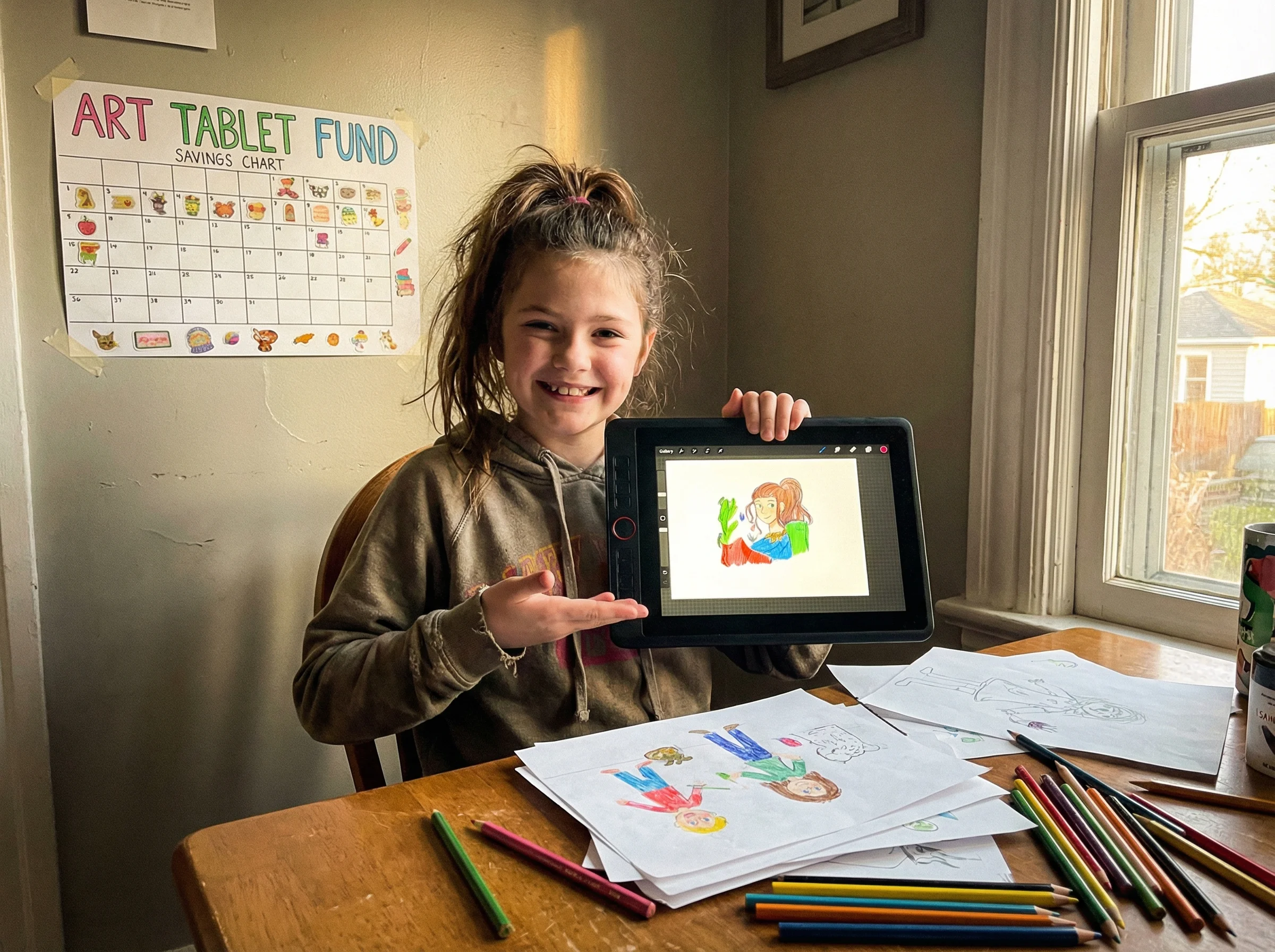
My daughter wanted to save for an expensive art tablet. Instead of launching into a lecture about money and responsibility, I asked how she planned to reach her goal. She immediately referenced her Animal Crossing savings strategy - daily tasks, resource optimization, not spending on temporary wants.
We translated it directly. Daily tasks became weekly chores with specific values. Resource optimization became finding ways to earn extra. Not spending on temporary wants became... not spending on temporary wants. Same system, real world application.
She got it immediately because we were building on her existing goal framework, not trying to impose mine.
That's the secret: kids already have sophisticated goal-setting skills. They've learned them through gaming, creating, and navigating their social worlds. Our job isn't to teach them goal-setting from scratch. It's to help them recognize they're already experts.
This is exactly why we created Yakety Pack - to give families a tool for these kinds of conversations. When you ask a kid "What's a goal you crushed recently?" and actually listen to their Minecraft achievement or TikTok milestone, you're validating their goal-setting abilities while opening doors to talk about how those skills transfer.
Your Next Move
Tonight, ask your kid about a goal they're currently working on. Don't judge it. Don't try to redirect it. Just get curious. Ask how they plan to achieve it. What obstacles they expect. How they'll know when they've succeeded.
You might be surprised by how much they already know about goal-setting. They just learned it in places you weren't looking.
Because here's the truth: that kid grinding for hours to rank up in their favorite game already understands persistence, planning, and incremental progress better than most adults. They don't need you to teach them goal-setting.
They need you to recognize they've already got it figured out.
For the Repeat Sessions: A deck of Yakety Pack conversation cards near the gaming setup keeps the post-game ritual going.
The version they tell youPause, Play, Connect: Core Deck172 prompts that give you an easy way to ask what a kid is chasing right now.$49 CAD • 90 cards • 18 reviewsShop the deck
Related Articles
Looking for more? Check out these related articles:

