
My son beat a Dark Souls boss after 73 attempts. When I asked him to practice piano for 15 minutes, he quit after two tries. Sound familiar? Here's the thing - he already mastered what are the 5 R's of goal setting. He just learned them holding a controller instead of a pencil.
Last week, he explained his three-week strategy for beating that boss. He tracked his progress, watched YouTube tutorials, adjusted his equipment, and celebrated each tiny improvement. Meanwhile, I'm over here trying to get him excited about a "piano practice chart" with gold stars. No wonder it wasn't working.
That's when it clicked. My kids don't need to learn goal setting. They're already experts. They just learned it in Minecraft instead of math class.
 Not a framework, just cardsPause, Play, Connect: Core Deck172 prompts that have nothing to do with frameworks, just questions a family can answer together.$49 CAD • 90 cards • 18 reviewsShop the deck
Why Traditional Goal Setting Fails with Kids (And What Gaming Gets Right)
For the bigger frame, see our pillar piece on turn screen time into connection time.
Let me paint you a picture. Parent-teacher conference. The teacher pulls out a goal-setting worksheet. "We want students to set SMART goals for the quarter." My son's eyes glaze over faster than you can say "specific, measurable, achievable."
But put that same kid in front of Fortnite, and watch what happens. He'll tell you exactly what tier he wants to reach this season, how many wins he needs, what challenges to complete, and his backup plan if the meta changes. That's five different goal-setting principles in one breath.
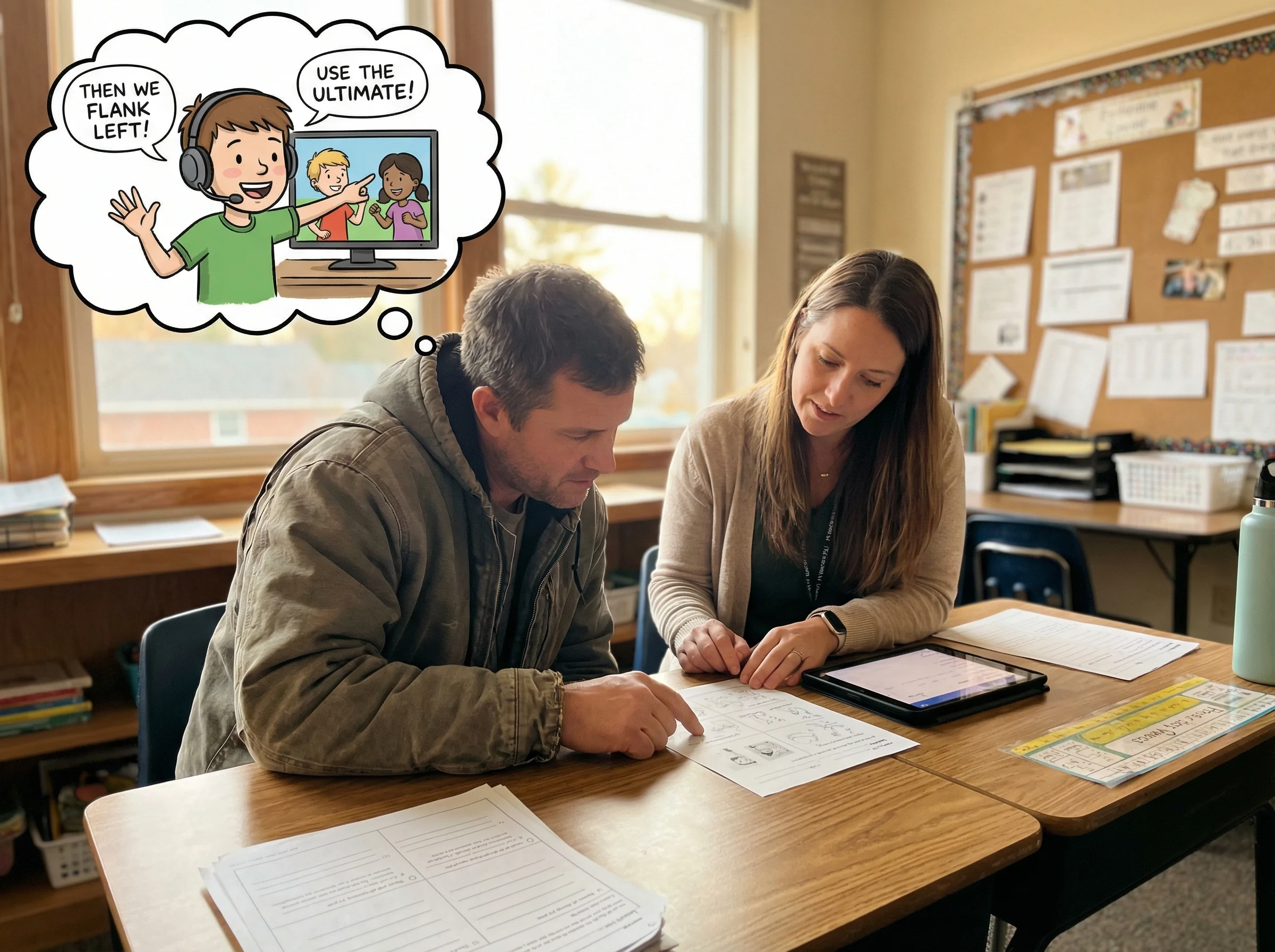
Here's what we're missing: Kids set and crush goals every single day. We just don't recognize them because they involve defeating virtual dragons instead of improving reading levels.
My daughter spent three weeks planning her Animal Crossing island. Three weeks! She sketched layouts, calculated bell costs, researched flower breeding guides, and recruited her friends to donate materials. When I suggested she put that same energy into her science fair project, she looked at me like I suggested eating cardboard for dinner.
The problem isn't kids. The problem is us. We're speaking different languages. We say "objectives" and "milestones." They think in quests and achievements. We talk about "long-term planning." They're already planning raid strategies for next weekend.
The 5 R's Your Kids Already Use in Games
Traditional goal-setting frameworks teach what are the 5 R's of goal setting: Relevant, Realistic, Resourced, Reviewed, and Rewarded. Guess what? Your kid uses all five every time they boot up their favorite game.
Relevant: Watch your kid choose quests in any RPG. They skip the boring fetch quests and go straight for what matters to them. My son ignores every Minecraft tutorial that suggests building a dirt house first. Why? "Dad, I'm not trying to live in dirt. I'm building a castle." He naturally picks goals that matter to him.
Realistic: Games teach this brilliantly. You can't fight the final boss at level 1. My daughter learned this the hard way in Pokemon when she tried to challenge the Elite Four with her starter team. Now she says things like, "I need to train more before I try that gym." She's literally explaining realistic goal setting.
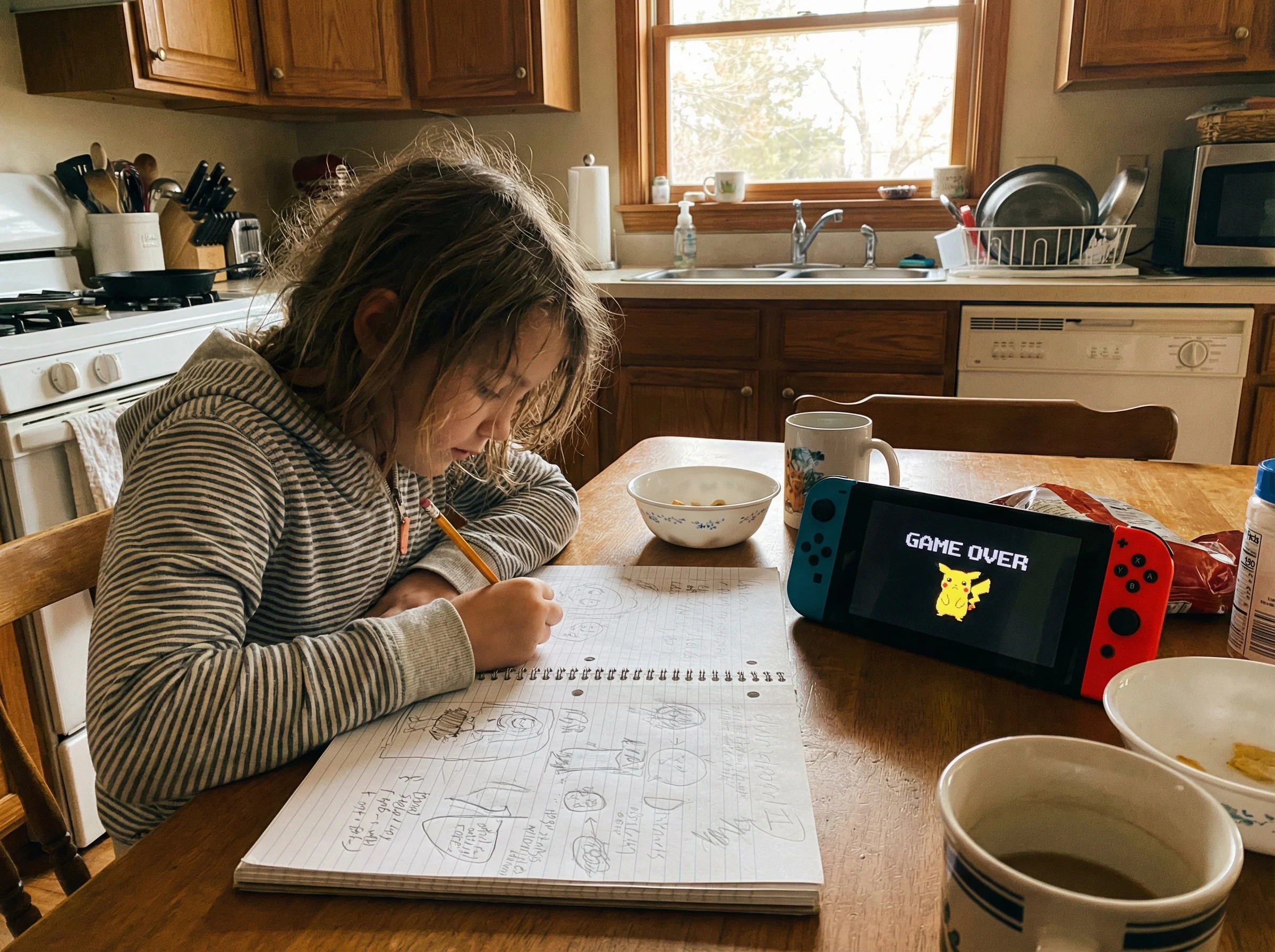
Resourced: Open my son's YouTube history. It's 90% gaming tutorials. He researches boss strategies, watches speedruns, and studies pro players. Last month, he made a spreadsheet - a spreadsheet! - tracking materials needed for his Terraria base. But ask him to research his history report? Suddenly he "doesn't know how to find information."
Reviewed: Every game has stats. K/D ratios, win rates, completion percentages. My kids check these constantly. They know exactly where they stand and what needs work. My daughter reviews her Splatoon stats after every session. "My accuracy went up 3% but my special usage is still low." That's data analysis, people.
Rewarded: Achievement unlocked. New skin earned. Rank increased. Games nail the reward cycle. But here's the kicker - it's not just about the rewards. It's about recognition. When my son finally beat that Dark Souls boss, he didn't get anything useful. But he immediately messaged his friends. The real reward was respect.
Real vs Realistic: The Goal-Setting Lesson I Learned from My Son's YouTube Dreams
"I'm going to be a famous YouTuber."
Every parent's favorite declaration, right? My first instinct was to launch into a speech about statistics and backup plans. Then I remembered something.
Six months earlier, he'd announced, "I'm going to beat every Dark Souls boss." I'd privately thought, "Good luck with that." But he didn't try to beat them all in a week. He started with the first one. Died 73 times. Beat it. Moved to the next one.
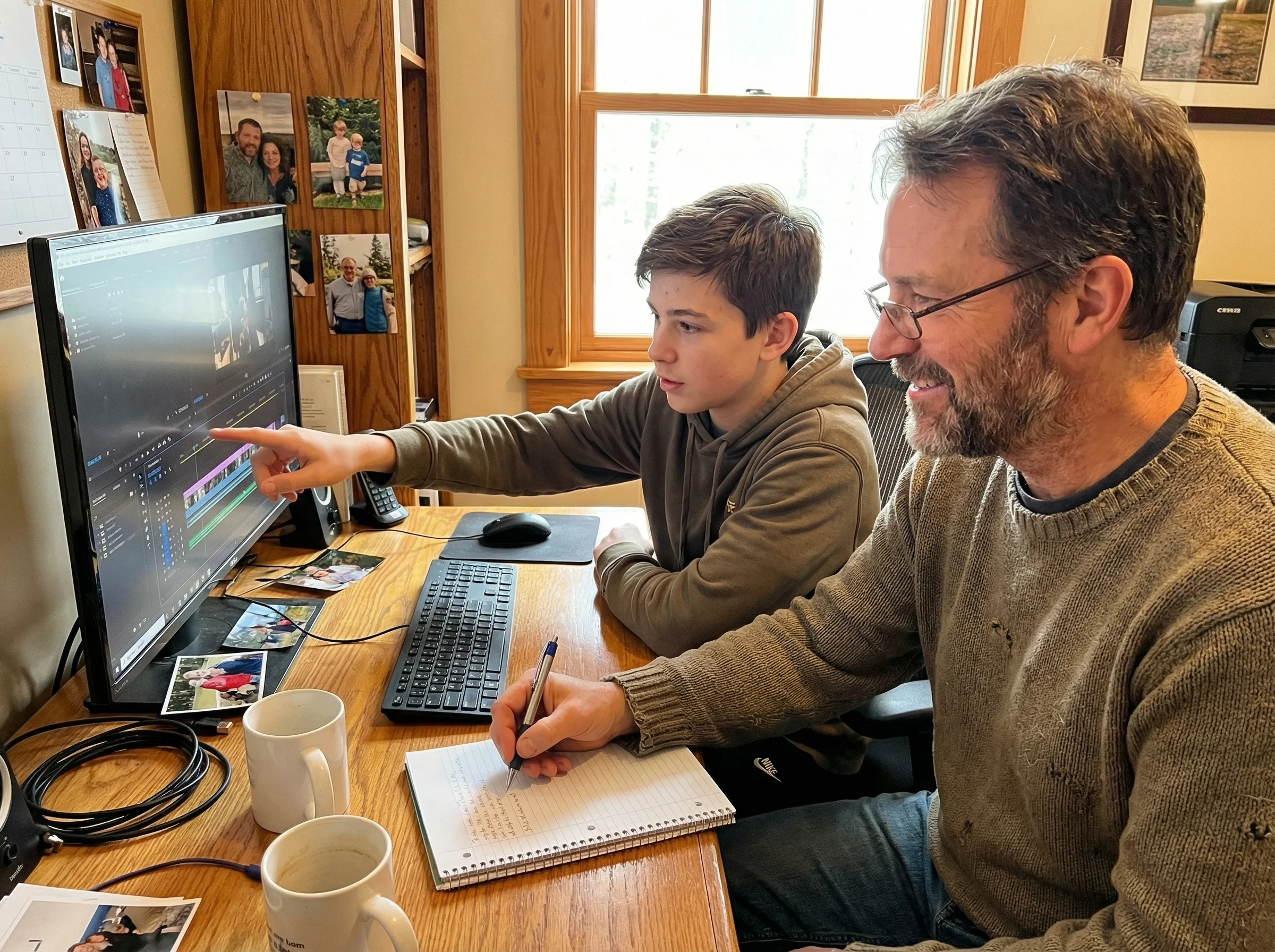
So when the YouTube dream appeared, I tried something different. "Cool. What's your first video going to be about?"
"I don't know. Something that gets millions of views."
"Remember when you started Dark Souls? You didn't fight the hardest boss first."
His eyes lit up. "Oh. So like... I should make one video first?"
"What do you think?"
"Maybe I'll record one of my gaming sessions. See if my friends like it."
That's the difference between "I want to be a famous YouTuber" (overwhelming) and "I want to make one video this week" (achievable). Games teach this naturally through level progression. You don't start at the final boss. You start at level 1.
Now when my kids set huge goals, I ask, "What's the level 1 version of this?" They get it immediately.
 Pick one and askPause, Play, Connect: Core Deck$49 CAD • 172 promptsSee the deck
The Review System That Actually Works (Hint: It's Not a Chart on the Fridge)
I tried the sticker chart. I tried the goal thermometer. I tried the app that sends encouraging notifications. Know what actually worked? Treating real-life progress like gaming stats.
Every Sunday, we do "stats review" during dinner. Not "let's check your goals." Stats review. Totally different energy.
"What's your math level this week compared to last week?"
"I went from getting 7 out of 10 right to 8 out of 10."
"Solid improvement. What's your strategy for hitting 9?"
See what I did there? Same conversation as "how's your math goal going?" but in their language. My daughter now tracks her soccer goals per game like she tracks her Splatoon splats. My son measures his reading speed like his speedrun times.
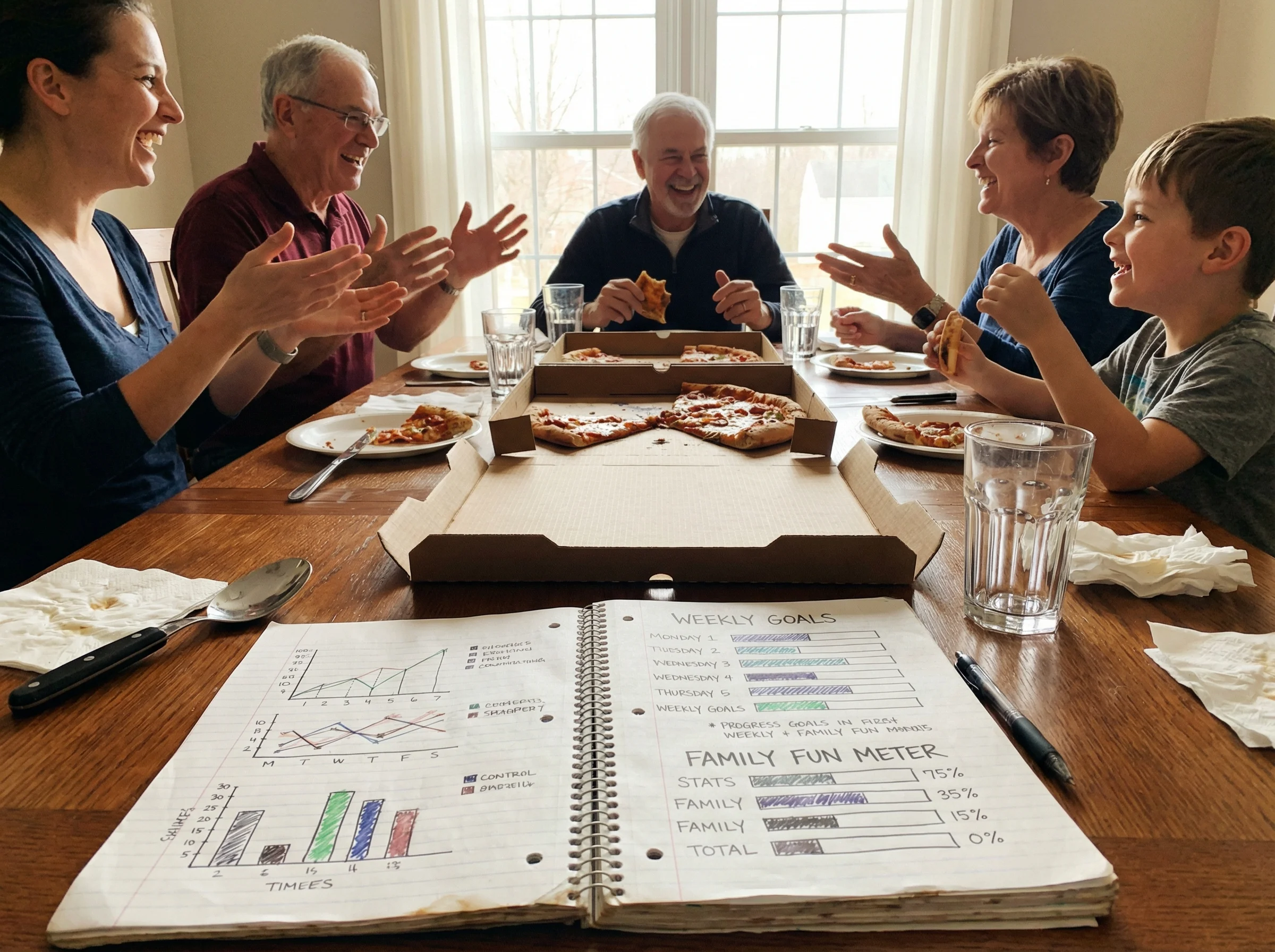
The magic isn't in the tracking. It's in making progress visible without making it feel like homework. When my daughter sees her "soccer stats" improving, she gets the same excitement as ranking up in her favorite game.
Pro tip: Let them choose what to track. My son wanted to track "days without forgetting homework" because he figured out it was killing his grades like dying in a game kills your K/D ratio. His idea, his system, his success.
For the Goal Talk: A curiosity card lands during the in-between beats. Bring out the Pause, Play, Connect deck so a prompt is ready when you sit down together.
When Goals Fail: The Respawn Approach
For the Long Build: Connection grows from many small low-pressure conversations. A deck of conversation cards for families with gamer kids on the table makes those talks routine.
Here's a conversation that changed everything:
"Dad, I'm never going to make the travel soccer team. I'm quitting."
This was my daughter after getting cut from tryouts. Total devastation. Then I remembered something.
"Remember when you couldn't beat Cynthia in Pokemon?"
"Yeah, her Garchomp destroyed me like fifteen times."
"Did you quit Pokemon?"
"No, I just trained more and tried different strategies."
"So you're telling me Cynthia is harder than making the soccer team?"
She actually laughed. "Dad, Cynthia is way harder."
That's when we invented the "respawn approach." In games, failure isn't failure. It's information. You don't quit the game. You respawn and try again with what you learned.
Now when goals fail, we ask: "What did that attempt teach you?" and "What's your respawn strategy?" It completely reframes failure from "I can't" to "I need to level up more first."
My son kept a "death counter" for his piano piece - tracking how many times he messed up the hard part. He turned frustrating practice into "attempts" just like his Dark Souls boss fights. By attempt 34, he nailed it. Then he literally said, "Finally! That was harder than beating Ornstein and Smough!"
Bridging Virtual Wins to Real-World Goals
The trick isn't pulling them away from games. It's connecting games to everything else. Here's what actually works:
Start with their world. At dinner, I ask, "What are you working toward in your game right now?" They'll talk for 10 minutes about their current quest. Then I follow up with, "That reminds me of your science project. What's your next quest there?"
Use their analogies. When my son was struggling with his book report: "Think of it like a game review. What would you tell someone who's never played it?" Suddenly he had opinions. Strong ones.
Make achievements visible. We created "achievement unlocked" moments for real life. Finished that impossible math unit? Achievement unlocked. Made the basketball team? Rare achievement unlocked. Same energy as their games, applied to real life.
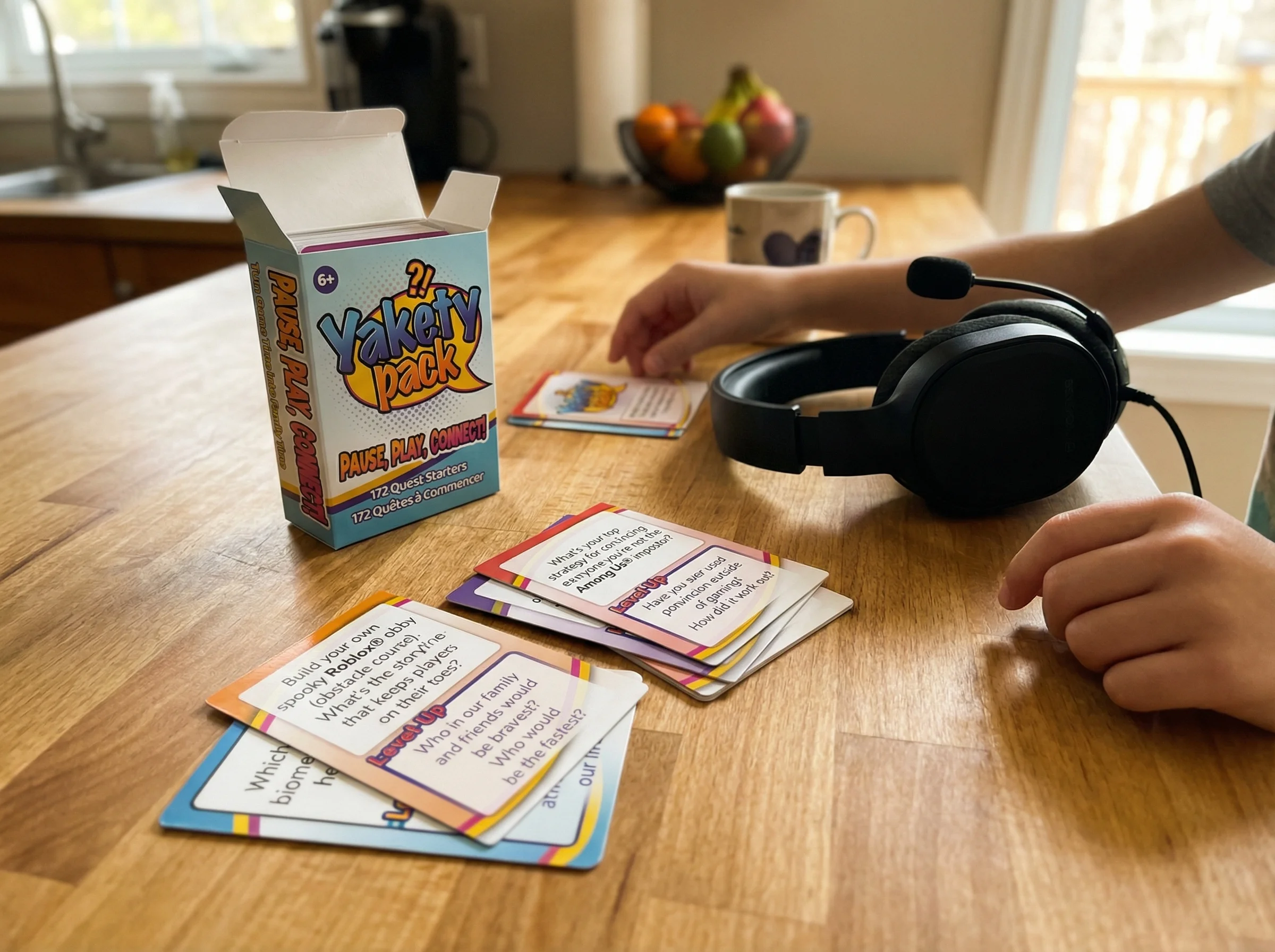
Here's one that shocked me: My kids started using Yakety Pack cards to interview each other about gaming achievements. One card asks, "What's the hardest thing you've accomplished in a game?" That led to a 30-minute conversation about persistence that I couldn't have forced with a thousand lectures.
The bridge appears when you respect their gaming goals as real goals. Once they see you genuinely care about their virtual achievements, they're way more open to talking about real-world ones.
Your Next Quest: Starting the Conversation Tonight
Ready to try this? Here's your starter pack:
For dinner tonight, ask one of these:
- "What's the hardest thing you're trying to do in your game right now?"
- "If real life had achievements, what would you want to unlock this week?"
- "What level do you think you're at in [subject they're struggling with]?"
When they only talk about gaming goals: Don't panic. That's your entry point. Listen to how they set gaming goals, then casually mention, "You know, you use the same strategy for games as really successful people use for life stuff." Watch their minds explode.
Age-specific approaches:
- 6-10 years: Everything is a quest. Make checklists look like quest logs. Celebrate small wins like achievement unlocks.
- 11-14 years: They can handle stats and data. Let them track their own progress. Connect gaming rank systems to grades or sports.
- 15+: Talk strategy. They can plan long-term campaigns. Discuss how their gaming goals show they already have executive functioning skills.
The one rule: Meet them where they are, not where you want them to be. If they're obsessed with reaching Diamond rank, that's your starting point. Show genuine interest in that goal first. The connection to other goals comes naturally when they feel heard.
Whether you're using conversation cards or just winging it at dinner, the key is showing genuine interest in their gaming world first. Once they know you respect their virtual goals, they'll let you in on their real-world ones.
Your kids already know what are the 5 R's of goal setting. They learned them defeating bosses and building virtual worlds. Your job isn't to teach them goal setting. It's to help them see they're already experts.
Now, what's your first quest going to be?
For the Repeat Sessions: A deck of Yakety Pack conversation cards near the gaming setup keeps the post-game ritual going.
When you want to talkPause, Play, Connect: Core Deck172 prompts that give you something easy to talk about with your kid tonight.$49 CAD • 90 cards • 18 reviewsShop the deck
Related Articles
Looking for more? Check out these related articles:

