
Look, I tried everything to teach my kids perseverance. Sticker charts. Motivational quotes on the fridge. Long talks about "finishing what you start." Know what actually worked? Watching my son die 73 times to the same Dark Souls boss without throwing his controller once.
Same kid who told me fractions were "impossible" after trying one problem.
That's when it hit me. My kids didn't lack perseverance. They were drowning in it. Just not where I was looking.
 Just a deck of questionsPause, Play, Connect: Core Deck172 prompts that give a family something to talk about at the end of the day.$49 CAD • 90 cards • 18 reviewsShop the deck
The Perseverance Paradox: Why Kids Quit Everything (Except What They Love)
For the bigger frame, see our pillar piece on turn screen time into connection time.
Here's what nobody tells you about teaching perseverance: Your kids already have it. They're just really picky about where they use it.
My daughter once spent an entire Saturday rebuilding her Minecraft castle after a creeper blew it up. Every block. Every torch. Every carefully placed flower pot. Six hours of focused determination.
Next day? Quit her art project after ten minutes because "the tree looks weird."
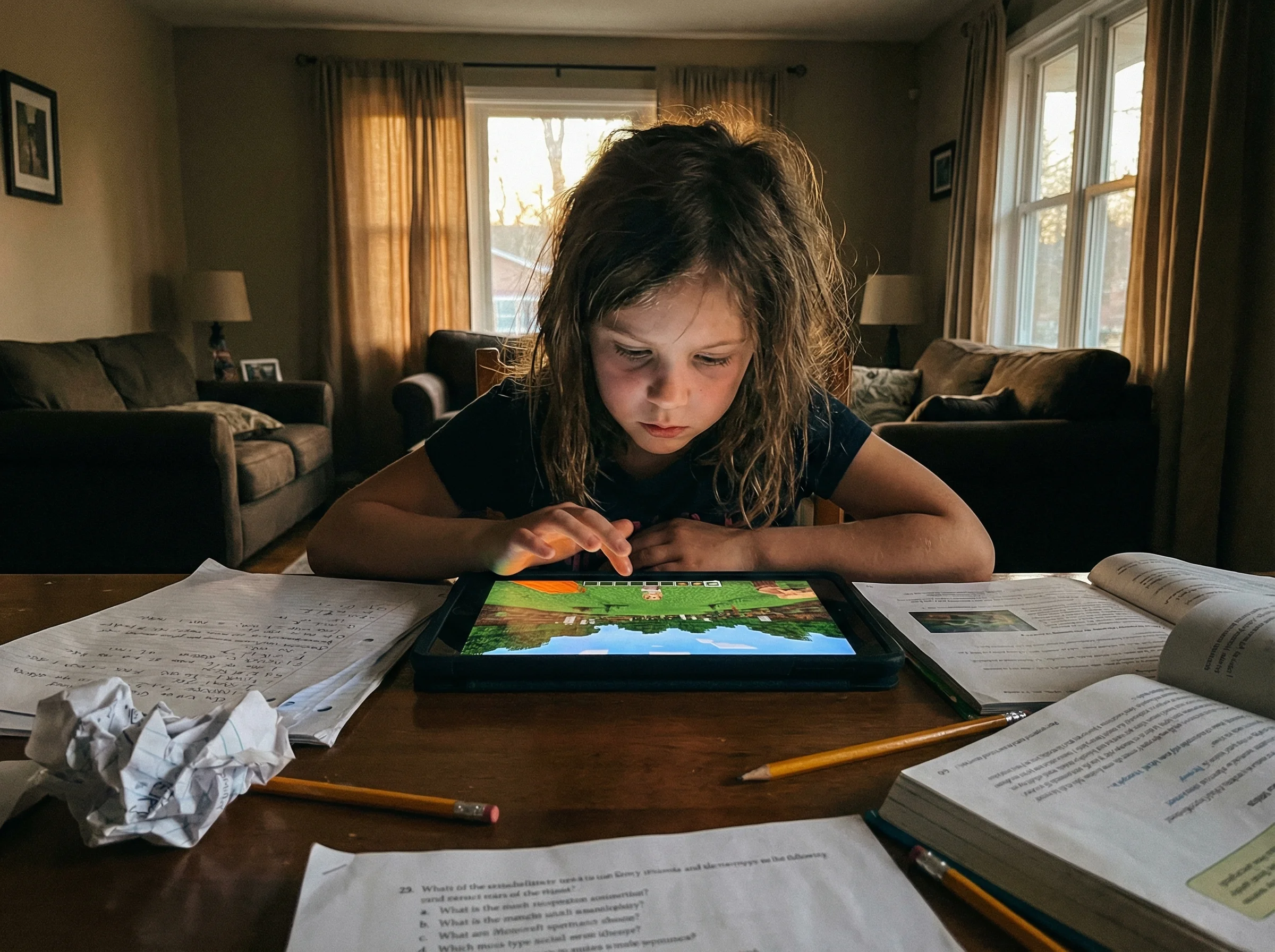
The problem isn't that kids lack grit. It's that we only recognize grit when it shows up where we expect it. Piano practice? That's perseverance. Grinding for diamonds in Minecraft? That's "wasting time."
But here's the thing. That kid who's died 10,000 times in Fortnite and keeps dropping back in? They're practicing the exact same skill we want them to have for math homework. We just wrapped it in different packaging.
Finding Hidden Perseverance: It's Already There
I discovered my quiet son's Pokemon notebook by accident. 47 pages. Hand-drawn type charts. Move combinations. Statistical analysis that would make a data scientist proud. This was the same kid who "couldn't focus" on his science homework.
Turns out he could focus just fine. He'd spent months calculating damage multipliers and breeding for perfect IVs. That's not distraction. That's dedication.
Here's where I see kids showing insane perseverance that parents miss:
Speed-running: Kids will practice the same 30-second segment for hours to shave off milliseconds. That's deliberate practice at its finest.
Wiki-diving: Reading 50 pages about Terraria boss strategies isn't procrastination. It's research.
Grinding: Collecting 999 wood blocks isn't mindless. It's delayed gratification in action.
Modding: Learning basic coding to change game mechanics? That's problem-solving persistence.
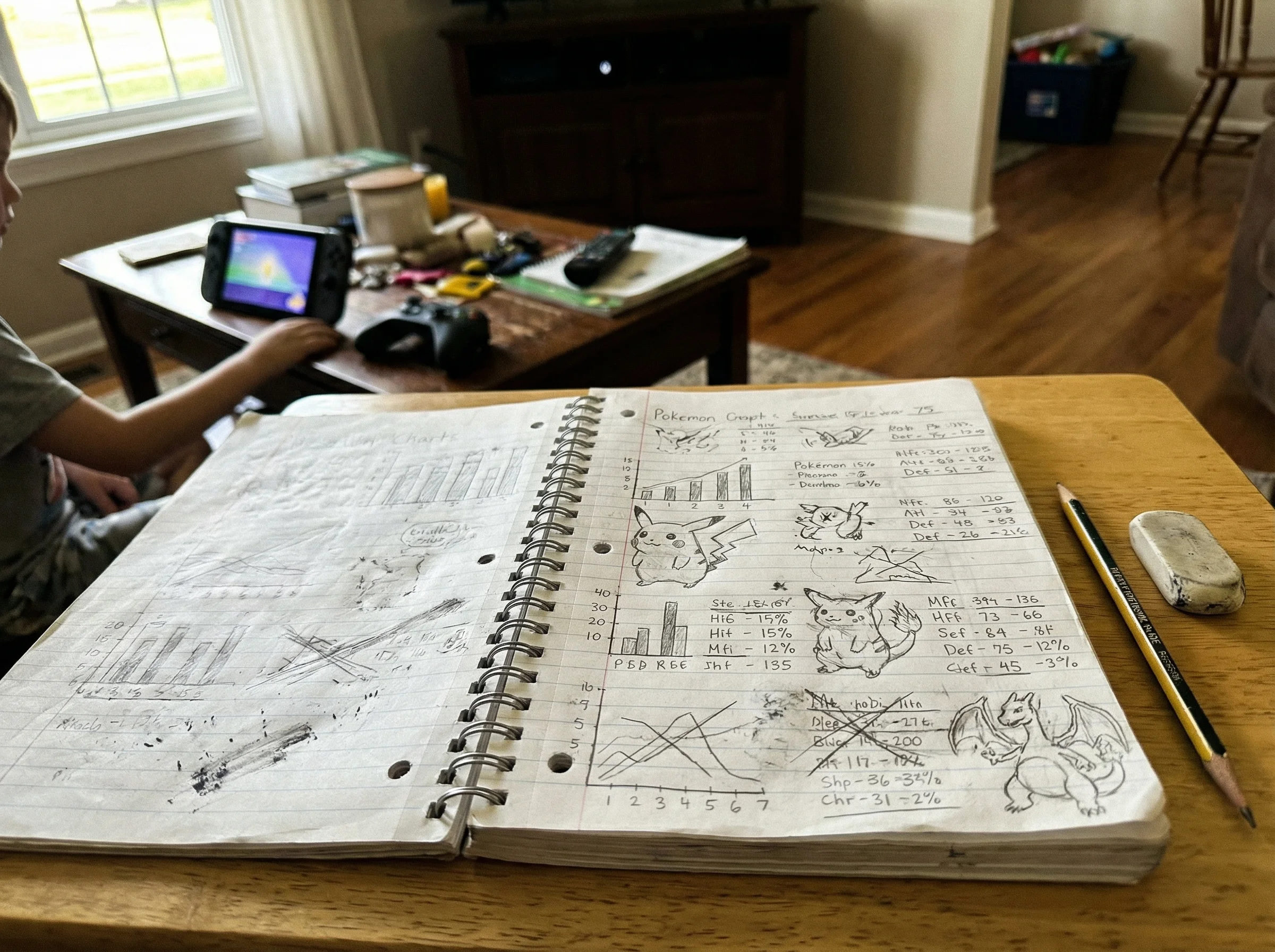
The issue isn't teaching perseverance. It's recognizing it when it's wearing a Creeper hoodie instead of a soccer uniform.
The Transfer Method: From Game Grit to Real-World Resilience
"What would Mario do?"
That became our family's perseverance mantra after I realized something. Every game teaches the same lesson: You fail, you learn, you try again. So why not use that?
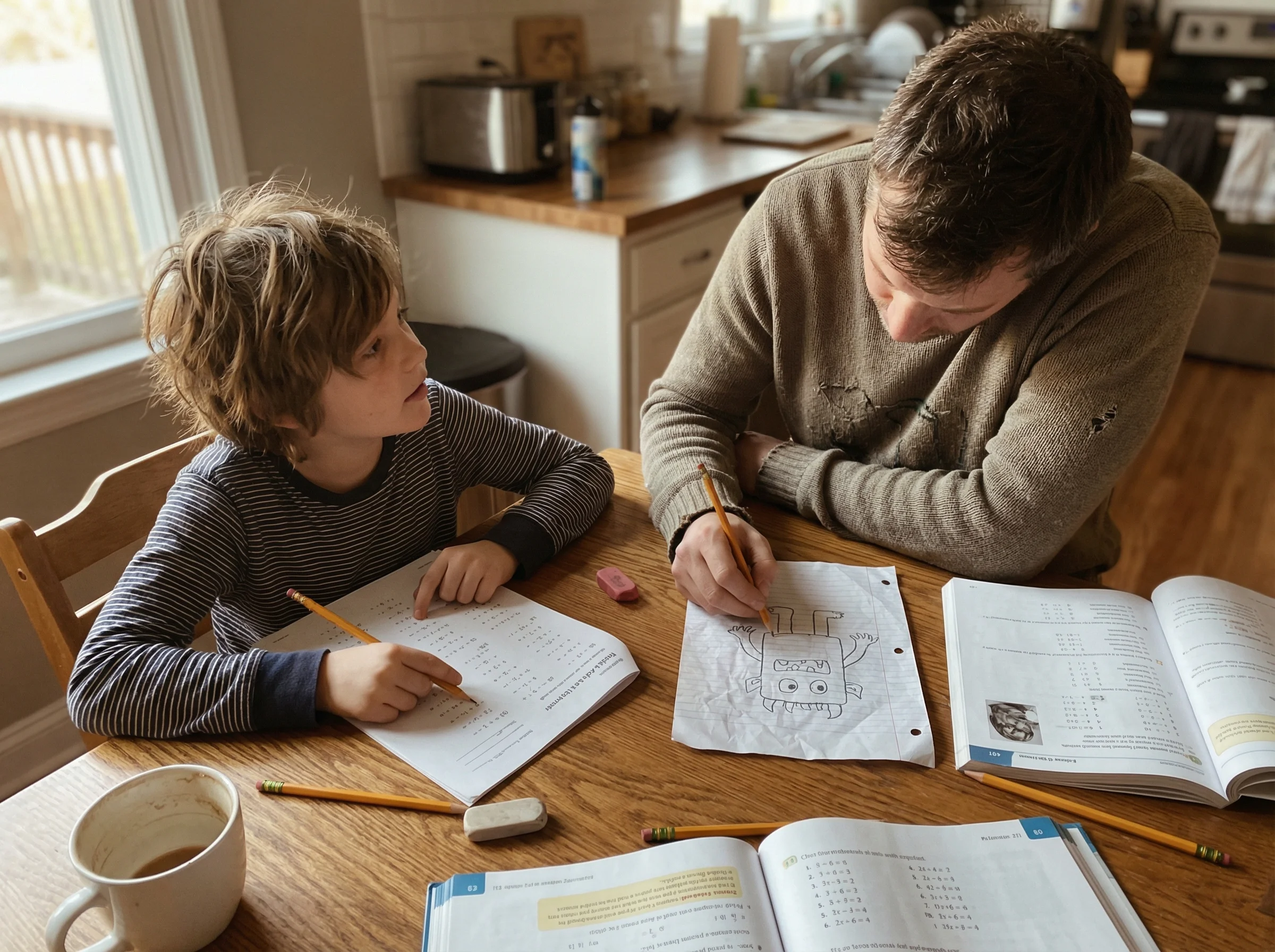
When my son hit a wall with long division, I didn't say "keep trying." I said, "Remember the Nameless King fight? This is your math boss. What's your strategy?"
Suddenly he got it. Not the math - the approach. In Dark Souls, you don't just swing wildly at a boss 50 times. You learn patterns. You adapt. You take breaks. You maybe watch a YouTube guide.
We started using gaming language for everything:
- "This is your boss fight" instead of "this is hard but important"
- "What level are you on?" to break big projects into stages
- "Time to grind" for boring but necessary practice
- "Need a checkpoint?" when frustration builds
- "Different build needed?" when one approach isn't working
My daughter now calls her spelling tests "mini-bosses." She doesn't stress about them anymore. She strategizes.
Healthy vs. Toxic Perseverance: When to Push and When to Pivot
Here's something games taught my kids that I couldn't: Sometimes quitting is the smart move.
In Hollow Knight, if you keep dying to a boss, you don't just bash your head against it forever. You go explore somewhere else. Level up. Find better charms. Come back stronger.
That's not giving up. That's strategic thinking.
My son taught me this when he switched from aggressive to stealth gameplay in Horizon Zero Dawn. "Dad, I wasn't failing. I just needed a different approach." He was right. And that lesson transferred when he struggled with basketball. Instead of quitting the team, he focused on defense and assists instead of scoring.
The difference between healthy and toxic perseverance:
Healthy: "This isn't working. What else can I try?" Toxic: "I'll do the exact same thing 100 more times."
Healthy: "I need to level up before I tackle this." Toxic: "I should be able to do this now."
Healthy: "Let me research some strategies." Toxic: "Asking for help is cheating."
Games teach this naturally through difficulty settings, multiple paths, and character builds. Life should work the same way.
For the Hard Moment: A curiosity card lands during the in-between beats. Pull a Pause, Play, Connect card after a rough run so a prompt is on the table when you sit down together.
Co-op Mode: Building Perseverance Together
For the Long Build: Connection grows from many small low-pressure conversations. A deck of conversation cards for families with gamer kids on the table makes those talks routine.
Want to know the best $30 I ever spent on teaching perseverance? Cuphead.
My daughter and I got absolutely destroyed. Over. And over. And over. But we were failing together, laughing together, slowly improving together. No lectures. No pressure. Just "okay, what did we learn that time?"
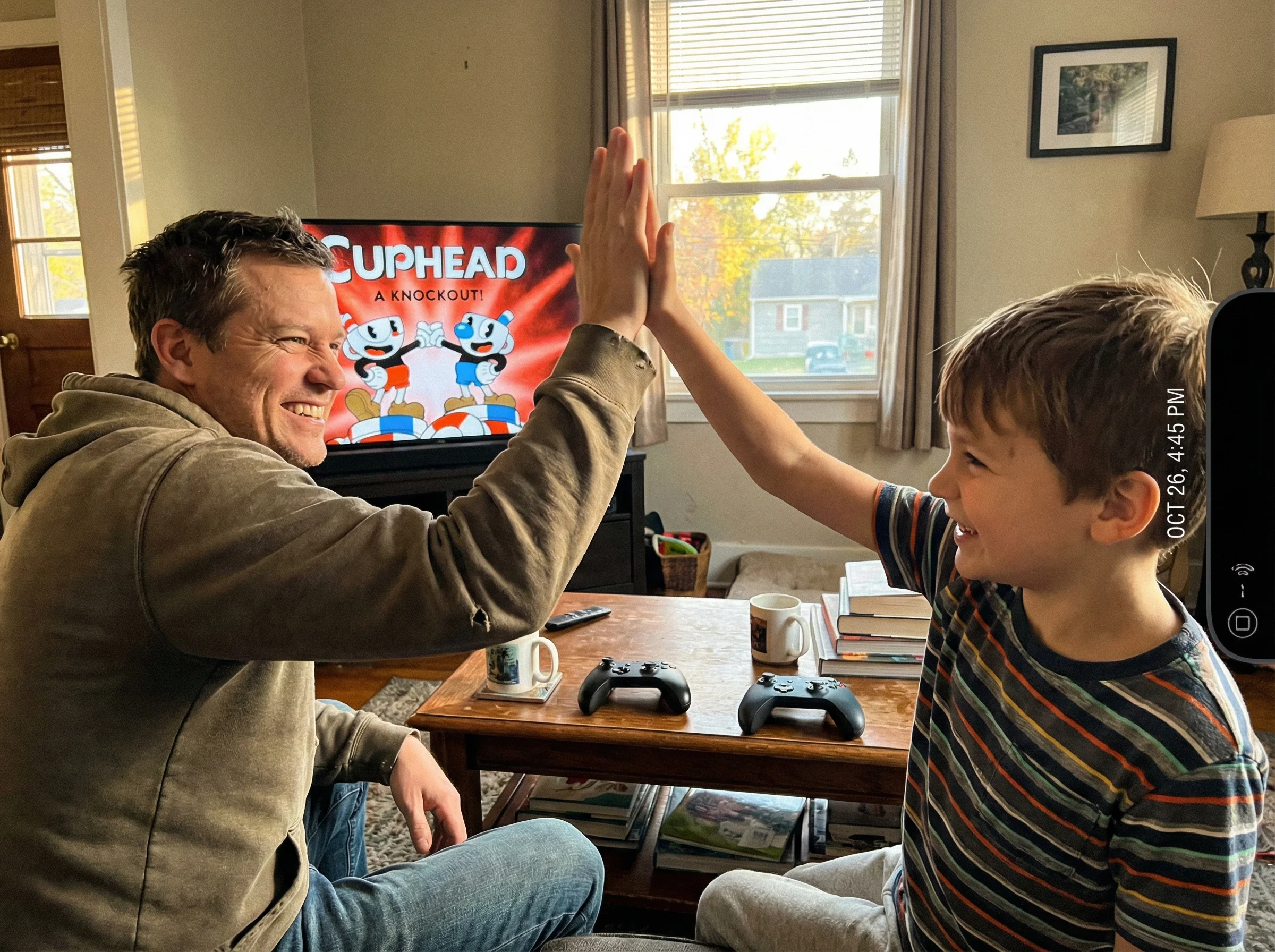
This beats every "perseverance building activity" I've ever tried because:
- We're both bad at it (levels the playing field)
- We need each other (builds trust)
- Progress is visible (that boss health bar doesn't lie)
- Failure is expected (the game is literally designed to be brutal)
Other games that build co-op perseverance:
- It Takes Two (requires actual cooperation)
- Overcooked (chaos management together)
- Portal 2 (puzzle-solving that needs two brains)
- Minecraft (long-term projects together)
The magic happens in the struggle. When we finally beat that Cuphead boss after 45 tries, my daughter didn't just learn perseverance. She learned that her dad struggles too. And keeps trying anyway.
 Talk, not a lessonPause, Play, Connect: Core Deck$49 CAD • 172 promptsSee the deck
The Conversation Shift: From "Don't Quit" to "What's Your Strategy?"
I used to say things like "you need to stick with it" or "don't give up so easily." Useless. You know what actually works?
Better questions.
Instead of "why are you quitting?" try:
- "What's making this feel impossible right now?"
- "If this was a game, what would you try next?"
- "What's the smallest progress you could make today?"
- "Who could we ask for tips?"
One question from our Yakety Pack deck completely changed how my son approaches challenges: "What's the hardest thing you've ever done in a game, and how did you finally beat it?"
His answer blew me away. He talked about spending weeks learning speedrun techniques for Celeste. Watching videos. Taking notes. Practicing the same jump 200 times. When I asked why homework felt different, he said, "Because in Celeste, I can see myself getting better. In math, I just see red X's."
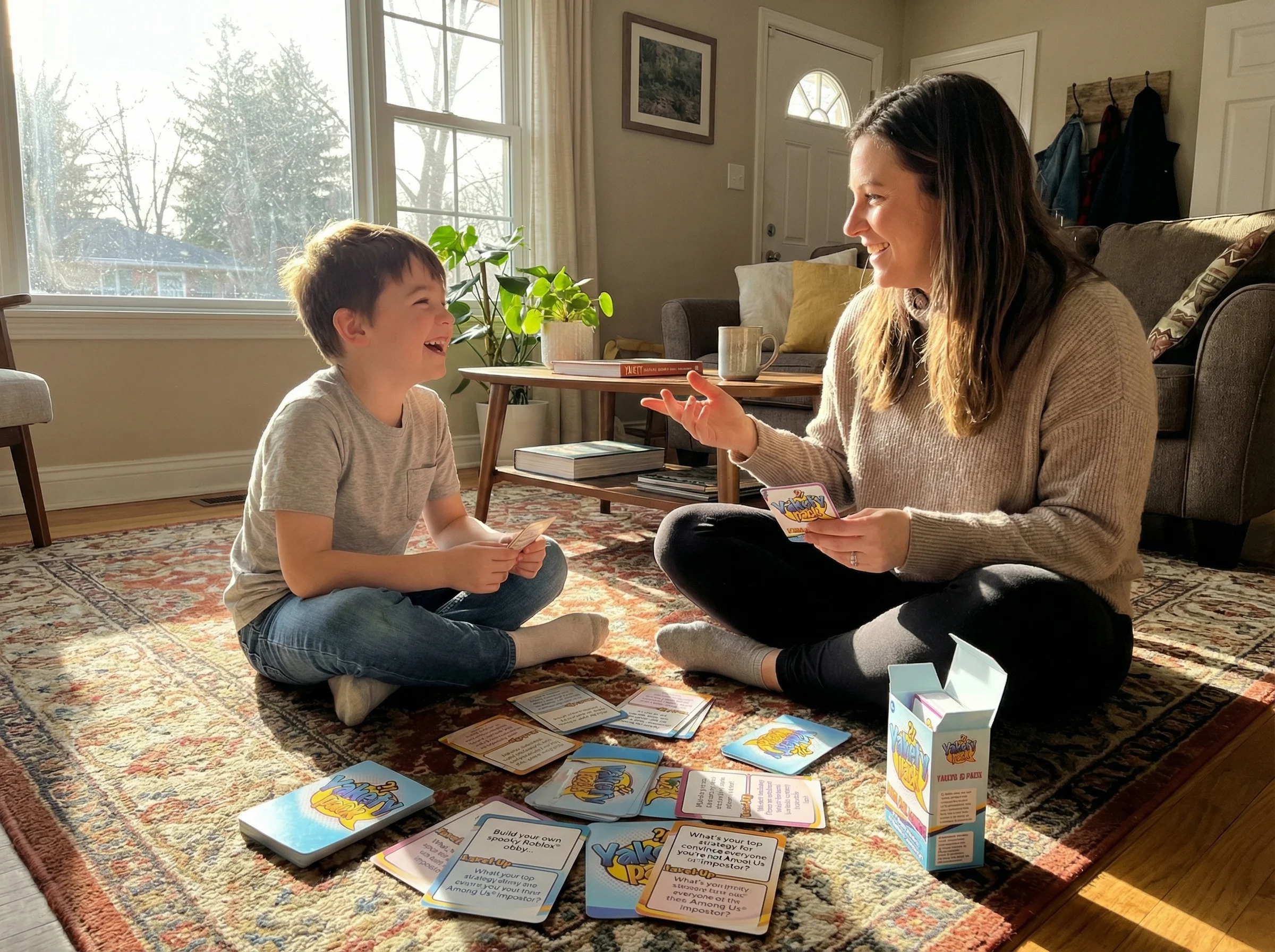
That conversation led to us tracking math improvement like gaming stats. Suddenly, perseverance made sense to him.
Real Success Stories: What This Actually Looks Like
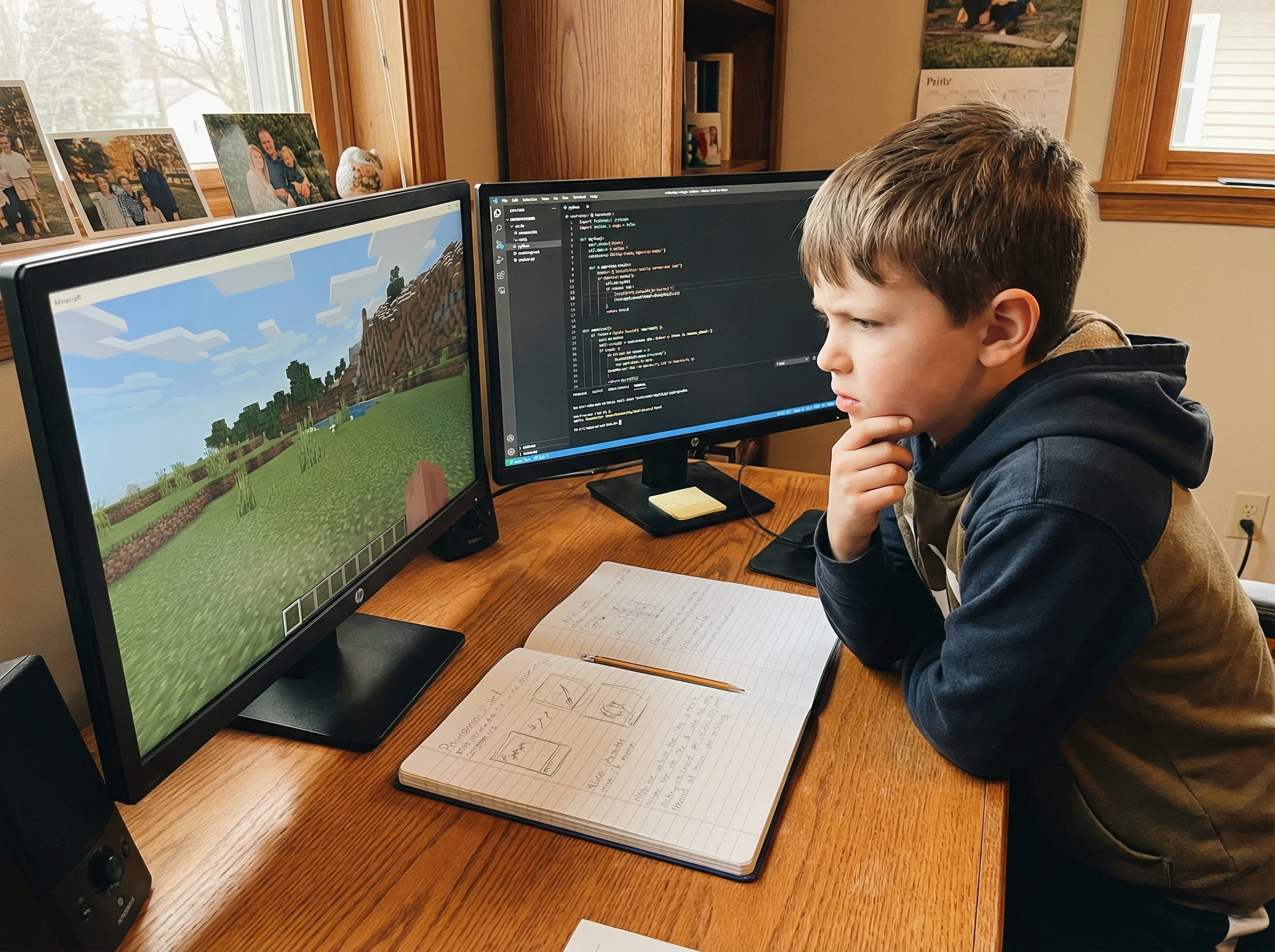
My son's coding journey started with Minecraft redstone. He wanted to build an automatic farm. Failed completely. Rage quit.
Three days later, he was back. "Dad, I watched some tutorials. Can I try again?"
Six months later, he'd built a working calculator in Minecraft. In blocks. With redstone. The kid who "couldn't focus" had taught himself basic logic gates.
Now he's learning Python. When he hits a bug, instead of melting down, he says "debugging time" like it's just another game mechanic. Because to him, it is.
His baseball story is different but connected. He couldn't hit a fastball to save his life. Wanted to quit. I reminded him about his Dark Souls philosophy: "Every boss has a pattern." We started treating pitches like boss attacks. Track the patterns. Adjust timing. Practice specific responses.
He's not the best hitter on the team. But he doesn't strike out anymore. More importantly, he doesn't want to quit anymore.
The shift from "I can't" to "I can't yet" didn't happen because I taught him about growth mindset. It happened because every game he's ever played already taught him that. I just helped him see the connection.
Your Next Move
Tonight, ask your kid about the hardest thing they've ever done in a game. Really listen to their answer. You'll hear perseverance in there. Problem-solving. Strategic thinking. Dedication.
Then help them see it too.
The goal isn't to teach perseverance from scratch. It's to help them recognize they already have it, celebrate where it shows up, and transfer it to new challenges. Even if those challenges don't have respawn points.
Because here's the truth: That kid grinding for hours in their favorite game? They're not learning to waste time. They're learning to persist. We just need to help them aim that superpower at the rest of life.
What would Mario do? He'd try again. And again. And again. Until he saves the princess, beats the boss, or finally understands fractions.
Your kids already know this. Time to let them teach you.
For the Repeat Sessions: A deck of Yakety Pack conversation cards near the gaming setup keeps the post-game ritual going.
For an ordinary eveningPause, Play, Connect: Core Deck172 prompts that are simply conversation starters, nothing to teach and nothing to track.$49 CAD • 90 cards • 18 reviewsShop the deck
Related Articles
Looking for more? Check out these related articles:

